


38,99 €
Mehr erfahren.
- Herausgeber: John Wiley & Sons
- Kategorie: Fachliteratur
- Serie: Bloomberg Professional
- Sprache: Englisch
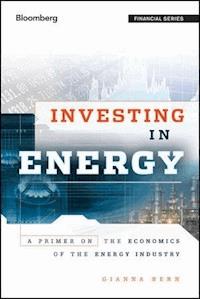
An energy industry researcher and investment advisor provides a fresh perspective on the economics of energy From major players in the energy industry, such as big oil, to the emerging cap-and-trade market, no other book offers a more complete overview of the energy industry, specifically its economic and financial intricacies, than Investing in Energy: A Primer on the Economics of the Energy Industry. * Details how to value and invest in the four big energy sectors: oil, gas, power, and green * Describes key financial considerations for the energy sectors, including credit metrics, the importance of liquidity, cash flow, and capital expenditures * From Bloomberg, a leading provider of the most up-to-date business news and financial data A comprehensive guide to the economics of the energy industry, Investing in Energy will prove an invaluable resource for traditional energy investors looking to expand into new areas, as well as for eco-investors looking to better understand how energy markets function.
Sie lesen das E-Book in den Legimi-Apps auf:
Seitenzahl: 336
Veröffentlichungsjahr: 2011
Ähnliche



















Contents
Cover
Series
Title Page
Copyright
Dedication
Preface
Acknowledgments
Part I: Introduction and Financial Considerations
Chapter 1: Historical Perspectives
Oil and Gas Producers
Production Perspectives
Importance of Reserves
Regulatory Environment
Alternative Energy Forms
Alternative Energy Growth
Energy Investment Cost Considerations
Concluding Thoughts
Chapter 2: Investment Opportunities in Energy
Asia Comes of Age
Australia's Natural Gas Boom
Brazil Beckons with Deepwater
Iraq's Road to Recovery
North American Unconventional Natural Gas Plays
Solar Power Generation
Concluding Thoughts
Chapter 3: Cash Flow and Liquidity at Various Crude Prices
Independent Oil Companies
National Oil Companies
Capital Expenditure Planning
Liquidity—Cash Is Still King
Liquidity Metrics
Cash-Flow Considerations
Cash-Flow Metrics
Leverage
Concluding Thoughts
Chapter 4: Capital Structure and Capital Markets
Capital Structure
Investors
Alternative Energy Subsidies
Concluding Thoughts
Chapter 5: The Quarterly Earnings Disconnect
Short Term versus Long Term
Business Risks
Concluding Thoughts
Part II: Crude Oil and Natural Gas
Chapter 6: Analyzing Reserves
Authorities on Reserves
Proven Reserves
Industry Nomenclature
Proven Reserve Criterion
Unproven Reserves
Certification Process
More on Reserve Authorities
Measuring Reserves
Concluding Thoughts
Chapter 7: Crude Oil Markets and Production
The Crude Oil Markets
Benchmark Crudes
Inventory Levels
Crude Oil Quality
Crude Oil Markets
Concluding Thoughts
Chapter 8: Natural Gas Markets and Production
De-Coupling of Natural Gas from Crude Oil
Conventional Natural Gas Production
North American Unconventional Natural Gas Shale Plays
Canadian Natural Gas Markets
Natural Gas Markets
LNG—Fuel for the Future
Natural Gas Storage
Natural Gas as a Utility
Natural Gas—The Cleaner Fuel
Concluding Thoughts
Chapter 9: Understanding Refining Economics
The Business Model
Challenge for Independent Refiners
Physical Crude Oil Trading
Refining Capacity, Complexity, and Utilization
Benchmark Crude Oils
Crack Spreads
The Challenge
Concluding Thoughts
Chapter 10: Integrated Majors and the Evolution of the Competitive Landscape
Role of National Oil Companies
The Road Ahead for Integrated Majors
U.S. Safety and Regulation
UK Environmental Program
Technological Challenges Abound
Reserve Changes
Concluding Thoughts
Chapter 11: The Oilfield Service Sector and Oil Juniors
The World Is Their Platform
Oil Juniors: Is Smaller Better?
Concluding Thoughts
Chapter 12: OPEC
OPEC Organization
OPEC Crude Basket
OPEC Crude Production
OPEC's Role during the Financial Crisis 2008 to 2009
Saudi Arabia's Role in OPEC
OPEC versus Non-OPEC Reserves
Geopolitics of Crude
Nationalization of Assets
Concluding Thoughts
Chapter 13: Bidding and Production Rights
Brazil
Mexico
Norway
The United Kingdom
Venezuela
Concluding Thoughts
Chapter 14: Analyzing State-Owned Oil Companies
Hydrocarbons, a Source of Revenue
Regulatory Frameworks
Concessions and Bid Rounds
Taxes and Royalties
Pensions and Legacy Support
Transparency
Social Programs
Capital Markets
Mexico's PEMEX
Ownership Structure
Hybrid-Capital Companies
Concluding Thoughts
Chapter 15: Crude Oil Pricing and Industry Investment
Higher Crude Prices Impact Demand
Global Oil Imbalance
Unprecedented Financial Crises
Great Commodity Collapse of 2009
Leverage Creep
Improved Market Fundamentals
Investment Outlook
Concluding Thoughts
Part III: The Power Sector
Chapter 16: Hydroelectric Power
Advantages
Disadvantages
China
Brazil and Paraguay
Concluding Thoughts
Chapter 17: Nuclear Quagmire
The Issue: Nuclear Waste
The Benefits
Nuclear Power in the United States
The Future of Nuclear Energy
Nuclear Energy in France
Concluding Thoughts
Chapter 18: Geothermal and Wind Energy
United States
Philippines
Wind Generation Energy
Denmark
United Kingdom
Concluding Thoughts
Chapter 19: Solar Energy
Types of Solar Energy
Spain
Germany
Concluding Thoughts
Part IV: Green Energy
Chapter 20: Biofuels and Ethanol
Biofuels Development
Ethanol Development
Concluding Thoughts
Chapter 21: Cleaner Coal
Coal as a Fuel Source
Cleaner Coal
Concluding Thoughts
Part V: Summary and Conclusion
Chapter 22: Opportunities and Challenges in Green and Traditional Energies
Renewable Energy
Cap and Trade
Natural Gas Opportunities
Offshore Drilling Challenges
Concluding Thoughts: Energy Independence—A Strategic Imperative
Appendix: Energy Equivalent Conversions
Glossary
About the Author
Index
Since 1996, Bloomberg Press has published books for financial professionals on investing, economics, and policy affecting investors. Titles are written by leading practitioners and authorities, and have been translated into more than 20 languages.
The Bloomberg Financial Series provides both core reference knowledge and actionable information for financial professionals. The books are written by experts familiar with the work flows, challenges, and demands of investment professionals who trade the markets, manage money, and analyze investments in their capacity of growing and protecting wealth, hedging risk, and generating revenue.
For a list of available titles, please visit our web site at www.wiley.com/go/bloombergpress.
Copyright © 2011 by Gianna Bern. All rights reserved.
Published by John Wiley & Sons, Inc., Hoboken, New Jersey. Published simultaneously in Canada.
No part of this publication may be reproduced, stored in a retrieval system, or transmitted in any form or by any means, electronic, mechanical, photocopying, recording, scanning, or otherwise, except as permitted under Section 107 or 108 of the 1976 United States Copyright Act, without either the prior written permission of the Publisher, or authorization through payment of the appropriate per-copy fee to the Copyright Clearance Center, Inc., 222 Rosewood Drive, Danvers, MA 01923, (978) 750-8400, fax (978) 646-8600, or on the Web at www.copyright.com. Requests to the Publisher for permission should be addressed to the Permissions Department, John Wiley & Sons, Inc., 111 River Street, Hoboken, NJ 07030, (201) 748-6011, fax (201) 748-6008, or online at http://www.wiley.com/go/permissions.
Limit of Liability/Disclaimer of Warranty: While the publisher and author have used their best efforts in preparing this book, they make no representations or warranties with respect to the accuracy or completeness of the contents of this book and specifically disclaim any implied warranties of merchantability or fitness for a particular purpose. No warranty may be created or extended by sales representatives or written sales materials. The advice and strategies contained herein may not be suitable for your situation. You should consult with a professional where appropriate. Neither the publisher nor author shall be liable for any loss of profit or any other commercial damages, including but not limited to special, incidental, consequential, or other damages.
For general information on our other products and services or for technical support, please contact our Customer Care Department within the United States at (800) 762-2974, outside the United States at (317) 572-3993, or fax (317) 572-4002.
Wiley also publishes its books in a variety of electronic formats. Some content that appears in print may not be available in electronic books. For more information about Wiley products, visit our web site at www.wiley.com.
Library of Congress Cataloging-in-Publication Data:
Bern, Gianna. Investing in energy : a primer on the economics of the energy industry / Gianna Bern. p. cm. – (Bloomberg financial series) Includes index. ISBN 978-1-57660-375-8 (hardback); ISBN 978-0-47087-878-1 (ebk); 978-1-118-12838-1 (ebk); 978-1-118-12839-8 (ebk) 1. Energy industries–Finance. 2. Investments. I. Title. HD9502.A2B475 2011 333.79–dc22 2011006383
This book is dedicated to my incredible family whose encouragement eradicated any doubt that this project was achievable: my treasured parents, my sister, brother, and their spouses, and my husband and children, who have lovingly nurtured and sustained the heart and soul of this budding author. Thank you all for your support, patience, and understanding.
Preface
It is my sincere hope that this book lays a foundation for those new to energy and fills in gaps for the veterans of the energy sector. The energy sector is a very complex and growing sector for investment. Investing in Energy illustrates numerous developments worthy of consideration and review by those interested in learning more about and investing in energy.
This book takes a comprehensive and financial approach to learning about oil, gas, and renewable energy. Part I reviews financial considerations necessary for evaluating and assessing cash flow, capital structure, and the role of capital markets across a myriad of energy sector firms.
Part II is the heart of the book and covers the economics inherent to the oil and gas sector such as reserves, production, crack spreads, and refining economics. We also review certain basics relevant to the oil and gas markets and explore why the crude oil and natural gas markets behave the way they do. Part II considers the role of OPEC, production rights, oilfield sector companies, oil juniors, independent oil companies, and national oil companies. Finally, Part II evaluates the complex landscape of crude oil pricing and its volatility in the commodity markets.
Part III of Investing in Energy assesses the current state of the power sector across various global markets. In this section, we bring readers up to date on developments in solar energy, hydro electrical power, nuclear power, geothermal electricity, and wind energy.
Part IV addresses developments in green energy such as bio fuels and ethanol. Once again, we analyze various other global markets, to ascertain where there are challenges and perhaps some opportunities across the energy landscape for biofuels, biomass, and ethanol.
Part V concludes with a summary of various opportunities we explored in the book and reviews the notion of energy policy as a sovereign's strategic and economic imperative.
Acknowledgments
Books are rarely the efforts of a single individual. I must acknowledge the incredible assistance from my husband and business partner Lester Bern, whose insights, advice, and editorial assistance are pervasive throughout this book. He kept my feet to the fire, always insisting upon perfection; this book would not have been possible without his help. I would also like to acknowledge my appreciation for Lester’s technical and editorial expertise in chapters 16–19.
Enormous gratitude also goes to my outstanding editorial team at John Wiley & Sons: Laura Walsh, senior editor, and Judy Howarth, development editor. Their guidance and editorial expertise were indeed extraordinary and valuable. I am fortunate that they were on my team. Thanks are also given to the Wiley graphics department for its creative expertise and to my production editor, Melissa Lopez for her insights and patience.
Special acknowledgements and thanks are given to Team Pope for its unique analytics and graphics assistance.
My colleagues at Capital IQ and Bloomberg News are thanked for permitting me to use, throughout the book, various proprietary data used for illustrative purposes.
Special thanks go to Evan Barton, the Bloomberg Press editor who recognized the merits of this project and championed it in its early days. This book would not have been possible without his initial support. Finally, another special heart-felt thank you is extended to Joe Carroll of Bloomberg News, for his early and continuing support of this project.
Part I
Introduction and Financial Considerations
Chapter 1 Historical Perspectives
Financial Considerations
Chapter 2 Investment Opportunities in Energy
Chapter 3 Cash Flow and Liquidity at Various Crude Prices
Chapter 4 Capital Structure and Capital Markets
Chapter 5 The Quarterly Earnings Disconnect
CHAPTER 1
Historical Perspectives
The energy industry is undergoing unprecedented change as it reacts to new challenges in safety, regulation, exploration, and alternative-energy initiatives. One need only layer on the global political environment and the long-ranging repercussions of the 2010 Gulf of Mexico oil spill or the turmoil in the Middle East to realize that the energy sector is as complex as it has ever been. From this increasing complexity springs the need for this book. The following pages present a framework for understanding the basic elements of energy-industry economics. While not covering geology or refining from technical standpoints, this book provides a framework for analyzing the industry's basics and economics, and thereby helps prepare investors and other energy-industry professionals to more confidently venture forth into this vast and complex sector.
Lesen Sie weiter in der vollständigen Ausgabe!
Lesen Sie weiter in der vollständigen Ausgabe!
Lesen Sie weiter in der vollständigen Ausgabe!
Lesen Sie weiter in der vollständigen Ausgabe!
Lesen Sie weiter in der vollständigen Ausgabe!
Lesen Sie weiter in der vollständigen Ausgabe!
Lesen Sie weiter in der vollständigen Ausgabe!
Lesen Sie weiter in der vollständigen Ausgabe!
Lesen Sie weiter in der vollständigen Ausgabe!
Lesen Sie weiter in der vollständigen Ausgabe!
Lesen Sie weiter in der vollständigen Ausgabe!
Lesen Sie weiter in der vollständigen Ausgabe!
Lesen Sie weiter in der vollständigen Ausgabe!
Lesen Sie weiter in der vollständigen Ausgabe!
Lesen Sie weiter in der vollständigen Ausgabe!
Lesen Sie weiter in der vollständigen Ausgabe!
Lesen Sie weiter in der vollständigen Ausgabe!
Lesen Sie weiter in der vollständigen Ausgabe!
Lesen Sie weiter in der vollständigen Ausgabe!
Lesen Sie weiter in der vollständigen Ausgabe!
Lesen Sie weiter in der vollständigen Ausgabe!
Lesen Sie weiter in der vollständigen Ausgabe!
Lesen Sie weiter in der vollständigen Ausgabe!
Lesen Sie weiter in der vollständigen Ausgabe!
Lesen Sie weiter in der vollständigen Ausgabe!
Lesen Sie weiter in der vollständigen Ausgabe!
Lesen Sie weiter in der vollständigen Ausgabe!
Lesen Sie weiter in der vollständigen Ausgabe!
Lesen Sie weiter in der vollständigen Ausgabe!




