


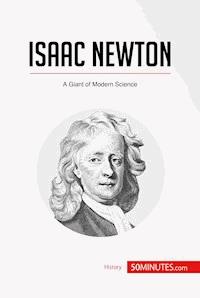
9,99 €
Mehr erfahren.
- Herausgeber: 50Minutes.com
- Kategorie: Sachliteratur, Reportagen, Biografien
- Serie: History
- Sprache: Englisch
Keen to learn but short on time? Get to grips with the life and career of Isaac Newton in next to no time with this concise guide.
50Minutes.com provides a clear and engaging analysis of the life and work of Isaac Newton. Although this English scientist and mathematician is best known for his theory of universal gravitation, he worked in a variety of domains and made major discoveries that revolutionised the way we see the world. Newton remains one of history’s greatest and most influential scientists: until the 20th century, all of modern science was shaped by his theories, and his work laid the foundations for the discipline of classical mechanics.
In just 50 minutes you will:
• Learn key facts about Isaac Newton’s life and career
• Find out how his work revolutionised scientific knowledge at the time
• Understand the impact that Newton’s theories and discoveries had on scientists for generations to come
ABOUT 50MINUTES.COM | History & Culture
50MINUTES.COM will enable you to quickly understand the main events, people, conflicts and discoveries from world history that have shaped the world we live in today. Our publications present the key information on a wide variety of topics in a quick and accessible way that is guaranteed to save you time on your journey of discovery.
Das E-Book können Sie in Legimi-Apps oder einer beliebigen App lesen, die das folgende Format unterstützen:
Seitenzahl: 29
Veröffentlichungsjahr: 2017
Ähnliche








Isaac Newton
Key information
Born: 4 January 1642 in Woolsthorpe (England).Died: 31 March 1727 in London.Main discoveries and inventions:Theory on refraction and the composition of colour (1665-1666).Infinitesimal calculus (1666-1704).Reflecting telescope (1671-1672).Theory of universal gravitation (1684-1687).Impact of his discoveries:Development of classical mechanics in physics.Scientific progress leading to a new theory, namely Albert Einstein’s (1879-1955) theory of relativity.Introduction
Isaac Newton was a genius who entered the field of mathematics in 1665 and started by reading contemporary authors such as René Descartes (French philosopher, mathematician and scientist, 1596-1650). He soon turned towards problems involving algebra and the calculation of the area of given geometric figures. In this way, in 1666 he formulated the method known as infinitesimal calculus, which allows mathematicians to work based on an infinite series of infinitely small quantities of a mathematical element.
At the same time, Newton worked on analysing the phenomenon of colour as shown through the refraction of light. He carried out experiments using a prism and refuted the idea of simple, homogenous light, arguing instead that light is composite and comprises a continuous spectrum of colours which only appear through refraction, meaning the distortion of a ray of sunlight at the boundary between two different environments, air and glass. Taking this observation as a starting point, he invented a new type of telescope whose lenses were supposed to stop this phenomenon from obstructing the observer’s field of vision.
Newton did not stop there. He had a true passion for science and tackled a range of physics problems. Starting in 1684, inspired by the work of scientists such as Galileo (1564-1642) and Johannes Kepler (1571-1630), he considered the phenomenon of falling bodies and the movement of the planets. These investigations led him to formulate his theory of universal gravitation, which states that gravity applies to stars as well as to beings and objects on Earth. This shook the world of science.
Biography
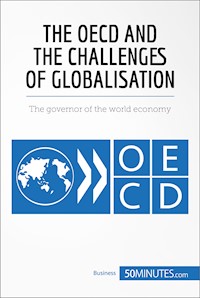
Portrait of Isaac Newton.
A childhood marked by abandonment
Isaac Newton was born on 4 January 1642 in Woolsthorpe, a village in Lincolnshire in the East of England. His father, a wealthy farmer, died a few months before he was born and his mother Hannah Ayscough (1623-1679) remarried and went to live with her new husband, a local reverend, when he was just three years old, leaving him in the care of grandmother in the family home. Newton did not cope well with this abandonment and developed a strong feeling of resentment towards his mother and stepfather. Indeed, years later he wrote in a private catalogue of his own sins that he had threatened to burn them alive inside their house.
Although he was the heir to the family property, he was much more interested in observing physical phenomena than in learning how to farm effectively. When he was ten, his stepfather died and his mother moved back into the family home. She decided to send her son to school in the small town of Grantham, a few miles from Woolsthorpe. The boy stayed with the apothecary in Grantham, where he watched decoctions, brewing and blending, which inspired in him a lasting passion for alchemy. At school he learnt Latin, theology and some arithmetic, but he seems to have been a very inattentive pupil.




