


59,99 €
Mehr erfahren.
- Herausgeber: John Wiley & Sons
- Kategorie: Fachliteratur
- Serie: Wiley Finance Editions
- Sprache: Englisch
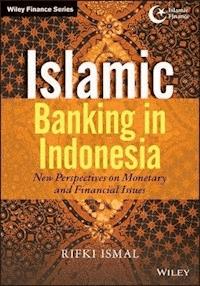
A comprehensive overview of key developments in Islamic banking In Islamic Banking in Indonesia, renowned economist Dr. Rifki Ismal explores current issues in Islamic banking and financial products with a particular focus on the danger of liquidity risk in Indonesia. It approaches liquidity risk from the conventional perspective of international banking standards, as well as from the Islamic banking perspective. Dr. Ismal also covers the issues of asset-liability balancing, liquidity risk index, organizational structures for managing liquidity, industrial analysis, withdrawal risk, bankruptcy risk, moral hazard risk, and market risk. Compiling all the latest academic research on liquidity risk and other risks in Islamic banking, the book provides a theoretical foundation for managing risk that will is highly useful for researchers on Islamic banking and practitioners and academics. * Written by a renowned expert on Islamic banking who works on monetary policy at the central bank of Indonesia * Covers the latest developments in Islamic banking, particularly liquidity risk, for a rapidly expanding market * Ideal for European and American readers, in addition to Asian readers, who need a fuller understanding of Islamic banking institutions, markets, and products With the latest academic research and the expertise of a leading practitioner in Islamic banking, this book offers in-depth coverage of the most pressing issues in the field.
Sie lesen das E-Book in den Legimi-Apps auf:
Seitenzahl: 848
Veröffentlichungsjahr: 2013
Ähnliche



















Contents
Foreword
Preface
Acknowledgments
Chapter 1: Classic Arab Financial Contracts in Modern Financial Institutions
Introduction
Economic Conditions in the Prophet Muhammad’s (pbuh) Era
Development of Classic Economic Contracts
Conclusion
Notes
References
Chapter 2: Program to Develop Indonesian Islamic Banking
Introduction
The Indonesian Islamic Banking Industry
A Program to Improve the Performance of the Islamic Banking Industry
Conclusion
References
Chapter 3: Understanding Characteristics of Depositors
Introduction
Studies on the Output of Empirical Surveys
Segmentations of Banking Depositors
Investment Behavior of Banking Depositors
An Integrated Program to Develop the Industry
Conclusion
References
Chapter 4: Liquidity Risk Management in Banks
Introduction
Liquidity Risk in Banking Institutions
Process of Liquidity Risk Management
Asset-Liability Imbalance and Maturity Mismatch Risks
Techniques to Mitigate Liquidity Risk
Financial Instruments as Sources of Banks Liquidity
Conclusion
Note
References
Chapter 5: Liquidity Risk Management in Banks
Introduction
Liquidity Risk Issues in Islamic Banking
Characteristics of Islamic Banks Facing Liquidity Risk
Sharia Issues in Liquidity Risk Management
Approaches to Manage Liquidity Risk Based on Sharia
Techniques to Mitigate Liquidity Risk Based on Sharia
Conclusion
Notes
References
Chapter 6: Islamic Banking Characteristics, Economic Conditions, and Liquidity Risk Problem
Introduction
Supporting Factors of Development
Characteristics of the Industry in Relation to Liquidity Problems
Investment Behavior of Depositors and Economic Conditions
Ideas for Improvements
Conclusion
References
Chapter 7: Performance of the Islamic Banking Industry
Introduction
Background of the Indonesian Islamic Banking Industry
Organizational Approach to Managing Liquidity
Liquidity Risk Management Related to the Liability Side
Liquidity Risk Management Related to the Asset Side
Liquidity Ratios and GAP Analysis
Instruments to Manage the Demand for Liquidity
Conclusion
Notes
References
Chapter 8: Growth of the Islamic Banking Industry
Introduction
Islamic Banking Industry and Its Development Programs
Literature Reviews
Construction and Output of the Models
ARIMA Models
Conclusion
References
Chapter 9: The Optimal and Decreasing Growth Rate of the Islamic Banking Industry
Introduction
Conditions Leading to the Optimal and Decreasing Growth Rate
Papers Analyzing Growth and Development of the Islamic Banking Industry
Construction of the ARIMA Models and Estimations
Findings and Strategic Policy Recommendations
Conclusion
References
Chapter 10: Liquidity Management Index
Introduction
Liquidity Risk Problem in Sharia Perspective
Construction of Liquidity Risk Management Index
Assessing the Indonesian Islamic Banking Industry
Overall Assessments of the Islamic Banking Industry
Conclusion
Appendix 10A: Liquidity Risk Management (Survey Manuals)
Appendix 10B: Bank X Survey Results
Appendix 10C: Bank Y Survey Results
Appendix 10D: Bank Z Survey Results
Note
References
Chapter 11: An Empirical Survey on Liquidity Risk Management
Introduction
Depositors Understanding of Islamic Banking
Investment Behavior of Depositors
Liquidity Behavior of Depositors
Risk Management Committee in Islamic Banks
Sources of Liquidity Risk Problem and Liquid Instruments
Conclusion
Notes
References
Chapter 12: Islamic Banking Behavior Model of Indonesia (ISLAMI)
Introduction
Framework of ISLAMI
Model Review and Justification
Asset Liability Balance Models: Theoretical Background
Liquidity Reserves Model: Theoretical Background
Model of Islamic Monetary Operation: Theoretical Background
Econometric Analysis
Interpretation of the Models
Long-Run Causality and Dynamic Responses of Variables
Findings and Recommendations
Conclusion
Notes
References
Appendix 12A: Proofing Formula
Appendix 12B: Proofing Formula
Appendix 12C: Proofing Formula
Appendix 12D: Proofing Formula
Chapter 13: Strengthening and Improving Liquidity Management
Introduction
Organizational Structures
Integrated Output of the Previous Chapters
Discussion of the Depositors’ Side
Discussion of the Islamic Banking Side
Liquidity Problems and Islamic Liquid Instruments
A Proposed Program to Manage Liquidity Risk
Conclusion
References
Chapter 14: Demand and Supply of Liquidity in Islamic Banks
Introduction
Short-Term Demand for Liquidity
Short-Term Suppliers of Liquidity
Historical Performance of Short-Term Liquidity Management
Future Performance of Short-Term Liquidity Management
Findings and Suggestions
Conclusion
References
Chapter 15: An Empirical Survey on Depositors’ Withdrawal Behavior
Introduction
Potential Problems of Withdrawals Risk in Islamic Banks
Depositors’ Behavior in Withdrawing Funds
Empirical Survey on Deposit Withdrawal Behavior
Policy Recommendation
Conclusion
Notes
References
Chapter 16: An Econometric Model of Depositors’ Withdrawal Behavior
Introduction
Flow of Funds in Islamic Banking
Model of the Liability Side in the Competitive Banking Sector
Econometric Analysis
Findings from Models and Suggestions
Limitation of the Models
Conclusion
References
Chapter 17: Formulating Withdrawal Risk and Bankruptcy Risk
Introduction
Characteristics of Islamic Banking Industry
Assumptions and Risk Formulas
Withdrawal Risk Scenarios
Bankruptcy Scenarios
Soundness and Failure of Islamic Banks
Revenue-Sharing Equilibrium Ratio
Conclusion
Notes
References
Appendix 17A: Proofing Formula of the Invulnerable and Vulnerable Condition
Appendix 17B: Proofing Formula of Solvency and Bankruptcy Condition
Appendix 17C: Proofing Formula of Combination of Scenarios
Chapter 18: An Optimal Risk-Return Portfolio of Islamic Banks
Introduction
The Dominant Islamic Financing Instruments
Risk-Return Portfolio Theory
Efficient Portfolio Theory
Risk-Return Analysis of Islamic Financing Instrument
An Efficient Portfolio Financing Frontier
Conclusion
References
Appendix 18: Derivation of Variances of 1–4 Financing Instruments
Chapter 19: Volatility of the Returns and Expected Losses of Islamic Bank Financing
Introduction
Islamic Financing Instruments
Value at Risk Approach
Value at Risk (VAR) Analysis for the Indonesian Islamic Banks
Value at Risk Result
Recommendations
Conclusion
References
Chapter 20: The Moral Hazard Problem in Murabahah Financing
Introduction
Murabahah Financing
Moral Hazard in Murabahah Financing
Minimizing Moral Hazard in Murabahah Financing
Conclusion
Note
References
Chapter 21: Central Bank Islamic Monetary Instruments
Introduction
General Assumptions
Islamic Monetary Instruments
Utility of Islamic Monetary Instruments
Conclusion
Notes
References
Appendix 21A: Derivation of Central Bank Wakalah wa Ijarah Certificate
Appendix 21B: Derivation of Central Bank Wakalah wa Ijarah Muntahia Bitamlik Certificate
Appendix 21C: Derivation of Central Bank Islamic Securitization Wa Ijarah Certificate—Ijarah Rental Rate
Appendix 21D: Derivation of Central Bank Islamic Securitization wa Ijarah Certificate—Investors Investment Decision
Chapter 22: Assessing Economic Growth and Fiscal Policy in Indonesia
Introduction
Wagner’s Law and Keynes’s Law on Economic Development
Assumptions and Economic Modeling
Defining Variables and Model Specification
Autoregressive Distributed Lag (ARDL) Model
Long-Run Dynamic Model
Findings and Historical Conditions
Conclusion
Notes
References
Chapter 23: Bank Lending Channel and Islamic Banks
Introduction
Underlying Conditions and Assumptions
Econometrics Analysis
Findings from Econometrics Analysis
Conclusion
Note
References
Chapter 24: Islamic Gracious Monetary Instruments
Introduction
General Assumptions
The Islamic Gracious Monetary Instruments
Utility of the Islamic Gracious Monetary Instruments
Conclusion
References
Chapter 25: Assessing Gold Murabahah in Islamic Banking
Introduction
Underlying Finance Theory
Analysis of Gold Murabahah Financing in Islamic Banking
Regulating Gold Murabahah
Conclusion
References
Chapter 26: Simulation-Based Stress Testing
Introduction
Stress-Testing Guidance
Stress-Testing Simulations and Findings
Conclusion
References
Chapter 27: Does the Return on Islamic Deposits Mimic the Interest Rate?
Introduction
Performance of Islamic Deposit Return
Literature Review
Research Framework
Results of Applying Ayuda Neurointelligence
Interpretations of the Results
Conclusion
References
About the Author
Index
Founded in 1807, John Wiley & Sons is the oldest independent publishing company in the United States. With offices in North America, Europe, Australia, and Asia, Wiley is globally committed to developing and marketing print and electronic products and services for our customers’ professional and personal knowledge and understanding.
The Wiley Finance series contains books written specifically for finance and investment professionals as well as sophisticated individual investors and their financial advisors. Book topics range from portfolio management to e-commerce, risk management, financial engineering, valuation, and financial instrument analysis, as well as much more.
For a list of available titles, visit our Web site at www.WileyFinance.com.
Copyright © 2013 by John Wiley & Sons Singapore Pte. Ltd.
Published by John Wiley & Sons Singapore Pte. Ltd.
The first edition of this book, The Indonesian Islamic Banking: Theory and Practices, was published by Gramata in 2011.
1 Fusionopolis Walk, #07-01, Solaris South Tower, Singapore 138628
All rights reserved.
No part of this publication may be reproduced, stored in a retrieval system, or transmitted in any form or by any means, electronic, mechanical, photocopying, recording, scanning, or otherwise, except as expressly permitted by law, without either the prior written permission of the Publisher, or authorization through payment of the appropriate photocopy fee to the Copyright Clearance Center. Requests for permission should be addressed to the Publisher, John Wiley & Sons Singapore Pte. Ltd., 1 Fusionopolis Walk, #07-01, Solaris South Tower, Singapore 138628, tel: 65–6643–8000, fax: 65–6643–8008, e-mail: [email protected].
Limit of Liability/Disclaimer of Warranty: While the publisher and author have used their best efforts in preparing this book, they make no representations or warranties with respect to the accuracy or completeness of the contents of this book and specifically disclaim any implied warranties of merchantability or fitness for a particular purpose. No warranty may be created or extended by sales representatives or written sales materials. The advice and strategies contained herein may not be suitable for your situation. You should consult with a professional where appropriate. Neither the publisher nor the author shall be liable for any damages arising herefrom.
Other Wiley Editorial Offices
John Wiley & Sons, 111 River Street, Hoboken, NJ 07030, USA
John Wiley & Sons, The Atrium, Southern Gate, Chichester, West Sussex, P019 8SQ, United Kingdom
John Wiley & Sons (Canada) Ltd., 5353 Dundas Street West, Suite 400, Toronto, Ontario, M9B 6HB, Canada
John Wiley & Sons Australia Ltd., 42 McDougall Street, Milton, Queensland 4064, Australia
Wiley-VCH, Boschstrasse 12, D-69469 Weinheim, Germany
Library of Congress Cataloging-in-Publication Data
ISBN 978-1-118-50993-7 (Hardcover)
ISBN 978-1-118-50996-8 (ebk)
ISBN 978-1-118-50994-4 (ebk)
ISBN 978-1-118-50995-1 (ebk)
For my beloved father and mother, brothers, wife, and children (Muthia, Yusuf, Yahya, and Ilyas)
Allah destroys interest and increases charity and Allah loves not any ungrateful big sinner.
—Qur’an (al Baqarah: 276)
Foreword
Islamic banking in Indonesia started formally in 1991–1992 when the first Islamic bank was established. Since then, its progress remains remarkable with an average of 40 percent asset growth per year and the increasing number of depositors and offices. The establishment of Islamic bank has also triggered the emergence of many other form of Islamic financial institution, from Islamic cooperatives to Islamic stock market.
These facts reveal that Islamic finance in Indonesia is very prospective. Indeed, Indonesia has a potential to be one of the most prospective Islamic finance in the world, taking into account its huge moslem population, strong domestic demand for Islamic finance, an independent National Sharia Board (DSN), real-sector-oriented Islamic banking operations, robust Islamic banking performance, and potential linkage between Islamic banks and more than 100,000 non-bank Islamic financial institutions (Baitul Maal Wattamwill-BMT, Islamic cooperatives, etc).
However, it is realized that there are still some problems in the industry. For example, (1) there is a potential of liquidity risk problem in the industry, (2) lack of human resources (both quantity and quality) to back up the industry, (3) less-developed Islamic financial markets, especially sukuk market, (4) very sensitive depositors’ behavior with respect to return from Islamic deposits, and (5) a limited number of Islamic instruments in the financial markets as well as Islamic monetary instruments.
Those problems happen because of lack of research and information on Islamic banking and finance. I very happy to find this book containing information on risk management, banking performance, and other Islamic finance issues of the Indonesian Islamic banking industry. Hopefully, the book can support the development of Indonesian Islamic finance and share some information to the local and global players, investors, and academics. May Allah SWT bless us with our efforts to develop Islamic finance for the sake of the Islamic glory and ummah in general.
Dr. Muliaman D. Hadad
Chairman of the Indonesian Financial Service Authority (Otoritas Jasa Keuangan)
Jakarta, September 2012
Preface
The global Islamic banking industry has been growing progressively in the past three decades. At present, its assets are estimated at around USD1-3 trillion and spreading in more than 75 countries with around 350 Islamic financial institutions worldwide. There is great potential in the Islamic banking industry in Indonesia, considering that it is a country with the highest Moslem population in the world, a supportive government, Islamic scholars, and public. Moreover, it has an annual Islamic banking growth rate of around 40 percent in the past seven years, which is much higher than the world Islamic banking growth rate.
However, information about Indonesian Islamic finance and economy is rarely found in literatures and media, while international investors, academics, Islamic bankers, and all related parties need it comprehensively. Information about risk management, industrial operations, depositors’ characteristics, Islamic monetary operations, and current issues of the Indonesian Islamic finance and economy is highly demanded by the public around the world.
This book seeks to fulfill such demands and expectations. It is actually a revised and updated version of a book published by Gramata Publishing in Indonesia. And, the special thing about the book is that it is a reference book containing comprehensive and high-quality academic research on various aspects of the Indonesian Islamic finance. By reading this book, readers might have a lot of information, data, and facts regarding the Indonesian Islamic finance, including from the academic perspective (papers published in reputable international journals, bulletins, and magazines in England, Japan, Malaysia, etc.). This is a reference book for students in universities, academics (lecturers, professors), practitioners (Islamic bankers, Islamic financial analysts, local and foreign investors, and stakeholders of Islamic finance in Indonesia and abroad, including government, multinational companies, and multinational organizations dealing with Islamic finance.
OVERVIEW OF THE CONTENTS
This book is divided into seven parts:
In every part, some empirical and analytical chapters are delivered to give beneficial information to the readers.
The first part of the book, particularly Chapter 1, explains some classic Arab economic contracts, which are widely used in modern Islamic financial institutions. This can give readers initial ideas and information with regard to Islamic finance contracts, sources of Islamic law of the contracts, and applications of Islamic contracts in Islamic banking. Chapter 2 elaborates programs to develop the Indonesian Islamic banking industry. Chapter 3 complements this material, explaining characteristics of the Islamic banking depositors.
Chapters 4, 5, and 6 exercise and elaborate liquidity risk issues based on the literature (conventional and Islamic) and facts in the Indonesian Islamic banking industry. These chapters give the reader ideas regarding managing liquidity risk from a conventional perspective (international banking standards) and from an Islamic one (Islamic laws and contemporary Islamic guides) so that the reader might know the differences and unique approaches of the two perspectives. In addition, they also capture the Indonesian Islamic banking experiences in dealing with liquidity problems.
Chapters 7, 8, and 9 focus on research on the performance of the Indonesian Islamic banking industry. The chapters explain the performance of the Indonesian Islamic banking industry, including the highs and lows of its growth. Then, Chapters 10 through 14 assess the liquidity-risk-capturing liquidity index, an empirical survey, econometric modeling, strengthening and improving liquidity management in Islamic banks, and assessing the demand and supply of liquidity in Islamic banks.
Chapters 15, 16, and 17 deliver researches related to withdrawal risk and bankruptcy risk in Islamic banks, including survey of withdrawal risk and econometric modelling. Chapters 18, 19, and 20 address other issues related to efficient portfolio frontier: volatility of the bank’s return and moral hazard problem in Murabahah financing.
The remaining chapters give beneficial information on the Islamic monetary instruments and the latest issues related to Islamic finance in Indonesia and in the world.
Acknowledgments
First of all, my gratitude goes to Allah SWT, the Most Gracious and the Most Merciful. I am indebted to my parents, especially my beloved father, who always supported me to publish my research in the international press and with a well-known book publisher. He passed away peacefully in April 2012; we miss him a lot and this book is dedicated to him. May Allah the mighty grant him His mercy and blessing, and place him among Syuhada and Sholihin in Jannah, amin. My beloved mother continues to encourage and motivate me to keep doing good things for the sake of ummah.
I also extend my deepest gratitude to my family for their patience, prayers, and du’a, particularly my brothers, my lovely wife, and our four jundi/ah: Nurul Alya Muthia (daughter), Muhammad Yusuf Ismail (son), Muhammad Yahya Ismail (son), and Muhammad Ilyas Ismail (son). This book represents all of your sacrifices and understanding. I also want to thank my office, Bank Indonesia (the Central Bank of Indonesia) for sending me abroad to study economics, and particularly Islamic finance and banking. Hopefully this modest book can support the development of the Indonesian Islamic banking and make it the number one Islamic banking industry in the world.
Thanks to all my colleagues in Bank Indonesia, University of Indonesia, Sharia Economic Society (MES), Association of Islamic Economic Expert (IAEI), and others who cannot be mentioned one by one in this book. May Allah reward all of us with His mercy, forgiveness, and barokah in this life and the hereafter, Amin.
Chapter 1
Classic Arab Financial Contracts in Modern Financial Institutions∗
INTRODUCTION
As a way of life, Islam provides not only religious values related to worshipping God and kindness to humankind but also an economic system through special religious contracts (Sharia jurisprudence). Historically, these contracts began in the Prophet Muhammad’s (pbuh) era, when he first introduced Islamic values and concepts of economics and trade to Arab people. Later, such Islamic economic concepts become the basis for modern financial contracts in Islamic financial institutions.
Actually, Sharia financial contracts are composed of some traditional (classic) Arabic economic contracts approved by the Prophet (pbuh) and some other contracts (new contracts) introduced and applied by the Prophet (pbuh) and his companions. By transforming positive aspects of classical Arab contracts and new Islamic contracts, the Prophet (pbuh) had successfully developed fair economic transactions and ensured a stronger economic condition for Arabic society.
ECONOMIC CONDITIONS IN THE PROPHET MUHAMMAD’S (pbuh) ERA
In the Prophet’s (pbuh) era, the Arab economy was trade-based, with no natural resources business. Trading activities were conducted internally and externally with other regions. As such, there were typically several trade links in the Middle East regions such as from Rome into India (southern trade link), Rome into Persia (northern trade link), and Syria into Yemen (northern and southern trade links) (Muhammad 2002, 142). Through these links, Arabic traders gained regional economic advantages by becoming intermediaries for goods delivered from and passing through their regions.
The economic transactions in that time used dinar and dirham as legal currencies, which had stable values for a long period.1 In addition, the position of Ka’bah as a central, sacred place for all Moslems guaranteed the safety of economic activities of Arabic traders.2 In addition, the Hilf ul Fudul agreement among Arab tribes to set up a peaceful business environment (wars among tribes commonly occurred) created the necessary social conditions for trading (Ayati, as cited in Muhammad 2002, 144).
Nonetheless, despite such favorable conditions, some unfair trading contracts existed among traders before the Islamic period. Particularly, unfair and disputable transactions such as Talaqqi Rukban, Kali bi kali, and Riba al Jahiliah3 were common trading activities. Talaqqi Rukban was a practice of stopping foreign traders before they came into the Arabic region, buying their goods, and reselling them with a higher price margin. It was such a traditional practice of price distortion at that time.
Kali bi kali was a transaction in which the buyer ordered a good from the seller to be delivered later with an installment payment basis. Usually, both of the parties (buyer and seller) used borrowed money to fulfill these contracts. Even before the good was delivered by the seller, the buyer had contracted with a third party to be the next buyer of the ordered good. Selling an invisible (not existing) good is prohibited in Islam and the problem is exacerbated if the parties involved use borrowed moneys.
The last practice mentioned is Riba al Jahiliah. In fact, the most dominant mode of financing during the pre-Islamic era was Riba-based borrowing. Riba al Jahiliah was practiced among members of Quraish and Thaqif tribes and in Jewish communities (Kahf and Khan 1992, 11). In this case, a lender made money available to others for a certain period of time with or without any agreement to ask for any profit/remuneration from the borrower. However, when the borrower failed to return the loan in an agreed date, he would be charged interest (for example, 12 percent per annum). The same case applied if the borrowers asked for an extension to repay the loan. But, if the amount was returned on time, there was no charge. This type of hazardous loan is also not allowed in Islam.
Despite the prohibited economic transactions described here, there were other traditional Arab contracts that were fair and respectable trading contracts. Interestingly, those contracts were practiced long before the introduction of Islamic trading values and principles by the Prophet (pbuh). These contracts include and , which became part of the modern Islamic modes of financing.
Lesen Sie weiter in der vollständigen Ausgabe!
Lesen Sie weiter in der vollständigen Ausgabe!
Lesen Sie weiter in der vollständigen Ausgabe!
Lesen Sie weiter in der vollständigen Ausgabe!
Lesen Sie weiter in der vollständigen Ausgabe!
Lesen Sie weiter in der vollständigen Ausgabe!
Lesen Sie weiter in der vollständigen Ausgabe!
Lesen Sie weiter in der vollständigen Ausgabe!
Lesen Sie weiter in der vollständigen Ausgabe!
Lesen Sie weiter in der vollständigen Ausgabe!
Lesen Sie weiter in der vollständigen Ausgabe!
Lesen Sie weiter in der vollständigen Ausgabe!
Lesen Sie weiter in der vollständigen Ausgabe!
Lesen Sie weiter in der vollständigen Ausgabe!
Lesen Sie weiter in der vollständigen Ausgabe!
Lesen Sie weiter in der vollständigen Ausgabe!
Lesen Sie weiter in der vollständigen Ausgabe!
Lesen Sie weiter in der vollständigen Ausgabe!
Lesen Sie weiter in der vollständigen Ausgabe!
Lesen Sie weiter in der vollständigen Ausgabe!
Lesen Sie weiter in der vollständigen Ausgabe!
Lesen Sie weiter in der vollständigen Ausgabe!
Lesen Sie weiter in der vollständigen Ausgabe!
Lesen Sie weiter in der vollständigen Ausgabe!
Lesen Sie weiter in der vollständigen Ausgabe!
Lesen Sie weiter in der vollständigen Ausgabe!
Lesen Sie weiter in der vollständigen Ausgabe!
Lesen Sie weiter in der vollständigen Ausgabe!




