


27,99 €
Mehr erfahren.
- Herausgeber: John Wiley & Sons
- Kategorie: Fachliteratur
- Sprache: Englisch
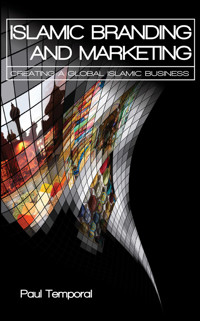
Islamic Branding and Marketing: Creating A Global Islamic Business provides a complete guide to building brands in the largest consumer market in the world. The global Muslim market is now approximately 23 percent of the world's population, and is projected to grow by about 35 percent in the next 20 years. If current trends continue, there are expected to be 2.2 billion Muslims in 2030 that will make up 26.4 percent of the world's total projected population of 8.3 billion. As companies currently compete for the markets of China and India, few have realized the global Muslim market represents potentially larger opportunities. Author Paul Temporal explains how to develop and manage brands and businesses for the fast-growing Muslim market through sophisticated strategies that will ensure sustainable value, and addresses issues such as: * How is the global Muslim market structured? * What opportunities are there in Islamic brand categories, including the digital world? * What strategies should non-Muslim companies adopt in Muslim countries? More than 30 case studies illustrate practical applications of the topics covered, including Brunei Halal Brand, Godiva Chocolatier, Johor Corporations, Nestle, Unilever, Fulla, Muxlim Inc, and more. Whether you are in control of an established company, starting up a new one, or have responsibility for a brand within an Islamic country looking for growth, Islamic Branding and Marketing is an indispensable resource that will help build, improve and secure brand equity and value for your company.
Sie lesen das E-Book in den Legimi-Apps auf:
Seitenzahl: 479
Veröffentlichungsjahr: 2011
Ähnliche


















Contents
Preface
Acknowledgments
Chapter 1: Introduction
Islam: The Religion and the Brand
Is Islamic Branding a Myth or a Reality?
The Five Pillars of Islam
The Principles of Islamic Trade and Commerce
The Interface between Islam and Trade
How Are Islamic Brands Doing?
Why the Interest in Islamic Branding and Marketing?
Could There Be an Islamic Economic Union?
Notes
Chapter 2: Why Muslim Nations Need to Develop Strong Brands
Introduction
Why Do Countries Need Branding?
Why Do Islamic Countries Need to Undertake and Encourage Branding?
The Power and Rewards of Country Branding
The Connection between National and Corporate Branding
National Brand Structures
Sector and Industry Branding
Summary: Branding for Islamic Countries and Industries
Notes
Chapter 3: An Overview of Muslim Markets
Introduction
The Growing Global Muslim Market
The Gallup Coexist Index
JWT Muslim Market Segmentation
Ogilvy & Mather Worldwide and Ogilvy Noor
Retail Muslim Consumer Segmentation
Summary: What Does All This Mean?
The Range of Opportunities in Islamic Branding and Marketing
Notes
Chapter 4: The Nature and Structure of Islamic Markets
Introduction
A Typology of Islamic Brands
Notes
Chapter 5: Building a Brand Strategy
Introduction
Brand Strategy
The Role of Consumer Insight
Creating a Brand Strategy
Brand Personality, Attitude, and Trust
Speed, Agility, and Innovation
Brand Positioning
The Need for Positioning Statements
How to Write and Use a Positioning Statement
Brand Management
Can Islamic Brands Use Western Techniques to Go Global?
Summary
Notes
Chapter 6: Opportunities in Islamic Brand Categories
Introduction
Islamic Foods and Beverages
Islamic Financial Services
Islamic Education
Islamic Entertainment and “Edutainment”
Islamic Travel, Tourism, and Leisure
Islamic Medical, Pharmaceutical, and Beauty Products and Services
Islamic Fashion and Products for Women
Islamic Internet, Media, and Digital Products
Vast Opportunities; No Big Brands
Summary
Notes
Chapter 7: The Future: Opportunities in the Internet, Media, and Digital World
Introduction
The Impact of Internet Developments on Marketing
Social Media Branding and the Muslim Lifestyle Consumer
Implications for Islamic Branding and Marketing
Other Internet Brands
Opportunities in Traditional Media
Summary
Notes
Chapter 8: Challenges Facing Islamic Brands
Introduction
Key Challenges for Aspiring Muslim Brands: The Six A’s
Summary
Note
Chapter 9: Key Success Factors and Strategies for Aspiring Islamic Brands
Introduction
1. Understand the Market Clearly
2. Build Your Brand Based on Islamic Values with Universal Emotional Appeal
3. Position Your Company and Brand on Relevance to the Market
4. Commmunicate the Brand Appropriately and with Islamic Appeal
5. Gain First Mover Advantage in New Industries and Categories
6. Consider Mergers, Acquisitions, and Partnerships
7. Develop New and Ethical Business Models Using Islamic Values and Practices
8. Build an International Brand Using Western Techniques and Appeal
9. Aim for a Niche Market
10. Offer a Close Alternative in a Major Category
Summary
Notes
Chapter 10: Challenges and Key Strategies for the Building and Marketing of Non-Muslim Brands to Muslim Markets
Introduction
Gaining Brand Awareness
Ensuring Accessibility
Gaining Acceptability
Achieving Suitable and Consistent Standards and Quality (Adequacy)
Understanding the Culture
Gaining Trust (Affinity)
Attack from Brand Competitors
Summary
Notes
Chapter 11: Summary of Power Brand Strategy Programs for Muslim Markets
Strategies for Non-muslim Brands
Strategies for Muslim Brands
The Future of Islamic Branding and Marketing
Appendix 1: The Oxford Research and Education Project on Islamic Branding and Marketing: Brief Project Overview
Appendix 2: The Inaugural Oxford Global Islamic Branding and Marketing Forum: Summary of Proceedings
Index
Copyright © 2011 John Wiley & Sons (Asia) Pte. Ltd.
Published in 2011 by John Wiley & Sons (Asia) Pte. Ltd.
1 Fusionopolis Walk, #07-01, Solaris South Tower, Singapore 138628
All rights reserved.
No part of this publication may be reproduced, stored in a retrieval system, or transmitted in any form or by any means, electronic, mechanical, photocopying, recording, scanning, or otherwise, except as expressly permitted by law, without either the prior written permission of the Publisher, or authorization through payment of the appropriate photocopy fee to the Copyright Clearance Center. Requests for permission should be addressed to the Publisher, John Wiley & Sons (Asia) Pte. Ltd., 1 Fusionopolis Walk, #07-01, Solaris South Tower, Singapore 138628, tel: 65–6643–8000, fax: 65–6643–8008, e-mail: [email protected].
This publication is designed to provide accurate and authoritative information in regard to the subject matter covered. It is sold with the understanding that the publisher is not engaged in rendering professional services. If professional advice or other expert assistance is required, the services of a competent professional person should be sought.
Neither the authors nor the publisher are liable for any actions prompted or caused by the information presented in this book. Any views expressed herein are those of the authors and do not represent the views of the organizations they work for.
Other Wiley Editorial Offices
John Wiley & Sons, 111 River Street, Hoboken, NJ 07030, USA
John Wiley & Sons, The Atrium, Southern Gate, Chichester, West Sussex, P019 8SQ, United Kingdom
John Wiley & Sons (Canada) Ltd., 5353 Dundas Street West, Suite 400, Toronto, Ontario, M9B 6HB, Canada
John Wiley & Sons Australia Ltd., 42 McDougall Street, Milton, Queensland 4064, Australia
Wiley-VCH, Boschstrasse 12, D-69469 Weinheim, Germany
Library of Congress Cataloging-in-Publication Data
ISBN 978-0-470-82539-6 (Hardcover)
ISBN 978-0-470-82847-2 (e-PDF)
ISBN 978-0-470-82846-5 (e-Mobi)
ISBN 978-0-470-82848-9 (e-Pub)
Preface
Very little has been written to date about how Islamic branding and marketing, or “marketing to Muslims,” differs from or is similar to traditional branding and marketing, which is based on Western corporate development. The lack of literature on the topic is surprising, given the extent of the world’s Muslim population and the prominence of Islam. This gap in our knowledge gave rise to The Oxford Research and Education Project on Islamic Branding and Marketing, which is being conducted at Oxford University’s Saïd Business School and which I am directing. A brief description of this project is given in Appendix 1. Much of the findings of this research work have been incorporated into this text.
A second reason for writing this book is that many of my clients, as well as professional people whom I have met in Islamic countries, have commented to me on the need for a body of thought on this subject area. The extent of this interest, and the impact of the extremely rapid development of Islamic countries on the aspirations of Muslims in a branded world, leave me in no doubt that the next wave of global branding will come from Islamic economies and companies.
A third reason is that global brands from Western countries are becoming very interested in Muslim markets. Some have already started to build their brands across the Islamic world and are seeking to achieve a complete global presence by entering the last remaining and biggest significant segment of the world’s population.
Around 23 percent of the world’s population is Islamic, with varying degrees of affiliation and implementation of that religion. While some businesses, academics, and people living in the West often think of the Islamic population as being concentrated in a handful of nations, especially in the Middle East and Southeast Asia, the truth is that there are significant Muslim-minority populations around the world—from India to China, and from France to Japan.
In Islamic-majority and minority countries throughout the Middle East, Asia, Africa, and Europe, there is a massive amount of business activity, with Islamic trade currently assessed as being worth trillions of dollars. In terms of global economic power and commercial success, it is becoming clear that Islamic countries are gaining ground on their Western counterparts.
The rising prosperity and spreading population of Islam is, however, only part of the story. Muslim consumers are no different to non-Muslims in their love of brands. From a marketing perspective, just as the Western world has done, the Muslim world would dearly like to develop an array of leading global brands of its own.
Muslim countries would also like to see their local brands going global, because they have seen how powerful brands can be in making an economic contribution and shaping a country’s national image. In particular, they have noticed that the cultivation of intangible assets such as strong brands is seen as an essential feature of a mature, stable national economy. Finally, many Muslim countries want to diversify their business interests in order to achieve greater economic well-being and to rely less on narrow resource-based industries such as energy.
Since the late 1980s, there has been a substantial increase in the number and success of Western-held brands. During the 1990s, we saw a competitive response beginning in Asia, with brands from countries such as Singapore, South Korea, India, and China making considerable progress in regional and global markets.
It is perhaps not surprising, therefore, that early signs of branding success from Islamic countries, such as those in the Middle East and Asia, are emerging. At the same time, the vast potential represented by large Muslim populations everywhere has caught the eye of the Western multinationals.
However, it is only recently that the potential of the global Islamic market has been fully understood. Principally, the impetus for doing more business in Islamic-majority and minority markets has come from three sources:
the rapid expansion of Western brands to penetrate these markets in order to gain a global presence;the response from Islamic companies, and the need to rely less on finite resources such as oil production; andthe rise of industries that conform to Islamic practice, such as Islamic financial services.By way of response, Islamic audiences love Western brands, but there are three main reasons why they wish to have their own.
1. Western brands are often not compliant with Islamic values (or their ethical base)—for instance, in hospitality, food and beverage, pharmaceutical and medical products, and services markets.
2. Islamic countries want to create their own global brands, which they see as strategic business assets and national brand ambassadors.
3. The growth of the educated middle class in Muslim-minority and majority cultures and countries has created an impetus for developing businesses, products, and services that are competitive with the long-established and accepted brands.
As a consequence of the above, there is now a considerable surge in demand within Islamic countries and companies to master the branding and marketing techniques and skills so ably demonstrated by the West in order to address international perceptions not just of Islamic products, services, and businesses, but also of the countries and cultures of their origin.
What Is “Islamic Branding and Marketing”?
When I use the phrase “Islamic branding and marketing,” I am not referring just to brands that originate from Islamic countries, although they would of course come under such a definition. Rather, I am referring to any brands that seek to address the needs of Muslim markets. I include in this definition any activity related to the branding and marketing of countries, products, and services to Islamic audiences, regardless of whether or not they derive from a Muslim-majority or Muslim-minority country or have Muslim ownership. This rather broad definition thus encompasses not just Islamic branding and marketing to Muslim-owned businesses, but also companies that don’t have Islamic owners but which are reaching out to Muslim consumers. Thus, non-Muslim brands would also come under this heading if they were looking to build their brands and market share in any Muslim-majority or minority market; brands such as Nestlé, for example. Indeed, many of the first-mover brands that are meeting the needs of global Muslim audiences are owned by non-Muslim companies.
I also use the terms “Islamic” and “Muslim” interchangeably on occasion. Muslims are people who are followers of Islam, and so one can refer to “Islamic markets” and “Muslim markets” and mean the same thing.
Branding and Religion
No doubt, there will be some observers who will comment that it is not appropriate to mix branding and marketing with religion, but I would disagree on this point. From a marketing perspective, it is always good to give consumers what they really want, and Muslims are a significant market segment that hasn’t yet been studied and understood. It would be foolish to think that Islam as a religion doesn’t influence the needs and wants of its followers. Western brands and marketers fully understand the main markets they are dealing with, but Islam as a market has not yet been properly addressed, either in Muslim-majority or minority markets. The opening up of these markets, and the increased immigration of Muslims to Western countries as significant minorities, can no longer be ignored.
The question of segmenting markets based on religion is always a thorny one. Most of the brand managers I have met while conducting my research have emphasized that they are not selling a religion; they are giving a large market products and services they have long wanted but which have never before been tailored to them.
From this wider definition it follows that I am writing not about building religious brands, but about building brands that appeal to a global religious population; a global audience who are bound together by common values and practices.
Another reason for taking a wider stance is that, although Muslims have a set of shared values and principles, as markets they can behave very differently. There are, in fact, a number of variables—the industry category, the brand positioning, the country of origin, and the varying cultures and degrees of religiosity—that make “Islamic branding and marketing” very difficult to pin down in terms of consumer behavior. These issues, and many more, will be discussed throughout the book. Nevertheless, there are a great many opportunities for brand and marketing managers when looking at the needs of the Muslim world.
The Oxford Research and Education Project on Islamic Branding and Marketing (see Appendix 1) was instituted in 2008 after I began to question why there were not more brands emanating from, and addressing the needs of, Islamic countries and their populations. The project is ongoing, and involves working with a variety of partners.
A Large and Disparate Market
The Muslim market is huge and disparate. One of the interesting findings of the research that I have been involved in is that, despite the huge numbers and—in the case of Muslim-majority countries—concentrations, there is no one homogeneous Islamic or Muslim market. As we will see, Muslims account for a quarter of the world’s population, and yet within this huge global segment there are many different forms of consumer behavior that are dependent on a wide array of variables, many of which have not yet been researched properly. Thus, this book is groundbreaking in its attempt to understand one of the largest single markets in the world, and to provide advice on how to reach that market to brand and marketing professionals.
It should be noted that I have not taken into account the five different schools of Islamic thought—Shia, Hanafi, Maliki, Hanbali, and Shafi’i—in writing this book. They are highly technical; and although they account for issues that may impinge on marketing, a discussion of them would not add substantial value to the principles and strategies discussed. They are all consistent in following the fundamental thinking of Islam, but they can interpret various concepts in different ways. This can affect whether or not some products and services developed under one school of thought are accepted by scholars from another school, and thus be allowed or not allowed to be sold in certain countries. This book doesn’t attempt to probe these different schools, but it would be advisable for those involved in new product development in, say, Islamic finance, to take them into consideration.
Overview of the Book
This book describes what is happening in Muslim markets, contrasts Western and Muslim branding and marketing activities, and looks at what the future holds for both Western and Islamic brands in global markets.
Chapter 1 introduces some of the concepts underlying Islamic economics and business, and examines why branding and marketing are gaining in importance within this framework.
Chapter 2 underlines how serious branding and marketing activities are in terms of their potential impact on national prosperity. In particular, it looks at the need for branding to be carried out at the national, sector, industry, and corporate levels if its full impact is to be realized.
In Chapter 3, I will look more specifically at the structure of Muslim-majority and minority markets, describe their similarities, and give an overview of the latest research on the Muslim market worldwide. We will see that this research is giving marketers not only more precise information, but also some clues as to how Muslim markets can behave differently and how they might be segmented.
Chapter 4 looks at the sources of brands in Islamic markets, and gives a typology with examples that reveal the many opportunities that can be explored by aspiring businesses.
Chapter 5 deals with the principles of branding and explains how these can be adapted by Islamic brands, especially with regard to the use of universally appealing values.
Chapter 6 looks at the variety of strategic opportunities for Islamic branding and marketing, including options for brand creation and business development across many categories, including halal food, finance, cosmetics, pharmaceuticals, health care, hospitality, and more lifestyle products and services, with case studies to illustrate these.
Chapter 7 discusses the future in terms of digital branding and marketing, and looks at the specific opportunities offered within this fast-growing category.
Chapter 8 summarizes the challenges faced by Islamic companies in building and marketing international brands. Chapter 9 follows with a comprehensive exposition of the key factors and branding and marketing strategies that will be of use to all aspiring Islamic companies in order to be successful in overcoming these challenges in global markets.
Chapter 10 looks at the challenges and strategies for non-Muslim brands in reaching out to Muslim markets, while Chapter 11 summarizes the lessons to be learned and makes some strategic business recommendations for Islamic and non-Islamic brands.
Finally, as we shall also see in this book, non-Muslims can also be attracted to Islamic products intended for Muslims, a fact that offers both challenges and opportunities for brand managers and marketers.
Paul Temporal, 2011
Acknowledgments
Many people, organizations and governments have kindly offered advice, information and content that has been included in the writing of this book, and I am grateful to them all, including:
Chicken Cottage Ltd., DinarStandard, Dubai Aluminium (DUBAL), EMEL, EuropeArab Bank, Gallup, Government of Brunei Darussalam, Government of Malaysia, HSBC, Islam Channel, Islamic Bank of Britain, Johor Corporation, J. Walter Thompson (JWT), MDUK Media, MoneyGram International, Muxlim Inc, Nestlé, Ogilvy & Mather Worldwide, Ogilvy Noor, OnePure Beauty, Opus, Petronas, Pew Research Center, Standard Chartered Bank and Standard Chartered Saadiq, State Government of Sarawak, The Muslim Council of Britain, Ummah Foods.
Allen Lai, Amjid Ali, Azrulnizam Abd Aziz, Firoz Abdul Hamid, John Goodman, Kazi Hussain, Khalid Sharif, Lau Kong Cheen, Layla Mandi, M. Fahad Mehboob, Michael Maedel, Miles Young, Mohamed El-Fatatry, Muhammad Ali Hashim, Naeem Dar, Nazia Hussain, Noel Shield, Riaz Hassan, Riaz Ramzan, Rafi-uddin Shikoh, Roy Haddad, Roziah Abu Bakar, Sarah Joseph, Stephen Lee, Steven Amos, Suhaimi Halim, Tariq Ramadan, Tunku Siti Raudzoh Tunku Ibrahim.
I would particularly like to thank the Saïd Business School, University of Oxford, and all of my colleagues there for their support, encouragement, and assistance, and in allowing research and forum material to be published. However, the views and opinions expressed in this book are mine and do not necessarily reflect those of the University of Oxford.
Chapter 1
Introduction
Islam: The Religion and the Brand
Islam has a huge following, as befits a religion that is around 14 centuries old. Islam is based on a belief in one God, Allah. The primary sources of Islamic law that believers follow are the Qur’an, a book believed to have been given by Allah to the Prophet Muhammad, and the Sunnah, a body of Islamic law based on the Prophet Muhammad’s words and deeds. Followers of Islam are known as Muslims. The word “Muslim” means “those who accept and submit to the will of God.”
Islam, as with any other well-known name, has an image. It can be considered to be a brand in its own right, with its own brand image; and like any global brand, this image is viewed differently by different people in different places. However, Islam is a very complex brand, and the differences in religious affiliation to Islam enhance this complexity; for example, the Sunni and Shia sects interpret some of the principles of Islam in different ways. And Islam, like any brand, may be perceived either positively or negatively. When left uncontrolled or unmanaged, such positive and negative perceptions will affect attitudes toward the brand.
For instance, in the West, some negative connotations of the word “Islam” stem principally from associations with extremist forms of behavior. While the purpose of this book is not to look at this issue, the lack of education and understanding about the religion is one reason for such perceptual differences, and this affects the acceptability of Islamic businesses globally if they choose to use their religious affiliation as a part of their brand identity. But if we take a broader view, we can see another reason for concern about Islamic businesses: that in any areas of the world where poverty is rife, more extremes of behavior occur, and this is so in the Muslim world. The fact that the majority of Muslims come from poor backgrounds can and does impact the image of Islam.
Lesen Sie weiter in der vollständigen Ausgabe!
Lesen Sie weiter in der vollständigen Ausgabe!
Lesen Sie weiter in der vollständigen Ausgabe!
Lesen Sie weiter in der vollständigen Ausgabe!
Lesen Sie weiter in der vollständigen Ausgabe!
Lesen Sie weiter in der vollständigen Ausgabe!
Lesen Sie weiter in der vollständigen Ausgabe!
Lesen Sie weiter in der vollständigen Ausgabe!
Lesen Sie weiter in der vollständigen Ausgabe!
Lesen Sie weiter in der vollständigen Ausgabe!
Lesen Sie weiter in der vollständigen Ausgabe!
Lesen Sie weiter in der vollständigen Ausgabe!
Lesen Sie weiter in der vollständigen Ausgabe!




