


39,99 €
Mehr erfahren.
- Herausgeber: John Wiley & Sons
- Kategorie: Fachliteratur
- Serie: Wiley Finance Series
- Sprache: Englisch
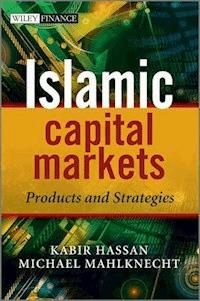
Islamic Finance has experienced rapid growth in recent years, showing significant innovation and sophistication, and producing a broad range of investment products which are not limited to the complete replication of conventional fixed-income instruments, derivatives and fund structures. Islamic Finance represents an elemental departure from traditional interest-based and speculative practices, relying instead on real economic transactions, such as trade, investment based on profit sharing, and other solidary ways of doing business, and aims to incorporate Islamic principles, such as social justice, ecology and kindness, to create investment products and financial markets which are both ethical and sustainable. Products created according to Islamic principles have shown a low correlation to other market segments and are relatively independent even from market turbulences like the subprime crisis. Therefore, they have become increasingly popular with secular Muslims and non-Muslim investors, as highly useful alternative investments for the diversification of portfolios. In Islamic Capital Markets: Products and Strategies, international experts on Islamic Finance and Sharia'a Law focus on the most imminent issues surrounding the evolution of Islamic capital markets and the development of Sharia'a-compliant products. The book is separated into four parts, covering: * General concepts and legal issues, including Rahn concepts in Saudi Arabia, the Sharia'a process in product development and the integration of social responsibility in financial communities; * Global Islamic capital market trends, such as the evolution of Takaful products and the past, present and future of Islamic derivatives; * National and regional experiences, from the world's largest Islamic financial market, Malaysia, to Islamic finance in other countries, including Germany, France and the US; * Learning from Islamic finance after the global financial crisis; analysis of the risks and strengths of Islamic capital markets compared to the conventional system, financial engineering from an Islamic perspective, Sharia'a-compliant equity investments and Islamic microfinance. Islamic Capital Markets: Products and Strategies is the complete investors' guide to Islamic finance.
Sie lesen das E-Book in den Legimi-Apps auf:
Seitenzahl: 1053
Veröffentlichungsjahr: 2011
Ähnliche



















Contents
Cover
Half Title page
Title page
Copyright page
About the Contributors
Preface
Part I: General Concepts and Legal Issues
Chapter 1: Rahn Concepts in Saudi Arabia: Formalization and a Registration and Prioritization System
1.1 Introduction
1.2 The Mortgage Law
1.3 Conclusion
Notes
Chapter 2: The Shariah Process in Product Development and Approval in ICM
2.1 Introduction
2.2 Product Development, Financial Engineering And Innovation in Islamic Finance
2.3 The Shariah Framework in Product Development and Approval
2.4 The Types of Product in Islamic Finance
2.5 Process of Product Development in Shariah-Based Products
2.6 Process of Product Development in Shariah-Compliant Products
2.7 The Framework and Process Flow of Product Approval in Islamic Finance
2.8 The Methodology Used in the Approval Process
2.9 Product Approval in Securities in Islamic Capital Markets
2.10 Applying the Shariah Advisory Council Methodology
2.11 Other Methodology of Shariah Screening Process for Securities
2.12 Conclusion
Notes
Chapter 3: Integration of Social Responsibility in Financial Communities
3.1 Introduction
3.2 The Conflicting Ideologues within Islamic Finance
3.3 Core Motivations of Conventional Business Models and their Social Responsibility Mandates
3.4 Islam, Business, and Social Responsibility
3.5 Case for Broader Social Responsibility Mandate
3.6 Current Challenges and Recommended Approach to Islamic Social Responsibility
3.7 Disclosure as A Means of Accountability
3.8 Lessons From Current Socially Responsible Business Practices
3.9 Concluding Thoughts
Notes
References
Further Reading
Chapter 4: The Dispute Resolution Framework for the Islamic Capital Market in Malaysia: Legal Obstacles and Options
4.1 Introduction
4.2 The Legal Framework of the Islamic Capital Market in Malaysia
4.3 The Nature of Disputes Among Market Players
4.4 Constraints and Concerns Over the Current Legal Framework
4.5 Dispute Resolution Models for the Capital Markets
4.6 Conclusion
Case Studies
Notes
References
Chapter 5: The Small World of Islamic Finance: How Good Governance can Assist in Taking the Islamic Finance Industry to the Next Level
5.1 Introduction
5.2 Shariah Scholars in the Gcc – A Network Analytic Perspective
5.3 Good Governance-Related Points
5.4 Summary
References
Chapter 6: The Alpha and Omega of Abrahamic Finance
6.1 Introduction
6.2 Jewish Funds
6.3 Catholic Funds
6.4 Socially Responsible Investing (SRI) Funds
6.5 Islamic Funds Redux
6.6 Alpha: Quantitative Results of Abrahamic Funds
6.7 Amana and the Benchmarks
6.8 Conclusion
Appendix: The Abrahamic Family Tree
Notes
References
Part II: Global Islamic Capital Market Trends
Chapter 7: Islamic Derivatives: Past, Present, and Future
7.1 Introduction
7.2 Formal Shariah Objections and Solutions
7.3 Substantive Shariah Objections and Resolutions
7.4 Islamic Swaps and Currency Transactions
7.5 Isda/Iifm Tahawwut Master Agreement, Published 1 March 2010
7.6 Conclusion
Notes
Chapter 8: Overcoming Incentive Problems in Securitization: Islamic Structured Finance
8.1 Introduction
8.2 Incentive Problems of Conventional Securitization
8.3 The Rise of Islamic Finance
8.4 The Case of Islamic Securitization
8.5 Conclusion
Notes
References
Chapter 9: The Evolution of Takaful Products
9.1 Insurance Under Islam
9.2 Organizational Structures and Operational Models
9.3 Product Development and Prospects
Notes
References
Chapter 10: A New Model for Options in Islamic Law
10.1 Looking for Islamic Derivatives: A Legal Oxymoron?
10.2 Options, Western Law, and Islamic Justice
10.3 Khiyr ash-shart. and al-‘urbn as Islamic Analogues to Options: Critical Elements
10.4 In Search of a Shariah-Based Substitute: The ijra wa-hiba Structure
10.5 Trading ijra wa-hiba Options? Clearing House, Issuance of Sukk al-manfa‘a, and Lack of Speculation
10.6 Pricing Sukk al-manfa‘a in Relation to the Rental Rate of Return
10.7 Ijra wa-hiba Options and the Path Towards Legitimacy
References
Part III: National and Regional Experiences
Chapter 11: Building up an Islamic Capital Market: The Malaysian Example
11.1 Introduction
11.2 The Beginnings of Shariah-Based Finance in Malaysia
11.3 The Islamic Capital Market in Malaysia
11.4 Conclusion
Notes
Chapter 12: Islamic Finance in Germany: Trends, Opportunities, and Potential
12.1 Introduction and Background
12.2 Research and Studies on the Muslim Population in Germany
12.3 Analysis of the Attitudes and Preferences of the Muslim Population in Germany Towards Financial Products
12.4 Conclusion and Practical Implications for Financial Institutions in Germany
Notes
References
Chapter 13: Islamic Finance in France: An Emerging Market?
13.1 Legal Aspects
13.2 Economic Dimensions
Notes
References
Chapter 14: Islamic Finance in the United States
14.1 Introduction
14.2 The United States as A Destination for Shariah-Compliant Investment
14.3 Wholesale Islamic Finance Within the United States
14.4 Mutual Funds and Exchange Traded Funds
14.5 Legal, Tax, and Regulatory issues in Islamic Finance
14.6 Sukuk Issued by Us-Based Companies
14.7 Conclusion
Notes
Chapter 15: An Analysis of Global Trends and Regional Pockets in the Application of Islamic Financial Contracts in Malaysia and the Gulf Cooperation Council
15.1 Regional Pockets and Global Trends
15.2 The Influence of the Shariah Framework
15.3 The Function of Shariah Boards
15.4 The Role of Shariah Boards In Malaysia
15.5 The Role and Function of Shariah Boards in the GCC
15.6 Convergence Between the GCC and Malaysia
15.7 Slight Divergence in Interpretations
15.8 The Impact of the Regulatory Dimensions of the Jurisdictions
15.9 The Role of the Creation of International Hubs in Harmonizing Views
15.10 Conclusion
Notes
Chapter 16: Developments in Islamic Finance Practice: The Experience of Australia
16.1 Introduction
16.2 State of the Australian Economy in the World
16.3 Potential Problems in the Development of Islamic Finance in Australian Market
16.4 Prospects of Islamic Finance in Australia
16.5 Summary, Findings, and Recommendations
References
Part IV: Learning from Islamic Finance after the Global Financial Crisis
Chapter 17: The Current Financial Market Crisis: Lessons Learned, Risks and Strengths of Islamic Capital Markets Compared to the Conventional System
17.1 Introduction
17.2 Causes of the Global Financial Crisis
17.3 Some Implications of the Global Financial Crisis
17.4 Can Such Crises Occur Under an Islamic Financial System?
17.5 The Prohibition of “Bad” Risks in Islamic Finance
17.6 Lessons Learned
17.7 Conclusions and Outlook
Notes
References
Chapter 18: An Islamic Perspective of Financial Engineering
18.1 Introduction
18.2 Financial Engineering: Definition and Concept
18.3 Principles of Islamic Financial Engineering
18.4 Strategies for Product Development
18.5 Challenges in Financial Engineering in Islamic Finance
18.6 Concluding Remarks
Note
References
Chapter 19: Shariah-compliant Portfolio Management: Processes, Methodologies, and Performances
19.1 Introduction
19.2 Shariah-Compliant Portfolio Management Process
19.3 Shariah Guidelines
19.4 Fund Performance
Notes
References
Chapter 20: Islamic Microfinance: The Way Forward
20.1 Modes of Islamic Microfinance
20.2 Instruments of Islamic Microfinance
20.3 Islamic Microfinance Projects Across the Globe
20.4 Product Development in Islamic Microfinance Sector
20.5 Meeting Funding Requirements of Islamic Microfinance Sector
Notes
References
Further Reading
Index
Islamic Capital Markets
For other titles in the Wiley Finance series please see www.wiley.com/finance
This edition first published 2011 © 2011 John Wiley & Sons, Ltd
Registered office John Wiley & Sons Ltd, The Atrium, Southern Gate, Chichester, West Sussex, PO19 8SQ, United Kingdom
For details of our global editorial offices, for customer services and for information about how to apply for permission to reuse the copyright material in this book please see our website at www.wiley.com.
The right of the author to be identified as the author of this work has been asserted in accordance with the Copyright, Designs and Patents Act 1988.
All rights reserved. No part of this publication may be reproduced, stored in a retrieval system, or transmitted, in any form or by any means, electronic, mechanical, photocopying, recording or otherwise, except as permitted by the UK Copyright, Designs and Patents Act 1988, without the prior permission of the publisher.
Wiley also publishes its books in a variety of electronic formats. Some content that appears in print may not be available in electronic books.
Designations used by companies to distinguish their products are often claimed as trademarks. All brand names and product names used in this book are trade names, service marks, trademarks or registered trademarks of their respective owners. The publisher is not associated with any product or vendor mentioned in this book. This publication is designed to provide accurate and authoritative information in regard to the subject matter covered. It is sold on the understanding that the publisher is not engaged in rendering professional services. If professional advice or other expert assistance is required, the services of a competent professional should be sought.
Library of Congress Cataloging-in-Publication Data
Hassan, M. Kabir. Islamic capital markets : products and strategies / M. Kabir Hassan, Michael Mahlknecht.p. cm.—(The wiley finance series)Includes bibliographical references and index.ISBN 978-0-470-68957-81. Banks and banking—Islamic countries. 2. Capital market—Islamic countries. 3. Finance—Islamic countries. I. Mahlknecht, Michael. II. Title.HG3368.A6M36 2011332.0415091767—dc22
2010050394
A catalogue record for this book is available from the British Library.
ISBN 978-0-470-68957-8 (hardback), ISBN 978-1-119-99137-3 (ebk), ISBN 978-1-119-97081-1 (ebk), ISBN 978-1-119-97082-8 (ebk)
About the Contributors
Dr Abu Umar Faruq Ahmad is an Islamic legal expert in Shariah advising, research and teaching and with experience in Islamic banking, finance, microfinance, comparative jurisprudence, Islamic studies and case studies of Islamic financial services providers. Dr Ahmad received his LLM (Honours) in Islamic banking and PhD in Islamic finance at the University of Western Sydney, Australia, with two prestigious university-wide research scholarships for his doctoral study in which he earned an ‘A’ (high distinction) for the quality of his research. Currently he is an Assistant Professor of Islamic Finance at Hamdan Bin Mohammed e-University, Dubai. He has published over 12 research articles in academic refereed journals. He is author of Theory and Practice of Modern Islamic Finance: The Case Analysis from Australia (ISBN: 1599425173, pp. 322) and Developments in Islamic Banking Practice: The Experience of Bangladesh (ISBN: 1599428288, pp. 228). Besides, he has published book chapters and conference proceedings, and presented papers at over 30 professional forums held in Asia, Australia, America, Europe and Africa. Dr Ahmad has been on the Editorial Advisory Board of International Journal of Islamic and Middle Eastern Finance and Management, Journal of Islamic Accounting and Business Research and The Open Law Journal. In addition, he acts as an ad hoc reviewer of American Journal of Islamic Social Sciences, Thunderbird International Business Review, Review of Islamic Economics, Islamic Economic Studies and African Journal of Business Management.
Dr Sami Al-Swailem was educated in the USA, earning his MA in Economics from Southern Illinois University, Carbondale, in 1990 and his PhD in Economics from Washington University in 1995. He was a Chief Consultant and subsequently Research and Development Manager in Al-Rajhi Bank during 1995–2004. Since 2004, he has been a Senior Economist at the Islamic Research and Training Institute (IRTI), IDB Group. He has published several papers on Islamic Economics and Finance
Mufti Talha Ahmad Azami is a Principal at BMB Islamic. A seasoned and dynamic UK-based Shariah scholar with a specialization in Islamic Commercial Law, Mufti Talha serves as the in-house Shariah scholar for BMB Islamic and plays an instrumental role in the management of the firm’s Shariah advisory services. Mufti Talha is responsible for Shariah structuring, screening and monitoring, research, and publications. Prior to BMB Islamic, he worked in Islamic Academia with prominent scholars from India for more than ten years. Mufti Talha holds a BA in Arabic and Quranic Sciences and an MA in Islamic Law from Nadwa University in Lucknow, where he studied under a number of leading Islamic jurists and Muslim thinkers. He also has an MA in Hadith Sciences from Islamic University in Deoband and an MA in Islamic Banking and Finance Management from Loughborough University in the UK. He is the general editor of the Global Islamic Finance Report 2010 published by BMB Islamic, Shari’a-Compliant Private Equity: A Primer for the Executive, forthcoming for Euromoney Books and a co-author with Shahzad Siddiqui of SS Law Corporation on several works including “Fruits” of the Orchard: Endowments for Mosques and Islamic Charitable Organizations in Western and Muslim Lands, also published by Euromoney.
Dr Valentino Cattelan, LLM, MSc, holds a PhD in Banking and Financial Law from the University of Siena and he is currently Post-Doctoral Research Fellow at the School of Economics of the University of Rome Tor Vergata. He is qualified as a lawyer in the EU, and he actively contributes to seminars, workshops and conferences in Islamic law and finance. His major fields of research are comparative law methodology, Islamic law of contracts, and its application to structure innovative financial instruments, especially in the derivatives market. In relation to his expertise, he has been awarded by the European Commission a grant for a teaching module on “Integrating Islamic finance in the EU market”, to be developed over the next three years (September 2010–August 2013). Among his recent publications: Islamic Finance and Ethical Investments. Some Points of Reconsideration, in Khan, M.F., and Porzio, M. (eds) (2010) Islamic Banking and Finance in the European Union. A Challenge, Edward Elgar, pp. 76–87 and “From the Concept of to the Prohibitions of rib, gharar and maysir in Islamic finance”, in International Journal of Monetary Economics and Finance (2009) 2(3/4), 384–97.
Ibrahim-Zeyyad Cekici is a teacher and researcher in the Business School EM Strasbourg, University of Strasbourg. He is in charge of the Master’s Degree Islamic Finance and the research programme on Islamic Banking and Finance. He is at present a PhD candidate and his topic is the Islamic credit operation in French law. He has two Master’s degrees: one on European Comparative Law on Religion and another on Banking and Finance Law. He has written a number of papers on the compatibility of Islamic finance and French law. He has launched a review named Les Cahiers de la Finance Islamique.
A. Usama DeLorenzo is currently serving as Project Leader in the office of the executive director for Strategy and Development for the Securities Commission Malaysia. Prior to working with the Securities Commission, DeLorenzo helped with the launch of the first Shariah-compliant exchange traded fund to be listed on the New York Stock Exchange. DeLorenzo has worked with Shape Financial as a consulting analyst, with Oppenheimer and Co. as a trader, and with Saturna Capital, investment advisor to the Amana Mutual Fund Trust, as an investment manager. Prior to his work in finance, DeLorenzo worked in the information technology sector with work ranging from software development to cartographic analysis. He has spoken about Islamic finance and investments at many industry conferences and universities, as well as at many educational panels for the communities in which he has lived. He also served as Treasurer on the board of directors for the Council for American Islamic Relations in New York City.
Azadeh Farhoush is presently working for BNP Paribas Lease Group S.A., a subsidiary of BNP Paribas, as an Underwriter in the Wholesale Finance Department. She was born in Teheran, Iran, and emigrated to Germany in 1984. Ms Farhoush studied Economics and Business Information Systems at the University of Cologne where she earned a Masters Degree. Additionally, she successfully completed a semester in Indonesia. Her diploma thesis focused on Islamic Leasing (Ijarah), comparing the banking and financial systems of Iran, Dubai, and Germany. Ms Farhoush recently completed a two and a half year course in Islamic Studies and she is a prospective PhD student in the field of Islamic Banking and Finance. Azadeh Farhoush has published the article “Leasing as a Sharia compliant Financial Instrument”.
Dr Sayd Farook is mandated with the responsibility to lead the development of the next generation Islamic capital markets transactions platform at Thomson Reuters. As Global Head, Islamic Capital Markets, Dr Farook is the principal architect of Thomson Reuters’ vision of a global interconnected and diversified Islamic finance and capital markets without borders. Dr Farook joins Thomson Reuters from Dar Al Istithmar where he was responsible for Structuring and Legal compliance as a Senior Consultant. Prior to his time at Dar Al Istithmar, Dr Farook worked in a number of roles at the Centre for Islamic Finance - Bahrain Institute of Banking and Finance (BIBF), Accounting and Auditing Organisation for Islamic Financial Institutions (AAOIFI), Hong Kong Shanghai Banking Corporation (HSBC) and lectured on Business Analysis, Valuations and Islamic Finance at several prominent universities and institutes globally. He holds a Phd in Islamic Finance, Business and Law degrees from the University of Technology Sydney, and is a Certified Islamic Professional Accountant (CIPA) from AAOIFI. Sayd’s papers are widely published in peer-reviewed journals, magazines, and as chapters in edited books, while he has also been invited to present his research and views at a number of renowned international gatherings on Islamic Finance. Sayd is on the international editorial board of the Journal of Islamic Accounting and Business Research (Emerald Insight).
Anne-Sophie Gintzburger was awarded an MPhil at the Australian National University in March 2010 on the topic of Islamic finance. Her chapter is a snapshot of her research on regional contractual differences in the Gulf Cooperation Council (GCC) states and Malaysia. Her research, based on fieldwork in Malaysia and the UAE, is the subject of her forthcoming book to be published by Edward Elgar Publishing. Of both French and Australian citizenship, Anne-Sophie Gintzburger is currently a doctoral candidate in France at the Ecole Normale Supérieure, is working at Altran CIS financial services, and is project manager for the new edition of Failaka Advisor’s Shariah Report.
Blake Goud is the founder of SharingRisk.org, a think tank on Islamic finance based in Portland, Oregon. He is also the Chief Compliance Officer for Marquam Capital, a registered investment advisor, and is a registered representative at HP Securities, Inc. He graduated from Reed College with a BA in Economics in 2003 and has several years’ experience in the financial industry. In April 2008, he co-authored a paper, “The development of Shari’ah-based microfinance using the Grameen group financing methodology” which he presented at the pre-forum workshop on Islamic microfinance at the 8th Harvard University Forum on Islamic Finance. A similar paper was published in 2009 in the Journal of Islamic Banking, Economics and Finance. He writes regularly for several Islamic finance publications and has been involved in an advisory role with two Islamic microfinance development projects. He also serves as the Editor of Publications for the Usury Free Association of North America (UFANA).
Dr M. Kabir Hassan is a financial economist with consulting, research, and teaching experience in development finance, money and capital markets, Islamic finance, corporate finance, investments, monetary economics, macroeconomics, and international trade and finance. He has provided consulting services to the various governments and multilateral development agencies. Dr Hassan received his BA in Economics and Mathematics (Phi Beta Kappa) from Gustavus Adolphus College, Minnesota, USA, and his MA in Economics and PhD in Finance from the University of Nebraska-Lincoln, USA, respectively. He is now a tenured Professor in the Department of Economics and Finance at the University of New Orleans, Louisiana, USA. He has more than 100 papers published in refereed academic journals to his credit. Dr Hassan has supervised 27 doctoral theses, and many of his students are now well placed in academic, government, and private sectors. He is editor of Journal of Islamic Economics, Banking and Finance, and co-editor of Journal of Economic Cooperation and Development.Dr Hassan has edited and published many books along with articles in refereed academic journals. Dr Hassan is co-editor (with M.K. Lewis) of Handbook of Islamic Banking and Islamic Finance, The International Library of Critical Writings in Economics (Edward Elgar, 2007), and co-editor (with Michael Mahlknecht) of Islamic Capital Market: Products and Strategies (John Wiley and Sons Ltd, forthcoming 2010). He is co-author of Islamic Entrepreneurship (Routledge UK, forthcoming 2010). A frequent traveller, Dr Hassan gives lectures and workshops in the US and abroad, and has presented over 100 research papers at professional conferences.
Rasem N. Kayed is currently head of the Business Administration and Marketing Departments — Faculty of Administrative and Financial Sciences at the Arab American University in Palestine. Prior to his recent appointment at the AAUJ, he was a lecturer in International Business at the College of Business at Massey University, and an adjunct senior lecturer at the New Zealand School of Export — New Zealand. Dr Kayed received his both undergraduate degrees as well as his MBA degree from Jacksonville State University — USA, and his PhD in Development Studies from Massey University — New Zealand. His doctoral thesis explored the entrepreneurial phenomenon from an Islamic perspective and argued for Profit and Loss Sharing (PLS) contracts as viable alternatives to the conventional interest-based financing instruments. Dr Kayed is co-author of Islamic Entrepreneurship (Routledge UK, 2010). He has published a number of peer reviewed papers in preferred academic journals and chapters in edited books. He also participated in several seminars, forums and workshops and presented various academic as well as research-based papers at several high profile international conferences. Dr Kayed’s research activities are currently twofold: while the first research activity is set to explore the developmental role that entrepreneurship could play in advancing the well-being of the Muslim ummah; the second major research theme that he is pursing is focused on the current global financial crisis and the resilience of the Islamic financial services industry, and its ability to present itself as a more reliable alternative to the conventional financial system.
Ali Rod Khadem is the founder of New Orient Advisors, where he provides consulting services related to Islamic finance, Islamic law and politics, and the China-Middle East investment corridor. Ali Rod is currently a PhD candidate in Islamic Law at Harvard University. Ali Rod launched his career at Andersen Consulting in 1999, prior to accepting a role in Silicon Valley as a business development and strategy manager for two companies in the Idealab, Inc. portfolio. From 2004 to 2009, Ali Rod worked as an Islamic finance and private equity lawyer for King & Spalding LLP and DLA Piper LLP. Since founding New Orient Advisors in 2009, Ali Rod has consulted with clients such as a Shanghai-based placement agent seeking to build a China-GCC investment platform, a Dubai-based financial services company seeking to structure a Shariah-compliant exchange traded gold fund, and an East Asian government regulatory body seeking to revise its domestic securities and tax regulations in order to allow for corporate sukuk issuances. Ali Rod received his Bachelor’s degree with Honors in 1999 from the University of California at Berkeley, where he double-majored in International Relations and Environmental Biology. In 2004, Ali Rod earned two further degrees from UC Berkeley: a Juris Doctor (JD) and a Master’s Degree in Islamic Law. While in law school, Ali Rod was an editor of the California Law Review, and subsequently, he clerked for the Honorable Cecilia M. Altonaga of the United States District Court. Ali Rod has given numerous presentations and has published on the topics of Islamic finance, Islamic law and politics, and comparative law. His article, “The Doctrine of Separation in Islamic Jurisprudence”, was published in the UCLA Journal of Near Eastern and Islamic Law (2005). Ali Rod is fluent in formal Arabic, Farsi, and English, is proficient in French, and knows Mandarin.
Andreas (Andy) Jobst is a mid-career economist at the Monetary and Capital Markets Department (MCM) of the International Monetary Fund (IMF) in Washington, DC. His work focuses on structured finance, risk management, sovereign debt management, financial regulation, and Islamic finance. As a member of IMF Article IV missions, he has been responsible for the financial sector coverage of several large mature and emerging market economies. He recently completed the stress test of the US financial sector for the IMF’s Financial Stability Assessment Programme (FSAP), and he will lead the upcoming stress tests for Germany and the United Kingdom. Mr Jobst is one of the main authors of the Global Financial Stability Report (GFSR) published by the Monetary and Capital Markets Department. He also contributes to both the early warning and vulnerability exercises (for both advanced and emerging economies) in collaboration with the Financial Stability Board (FSB) and teaches courses on banking regulation, risk management, derivatives, and systemic risk analysis at the IMF Institute. He holds a PhD in Finance from the London School of Economics (LSE).
Dr Ahcene Lahsasna is currently a lecturer at the Shariah and Legal Studies department at the International Centre for Education in Islamic Finance (INCEIF) and the Graduate Studies Academic advisor at the same university. He received his Bachelor’s degrees in Islamic law and Islamic Jurisprudence from Algeria, and his Master’s and PhD degrees in Islamic Law & Islamic Jurisprudence (Fiqh and Usul Fiqh) from IIUM (Malaysia). He lectured at several universities in Malaysia including the Islamic Science University of Malaysia, Faculty of Business and Accountancy at University of Malaya (MBA and BBA), School of International Business and Finance at the University of Malaysia Sabah, Labuan, and the Open University Malaysia on Islamic finance courses for MBA. He was attached to the industry and worked for several years at the Manufacturer and Exporter group of companies in Malaysia as International Marketing Manager, and head of the documentation department. Currently he is a Shariah Advisory Board member at Maybank Islamic and Etiqa Takaful in Malaysia, and Shariah advisory member for the Malaysian Financial Planning Council (MFPC. Malaysia). He published books and articles in Arabic and English in Qatar, Egypt and Malaysia. In addition he is actively participating in presenting papers and conducting workshops and training in the area of Islamic banking and finance locally and internationally.
Mervyn K. Lewis is Professor of Banking and Finance in the School of Commerce at the University of South Australia. Previously he was Midland Bank Professor of Money and Banking at the University of Nottingham, and Course Director of the MBA in Financial Studies. He was also a Consultant to the Australian Financial System Inquiry, Visiting Scholar at the Bank of England, inaugural Securities Commission-University of Malaya, Visiting Scholar in Islamic finance, and has been visiting professor at the Universities of Cambridge, Melbourne, Vienna, Wuhan, Mauritius, Goettingen, and Euromed Marseilles. In 1986 he was elected a Fellow of the Academy of the Social Sciences in Australia.
Professor Lewis has authored or co-authored 21 books, 65 articles, and 75 chapters. Recent volumes are The Economics of Public Private Partnerships(2005), Reforming China’s State-owned Enterprises and Banks(2006), Handbook of Islamic Banking(2007), Islamic Finance (2007), and Untangling the U.S. Deficit: Evaluating Causes, Cures and Global Imbalances (2007). His book, Public Private Partnerships: The Worldwide Revolution in Infrastructure Provision and Project Finance (2004), co-authored with Darrin Grimsey, won the 2005 Blake Dawson Waldron Prize for Business Literature. The latest volume is An Islamic Perspective on Governance (2009), written with Zafar Iqbal. In addition, Professor Lewis is Series Editor of New Horizons in Money and Financeand Studies inIslamic Finance, Accounting and Governance.
Michael Mahlknecht is a consultant in the areas of risk management, capital markets, and Islamic finance. He regularly holds presentations and gives university lectures about Islamic finance, for instance in the Islamic finance programme at institutions, such as the Ecole de Management Strasbourg, the Philipps-Universität of Marburg (Germany), and others. He currently lives in Hamburg, Germany. Michael has written several papers about Islamic banking, insurance, and capital markets, as well as on issues as diverse as graphical analysis methods, financial hedging, structured products, and credit risk management, which have been published in various national and international magazines, such as the Capco Journal of Financial Transformation, Islamic Business & Finance, Banker Middle East, and Private Equity and Hedge Funds Middle East. Michael Mahlknecht is the author of the introductory German handbook Islamic Finance: Einführung in Theorie und Praxis (Wiley, 2008) and of the Executive Report Islamic Capital Markets and Risk Management (Incisive Media/RISK Books, 2009). Michael is co-editor (with Prof. M. Kabir Hassan) of Islamic Capital Markets: Products and Strategies (Wiley, 2010). He may be reached via his private e-mail address: [email protected].
Dr Shehab Marzban is an expert in computer-based financial services with consulting, research, and teaching experience in finance, Islamic finance, Operations Research and Decision Support Systems. As the domain expert in Islamic Fund Management and Screening, Dr Marzban joined IdealRatings, the market leader in screening Islamic equities, as Product Development Director and Head of Research in August 2008. Prior joining IdealRatings he received his PhD — magna cum laude — entitled “Strategies, Paradigms and Systems for Shariah-compliant Portfolio Management” from the University of Cologne in Germany where he also worked as researcher and project manager for global research and partnership programmes. His extensive research in Islamic Fund Management, Shariah Screening, and Purification resulted in some innovative results presented in international conferences and published in a number of papers and articles that appeared in highly ranked international journals and magazines, such as the Journal of Banking and Finance, Harvard Islamic Finance Forum Proceedings, International Journal of Islamic and Middle Eastern Finance and Management, as well as the Islamic Banking and Finance magazine. Dr Marzban is in parallel a Visiting Fellow at Durham University in the UK and a guest lecturer in various European Islamic finance programmes as well as a frequent speaker at international Islamic finance events and conferences.
Michael J.T. McMillen is a member of the bar of the State of New York and works in the areas of Islamic finance (since 1996) and project finance and structured finance (since 1983). He has been a partner of major international law firms. He teaches Islamic Finance at the University of Pennsylvania Law School and the Wharton School of Business. Dr McMillen has twice served as Chairman of the American Bar Association Islamic Finance Section, was the founding Chairman of that Section, and currently serves as Senior Adviser to that Section. He has twice received Euromoney’s award for Best Legal Advisor in Islamic Finance (Global) and has also received the Sheikh Mohammed Bin Rashid Al Maktoum Award for Best Islamic Finance Legal Advisor for North America. Euromoney Magazine featured him as one of the 12 pioneers of Islamic finance. He has worked on transactions in over 25 countries and has developed many of the Islamic finance structures currently used in North America, Europe, the Middle East, and South East Asia. Michael received his Doctor of Medicine from the Albert Einstein College of Medicine in 1983, his Juris Doctor from the University of Wisconsin School of Law in 1976, and his Bachelor of Business Administration from the University of Wisconsin in 1972.
Dr Mohammed Obaidullah is the Founder of IBF Net: The Islamic Business and Finance Network and the International Institute of Islamic Business and Finance (IIIBF), India. He currently serves the Jeddah-based Islamic Development Bank as a Senior Economist specializing in microfinance and poverty alleviation. Dr Obaidullah has also served the Islamic Economics Research Center, King Abdulaziz University, Jeddah, Saudi Arabia, and taught at the International Islamic University Malaysia, the Xavier Institute of Management, India, as an Associate Professsor. He has also served the International Association for Islamic Economics as its Secretary General. He is the author of Islamic Financial Services (Scientific Publishing Centre, King Abdulaziz University, Jeddah, 2005); Teaching Corporate Finance from an Islamic Perspective (Scientific Publishing Centre, King Abdulaziz University, Jeddah, 2006); Role of Microfinance in Poverty Alleviation: Lessons from Experiences in Selected IDB Member Countries (IRTI, IDB, 2008); Islamic Microfinance Development: Challenges and Initiatives (IRTI, IDB, 2008) and over thirty research papers in the field of Islamic Finance, Financial Markets, and Development Finance.
Mr Umar Oseni is a Solicitor and Advocate of the Supreme Court of Nigeria. He completed the Bachelor of Laws programme in 2005 and proceeded to the Nigerian Law School. He successfully completed the Bar Part II programme in 2007 and was called to the Nigerian Bar on 11 May 2007. He had a one-year stint in legal practice as an attorney and was also involved in corporate practice before he proceeded to postgraduate studies in Malaysia. He is a member of the following professional bodies: Peace and Collaborative Development Network since 2009; Young International Arbitration Group (YIAG), London Court of International Arbitration, since 2008; Nigerian Bar Association, since 2007; and Association of Professional Negotiators and Mediators since 2007. Mr Umar Oseni has written up to 15 academic papers, 10 of which have been published in academic journals and books. He has also presented papers in international conferences on Islamic banking and finance. In December 2009, he was a resource person on Islamic microfinance at the UN-Habitat Workshop on Land Development in Islam organized by the United Nations, International Islamic University Malaysia (IIUM) and the University of East London. Mr Umar Oseni was also invited as a resource person at a Pre-Conference workshop organized by the Asia Business Forum on 22 March 2010 where he spoke on “Islamic Microfinance and Waqf in Land Development” at JW Marriott Hotel, Kuala Lumpur, Malaysia. The young scholar won the Best Student Award for Masters of Comparative Laws, during the 25th Convocation Ceremony of IIUM in 2009. He is currently a PhD research scholar and part-time lecturer at the Faculty of Law, IIUM. His areas of research include Islamic banking and finance, Alternative Dispute Resolution, Contemporary Application of Islamic Law, and International Trade Law.
Nicolas Schmidt works as business consultant and project manager within the European Corporate Development of a large global asset management firm. Before that, he worked for a management strategy consultancy and in several positions for different asset managers and private banks. He holds a graduate degree as “Diplom-Kaufmann” from the University of Frankfurt, majoring in Finance and Politics. In his diploma thesis, he critically analysed the development of Dubai as an international financial centre. Nicolas Schmidt is currently enrolled as an external doctoral candidate at the WHU — Otto Beisheim School of Management, Vallendar. His research focuses on investment preferences and characteristics of private clients and implications for the retail asset management industry in Germany.
Rafi-uddin Shikoh, Managing Partner/Founder, DinarStandard™, is leading the development of DinarStandard™ — a growth strategy and market intelligence consultancy, focused on the OIC markets (The Organization of the Islamic Conference) and the global Muslim Lifestyle Market™. DinarStandard’s vision is to empower businesses in Muslim markets to become global leaders with recognized brands and services while leveraging their unique identity. Rafi-uddin has led the research, analysis, and writing of the DS100™ ranking of Top 100 Businesses in the Muslim World, Leading Brands of the Muslim World, Top 10 Opportunity Trends, and various Muslim Lifestyle Market™ reports and features.
As an emerging expert on Muslim markets, he is regularly quoted in media such as The Economist, Forbes, LA Times, BrandChannel, Arab News (Saudi Arabia), Khaleej Times, Sabah (Turkey), The Star (Malaysia), Geo TV (Pakistan), and many more. Rafi-uddin has 12+ years of marketing strategy, e-business strategy consulting and technology management experience with small to Fortune 500 sized companies in the US such as Marsh & McLennan, Hartford, Sun Microsystems, Acxiom and Thomson Reuters. He has an MBA from UNC-Charlotte, North Carolina, USA, and a BSc in Marketing from Southwest State University, Minnesota, USA. He was born in Pakistan and spent 14 years of his early schooling in the Sultanate of Oman.
Shahzad Siddiqui is a Toronto-based lawyer. A graduate of the University of Toronto and Osgoode Hall Law School, he worked at the Bay Street law firm of Fraser Milner Casgrain LLP before teaching the law of international business transactions at Southwest University in China. He subsequently spearheaded the entry of a Chinese conglomerate into the Islamic Republic of Pakistan. He currently advises organizations as diverse as the Islamic Foundation of Toronto, which is one of the largest mosque and school facilities in Canada; the Chinese Muslim Association of Canada; and Islamic wealth management teams at HSBC Securities and Macquarie Capital Advisors, a top-tier investment bank. He is the author of Shari’a-Compliant Private Equity: A Primer for the Executive, forthcoming for Euromoney Books and a co-author with Mufti Talha Ahmad Azami of BMB Islamic on several works including “Fruits” of the Orchard: Endowments for Mosques and Islamic Charitable Organizations in Western and Muslim Lands, also published by Euromoney.
Priya Uberoi is the Director of Islamic Derivatives and Islamic Structured Products at Clifford Chance. Over the past 12 years Priya has advised on a number of complex structured finance and OTC derivative transactions mainly in Emerging Markets (Middle East, Russia, Kazakhstan, and North Africa) that blend conventional debt and derivative instruments with local law particularities. Priya’s practice specializes in developing OTC derivatives technology in the world of Islamic finance using halalIslamic products (e.g. murabaha, wa’ad, salam and arbun) to generate similar economic profiles to conventional derivatives, but in a Shariah-compliant manner. Priya has advised a number of major banks on establishing cutting-edge OTC Shariah-compliant derivative platforms that trade cross-currency swaps, profit rate swaps, and wa’ad-based products. She has also advised a number of banks on Islamic Structured Note Programmes. Priya has worked extensively in helping to develop the ISDA/IIFM Tahawwut Master Agreement and is a regular speaker at industry events on this subject. She has also been involved in a number of discussion fora with respect to the establishment of Shariah-compliant long funds and Shariah-compliant hedge funds with emphasis being placed on Shariah-compliant shorting techniques, repos, custodian arrangements, and issues relating to rehypothecation and synthetic CLO structures. Priya has a BA Hons in Jurisprudence from Oxford and is the author of a number of publications and articles.
Murat Ünal studied Business Administration and graduated from the University of Adelaide/Australia with a BCom degree. He worked for an international management consulting firm after his studies and joined the investment industry in 1998 acting as a Management Committee member for a local asset manager where he was mainly responsible for integrated marketing, sales and PR. As Head of Investment Marketing and Sales within Citibank Northern Europe (focusing on Belgium and France) in Brussels he managed the third party fund business (CitiChoice) and brokerage activities. Before Murat founded Funds@Work AG, which he now represents as the responsible board member, he took over the bank marketing business at Fidelity Investments for a short period of time. Murat has an MBA degree from the Kellogg School of Management/USA in joint cooperation with WHU/Germany and its network programmes at Tel Aviv University/Israel and Hong Kong University of Science and Technology/China). Murat also holds an LLM degree from the School of Law at Northwestern University (NLaw) in Chicago. Murat is also a doctoral candidate and about to complete his Doctorate at IE Business School (Instituto de Empresa, www.ie.edu). He has published and contributed to more than 1000 articles in leading international dailies and practitioner magazines. The leading German economic daily Handelsblatt recently positioned him as one six internationally acknowledged masterminds within the investment industry and the FT Asset Management’s DPN publication singled out his work (a network analysis he carried out among institutional investors and their links to the SRI industry) as ingenious. At Funds@Work AG he has been involved in more than 150 projects in 14 countries. In this context he has developed new solutions and organizations and has been involved in numerous market entry as well as expansion projects but has also assisted in take-over activities within the investment industry.
Laurent Weill is Full Professor of Economics at EM Strasbourg Business School, University of Strasbourg. He has been visiting researcher at Bank of Finland and at Université Libre de Bruxelles. His research focuses on banking in emerging markets. His current fields of interest are Islamic finance and banking in Russia. He has published 50 papers in journals and books, including World Development, European Financial Management, Economics of Transition, Applied Economics, and European Journal of Political Economy.
Preface
Islamic finance is the only financial system in the world today that is based on the teachings of a major religion, and it proves to be increasingly attractive for secular Muslims and non-Muslims as well. While the conventional financial industry has been suffering a tremendous loss of reputation, due to its obvious shortcomings and its harmful impact on economies worldwide, a Shariah-compliant financial system appears to be profitable, viable, fair, and a clear survivor of the recent global debacle.
Islamic finance represents a fundamental departure from conventional interest-based and speculative practices, as it relies completely on real economic transactions, such as trade, investment based on profit-sharing, and other solidary ways of doing business. Rather than treating money as a commodity (as in capitalism), in Islam, money is no more than a measure of value.
Many of the features of Islamic finance are also found in other religions and ethical systems. For instance, the prohibition of interest is present in all Abrahamic faiths: Christianity, Islam, and Judaism. Interest was limited in Hindu law, the Code of Hammurabi, the Magna Carta, and Roman law, as well as in many US States until 1981. The rejection of financial speculation, which is detached from real economies, is shared by many observers and consumers in non-Islamic, Western countries. There is a significant overlap between Islamic principles and socially responsible investment (SRI), given that Islam preaches social justice, ecology, kindness, and what is called nowadays sustainability. All this makes Islamic finance a topic of truly global interest and relevance, as there is the potential for introducing a financial system which is both ethical and stable at the same time.
It must however be noted that the reality of Islamic financial systems nowadays is not yet close enough to those noble ideals. In several cases, the basic rules, such as the prohibition of riba (interest), have been circumvented, and pseudo-Islamic financial products were created, which were actually mere imitations of conventional financial products. By way of example, in the past there had been some types of sukuk (Islamic bonds), which exactly mimicked conventional interest-based bonds, and even instruments that resembled financial derivatives in an undesirable way. Pseudo-Islamic financial products strike at the foundations of Islamic finance, and in fact there is a growing standardization of financial instruments and practices, which will avoid such a misuse of traditional Islamic contracts.
Moreover, most existing Islamic financial institutions are Shariah-compliant in form, but few of them have aimed to achieve the higher objectives of Shariah, i.e. to add explicit “ethical” objectives and features to their financial products. For example, while modern microfinance has been devised significantly by Muslims, such as Muhammad Yunus, Islamic microfinance funds only account for a very small share of Islamic fund products currently. Likewise, social responsibility has been integrated so far by very few Islamic fund managers and financial institutions. Other challenges include education and the creation of awareness, the development of suitable Islamic benchmarks for pricing of goods and services, the creation of efficient liquidity management tools, and the unification of Shariah-compliant risk management products.
To help bring discussion on the most imminent issues to a higher level, this book focuses on Shariah, regulatory, legal issues affecting the evolution of Islamic capital markets, economic theory and policy, as well as on major current market trends. It focuses on imminent real-life issues from various perspectives, which should make it a comprehensive reference material on the subject.
It is structured in four major parts: general concepts and legal issues; global Islamic capital market trends; national and regional experiences; and learning from Islamic finance after the global financial crisis.
In Part I, relevant legal aspects of Islamic capital markets are being analysed. Michael McMillen provides a cutting-edge and up-to-date analysis of trust laws in Islamic jurisdictions and explains the concept of Rahn in Saudi Arabia. Ahcene Lahsasna and M. Kabir Hassan focus on the Shariah process in product development, while Sayd Farook and Rafi-uddin Shikoh discuss the need for a broader ethical and social foundation of Islamic finance. Looking at the highly developed Islamic capital market of Malaysia, Umar A. Oseni and M. Kabir Hassan provide a discussion of the dispute resolution framework existing there, while Murat Ünal focuses on the world of Shariah Boards, and Mufti Talha Ahmad Azami and Shahzad Siddiqui look at the successes and failures of Abrahamic, faith-based funds.
In Part II, current practices of Islamic hedging and derivatives products are discussed from a legal perspective by Priya Uberoi and Ali Rod Khadem. Andreas Jobstshows how Islamic structured finance may help overcome some incentive problems in securitization, while Mervyn Lewis gives an overview of Takaful (Islamic insurance), its basic structural types, Shariah issues, and the further evolution of Takaful insurance products. Finally, Valentino Cattelan discusses a new model for options in Islamic law.
Part III contains various chapters that focus on relevant national experiences, situations, and potential with regard to Islamic finance. It is commenced by Antonio Usama DeLorenzo who explains in detail how the Malaysian Islamic capital market was built up. Malaysia is still the largest single national Shariah-compliant capital market in the world, and it provides a very inspiring example for the development of Islamic capital markets. The situation of Islamic finance in Germany is then described by Azadeh Farhoush and Nicolas Schmidt, while the case of France is explained in legal detail by Laurent Weill and Ibrahim Cekici. Both countries share several characteristics, which make an analysis of them interesting: they have the largest Muslim populations in the European Union, there are both French and German global banks acting in Islamic banking and capital markets abroad, but there is virtually no Islamic financial industry in place so far. This is in contrast to the USA and Australia, which are both non-Muslim countries, but with a longer tradition of Islamic financial institutions. Blake Goudand M. Kabir Hassan give an excellent, detailed, and highly comprehensive overview of Islamic finance in the USA, while Anne-Sophie Gintzburger takes a closer look at the comparative study of Malaysia and the GCC. Developments in Islamic finance in Australia are also described by Abu Umar Faruq Ahmad and M. Kabir Hassan.
Part IV discusses possible learning effects, which can be derived from Islamic finance in the light of the recent global financial market turbulences. Rasem Kayed, M. Kabir Hassan, and Michael Mahlknecht search for lessons learned, analyse specific risks of the Islamic financial system, and compare its strengths and weaknesses with the prevailing conventional financial system. Sami al-Suwailem and M. Kabir Hassan analyse the specifics of Islamic financial engineering, again comparing it to its conventional counterpart. Shehab Marzban then studies the most important properties of Shariah-based investment, and again compares it to the conventional financial industry. Finally, Mohammed Obaidullah takes a closer look at Islamic microfinance, which still needs to be developed further.
We sincerely hope that this book, and the effort of all our esteemed contributors, will do the Islamic and ethical financial industry a good service.
19 August 2010 M. Kabir Hassan, Philadelphia, USA Michael Mahlknecht, Hamburg, Germany
Part I
General Concepts and Legal Issues
Chapter 1
Rahn Concepts in Saudi Arabia: Formalization and a Registration and Prioritization System
Michael J.T. McMillen*
1.1 INTRODUCTION
The first limited recourse project financing in the Kingdom of Saudi Arabia, the Saudi Chevron petrochemical project, commenced in 1996.1 Conventional interest-based financing was provided by a group of international, regional, and local lenders to a special purpose entity established to construct, own, and operate the project. As recourse was limited to the assets comprising the project and cash flows generated by the project, the collateral security structure provided to those lenders was critical.2 A primary difficulty in creating an effective collateral security structure in 1996, and at all times up to and including the present, is the fact that mortgages, pledges, and other security interests may not be registered in Saudi Arabia.3 Which is not to say that mortgages and pledges are unavailable as part of a collateral security package in Saudi Arabia. They are available pursuant to the principles and precepts of Islamic Shariah (the “Shariah”) as enforced in Saudi Arabia, most particularly those applicable to (mortgage and pledge) arrangements. The Shariah is the paramount law of the land in the Kingdom of Saudi Arabia and is enforced in the courts of Saudi Arabia.
Lesen Sie weiter in der vollständigen Ausgabe!
Lesen Sie weiter in der vollständigen Ausgabe!
Lesen Sie weiter in der vollständigen Ausgabe!
Lesen Sie weiter in der vollständigen Ausgabe!
Lesen Sie weiter in der vollständigen Ausgabe!
Lesen Sie weiter in der vollständigen Ausgabe!
Lesen Sie weiter in der vollständigen Ausgabe!
Lesen Sie weiter in der vollständigen Ausgabe!
Lesen Sie weiter in der vollständigen Ausgabe!
Lesen Sie weiter in der vollständigen Ausgabe!
Lesen Sie weiter in der vollständigen Ausgabe!
Lesen Sie weiter in der vollständigen Ausgabe!
Lesen Sie weiter in der vollständigen Ausgabe!
Lesen Sie weiter in der vollständigen Ausgabe!
Lesen Sie weiter in der vollständigen Ausgabe!
Lesen Sie weiter in der vollständigen Ausgabe!
Lesen Sie weiter in der vollständigen Ausgabe!
Lesen Sie weiter in der vollständigen Ausgabe!
Lesen Sie weiter in der vollständigen Ausgabe!
Lesen Sie weiter in der vollständigen Ausgabe!
Lesen Sie weiter in der vollständigen Ausgabe!
Lesen Sie weiter in der vollständigen Ausgabe!
Lesen Sie weiter in der vollständigen Ausgabe!




