


3,70 €
Mehr erfahren.
- Herausgeber: Hussein Elasrag
- Kategorie: Fachliteratur
- Sprache: Englisch
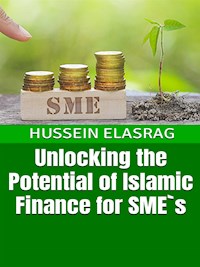
Since the Small and Medium Enterprises (SMEs) are important for the economy, the Islamic banks and Islamic financial institutions must play a significant role in financing these businesses. Supporting SMEs are one of the objectives of religious institutions, thus the most important goal of Islamic banks and Islamic financial institutions is to contribute to the economic and social development of the society. This study aims to analyze the appropriateness of the Islamic financial system for SME finance.
Das E-Book können Sie in Legimi-Apps oder einer beliebigen App lesen, die das folgende Format unterstützen:
Seitenzahl: 160
Veröffentlichungsjahr: 2024
Ähnliche








Islamic Finance for SME`S
Hussein Elasrag
Copyright © 2016 Hussein Elasrag
All rights reserved.
Table of Contents
LIST OF ABBREVIATIONS
Introduction
CHAPTER 1: Understanding SMEs
SMEs Definitions
1. Quantitative Criteria for Defining SMEs
2. Qualitative Criteria for Defining SMEs
SMEs distribution in various parts of the world
Contribution of SMEs to employment and economic growth
1- Contribution of SMEs to employment
2- Number of SMEs in the total enterprise population, in the informal economy
3. SMEs and job creation
SMEs and Access to Finance
CHAPTER 2: Understanding Islamic finance
Fundamentals of the Islamic finance
Shari'ah law defined
Key Shari'ah principles and prohibitions relevant to finance
Regulation of Islamic Finance
Global Islamic financial infrastructure
Islamic banking
What is Islamic banking?
Advantages of Islamic banking
Challenges of Islamic banking
The origin of the modern Islamic bank
The Importance of Religion in Islamic Banking
CHAPTER 3: Islamic Financing techniques for SMEs
Basic Islamic financial instruments
A. Trade with mark-up or cost-plus sale (Murabaha)
B. Profit-sharing agreement (Mudaraba)
C. Equity participation (Musharaka)
D. Leasing (Ijara)
E. Salam
F. Istisna
Islamic bonds (Sukuk)
CHAPTER 4: key elements required to unlock the full potential of Islamic finance for SMEs
(a) Creating an Enabling Environment
(b) Developing the industry and markets
(c) Ensuring financial stability
References:
This Book
Small and Medium Enterprises (SMEs) make up the bulk of the economic tissue of the economy. In developing countries, they represent the majority of employment, including female employment. Investing in SMEs is a long-term and smart strategy, with sustainable returns that multiply across regions, countries and societies. SMEs constitute the overwhelming majority of firms. Globally, SMEs make up over 95% of all firms, account for approximately 50% of GDP and 60%–70% of total employment, when both formal and informal SMEs are taken into account. This amounts to between 420 million and 510 million SMEs, 310 million of which are in emerging markets. Promoting access to finance for SMEs has been on the global reform agenda since the global financial crisis. Nevertheless, SMEs consistently cite lack of access to finance as a severe constraint. Often, the costs and risks of serving SMEs are perceived to be too high by banks. Because of information asymmetries and the high costs of gathering adequate information to assess the creditworthiness of typical SME borrowers, banks are usually reluctant to extend them unsecured credit, even at high interest rates. Subsequently, many SMEs with economically viable projects, but inadequate collateral, cannot obtain the most needed financing from traditional lenders. The International Finance Corporation (IFC) reports that top banks serving SMEs in non-OECD countries reach only 20% of formal micro enterprises and SMEs, and just 5% in sub-Saharan Africa. Underscoring the scale of problems with access to finance, the Asian Development Bank (ADB) estimates that there is a global gap of US$ 1.9 trillion between the supply and need for trade finance alone. This gap widens especially at the ‘lower end of the market’, where almost half of SMEs requests for trade finance are estimated to be rejected, compared to only 7% for multinational corporations. According to The World Bank estimates, approximately 70 percent of all MSMEs in emerging markets lack access to credit. While the gap varies considerably between regions, it’s particularly wide in Africa and Asia. The current credit gap for formal SMEs is estimated to be US$1.2 trillion; the total credit gap for both formal and informal SMEs is as high as US$2.6 trillion. According to several research studies in the last decade there are greater opportunities for development and growth of Islamic financial system because Muslim community is eager to take financial products and they are willing to spend their lives according to their religion. Islamic Finance is a promising solution to SMEs to meet the requirements of formal financing. And can prove particularly effective to facilitate access to finance for SMEs. Although there is a wealth of literature around Islamic finance and around finance in general for SMEs, literature that draws and connects these two areas together is limited. The purpose of this book is to investigate the opportunities of development and growth as well as the main challenges to Islamic finance for SMEs. This book will help to deepen understanding of the concepts of Islamic finance as well as SMEs. In addition to evaluate how Islamic financial institutions can support SMEs.
LIST OF ABBREVIATIONS
AAOIFI
Accounting and Auditing Organization for Islamic Financial Institutions
AuM
Assets under management
ADB
Asian Development Bank
ALA
Alternative Liquidity Arrangements
ASA
Alternative Standardised Approach
ASF
Available stable funding
BAFIA
Banking and Financial Institutions Act 1989
BASEIND
Basic Social and Economic Indicators
BBA
Baiʿ Bithaman al-Ājil
BCBS
Basel Committee on Banking Supervision
BCG
Basel Consultative Group
BCPs
Core Principles for Effective Banking Supervision (or Basel Core Principles)
BCR
Basic Capital Requirements
BI
Business Indicator
BIA
Basic Indicator Approach
BIBF
Bahrain Institute of Banking and Finance
BIS
Bank for International Settlements
BNM
Bank Negara Malaysia
bps
Basis points
CAGR
Compound annual growth rate
CAR
Capital adequacy ratio
CBA
Central Banking Act 2009
CBB
Central Bank of Bahrain
CCE
Coordinated Compilation Exercise
CDC
United States Centers for Disease Control and Prevention
CDIS
Conventional Deposit Insurance Scheme
CDMs
Concentration and distribution measures
CGFS
Committee on the Global Financial System
CIS
Collective investment schemes
CMGs
Crisis management groups
COMCEC
OIC Standing Committee for Economic and Commercial Cooperation
ComFrame
Common Framework
CPs
Core principles
CPIFR
Core Principles for Islamic Finance Regulation
DFIs
Development financial institutions
DFSA
Dubai Financial Services Authority
DGI
Data Gaps Initiative
DIS
Deposit insurance scheme
DJIM
Dow Jones Islamic Market
D-SIBs
Domestic-systemically important banks
ECB
European Central Bank
ED
Exposure Draft
EMDEs
Emerging market and developing economies
FAS
Financial Accounting Standard
FDR
Financing-to-deposit ratio
FIS
Facilitating the Implementation of the IFSB Standards
FOMC
Federal Open Market Committee
FSA
Financial Services Act 2013
FSAP
Financial Sector Assessment Programme
FSB
Financial Stability Board
FSF
Financial Stability Forum
FSI
Financial Stability Institute
FSIs
Financial Soundness Indicators
FSIRG
Financial Soundness Indicators Reference Group
FSRs
Financial Stability Reports
FSSA
Financial System Stability Assessment
G-20
Group of Twenty
GB
Governing body
GCC
Gulf Cooperation Council
GDP
Gross domestic product
GFC
Global Financial Crisis
GFSR
Global Financial Stability Report
GHOS
Governors and Heads of Supervision
GI
Gross income
GN
Guidance Note
G-SIBs
Global-systemically important banks
G-SIFIs
Global-systemically important financial institutions
G-SIIs
Global-systemically important insurers
HLA
Higher loss absorbency
HLGs
High-level goals
HNWI
High-net-worth-individuals
HQLA
High-quality liquid assets
IA
Insurance Act 1996
IA
Investment account
IADI
International Association of Deposit Insurers
IAG
Inter-Agency Group on Economic and Financial Statistics
IAHs
Investment account holders
IAIGs
Internationally Active Insurance Groups
IAIS
International Association of Insurance Supervisors
IASB
International Accounting Standards Board
IBF
Islamic banking and finance
IBIS
Islamic Banks and Financial Institutions Information System
ICIS
Islamic collective investment schemes
ICM
Islamic capital market
ICMTF
Islamic Capital Market Task Force
ICPs
Insurance Core Principles
ICS
Insurance Capital Standard
IDB
Islamic Development Bank
IDIC
Indonesian Deposit Insurance Corporation
IFC
Irving Fisher Committee
IFDI
Islamic Finance Development Indicator
IFSA
Islamic Financial Services Act 2013
IFSB
Islamic Financial Services Board
IFSI
Islamic financial services industry
IIFS
Institutions offering Islamic financial services
IILM
International Islamic Liquidity Management Corporation
IIMM
Islamic interbank money market
ILAAP
Internal liquidity adequacy assessment
IMF
International Monetary Fund
INCEIF
International Centre for Education in Islamic Finance
IOSCO
International Organization of Securities Commissions
IRB
Internal-ratings based
IRTI
Islamic Research and Training Institute
ISFD
Islamic Solidarity Fund for Development
ISLM
Islamic Finance Platform
ISRA
International Sharīʿah Research Academy
LCR
Liquidity coverage ratio
LNG
Liquefied natural gas
LOB
Lines of business
LOLR
Lender of last resort
MDBs
Multilateral development banks
MDIC
Malaysia Deposit Insurance Corporation
MENA
Middle East and North Africa
MiFID
Markets in Financial Instruments Directive
MMoU
Multilateral Memorandum of Understanding
MoU
Memoranda of Understanding
MTP
Medium-term plan
NBNI
Non-bank or non-insurer
NMPIs
Non-mainstream pooled investments
NPLs
Non-performing loans
NPFs
Non-performing financing/facilities
NSFR
Net stable funding ratio
NSOs
National Statistical Offices
NSSs
National Statistical Systems
OECD
Organisation for Economic Co-operation and Development
OIC
Organisation of Islamic Cooperation
OPEC
Organization of Petroleum Exporting Countries
OPHI
Oxford Poverty and Human Development Initiative
PER
Profit equalisation reserves
PGI
Principal Global Indicators
PRIIPs
Packaged Retail and Insurance-Based Investment Products
PSEs
Public-sector entities
PSIAs
Profit-sharing investment accounts
PSIFIs
Prudential and Structural Islamic Financial Indicators
QE
Quantitative Easing Programme
QIS
Quantitative impact study
RAM
Risk Assessment Matrix
RCAP
Regulatory Consistency Assessment Programme
REPI
Real Estate Price Index
ROA
Return on assets
ROE
Return on equity
ROSCs
Reports on the Observance of Standards and Codes
RPSIA
Restricted profit-sharing investment account
RSAs
Regulatory and supervisory authorities
RSF
Required stable funding
SALR
Short-term asset–liability ratio
SAPR
Self-Assessment and Peer Review
SBP
State Bank of Pakistan
SCDIS
Sharīʿah-Compliant Deposit Insurance Schemes
SDDS
Special Data Dissemination Standards
SESRIC
Statistical, Economic and Social Research and Training Center for Islamic Countries
SHF
Shareholders’ Fund
SIBs
Systemically important banks
SIFIs
Systemically important financial institutions
SIG
Supervision and Implementation Group
SKRA
Strategic Key Result Area
SLOLR
Sharīʿah-compliant lender of last resort
SLRP
Supervisory liquidity review processes
SMC
SESRIC Motion Charts
SMEs
Small and medium enterprises
SNA
System of National Accounts of the United Nations
SPFO
Strategic Plan and Financial Outlook
SPP
Strategic Performance Plan
SRI
Socially responsible investing
STA
Statistics Department
TA
Technical assistance
TC
Technical Committee
TORF
Takāful Operators’ Risk Fund
TSA
The Standardised Approach
TSM
Total Stock Market
UAE
United Arab Emirates
UCIS
Unregulated collective investment schemes
UCITS
Undertakings for Collective Investment in Transferable Securities Directive
UNDP
United Nations Development Programme
UNSD
United Nations Statistics Division
UPSIA
Unrestricted profit-sharing investment accounts
US
United States
USD
United States dollar
VE
Vulnerability exercise
WB
World Bank
WG
Working group
WHO
World Health Organization
UNWTO
World Tourism Organization
WP
Working Paper
XOF
CFA Franc
Introduction
A growing economy requires a well-functioning financial system. The financial sector is essential not just for tasks like running the payment systems, ensuring a flow of funds from savers to investors, including small and medium-sized enterprises, and creating information and opportunities for investment. The financial sector is also necessary for diversifying investments, managing risk, and providing liquidity and other resources necessary for growth.(Stiglitz, 2015)
Since the establishment of banks and other financial institutions, the primary objective is to provide support for the development of Large Scale Enterprises (LSEs) and the development of small and medium-sized enterprises (SMEs). Unfortunately, initial efforts were unable to provide favourable results for SMEs.
As governments around the world continue to grapple with uncertain economic prospects and important social challenges, they are looking to small and medium-sized enterprises (SMEs) and entrepreneurs as an important source of economic growth and social cohesion. Appropriate access to finance is a critical prerequisite to enable these businesses to invest, grow and create jobs, and the issue has been climbing steadily up the policy agenda in recent years. But effective policy responses for SME finance require coherent and meaningful evidence.(OECD, 2016)
Small and Medium Enterprises (SMEs) play a major role in most economies, particularly in developing countries. Formal SMEs contribute up to 45 percent of total employments and up to 33 percent of national income (GDP) in emerging economies. These numbers are significantly higher when informal SMEs are included. According to estimates, 600 million jobs will be needed in the next 15 years to absorb the growing global workforce, mainly in Asia and Sub-Saharan Africa. In emerging markets, most formal jobs are with SMEs, which also create 4 out of 5 new positions. However, access to finance is a key constraint to SME growth; without it, many SMEs languish and stagnate.
Despite the fact that SMEs account for a significant part of the country's economy and provide employment opportunities for the majority of people. SMEs are less likely to be able to secure bank loans than large firms; instead, they rely on internal or “personal” funds to launch and initially run their enterprises. Fifty percent of formal SMEs don’t have access to formal credit. The financing gap is even larger when micro and informal enterprises are taken into account. Overall, approximately 70 percent of all MSMEs in emerging markets lack access to credit. While the gap varies considerably between regions, it’s particularly wide in Africa and Asia. The current credit gap for formal SMEs is estimated to be US$1.2 trillion; the total credit gap for both formal and informal SMEs is as high as US$2.6 trillion.[1]
A World Bank Group study suggests there are between 365-445 million micro, small and medium enterprises (MSMEs) in emerging markets: 25-30 million are formal SMEs; 55-70 million are formal micro enterprises; and 285-345 million are informal enterprises. Moving informal SMEs into the formal sector can have considerable advantages for the SME (for example, better access to credit and government services) and to the overall economy (for example, higher tax revenues, better regulation). Also, improving SMEs’ access to finance and finding solutions to unlock sources of capital is crucial to enable this potentially dynamic sector to grow and provide the needed jobs.
The lack of funding is one of the most important constraints faced by SMEs. Marketing and administrative barriers, the lack of an integrated accounting system, shortage of trained manpower, institutional constraints and government legislation are also limitations faced by the SMEs. (Mumani, 2014)
High interest rates and the lack of adequate collateral are the major barriers facing the SMEs where banks would usually finance large businesses and prefer to deal with them because of the low degree of risk and the ability of these businesses to provide the required guarantees. Islamic finance has certain features which give it the potential to effectively support SME financing, and economic growth and development.
According to a 2014 report by the World Bank's International Finance Corporation (IFC), there is a shortfall of some USD 13.2 billion in Islamic finance across nine surveyed Islamic countries. The IFC report notes that despite rising demand for Islamic financing among SMEs, only 36% of MENA region banks offer SME products, and a mere 17% subset of those offer Islamic options. This has a chilling effect on SME financing, particularly in those countries where local SMEs won't consider non-Islamic finance. In Saudi Arabia, for instance, IFC figures note that up to 90% of SMEs are only seeking Shariah-compliant banking services. When the net is widened to include Iraq, Pakistan, Yemen, Saudi Arabia, Jordan, Tunisia, Morocco, Lebanon and Egypt, around 35% of SMEs are dissuaded from borrowing due to a lack of Islamic banking options.[2]
This is a gap that Islamic finance offerings can address. Islamic finance helps promote financial sector development and broadens financial inclusion. By expanding the range and reach of financial products, Islamic finance could help improve financial access and foster the inclusion of those deprived of financial services.
Bank lending to SMEs seems to be tailor made for Islamic banking practises based around relationship lending as opposed to other more conventional forms of debt financing. A key competitive benefit of this approach is a pure cost advantage brought about by reduced monitoring costs.
However, the nature of the contract may also provide opportunities for enhanced growth and an additional quality advantage based around the holding of collateral, greater managerial experience and reduced information asymmetries. Islamic banking and the use of Islamic financial products has increased significantly in recent years. A pure cost advantage should provide Islamic banks a foothold in the market for lending to SMEs. An additional quality advantage means that this advantage can be more intense in the sense that the market share of Islamic banks could increase dramatically in principle capturing the whole of the market.(Shaban, Duygun, & Fry, 2016)
Islamic finance emphasizes partnership-style financing, which could be useful in improving access to finance for the poor and small businesses. It could also help improve agricultural finance, contributing to improved food security. In this regard, Islamic finance can help meet the needs of those who don’t currently use conventional finance because of religious reasons. Of the 1.6 billion Muslims in the world, only 14% use banks. It can help reduce the overall gap in access to finance, since non-Muslims aren’t prohibited from using Islamic financial services.[3]
However, the Islamic financial system, operating alongside the conventional sector, is also exposed to broadly the same systemic risk factors and volatilities as its conventional counterpart, despite its sustained growth momentum. The various sections of this chapter further analyse the growth momentum and structural shifts of the Islamic finance industry while assessing financial stability aspects in light of the evolving global macroeconomic and financial conditions. A resilient and well-regulated banking system is the foundation of financial stability, as banks are at the centre of the credit intermediation process between savers and investors. Instability in banking institutions can cause tremendous systemic effects across various productive economic sectors of a domestic economy, with the potential to spill over into regional and global economies. Banks provide critical financial intermediation services across all sectors of the real economy, including individual households, small and medium-sized enterprises (SMEs), large firms and government institutions. (Islamic Financial Services Board, May 2015)
There has also been a surge of interest in Islamic finance from non-Muslim financial centres such as the UK, Luxembourg, South Africa, and Hong Kong. For example, the World Bank, acting as treasurer for the International Finance Facility for Immunization, has helped raise $700 million through two Sukuk issuances.
The Islamic finance industry has expanded rapidly during the last decade, with annual growth rates of over 15%. In many majority Muslim countries, Islamic banking assets have been growing faster than conventional banking assets.[4]
Islamic finance’s underpinning principles of promoting participation, equity, property rights and ethics are all “universal values”. And yet, despite these important benefits and the clear potential, there is still a long way to go to fulfil the maximum potential of Islamic finance. Today, it represents less than 1 percent of global financial assets and is still very much concentrated in a few markets. So there is clearly room to grow, especially given that the features of Islamic products can appeal to a much wider group. [5]
Islam puts the highest emphasis on ethical values in human life; these ethical values are definite and absolute.




