


Erhalten Sie Zugang zu diesem und mehr als 300000 Büchern ab EUR 5,99 monatlich.
- Herausgeber: Papillote Press
- Kategorie: Gesellschafts- und Liebesromane
- Sprache: Englisch
There is renewed interest in Phyllis Shand Allfrey, author (the Orchid House) and politician from Dominica. Allfrey died in 1986 - her poetry neglected and little known. Her work is now being acclaimed and her place in Caribbean literary cannon assured. Allfrey's biographer, Lizabeth Paravisini-Gebert, writes in her illuminating introduction that with the renewed academic interest in Allfrey's work and the publication of this collection, Allfrey's time has come. The volume includes all the poems published in her lifetime, some unpublished poems and a sample of her satirical poems written when she was editor and publisher of The Star newspaper in Dominica. This is the first time her poetry has been put together in one volume, spanning five decades, from the 1930s, and reflects the two strands of Allfrey's life - the tropical and the temperate. Phyllis Shand Allfrey was born in Dominica in the eastern Caribbean in 1908. She was a friend of Jean Rhys. Her novel, The Orchid House, was published in 1953 and her short story collection, It Falls into Place, in 2004. She lived in New York and London before returning to Dominica in the early 1950s. She was the co-founder of the Dominica Labour Party and served as a minister in the short-lived West Indies Federation (1958-62). She died in Dominica in 1986. The introduction is by Lizabeth Paravisini-Gebert, Professor of Caribbean Literature at Vassar College New York. Her biography of Allfrey, A Caribbean Life, was published in 1996.
Sie lesen das E-Book in den Legimi-Apps auf:
Seitenzahl: 161
Veröffentlichungsjahr: 2018
Das E-Book (TTS) können Sie hören im Abo „Legimi Premium” in Legimi-Apps auf:
Ähnliche


















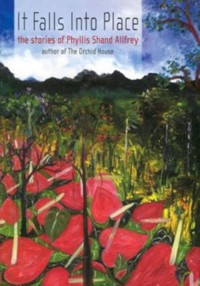
It Falls Into Place
the stories of Phyllis Shand Allfrey
First published in Great Britain in 2004 by Papillote Press
© 2004 for the estate of Phyllis Shand Allfrey
All rights reserved. No part of this publication may be reproduced, stored in a retrieval system, or transmitted, in any form or by any means, electronic, mechanical, photocopying, recording, or otherwise, without the prior permission of the copyright owner.
A CIP catalogue record for this book is available from the British Library.
Acknowledgement. The publication of this book was funded in part through a generous grant from the Vassar College Faculty Research Committee
Typeset in Book Antiqua and Century Gothic
Printed and bound in Malaysia
ISBN: 0 9532224 1 1
Papillote Press
23 Rozel Road
London SW4 OEY
United Kingdom
Also by Phyllis Shand Allfrey
The Orchid House, first published by Constable, 1953; re-issued by Virago Press, 1982
In Circles: poems, London, 1940
Palm And Oak: poems, London, 1950
The following stories from It Falls Into Place were first published elsewhere:
Uncle Rufus, Tribune, December 11 1942
A Talk On China, The Windmill 1, no.1, 1944-46
Breeze, Pan Africa, January 1947
O Stay And Hear, Argosy 15, no 9, September 1954
It Falls Into Place, Dominica Herald, June 13 1964 (as Philip Warner)
A Time For Loving, Dominica Star, February 12 and 18, 1966
A Real Person, Dominica Star, June 4 and 11, 1966
Proserpeena and the Colonel, Dominica Star, February 4 1967
Miss Garthside’s Greenhouse, Caribbean Women Writers: Essays from the First International Conference, edited by Selwyn Cudjoe, 1990
Contents
Introduction by Lizabeth Paravisini-Gebert
O Stay and Hear
Breeze
The Objective
Parks
Letter to a German-American Laundress
Proserpeena and the Colonel
Uncle Rufus
A Talk on China
Miss Garthside’s Greenhouse
The Yellow Horse
The Naming
A Real Person
A Time for Loving
It Falls Into Place
Postscript by Lennox Honychurch
Profile of Phyllis Shand Allfrey by Polly Pattullo
Introduction
The name of Phyllis Shand Allfrey evokes contradictory images. Born in 1908 into a family of white colonial officials in the British colony of Dominica in the eastern Caribbean, she built a political career through an alliance with the labour unions and peasantry that threatened the interests of her own class and race. A promising writer whose first novel, The Orchid House (1953), opened bright prospects for a successful literary career in England, she renounced all expectations in order to return to the Caribbean in 1954 to found the Dominica Labour Party. A committed Fabian Socialist who worked indefatigably to uphold voting rights and safeguard the peasantry’s participation in Dominican politics, she found herself expelled from the Party she had founded and excluded from island politics when the demands of black nationalism made it expedient. She found a place for herself in Dominican society, nonetheless, as a newspaper editor and spokesperson for the political opposition, roles that allowed her a lasting public life and through which she eked out a meagre living. She died in Roseau, Dominica, in 1986.
Towards the end of her life, as she pondered the choices she had made during her long political career, Allfrey came to regret her choice of politics over writing. “Politics ruined me for writing,” she would muse wistfully when she despaired about having failed to earn the lasting legacy to which she aspired through her political work. It was at that juncture that she turned to the writing she had abandoned in favour of politics, struggling in the last few impoverished years of her life to see The Orchid House return to print for the first time since 1953, gather her scattered short stories into a book, reissue her four collections of poems, and finish In the Cabinet, the autobiographical novel about her years as a minister during the West Indies Federation, which she had started in 1961.
In all but the first of these goals she failed. She lived to see The Orchid House reissued in England in 1982 – a second American edition appeared in 1996 – but illness, poverty, and eventually death conspired against her efforts to claim her position as a pioneer among women writers in the Caribbean. In The Cabinet remained unfinished; her poems remain out of print. The best of her stories, many of which had appeared in the 1940s and 50s in English journals and newspapers such as Pan Africa, The Windmill, Argosy and the Manchester Guardian, are collected here for the first time. A handful have never been published before.
The 14 stories collected in this volume represent roughly a third of the published texts and extant manuscripts found among Phyllis Shand Allfrey’s papers. They are characteristic of the themes and techniques that distinguish her fiction, and, like her published and unpublished novels, have a strong autobiographical foundation. Allfrey wrote best about what she knew well – that which she had experienced herself or come to know first hand – and her subjects follow the trajectory of her peripatetic career. Every story connects, directly or indirectly, with an episode in her life – every text recalls a juncture in the path she followed from a childhood in the twilight of the British empire in the West Indies, through the voluntary exile that took her to the United States during the great depression and to England during the second world war, to a return to a West Indian social landscape transformed by struggles for labour reform, political independence, and federation.
Writing from a profound sense of her own West Indian identity, Allfrey centres her plots on the epiphanies that result from chance encounters between characters of different cultures, classes, outlooks, and – above all – races. As a writer, she was endlessly fascinated by the transformations brought about by juxtaposing perspectives that clashed – and occasionally crashed. These transformative encounters stem from affairs as mundane as the melodrama surrounding the naming of a new neighbourhood art centre – as in The Naming – where an artistic and lonely young man surrounded by working-class matrons finds his ideal of beauty in the self-portrait of a dead young woman with the unfortunate name of Mabs Boojoys. Or from the rapport that develops in Proserpeena and the Colonel between a Free-French colonel stranded in Dominica without an army during the second world war and the young servant woman who assembles a platoon of recruits for him from among the many Martinican refugees in Roseau. Rooted in Allfrey’s confidence in common people’s innate decency and fairness, they speak to the efficacy of facing the unfamiliar as instrumental in helping people rise above bigotry, narrow-mindedness and chauvinism.
In these tales Allfrey writes with light irony about the specificities of class, race, and gender relations in West Indian society. The delicate mockery of tone and wistful empathy that characterise her fictional renderings of the complexities of social life in Caribbean islands are her cultural legacy as a Dominican writer. Her ear attuned to the gentle satire and wry sense of the ridiculous that marks the Dominican character, she deploys them to bittersweet effect to unveil the intricate nuances of white mistress/black servant relations in O Stay and Hear, the absurdities of the strategies to prevent a marriage between a coloured baker and a scion of a white elite family in Uncle Rufus, and the poignancy of the lonely young protagonist of A Real Person, who despite the murder of his friend could still believe that “in spite of the mysterious and inexplicable conflict of faith and races in the world, it was still a world in which miracles happened.”
Phyllis Shand Allfrey’s short stories reveal a new dimension of a literary talent that was never allowed to reach full fruition. Subordinated as it always was to her political career, her published writing never reached in volume a level comparable to that of most West Indian writers of her generation. The stories collected here, however, by showcasing a new facet of her literary gifts and adding considerably to the sum of her known oeuvre, uphold her claim to a salient place in Caribbean literary history.
Lizabeth Paravisini-Gebert
O STAY AND HEAR
They are walking in the flower garden, and what are they singing? Something rather merry and mocking; the veering breeze blows up a few words now and then to the ears of a lady behind green bathroom blinds.
Now the lady raises a long pale arm and applies a little soap to it, at the same time peeping through the slats without rising from her cool bath water.
Samedi après-midi,
Madame-là tombait malade:
Voyez, cherchait l’Abbé...
The brown girls’ arms are intertwined like snakes; yet somehow the plump hand of Melta, who is a maid by profession and fond of arranging flowers, reaches out with a sharp carving-knife and lops off half a bush of crimson roses between one stanza and another; both girls dip in a flying curtsy, and the thinner fingers of Ariadne, the eighteen-year-old cook, brush grass and come up with the dazzling spray.
Monsieur l’Abbé venait.
Il dit, Rome Saeculorum.
Madame-là comprend c’est ‘rhum’.
But I thought they said the patois was common and that they disdained it, says this English Madame-là to herself, standing on a rush mat and dabbing off rivulets absently. To think of me, me myself, indulging in a cold bath at four o’clock in the afternoon! she comments inwardly.
When she told them about the sudden dinner, they had taken it very sweetly. “A business friend of the Master’s.” “Oh yes, Mistress: understood.” “He is a director, but has quite a simple appetite.” “Flying fish,” says Ariadne. “And fried plantains,” adds Melta.
“Oh no, I think not fried plantains – too hot. Something green. Perhaps a little stuffed avocado?”
“Stuffed with what, Mistress?” asks Ariadne bluntly.
“Oh, I don’t know...perhaps some parsley?”
“The hen and the weeding boy have taken the parsley,” Melta says.
“Then I leave it to you.”
They are pleased: they like things being left to them. They take up the carving knife and go out into the garden. But instead of hunting for a last blade of parsley or a handful of chives, they dance around in the high soft breeze, lopping off roses. Their aprons lift and swirl, and they look like ballet dancers dressed as probationer nurses: the full skirts of their uniforms are covered with a flight of multicoloured wild ducks. Their little song has come to an end, so they begin it again:
Samedi après-midi,
Madame-là tombait malade...
It is Saturday afternoon; and if I had fainted in my bath I could have drowned, I could have died, and those girls wouldn’t have been in the least concerned, thinks Madame-là anxiously. She is envious of them, because they have each other for gay company. Now they are advancing on the lonely house, using their bouquet to shoo before them a brown hen with well-clipped wings. This is the pullet, which had the temerity, in the middle of a sweltering West Indian summer, to lay one egg in a secret place and hatch out a solitary cream-coloured chicken.
The girls drive the hen, the hen cups the chick with her shortened wings, all rush in a giggling, clucking posse towards the kitchen steps, under which the hen and chicken disappear. Something about the hen and chick has a secret power of mirth over the girls: they sit on the bottom step, laps full of roses and arms round each other’s necks, laughing fecklessly.
Madame-là has her own method of attracting attention: she leans out of the window with a small brass bell suspended on a string, and tinkles it above the white-capped heads.
“Melta! Ariadne! Don’t forget Mr Whitborough is coming to dinner!”
“Yes, Mistress,” says Melta in her deep, harsh contralto. “We forget ourselves. The hen makes us laugh.”
But they are speaking to an empty window: Madame-là has slipped downstairs to greet them on the landing. She wants to know what there is about the hen...
About the hen? Ariadne starts to laugh again. It is really intolerable. At last Melta says: “It is the hen and her child.”
“The hen and her child is like ourselves,” says Ariadne, rising to full copper height.
Melta is engaged in slicing off the rose stems, for all the world as if she is going to stuff Mr Whitborough’s avocado pears with the trimmings. Madame-là notices how pretty both girls are, and that Ariadne is the one with the crisp, scornful upper lip.
“She takes pride in her chick, which is of a lighter complexion than herself,” volunteers Melta.
“Just as we do,” says Ariadne. They both laugh again, to see the amazement and appeal on Madame-là’s face. It is giving them great pleasure to satisfy her curiosity tormentingly, bit by bit.
“I have a daughter, of very pale coloration,” says Ariadne. “It is a girl. She is name Dolores.”
“I also have a child, a boy name Ah-but-not. He is even so light as Adne’s child, and born in the same month,” says Melta.
“And how old are these children?” asks Madame-là, sounding lost. When she says the word “children” she looks wonderingly at their continuing childish arabesque against a background of roses.
“Two years at Epiphany,” says Melta, and Ariadne echoes, “E-pi-phan-y.”
“But where are they?”
“Where?” ask the girls together, astonished. “With our mothers in the country, Mistress, naturally.”
Ariadne declares, “We were raised up as neighbours. We do everything together.”
Madame-là makes an effort, and collects herself. “You must bring the children to see me.”
“Yes, Mistress.” They undulate evasively.
“But don’t forget the dinner. Perhaps I could arrange the roses, to save time?”
Melta lays down the stems reproachfully. To create a diversion, Ariadne exclaims with cunning: “I can hear the Master’s step, Mistress.”
So Madame-là goes back upstairs and finds that Rodney indeed stands, steaming with recent energetic action, on the upstairs veranda. A strange redness overlays his sun-browned face. “Have you been playing tennis?” she asks him.
“No, darling,” says Rodney, turning his back to reveal that his shirt is torn to shreds. “I’ve been fighting.”
All her life she has been wanting Rodney to be successful and masterful, and now she is not sure that success really suits him. Is he, after all, getting too tough?
“With the skipper of the Douce Hélène,” he answers her question tersely.
“Oh Rodney! That poor black man!”
“He nearly made me two thousand pounds poorer, by tipping our new engine into the sea. I had practically to stun him to get it eased back into the boat until we could land it.”
She is silent, envisaging the horrid scene, a large lump of tangled steel perilously rocking, and Rodney springing at the skipper’s gleaming torso. But Rodney appears unconcerned: he removes his shredded shirt and makes for the bathroom.
To soothe him further, she calls through the netted swing door: “I have a theory about the social aspects of... “
But Rodney calls back: “Oh lord, no theories! Not with Whitborough coming to dinner!”
She is hurt, because really her theory is quite delicate and distinguished. She believes now that people in this tropical island do not make love for romantic reasons, but as social and evolutionary means. She is thinking of Melta and Ariadne and their children of light coloration, and the hen and the chick; it all seems to link up.
Fastening her pearls above the surf-green voile, she sighs, and then she begins to hum the catchy little song the girls were singing in the garden; going downstairs a moment later to see how Mr Whitborough’s dinner is progressing.
If there is any dinner at all, it must be incarcerated in the frightening iron oven. Even the open coal-pot has disappeared. So have the girls.
Madame-là runs back upstairs in distress. “Rodney! I can’t find the maids – and the coal-pot has gone, too.” She hunts for her little brass bell.
“Don’t worry,” he says. “They are probably ironing out each others’ hair with flat-irons. They always do before a dinner-party. Look out of the back window and you’ll see them at it.”
He is quite right. Ariadne is stretched on a piece of sacking outside the maids’ room; Melta is applying a sizzling iron to her short, crimped hair, pulling as she presses. It is a painful scene, like an operation, and is transforming the girl into a sophisticated Arawak.
“And I can’t think,” cries Madame-là, “why they should want to have hair as straight as ours, when they mock at us so!”
Rodney laughs. He goes to a cabinet and pours out two long frosted drinks, to fortify them against their guest.
Yet, after all, the evening turns out smooth and gracious. Mr Whitborough does most of the talking; as Rodney has hinted, he is a man of theories. He is a much-travelled man, and makes a good story of how he found an almost untarnished button of his glorious regiment on a high slope in the Himalayas. Once, too, he entered an African chieftain’s hut and was surprised to see the pennant of his yacht club fluttering above a four-poster.
“Fluttering?” Madame-là cannot resist exclaiming, thinking of the draught on the dying chieftain – she having imagined African huts as windowless as igloos...
“But not the least charming of my adventures,” says Mr Whitborough, over the crimson roses – he is quite handsome for his age, and his quivering nostrils seem to devour the flying fish before he lifts his fork... After all, the dinner is superb, though it seems to have been cooked in ten minutes, and the mysterious stuffing which inflates the yellow-green avocado pears must always remain a secret. “When I visited this island once, not so awfully long ago, my friend Arbuthnot and I went up the Rivière Fantasque: he was trying to net rare birds for his tropical aviary, and I was after edible crabs. We sat there on the river bank, enjoying the scene and contemplating a plunge, when suddenly – “
The memory is so sweet, so incomparable, that Mr Whitborough’s nostrils meet his upper lip in an unusual smile.
“Suddenly there was this voice, coming from the depths of what I can only describe as a jungle; and we saw that higher up the river two comely girls, clothed only in a series of patches, were beating some cloth against a rock in the water and singing. At least, one of them was singing: and I am sure you will never guess what the words were.”
“A song about a sick lady on Saturday afternoon,” Madame-là puts forward, startling Rodney by her sudden vivacity. She has taken advantage of Melta’s absence with the emptied plates: but she knows, she is positive that behind the glazed screen two interlinked forms are panting against each other with suppressed giggles.
Mr Whitborough stares at Madame-là in astonishment.
“And how the Abbé was called in – “ she starts to explain.
“Oh no!” Mr Whitborough states firmly, authoritatively. “Nothing as ribald as that. Something very strange, almost, one might say, moving. A Shakespearean song to an Elizabethan air. We distinctly heard it: O stay and hear, your true love’s coming...and the other voice took it up: That can sing both high and low. I remember how it echoed down the valley. Both high and low. It quite put poor Arbuthnot off his game. He dropped the net, and three rare specimens escaped.”
“That’s a beautiful tale, Whitborough – one of your best,” says Rodney.
“And the most beautiful thing is that it’s quite true,” says Mr Whitborough.
“I believe it,” says Madame-là sparkling.




