


Erhalten Sie Zugang zu diesem und mehr als 300000 Büchern ab EUR 5,99 monatlich.
- Herausgeber: Papillote Press
- Kategorie: Gesellschafts- und Liebesromane
- Sprache: Englisch
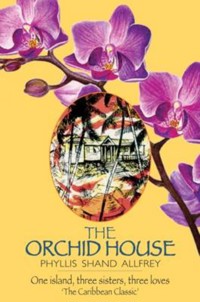
After many years out of print this enticing and hugely autobiographical novel is back. Its new and incisive introduction by the Dominican scholar Schuyler Esprit casts a fresh and contemporary eye on Allfrey's life and work. First published in 1953, it was republished in 1982 as a Virago Modern Classic. Three white sisters return to their Caribbean island home to find their family living in poverty and mental anguish. Each sister responds to the family's plight in different ways — seeking change through romance or politics or money. The Orchid House describes a colonial society in decay as seen through the (usually) loyal eyes of the sisters' childhood nurse, Lally: "Beauty and disease, beauty and sickness, beauty and horror: that was the island."
Sie lesen das E-Book in den Legimi-Apps auf:
Seitenzahl: 338
Veröffentlichungsjahr: 2016
Das E-Book (TTS) können Sie hören im Abo „Legimi Premium” in Legimi-Apps auf:
Ähnliche


















THE
ORCHID HOUSE
PHYLLIS SHAND ALLFREY
Je sui né dans une île amoureuse du vent Où l’air a des odeurs de sucre et de vanille Et que berce au soleil du tropique mouvant Les flots tièdes et bleus de la mer des Antilles
DANIEL THALY: L’Île Lointaine
Published by Papillote Press 2016 in Great Britain
First published in Great Britain by Constable and Co Ltd 1953 Published by Virago Press Ltd 1982
Copyright © 2016 for the estate of Phyllis Shand Allfrey
Introduction copyright © Schuyler Esprit 2016
All rights reserved
No part of this publication may be reproduced, stored in a retrieval system or transmitted in any form or by any means, electronic, mechanical, photocopying, recording or otherwise, without the prior permission of the copyright owner.
A CIP catalogue record for this book is available from the British Library.
Typeset in Minion
Printed in India by Imprint Digital
Book and cover design by Andy Dark
A detail from the artwork of the original cover design is used on the cover of this edition. All attempts to track down the artist and copyright holder have been unsuccessful.
ISBN: 978-0-9931086-2-4
Papillote Press
23 Rozel Road
London SW40EY
United Kingdom and Trafalgar, Dominica
www.papillotepress.co.uk
www.facebook.com/papillotepress
@papillotepress
CONTENTS
INTRODUCTION
THE DAYS BEFORE
MISS STELLA COMES HOME
MISS JOAN RETURNS
MISS NATALIE ARRIVES
The island exists, but all the characters with whom I have populated it are creatures of my imagination. For permission to quote from a poem by Daniel Thaly, I am indebted to the courtesy of M Léon Bocquet of Editions “Le Beffroi”.
INTRODUCTION
BY SCHUYLER ESPRIT
Ask any Caribbean student today, even in Dominica, who Phyllis Shand Allfrey is, and you may receive a blank stare. It may be your lucky day if one of the more astute of the class can reference her political career as a point of recognition. Alas, the struggle to hear a name so significant to the literary and political history of this small island mirrors the history of the island itself, where Allfrey was born and where she found both the highs and lows of life as a writer.
Dominica, the rugged island that even Columbus found too impenetrable to dominate, is at once a mystery and a paradise. And yet, those who encounter its shores are captivated by its almost-too-green rain forests, vivid flora and sublime vistas. So, too, do we find The Orchid House; a chance encounter into a world that intrigues us with its political foresight and delights us with its literary style. First published in 1953, the novel is a meditation on the effects of decolonisation on the race and class structures of a small society. The novel explores the impact of that political change on the everyday lives of its characters.
Allfrey is frequently compared with her friend, fellow Dominican and literary counterpart Jean Rhys, sometimes solely because of their status as white West Indian women writers. However, although Rhys’ Wide Sargasso Sea solidified her connection to her West Indian homeland, much of her writing was dark, and would eventually become far removed from the Caribbean. On the other hand, Allfrey who developed a friendship with Rhys while in England, conveyed a generally positive engagement with her Caribbean life. She also thought of herself and her work as having a future there despite spending years of her young adulthood between London and New York.
After her departure from Dominica at 19, metropolitan life shaped Allfrey’s class consciousness, and put into perspective for her the stark contrast of her life in Dominica as a white person and her life as a colonial working-class woman during the Great Depression and World War II. Her activism and leftist politics took shape during that time. However, her writing was still deeply connected to Dominica where she always knew she belonged.
Allfrey was prolific during her time in London, and published numerous poems and short stories, even winning major literary prizes. The Orchid House, mostly written while she was in London, synthesises, as did much of her writing, these two areas of Allfrey’s life and mind – class and labour struggles – and Dominica’s physical and socio-political landscape.
Once she arrived back in Dominica in 1954, Allfrey’s career as a writer was overshadowed by the other two elements of her three-pronged professional life – as journalist and politician. Ironically, The Orchid House, her most well-known literary work, reflects on both these professions long before she was even formally associated with public life in Dominica. As other critics have commented, Allfrey’s keen understanding of the political climate and her participation in the radical tradition of labour activism prepared her for her inevitable exclusion to the margins of political society, should her efforts prove successful.
The already well-documented exclusion of Phyllis Shand Allfrey from the Caribbean literary tradition, by virtue of her race, was also not necessarily a surprise to her. Her participation in national politics and the failed West Indies Federation (in which she served as a Cabinet Minister) would become evidence of that. She was deeply disappointed in its failure, and her later expulsion from the Dominica Labour Party, which she had helped found, was a brutal reminder that advocating for black issues did not make her black. These tensions are almost prophetically delivered in The Orchid House in which the central white characters must face this harsh reality, for better or worse.
The Orchid House is a novel about a family’s transformation against the timeline of colonialism and decolonisation. The story is set on an unnamed island, but readers familiar with Allfrey’s biography and literary profile may correctly presume that the location is Dominica. As the plot unfolds, the members of the household – father, mother, daughters and their beloved housekeeper and nurse Lally, who serves as narrator – work to maintain their family structure and their sentimental, class and economic connections to the island amidst the myriad traumas and upheavals directed at them.
Their town house, Maison Rose, and the house in the country at L’Aromatique – the orchid house – become characters themselves, housing the tumultuous events that frame the family’s reluctant acceptance that a new social order has taken effect on their island home. The orchid house, inspired by the home of Allfrey’s grandfather Henry Nicholls who was a doctor and horticulturalist, provides the family with a retreat from the clashing of cultures and ideas that is represented by the city location of Maison Rose. They become the past in a nation where the future is seen in the labour of the peasants and the intricate details of their everyday lives.
In the first part of the novel, the three small daughters of the family, Stella, Joan and Natalie, are living without their father who is away fighting, presumably in World War I. The fact that they are white girls, not creole or black, distances them from the community of children their age. Their family’s racialised desire to protect the girls results in loneliness and alienation in education and experience, but does not stop the girls from seeking out their neighbours – creole, black – and beneath them, according to the rules of society.
The story is told from Lally’s point of view. Lally, a Negro woman originally from Montserrat, is astonishingly clairvoyant in her depiction of the white family who is entrusted to her care. In many ways, most of the novel is focused on the idea of migration and return. The island of Dominica, then, becomes a significant character in the plot as it anchors all important players to political, social and emotional growth.
Upon their return as young adults, Stella, Joan and Natalie each use the island as a crutch to play out their fantasies – sentiment, activism and wealth respectively. To this end, their travels to and from Dominica are symbolic of their inner struggles with belonging to that place. Stella cannot remain because she refuses to deal with the reality of the changing society – her mother’s complacence, her father’s mental illness and drug abuse, and the complicity of their inner circle. Her denial leads her to commit a crime that leads her into exile. Joan, the agitator, has to vow to live outside the domain of politics under pressure from the draconian Catholic Church. And Natalie, the rather carefree sister and a rich widow, becomes the family’s financial saviour. By the end of the novel, the three sisters prove to be paradoxes of their individual desires – aesthetics, politics and capitalism respectively. These three ideals parallel the history and challenges of the island at the time in which the plot is set.
While it had successful reviews in London when it was first published, The Orchid House was not well received in the West Indies and would never see its words on a Caribbean imprint, until now. But what does The Orchid House offer the 21st century reader that might bring us to understand this moment through a different lens? After almost twenty years since the printing of the US edition, the themes presented in the novel are even more relevant to a Caribbean and global literary context than ever before.
First, Allfrey’s insistence upon the difficult terrain of Dominica in the foreground of the text and her invocation of nature as a critical element of her storytelling is a reminder, in the era of climate change and eco-consciousness, that Caribbean literature is a model for centring our natural environment and treating it with value and respect. The characters’ connection to the physicality of their environment is evident, influencing the sisters’ moods and whimsies. The orchid house itself serves as a “wellness” retreat for the family as an escape from the psychological noise of the town, especially for the father.
The feminism of The Orchid House, already recognised by Elaine Campbell (in the introduction to the Virago edition), is another theme worth revisiting in a 21st-century multicultural context. In many ways, Allfrey finds herself the predecessor to a Caribbean women’s tradition of writing from which she had been de facto expelled by the male elite of that time.
For the literary establishment, the critique against the possibility of empathy in Lally’s voice as the authority in the novel was as much about shaping a gendered construction of literature as it was about protecting Afro-Caribbean aesthetics. However, the plane of the domestic from which Lally challenges the patriarchal structures of war and the hypocrisy of colonial privilege as seen in Madame, Stella and Natalie (and even Joan) is indeed radical for a 1950s novel. That type of agency for a black female character or narrator was rare in Caribbean writing until the 1970s rush of West Indian women’s writing. To make Lally the prominent voice of the novel, with the discernment to articulate to the reader the critical juncture of this society, was a brave attempt and successful in its own right.
Lally is presented as an inconsistent narrator, who wavers in how she sees herself and how she identifies with the white family. That rendering is an important aspect of the novel because readers can appreciate the nuance of Lally’s journey from a colonial loyalist to a decolonised citizen. Indeed, she understands that sentiment to the white family is not currency in the social order. By this portrayal, Allfrey acknowledges the crossroads of suffrage and political independence and depicts the empowerment of black women, who were matriarchs and labourers, as critical to this effort.
In addition to her progressive politics as illustrated in the feminism of the novel, Allfrey is remembered for her love of literature, as a reader and not just as a writer. She was well read in French literature, and particularly favoured the poetry of Daniel Thaly, the famed poet who was born in Dominica, but lived for a time in Martinique where he was published. In fact, the novel’s epigraph is from Thaly’s work.
It is fitting, then, that the trope of reading, particularly in Joan and Baptiste’s exchange of reading material and ideas, is significant to the novel’s contribution to the literary landscape. Baptiste, who is the son of the family cook, challenges Joan to read books outside of the expected colonial library, and to engage with books that would force her imagination out of that legacy. Certainly the decolonisation of the nation had much to do with the decolonisation of knowledge and Baptiste was a unique counterpoint to Joan’s biases.
But more importantly, for both characters, books and reading opened up spaces for them – albeit for different reasons – that were unavailable to them in the reality of their everyday lives. Later in life, Joan’s decision to have Baptiste teach her son Ned is as endearing as it is problematic. And this is the binding quality of their relationship: Joan’s (and Allfrey’s) blind spot that the white old order and black new order can coexist without the haunting of these power dynamics. What seems to endure is their insistence on a new world order when the current one cannot accommodate their desire to be friends and equals.
This is the same spirit of defiance that drove Allfrey out of the political limelight and into the world of journalism. She would maintain strong opinions as editor of two Dominican newspapers in the 1960s and 1970s, the Herald and the Star, but the impact of her writing there is hard to gauge. And even with her critical role in forming what is now Dominica’s leading political party, Allfrey’s name is now only ceremonial at best.
Allfrey lived to the end of her life at the margins of Dominican society, among the natural sanctuary of the Roseau Valley. And to this day, there is no thorough understanding of her contribution to the Dominican social fabric. There is nothing named after her – no highways or schools, hospital wards or libraries. For a person who worked hard to be tethered to the land, her memory is all but nostalgic.
Allfrey’s assertion of citizenship and belonging within the Dominican milieu was not enough to garner her inclusion at the place and time when she lived and worked. The Orchid House, as with most of her short stories and poetry, was uniquely focused on the details of the geography and physical dimensions of her tropical island home, and evokes both the bliss and the melancholy usually attributed to writers and narratives of exile. But for the greater part of her life, she was not in exile. She was home.
So a new reading of The Orchid House, as offered here, is an opportunity to find a permanent place for this text, this house of progressive ideas, to settle after wandering for decades. This peculiar narrative is one the literary authorities would have preferred to downplay. Yet even the stories of a past we would rather forget, have their right of place, their lessons to offer and their reminders of why we must work harder to protect the type of democracy gained from political independence.
The Orchid House also offers a new generation of readers the opportunity to encounter this intriguing history through new social contexts of migration, environmentalism and multiculturalism. For the student, it is a coming of age adventure experience with a didactic nod to colonial history, and for the citizen and scholar, an ethnographic cautionary tale and aesthetic delight. Its humour and wit complement the serious implications of its themes and make for an accessible and thoughtful reading experience. But the most endearing and significant appeal of this edition is that it returns Allfrey and The Orchid House to their rightful place in the annals of Caribbean literary history, as an authentic product of Dominica offered to the world.
THE DAYS BEFORE
CHAPTER 1
MADAM AND THE MASTER
Madam came to see me this afternoon, bringing the news with her and my few shillings which she has always been faithful to give me, even when there was hardly any money in the house. For a long time now there has hardly been enough money to pay Christophine her wages with, hardly enough to set aside for Mr Lilipoulala when the mail boat comes in. But now that Miss Natalie’s husband is dead and she is rich, Madam and the Master have sold the town house and paid their bills. Miss Natalie has bought Old Master’s estate and given it to her parents, but she has done all that in a letter, she has not yet come to see them. And the other children are far away: Miss Stella is in America and Miss Joan is in England.
This is the first time that Madam has come downhill since they moved to L’Aromatique, and this is the first time that I have seen the look of happiness on her face since Miss Natalie’s wedding. I would not say that Madam’s was ever a sad face, for sadness is not in her nature. She has lived most of her life in the sun here, and her face is just a little brown and not lined, like the faces of visitors from cities, and her hair is that blackbrown with only about six white hairs. It is hard for us all to believe that Madam is a grandmother. It was hard enough for me to believe, twenty-eight years ago, that Madam was a mother.
They told me that the young lady at Maison Rose was looking for a nurse for her first baby, but I had some trouble finding my way there. I had come fresh from Montserrat in my middle years, and being an English Negress and proud of my skin, not Frenchy and Catholic and boasting of a drop of white blood, like Christophine, I could not understand the talk of this island very well. At last I found the Maison Rose, and when I pulled the garden gate open a big bell clanged and a young lady in plaits came out on the balcony and smiled. So I went up the stone steps into her drawing-room, for this was not a proud lady at all, who would keep you downstairs in the hall as if you were a beggar. Then I asked to see the Madam, and she said to me, “I am the Madam here.” But I still didn’t believe her, so she went into another room and came back with a basket in her arms, and in the basket was a little baby – that was Miss Stella. I looked into the basket: I could see that it had come from abroad and wasn’t made by the Caribs, and there lying on a little cushion was the prettiest girl-child I had ever seen. Then this young lady lifted her baby out of the basket in a very awkward way, so that I couldn’t help taking the baby from her and showing her how to do it properly. From that moment I loved Madam and I loved Miss Stella and I knew that I would not leave them until they did not need me any longer.
Christophine and I used to have words at first. Christophine had been cook at Maison Rose since the wedding day, and she favoured the Master, but right from the start I could see that the Master would be difficult and bring trouble, I could have told them all about this long before the war took him away and long before he came back as he did.
Madam sat down in my one-room house and told me why she was happy. “Lally, the children are coming home to visit us,” she said. “Imagine, Lally, after all this while we shall see the children again. For many weeks we have been making plans, and letters have been passing between us. And now it seems to be coming true.”
“It’s a long while,” I said.
“But you know the reasons,” Madam said. “You know the reasons, Lally.”
Madam was right. I knew all the reasons; for she had never kept anything from me. I knew that Miss Stella and Miss Joan had married poor men and had babies, and Miss Natalie had married rich old Sir Godfrey, but before she could even have a baby the awful thing had happened, the car had gone over the cliff and Sir Godfrey had died.
“And how are you feeling, Lally?” asked Madam. “A little stronger?”
“I never felt better,” I told her. For I guessed what she was going to ask of me, and joy took away the ache in my stomach and the stiffness in my legs. I would nurse Madam’s grandchildren before I died. I would see Miss Stella and Miss Joan and Miss Natalie again.
“I have brought a little bottle of wine,” said Madam. “Have you got two glasses?” I was delighted to show Madam how many glasses I had in my cupboard, even the china cockatoo Miss Joan had given me was still there, and every empty medicine bottle that the Old Master had prescribed for me. Madam looked up and saw Old Master’s picture, cut out of the newspaper and pasted above the cupboard, and she said: “Christophine has stuck him between the Virgin Mary and St Joseph, but I’m not sure that he doesn’t look better by himself.”
“He was always a one to be by himself,” said I.
“Lally,” said Madam, after we had sipped our wine and sat thinking for a few moments about old things, “the girls want you to come up to L’Aromatique and nurse their children while they are there. They say that they would not trust the little boys to anyone but you. Do you feel that you can manage this? It’s a long time, remember, since you and I have had little children to care for. Please do not be sad, Lally, if you don’t feel strong enough to do it.”
“I could do it, and easily, Madam,” I said, “if Baptiste would help me.” (Baptiste is Christophine’s son: a gawky sullen boy, but handy. It is he who brings me the few shillings every week, and news of the family.)
Madam was glad that I felt able to come. She went away after a short while, leaving me the half-bottle of wine to hearten me up against seeing the children. I put the bottle into my sewingbag that I used to carry their torn underclothes in, and I latched my little one-room house door and walked out slowly by the hibiscus hedge and through the gates of the Botanical Gardens. And there I sat under the big shack-shack tree, on the same bench which was there all those years ago. Mimi Zacariah and I used to sit there and watch our children at play while we chatted and sewed, for Mimi Zacariah was nurse to Master Andrew. Now I sat there under the shack-shack tree, thinking about a great many things that I had kept out of my mind for many a month, and every now and again I drank a little out of the bottle.
Mimi Zacariah is dead, and many others have married strangers and gone away, but Master Andrew is still in the island, living at Petit Cul-de-Sac, or all that’s left of him is. Mimi and I used to have some great fights and rivalries over our children. She would say that Master Andrew was the most beautiful child in the Islands, with his brown eyes and dark curls, and I would say that it was not so exceptional to have curls and brown eyes in a place where brown eyes and curls were too ordinary for beauty, and I would call Miss Stella to me and stroke her hair; I would say that thank goodness there was no danger of any curly-heads in Madam and the Master’s family. But Mimi and I both agreed that it would be nice for Master Andrew to marry one of my children some day, perhaps Miss Stella, who was exactly his age, or little Miss Natalie, who followed him around like a puppy. Miss Joan and Master Andrew would hit and kick and scratch each other to rags whenever they got the chance. Before Mimi died last year I went to see her and I told her as she lay dying that there never was such a beautiful boy in the whole world as Master Andrew. I told her that he would get better of his sickness and marry a nice young lady, but I do not think that she heard me, for she lay with shut eyes and never spoke again.
The children used to call the Botanical Gardens “the Station”. That was because the only trains they had ever seen were toy trains, and as they had never seen a railway station they thought it must be the best and most exciting place in the world. They would say that Mimi Zacariah and I were the trains which brought the children to the Station and took them away again just when they were beginning to enjoy themselves. I don’t expect that I shall ever see a train or a station in this life, but still I think that no station could be as beautiful as these gardens spread out under the hill, with the mountains blue behind that, and the nurseries of young plants and vanilla and cocoa trees running all the way up the hollow to the middle of the hill. At this very moment Miss Stella and Miss Joan will be walking in snow and fog, but in these gardens there are only two trees which drop their leaves, and though sometimes in the drought season the grass is yellow and brown, mostly this is a green, green place splashed over with jewel flower colours.
I can see how beautiful it is, now that I am old and have a tumour inside me that Old Master would greatly have enjoyed lifting out in that brand-new operating-room. But there’s nobody going to get me to cross that threshold, modern or not. I would have gone to him in those early days, when they do say that he amputated legs with a kitchen knife until the equipment started coming: and only one case of blood-poisoning and one case of gangrene against him, in spite of all. But Old Master is gone, and I’ll be nursing my complaint to the grave sooner than be looked over by one of these young whipper-snappers. When I was nurse to the little girls, I had no time to fall ill or to see how beautiful everything was. And anyhow, when you are working for white people whom you love, you can only think of those people and their wants, you hardly notice anything else. I did not even pay any attention to my own people, the black people, in those days, but now I am observing them and seeing what is happening to them. I am seeing how poor they are, and how the little babies have stomachs swollen with arrowroot and arms and legs spotted with disease. That was something which Old Master saw and fought against right from the moment that he stepped onto the jetty in his panama hat for the first time. He never forgot. When he brought his English and American friends who dropped in from their yachts or pleasure cruises to look at his orchids and these gardens, Old Master would say to them seriously, “Come and see the other side of the picture. Come into the back alleys.” I do not think the visitors cared to see the back alleys, especially when they had ladies with them who were all dressed up in beautiful clothes.
No lady ever had more beautiful dresses than the American lady who took Miss Stella away to America. Oh, what a lovely face she had too, better and kinder than the face on Christophine’s Virgin from Lourdes! It all happened in such an easy, quick way. Old Master showed them the gardens: Old Master walked with his man-friend, and Miss Stella walked beside the man-friend’s daughter, as she was the eldest grandchild, and the American lady was quite young. So while Miss Stella walked beside the strange young lady, an understanding came up between them, and they sat on the grass, and the American lady asked Miss Stella about her life, and Miss Stella said: “I am very unhappy, I would like to go away, please help me to get away soon.” Then Miss Stella told the American lady about Mr Lilipoulala.
I remember the first day that the children were frightened of anything. We passed the carpenter’s workshop, and the one-eyed carpenter who was paralysed sat in the doorway. Miss Joan was skipping along in front of me and the other two were following behind us, like little ducks, all dressed in white muslin with white muslin hats on, lined with red silk to keep off the sunstroke. Suddenly Miss Joan saw the one-eyed carpenter; she stopped and screamed. She sat down in the dust of the road outside that shop, staring at him and screaming. The other two came up and stood there looking afraid. “Don’t you cry, Miss Joan,” I said. “It’s only Papa Poulet, the carpenter. He can’t help looking that way.” “He looks like that because he’s wicked,” cried Miss Joan. “Oh, no, he doesn’t,” said Miss Stella but she was frightened too. Miss Natalie was too young to do anything but cry. “Get up, Joan; Grandfather will fix Papa Poulet up,” said Miss Stella. But Miss Joan said that her grandfather could never fix anyone who was so wicked, who had such a terrible look in his one eye.
With Mr Lilipoulala it was different: he seemed like a funny man at first. He made the children think of a banana which had been picked and left in the sun, and was covered with black mole-spots. His face was long and yellow and secret, but not ugly, and nobody knew what he was, except that he came from Port-au-Prince. He was a little short man and wore a black alpaca coat and black trousers, like a lawyer’s clerk, and he carried a small black leather bag. The first time he called to see the Master he handed in a little printed card at the door which said: H Lilipoulala, Cigarette Merchant. That was many a year ago, and though I have seen Mr Lilipoulala too often since then for my liking, I don’t know any more about him than what it says on the card; I don’t even know what the H stands for.
I only know that I hope with all my heart that he won’t be travelling down to see the Master in the same ship as Miss Stella and her little boy. For I think that if Miss Stella saw Mr Lilipoulala walking the deck in a dim light she would faint clean away and fall through the rails and her little boy would be motherless. But perhaps Miss Stella has grown into someone brave, like her mother. Perhaps she has grown out of the days when she would come sobbing and shuddering into my bed and cry all over my flannel nightgown, telling me that she saw Mr Lilipoulala coming through the keyhole, that he wasn’t a man at all but just an evil spirit wrapped in a banana-skin. I do indeed hope that she has grown as brave as Madam.
Not that it always made me happy to see Madam so brave. I used to think, “Now if Madam for once would be the weak one, and throw a fit, and need to be cherished; if Madam had been the weak one right from the start – right from the moment when I saw her standing there in plaits with Miss Stella in her arms – all of her life and the children’s lives would have been different. It may well be that we would never have known Mr Lilipoulala, and then Miss Stella would never have been frightened.”
But there you are, you might as well try to empty the Boiling Lake or split Rodney’s Rock in two as to make Madam the weak one. For she has always stood there so staunch and firm that it was natural for weak and selfish people to lean on her; you might indeed say that she invited the leaners. I have been thinking that it is Madam’s way not to have mentioned whether Miss Stella and Miss Joan would be coming with their husbands or alone. Alone or together – what would be the difference to Madam? She would not have it thought that her daughters could not stand alone at any time, just as she stood alone all those years when the Master was fighting in the war, and afterwards. She would not have it thought that they needed men to be supporting them and caring for them. Without men they would never be, as it was naked to the eye right from their early days. But with or without men they were Madam’s daughters, and that means to say that they could be sufficient unto themselves.
I am thinking back to the time when the telegrams used to come in those war days, and when I took upon myself to open them first, so that if the worst one came I could read it out to Madam. “It’s only Master Kenneth,” I’d say to Madam. Or I’d say: “Master Rufus is wounded. Nothing serious.” Or I’d say: “Master David is killed.” The three little girls would be hanging at my skirts. But Madam would only give me a stubborn brave look as the envelope was torn open, daring me to tell her everything that she couldn’t bear.
CHAPTER 2
WHEN THE MASTER CAME HOME
Iremember well enough the day that the Master came home. Miss Stella and Miss Joan were sitting on the flagstones at Maison Rose, playing with their puppy. Miss Joan had bought the puppy the day before, for three shillings and sixpence. Madam had always told them that they could not keep a dog at Maison Rose. “It would be different,” Madam would say, “if we lived at L’Aromatique with Grandfather. This garden is too small, too full of flowers and other people’s cats and chickens.” But the children thought that their mother would not notice the puppy, because of all the excitement.
It was a lovely time of year. The garden walls were covered with white jasmine flowers, thinner and spikier, the tourists said, than the kind which grew in the North. And sweeter to smell. I was busy that morning tidying up the old stables, which were always empty of horses now and were filled instead with old cribs, wine bottles, a clothes horse and a perambulator. Miss Natalie was asleep under her mosquito net upstairs. The two big ones sat on the baking cobble-stones and played with the puppy, which up to now I had pretended not to see. Mimi Zacariah’s sister had sold them the dog. I heard her say to Miss Joan, at the back gate: “Nobody know who he father be, dey say it a dawg got left behind by de mail boat and pick up again next trip. But he mudder me own some-timeish long-tail bitch.” Madam always used to say that she was glad I was a book-taught English-speaking Negress, who wouldn’t let bad words fall like the Zacariah family did, or even Christophine. Christophine was helping out by ironing Madam’s underwear while the sweet potatoes were cooking. I could smell the hot flat-irons on the hot coals, and I could hear Christophine groan every now and again: “Jesus! The heat!” And Christophine would wipe the sweat off her forehead with the dampening rag, and she would say: “Holy Christ! The heat!” Baptiste, Christophine’s son, crouched by her bare feet pounding green almonds for the dessert.
I saw Miss Stella take advantage of this and steal into the empty kitchen, which she called the black hole of Calcutta, to snatch a little milk for the puppy. She brought the milk out in a sardine tin and put it on the flagstone path. The little dog began to lick at the milk like a clumsy suckling. I stood there leaning on my broom and watching the children and the puppy, knowing that everything would be changed for them in a few hours’ time, and wondering how much difference the return of their father would make to them. That was what they were wondering too, for as I stood there watching and listening I heard Miss Stella ask:
“Joan, do you remember Daddy?”
“No,” said Miss Joan, tipping up the sardine tin to help the puppy. She looked over to where I stood, but she did not see me. But I could see her square little head, shaped like Madam’s, and her green eyes which were smaller than Miss Stella’s. She blinked and then she peeled away a scab on her knee. That was Miss Joan: always falling down, and liking it, and trying to make the scars last a long while.
“Did you ever dream about him?” asked Miss Stella.
“Lots of times,” said Miss Joan. “But in my dreams he is as old as Grandfather.”
“I dream, too,” said Miss Stella softly.
“But your dreams are always horrible,” said Miss Joan.
“If I were to tell you some of my dreams about Daddy,” said Miss Stella, “they’d put you off him for ever.”
“I wonder why,” said Miss Joan, “Daddy didn’t come home before? The war has been over for two years, but Daddy just hangs around on the continent and in England, and all of a sudden he remembers that he has a family…”
“He may have been mixed up in another fight, a rather private sort of fight that we don’t know about,” said Miss Stella.
“I suppose,” said Miss Joan. And then she said, taking the puppy by its front paws: “Now what shall we call this lovely little dog that I bought for three and sixpence?”
Miss Stella said: “I’ve thought of two names for him. One is Flanders and the other is Flounders. If Daddy wants to talk about the war, and seems proud of how he rushed around shooting down Germans and Turks, we’ll call him Flanders. But if he is rather smashed up – you remember those telegrams, don’t you, Joan, about being invalided home and all that? – well, if he is rather a wreck, we’ll call the puppy Flounders.”
It didn’t seem natural to me that the girls should talk this way. So I put down my broom and drove them indoors, saying that I would tell their mother about the puppy if they didn’t get tidy for lunch. Just the same, I could not scold them when I remembered that Miss Stella was four years old when she saw her father last, Miss Joan was two and a half, and Miss Natalie was not yet weaned.
I brought Miss Natalie downstairs and helped her into her chair. She was looking very pale, and I was afraid that she would have a sudden attack of malaria and spoil the homecoming. There she sat, like a doll, with her yellow hair dancing round her little white face, begging her sisters to let her play with the puppy after lunch.
Through the green jalousie-blinds of the downstairs diningroom we could see slits of sunlight and we could hear all the sounds and smell all the smells of the island. When the wind came from the bay we could smell the newly-landed cargo at the customs, or the strong fresh perfume of lime-oil and crated oranges waiting to be shipped to New York. The children gobbled up their fish and yam and sliced avocado pear, behaving as if they would like to gobble up the day whole. “Your mother’s lying down,” I told them. “She’s not eating anything yet.”
“I never liked this room,” said Miss Stella, “since we used it as a schoolroom.”
“Thank goodness Mother has given up teaching us,” said Miss Joan, swatting a fly and putting it under her glass. “I wish we were coloured and could go to the Convent with all the coloured children, instead of having lessons from Mamselle Bosquet and Dr Garon.”




