


13,99 €
Mehr erfahren.
- Herausgeber: John Wiley & Sons
- Kategorie: Fachliteratur
- Sprache: Englisch
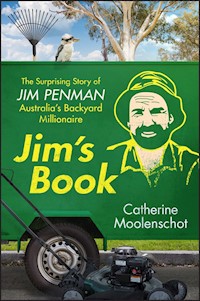
Meet the man and uncover the story behind one of Australia's most recognised brands We all know Jim's. Maybe you just passed a Jim's Mowing trailer on the road; or maybe there's a Jim's Cleaning van parked across the street each Tuesday morning; or maybe your best mate is laughing all the way to the bank after quitting the city and starting his new Jim's Fencing franchise, but do you know the real story behind the Jim's Group and its founder, Jim Penman? Brutally efficient, socially awkward, and a tireless perfectionist, Jim is as complex and fascinating as the Jim's Group. This book is a warts-and-all look at his colourful life that delves deep into how he ignored conventional thinking to turn a few mowing rounds into a corporate juggernaut built on always putting the customer first. Jim's unique approach revolutionised Australia's business landscape, providing thousands of people the opportunity to create and grow their own businesses. Most Australians know very little about the man who created one of the nation's most famous companies. For all of his success, Jim is remarkably unassuming and approachable. In this authorised biography, author Catherine Moolenschot sat down with Jim and over one hundred people who know him -- from franchisees and franchisors, to family, friends, and adversaries -- to get up close and personal with the surprising story of one of Australia's biggest brands and the man who made it all happen. Jim's Book tells the fascinating story of the man and the business that bears his name. Equal parts biography, history and philosophy, this book takes readers on a journey through one man's remarkable life.
Sie lesen das E-Book in den Legimi-Apps auf:
Seitenzahl: 385
Veröffentlichungsjahr: 2019
Ähnliche



















First published in 2019 by John Wiley & Sons Australia, Ltd 42 McDougall St, Milton Qld 4064
Office also in Melbourne
Typeset in Garamond Premier Pro 12.5/18pt
© Catherine Moolenschot 2019
The moral rights of the author have been asserted
All rights reserved. Except as permitted under the Australian Copyright Act 1968 (for example, a fair dealing for the purposes of study, research, criticism or review), no part of this book may be reproduced, stored in a retrieval system, communicated or transmitted in any form or by any means without prior written permission. All inquiries should be made to the publisher at the address above.
Cover design by Brio Books Pty Ltd
Disclaimer
The material in this publication is of the nature of general comment only, and does not represent professional advice. It is not intended to provide specific guidance for particular circumstances and it should not be relied on as the basis for any decision to take action or not take action on any matter which it covers. Readers should obtain professional advice where appropriate, before making any such decision. To the maximum extent permitted by law, the author and publisher disclaim all responsibility and liability to any person, arising directly or indirectly from any person taking or not taking action based on the information in this publication.
CONTENTS
Cover
Prologue
Summary of the Jim's Group structure
Introduction: ‘The Real Jim'
An Aussie icon
Note
1
The Early Years
The gardening begins
The spark of a lifelong passion
A significant gift
The apple doesn't fall far from the tree
The teenage years
2
The Accidental Gardener
University days
The cutting edge
A PhD in History
Note
3
Jim's Calling
Coming to God
A ruined career
The beard appears
4
This Little, Short-term Mowing Business
Selling by not selling
A franchise is born
A flawed business model
Expanding interstate
Note
5
Divorce
A unique parenting style
Parenting tactics
6
The Jim's Brand Expands
New divisions
BarterBank
National rights
North America
7
The Jim Way
Jim's way or the highway
Complaint uproar
8
Winning the Lottery
Meeting Li
A honeymoon marriage
9
Growth
An experimental attitude
Jim's Cleaning
National Office gets its own office
Jim's national conferences
Foothills Conference Centre
10
Business Can Be Tough
Fiascos
Referendum
UK struggles
Jim's call centre
Constant change
11
Jim's Training
Training's early days
Fine-tuning training
Training today
A different side of Jim
12
The Franchisee Experience
A selective process
Financially rewarding work
The complaint system: Guilty until proven innocent
13
‘A Serial Firer'
A revolving door
Firing family
14
Revolt in the Ranks
Franchisor frustrations
Taking everything into account
UK troubles
Legal proceedings
Jim's legal strategy
Notes
15
Tackling Insurance
A frantic start
Too trusting
16
Looking for The One
An acrimonious partnership
Skip Bins stoush
A new CEO
17
Duelling Diggers
Deterioration in Diggers
Legal challenges
Mental health challenges in the Jim's Group
Notes
18
Funding a Lifelong Passion
Jim's theory, summarised
Coming to his theory
Early results
Developing his theory
Funding an obsession
Notes
19
It's All About Character
Jim's University?
Character
20
Looking to the Future
About the Author
Acknowledgements
List of Interviewees
Index
End User License Agreement
Guide
Cover
Table of Contents
Introduction
Pages
C1
iii
iv
vii
viii
ix
x
xi
xii
xiii
xiv
xv
xvi
xvii
xviii
xix
1
2
3
4
5
6
7
8
9
10
11
12
13
14
15
16
17
18
19
20
21
22
23
24
25
26
27
28
29
31
32
33
34
35
36
37
38
39
40
41
43
44
45
46
47
48
49
50
51
52
53
54
55
56
57
58
59
60
61
62
63
65
66
67
68
69
70
71
73
74
75
76
77
78
79
80
81
82
83
84
85
86
87
88
89
90
91
92
93
94
95
96
97
98
99
101
102
103
104
105
106
107
108
109
110
111
113
114
115
116
117
118
119
120
121
122
123
124
125
126
127
128
129
130
131
132
133
134
135
136
137
138
139
140
141
142
143
145
146
147
148
149
150
151
152
153
154
155
156
157
158
159
160
161
163
164
165
166
167
168
169
170
171
172
173
175
176
177
178
179
180
181
182
183
184
185
187
188
189
190
191
192
193
194
195
196
197
198
199
200
201
202
203
205
206
207
208
209
210
211
212
213
214
215
216
217
218
219
220
221
222
223
225
226
227
228
229
230
231
232
233
234
235
236
237
238
239
240
241
242
243
244
245
247
248
249
250
251
252
253
254
255
256
257
259
260
261
262
263
267
269
271
272
273
274
275
276
277
278
279
280
281
282
283
284
e1
Prologue
I met Jim Penman in September 2017 at a business event held at Foothills Conference Centre, which he owns. A friend had called to offer me a free ticket to the event, adding, ‘Jim Penman will be one of the keynote speakers; it'll be a great day'.
‘Jim who?' I replied.
‘Penman — you know Jim's Mowing? The guy who started it.'
‘Oh Jim!' Of course I knew of Jim's. Who didn't?
At the event Jim shared the story of his franchise, especially his obsession with great customer service. It was inspiring. He also made a brief mention of his research into the rise and fall of civilisations, which I found fascinating: what can we learn from our past mistakes and successes as a civilisation?
After the talk a small group of us chased Jim down, catching him just before he left for his next appointment. He was happy to chat for five minutes, and gave us all a free copy of his book Biohistory: The decline and fall of the West — and, amazingly, his email address.
I love talking with individuals who have achieved a lot, learning valuable insights and hearing their incredible stories, so this was an opportunity I couldn't pass up. I emailed him that night thanking him for the book and suggesting we catch up. He agreed, as he wanted to discuss with me how he could get more exposure for his research, and suggested I read the book first.
I read it over the next month, emailed him, and arranged to meet at Jim's national office. Upon arrival I had two distinct impressions. The first was how beautiful the 20-acre property that hosts Jim's national office and the Foothills Conference Centre is. The second was how unassuming the office buildings are. There was no grand entrance. In fact, the buildings looked rather plain: the main office building is long, and looked from the outside more like a row of schoolrooms than an office. I had a hard time figuring out where to enter until I noticed a laminated sign blue-tacked to one of the doors that read ‘National Office'. Surprised, I opened it and stepped into a basic, well-lit, open-plan office.
Valerie Lobo, Jim's employee of over twenty years, pointed me to Jim's office. The door was ajar, and inside he was sitting on a bright-purple exercise ball, working at his computer. I noticed a very basic desk, empty except for his computer. The walls were bare and there was no clutter: no papers, pens, keys or phone, no photos in frames, nothing personal. (Months later I walked into his home office and discovered the walls covered with artwork from his kids, photos of his wife and children, and all the usual desk clutter. It was clear he kept home life and work life separate.)
Jim stood to greet me, immediately launching into a rapid monologue. ‘Oh hi there Catherine; I watched your TED talk and it was good. I liked your Funnel of Greatness idea. It's similar to what I say about the importance of character. You seem to be a lively person who communicates well — maybe there is something we can do together.'
Through our chat that day, and more in the following weeks, we arrived at the idea of me writing a biography of Jim, incorporating the differing perspectives of the people who know Jim — ‘warts and all', in Jim's words. ‘I'm not always easy to work with. I'll introduce you to family, friends, staff, franchisees, franchisors, particularly those who don't like me, so you can have an honest account.'
Throughout my research, Jim has been true to his word. For example, in an email he sent me in April 2018, he suggested I speak with one man in particular: ‘He's just launched a legal action and known me for years, so would be a strong negative voice'. He included his email address so I could contact him.
He was also happy to draft and sign a legal document for a number of interviewees who requested it, promising not to sue them for anything they told me.
Jim has given me access to his family, and current and former staff, franchisors and franchisees. I've attended Jim's Group training, staff lunches and Jim's National Conference. I have been to his home and his farm, and have interviewed over one hundred people from all areas of his life. A few have wished to remain anonymous, and a few declined point-blank to be interviewed.
It would have been impossible to include the perspectives of every one of the over 8000 people who have been involved in the Jim's Group over the years, and there have even been too many GMs, COOs and CEOs to adequately cover in one book. Likewise, the expansion into each new Jim's division has not been covered, as that is too long a list; today there are over fifty divisions, plus others that have failed.
My aim is to give you a full account of Jim's life — his character, his business, and his passions — as well as the company's progression over the years. Some people have very different accounts of what happened, and I have done my best to reconcile them.
This book is the story of the unique man who has built the largest home-service franchise in Australia through his passion for franchisees and customers. Yet while this unrelenting passion has driven his business forward over the past thirty years, his temper, unorthodox communication style, and some of his business decisions have put many offside. His story is inspiring, often surprising, and at times very strange.
Summary of the Jim's Group structure
In the beginning the structure was simple, with Jim as the franchisor selling franchises and no layers of management in between. Today, the Jim's Group franchise system is set up as follows.
Introduction: ‘The Real Jim'
In the late 1980s Jim Penman was in an ‘utter panic'. He had been mowing lawns in Melbourne, employing subcontractors, and selling his excess clients in batches called ‘mowing rounds' to people who wanted to start independent mowing businesses. He knew there was a mowing franchise system called VIP in Adelaide that was very successful, but Jim couldn't see how to make a franchise work in a way that would clearly benefit the franchisee.
Then VIP expanded to Victoria and Jim feared they would swallow his entire business. He talked to VIP's Victorian state manager at the time and offered to sell his entire output of mowing clients to VIP on an ongoing basis, making Jim an appendage of VIP. But VIP was a big business that was growing steadily, and the offer was refused. Still, the success of VIP suggested to Jim that franchising was feasible.
Shortly thereafter Jim attended a meeting at his church. That day the talk was about goal-setting, and, as Jim recalled, ‘On the spot, I decided that franchising the business would be my goal'.
His first move was to attend the 1988 Melbourne Franchise Show, immediately hiding his nametag upon arrival. He walked straight to the VIP stand and enquired. ‘The man gave me a brochure and a long and detailed explanation of the VIP system,' Jim recalled with a grin. After twenty minutes VIP's Victorian state manager arrived, saw Jim, and called out, ‘That's Jim Penman! Don't tell him another thing!' But Jim had already learned what he needed to know.
Jim discovered that VIP concentrated work in one area to reduce franchisee travel, provided discounts on equipment and insurance, and allowed franchisees to make extra cash by selling surplus jobs. Plus, if they were sick or injured they could have someone look after their customers, a major concern for contractors. Jim could finally see why franchisees would pay fees for these benefits, but more importantly Jim was, in his words, ‘very motivated by defence and survival'.
Jim engaged a solicitor to draw up a franchise agreement, rejecting VIP's, which he considered ‘simply unfair to franchisees'. The first thing the solicitor did was create a template for two contracts, one for each company: Jim's Mowing (Australia), and Jim's Mowing (Victoria). ‘I said, “What's this for?” and he said, “In case you want to set up interstate”. I just laughed,' Jim recalled. His ambition was to survive VIP's expansion to Victoria; he would never get big enough to expand. Still, he ended up agreeing, ‘just in case'.
After nine months of arguing over an agreement that the solicitor feared was overly favourable to the franchisee, Jim finally had a franchise agreement he found satisfactory. Though the contract was radically pro-franchisee in many ways, it was still tough on customer service, on-time payment of fees, and that franchisees must always wear their uniform when working.
And so, in June 1989, at the start of a Melbourne winter, Jim Penman launched Jim's Mowing and signed his first franchisee.
Fast forward to today and the Jim's Group is Australia's largest home service franchise, with fifty-two divisions (as of writing — it's rising fast), and with almost 4000 franchisees servicing roughly 35 000 customers a day, on average. The Australian Financial Review1 described the Jim's Group as ‘Australia's second-largest franchise player after Australia Post'. Jim begs to differ. ‘There may be more than four thousand post offices in Australia but less than three thousand are licensed. Look it up.'
Every week in Australia some 175 000 people have their needs met by a Jim's franchisee. You could wake up one morning and have your antenna fixed, your dog washed, your bookkeeping done, your lawn mowed, your house cleaned, your windows washed, your devices tested and tagged, your computer cleared of viruses, your home cleared of pests, your car detailed, your pool cleaned and a new fence put up — all by a Jim's service. And this isn't even a quarter of what Jim's people do.
Today, the Jim's franchise as a whole turns over roughly half a billion dollars a year. Jim himself employs roughly forty people, and rising. And though franchise numbers have been growing steadily, client demand has risen even faster. In 2016 the Jim's Group turned down 121 000 jobs because there were not enough franchisees to do the work. In 2017 and 2018, the number of ‘unserviced leads', as they are called, was 170 000 and 175 000, respectively.
So who is this Jim?
An Aussie icon
What is the first name of the founder of Jim's Mowing? When Jim posed this question to me I made the obvious guess, ‘James', as did most of the people I have since asked. Jim shook his head, grinning. ‘My first name is David,' he said. I was somewhat dubious so he pulled out his driver's licence to prove it, and, sure enough, it reads ‘David J Penman'. ‘If you talk to any of my relatives they still call me David,' he laughed.
He started calling himself Jim, he explained, when he worked on a farm after graduating high school. The owner's son was also named David, so he told everyone to call him Jim, from his middle name, James. The new name stuck, and we don't have to contemplate a world serviced by ‘David's Mowing'.
Jim has quite a reputation. While writing this book, when it came up in conversation what I was writing, I received an interesting array of responses:
‘Oh, Jim! I've heard he's a prick.'
‘Man there's a Jim's everything these days. Where will they stop? Jim's Haircuts?'
‘I heard Jim fired his sister, is it true?'
‘I know someone who was a franchisee but left because of all the changes to the contracts.'
‘I was a Jim's Mowing guy a number of years ago! I was much fitter back then, of course.'
‘Wow — he's an Aussie icon!'
‘I've heard some bad things about him.'
Jim Penman is a powerful man with tight control over his franchise system. He is relentless about delivering great customer service and looking after franchisees. He has a rigorous complaint system that he personally manages. Because of his forceful reputation in the business world, I did a double take when I saw him affectionately cuddle, kiss, and tickle his eight-year-old son. I have watched Jim command a room with riddles, jokes and party tricks at a franchisor dinner, and I have had him finish many of our interviews by simply standing up and walking away without saying ‘goodbye'.
The first staff member I interviewed wrote me an email beforehand, to give me an initial insight into Jim. Remarkably, Jim was copied into the email, which either shows this employee's extreme confidence in their ability to hold their job, or it shows that Jim doesn't mind his employees being brutally honest with him. Maybe it's both?
My first direct experience with Jim, beyond the initial ‘welcome aboard' handshake, was fear. He was asking me about an ETA on the project that I'd been hired to work on. I told him my estimate and — holy crap — that look in his eyes … you feel like you're standing on very, very thin ice. I've heard the same about that penetrating stare from other people (who actually did end up getting fired!) …
I've got a ton of respect for him. Respect has roots in both admiration and fear, and I have both for Jim …
When it comes to business: he's ruthless. If you're not contributing, you're gone. Regardless of your situation. I've seen him fire a guy who was a week from his first baby.
Some of Jim's staff are daunted by him, but not those who communicate with him most. Where other employees see him as domineering, to them he is a passionate, intelligent, ‘tough but fair' boss.
In 2012 you might have seen Jim's sister Gill Moxham talk on Today Tonight about her own brother firing her. ‘The Today Tonight interview twisted it,' Gill told me. ‘They made it out like it was a family business. They didn't push the fact that Jim shafted me so much.' Needless to say, Gill is still very hurt and mad at him. You'll hear the details of what happened later.
Jim has many contradictions. He is not a likable, social personality, nor is he someone you meet and instantly feel warmth for. Yet he has a lot of people in his life, gets on well with his kids, has been married to his current wife for seventeen years, and has friends he sees weekly. Jim is known to change his mind often, make decisions very quickly and get angry in an instant. (‘Of the seven sins, wrath is definitely my downfall,' Jim admitted.)
Jim responds to emails with record speed, though often without thinking through how his response will sound to the recipient. And he doesn't add niceties like ‘Hi Catherine, I hope you're well' to his emails; he is famous for replying abruptly. Jim has a reputation of being a firer, with many franchisors laughing that ‘it's always a revolving door at National Office'. And yet he has multiple staff members who have worked for him for five to ten years, and some who have been there for over twenty.
Jim is generally seen as ruthless and tough in business, not one to be crossed lightly. And yet the Jim's Group has avoided litigation better than most franchise systems. Though himself a powerful and forceful man, he believes passionately in the rights of the underdog, which is why his contracts are unique in allowing franchisees to vote out franchisors who do not support them properly, and in allowing franchisees to walk away and operate independently.
Jim is the easiest person to reach that I have ever met. He gives all franchisees his direct phone number and email address and actively encourages them to contact him at any time, responding with lightning speed when they do. Yet he has many faults as a manager, which he admits openly. Many of his staff, franchisors and franchisees say he doesn't know how to manage anything effectively, and yet, somehow, he has built an enterprise that has far outstripped its competitors. Though Jim is deeply and ferociously ambitious, he lives a simple lifestyle and pours every dollar he can into finding a cure for addiction, depression and other ills.
So among all of this — who is Jim, really?
And how on earth did he build Australia's (if not the world's) most successful home-service franchise?
Is he a tyrant? Or a saint?
Note
1
Michael Bailey, 14 November 2017. ‘Jim's Group mows short court battle with digger franchisor'.
Australian Financial
Review
.
1The Early Years
Jim's father, Tom Penman, was a product of his British upbringing. Tom's father had been a senior manager for an electricity company and his great-grandfather David Penman, Jim's great-great-grandfather, was a sea captain who went down in a storm in the Bay of Biscay. He had become a family legend and Jim's personal hero, as someone who had risen from poverty to success. Jim's mother, Margaret Moxham, was one of six children growing up in Scone, a small country town roughly 250 kilometres north of Sydney. Margaret's father was a shire clerk. Both of Jim's parents came from upper-middle-class, educated families.
Jim's mother was a maverick for her time. She was denied enlistment for World War II since primary teaching was a reserved occupation. But as soon as the war ended she used her savings to buy a ticket on the first civilian ship allowed into the UK after the war. Once on English soil she hitchhiked from place to place, having the time of her life. This was in the late 1940s, when women just didn't do that kind of thing.
At a youth hostel in Wales Margaret met an Englishman, Tom Penman. They courted in Wales before deciding to holiday on the continent together, where they argued the whole time. ‘And then they just thought, “We might as well get married”. It wasn't romantic in any normal sense,' Jim said. ‘Mum chose Dad because he didn't bore her, and she thought she wouldn't find anyone better.'
They settled in Halesowen, Worcestershire, and soon had their first child, Lynne, after which Margaret became severely depressed but received no support. ‘What we see now as post-natal depression, the doctors saw then as a madwoman,' Jim's sister Gill said. The doctors simply gave Margaret Valium, which gave her bad side effects, so they gave her other tablets to help. Unfortunately those tablets also had side effects.
‘She was on about twenty-five tablets a day for thirty-three years,' Gill said.
Every time she got pregnant she would stop having the tablets, cold turkey, because even she was aware — with the knowledge at that time — that they could affect the child. I don't know if that had any influence on our very early gestation, who can tell …
Despite the fact that, according to Gill, ‘Dad was extremely unsupportive when Mum was pregnant', Margaret and Tom went on to have three more children: David (Jim), on 8 May 1952, and two years later another son, Chris. Gill was born five years after Chris. (Lynne and Chris declined to be interviewed for this book.)
In 1955, when Jim was three, Tom became a Ten Pound Pom and the family moved to Australia so Tom could lecture in engineering at Adelaide University. The family moved into a basic commission house in Adelaide.
Margaret was unhappy as a homemaker. ‘If she was born later she'd have been a doctor or some sort of highly successful person, but for a woman in the 1950s that wasn't on,' Jim said. ‘My mother was loving, but temperamental. She'd lose her temper and we learned to be wary of her moods.' Margaret was anxious and worried a lot, but she was also an intelligent, strong-willed and capable woman. She taught Jim to read before he went to school, and he fondly remembers that she wrote a children's book for him called ‘David and the Dinosaurs'.
After a few years the Penmans could afford to buy a red-brick house in Glen Osmond, Adelaide. When Jim was seven his mother gave birth to Gill, and again Margaret suffered severe post-natal depression. There would be a knock on the door in the early hours of the morning, and Tom would answer to find a police officer and his wife on the doorstep.
‘Dr Penman, we found your wife wandering the streets,' the police officer would explain.
Tom would reply, ‘She's a grown woman, she can do exactly what she wants', showing no concern that her unhappiness drove her out of the house and onto the streets in the middle of the night.
‘They should have been married for six months, because that is how long they got on for,' Gill reflected. Jim's view of his father was that he was
totally traditional in the sense that he didn't like to talk about feelings and thus couldn't relate to Mum that well, but he was totally dedicated to his family … I can remember him working night and day and living in what today people would consider poverty, so we would have the best start in life. And he clearly loved Mum, even if he couldn't give her what she needed.
Despite Margaret's unhappiness, and despite the drugs clouding her thinking, she was still an amazing mother. ‘I loved my mother very much,' Jim said. Gill shared that Margaret ‘had the skill to know when a child was ready for a certain book, or to play at maths, or to draw. She was always there for us'.
All the Penman children helped out with chores. Jim remembers doing the dishes, putting mallee roots in the firebox and cleaning out the ash from the fireplace. As a young boy Jim's dream job evolved from train driver to doctor to vet (he found animals easier to get along with than people).
Jim got on well with his brother Chris, and the two of them fought and played together all the time. ‘We were a strong pair,' Jim said. ‘Chris was my closest friend, and the best man at my first wedding.'
He didn't get on so well with Lynne as a child, though of all the siblings they are closest to each other today. Gill remembers Lynne once saying to her that ‘“up to the age of about seven he was nice, then all of a sudden he turned into a sour little boy.” Now,' Gill added, ‘whether that was when his Asperger's kicked in, or me coming along totally unexpectedly was the thing, I'm not sure.'
Gill remembers getting along very well with Jim when she was little.
I thought he was just wonderful … but he gets on with children because they don't have their own opinions. As soon as somebody says something that is opposing to what he thinks, he reacts strongly.
A few moments later Gill, memories perhaps clouded by more recent interactions with Jim, added, ‘He's always been an arrogant arsehole, but he takes after Dad'. For his part, Jim said that Gill ‘was a cute little girl, I was very fond of her'.
The boys were sent to Prince Alfred College in Adelaide, a school that was founded by the Methodist Church in 1869 and still exists today. Jim recalls that the school was okay, but he has no warm feeling for it: ‘I was a solitary kid who got picked on. School was just something to go through.' He wasn't social and didn't bond well with his classmates, instead burying his head in books.
The gardening begins
At eight Jim joined Cub Scouts, though he was not particularly good at it. He didn't get many badges and had few friends. But some good did come of it: cubs were encouraged to do odd jobs around the neighbourhood to earn money for the troop. It was called ‘bob-a-job' in those days, because you would get paid a bob (one shilling) for a job. The Penmans knew their neighbour over the back fence, Mr Tapley, quite well, and so eight-year-old Jim knocked on his door. Mr Tapley gave Jim the job of raking his gravel driveway. ‘He was a gentleman who never raised his voice in all the years I knew him,' Jim said. It became an ongoing arrangement, with Mr Tapley asking Jim to do the weeding and other simple gardening jobs. ‘He paid me two shillings a week,' Jim recalled with glee, ‘which was good value then. You could buy a large block of Cadbury chocolate with it, though I didn't buy one often. I was a saver!'
Tom saw Jim's effort in Mr Tapley's garden and figured Jim was now old enough to help out in theirs. They had a push mower, and their backyard was the first lawn Jim ever mowed. It wasn't easy: ‘Twigs from the trees were forever jamming the blades, and the backyard was terribly sloped,' Jim said.
Jim soon gained his second client, another friendly, gentlemanly neighbour who lived across the road. He was Polish and had been in a prisoner-of-war camp for Polish officers in World War II. ‘He was very kind to me,' Jim remembered.
One day Jim went to Mr Tapley's house to work in the garden as usual, but the gravel drive did not need raking and there was no weeding to be done. ‘Why don't you carry that pile of rubbish to the incinerator?' Mr Tapley suggested, and so Jim did.
When he was finished Mr Tapley inspected Jim's work and found leaves and twigs dropped along the way. ‘If you're not going to do it properly, I might as well do it myself,' Jim remembered Mr Tapley saying in a sad tone. Jim was filled with deep shame, and a strong determination to never let Mr Tapley down again. This was the moment Jim became obsessed with always doing an outstanding job, and to this day he is obsessive about his franchisees delivering excellent customer service. ‘I am notoriously emotional in my attitude to customer service — I feel very upset when any one of my customers has been let down.'
The spark of a lifelong passion
When Jim was ten Tom took the family to England for a year, on study leave with his job as a lecturer at Adelaide University. Tom's work was at an atomic research centre in Berkshire, England, but it left plenty of spare time.
‘We spent the whole year driving, looking at castles, cathedrals, Roman roads, searching for flints that might be prehistoric knives,' Jim said animatedly. ‘It was quite extraordinary, I remember more of that one year than the whole rest of my childhood.' It fueled his love of history.
Jim's maternal grandfather had died of pneumonia back in Australia before Jim was born, and he didn't see his maternal grandmother often because she lived in Sydney. This trip gave Jim and his siblings time to see their paternal grandparents in England, though it wasn't long enough to build any serious bond. ‘They were quite indulgent of us, nothing like what my father experienced as a kid. Dad had an austere upbringing, with few obvious shows of affection,' Jim said.
Jim and his siblings went to school in a twin village called Aston Upthorpe/Aston Tirrold, in Oxfordshire, England. There were only two teachers for the whole primary school: one for years one and two, and another for years three to six. Jim didn't get on well with the other kids, and one day ‘a gang of four set on me after school, so I hit one and pushed another over and ran for it,' Jim said. It worked well enough that they didn't try it again.
This village school was the first time Jim was in a co-ed environment, and it was here he had his first crush on a girl. It came to nothing, but Jim still recalls his year in England as ‘the most amazing experience. It was quite life-changing'.
The Penmans returned to Adelaide, and the kids to their respective schools. In Jim's first year of high school another boy, Nobbs, ‘used to really have a go at me. He just took a dislike for some reason,' Jim said. Nobbs picked on him often, and it got to a point that Jim wanted to leave the school. But one day, when Nobbs balled a scrap of paper and threw it at Jim, Jim exploded. ‘I went for him, attacking him,' Jim recalled. They overturned several desks in their fight, and it was quickly big news around the school. ‘Even months later boys used to talk about the Nobbs – Penman fight,' Jim chuckled. After that things got easier and he decided to stay.
A significant gift
In 1966, the year Jim turned fourteen, the family moved to Sydney for a year because Tom took a job with Austin Anderson, a consulting firm. The boys went to Sydney Church of England Grammar School, ‘Shore' for short, an Anglican all-boys school. In a physical education class they measured their pulse rates and Jim realised he was one of the least fit kids, so he started jogging regularly. ‘This was in the 1960s, well before jogging became popular,' Jim said. Today, he still runs almost daily.
As a teenager Jim had begun to hate birthdays and receiving presents, and he still hates them today:
It's probably got something to do with the fact that, having no social skills whatsoever, if you're given a present you don't really want, you're supposed to make a pleasant comment … but I can't do that. I can't appreciate something I really don't want, I'm unable to pretend.
But, in a contradiction characteristic of Jim, one particular gift changed the course of his life.
Jim made one friend in Sydney, Harold Richards, whose family had a beautiful house on Sydney Harbour. When saying goodbye at the end of the year, Harold gave Jim a present. It was The Peloponnesian Wars, an account by Thucydides (460 – 400 BC) of the great struggle between Athens and Sparta, in which Thucydides himself had actually fought. Thucydides took great care with his sources and was keen to understand motivations and root causes, so, although he was Athenian, his account is unusually balanced and he was often critical of his own city.
Thucydides has been called ‘the father of scientific history', and this book had a huge impact on Jim. Athens at that time was, in Jim's opinion, perhaps ‘the most brilliant city of all time', and he struggled with the question of why Athens declined so quickly, losing its creative brilliance and falling subject to Macedon in just a few decades.
Reading this book triggered an ongoing obsession with the fall of Rome. Not only was it fascinating in its own right, Jim also saw obvious parallels with our own time. ‘Even in the 1960s, there was an obvious decline in traditional standards and in religion, just as in the late Roman Republic,' Jim said. He wondered: Was our own civilisation heading the same way as Athens and Rome? And if so, could anything be done about it?
The apple doesn't fall far from the tree
In early 1967 the Penmans moved from Sydney to Melbourne, where Tom had been appointed Chief Engineer at Carlton United Breweries. It was Jim's first time in the city that would become his home. Tom and Margaret could now afford to buy a posh house in North Balwyn.
The boys were sent to Melbourne Grammar, with Jim joining Miller House, and the girls were sent to Presbyterian Ladies' College. Andrew Michelmore attended Melbourne Grammar from Grade 7 and recalls Jim joining his class in 1967.
‘David [Jim] was pretty quiet, but he had a strong character,' Andrew recalled.
I remember there were a couple of arguments, discussions on things, and he didn't back off. I can picture David in an argument about something and reacting very strongly and very quickly. He was this quiet, unassuming guy who went about his own business, and then it was like someone would light a match and wha! That's when you saw the strength of his character.
This quick temper is something staff, franchisors and franchisees were to experience on many occasions.
‘Jim was very studious,' Andrew Michelmore added. ‘He had a strong underlying character; he is easily underestimated.'
Jolyon Shelton, who was also in Jim's class, remembered that ‘David Penman was very smart,' but added that ‘he didn't strike me as the really brilliant type, nor a successful businessman. He was quiet and reserved and kept his own company'.
Stewart Niemann, another of Jim's classmates, remembered that Jim ‘came across as one of those English types, a bit cultured'. Stewart added that Jim often had ‘his nose in books, which was reasonably unusual, to read outside of the curriculum'.
Though Melbourne Grammar was an Anglican school, Jim's questioning mind led him to the conclusion that God didn't exist. ‘I was pretty militant, actually. At school I would pin people down and ask whether they believed in God, and argue with them,' Jim said. He and a friend went to a Billy Graham crusade to make fun of the people there. ‘So I was kind of anti, you could say,' Jim chuckled. But at the same time he was drawn to Christianity … Whenever someone came to the Penmans' front door, no matter what religion they represented, Tom and Margaret would invite them in; it was the family's way. Said Jim,
There was something that attracted me [to religion], but I fought against it. Emotionally, it all made pretty good sense. In a way I was saying ‘I don't think there is a God. Convince me'.
But he was to remain a militant agnostic for many years to come.
Tom worked at Carlton United Breweries for the next two years, at which point he lost the job due to his inability to get on with (in his words, according to Jim) ‘eighteenth-century management'. ‘He wasn't tactful enough, just like me,' Jim explained.
Tom went on to launch a successful consulting business, solving murders and investigating fires. One case Jim vividly remembers is that of a young man who crashed his car, killing his fiancée. The police found that he had been drinking heavily and speeding, and the young man was facing several years in prison. The defence lawyer called on Tom to see if there was anything to be done.
Tom assessed the skid marks and showed they were consistent with someone travelling the speed limit. He asked the paramedic, ‘Did you swab his skin with alcohol before taking the blood sample?' They responded they had. ‘That accounts for the alcohol,' Tom replied. He also pointed out that the man had been having dinner with his future father-in-law who was a Methodist minister, so it was extremely unlikely he had been drinking at all. ‘This young man,' Jim said,
whose life would have been … I mean, it's bad enough your fiancée gets killed, he would have been destroyed by being sent to jail for culpable driving … And he gets out, because of my father. Dad was a really brilliant man. Very tactless, with limited social skills and not a great husband. But very driven and smart.
Years later Andrew Michelmore, Jim's former classmate, was working at Conzinc Riotinto Australia, which during a particular case used an expert witness in chemical engineering, ‘and it was Tom Penman, David's father!' Andrew recalled. Andrew expected Jim to go on and have a career similar to his father's, ‘being an expert in something and providing considered advice,' Andrew said.
Tom Penman was always full of ideas and he encouraged thinking, learning and researching in his children. When the family watched a historical film on television Tom would grab the encyclopaedia and read out what really happened during the commercials. ‘As a kid you don't appreciate that,' Jim said.
Despite the respect Jim has today for his father, as a teenager it was a tough relationship.
He was a very conscientious and concerned father, but not exactly a softy. I would never have dreamed of disobeying him! There was a time when I stopped speaking to him entirely. At the dinner table he told me to shut up, probably because I was having a go at him. So, I did, for six months. It was really horrible when I think about it, because my father sacrificed so much for us, and yet he was a pretty fierce character and I fought with him. Later I did thank him for all he had done, but after he died I wished I had apologised to him for being such an ass as a teenager.
Jim's teenage rebellion took a distinct form, however. Rather than indulging in more typical behaviours, he reacted to his father's moderate wine drinking by avoiding all alcohol, something he has maintained (with the exception of a few months at university) until today.
The teenage years
Jim's teenage years were not happy; he was unpopular. ‘I was really cantankerous,' he admitted. He disliked being physically close to others, and he didn't know the names of most in his class, a result of the combination of a lack of interest and a struggle to remember names and faces that plagues him to this day. He did have a few friends in high school, ‘to some extent. Very few. I had three friends I used to play bridge with in my last couple of years of school'. He was keen on girls but ‘hopeless' at interacting with them. He was awkward and clueless, and being at an all-boys school didn't help. ‘My greatest wish was to know what girls were thinking. I just had no idea,' he said. He would have crushes for months and even years, without ever asking them out. ‘They probably didn't even know … ' Jim added.
There were two positive influences in these years. The first was reading, often a book a day. ‘It was before the age of computers; we didn't even have a television until my late teens. I was a fanatical reader,' Jim said. Jim read books about history, particularly ancient history, and was also interested in biology.
Then there were the great writers such as Tolstoy, Hemingway, Murasaki Shikibu (author of The Tale of Genji, an eleventh-century Japanese classic) and others.
The books Jim read sparked him to ask some unusual questions for a teen, such as,
Why does a civilisation collapse? Why did ancient Athens and the Roman Empire decay? Why do humans react to wealth differently to how animals react? When you put animals in an environment with masses of food, their populations explode. Humans are the only species where, when in an abundant environment, our populations, overall, shrink. So I just used to read masses and masses of books. A lot of science fiction too, of course; it wasn't all instructive.
The second positive in his teenage years was his relationship with his mother. He would come home from school and talk to her in the kitchen, pacing up and down or sitting at the kitchen bench. ‘She was the person I was closest to in those times,' Jim said.
Jim was very idealistic and ferociously egalitarian in his thinking. He dreamed of a truly egalitarian society where university professors would take out the rubbish and cleaners take their turns at management. ‘I dislike inequality,' Jim said.




