


0,99 €
Mehr erfahren.
- Herausgeber: Annie Jones
- Kategorie: Geisteswissenschaft
- Sprache: Englisch
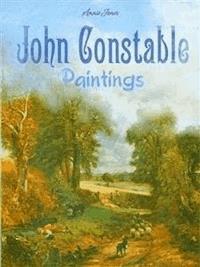
John Constable was English artist, considered with Turner as one of the greatest British landscape painters. His most excellent landscapes are of the places Constable knew, mainly Suffolk and Hampstead, where he lived. He worked broadly in the open air, drawing and sketching, but his finished pictures were produced in the studio. Constable refused the strict or "picturesque" depicting of nature; as an alternative he tried to seize the effects of changing light and the forms of clouds moving crosswise the sky. He loved the country landscape and open-air scenes in his inhabitant Suffolk. His larger scenes were sketched full-size in oil, and the sketch was then used as a model for the finished painting.
Das E-Book können Sie in Legimi-Apps oder einer beliebigen App lesen, die das folgende Format unterstützen:
Veröffentlichungsjahr: 2015
Ähnliche


















John Constable: Paintings
ByAnnie Jones
First Edition
Copyright © 2015 byAnnie Jones
*****
John Constable: Paintings
*****
Foreword
John Constable was born June 11, 1776, in East Bergholt, Suffolk. His father was a wealthy corn merchant. Constable was educated at Dedham Grammar School, and after he left school he worked in his father's business. His heart was not in it, however, and in 1799 he induced his father to send him to the Royal Academy in London to study art.
A colleague student at the Royal Academy School was JMW Turner, but the two men never became friends. Constable exhibited his first painting in 1802, but unlike Turner, success eluded him. He sold only 20 paintings in his lifetime, and was never recognized in his homeland while he was alive.
In 1816 Constable became financially secure with money left to him when his father died. He married Maria Bicknell despite the opposition of her family. The couple were happy together, and Constable was plunged into depression on her death in 1828.
Constable rejected the formal or "picturesque" rendering of nature found in the works of artists like Gainsborough. Instead, he tried to capture informally the effects of changing light and the patterns of clouds moving across the country sky. He loved the countryside, and his best work was of outdoor scenes in his native Suffolk and his London home in Hampstead.
He worked in the open air, though he he returned to his studio to finish his paintings. His larger scenes were sketched full-size in oil, and the sketch was then used as a model for the finished painting.
In France Constable found the success that escaped him in England. His 1821 master work The Haywain was exhibited at the Paris Salon of 1824. Constable's work greatly influenced the French artist Delacroix, and the so-called "Barbizon School", who followed Constable's lead in working outdoors. Later still, the French Impressionists built on Constable's efforts to capture the moods of light.
It was not until 1829 that Constable was reluctantly awarded full membership in the Royal Academy (and then by a majority of only one vote). He continued to struggle for commercial success, and was forced to take on some portrait work to make ends meet.
John Constable died on March 31, 1837, and was buried in St. John's church, London.
Paintings
Overlooking the Stour
1810,oil on canvas,26,7 × 26,7cm
Boat building in Flatford
1810,oil on canvas, 26,7 × 26,7cm




