


22,60 €
Mehr erfahren.
- Herausgeber: John Wiley & Sons
- Kategorie: Fachliteratur
- Sprache: Englisch
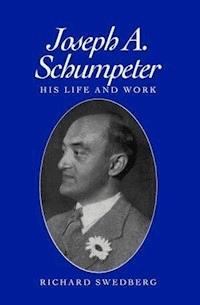
Joseph A. Schumpeter (1883-1950) is one of the most celebrated authors on the economics and sociology of the twentieth century. Richard Swedberg's new biography provides an engaging and vivid account of Schumpeter's varied life, including his ventures into politics and private banking as well as his academic career. As a backdrop to these, Swedberg also discusses Schumpeter's tragic personal life.
This book provides a thorough overview of Schumpeter's writings, and also introduces previously unpublished material based on his letters and interviews. Swedberg emphasizes that Schumpeter saw economics as a form of social investigation, consisting of four fields: economic theory, economic sociology, economic history and statistics. The author describes and analyses Schumpeter's theory of social classes and modern states as well as his more famous theory of the entrepreneur.
Sie lesen das E-Book in den Legimi-Apps auf:
Seitenzahl: 636
Veröffentlichungsjahr: 2013
Ähnliche



















Copyright © Richard Swedberg 1991
Richard Swedberg is hereby identified as author of this workin accordance with Section 77 of the Copyright,Designs and Patents Act 1988.
First published in 1991 by Polity Pressin association with Blackwell PublishersFirst published in paperback 1993
Reprinted 2005, 2007
Polity Press65 Bridge StreetCambridge, CB2 1UR, UK
Polity Press350 Main StreetMalden, MA 02148, USA
All rights reserved. Except for the quotation of short passages for the purposes of criticism and review, no part of this publication may be reproduced, stored in a retrieval system, or transmitted, in any form or by any means, electronic, mechanical, photocopying, recording or otherwise, without the prior permission of the publisher.
Except in the United States of America, this book is sold subject to the condition that it shall not, by way of trade or otherwise, be lent, resold, hired out, or otherwise circulated without the publisher’s prior consent in any form of binding or cover other than that in which it is published and without a similar condition including this condition being imposed on the subsequent purchaser.
ISBN: 978-0-7456-6870-3 (Multi-user ebook)
British Library Cataloguing in Publication DataA CIP catalogue record for this book is available from the British Library.
Typeset in 9½ on 11 pt Asterby Graphicraft Typesetters Ltd, Hong KongPrinted and bound in Great Britain byMarston Book Services Limited, Oxford
This book is printed on acid-free paper
For further information on Polity, visit our website: www.polity.co.uk
Contents
Acknowledgements
Introduction
1 Childhood and Youth
2 Early Economic Works
3 In Politics
4 The Difficult Decade
5 Excursions in Economic Sociology
6 In the United States
7 Capitalism, Socialism and Democracy
8 Last Years, Last Work
Appendices
I Aphorisms from Schumpeter’s Private Diary
II Schumpeter’s Novel Ships in the Fog (a Fragment)
III Letters by Schumpeter
Bibliography of Schumpeter’s Works
Notes
Index
Acknowledgements
First of all I would like to thank two people who have played a key role in this project: Anthony Giddens and my wife, Marta Cecilia Gil-Swedberg. Anthony Giddens suggested that I should write this book; and Cecilia gave me love, support and inspiration while I wrote it.
Most of the material for this book was gathered during the academic year of 1987–8 which I spent as a visiting scholar at Harvard University, where the Schumpeter Collection is to be found. I am very grateful to Mr Clark A. Elliott, Associate Curator of the Harvard University Archives, and to his most helpful staff, especially Mike Raines. Some of the other scholars working in the Archives were also very helpful to me, especially William Buxton and Larry Nichols. I must in addition thank the Schlesinger Library, Radcliffe College, where Elizabeth Boody Schumpeter’s papers are housed, and the staff at the Kress Library and the Baker Library at the Harvard Business School. While in Cambridge I interviewed many people who had known Schumpeter in one capacity or another, including Abram Bergson, James Duesenberry, John Kenneth Galbraith, Carl Kaysen, Wassily Leontief, Richard Musgrave, Paul A. Samuelson, Robert Solow, Paul Sweezy and James Tobin. All of them gave freely of their time and knowledge. I also met and/or corresponded with a number of other scholars and have benefited very much from their insights and information relating to Schumpeter, including Hugh G. J. Aitken, Robert Loring Allen, Bernard Barber, Daniel Bell, Thomas C. Cochran, Lewis A. Coser, Regis A. Factor, Richard M. Goodwin, Gottfried Haberler, George C. Homans, David Landes, Edward S. Mason, Robert K. Merton and Chris Prendergast. A special mention must be made of Wolfgang Stolper, who for several years has answered my questions about Schumpeter with authority and kindness, and of Mark Granovetter who always teaches me new things in economic sociology.
Back in Sweden in the autumn of 1988 I continued to gather material, this time from Europe. Many people helped me at this stage, including Karl Acham, Massimo M. Augello, Gunnar Boalt, Erik Dahmén, Karl Eschbach, Herbert Giersch, Dirk Käsler, Hans Lutz Köllner, Dieter Krüger, Wolfgang Mommsen, Kurt Mühlberger of the Archives at the University of Vienna, Olle Persson (Inforsk), Galina Petkova, Günther Roth, Wolfgang Schluchter, Paul Schmidt at Archiv der Rheinischen Friedrich-Wilhelms-Universität, Yuichi Shionoya, Georg Siebeck, Michael J. Stevenson, Chuhei Sugiyama, Shigeto Tsuru and Lars Udéhn. I also received much fine information from various institutions, including Allgemeines Verwaltungsarchiv in Vienna, Karl-Franzens-Universität Graz, the Library of the University of Reading, the Royal Library in Stockholm, and the Library of Stockholm University. For intellectual inspiration I would like to single out Jürgen Osterhammel, who has written a couple of excellent articles on Schumpeter. Eckhart Kühlhorn and Harry Dahms helped me by checking my German translations. György Lengyel organized a fine seminar on comparative economic sociology in the spring of 1990 at Dubrovnik which inspired some of the ideas in chapter 7.
Finally, I most gratefully acknowledge financial support at various stages of this project from the American Council of Learned Societies, the Foundation of Ruben Rausing, and the Foundation of Magnus Bergvall (Skandinaviska-Enskilda Banken). The finishing touches to the manuscript were made in the autumn of 1990 while I was at the Russell Sage Foundation in New York. Many people at the Foundation helped me with various tasks, such as Sara Beckman, Vivian Kaufman and Pauline Rothstein. At this stage of the process I also benefited from very careful readings of the manuscript by Murray Milgate, Mark Perlman and Jack Repcheck. All three made many valuable suggestions for how it could be improved. A careful reading and copy-editing was also made by Sue Ashton. Finally, I hope that I have ended up by writing the kind of book that the reader will enjoy.
The publisher would like to thank: Harvard University Press for permission to reproduce an extract from Schumpeter Social Scientist by Seymour E. Harris, ed., Cambridge, Mass.: Harvard University Press, Copyright © 1951 by the President and Fellows of Harvard College; Yale University Library for permission to reproduce Joseph A. Schumpeter’s letter to Irving Fisher, February 18, 1946, Irving Fisher Papers, Manuscripts and Archives, Yale University Library; the Schlesinger Library, Radcliffe College for permission to quote from the papers of Elizabeth Boody Schumpeter; the Harvard University Archives for permission to quote from the papers of Joseph A. Schumpeter.
Introduction
Why a book on the life and work of Joseph A. Schumpeter? There are several reasons, some of which are more legitimate than others. For one thing, Schumpeter’s ideas are very close to the temper of our time. Keynesianism has fallen into disrepute and economic liberalism has taken its place as the dominant economic ideology. The market and the entrepreneur are seen as essential not only to a well-functioning economy but also to a well-functioning society; and this means that what Schumpeter said on these topics is avidly studied today. There are many examples of this, from the business press to the academic journals. The Economist, for example, often takes a Schumpeterian stance in its editorials and articles. Those who are quick to sense an ideological ally in Schumpeter should, however, beware. Schumpeter may have celebrated the entrepreneur – but he also thought that socialism was around the corner and that monopolies could be superior to the free market.
Another reason for the current interest in Schumpeter is that mainstream economics is experiencing something of a crisis, and a number of economists feel that Schumpeter may have some relevant answers. Schumpeter spent much time on some of today’s most important puzzles: the role of technology in the economy; how to incorporate social factors into economic theory; and how to develop a truly dynamic theory. Finally, there is also an increased realization that Schumpeter’s life as well as his work are much richer than has commonly been understood. During the past few years, for example, a number of important unpublished texts by Schumpeter have been located and made available. These include not only a number of interesting economic writings but also some personal letters and political writings, which show that Schumpeter was a much more complex person and thinker than we thought. The same message comes through again and again in the conferences arranged by the recently created International Joseph A. Schumpeter Society. In brief: Schumpeter’s legacy is very much alive and worthy of our attention.
A central theme in this book is that Schumpeter, in his various writings, tried to work out solutions to economic problems within a division of labour in the social sciences which is very different from the one we have today. When Schumpeter was young he was heavily influenced by Max Weber’s attempt to create a new and broad type of transdisciplinary economics, called Sozialökonomik or ‘social economics’. This type of economics was Weber’s answer to the Methodenstreit, an academic feud between German-speaking economists which started in the 1880s and dominated the economic scene till some time in the 1910s. In Weber’s opinion, this ‘battle of methods’ had had a disastrous impact on economics by polarizing it into a theoretical part and a historical part. Economics, Weber said, had been split into ‘two sciences’: one that was overly abstract and non-historical and one that was overly historical and non-theoretical.1 This was unacceptable to Weber; and to get out of this deadlock, he suggested a new type of economics – Sozialökonomik — which tried to synthesize economic theory and history. Sociology was also included in Weber’s alternative; it constituted more or less the mediating link between history and theory. All of this had a great impact on the young Schumpeter who was a colleague of Weber and often took his side in public disputes. In short, Schumpeter made the Weberian notion of Sozialökonomik his own.
One key to Schumpeter’s work is consequently his effort to work out his own analysis within this Weberian paradigm for economics, which is now since long forgotten. Sometimes he leaned more towards pure economic theory (this was especially true during the early part of his life when he endorsed mathematical economics) and sometimes (as in later life) he tried to counterbalance the exaggerated use of mathematics in economics with economic history. Always, however, Schumpeter was intensely aware that even if there exist several social sciences, there is only one social reality. To cite the famous opening lines of Schumpeter’s classic, The Theory of Economic Development: ‘The social process is really one indivisible whole. Out of its great stream the classifying hand of the investigator artificially extracts economic facts.’2
This book, however, is not only about Schumpeter’s work, it is also about his life. The decision to include material about Schumpeter’s life was taken despite the fact that the biographical information about Schumpeter is rather meagre, especially for his early years and his first academic appointments in Europe (for various reasons we know more about Schumpeter’s American period). The fact that this study includes biographical material should, however, not be interpreted to mean that in order to appreciate Schumpeter’s work, a knowledge of his life is absolutely necessary. It is clear that Schumpeter’s finest intellectual achievements can be fully appreciated without any knowledge whatsoever of his life. Still, there is the fact that Schumpeter’s personality is very much present in everything he wrote. In an article about Pareto, Schumpeter wrote as follows (and he might as well have been describing himself): ‘But into everything that was not a theorem in the pure logic of economics the whole man and all the forces that conditioned him entered so unmistakably that it is more necessary than it usually is in an appraisal of scientific performance to convey an idea of the man and of those forces.’3
It is also true that just as our fascination with, say, someone like Max Weber is heightened by a knowledge of the various facts of his life, this is also the case with Schumpeter. The reader, one may say, would be cheated out of half the story if he did not get to know something about Schumpeter’s life. For this is a very fascinating story indeed. Here we have the brilliant young economist who pulls off the feat of producing a major work in economics (in addition to writing its history) at an age when the average economist has barely finished his thesis. And then there is the conservative Schumpeter, who accepts a position as finance minister in a government led by the socialists in the young Austrian republic, only to be fired a few months later. And then, of course, there is Schumpeter the showman and the snob, entertaining his followers with his wit, such as the following infamous statement: ‘Early in life I had three ambitions: to be the greatest economist in the world, the greatest horseman in Austria, and the best lover in Vienna. Well, in one of those goals I have failed.’
But there is also a less well-known side to Schumpeter. Here is the man who had to struggle in desperation to pay off a mountain of debts that he had incurred during an unsuccessful foray into the Viennese business world. And when things started to go well a few years later, his mother and his beloved young wife suddenly died. In order to counteract his profound sorrow, Schumpeter started to worship the memory of his mother and of his wife, turning them into his personal saints in a peculiar kind of private cult. Resigned and weary, Schumpeter eventually decided to move to the United States where he was offered a position at Harvard. The despair that he felt, however, did not go away; indeed, it increased even more in the 1940s, because of the impact of the Second World War. A sombre and sinister side to Schumpeter’s personality now came to the fore. What to some friends was just crude anti-semitism and naive pro-fascism appeared in a different light to other friends, who swore that Schumpeter was just being outrageous and shocking. Who is correct? Well, with the help of Schumpeter’s diary and other documents we can today get a little bit closer to the truth. After the war Schumpeter gave way to greater despair, and he now started to prepare for his death. In various ways he tried to summarize his life during these last years; he was feverishly working on a giant history of economic thought and he often set down his view of life in the form of terse, hostile aphorisms in his private diary (reproduced in Appendix I). He often asked himself why he was so unhappy. Perhaps it was because he never became the great economist that he had always wanted to be. Or maybe it was just that some old conflicts, which had always been there, were now activated with a vengeance. It is hard to know. In any case, all of this is part of the story which we are now about to tell.
1
Childhood and Youth
‘Early in life I formed an idea of a rich life to include economics, politics, science, art, and love.’ To this he drily adds today, ‘All my failures are due to observance of this program and my successes to neglect of it; concentration is necessary for success in any field.’
(Interview with Schumpeter in The Harvard Crimson, 1944)
Schumpeter never wrote about himself and only touched upon his own life in anecdotes and witticisms as the one cited above. As will become clear later on, this penchant for using anecdotes and witticisms is an interesting fact in itself. Indeed, it constitutes a clue of sorts to Schumpeter’s enigmatic personality. For the moment, however, let us leave this issue aside and instead introduce some of the basic facts about Schumpeter’s early life. For this purpose consider a letter that Schumpeter wrote in 1934 to Stewart S. Morgan, a professor of English who had just told Schumpeter that one of his essays had been singled out for inclusion in a collection to be used in courses of composition. Schumpeter was clearly pleased with this acknowledgement of his handling of English, which after all was a foreign language to him (‘I muddle along all right both in writing and in talking’), and he wrote happily back to Morgan:
You want to have some facts about myself. Well, I am an Austrian by birth, born in 1883 in a village called Triesch in what was then a province of the Austro-Hungarian Empire, viz. Moravia, which now forms part of the Czechoslovakian Republic. I was educated in Vienna, and following up an impulse which very early asserted itself, I then travelled about for a few years studying economics from various standpoints and began to give lectures on Economic Theory at the University of Vienna in 1909, in which year I also was appointed to a chair of Economics in Czernowitz, then the most eastern town of Austria, now belonging to Roumania. I was called to the University of Graz in 1911, and in 1913–141 acted as what was called an exchange professor to Columbia University, when I first made acquaintance with and fell in love with this country. Later on I entered politics and took office as Minister of Finance in Austria after the war. I did not return to scientific life until 1925, when I accepted a professorship at the University of Bonn, Germany. In 1927–8 and again in 1930 I visited Harvard University, which I joined as a member of her permanent staff in 1932. I think this is as much as you will want to know about my past history and type of life.1
I
Schumpeter never wrote much more than this about his own life. There exists no autobiography or autobiographical articles in his giant production, which has been estimated to be around 250 items. What this means for our purposes is that Schumpeter’s life has to be reconstructed bit by bit from official documents, recollections of friends, and the like. It may also be noted that Schumpeter never made any particular effort to save material about his life, such as letters or interviews. Indeed, when he in 1932 decided to emigrate to the United States, he left behind most of his correspondence, private library and public documents in Germany. He even left some of his own writings in economics. His wife Elizabeth says that he ‘always regretted’ that he did this and that various logistical problems prevented him from having his things shipped to the United States.2 But Schumpeter could have sent for them whenever he wanted – they were all neatly stored in a number of trunks in a house outside Bonn. One gets the distinct impression that Schumpeter preferred to leave his European past behind and in this way be free from it.
Because of the lack of written records, what we know about Schumpeter’s childhood is rather limited. According to his birth certificate ‘Joseph Aloisius Julius Schumpeter’ was born on 8 February 1883 in Triesch.3 A few days later he was baptized into the Roman Catholic faith. His father, Josef Schumpeter, is described in the birth certificate as a Tuchfabrikant (cloth manufacturer) and so is his grandfather, Alois Schumpeter. The mother, Johanna Schumpeter (born Grüner), came from a well-known doctor’s family in Iglau, a town close to Triesch. According to other official information, Joseph was the only child in the Schumpeter family; a second son was born dead on 10 April 1884.4 At the time of Joseph’s birth, his parents had been married for a little more than a year – their wedding had taken place in Iglau on 3 September 1881.
Triesch, where Schumpeter was born, is today called Trest and is a small town of about 6,000 people, situated in Moravia, Czechoslovakia. In those days Triesch was part of the Austro-Hungarian Empire and the population was around 4,000. The predominant language was Czech but there was also a small German minority, which controlled most of the economic and political life of the town. Most of the German-speaking inhabitants were Jewish, but some were Catholic. The Schumpeter family was a prominent and successful bourgeois family of the Catholic faith, which belonged to the German minority. Exactly when the family arrived in the region is unclear, but there exist records of the Schumpeters in Moravia since at least 1523. This means that Joseph Schumpeter was the eleventh generation of Schumpeters residing in Moravia. Schumpeter himself seems to have speculated that the Schumpeter family, before arriving in Moravia, had lived in Italy and that ‘Schumpeter’ was a German corruption of ‘Giampietro’. No reliable confirmation of this has been found. Neither is it known whether there is any truth in the colourful legend about an early Schumpeter being a nobleman who was decapitated in the thirteenth century. In the Schumpeter family, however, this legend was apparently believed. To cite a letter (written in charming but faulty English) that Elizabeth Schumpeter received from one of her husband’s relatives some time after his death:
Lesen Sie weiter in der vollständigen Ausgabe!
Lesen Sie weiter in der vollständigen Ausgabe!
Lesen Sie weiter in der vollständigen Ausgabe!
Lesen Sie weiter in der vollständigen Ausgabe!
Lesen Sie weiter in der vollständigen Ausgabe!
Lesen Sie weiter in der vollständigen Ausgabe!
Lesen Sie weiter in der vollständigen Ausgabe!
Lesen Sie weiter in der vollständigen Ausgabe!
Lesen Sie weiter in der vollständigen Ausgabe!
Lesen Sie weiter in der vollständigen Ausgabe!
Lesen Sie weiter in der vollständigen Ausgabe!
Lesen Sie weiter in der vollständigen Ausgabe!
Lesen Sie weiter in der vollständigen Ausgabe!
Lesen Sie weiter in der vollständigen Ausgabe!




