


13,99 €
Mehr erfahren.
- Herausgeber: The History Press
- Kategorie: Geisteswissenschaft
- Sprache: Englisch
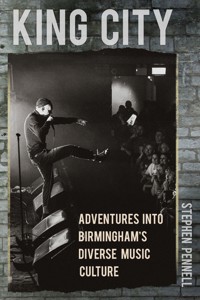
Birmingham has a tradition of individualism and experimentation, giving rise to a fragmented but innovative culture. This applies to the city's contemporary music scene just as it does to the rest of its cultural heritage, which explains why the Birmingham sound is hard to define. Whereas other cities are known for a certain sound, this city celebrates its diversity. In this new decade, the plethora of exciting indie bands, sick rappers and emotive singer-songwriters are surrounded by a collective of DJs, producers, promoters, venues, bloggers and vloggers who promote them. There's an agglomeration building, coalescing around the Birmingham Music Awards, whose mission is to amplify this uprising to the world. In this book, Stephen Pennell's reviews and musings shine a light on Birmingham's finest up-and-coming performers playing the city's most iconic venues, taking us on a unique journey around Birmingham's music scene.
Das E-Book können Sie in Legimi-Apps oder einer beliebigen App lesen, die das folgende Format unterstützen:
Veröffentlichungsjahr: 2021
Ähnliche




















In loving memory of Paddy Dalton ...Rest easy, my friend.
Paddy Dalton and his partner, Kelly.
Paddy, Aairon, and Eli.
ALSO BY THE AUTHOR:
STAR-SPANGLED VILLANS
GANGSTERS, GEEZERS AND MODS
First published 2021
The History Press
97 St George’s Place,
Cheltenham,
Gloucestershire,
GL50 3QB
www.thehistorypress.co.uk
© Stephen Pennell, 2021
The right of Stephen Pennell to be identified as the Author of this work has been asserted in accordance with the Copyright, Designs and Patents Act 1988.
All rights reserved. No part of this book may be reprinted or reproduced or utilised in any form or by any electronic, mechanical or other means, now known or hereafter invented, including photocopying and recording, or in any information storage or retrieval system, without the permission in writing from the Publishers.
British Library Cataloguing in Publication Data.
A catalogue record for this book is available from the British Library.
ISBN 978 0 7509 9820 8
Typesetting and origination by Typo•glyphix, Burton-on-Trent
Printed and bound by TJ International Limited, Padstow, Cornwall
eBook converted by Geethik Technologies
CONTENTS
Dedication to Paddy Dalton
Acknowledgements
Introduction
My Birmingham and The Rap Game UK
Remember How we Started
Starr-Struck
Uniquely Talented
Soul Men
God Save the Queen
Paddy and Stevie … Gone too Soon
Paradise is Twice as Nice
Blinded by the Night
Amongst Butterflies
A Unique Night Out
Bring it on, Manchester
Happy Birthday to Me!
We are Family
Peace Offering
The Eternal Battle for ‘Me Time’
In the City
Promotion Clause
Digbeth Calling
Don’t Stop Thief
Love Music, Hate Racism
Judging Jeffries
Figure it Out
For the Many …
Not the Few
Under Pressure
A Shark’s Tale
David Cameron, Wayne Rooney and Me
Birmingham at its Musical Best
The Great Handover
Guest Starring – New York
Everything’s Going Swimmingly
Making the Stars Align
Working Launch
‘Jam’ Packed
Yikes!
Sonic Boom in B-Town
Grinding out a Result
Introducing … Spilt Milk Society
Northern Exposure
Two Worlds Collide
Kerri Steals the Show
Homecoming Queen
My Summer with the Novus …
Growing up in Public
Making Waves
Post-Election (Rhythm and) Blues
Santa Clause
Agents Double-0 Soul
Big in Seoul
Go West, Young Men
The Lycio Lowe-Down
Siren Voice
Living it up in Lockdown
Last Laugh
Tough Cookie
Supporting Acts
DEDICATION TO PADDY DALTON
A As final preparations were being made for the publication of this book, I received a phone call from a friend, Bod Phillips, with the heartbreaking news that I – we – had lost our friend Paddy Dalton in tragic circumstances. The call hit me hard. First, we lost Garry Twist and Paul ‘Dinky’ Drinkwater – two full-of-fun, larger-than-life characters (more of whom later) – and now Paddy.
My debut novel, Gangsters, Geezers and Mods, had just been published and was doing well, and just a week earlier I had told my wife Kerri of my plan to get Paddy involved in a follow-up. (Paddy’s partner, Kelly, later told me that he would have loved to have written a book.) I had the story mapped out in my mind and wanted my mate to ‘pad it out’ (pun intended) with the kind of colour, experience, detail and humour that only he could bring. I wanted to go out for a drink with him and discuss it all, just the two of us. Whenever I saw Paddy, we were in a crowd and he’d be holding court, telling an enthralled audience his notoriously tall tales, everyone rolling around with laughter. Were they all true? Maybe not, but Paddy lived such an incredible life, you never knew for sure. Either way, I’ll always be grateful that whatever company he was in, he always greeted me as a friend and never outed me as a Villa fan!
After the initial shock and grief, my mind dwelled on happier memories of a man who was the life and soul of every night out I was privileged to share with him. Due to Covid restrictions, I wasn’t able to attend the funeral, so instead, I decided to pay my respects with this book and donate half my royalties from its sale to Kelly, the son he was so proud of, Aairon, and their family.
Of course, if you bought this book, that money comes from you, whether you were lucky enough to know him or not, so heartfelt thanks for your generosity. I’m just the treasurer. Paddy contributed more to good nights out in Brum than anyone (bar Eddie Fewtrell), so this book seems an appropriate place to pay tribute, and I’ve shared an amusing little story about him within its pages. I hope it makes you smile.
ACKNOWLEDGEMENTS
T hanks to those who were instrumental in the writing of this collection, especially my wife, soulmate and digital guru, Kerri Pennell; my mate and picture editor extraordinaire, Simon Pitt; my long-time editor, employer, mentor and friend, Dave Woodhall; Richard Franks, editor at Counteract; and Nicola Guy from The History Press, who worked so hard to get this book commissioned and was always ready with a calming message when I was panicked about something or other.
Inspiration was provided by everybody who features, too many to mention here, but especially AffieJam and Ben Ramsay (The New Consistent), who I am privileged to call my friends.
A big shout out to the brilliant photographers featured: Luke Jones, Paul Moreau, Phil Drury, Stewart Lawley, Soul Diggs, Dan Clayton, Taylor Wright, Rob Blackham, Lee Crawford and Matt Crockford.
Thanks to everyone who accompanied me on these adventures: my babies, Amber and Lewis Pennell; my grown-up kids, Kirsty, Kurtis and Tyler Cassin; my partner-in-crime, Mark Eagles; my mother-in-law Carmen Henry and auntie Angie Jackson; the indefatigable Jo Jeffries; Paul and Sam Schofield; Jordan Dillon, Russ James, Jason Rhodes, Gay Morse, Mark Carter, Lee Byrnes, Jason Donnelly, Peter Rogers, Paul and Louis Caffrey, Courtney Hearne, Russell and Jo Collier, Mark and David Jackson, Lizzie Halpin, Tony Baldwin, Paddy Ryan, Gary Williams, Steve O’Connor, Steve Turner, Steve Sainy, Jerome Falconer, Carlos Malcolm, Filthy Phil and Long-Haired Lou.
Thanks also to Phil and Jim McLaughlin, Kelly Wagstaff, Aairon Dalton, Carl Chinn, Richard Whitehead, Sam Lambeth, Lee Williams, Mark Moore, Stuart Palmer, Chris Waldron, Dave Scrivens, Darren Kierney, Lynn Ryan, Sharon Walker, Joanne Carberry, Michael Taylor, Chris Bushell, Paul Collins (the Gabbie Cabbie), Gavin Monaghan, Roger Davis, Adrian Goldberg, Mazzy Snape, Robert and Amanda Hill, Sara Coleman, Robert Hayden, Lisa Smith and Chris Sutton for their friendship and support.
INTRODUCTION
B irmingham is probably the most creative city on earth – of 4,000 patents registered in the UK each year, 2,800 come from Brum – but the perception of it rarely lives up to the reality. Half the people who live here haven’t got a good word to say about the place, and from further afield the brickbats are even worse. The BBC have abandoned us, run off with our TV licence money, turned Pebble Mill into a dental hospital and shacked up with Manchester. We’ve had a lot of good press in the print media lately, but they always seem to preface even the most positive article with, ‘We know it’s terrible but it’s not as bad as you think’. Yet, the negativity towards the birthplace of the modern world seems to be a peculiarly British phenomenon, and I sometimes feel like telling the rest of the country that if we’d known you were going to be like this, we wouldn’t have bothered building all those Spitfires.
But don’t be disheartened fellow Brummies – there’s a big world out there and lots of it loves us. A while ago, a portion of England seemed in danger of losing its marbles over the Stone Roses reunion, mainly due to the fact they’re from Blow-Your-Own-Trumpetsville. Elsewhere, a comeback by Black Sabbath, a much bigger and more influential band, went comparatively unheralded. In the end, the Roses played a couple of big gigs in parks slightly smaller than Sutton’s before their comeback fizzled out to nothing, while Sabbath set off on a massive world tour and released an album, 13, that went to number one in the States, Canada, the UK and numerous other countries.
The Sabbath story is probably the Brummiest ever told. Tony Iommi was on his last shift at the sheet metal works before committing full time to music when disaster struck as he accidentally chopped off the ends of two fingers. Instead of giving up, like a cockney would, he made thimbles to protect his damaged digits and when he played guitar with them, discovered he’d invented heavy metal. Resourceful and revolutionary – just like his hometown. More recently, I was on holiday in Mexico and many I spoke to had a refreshingly high opinion of Birmingham culture, be it J. R. R. Tolkien, Lee Child or Peaky Blinders. I met fans of UB40, ELO and Duran Duran, and everybody just LOVED Ozzy. I mentioned Oasis, Joy Division and the Roses, which proved to be useful research – if you were researching the various ways different nationalities do blank looks.
It’s hard to say when my obsession with Greater Birmingham music began. It could have been when the Guardian heralded Peace as the future of indie, the NME hailed The Twang as ‘the best new band in Britain’, or when I saw Lady Leshurr performing ‘No Scrubs’ with my daughter at a school concert. Perhaps it goes back to my teenage years in Marston Green hanging around with Miles Hunt, who went on to front the Wonder Stuff, or even further to when my little mate in Chelmsley Wood had a nan from Aston who knew Black Sabbath and a big brother who had signed copies of all their LPs.
Bear with me as I examine our rich musical heritage more closely. A good place to start is with The Wonder Stuff who, along with Pop Will Eat Itself and Ned’s Atomic Dustbin, were the leading lights of a Stourbridge-born music phenomenon that raised its unkempt head back in the eighties. The bands were all pals and shared certain musical and sartorial similarities, so the music press had to come up with a name for it: ‘grebo’. The term claimed the cultural zeitgeist for a while, most notably when The Stuffies teamed up with Reeves and Mortimer for their number one hit ‘Dizzy’.
I didn’t see them in the course of writing this book, but I mention them here because they encompass the second city’s modus operandi – producing understated, unheralded brilliance with very little hype and fanfare, in much the same way as the Moody Blues invented prog rock, Sabbath invented heavy metal, and a few kids including Napalm Death messed about at the Mermaid in Sparkhill and created grindcore.
The NME rightly credits the city as being ‘one of the few places not situated by the Mississippi River that can legitimately claim to have birthed a musical genre’. Close, but no cigar. Try FIVE genres – heavy metal, prog rock, bhangra, grebo and grindcore – and massive influence on and contributions to lots of others.
Any potted summary of Midlands musical innovation must also mention Duran Duran and Dexy’s Midnight Runners, while Sabbath’s ex-manager Jim Simpson’s assertion that Birmingham is the rock capital of the world stands up to scrutiny when one remembers his former charges plus Stevie Winwood, The Move, ELO, Judas Priest and Led Zeppelin, and the fact that a young woman from Bearwood (Christine McVie) wrote some of the best songs on Fleetwood Mac’s Rumours – one of the biggest-selling albums of all time.
And that’s just the white people. Joan Armatrading was the first black British female musician to achieve international success, closely followed by another Brummie – Jaki Graham – and the roll-call from that particular demographic is nothing short of phenomenal. Add Jamelia, Ruby Turner and Beverley Knight to the list and note that three of the last five best female winners at the MOBOS – Laura Mvula, Lady Leshurr and Stefflon Don – were born in Brum. Coming soon: Jorja Smith and Mahalia.
Birmingham was also the birthplace (and subsequently the international HQ) of bhangra, and who can forget the domination of reggae record sales by UB40, Steel Pulse and Musical Youth, whose promo for ‘Pass the Dutchie’ was the first black video ever played on MTV?
Back in the now, Mike Skinner’s documentary The Unstoppable Rise of Birmingham Rap explores the vibrant urban scene, while The Streets, Call Me Unique, Mahalia and Jorja Smith all impressed at the last Glastonbury Festival.
Lady Sanity and Namywa are not just super-talented, but also absolute soldiers for the city, and Lotto Boyzz, Mist, Dapz On The Map, Stardom, Mitch, M1llionz and Jaykae are doing bits worldwide, the latter having had a song played on glamorous US TV series Power, and bestowed credibility on a remix of Ed Sheeran’s chart topper, ‘Take Me Back To ...’ – nah, I ain’t typing that!
It’s no surprise that the BBC recently filmed two series of The Rap Game UK in the first city of UK rap. Meanwhile, hoping to reclaim our rightful place in the rock and pop mainstream, The Clause and The Novus are the nuclear option, Cage Park, Sugarthief and Spilt Milk Society provide the indie songcraft, while B-Town pioneers The Twang, Peace, Swim Deep and JAWS have shown admirable staying power with fourteen albums between them.
So, why does this huge, impactful success and talent go seemingly unnoticed, not by the rest of the world, just the rest of the country? Our incredible diversity is undoubtedly a good thing, but in terms of marketing, does it work against us? Jimmy Brown of UB40 thinks it might:
Most other cities have a sort of identity. The Liverpool sound, the Manchester sound, even London has a musical identity. But Birmingham is so diverse it encompasses many different styles. How do you find a link between bands like Black Sabbath, Duran Duran and UB40, and everything in between?
It could be a geographical thing, he reasons:
We are just about the only UK city that hasn’t grown out of a port. Ports have a different culture, they’re more transient, and there are strong links to the homelands of any incomers. With Birmingham, people are plonked down in the middle of the country and just told to get on with it. So we did. I was born and raised in Small Heath and that was a privilege. You could sit on your doorstep and watch the four corners of the world pass by.
Birmingham’s tradition of individualism and experimentation, and the unusually fragmented but innovative culture that results, has been widely remarked upon by commentators. New York-based urbanist Jane Jacobs described Birmingham as one of the world’s great examples of urban creativity, ‘a great, confused laboratory of ideas ... a muddle of oddments that grew through constant diversification’. The historian G.M. Young contrasted the ‘experimental, adventurous, diverse’ culture of Birmingham with the ‘uniform’ culture of Manchester. And that applies to the city’s contemporary music scene, just as it does to our cultural and industrial heritage, which goes some way to explaining why the Birmingham sound is hard to define and package. Also, English music journalists and taste-makers tend to be middle-class ex-students, so it is natural for them to praise the music of middle-class ex-students. But most of Birmingham’s musicians have been defiantly working class, which is perhaps why our music strikes more of a chord with blue-collar international audiences, and why Manchester’s doesn’t.
Another problem is our natural humility. Miles Hunt, frontman of the aforementioned Wonder Stuff, explains:
Every band we met from Liverpool and Manchester would tell us they were the best band in the world. You would never hear Noddy Holder of Slade say that because he didn’t need to. That’s because people from the Midlands are generally comfortable in their own skin, which not only enables them to have wonderfully self-deprecating senses of humour, but also removes any need for them to brag about themselves. It is part of their enduring charm.
But in this new decade, things are changing. We’re never going to be a city of swaggering egos, with heads too big to fit through the doors at Digbeth Dining Club, but there are signs that we are learning how to shine a light on our city. Credit for this goes not only to the plethora of exciting indie bands, sick rappers and emotive singer-songwriters, but also to the collective of DJs, producers, pro- moters, venues, photographers, bloggers and vloggers that surrounds and promotes them.
There’s an agglomeration building and coalescing around the Birmingham Music Awards, run by Jo Jeffries, whose unashamed mission is to relay and amplify this 0121 uprising to the world. And it’s working. As The Zine UK pointed out in an article published in 2019, ‘When The Brits TV show was yawning on in February, our Twitter was lit with chat about the Birmingham Music Awards’.
Birmingham Press and Richard Franks at Counteract are trying to get the message out by posting high-quality content all over the Internet and there were gigs by local artists almost every night of the week at the Hare and Hounds, the Sunflower Lounge, the Night Owl and a variety of other venues down Lower Trinity Street, before Covid. Call Me Unique’s ‘The Unique Experience’ (every second Saturday of the month at Mama Roux’s) was quite possibly the best night out in town – any town, open mic nights like ‘Dope Vibes’ and ‘Neighbourhood’, and networking events like the BMA monthly gatherings showcased the boundless energy and creativity of local artists, while Raw Sound TV gave them the chance to play up to the camera.
Studios like Vada, Bay 10, Pirate and Gavin Monaghan’s legendary Magic Garden provide artists with priceless expertise and facilities. Home of Metal, curators of the recent Black Sabbath exhibition at the Birmingham Museum and Art Gallery, and Jez Collins with his much-anticipated Birmingham Music Museum, look after the heritage, while the future is in the capable hands of promoters like Mazzy Snape, Adam Reagan, Sonic Gun, This is Tmrw and the indefatigable Tim Senna, bigging up local music through his various radio gigs and documenting the indie scene via his riotous vlogs. Muna Ruumi (often the only hijab in the room) could talk for England, but chooses instead to speak up for Birmingham. On the radio are Alex Noble, who has a two-hour platform on BBC WM, which he uses to promote (tagline alert!) ‘the best in unsigned, undiscovered and under-the-radar talent from the great West Midlands’, plus Pete Steel and the crew at Brum Radio, which streams local music 24/7 from the Warehouse Café in Digbeth and provides a showcase for the very best of it with their A-list show. Adrian Goldberg’s Adventures In Music is another two hours of essential listening for those who want to keep their ears to the ground and their fingers on the throbbing pulse of the vibrant local scene and beyond. For a reviewer like me, that’s five or six hours a week of unmissable radio, and the most pleasurable day’s work you could ever imagine.
Musical academia is well served by Lyle Bignon at Birmingham City University, Vix Perks at ACM, Jonny Amos at BIMM, Birmingham Ormiston Academy, South and City College and the Royal Birmingham Conservatoire, all churning out dozens of talented students. But what happens when they graduate? Venues are under attack from developers, who promote city living but make living in the city less attractive by displacing its culture. The Flapper has been saved from the wrecking ball but Scruffy Murphy’s is under threat, so while the mantra of ‘education, education, education’ is a wise one, we need to support musicians’ workplaces too.
I always wanted to be in a band – I’m proud of my city’s huge contribution to musical history and would love to have added my own paragraph. I hated getting out of bed in the morning and becoming a rock-and-roll star seemed like the easy way out. But when I tried it I was terrible, and that was the end of that. So now, in a poacher-turned-gamekeeper scenario, this failed musician is honing his pen game, hoping to bask in the reflected glory of artists with actual talent, by writing reviews of Birmingham’s finest up-and-coming performers, playing the city’s most iconic venues for my website King City Online.
This book is a collection of the best and most significant features, the criteria for inclusion being that there have to be plenty of Birmingham references. I’ve included a few reviews of more established artists from here and elsewhere to hold the interest of the reader, although many people have been kind enough to say they enjoy them whether they’ve heard of the subject or not. I’ve tried to capture not only the performances, but some of the city’s remarkable story, the genuine warmth between the stars and their audience, and most of all, the life that happens around the events. If you’re unfamiliar with some of these artists, read on anyway. You will still be joining me on a cracking night out in Brum.
The book is part autobiography (all art is self-portrait), part travelogue, but every piece relates in some way to the place I call home. You will also find the odd interview with some of my favourite artists and influential figures in the city’s creative sector. It meanders like Spaghetti Junction – largely dispensing with chronology – and I hope you enjoy the twists and turns.
The Birmingham music scene is about undeniable talent, irresistible beats and unpretentious fun. It’s often said we lack glamour, but with Lady Leshurr and Jack Grealish repping us to the world, Tommy Shelby on telly and Steven Knight’s plans to build TV and film studios in downtown Digbeth, that issue is being addressed. Soon, the only things we lack will be airs and graces, and you don’t miss what you never had.
SP, 2021
MY BIRMINGHAM AND THE RAP GAME UK
I ’m in Digbeth and all human life is here. During the day, creatives create in the Custard Factory, mods and hipsters hunt down vintage clothes, and blokes in grimy overalls build motorbikes or harvest salvageable bits from broken cars. The area is awash with social enterprises, beautiful churches, interesting architecture and an incredibly diverse population. Well-heeled hipsters rub shoulders with hard-up homeless, and barefoot babbies with wild hair play in the courtyard of the ramshackle flats above the coach station.
Later on, things will liven up even more as foodies arrive at Digbeth Dining Club, and Peaky Blinders tourists from all over the world follow Professor Carl Chinn on his walking tour somewhere over by the Rainbow and down Lower Trinity Street. Their paths will cross with locals meeting their mates for a big gig at the Institute, a little gig at Mama Roux’s, or a sixties soul happening at the Night Owl. As dusk closes in, the paint on state-of-the-art graffiti murals and ancient ghost signs will appear to be the only thing stopping the higgledy-piggledy buildings from toppling over onto the streets they overlook, and queues of revellers will snake along the narrow pavements outside clubs that look like drop forges, mainly because they’re converted drop forges.
This is the setting for the filming of a new BBC TV show, The Rap Game UK, in which seven promising MCs vie for a contract with Krept and Konan’s record label, Play Dirty. The contestants have been put up in a swish apartment on the twenty-fifth floor of the Orion building, overlooking the Mailbox, but for this week’s task they swap Yuppie paradise for the bear pit of the battle rap arena. The local underground MC community has been asked to stage a battle rap event – a clash – at which the TV hopefuls will cut their teeth on this most demanding of rap disciplines. Ghetts is there as a guest judge and Bison Briggs from Premier Battles is the host, charged with the responsibility of keeping some sort of order.
I’m here with the first family of battle rap – brothers Penance and Tydal (currently on an eight-clash-winning streak), and their sister Loxy, all-time champion of the long-running battle rap channel, King of the Ronalds. We make the most of the BBC catering – a Brummie has to get his money’s worth out of the licence fee somehow, seeing as how most of it ends up in London and Manchester – and head back into the main room for the curtain raiser, a clash between Tydal from Brum and Termz, who’s come up from The Smoke especially.
It’s a mismatch. Termz is a little bit overweight and Tydal starts with the body shots:
It must have been hard in school for a fat kid,
You couldn’t do the things that the rest of the class did.
For us it was ‘heads, shoulders, knees and toes’,
For you it was ‘heads, …
Miss, I can’t do the last bit’.
Termz tried to come back, but his punches weren’t landing, and he was on the ropes. Tydal moved in for the kill:
F*** Termz, I ain’t gonna show him respect,
I’d chin him, but look at this prick in the flesh.
I’m not exactly sure which chin I should check,
With his gross man-boobs and invisible neck,
I’ll punch him in the stomach for the ripple effect.
The hometown crowd roared their approval and waited for the knockout. They didn’t have to wait long:
‘You f***** up Bro, this is my home,
0121, welcome to my zone,
It’s gonna be tragic when your bros don’t back it
Realise in my postcode, ev’ryone savage.
Thought you could come here and war with a god?
I got this s*** in the bag like I’m walking the dog.
You don’t get knocked out in a battle rap (well, maybe sometimes), but the Brummie definitely won on a unanimous decision. You could sense the relief of the TV contestants that they would be battling against each other, and not against the seasoned pros. A bit like a crew of white-collar boxers walking into Cus D’amato’s gym and finding out they’re fighting that little balding bloke from Accounts, not a fresh-outta-jail Mike Tyson.
They did okay, I suppose. Freedom of Speech and Kico were pretty good, and Smooth won her battle courtesy of her opponent choking. Then a massive argument over Lady Ice’s beloved, deceased aunt and a bizarre love triangle involving J Lucia and Krept or Konan’s ex-girl kept things entertaining, even if the bars weren’t up to much. The edit made the row look like it soon blew over, but in real time it went on for about half an hour. Krept and Konan were fuming and the floor manager and other members of the film crew had their heads in their hands – time is money for them, I suppose.
When the filming finished, we went outside and blinked furiously at the surprise daylight – we’d been in a club for three hours and had totally forgotten it wasn’t even lunchtime yet. Our motley crew of MCs headed for Subside, a twenty-four-hour rock club with a punchbag machine and a pool table. One of the bar staff is a member of the Sealed Knot Society and had some of his props behind the bar, and it wasn’t long until some of Birmingham’s finest (and drunkest) grime clashers were running round the pool table wearing chain-mail helmets and wielding ferocious-looking broadswords. I wasn’t sure if they were re-enacting the last English Civil War or practising for the almost inevitable next one.
As for the show, I’m not sure it conveys quite how difficult it is to stand out as a rapper when there are so many really good ones about. As Lady Leshurr once put it, ‘A new MC is born every day of the week.’ Still, it’s an entertaining show, and mainstream exposure for the genre is welcome. It could have easily gone ‘X-Factor Goes Grime’, but it steers just to the right side of that and at least takes a much-maligned art form seriously enough to show the haters that it’s not as easy as they might think.
But they dropped a clanger by editing out the real star, Tydal. It would have made for great TV had the camera crew followed him and his siblings, Loxy and Penance, around the city for rest of the day.
REMEMBER HOW WE STARTED
A fter writing about the fate and fortunes of Aston Villa for a variety of magazines, culminating in my first book Star-Spangled Villans, my passion for writing about music was ignited when a friend gave me tickets to see my idol, Paul Weller. He asked me to write a review in lieu of payment, and I came up with something like this for Heroes and Villains …
MY NEVER CHANGING MOOD – PAUL WELLER @ WOLVES CIVIC
Ever since this date was announced I’d been looking forward to my trip to the Wolverhampton Civic with the enthusiasm of a teenager going to his first gig. Weller shows always bring that out in me, despite having seen him what must be close to 100 times. I suppose it’s the future-facing focus of The Man Himself that keeps things so fresh – he’s ripped up more successful formulas than any other musician I can think of. He’s in his fourth or fifth purple patch and it’s one that shows no sign of abating anytime soon.
I was slow off the mark for tickets and they sold out in four hours, so I’d have been dealing with touts were it not for my mate, or more accurately his missus, who booked a holiday for this, of all weeks, bless her, and he ended up giving me his tickets. So thanks Chris, I hope you enjoy reading about what you missed.
The day started well for me before I’d even left Chelmsley. There was a bloke outside the White Hart with a winning betting slip worth £280. Sadly for him the bookies was shut and he was so desperate for the money he was willing to sell it for £130. I wasn’t carrying that kind of cash but my mate Paul ‘Dinky’ Drinkwater was in the back bar and he was always carrying that kind of money. Dinky was a Brummie Arthur Daley, the unofficial Lord Mayor of our ends, with a big wedge of notes in his pocket and a big heart of gold in his chest – if he liked you. Now Dinky liked me, but there were a few he didn’t, and this bloke was one of them.
‘I wouldn’t give him the steam off my proverbial,’ he said, ‘but if you can make money out of the div, I’ll weigh in. Here’s a hundred, offer him that. Give it me back tomorrow after the bookie opens.’ The bloke took it and I had made one hundred and eighty almost as quickly and easily as a champion darts player – what a start to the night!
After a lifetime following him around the country, me and my mates Paddy, Filthy Phil and Long-Haired Lou were pretty confident that Weller would start weaving his magic at about a quarter to nine, so when we entered the venue at half eight-ish and saw him on stage, we went into a bit of a panic. We were relieved to find we’d only missed one song, albeit the magnificent title track to his 2010 album Wake Up the Nation, so first up for us was ‘Sunflower’. So delighted were we that he has started playing this live again after a few years’ absence, the four of us decided to head for the mosh pit. ‘I don’t care how long this lasts/we have no future/we have no past’, I thought, and Weller sang.
The Surrey super-mod was in fine form, his voice as strong as ever despite the ravages of forty years of smoking and singing for a living, and I was thrilled by a fresh-sounding set list that could never be described as ‘cabaret’. ‘Sea-Spray’ is one of my live faves, as is the electrifying ‘Come On/Let’s Go’, played with the extra passion Paul always displays on his newer stuff. ‘He’s the Keeper’, a touching tribute to late, great, Small Face Ronnie Lane, who died of MS, brought a lump to my throat and a tear to my eye, forcing me to stand in front of my mates so they couldn’t see I was a bit choked up. (‘He’s the one knight/On a knackered stallion/His rusty armour/So undervalued/Doesn’t know that/He’s the reason/He’s asleep now/But never gone’).
Next up was ‘Above the Clouds’, a single from twenty years ago (‘when I was 15,’ said Weller), which was obviously written in one of his ridiculous phases of self-doubt – ‘I have to wonder/Will I last?’ As the enthralled crowd sang every word, I thought it safe to conclude he probably will!
I said on the way in that I hoped he wouldn’t sing ‘Porcelain Gods’ as he sometimes drags out the guitar solo, but the power of the band and the bile and passion with which Weller spat the lyrics made it enjoyable again, despite his barbs at critics and reviewers – ‘more empty words from the living dead/who seek to explain what can’t really be said’. I tried not to blush.




