


107,99 €
Mehr erfahren.
- Herausgeber: John Wiley & Sons
- Kategorie: Fachliteratur
- Serie: ASM
- Sprache: Englisch
The definitive guide for identifying fungi from clinical specimens Medically Important Fungi will expand your knowledge and support your work by: * Providing detailed descriptions of the major mycoses as viewed in patients' specimens by direct microscopic examination of stained slides * Offering a logical step-by-step process for identification of cultured organisms, utilizing detailed descriptions, images, pointers on organisms' similarities and distinctions, and selected references for further information * Covering nearly 150 of the fungi most commonly encountered in the clinical mycology laboratory * Presenting details on each organism's pathogenicity, growth characteristics, relevant biochemical reactions, and microscopic morphology, illustrated with photomicrographs, Dr. Larone's unique and elegant drawings, and color photos of colony morphology and various test results * Explaining the current changes in fungal taxonomy and nomenclature that are due to information acquired through molecular taxonomic studies of evolutionary fungal relationships * Providing basic information on molecular diagnostic methods, e.g., PCR amplification, nucleic acid sequencing, MALDI-TOF mass spectrometry, and other commercial platforms * Including an extensive section of easy-to-follow lab protocols, a comprehensive list of media and stain procedures, guidance on collection and preparation of patient specimens, and an illustrated glossary With Larone's Medically Important Fungi: A Guide to Identification, both novices and experienced professionals in clinical microbiology laboratories can continue to confidently identify commonly encountered fungi. If you are looking for online access to the latest clinical microbiology content, please visit www.wiley.com/learn/clinmicronow.
Sie lesen das E-Book in den Legimi-Apps auf:
Seitenzahl: 635
Veröffentlichungsjahr: 2018
Ähnliche



















Table of Contents
Cover
Preface to the Sixth Edition
Preface to the First Edition
Acknowledgments
About the Authors
Basics
How To Use the Guide
Use of Reference Laboratories and Regulations for Transport
Safety Precautions
Taxonomy and Nomenclature
PART I: Direct Microscopic Examination of Clinical Specimens
Introduction
Histological Terminology
Tissue Reactions to Fungal Infection
Stains
Guide to Interpretation of Direct Microscopic Examination
Detailed Descriptions
Actinomycosis
Mycetoma (Actinomycotic or Eumycotic)
Nocardiosis
Mucormycosis (Zygomycosis)
Aspergillosis
Miscellaneous Hyalohyphomycoses
Dermatophytosis (Tinea, Ringworm)
Tinea versicolor
Tinea nigra
Phaeohyphomycosis
Chromoblastomycosis
Sporotrichosis
Histoplasmosis
Talaromycosis (Penicilliosis)
Blastomycosis
Paracoccidioidomycosis
Candidiasis (Candidosis)
Trichosporonosis
Cryptococcosis
Pneumocystosis
Protothecosis
Coccidioidomycosis
Rhinosporidiosis
Adiaspiromycosis
Special References
PART II: Identification of Fungi in Culture
Guide to Identification of Fungi in Culture
Filamentous Bacteria
Monomorphic Yeasts and Yeastlike Organisms
Thermally Dimorphic Fungi
Thermally Monomorphic Moulds
Detailed Descriptions
Filamentous Bacteria
Yeasts and Yeastlike Organisms
Thermally Dimorphic Fungi
Thermally Monomorphic Moulds
Part III: Basics of Molecular Methods for Fungal Identification
Introduction
Molecular Terminology
Overview of Classic Molecular Identification Methods
Fungal Targets
Selected Current Molecular Methodologies
Selected References for Further Information
PART IV: Laboratory Technique
Laboratory Procedures
Collection and Preparation of Specimens
Methods for Direct Microscopic Examination of Specimens
Primary Isolation
Macroscopic Examination of Cultures
Microscopic Examination of Growth
Procedure for Identification of Yeasts
Direct Identification of Yeasts from Blood Culture (by PNA FISH)
Isolation of Yeast When Mixed with Bacteria
Germ Tube Test for the Presumptive Identification of Candida albicans
Rapid Enzyme Tests for the Presumptive Identification of Candida albicans
Caffeic Acid Disk Test
Olive Oil Disks for Culturing Malassezia spp.
Conversion of Thermally Dimorphic Fungi in Culture
Sporulation Inducement Method for Apophysomyces and Saksenaea
In Vitro Hair Perforation Test (for Differentiation of Trichophyton mentagrophytes and Trichophyton rubrum)
Germ Tube Test for Differentiation of Some Dematiaceous Fungi
Temperature Tolerance Testing
Maintenance of Stock Fungal Cultures
Controlling Mites
Staining Methods
Acid-Fast Modified Kinyoun Stain for Nocardia spp.
Acid-Fast Stain for Ascospores
Ascospore Stain
Calcofluor White Stain
Giemsa Stain
Gomori Methenamine Silver (GMS) Stain
Gram Stain (Hucker Modification)
Lactophenol Cotton Blue
Lactophenol Cotton Blue with Polyvinyl Alcohol (PVA) (Huber’s PVA Mounting Medium, Modified)
Rehydration of Paraffin-Embedded Tissue (Deparaffination)
Media
Acetamide Agar
Arylsulfatase Broth
Ascospore Media
Assimilation Media (for Yeasts)
Birdseed Agar (Niger Seed Agar; Staib Agar)
Brain Heart Infusion (BHI) Agar
Buffered Charcoal-Yeast Extract (BCYE) Agar
Canavanine Glycine Bromothymol Blue (CGB) Agar
Casein Agar
CHROMagar Candida Medium
ChromID Candida Medium
Chromogenic Candida Agar
Citrate Agar
Cornmeal Agar
Dermatophyte Test Medium (DTM)
Dixon Agar (Modified)
Esculin Agar
Fermentation Broth for Yeasts
Gelatin Medium
Inhibitory Mould Agar (IMA)
Leeming-Notman Agar (Modified)
Loeffler Medium
Lysozyme Medium
Middlebrook Agar Opacity Test for Nocardia farcinica
Mycosel Agar
Nitrate Broth (for Nitrate Reduction Test)
Polished Rice, or Rice Grain, Medium
Potato Dextrose Agar and Potato Flake Agar
Rapid Assimilation of Trehalose (RAT) Broth
Rapid Sporulation Medium (RSM)
SABHI Agar
Sabouraud Dextrose Agar (SDA)
Sabouraud Dextrose Agar with 15% NaCl
Sabouraud Dextrose Broth
Starch Hydrolysis Agar
Trichophyton Agars
Tyrosine, Xanthine, or Hypoxanthine Agar
Urea Agar
Water Agar
Yeast Extract-Phosphate Agar with Ammonia
Color Plates
Glossary
Bibliography
Selected Websites
Index
End User License Agreement
List of Tables
Chapter 2
Category A packaging
Category B packaging
Chapter 12
Septate hyphae
On malt extract agar
Penicillate
Part III
FIGURE 1 Ribosomal DNA (rDNA) gene complex.
FIGURE 2 Molecular beacon hairpin-loop structure. F, fluorophore; Q, quencher.
FIGURE 3 Hybridization of molecular beacon probe to target DNA with resultant fl...
FIGURE 4 Sample phylogenetic tree of select Exophiala spp. Strain designations a...
Chapter 14
Figure (http://www.opgen.com/pathogenid/pna-fish-products/candida-pna-fish/)
List of Illustrations
Chapter 8
TABLE 1 Stains for direct microscopic observation of fungi and/or filamentous ba...
Chapter 13
TABLE 2 Differentiation of filamentous aerobic actinomycetes encountered in clin...
TABLE 3 Phenotypic characteristics of most common clinically encountered Nocardi...
TABLE 4 Characteristics of the genera of clinically encountered yeasts and yeast...
TABLE 5 Characteristics of
Candida
spp. most commonly encountered in the clinica...
TABLE 6 Characteristics that assist in differentiating
Candida dubliniensis
from...
TABLE 7 Differentiating characteristics of
Blastoschizomyces capitatus
versus Ca...
TABLE 8 Differentiating characteristics of
Candida krusei, Candida inconspicua,
...
TABLE 9 Differentiating characteristics of
Candida guilliermondii
versus Candida...
TABLE 10 Characteristics of
Cryptococcus
spp.
a
TABLE 11 Characteristics of yeasts and yeastlike organisms other than
Candida
sp...
TABLE 12 Key characteristics of the most common clinically encountered Trichospo...
TABLE 13 Characteristics for differentiating species of the
Sporothrix schenckii
...
TABLE 14 Differential characteristics of similar organisms in the class Mucormyc...
TABLE 15 Differential characteristics of the clinically encountered
Rhizopus
spp...
TABLE 16 Characteristics of
Phialophora
,
Pleurostomophora
,
Phaeoacremonium
, Acre...
TABLE 17 Characteristics of
Cladosporium
spp. and
Cladophialophora
spp
a
TABLE 18 Differentiating phenotypic characteristics of the clinically encountere...
TABLE 19 Differentiation of the clinically encountered
Verruconis
species
a
TABLE 20 Characteristics of some of the “black yeasts”
a
TABLE 21 Differential characteristics of
Aureobasidium pullulans
versus Hormonem...
TABLE 22 Characteristics of
Bipolaris
,
Drechslera
, and
Exserohilum
spp.
a
TABLE 23 Differentiation of similar conidia-producing
Trichophyton
spp.
a
TABLE 24 Growth patterns of
Trichophyton
species on nutritional test media
a
(p. ...
TABLE 25 Differential characteristics of fungi in which arthroconidia predominat...
TABLE 26 Differentiating characteristics of the most common species of Aspergill...
TABLE 27 Differential characteristics of
Paecilomyces variotii
versus Purpureoci...
TABLE 28 Differential characteristics of
Scopulariopsis brevicaulis
versus Scopu...
TABLE 29 Differential characteristics of
Chrysosporium
versus
Sporotrichum
a
Chapter 14
TABLE 30 Media for primary isolation of fungi
TABLE 31 Inhibitory mould agar versus Sabouraud dextrose agar as a primary mediu...
Guide
Cover
Table of Contents
Begin Reading
Pages
vii
iii
iv
v
xv
xvi
xvii
xviii
xix
xxi
xxii
xxiii
xxiv
xxv
xxvi
1
3
4
5
6
7
8
9
10
11
12
13
15
17
18
19
20
21
23
24
25
27
28
29
30
31
32
33
34
35
37
39
40
41
42
43
44
45
46
47
48
49
50
51
52
53
54
55
56
57
58
59
60
61
62
63
64
65
66
67
68
69
70
71
72
73
75
76
77
78
79
80
81
82
83
84
85
86
87
88
89
90
91
92
93
94
95
96
97
98
99
100
101
102
103
104
105
106
107
109
111
113
115
116
117
118
119
120
121
123
125
126
127
128
129
130
131
132
133
134
135
136
137
138
139
140
141
142
143
144
145
146
147
148
149
150
151
152
153
154
155
156
157
158
159
160
161
162
163
164
165
166
167
169
170
171
172
173
174
175
176
177
178
179
180
181
183
185
186
187
188
189
190
191
192
193
194
195
196
197
198
199
200
201
203
204
205
206
207
208
209
210
211
212
213
214
215
216
217
218
219
220
221
222
223
224
225
226
227
228
229
230
231
232
233
234
235
236
237
238
239
240
241
242
243
244
245
246
247
248
249
250
251
252
253
254
255
256
257
259
260
261
262
263
264
265
266
267
268
269
270
271
272
273
274
275
276
277
278
279
280
281
282
283
285
286
287
288
289
290
291
292
293
294
295
296
297
298
299
300
301
302
303
304
305
306
307
308
309
310
311
312
313
314
315
316
317
318
319
320
321
322
323
324
325
326
327
328
329
330
331
333
335
336
337
338
339
340
341
342
343
344
345
346
347
348
349
350
351
352
353
354
355
356
357
359
361
363
364
365
366
367
368
369
370
371
372
373
374
375
376
377
378
379
380
381
382
383
384
385
387
388
389
390
391
392
393
394
395
397
398
399
400
401
402
403
404
405
406
407
408
409
410
411
412
413
414
415
416
417
418
419
420
421
422
423
424
425
427
428
429
430
431
432
433
434
435
436
437
438
439
440
441
442
443
444
445
446
447
448
449
450
451
452
453
454
455
457
458
459
460
461
462
463
464
465
466
467
468
469
470
471
472
473
474
475
476
477
478
479
480
481
482
483
484
485
486
487
488
489
490
491
492
493
494
495
496
497
499
500
501
502
503
504
505
506
507
508
509
510
511
512
513
514
515
516
517
518
519
520
521
522
523
527
6th EDITION
Larone’s MEDICALLY IMPORTANT FUNGI
A GUIDE TO IDENTIFICATION
Thomas J. Walsh, M.D., Ph.D. (hon), FIDSA, FAAM, FECMM
Weill Cornell Medicine of Cornell University, NewYork–Presbyterian Hospital, and Hospital for Special Surgery, New York, New York
Randall T. Hayden, M.D.
St. Jude Children’s Research Hospital, Memphis, Tennessee
Davise H. Larone, MT(ASCP), Ph.D., D(ABMM), F(AAM)
Professor Emerita, Weill Medical College of Cornell University, New York, New York
Illustrated by Davise H. Larone
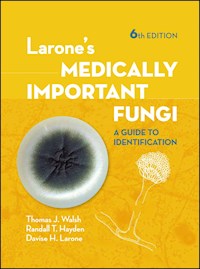
Cover:Aspergillus fumigatus on Sabouraud dextrose agar at 30°C for 4 days. Green velvety colony with a narrow white border. Microscopic structures consisting of septate hyphae and unbranched conidiophores with enlarged vesicle at the top. Compact uniseriate phialides bearing chains of round conidia only on the upper two-thirds of the vesicle. See pp. 295 and 450.
Copyright © 2018 by ASM Press. ASM Press is a registered trademark of the American Society for Microbiology. All rights reserved. No part of this publication may be reproduced or transmitted in whole or in part or reutilized in any form or by any means, electronic or mechanical, including photocopying and recording, or by any information storage and retrieval system, without permission in writing from the publisher.
Disclaimer: To the best of the publisher’s knowledge, this publication provides information concerning the subject matter covered that is accurate as of the date of publication. The publisher is not providing legal, medical, or other professional services. Any reference herein to any specific commercial products, procedures, or services by trade name, trademark, manufacturer, or otherwise does not constitute or imply endorsement, recommendation, or favored status by the American Society for Microbiology (ASM). The views and opinions of the author(s) expressed in this publication do not necessarily state or reflect those of ASM, and they shall not be used to advertise or endorse any product.
Library of Congress Cataloging-in-Publication Data
Names: Larone, Davise Honig, 1939- author, illustrator. | Walsh, Thomas J., M.D., author. | Hayden, Randall T., author.
Title: Larone’s medically important fungi : a guide to identification / Thomas J. Walsh, MD, PhD (hon), FIDSA, FAAM, FECMM, Randall T. Hayden, M.D., Davise H. Larone, MT(ASCP), Ph.D., F(AAM) ; illustrated by Davise H. Larone.
Other titles: Medically important fungi
Description: 6th edition. | Washington, DC : ASM Press, [2018] | Includes bibliographical references and index.
Identifiers: LCCN 2018015129 (print) | LCCN 2018016143 (ebook) | ISBN 9781555819880 (ebook) | ISBN 9781555819873 | ISBN 9781555819873q(alk. paper)
Subjects: LCSH: Pathogenic fungi—Identification. | Fungi—Cultures and culture media. | Medical mycology.
Classification: LCC QR245 (ebook) | LCC QR245 .L37 2018 (print) | DDC 616.9/6901—dc23
LC record available at https://lccn.loc.gov/2018015129
doi:10.1128/9781555819880
Printed in canada
10 9 8 7 6 5 4 3 2 1
Address editorial correspondence to: ASM Press, 1752 N St., NW, Washington, DC 20036-2904, USA.
Send orders to: ASM Press, P.O. Box 605, Herndon, VA 20172, USA.
Phone: 800-546-2416; 703-661-1593. Fax: 703-661-1501.
E-mail: [email protected]
Online: http://www.asmscience.org
Dedicated with love
To Ronit
Jessie
Beth
and with loving memory
to John D. Lawrence
Dedicated with love
To Laura, Emma, John, Frances, and Margaret Walsh
List of Tables
TABLE 1 Stains for direct microscopic observation of fungi and/or filamentous bacteria in tissue
TABLE 2 Differentiation of filamentous aerobic actinomycetes encountered in clinical specimens
TABLE 3 Phenotypic characteristics of most common clinically encountered Nocardia spp.
TABLE 4 Characteristics of the genera of clinically encountered yeasts and yeastlike organisms
TABLE 5 Characteristics of Candida spp. most commonly encountered in the clinical laboratory
TABLE 6 Characteristics that assist in differentiating Candida dubliniensis from Candida albicans
TABLE 7 Differentiating characteristics of Blastoschizomyces capitatus versus Candida krusei
TABLE 8 Differentiating characteristics of Candida krusei, Candida inconspicua, and Candida norvegensis
TABLE 9 Differentiating characteristics of Candida guilliermondii versus Candida famata
TABLE 10 Characteristics of Cryptococcus spp.
TABLE 11 Characteristics of yeasts and yeastlike organisms other than Candida spp. and Cryptococcus spp.
TABLE 12 Key characteristics of the most common clinically encountered Trichosporon spp.
TABLE 13 Characteristics for differentiating species of the Sporothrix schenckii complex
TABLE 14 Differential characteristics of similar organisms in the class Mucormycetes
TABLE 15 Differential characteristics of the clinically encountered Rhizopus spp.
TABLE 16 Characteristics of Phialophora, Pleurostomophora, Phaeoacremonium, Acremonium, Phialemonium, and Lecythophora
TABLE 17 Characteristics of Cladosporium spp. and Cladophialophora spp.
TABLE 18 Differentiating phenotypic characteristics of the clinically encountered members of the Scedosporium spp. complex and Lomentospora prolificans
TABLE 19 Differentiation of the clinically encountered Verruconis species
TABLE 20 Characteristics of some of the “black yeasts”
TABLE 21 Differential characteristics of Aureobasidium pullulans versus Hormonema dematioides
TABLE 22 Characteristics of Bipolaris, Drechslera, and Exserohilum spp.
TABLE 23 Differentiation of similar conidia-producing Trichophyton spp.
TABLE 24 Growth patterns of Trichophyton species on nutritional test media
TABLE 25 Differential characteristics of fungi in which arthroconidia predominate
TABLE 26 Differentiating characteristics of the most common species of Aspergillus
TABLE 27 Differential characteristics of Paecilomyces variotii versus Purpureocillium lilacinum
TABLE 28 Differential characteristics of Scopulariopsis brevicaulis versus Scopulariopsis brumptii
TABLE 29 Differential characteristics of Chrysosporium versus Sporotrichum
TABLE 30 Media for primary isolation of fungi
TABLE 31 Inhibitory mould agar versus Sabouraud dextrose agar as a primary medium for isolation of fungi
Preface to the Sixth Edition
Each edition of this book has been written with the intention of making the identification of clinically encountered fungi a more logical, understandable, and enjoyable endeavor for the personnel of clinical mycology laboratories as well as for others with an interest in the field. The accompanying goal is to broaden the reader’s knowledge and provide current information regarding emerging and established fungal pathogens as well as new methods that can be applied in clinical laboratories. To those ends, the original format that has proved to be so successful is carefully maintained in this edition while additions and updates have been made throughout the book.
This new edition represents a passing of the torch of writing this esteemed, beloved, and time-honored book by Dr. Davise H. Larone to Dr. Thomas J. Walsh and Dr. Randall T. Hayden. Tom, Randy, and Davise worked with extraordinarily close synergy in providing seamless continuity in order to update this important laboratory diagnostic resource in medical mycology.
The majority of recent advances in our field have been based on molecular taxonomic studies applied to the medically important fungi. This continues to result in a molecular labyrinth of taxonomy and nomenclature adjustments. Phylogenetic (evolutionary development) studies continue to discover that organisms which may appear morphologically identical and that have been thought to be a single species are instead a species complex (a collection of related but distinct species). The “new” individual species may possess unfamiliar names. Moreover, these studies also are revealing that organisms thought to be within one genus or order now need to be transferred to another phylogenetic category that allows for a more accurate classification but leads to a change in nomenclature.
Since these changes may be confusing, we have endeavored to provide continuity with earlier names and nomenclatural stability in areas of uncertainty. Nonetheless, over time, eventual accumulation of data regarding the distribution, clinical relevance, and antifungal susceptibility of newly described fungal species may lead to improved diagnosis and treatment of our patients. Recognizing the rapid changes that are occurring in terminology, we have introduced a discussion on taxonomy and nomenclature in order to help guide the reader through the substantial changes that are occurring in this area of medical mycology. The “Taxonomy and Nomenclature” essay in the Basics section outlines the principle of “one fungus/one name” and the consequences of simplifying, or in some instances complicating, the nomenclature. We note the transition of some common Candida species to the less commonly known teleomorph names, and exemplify cases of “cryptic species” that may only be identified by molecular tools.
The companion offshoot of molecular studies is the expanded variety of methods developed for the identification of fungi. As these methods are escalating in availability and usage, especially in reference laboratories, Part III, “Basics of Molecular Methods for Fungal Identification,” has been updated in this edition. This section is not an instruction on performing molecular assays; instead, its aim is to provide basic information to increase familiarity, comprehension, and comfort with the terminology, principles, and literature involved. It is written with the goal of increasing familiarity with the methods of molecular identification, especially for those readers who have traditionally relied on morphology and biochemicals to determine the identification of clinical isolates. Availability of morphological assessment, biochemical reactions, and molecular methods will allow the use of whichever systems are appropriate under the particular circumstance. We discuss several new technological advances that have become available since the last edition. Several commercial systems have incorporated real-time PCR and melt curve analysis in an integrated platform. Next-generation sequencing (NGS) is being incorporated into several new platforms that will likely be used increasingly in laboratory diagnostic mycology. The T2 system, which employs PCR and magnetic resonance technology, has the ability to rapidly detect five leading Candida spp. directly from blood.
This edition also includes descriptions of new emerging pathogens, such as Candida auris and Aspergillus tanneri. Detailed footnotes of nomenclatural changes that may be ongoing, but are not fully validated or routinely used in clinical laboratories, are now provided. Of particular note is the substantial increase in detailed descriptions of the epidemiological, clinical, and antifungal susceptibility characteristics of each organism. We also have revised the references throughout the book, adding many more primary references as well as updated atlases for resources. The section on reagents and biochemicals has been extensively reviewed to assure that all contact information, including websites, is most current.
Suggested readings for further information on each organism are still a standard component of each page in Part II. As new books and many valuable journal articles have been published in recent years, they have replaced some of the old, standard texts that many of us have used for a long time. In some instances, the older texts are still listed; this is because they contain a wealth of classic information that is not often covered as completely in the newer texts. However, the old nomenclature in these classic texts needs to be evaluated carefully to ensure correct interpretation relative to the more recent nomenclature.
Each edition of this book has been written with the needs of the reader foremost in mind. We strive to serve the clinical mycology community and their patients with this book as a key resource for laboratory diagnosis of medically important fungi. Throughout the years, many readers have offered helpful suggestions and requests that have been taken to heart and implemented toward the enhancement of the book. Such input plays a large role in ensuring that the goals of the book will be met; it is therefore most sincerely appreciated and we hope that it will continue.
March, 2018
Preface to the First Edition
More than ever, clinical laboratory personnel with limited experience in mycology must culture and identify fungi isolated from clinical specimens. Even after attending a course in the subject, technologists often need guidance in identifying the great variety of organisms encountered in the lab. With the advent of proficiency testing by local and national organizations, technologists have a need and opportunity to practice and increase their skills in the medical mycology laboratory.
Most classic texts, though rich in information, are arranged according to the clinical description of the infection; the textual discussion of any particular fungus can be located only from the index or table of contents. Since the technologist doesn’t know the name of an unidentified fungus and usually has little or no knowledge of the clinical picture, these texts are at best difficult to use effectively. The unfortunate result is the all-too-common practice of flipping through an entire mycology textbook in search of a picture that resembles the organism under examination. Such a practice may make the more accomplished mycologist’s hair stand on end, but it is a fact to be acknowledged.
This guide is not meant to compete with these large texts, but to complement them. The material here is so arranged that the technician can systematically reach a possible identification knowing only the macro- and microscopic morphology of an isolated organism. Reference can then be made to one of the classic texts for confirmation and detailed information.
Many possible variants of organisms are found under several categories of morphology and pigment. The outstanding characteristics are listed on the page(s) apportioned to each organism, and references are suggested for further information and confirmation (see How To Use the Guide).
Medically Important Fungi avoids the jargon so commonly and confusingly used in most mycology books. Drawings are used wherever possible to illustrate organisms described in the text. To ensure clarity, a glossary of terms is included, as well as a section on laboratory techniques for observing proper morphology. Another section includes use of the various media, stains, and tests mentioned in the book.
The actinomycetes, although now known to be bacteria rather than fungi, are included because they are frequently handled in the mycology section of the clinical laboratory.
It is believed that this guide will enable students and medical technologists to culture and identify fungi with greater ease and competency and in so doing to develop an appreciation of the truly beautiful microscopic forms encountered.
I wish to acknowledge with gratitude the encouragement and advice received from my co-workers at Lenox Hill Hospital, and Dr. Norman Goodman, Mr. Gerald Krefetz, Mr. Bill Rosenzweig, Ms. Eve Rothenberg, Dr. Guenther Stotzky, Mr. Martin Weisburd, Dr. Irene Weitzman, and Dr. Marion E. Wilson.
New York
December, 1975
Acknowledgments
With the writing of this new edition, we are grateful for the willingness of so many in our field to help in numerous ways. Our everlasting gratitude is also extended to the many colleagues who assisted in the preparation of previous editions; most of their contributions are now substantive and integral parts of the ongoing Guide.
Dr. Sanchita Das from North Shore University Hospital, Evanston, IL, generously contributed her time and expertise to update the section entitled “Basics of Molecular Methods for Fungal Identification” (Part III) which she had originally written for the 5th edition.
Our colleagues in Dr. Francis Barany’s molecular microbiology research laboratory at Weill Cornell Medicine have been extremely helpful and supportive during the writing of this edition as well as the previous edition.
Dr. Stephen Jenkins, Director of the Clinical Microbiology Laboratory of the NewYork–Presbyterian Hospital/Weill Cornell Medicine (NYPH/WCM) has always readily offered valuable advice and been very supportive. Dr. Lars Westblade, Associate Director of the Clinical Microbiology Laboratory, contributed numerous helpful suggestions for additions to this edition. As noted in previous editions, almost all the organisms shown microscopically and/or as cultured colonies were prepared in the Mycology Laboratory of NYPH/ WCM. We will forever be indebted to the staff of the mycology lab for their enormously significant contributions over the years.
Pat Kuharic of the Photography Department of Weill Cornell Medicine has given us the benefit of her outstanding expertise in preparing the excellent color photographs of fungal colonies as well as the black and white photomicrographs. With her talent and professional passion to get it “just right,” she is a great asset to the book.
Aleina Zehra, administrative assistant to Dr. Walsh, meticulously reviewed and updated the many Internet websites and suppliers’ locations mentioned throughout the book, as well as assisting in the preparation of working manuscript drafts of various sections.
We thank the staff of the St. Jude Children’s Research Hospital, Department of Environmental Health and Safety, for their assistance in reviewing the section related to packaging and shipping of hazardous materials.
Dr. Sybren de Hoog kindly provided a 2-year subscription to the Atlas of Clinical Fungi. Drs. David Warnock and Michael Pfaller discussed perspectives with us on fungal taxonomy and nomenclature.
Last, but definitely not least, we extend our deep appreciation to the members of ASM Press. Christine Charlip, Director, has been highly supportive of this 6th edition as an important contribution to ASM Press’s library of clinical microbiological resources. Kudos also goes to Larry Klein, Production Manager; Ellie Tupper, Senior Production Editor; and the marvelous associates who contributed to the production of this edition: Mark Via, copyeditor; Susan Schmidler, interior design; and Debra Naylor, cover design. They have been extremely helpful, creative, flexible, and patient and are much appreciated.
A NOTE FROM DR. LARONE
It has been my great honor, and a source of enormous satisfaction, to have written the first five editions of Medically Important Fungi: A Guide to Identification as sole author. I realized, after the 5th edition, that it would be wise to have some colleagues join me in writing the next editions. I can’t thank Tom Walsh and Randy Hayden enough for agreeing to take on that endeavor. Enormous appreciation also goes to Sanchita Das for working so closely with me to create the Molecular section in the 5th edition and updating it with us in the 6th edition.
My greatest continuous long-standing appreciation goes to Ellie Tupper, who for the 4th through 6th editions has been production editor and watchful overseer, always working very closely with me and ensuring the beautiful production and high quality of the book. I have often said, and most truly mean it, that her name, along with ours, deserves to be on the cover of the book, not just on this page.
Ellie: I, the coauthors, and all the readers owe you an enormous “Thank You” and look forward to your remaining our very talented and essential partner and guide.
About the Authors
Thomas J. Walsh, MD, PhD (hon), FIDSA, FAAM, FECMM, serves as Professor of Medicine, Pediatrics, and Microbiology & Immunology at Weill Cornell Medicine of Cornell University; founding Director of the Transplantation-Oncology Infectious Diseases Program and the Infectious Diseases Translational Research Laboratory, Henry Schueler Foundation Scholar in Mucormycosis; Investigator of Emerging Infectious Diseases of the Save Our Sick Kids Foundation; and Attending Physician at the NewYork–Presbyterian Hospital and Hospital for Special Surgery. Dr. Walsh directs a combined clinical and laboratory research program dedicated to improving the lives and care of immunocompromised children and adults with invasive mycoses and other life-threatening infections. The objective of the Program’s translational research is to develop new strategies for laboratory diagnosis, treatment, and prevention of life-threatening invasive mycoses in immunocompromised patients. Dr. Walsh brings to this book more than three decades of experience in the field of medical mycology, with clinical and laboratory expertise across a wide spectrum of medically important fungi and mycoses. In addition to patient care and translational research, Dr. Walsh has also mentored more than 180 students, fellows, and faculty, many of whom are distinguished leaders in the field of medical mycology throughout the world.
Randall T. Hayden, MD, is Director of Clinical Pathology Laboratories and Director of Clinical and Molecular Microbiology and Member in the Department of Pathology at St. Jude Children’s Research Hospital in Memphis, Tennessee. He joined the faculty there in 2000, following postdoctoral training in microbiology and molecular microbiology at the Mayo Clinic and in surgical pathology at the MD Anderson Cancer Center. He is board certified in Anatomic and Clinical Pathology with sub-specialty certification in Medical Microbiology. His research interests focus on the application of molecular methods to diagnostic challenges in clinical microbiology, with particular emphasis on the diagnosis of infections in the immunocompromised host. He is editor-in-chief of Diagnostic Microbiology of the Immunocompromised Host, 2nd Edition; co-editor of Molecular Microbiology, Diagnostic Principles and Practice, 3rd Edition; and section editor for the Manual of Clinical Microbiology, 12th Edition, all from ASM Press.
Davise H. Larone is Professor Emerita at Weill Cornell Medicine in the Department of Pathology and Laboratory Medicine and the Department of Clinical Microbiology and Immunology. From 1997 to 2008, she served as Director of the Clinical Microbiology Laboratories of The NewYork–Presbyterian Hospital, Weill Cornell Center. Prior to that, she was for many years at Lenox Hill Hospital, New York, rising from technologist to Chief of Microbiology. During that period, in 1985, she received her PhD in Biology/Microbiology from New York University. Her interest in clinical mycology dates from the 1970s. Her undergraduate degree was in Medical Technology from the University of Louisville, but her love for drawing led her to study art on the side. The combination of her organizational skills and her art background resulted in the first edition of this book in 1976. The subsequent editions in 1987, 1995, 2002, and 2011 all feature Dr. Larone’s elegant drawings. Dr. Larone has served on numerous standards, advisory, editorial, educational, and examination boards/committees. Over the years, she has presented more than 100 workshops and lectures in 52 cities in the United States and in 14 cities in nine other countries. She has received numerous awards for teaching and for contributions to clinical mycology.
Basics
How To Use the Guide
Use of Reference Laboratories and Regulations for Transport
Safety Precautions
Taxonomy and Nomenclature
How To Use the Guide
Before beginning to use the guide, the reader should understand several points.
Fungi often appear different in living hosts than they do in cultures. Part I (pp. 17–72) is designed as a guide for preliminary identification of fungi seen on direct microscopic examination of clinical specimens.
In Part II (pp. 73–331), the descriptions of the macroscopic and microscopic morphologies of the cultured fungi pertain to those on Sabouraud dextrose agar (SDA) unless otherwise specified. SDA may not be as regularly used for primary isolation of fungi directly from specimens as it was in the past, due to evidence that it is not as supportive as once believed (Scognamiglio et al., 2010). Fortunately, the descriptions can also be applied to growth on alternative media.
Many moulds begin as white mycelial growths, and coloration occurs at the time of conidiation or sporulation. Hence, organisms are listed under their most likely color(s) at maturity, when the typical microscopic reproductive formations are more readily observed.
In Parts I and II, when feasible, organisms are arranged in an order based on morphologic similarities (rather than alphabetical order) to facilitate convenient comparison.
This book is a guide to identification. Standard texts and our suggested references should be used for additional information concerning clinical disease, history, ecology, immunology, and therapy.
As molecular assays are increasingly being employed for identification of fungi, the basics of these methods and their utility in the clinical mycology laboratory are discussed in Part III (pp. 333–357).
Instructions for general laboratory procedures, i.e., collection of specimens, direct microscopic preparations, primary isolation, slide cultures, special tests, maintenance of stock cultures, and the like, are given in Part IV (pp. 359–384). Staining methods are described on pp. 385–394; the preparation and use of media are on pp. 395–425.
Any terms used that may not be familiar to the reader can most likely be found in the Glossary on pp. 457–468.
Once the organism has been properly collected, cultured, isolated, and observed microscopically, use of the guide is quite simple.
1.
Note the morphology of the unknown fungus.
a.
Is it a filamentous bacterium, yeastlike, thermally dimorphic, or a thermally monomorphic mould?
b.
Record color of surface and reverse (underside) of colony.
2.
Using the initial “Guide to the Identification of Fungi in Culture” on pp.
75
–
107
, refer to a page that shows drawings of the microscopic morphologies of organisms having the appropriate macroscopic appearance. Here one may see either the exact organism under examination or several possibilities.
3.
Proceed to the page given in parentheses under the likely organism(s) to find more detailed information, including pathogenicity, rate of growth, colony morphology, an enlarged drawing of the microscopic appearance, a photomicrograph, and references for additional information. Where applicable, there will be reference to tables and color plates
*
and discussions of tests or characteristics that may help to differentiate extremely similar organisms.
4.
Ordinarily, the identification will be quite certain. If, however, any doubt remains, the organism should be sent to a reference laboratory for confirmation of identification as discussed in the following section.
*
The Color Plates are found on pp. 427–455.
Use of Reference Laboratories and Regulations for Transport
Rare or atypical fungi can be difficult to identify even for a very experienced microbiologist or medical technologist. After a possible identification of an isolated organism is reached, confirmation is often necessary.
When the identification of an isolated fungus is dubious or when the fungus appears to be one that the laboratory worker has never before encountered, a reliable reference laboratory should be asked to confirm the identification. A reference laboratory should also be utilized if identification to species level is needed and requires molecular methods that are not available in the source laboratory. Because of the toxicity and known spectrum of activity of various antifungal medications, it is especially important to confirm the identification of organisms suspected of causing mycoses. Ordinarily, the state health department acts as a reference laboratory; otherwise, a reputable commercial laboratory of proven competency should be chosen to provide the service.
Cultures sent to reference laboratories should be pure, young, and actively growing on agar slants. Petri plates should not be transported. For details on the labeling, mailing, and delivering of potentially pathogenic isolates, one should consult the reference laboratory for specific requirements and comply with the shipping codes. Personnel involved in packing and shipping infectious substances must receive training in the proper procedures, and the training must be maintained and documented.
The regulations for transport of infectious substances and biological substances are developed and issued by three major authorities: (i) the International Civil Aviation Organization (ICAO), a United Nations agency; (ii) the International Air Transport Association (IATA); and (iii) the U.S. Department of Transportation (DOT). Thanks to a concerted effort made during the past few years, their regulations are now in substantial agreement with one another. All of the required supplies are commercially available.
Infectious substances are now classified as either Category A or Category B. The definition of each category and the instructions for packing and shipping isolates from humans follow.
A Category A Infectious Substance is an infectious substance in a form capable of causing permanent disability or life-threatening or fatal disease in otherwise healthy humans or animals when exposure to it occurs. If there is doubt as to whether or not an isolate meets the criteria for Category A, it must be handled as a Category A organism. At the time of this writing, the lone fungus expressly listed in Category A is Coccidioides immitis (includes Coccidioides posadasii), in cultured form only. The list is not all-inclusive, so other fungi may, with careful consideration, qualify as Category A.
The instructions for packing Category A organisms are as follows.
1.
The tube containing the slanted culture must be made of glass, metal, or plastic and should be labeled with the organism identification (in general terms if the identification is unknown). It must be securely closed and rendered leakproof by positive means (such as heat seal or metal crimp); if a screw cap is used, it must be secured with adhesive tape, paraffin sealing tape, or manufactured locking closure. The maximum allowable volume per tube is 50 ml (50 g). The culture tube is considered the “primary receptacle.”
2.
Position enough packing and absorbent material at the top, bottom, and sides of the culture tube to prevent breakage and to absorb the entire volume of the culture in case of leakage. If more than one tube is being transported, each one must be wrapped individually to ensure that contact between them, and consequent breakage, is prevented.
3.
Insert the wrapped culture tube(s) into durable, watertight “secondary packaging” (it must be made of material that is certified for ability to withstand an increased amount of pressure if it is to be shipped by air). Although several culture tubes may be placed in a single secondary container, the total contents cannot exceed 50 ml (50 g).
4.
Attach an itemized list of the contents and quantities of the primary receptacle(s) to the outside of the secondary packaging.
5.
Place the secondary package(s) in an outer shipping container that measures at least 4 × 4 inches on at least one surface and is constructed of sturdy material that meets the strict U.N. specifications for shipping Category A substances.
The outer shipping container must show (i) a “Class 6 Infectious Substance—In Case of Leakage” label; (ii) a label showing the proper shipping name, “Infectious Substance Affecting Humans,” and the UN2814 marking; (iii) the U.N. package certification mark; and (iv) shipper (or consignee) identification.
A Shipper’s Declaration must accompany shipment of a Category A substance. The necessary form has vertical red “candy stripes” along the left and right edges. Most carriers require that the form be typed (not handwritten). FedEx provides online software to generate the form (http://images.fedex.com/us/services/pdf/DiscColumnsColor_PDF.pdf). The form can also be found at http://www.econotech.com/shipping/index.php. Note that a color printer is required. A 24/7 emergency response telephone number must be supplied; it must be monitored by a person (not an answering machine or message service) who has access to information concerning the hazards, and actions required, in case of human exposure to the contents of the shipment. This role can be filled by an agency or commercial company that provides this service.
Category A packaging
A Category B Infectious Substance is an infectious substance that does not meet Category A criteria. The proper, complete designation for this type of organism is “Biological Substance, Category B.”
The instructions for packing Category B organisms are very similar to those for Category A, but differ in the following ways.
The primary receptacle does not require sealing by a positive means.
The maximum allowable volume per primary receptacle is 1 liter (4 kg).
The secondary packaging must be leakproof and sift-proof, but may be a sealed plastic bag or other intermediate packaging.
Either the primary or secondary container must be pressure resistant for transport by air.
There are no U.N. manufacturing specifications for the outer packaging, but it must be rigid and strong enough for its intended use and able to pass a 3.9-foot drop test.
The outer shipping container must show a label showing the proper shipping name, “Biological Substance, Category B,” and the UN3373 marking. The name and telephone number of a responsible person may be placed on the outer packaging or on a document such as an air waybill.
The Shipper’s Declaration for Dangerous Goods is not required.
An emergency response telephone number is not required.
Category B packaging
For updates on the regulations, consult the Federal Motor Carrier Safety Administration site https://www.fmcsa.dot.gov/regulations/hazardous-materials/how-comply-federal-hazardous-materials-regulations.
Following are suppliers of packaging materials.
Saf-T-Pak (
http://www.saftpak.com/
; the only one the author has used; can highly recommend)
CARGOpak (
http://www.cargopak.com/
)
EXAKT-PAK (
http://www.exaktpak.com/
)
Safety Precautions
Since many fungi produce conidia or spores that easily become airborne, precautions are essential to prevent contamination of the laboratory environment and infection of personnel.
If at all possible, laboratories culturing filamentous fungi should ideally be in a separate room with negative air pressure; the minimum alternative is a designated separate space in the open microbiology laboratory.
A suitable biological safety cabinet (Class II BSC) must be used when dealing with moulds. Yeast cultures can be handled on the bench in the same manner that bacterial cultures are routinely handled.
Care must be taken not to spatter infectious material by careless flaming of wire needles or loops. Use of a benchtop microbiology incinerator is one way to avoid this hazard. Sterile disposable implements provide the best solution by also eliminating the need to flame.
All used implements and any supernatants should be placed in a vessel containing disinfectant.
Screw-cap tubes of slanted media are safer to handle than are petri plates. If plates are used, shrink seals should be employed. Petri plates should NEVER be used if
Coccidioides immitis
is suspected or if a culture of any fungus is to be mailed or otherwise transported to another laboratory.
Plates and slants should be observed for growth before opening.
A wet preparation should be made of all moulds before setting up a slide culture; DO NOT make slide cultures of isolates that may be
Histoplasma capsulatum, Blastomyces dermatitidis, Coccidioides immitis, Coccidioides sposadasii, Paracoccidioides brasiliensis, Talaromyces marneffei,
or
Cladophialophora bantiana.
These organisms can usually be identified on well-made wet preps. DNA probes are commercially available for confirmation of
Histoplasma, Blastomyces,
and
Coccidioides.
All contaminated materials must be autoclaved before being discarded.
Laboratory coats must be worn at all times in the work area.
Gloves should be worn when manipulating a mould culture that is possibly a dermatophyte; when the task is completed, hands and wrists must be washed well (removing watches and bracelets).
Personnel must wash their hands thoroughly with a disinfectant soap after handling any mycology cultures.
The work area must be cleaned with disinfectant at least daily.
Mouth pipetting must NOT be done.
There can be no smoking, drinking, eating, gum chewing, application of cosmetics, or insertion of contact lenses in the laboratory.
A culture must NEVER be sniffed to determine whether it has an odor; the typical
Streptomyces
sp. can be smelled from afar.
For further information, see
Centers for Disease Control and Prevention/National Institutes of Health, 2009,
Biosafety in Microbiology and Biomedical Laboratories,
5th ed.
Miller, J. M. (ed.), 2011,
Guidelines for Safe Work Practices in Human and Animal Diagnostic Laboratories.
MMWR Supplement.
Taxonomy and Nomenclature
In 2011, a landmark development in the field of fungal taxonomy occurred: the concept of “One Fungus/One Name.” Throughout the past century, pleomorphic fungi had been defined with two different names based upon the phenotypic identification of the sexual stage (teleomorph) or the asexual form (anamorph). For example, the anamorph form Blastomyces dermatitidis was known as Ajellomyces dermatitidis in the teleomorph form. With the advent of numerous advances in molecular taxonomy, the teleomorphic and anamorphic stages of several medically important fungi were confirmed to be the same organism.
Recognizing the unique dilemma posed by the identification of pleomorphic fungi having two names, the Nomenclature Section meeting of the International Botanical Congress in Melbourne, Australia, in July 2011 recommended the discontinuation of the dual nomenclature system for fungi with anamorphic and teleomorphic forms (Hawksworth, 2011). Known as the “Amsterdam Declaration on Fungal Nomenclature,” this recommendation resulted in a historic revision of the International Code of Botanical Nomenclature. Becoming effective on January 1, 2013, the principle of “one fungus/ one name” assigned priority to the oldest genus/species name independently of whether the organism was originally described as the anamorph or the teleomorph (de Hoog et al., 2013).
The field of medical mycology has witnessed a rapid expansion of knowledge in the molecular taxonomy of medically important fungi. These developments have enabled clinical microbiologists to better understand the relatedness of fungal pathogens and to more accurately communicate their identification, particularly at the genus/species level. In parallel with these advances, the International Society for Human and Animal Mycology (ISHAM) Working Group on Fungal Taxonomy issued a report advocating for nomenclatural stability among the medically important fungi, while enthusiastically supporting continued research in fungal taxonomy (de Hoog et al., 2013; de Hoog et al., 2015). Underscoring that a given genus/species name conveys critical information on epidemiology, clinical manifestations, treatment, and prognosis for management of a patient, clear communication of a microbiological diagnosis is essential. In this book, we have addressed these concerns in three ways: (i) included the most recent name, while also parenthetically noting recent earlier names of the organism; (ii) added footnotes, where applicable, to explain the rationale for the change in genus and/or species; and (iii) retained the more established name of an organism, with further explanation in a footnote, when the field appears to be unresolved regarding proposals for a revision in nomenclature.
There have been multiple revisions in fungal nomenclature since the 5th Edition of Medically Important Fungi that may impact upon laboratory identification of medically important fungi (see the Index Fungorum [http://www.indexfungorum.org/names/names.asp] and de Hoog et al., Atlas of Clinical Fungi, Version 4.1.4 [http://www.clinicalfungi.org/]). These revisions include the naming of newly identified taxa at the genus/species level (nomen novum) (de Hoog et al., 2013). As many of these names have not been validated for general clinical usage, we have elected not to include some of the more recently identified organisms within this text, pending further confirmatory studies of their clinical significance and nomenclature. For example, a proposal has been made by Manamgoda and colleagues to transfer Bipolaris hawaiiensis and Bipolaris australiensis, the two most frequently recovered human pathogens of the genus Bipolaris, into the genus Curvularia to create the new names of Curvularia hawaiiensis and Curvularia australiensis (Manamgoda et al., 2014). Pending further confirmation and general acceptance of this proposed revision, we retain here the use of Bipolaris for these medically important fungi.
Another change in nomenclature has arisen in the naming of medically important Candida species. Under the Amsterdam Declaration on Fungal Nomenclature, the commonly used names of several Candida spp., including C. lusitaniae, C. krusei, C. kefyr, C. guilliermondii, and C. lipolytica, would be changed to the name of the teleomorphs Clavispora lusitaniae, Pichia kudriavzevii, Kluveromyces marxianus, Meyerozyma guilliermondii, and Yarrowia lipolytica, respectively. For the purposes of maintaining clarity of communication among clinical microbiology laboratories and health care professionals involved in the management of fungal infections in patients, we have retained the original names of these Candida spp. while including many of the names of teleomorphs within parentheses.
Some newly identified organisms, such as Aspergillus tanneri, may be identified through morphological features (Sugui et al., 2012). However, “cryptic” species have also been identified recently. A cryptic species is morphologically identical to another species but can be distinguished by molecular methods. For example, Aspergillus lentulus—which phenotypically resembles Aspergillus fumigatus, but occurs less frequently and is more resistant to antifungal agents—is best identified by molecular methods.
On the other hand, some cryptic species may be the most commonly recovered among those causing disease. For example, a recent study of 114 children with blastomycosis found that Blastomyces gilchristii, a relatively new cryptic species of genus Blastomyces, greatly exceeded Blastomyces dermatitidis (92% versus 8%) as the major cause of pediatric blastomycosis (Frost et al., 2017). While the clinical significance of these two species remains to be further studied, preliminary data suggest that B. gilchristii may be more prevalent in northern Wisconsin than is B. dermatitidis.
Another important advance in fungal taxonomy and nomenclature has emerged from a revision of the class of Zygomycetes (Kwon-Chung, 2012). The polyphyletic (containing diverse organisms without a close ancestor) class of Zygomycetes included the widely divergent orders of the Mucorales and Entomophthorales. Extensive studies now place the order Mucorales within the class of Mucormycetes while placing the order Entomophthorales within the class Entomophthoromycetes (Kwon-Chung, 2012; Shaikh et al., 2016). Thus, the broader term of “zygomycosis” for the diseases caused by these organisms has been supplanted by the more specific terms “mucormycosis” and “entomophthoromycosis.”
As the fundamental purpose of this book is to provide a practical resource for clinical laboratory diagnosis, it will likely have an important role in proficiency testing of the College of American Pathologists (CAP). In reviewing the 2018 CAP list of acceptable names of medically important fungi (Master List of Fungi and Aerobic Actinomycetes), we found that the nomenclature used in this book correlated strongly with that used in the listing. Nonetheless, recognizing that names of fungi may change, we provide links to the following resources:
http://www.mycobank.org/
https://mycology.adelaide.edu.au/
http://www.fungaltaxonomy.org/
http://www.clinicalfungi.org/
http://www.indexfungorum.org/names/names.asp
In summary, the advances made in the fields of fungal taxonomy and nomenclature will help to further augment our understanding of the relatedness and identification of medically important fungi (Brandt and Lockhart, 2012; Warnock, 2016). As with all medical science, confirmation of the observations and validation of the epidemiological, clinical, pathogenetic, and therapeutic implications are important criteria for acceptance into the lexicon of medical mycology.
For further information, see
Brandt and Lockhart, 2012
de Hoog et al., 2013
de Hoog et al., 2015
Frost et al., 2017
Hawksworth, 2011
Kwon-Chung, 2012
Manamgoda et al., 2014
Shaikh et al., 2016
Sugui et al., 2012
Warnock, 2016
PART IDirect Microscopic Examination of Clinical Specimens
Introduction
Histological Terminology
Tissue Reactions to Fungal Infection
Stains
TABLE 1
Stains for direct microscopic observation of fungi and/or filamentous bacteria in tissue
Guide to Interpretation of Direct Microscopic Examination
Detailed Descriptions
Special References
Introduction
Specimens submitted to the mycology laboratory from skin, tissue, or normally sterile body fluids, as well as any specimen from a patient strongly suspected of having a fungal infection, should be examined microscopically for the presence of fungal elements. This examination is important for several reasons.
• It may provide the physician with a rapid diagnosis and information regarding the possible need for treatment.
• It is helpful in determining the significance of an organism that may later be definitively identified on culture. If the cultured organism is one that is only sometimes pathogenic and it is seen on direct microscopic examination in appreciable numbers, it is more likely to be involved in a disease process and not merely present as a contaminant.
• Observation of unique fungal elements may indicate the need for special media, additional specimens from other sites, and/or serological or other tests.
• All too often, tissue sections are submitted to the anatomic pathology laboratory in fixative, rendering the specimens unsuitable for culture. In these situations, the direct microscopic examination of the tissue plays the principal role in diagnosis.
• Some organisms do not grow
in vitro,
rendering direct microscopic examination the only method of detection and identification.
It is not uncommon for microbiologists to be requested to examine tissue sections from the anatomic pathology laboratory when fungal infection is suspected or apparent. To attain an acceptable level of comfort and expertise in this responsibility, it is imperative to have at least a cursory knowledge of tissue reactions to mycoses. To familiarize the microbiologist with the histologic responses to fungal infection, the following pages present definitions of pertinent terms, descriptions of the various tissue reactions, and a discussion and table of the stains employed.
The Guide to Interpretation of Direct Microscopic Examination is intended for use as a quick guide in reading direct smears as well as tissue sections. It is intended to allow rapid comparative viewing of the possible interpretations of the structures in the specimen and to direct the reader to the appropriate pages for more detailed descriptions of the direct microscopic appearance of each of the mycoses.
The detailed description of each mycosis includes (i) the etiologic agent(s), (ii) the likely anatomic site(s) of infection, (iii) the tissue reactions most commonly produced, (iv) the microscopic morphology of the implicated organism, and (v) a line drawing and photomicrograph of the organism on direct microscopic examination. In some cases, the direct microscopic examination yields a relatively certain identification of the organism (yet presumptive, to be confirmed by culture); in many other instances, culture is the only means of identification. Every effort should be made to train physicians (especially surgeons) to submit specimens for culture whenever an infectious process is in the differential diagnosis. The most beneficial specimens obviously are obtained prior to initiation of antimicrobial therapy.
As the direct microscopic examination often does not provide definitive identification of the fungal organism observed, it is of utmost importance to render a report that reflects the level of uncertainty, offers probabilities and possibilities for consideration, and thus increases the opportunity for appropriate treatment. A battery of standardized templates to attain that goal has been designed for anatomic pathology reports and can be modified for use in the clinical mycology laboratory (Sangoi et al., 2009). Such reports should include comments on the type of fungal elements, such as yeasts or hyphae, with a detailed description of their characteristics. For yeasts, comments should include an approximation of size, presence of budding, encapsulation, thickness of walls, and breadth of the base of budding. For hyphae, the description should include an estimate of width, presence of septation, and type of branching. The presence of pigment in the cell wall should also be noted. Organisms should be noted to be intracellular or extracellular. Reproductive structures, if present, should also be described.
Characteristics of various stains are summarized in Table 1 (p. 28). Methods for direct microscopic examination of specimens in the mycology laboratory are outlined in Part IV, pp. 366–368. Staining methods are described in Part IV, pp. 385–394.
For further information and excellent photomicrographs of fungi in tissue, see
Chandler and Watts, 1987
Connor et al., 1997
Schnadig and Woods, 2009
Histological Terminology
Abscess Localized collection of suppurative inflammatory cells (polymorphonuclear neutrophils). In some instances, neutrophils and necrotic tissue are surrounded by a zone of granulation tissue. In time, the abscess may become walled off by connective tissue that limits further spread. (Color Plate 1.)
Acanthosis Increase in the thickness of the epidermis.
Calcification Deposition of calcium in tissue; with H&E, calcium stains as an amorphous purple deposit. (Color Plates 14 and 15.)
Caseous necrosis Histologically, eosinophilic amorphous, granular debris of fragmented, coagulated cells (Color Plates 12 and 13); on gross examination, it is white to yellowish or grayish and has a “cottage cheese” consistency.
Collagen Structural fibrous protein that provides support; collagen first appears as pink fibrils (with H&E) in early wound healing; later coalesces into dense organized bands in mature scars. (Color Plate 7.)
Connective tissue Tissue that binds together and supports various structures of the body. It is made up of fibroblasts, collagen, elastin, and blood vessels.
Cyst Cavity or sac lined by epithelial cells; it usually contains liquid or semisolid material.
Dermis Broad, dense connective tissue layer of the skin located under the epidermis. (Color Plate 19.)
Eosinophil A white blood cell containing a bilobulated nucleus and eosinophilic cytoplasmic granules. It is an acute inflammatory cell. (Color Plate 4.)
Eosinophilic Easily stained with eosin dyes; eosinophilic structures stain deep pink with H&E stain.
Epidermis The outer, thinner layer of the skin; it consists of layers of stratified squamous epithelium. (Color Plate 19.)
Epithelioid histiocyte A cell of monocyte or macrophage origin having characteristics resembling those of an epithelial cell. A relatively large, polygonal or elongated cell with a pale nucleus, pale pink granular cytoplasm (H&E stain), and indistinct cell boundaries. The ratio of the size of the nucleus to total cell size is ~1:4. (Color Plate 5.)
Fibroblast An elongated, flattened, spindle-shaped cell with cytoplasmic projections at each end; common in connective tissue that is growing; gives rise to collagen fibers. (Color Plate 7.)
Fibrosis Mature, organized bands of collagen; scar tissue. It appears as pink, smooth collagen bundles. (Color Plates 8 and 15.)
Giant cell




