


22,99 €
Mehr erfahren.
- Herausgeber: John Wiley & Sons
- Kategorie: Fachliteratur
- Sprache: Englisch
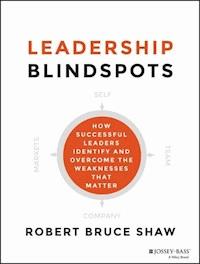
Good leaders become great by skillfully managing their own vulnerabilities Leadership Blindspots: How Successful Leaders Identify and Overcome the Weaknesses That Matter is a comprehensive guide to recognizing and acting on the weak points that can impair effectiveness, diminish results, and harm a career. Written by a 30-year veteran of the leadership consulting industry and author of Trust in the Balance, the book contains examples, worksheets and surveys that illustrate the practical application of the advice presented. An online questionnaire helps readers discover their own leadership vulnerabilities, and the book provides a roadmap for creating a targeted plan to increase their awareness in the areas that truly matter. The blindspot risk is that leaders fail to respond to weaknesses or threats due to a variety of factors including the complexity of their organizations, over-confidence in their own capabilities, and being surrounded by deferential subordinates. Leadership Blindspots provides a useful model for understanding how blindspots operate and why they persist, but at the same time suggests real, actionable steps to improvement. The book details a range of techniques that make blindspots stand out in sharp relief, so action can be taken before severe damage occurs - to a leader or his or her company. Topics include: * A framework to understand the threats posed by blindspots * The four most important types of blindspots - self, team, company and markets * Detailed case studies of blindspots in leaders across a variety of industries * A summary of the most common leadership blindspots * Corrective practices that help mitigate the risks that blindspots pose The one characteristic great leaders share is the constant desire for self-improvement. Good can always be better. These weaknesses and threats are called blindspots because they are invisible to the individual but have the potential to wreak havoc on one's reputation and long-term success. Identifying and fixing crucial problems is the leader's job, and sometimes the most debilitating problems are with the leaders themselves. Leadership Blindspots: How Successful Leaders Identify and Overcome the Weaknesses That Matter is the first step toward owning and addressing one's vulnerabilities and, as a result, becoming a more effective leader.
Sie lesen das E-Book in den Legimi-Apps auf:
Seitenzahl: 472
Veröffentlichungsjahr: 2014
Ähnliche



















Contents
Introduction
Section 1: Why Blindspots Matter
Chapter 1: The Dangers and Rewards of Being Blind
Steve Jobs: Blindspots About Himself
Jamie Dimon: Blindspots About His Team and Company
Henry Ford: Blindspots About His Market
Notes
Chapter 2: How to Spot Blindspots in Yourself and Others
The Blindspot Matrix
Degrees of Blindness
Responses to Blindspots
Identifying Your Own Blindspots
Notes
Chapter 3: The Common Blindspots Holding Leaders Back
Blindspots That Can Derail You
Blindspots About Yourself
Blindspots About Your Team
Blindspots About Your Company
Blindspots About Your Markets
Obtaining Further Blindspot Feedback
Notes
Chapter 4: Why Blindspots Are an Ever-Present Challenge
The Tenacity of Blindspots
Willful Blindness
Overcoming Blindspots
Notes
Section 2: How to Surface and Overcome Blindspots
Chapter 5: See It for Yourself: Customers, Colleagues, and Outsiders
Awareness of Customers and Markets
Awareness of Frontline Colleagues
Awareness of High Potentials
Awareness of Outsiders
Actions for Increasing Awareness
Notes
Chapter 6: Seek Out That Which Disconfirms What You Believe
Asking the Right Questions in the Right Way
Surface Disconfirming Data About Your Leadership Impact
Surface Disconfirming Data About Your Team
Surface Disconfirming Data About Your Organization
Surface Disconfirming Data About Your Markets
Actions for Seeking Out Disconfirming Data
Notes
Chapter 7: Develop Peripheral Vision and See What Others Miss
Know Your Team Members
Pay Attention to Behavioral Flags
Create Openings for Contrarians
Establish a Three-Strike Rule
Listen Differently
Actions for Developing Peripheral Vision
Notes
Chapter 8: Build a Network of Trusted Advisors in Critical Areas
Target the Areas Where You Need Advice
Match the Type of Advisor to Your Need
Maximize the Advice You Receive
Actions for Building a Network of Trusted Advisors
Notes
Chapter 9: Promote Productive Team Fights on the Vital Few Priorities
Hire a Group of Smart, Diverse, and Passionate People
Focus the Team on the Vital Few Priorities
Embrace High-Level Conflicts, Shun Low-Level Conflicts
Establish Ground Rules for Having Productive Fights
Ensure One Voice on Execution
Actions for Promoting Productive Team Fights
Notes
Conclusion
Section 3: Additional Resources
Resource A: Blindspot Q&A
Resource B: Leadership Blindspot Survey: Self-Assessment
Resource C: Common Leadership Blindspots: Feedback Worksheet
Resource D: Readings on Leadership Blindspots
Acknowledgments
About the Author
Index
Access to Companion Site
End User License Agreement
Pages
ii
iii
iv
v
vi
ix
x
xi
xii
xiii
xiv
xv
xvi
1
2
3
4
5
6
7
8
9
10
11
12
13
14
15
16
17
18
19
20
21
22
23
24
25
26
27
28
29
30
31
32
33
34
35
36
37
38
39
40
41
42
43
44
45
46
47
48
49
50
51
52
53
54
55
56
57
58
59
60
61
62
63
64
65
66
67
68
69
70
71
72
73
74
75
76
77
78
79
80
81
82
83
84
85
86
87
88
89
90
91
92
93
94
95
96
97
98
99
100
101
102
103
104
105
106
107
108
109
110
111
112
113
114
115
116
117
118
119
120
121
122
123
124
125
126
127
128
129
130
131
132
133
134
135
136
137
138
139
140
141
142
143
144
145
146
147
148
149
150
151
152
153
154
155
156
157
158
159
160
161
162
163
164
165
166
167
168
169
170
171
172
173
174
175
176
177
178
179
180
181
182
183
184
185
186
187
188
205
206
207
208
209
210
211
212
213
214
215
216
217
218
219
220
221
222
223
224
Guide
Cover
Table of Contents
Begin Reading
Join us at josseybass.com
Register at www.josseybass.com/email for more infromation on our publications, authors, and to receive special offers.
LEADERSHIP BLINDSPOTS
How Successful Leaders Identify and Overcome the Weaknesses That Matter
ROBERT BRUCE SHAW
Cover design by Wiley
Copyright © 2014 by John Wiley & Sons, Inc. All rights reserved.
Published by Jossey-Bass
A Wiley Brand
One Montgomery Street, Suite 1200, San Francisco, CA 94104-4594—www.josseybass.com
No part of this publication may be reproduced, stored in a retrieval system, or transmitted in any form or by any means, electronic, mechanical, photocopying, recording, scanning, or otherwise, except as permitted under Section 107 or 108 of the 1976 United States Copyright Act, without either the prior written permission of the publisher, or authorization through payment of the appropriate per-copy fee to the Copyright Clearance Center, Inc., 222 Rosewood Drive, Danvers, MA 01923, 978-750-8400, fax 978-646-8600, or on the Web at www.copyright.com. Requests to the publisher for permission should be addressed to the Permissions Department, John Wiley & Sons, Inc., 111 River Street, Hoboken, NJ 07030, 201-748-6011, fax 201-748-6008, or online at www.wiley.com/go/permissions.
Limit of Liability/Disclaimer of Warranty: While the publisher and author have used their best efforts in preparing this book, they make no representations or warranties with respect to the accuracy or completeness of the contents of this book and specifically disclaim any implied warranties of merchantability or fitness for a particular purpose. No warranty may be created or extended by sales representatives or written sales materials. The advice and strategies contained herein may not be suitable for your situation. You should consult with a professional where appropriate. Neither the publisher nor author shall be liable for any loss of profit or any other commercial damages, including but not limited to special, incidental, consequential, or other damages. Readers should be aware that Internet Web sites offered as citations and/or sources for further information may have changed or disappeared between the time this was written and when it is read.
Jossey-Bass books and products are available through most bookstores. To contact Jossey-Bass directly call our Customer Care Department within the U.S. at 800-956-7739, outside the U.S. at 317-572-3986, or fax 317-572-4002.
Wiley publishes in a variety of print and electronic formats and by print-on-demand. Some material included with standard print versions of this book may not be included in e-books or in print-on-demand. If this book refers to media such as a CD or DVD that is not included in the version you purchased, you may download this material at http://booksupport.wiley.com. For more information about Wiley products, visit www.wiley.com.
Library of Congress Cataloging-in-Publication Data
Shaw, Robert B.
Leadership blindspots : how successful leaders identify and overcome the weaknesses that matter / Robert B. Shaw. —First edition.
pages cm
Includes bibliographical references and index.
ISBN 978-1-118-64629-8 (cloth); ISBN 978-1-118-64622-9 (ebk); ISBN 978-1-118-64609-0 (ebk)
1. Leadership. I. Title.
HD57.7.S4826 2014
658.4'092—dc23
2014002404
To Jackie, for reasons great and small.
INTRODUCTION
An executive I know believes that leadership, when all is said and done, is simply making better decisions than your competition. When asked how people can best develop this capability, he smiles and says, “Make a lot of bad decisions that don’t kill you.” The fact that good judgment is built on bad judgment means that you learn primarily as result of your experiences—particularly your mistakes. Over time, you develop better judgment as you live with the outcomes of your choices. You also observe other leaders and extract lessons from their decision-making process. The full truth, however, is that experience is no panacea. You may not make the same mistakes twice and will most likely make fewer mistakes as your career progresses—but you will make mistakes. Even the most talented and best-prepared leaders learn on the job—facing complex, ever-changing, and often unexpected challenges.
It is equally true that mistakes become more costly as you move up in a company. Take the case of Ron Johnson at JCPenney. Johnson was appointed CEO based on his stellar performance at Target and later at Apple, where he created a retail division that became one of most profitable in the world. Some viewed him as a retail genius. The board of JCPenney believed that Johnson’s innovative leadership was needed to revitalize the firm. He would determine how to rebrand the company and bring in new customers. Soon after being hired, he pushed forward with his bold vision for the century-old retailer. He moved the company away from its historical roots as a retailer offering bargains on heavily discounted and private-label merchandise. The company would now offer a range of branded products at “everyday low prices.” Johnson implemented his changes quickly, despite warnings that he was moving too fast in a company and marketplace that he didn’t fully understand. Extremely confident, some would say arrogant in the mold of his former Apple colleagues, he saw no need to pilot test his ideas before pulling the switch on a massive and risky undertaking. It was soon apparent that his vision was ill-conceived and even more poorly executed. Many of the firm’s traditional customers, without the lure of steep discounts, stopped shopping at JCPenney, resulting in a loss of $1 billion in the first year after Johnson took charge. A business school professor noted that “Penney had been run into a ditch when he took it over. But, rather than getting it back on the road, he’s essentially set it on fire.”
Lesen Sie weiter in der vollständigen Ausgabe!
Lesen Sie weiter in der vollständigen Ausgabe!
Lesen Sie weiter in der vollständigen Ausgabe!
Lesen Sie weiter in der vollständigen Ausgabe!
Lesen Sie weiter in der vollständigen Ausgabe!
Lesen Sie weiter in der vollständigen Ausgabe!
Lesen Sie weiter in der vollständigen Ausgabe!
Lesen Sie weiter in der vollständigen Ausgabe!
Lesen Sie weiter in der vollständigen Ausgabe!
Lesen Sie weiter in der vollständigen Ausgabe!
Lesen Sie weiter in der vollständigen Ausgabe!
Lesen Sie weiter in der vollständigen Ausgabe!
Lesen Sie weiter in der vollständigen Ausgabe!
Lesen Sie weiter in der vollständigen Ausgabe!
Lesen Sie weiter in der vollständigen Ausgabe!
Lesen Sie weiter in der vollständigen Ausgabe!
Lesen Sie weiter in der vollständigen Ausgabe!
Lesen Sie weiter in der vollständigen Ausgabe!
Lesen Sie weiter in der vollständigen Ausgabe!
Lesen Sie weiter in der vollständigen Ausgabe!
Lesen Sie weiter in der vollständigen Ausgabe!
Lesen Sie weiter in der vollständigen Ausgabe!




