


19,99 €
Mehr erfahren.
- Herausgeber: John Wiley & Sons
- Kategorie: Fachliteratur
- Sprache: Englisch
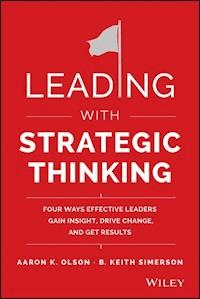
Be a more effective leader with strategic thinking Leading with Strategic Thinking reveals what effective leaders do differently. Eschewing the one-size-fits-all leadership model, this helpful guide outlines four general leadership types and demonstrates how each type achieves success - whether through personal vision, structured process, collaboration, or by empowering others. The authors identify the actions and skills that distinguish strategic leadership, drawn from interviews and focus groups with over three hundred leaders from around the world. Examples and case studies illustrate these concepts in action, and the provided reference materials steer readers toward more advanced information on this important topic. The disruptive forces of technology and globalization raise new challenges for leaders. This book is a manual that will help executives and aspiring leaders harness these forces and address the two central questions of strategic leadership: * How do the best leaders develop their strategy? * How do effective leaders drive strategic change? Becoming a strategic leader isn't about mimicking an icon. The most effective leaders seize opportunity in a way that consciously integrates environmental requirements, stakeholder expectations, and personal ability. Leading with Strategic Thinking shows what these leaders do, and gives anyone the tools to be a more strategic leader.
Sie lesen das E-Book in den Legimi-Apps auf:
Seitenzahl: 449
Veröffentlichungsjahr: 2015
Ähnliche


















CONTENTS
Cover
Praise for
Leading with Strategic Thinking
Title Page
Copyright
Dedication
Foreword
Preface
Introduction
Issues and Considerations
Fundamental Questions
Chapter 1: Fundamentals of Strategic Thinking and Leadership
The Nature of Strategic Thinking
The Art of Leadership
Chapter 2: The Four Types of Strategic Leadership
Fundamental Questions for the Strategic Leader
Four Types of Strategic Leadership
Similarities and Differences
Chapter 3: Examples of Strategic Leadership
Four Examples
Wrap-Up
Chapter 4: Applying Strategic Leadership
Gaining Strategic Insight
Driving Strategic Change
Integrating the Four Types
Integration and Authenticity
Chapter 5: Garnering Buy-in, Commitment, and Advocacy
Attaining Needed Buy-in, Commitment, and Advocacy
Winning Hearts, Engaging Minds, and Leveraging Hands
Chapter 6: Developing Strategic Leadership
Competencies of the Strategic Leader
Organization and Individual Development
In Closing
Resources
Firming Up and Rounding Out Your Skills and Abilities
References
About the Authors
Index
End User License Agreement
List of Illustrations
Figure 7.1
Figure 1.1
Figure 2.1
Figure 2.2
Figure 2.3
Figure 2.4
Figure 2.5
Guide
Cover
Table of Contents
Begin Reading
Begin Reading
Begin Reading
Chapter 1
Pages
i
ii
v
vi
vii
xi
xii
xiii
xiv
xv
xvi
xvii
xviii
xix
xx
xxi
xxii
xxiii
xxiv
xxv
xxvi
xxvii
xxviii
1
2
3
4
5
6
7
8
9
10
11
12
13
14
15
16
17
18
19
20
21
22
23
24
25
26
27
28
29
30
31
32
33
34
35
36
37
38
39
40
41
42
43
44
45
46
47
48
49
50
51
52
53
54
55
56
57
58
59
60
61
62
63
64
65
66
67
68
69
70
71
72
73
74
75
76
77
78
79
80
81
82
83
84
85
86
87
88
89
90
91
92
93
94
95
96
97
98
99
100
101
102
103
104
105
106
107
108
109
110
111
112
113
114
115
116
117
118
119
120
121
122
123
124
125
126
127
128
129
130
131
132
133
134
135
136
137
138
139
140
141
142
143
144
145
146
147
148
149
150
151
152
153
154
155
156
157
158
159
160
161
162
163
164
165
166
167
168
169
170
171
172
173
174
175
176
177
178
179
180
181
182
183
184
185
186
187
188
189
190
191
192
193
194
195
196
197
198
199
200
201
202
203
204
205
206
207
208
209
210
211
212
213
214
215
216
217
218
219
220
221
222
223
224
225
226
227
228
229
230
231
232
233
234
235
236
237
238
239
240
241
242
243
244
245
246
247
248
249
250
251
252
253
254
255
256
257
258
259
260
261
262
263
264
265
266
267
268
269
270
271
272
273
274
275
276
277
278
279
280
281
Praise for Leading with Strategic Thinking
“This is a very practical book, highlighting how the best leaders and organizations gain strategic insight and then make change happen. In the armed forces we take both strategy and leadership very seriously—this book does justice to both topics.”
—General Richard Myers,Chairman of the Joint Chiefs of Staff, U.S. Military (Retired)
“Leading with Strategic Thinking is an important, new contribution to the practice of leadership. Defining the intersection between business strategy and strategic management reveals multiple paths to leadership development—at a point in time or over time. I applaud Aaron and BK for making leadership more accessible for all of us.”
—Renetta McCann,Chief Talent Officer, Leo Burnett
“Through a powerful blend of diverse leadership examples and academic insights, Olson and Simerson provide a framework of leadership types that masterfully address the two competencies required of any successful leader: having strategic insight and driving strategic change.”
—Marc Knez,Clinical Professor of Strategic Management, University of Chicago Booth School of Business
“Across industries, many leaders are encouraged to improve their strategic skills. Often, the path to skill enhancement is not clear. What I appreciate about this book is the tangible behaviors, real-life case studies and specific actions to address the strategic needs of a leader and an organization. I strongly recommend this book to anyone looking to grow in their strategic leadership.”
—Rose Hollister,Senior Director, Jim Skinner Institute of Leadership, McDonald's Corporation
“Kudos to Olson and Simerson for giving us clear, compelling, and relevant approaches to strategic leadership, change, and implementation. Whether you are in the C-Suite or aspiring to get there, this book illustrates how strategic leaders can find the right way to adapt their approach. The examples, from established enterprises like Google and 3M, to entrepreneurial start-ups and even vast public sector transformations, make this a ‘must-read,’ whether you desire to lead a public company, a venture backed start-up, or an emerging not-for-profit. A great book that everyone on the team should read.”
—Michael C. Krauss,President, Market Strategy Group; “@ C-Level” columnist for Marketing News
“Great leadership is all about adjusting to new context. Aaron and BK provide us with a framework and insights to not only manage the disorientation of shifting context but to leverage it for better business results.”
—Steve King,Executive Director, Center for Executive and Professional Development, Wisconsin School of Business
Leading with Strategic Thinking
Four Ways Effective Leaders Gain Insight, Drive Change, and Get Results
Aaron K. Olson
B. Keith Simerson
Cover design and illustration: Wiley
Copyright © 2015 by Aaron K. Olson and B. Keith Simerson. All rights reserved.
Published by John Wiley & Sons, Inc., Hoboken, New Jersey.
Published simultaneously in Canada.
No part of this publication may be reproduced, stored in a retrieval system, or transmitted in any form or by any means, electronic, mechanical, photocopying, recording, scanning, or otherwise, except as permitted under Section 107 or 108 of the 1976 United States Copyright Act, without either the prior written permission of the Publisher, or authorization through payment of the appropriate per-copy fee to the Copyright Clearance Center, 222 Rosewood Drive, Danvers, MA 01923, (978) 750-8400, fax (978) 646-8600, or on the web at www.copyright.com. Requests to the Publisher for permission should be addressed to the Permissions Department, John Wiley & Sons, Inc., 111 River Street, Hoboken, NJ 07030, (201) 748-6011, fax (201) 748-6008, or online at www.wiley.com/go/permissions.
Limit of Liability/Disclaimer of Warranty: While the publisher and author have used their best efforts in preparing this book, they make no representations or warranties with respect to the accuracy or completeness of the contents of this book and specifically disclaim any implied warranties of merchantability or fitness for a particular purpose. No warranty may be created or extended by sales representatives or written sales materials. The advice and strategies contained herein may not be suitable for your situation. You should consult with a professional where appropriate. Neither the publisher nor the author shall be liable for damages arising herefrom.
For general information about our other products and services, please contact our Customer Care Department within the United States at (800) 762-2974, outside the United States at (317) 572-3993 or fax (317) 572-4002.
Wiley publishes in a variety of print and electronic formats and by print-on-demand. Some material included with standard print versions of this book may not be included in e-books or in print-on-demand. If this book refers to media such as a CD or DVD that is not included in the version you purchased, you may download this material at http://booksupport.wiley.com. For more information about Wiley products, visit www.wiley.com.
Library of Congress Cataloging-in-Publication Data:
Olson, Aaron K., 1974-
Leading with strategic thinking : four ways effective leaders gain insight, drive change, and get results / Aaron K. Olson, B. Keith Simerson.
pages cm
Includes index.
ISBN 978-1-118-96815-4 (hardback); ISBN 978-1-118-96816-1 (ePDF); ISBN 978-1-118-96817-8
1. Leadership. 2. Decision making. 3. Problem solving. I. Simerson, Byron K. II. Title.
HD57.7.O4327 2015
658.4′092–dc23
2015001987
Dedication
To Darlie, Jarrett, Brent, and Andrew, thank you for your continued encouragement and support and for teaching me the importance of personal and situational awareness. The boundless enthusiasm, passion, and zeal you bring to everything you do invigorate and energize me. To Kristin and Jessica, I find our conversations to be profoundly stimulating and exhilarating. To Alexander, I can already tell you are in for the time of your life!
To Jeanne, thank you for your wisdom, patience, and encouragement. You never cease to amaze me. To Grace and Habs, you help me see the world for the amazing thing that it is. To Mark and Doreen, thank you for teaching me the value of solving problems that matter.
Foreword
Disruptive change requires a new type of strategic leadership. While it is hard to define, we know what it looks like when we see it and when we don't. This book creates a new lexicon for this critical skill set and actionable ideas on how to develop a strategic perspective, apply adaptive thinking, and demonstrate courageous leadership.
A good example of the complex challenges we face is health care. It's clear that the traditional way of delivering health benefits—and health care—is broken. Costs continue to rise unabated, and the health of the population continues to decline. Nowhere is this more acute than in the United States. For the first time in decades, key stakeholders from employers, to insurance carriers, to health care providers, to government are all working on ways to fix a system that is ripe for fundamental change. In my recent discussions with literally hundreds of government leaders, CEOs in the health care industry, and senior executives at some of the world's largest employers, they are all trying to make sense of their role in an evolving health environment. They must rethink their definition of health and performance, reexamine the strength of the implied contract for health between employers and employees, and reconsider their role in transforming the health ecosystem in ways that align risk and consequences and drive healthy behaviors and outcomes.
This is just one example of a new breed of disruptive forces that are fueling upstarts and challenging incumbents in almost every industry and economy around the world. Advances in technology are transforming every aspect of our lives—enabling new solutions, services, and products delivered in a highly personalized way. The rise of consumerism is giving new power to the individual and raising expectations for the information and access needed to make increasingly consequential choices that affect our security and well-being. Likewise, globalization is creating both opportunity and competition as people and countries become increasingly intertwined.
Navigating these kinds of systemic change requires strategy and leadership. Finding the right solutions will require strategic analysis, design, and planning. Driving the necessary change will require strong leadership that embraces diverse thought, builds trust, creates momentum, and removes barriers. Without both strategy and leadership, we risk making incremental progress that doesn't address the real underlying problems we face.
The urgent need for strategic leadership exists at every level. We need leaders who can see opportunities arising from complex, highly interdependent problems. We need frontline leaders who can lead the charge, influencing others to embrace new ways of working together—and working for one another to achieve a common mission. We need individuals who are motivated to reinvent their own work and equipped to make trade-offs between competing priorities without constant direction from above.
Strategic leadership is easy to recognize when it is present—or missing—but it is often hard to describe. I've worked with many leaders in my career who possess the ability to assess an environment and quickly adapt their approach to suit the situation. I've probably worked with more who were unable to deconstruct a challenge, consider alternatives and consequences, and work differently to get the desired results. I've realized that the best leaders see patterns that others don't and can turn these observations into unique actions. They enroll and empower those around them to actively participate in problem solving. Most importantly, they aren't afraid to seek feedback and make course corrections when needed along the way. This book helps motivate, develop, and support individuals and organizations to bring together strategic thinking and strong leadership.
Aaron and BK offer fresh and pragmatic insights into what it means to approach a problem strategically and then lead through the required change. I've enjoyed spending time with them sharing some of my real-life examples of what strategic leaders actually do when addressing real-world problems and opportunities. As teachers, coaches, and leaders themselves, they've used their own experiences, along with insights from their deep networks, to capture crucial aspects of strategic leadership in practical terms that are easy to understand and apply. The result is a new and powerful language on how to lead through strategic change.
I look forward to seeing this book help organizations and individuals lead more strategically and with more sustainable impact.
—Kristi Savacool
CEO, Aon Hewitt
Preface
“You need to be more strategic.” When someone receives this kind of feedback, what does it mean?
We believe that too often strategic thinking is defined narrowly and is misunderstood. Strategic thinking is defined narrowly when its relevance is seen as being limited to senior executives responsible for defining strategic direction. This narrow definition overlooks the value that is created when everyone in an organization approaches work in a more strategic manner. This is particularly true in times of disruption, when forces of technology and social change challenge the status quo and create opportunities for massive improvements in collaboration, productivity, and value creation. Likewise, strategic thinking is misunderstood when it is thought of as synonymous with strategic planning. This limits the relevance and application of a key skill that can and should be applied in a wide range of contexts. Strategic thinking can and should improve the performance of CEOs, but it can and should also be applied by line managers, individual contributors, politicians, coaches, and parents. For these reasons, being competent in strategic thinking is critical for individuals and organizations. Practiced well, it drives performance and distinguishes high potentials. Practiced poorly, it destroys value and derails careers.
Strategic thinking comprises three key activities: assessing situations, recognizing patterns, and making decisions. Relevant concepts and tools from the fields of cognitive psychology, systems thinking, and game theory can enhance any leader's ability to think strategically.
It is in the application of strategic thinking to the art of leadership where many experts and books on this topic neglect to address important insights. Broader than a set of best practices or a strategic plan, strategic leadership:
Acknowledges both the planned and emergent nature of gaining strategic insight,
Considers the nuances of effectively driving strategic change, and
Varies widely as a reflection of both personal style and context.
These issues, often overlooked, are the primary focus of this book. In it we explore academic literature, popular opinion, real-world data, and case studies that inform our definition of strategic leadership.
We have written this book especially for those seeking answers to questions about the intersection of strategic thinking and leadership. The readers of this book will likely fall into one of several categories:
Aspiring and seasoned leaders: We wrote this book specifically for you, and designed it to be focused and practical. It has value in its entirety, but any specific chapter can stand alone and provide actionable advice. Use our book as a practical guide when (1) embarking on a new venture in which you want to weigh and select the most appropriate approach, (2) taking on new or expanded responsibilities that require you to reconsider how you approach your work, (3) reflecting on your work and how you consider your role, or (4) receiving feedback suggesting that you become more effective and have greater impact.
Consultants and advisors can use our book to coach leaders on the essentials of strategic thinking and leadership. From our experience, the concepts and tools in this book are well suited to help leaders at any level or with any amount of experience consider the challenges that sit at the intersection of strategy and leadership.
Academicians and students can use this book to teach or learn what leaders must do when driving strategy within various contexts, under different circumstances, and with different purposes in mind. While this book is intended to serve as a practical guide rather than an academic text, we have based our writing on well-regarded principles validated by empirical research. We wrote this book because we identified specific relationships between strategy and leadership that we do not see being fully addressed in today's popular or academic literature.
With these readers in mind, we have written a book intended to be as enjoyable to read as it is practical. While some books focus on strategic thinking and others on leadership, this book focuses on the intersection of the two topics. In looking at these relationships, we will address:
The major contexts and circumstances within which strategic thinking and leadership typically occur,
Four types of strategic leadership that integrate strategy formulation and execution, and
How a leader can adapt their approach to best suit a given situation.
This book is composed of real examples. Organized around a conceptual framework, it focuses on practical cases featuring real leaders. We draw these examples from our extensive experience working with senior executives, leadership teams, and graduate students who have applied these techniques to become more effective and achieve results.
This book's chapters are sequenced to introduce broader concepts and then provide tools likely to prove useful. The book contains six chapters:
Fundamentals of Strategic Thinking and LeadershipPresents the essential concepts of leadership and strategic thinking. Our definition of strategic leadership is introduced, and we review four examples that demonstrate strategic thinking and leadership in action.
The Four Types of Strategic LeadershipIntroduces our methodology and overarching framework. We describe the key activities we see leaders typically apply when practicing one of four types of strategic leadership:
Visionary LeadershipDriving strategy through personal vision.
Directive LeadershipDriving strategy through structure and process.
Incubating LeadershipDriving strategy through empowering others.
Collaborative LeadershipDriving strategy through cocreation.
Examples of Strategic LeadershipFour case studies describe what real-world leaders do when applying the four types of strategic leadership.
Applying Strategic LeadershipSpotlights how leaders can apply the concepts of this book to make conscious decisions to lead strategically, with a focus on gaining insight and driving change. A case study highlights one leader's intentional approach to adapt his leadership style to get results.
Garnering Buy-in, Commitment, and AdvocacySpotlights what individuals, depending on their strategic leadership type, must (1) consider as likely biases and blind spots, and the steps they must take to mitigate them; and (2) do to garner the buy-in, commitment, and advocacy of others. We provide examples to demonstrate how strategic leaders draw upon the hearts, minds, and hands of followers.
Developing Strategic LeadershipShowcases the skills that strategic leaders must demonstrate to be effective as strategic leaders, including how many of those skills vary depending on the type of strategic leadership being applied. We highlight practical examples of how we see strategic leadership developed at both the individual and organizational levels.
Case studies are included throughout this book, and discussions with leaders were an essential part of our work. The strategic thinkers and leaders willing to share their stories with us include Todd Connor; Brian Fitzpatrick; Liz Gerber, PhD; David Hammond; José Ignacio Sordo; Ronald Kirschner, MD; Erica Labovitz; Neil Nicoll; Danae Ringlemann; and Slava Rubin. These selfless individuals have shared insights without which this book would not have been possible.
Conversations with a slate of friends, associates, and colleagues also helped make this book possible. For this, we thank Greg Besio, Rich Gravelin, Robert Hooper, Chris Kingseed, Ingo Schiller, Kevin Murnane, Dan Tepke, and the faculty, staff, and students of Northwestern University's Masters of Learning and Organizational Change program, where we have had the privilege to teach.
Many professional colleagues at Aon Hewitt graciously shared their expertise and research as input to our work. For this, we thank Seymour Adler, Shelli Greenslade, Jessie Leisten, Ken Oehler, and Lorraine Stomski. Special thanks are due to Aon Hewitt CEO Kristi Savacool, who sponsored our collaboration and who was generous with her own time and insights on this topic.
Our wonderful editor, Shannon Vargo, and the team at Wiley have provided invaluable advice and support to us throughout the writing process. Thank you to Matt Holt, Lauren Freestone, and Elizabeth Gildea.
A special thanks goes to Jeanne Olson, who helped us immensely while working on our manuscript. Her input on our writing and her illustrations, which you will find throughout the text, have greatly added to the quality and clarity of how our work is presented.
Lesen Sie weiter in der vollständigen Ausgabe!
Lesen Sie weiter in der vollständigen Ausgabe!
Lesen Sie weiter in der vollständigen Ausgabe!
Lesen Sie weiter in der vollständigen Ausgabe!
Lesen Sie weiter in der vollständigen Ausgabe!
Lesen Sie weiter in der vollständigen Ausgabe!
Lesen Sie weiter in der vollständigen Ausgabe!
Lesen Sie weiter in der vollständigen Ausgabe!
Lesen Sie weiter in der vollständigen Ausgabe!
Lesen Sie weiter in der vollständigen Ausgabe!
Lesen Sie weiter in der vollständigen Ausgabe!




