


15,99 €
Mehr erfahren.
- Herausgeber: John Wiley & Sons
- Kategorie: Geisteswissenschaft
- Sprache: Englisch
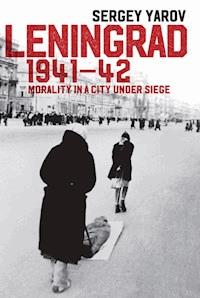
This book recounts one of the greatest tragedies of the twentieth century: the siege of Leningrad. It is based on the searing testimony of eyewitnesses, some of whom managed to survive, while others were to die in streets devastated by bombing, in icy houses, or the endless bread queues. All of them, nevertheless, wanted to pass on to us the story of the torments they endured, their stoicism, compassion and humanity, and of how people reached out to each other in the nightmare of the siege. Though the siege continues to loom large in collective memory, an overemphasis on the heroic endurance of the victims has tended to distort our understanding of events. In this book, which focuses on the "Time of Death", the harsh winter of 1941-42, Sergey Yarov adopts a new approach, demonstrating that if we are to truly appreciate the nature of this suffering, we must face the full realities of people's actions and behaviour. Many of the documents published here - letters, diaries, memoirs and interviews not previously available to researchers or retrieved from family archives - show unexpected aspects of what it was like to live in the besieged city. Leningrad changed, and so did the morals, customs and habits of Leningraders. People wanted at all costs to survive. Their notes about the siege reflect a drama which cost a million people their lives. There is no spurious cheeriness and optimism in them, and much that we might like to pass over. But we must not. We have a duty to know the whole, bitter truth about the siege, the price that had to be paid in order to stay human in a time of brutal inhumanity.
Sie lesen das E-Book in den Legimi-Apps auf:
Seitenzahl: 1048
Veröffentlichungsjahr: 2017
Ähnliche




















Contents
Cover
Title Page
Copyright
Foreword by John Barber
Preface
Part I Concepts of Morality in 1941–1942
1 The tragedy of Leningrad
The Time of Death
The breakdown of moral standards
Notes
2 Moral commandments
The concept of honesty
Fairness
Charity
Attitudes to theft
Notes
3 The shifting boundaries of ethics
Infringement of ethical standards: arguments used in self-justification
Compulsory ethical standards: coercion as a means of ensuring survival
Notes
4 The influence of moral standards on people’s behaviour
Appealing for help
Expressing gratitude for help
Notes
Part II The Ethical Dimension
5 The family: compassion, consolation, love
Notes
6 The family: ethics
Continuity and disintegration
Funerals
Friends
Neighbours
Colleagues
Notes
7 Party and government
Rules of behaviour
Privileges
Notes
8 Strangers
Parentless children
People collapsing in the streets
‘Dystrophics’
Leningraders in the queue
Notes
Part III Means of Reinforcing Morality
9 Concepts of civilization
Art, creativity, reading
Tales of the siege
Tales about life in the past and future
Diaries and letters
Control
Notes
10 Self-control
Codes of behaviour
Introspection
Notes
Leningraders in the Time of Death: human and superhuman
Index
End User License Agreement
Guide
Cover
Table of Contents
Begin Reading
Pages
iii
vii
ix
x
xi
xii
xiii
1
3
4
5
6
7
8
9
10
11
12
13
14
15
16
17
18
19
20
21
22
23
24
25
26
27
28
29
30
31
32
33
34
35
36
37
38
39
40
41
42
43
44
45
46
47
48
49
50
51
52
53
54
55
56
57
58
59
60
61
62
63
64
65
66
67
68
69
70
71
72
73
74
75
76
77
78
79
80
81
82
83
84
85
86
87
88
89
90
91
92
93
94
95
96
97
98
99
100
101
102
103
104
105
106
107
108
109
110
111
112
113
114
115
116
117
118
119
120
121
122
123
124
125
126
127
128
129
131
133
134
135
136
137
138
139
140
141
142
143
144
145
146
147
148
149
150
151
152
153
154
155
156
157
158
159
160
161
162
163
164
165
166
167
168
169
170
171
172
173
174
175
176
177
178
179
180
181
182
183
184
185
186
187
188
189
190
191
192
193
194
195
196
197
198
199
200
201
202
203
204
205
206
207
208
209
210
211
212
213
214
215
216
217
218
219
220
221
222
223
224
225
226
227
228
229
230
231
232
233
234
235
236
237
238
239
240
241
242
243
244
245
246
247
248
249
250
251
252
253
254
255
257
258
259
260
261
262
263
264
265
266
267
268
269
270
271
272
273
274
275
276
277
278
279
280
281
282
283
284
285
286
287
288
289
290
291
292
293
294
295
296
297
298
299
300
301
302
303
304
305
306
307
308
309
310
311
312
313
314
315
316
317
318
319
320
321
322
323
324
325
326
327
328
329
330
331
332
333
334
335
336
337
338
339
340
341
342
343
344
345
346
347
348
349
350
351
352
353
354
355
356
357
358
359
360
361
362
363
364
365
366
367
368
369
370
371
372
373
374
375
376
377
378
379
380
381
382
383
384
385
386
387
388
389
390
391
392
393
394
395
396
397
398
399
400
401
402
403
404
405
406
407
408
409
Leningrad 1941–1942
Morality in a City under Siege
Sergey Yarov
Translated byArch Tait
polity
First published in Russian as Блокадная этика. Представление о морали в Ленинграде в 1941–1942гг. © Sergey Yarov, 2012
This English edition © Polity Press, 2017
This publication was effected under the auspices of the Mikhail Prokhorov Foundation TRANSCRIPT Programme to support translations of Russian literature.
Polity Press65 Bridge StreetCambridge CB2 1UR, UK
Polity Press350 Main StreetMalden, MA 02148, USA
All rights reserved. Except for the quotation of short passages for the purpose of criticism and review, no part of this publication may be reproduced, stored in a retrieval system or transmitted, in any form or by any means, electronic, mechanical, photocopying, recording or otherwise, without the prior permission of the publisher.
ISBN-13: 978-1-5095-0802-0
A catalogue record for this book is available from the British Library.
Library of Congress Cataloging-in-Publication Data
Names: Yarov, Sergei Viktorovich, author.Title: Leningrad, 1941-42 : morality in a city under siege / Sergey Yarov.Other titles: Blokadnaia etika. EnglishDescription: English edition. | Cambridge, UK ; Malden, MA : Polity, 2017. | Includes bibliographical references and index.Identifiers: LCCN 2016043509 (print) | LCCN 2016046586 (ebook) | ISBN 9781509507986 (hardback) | ISBN 9781509508006 (paperback) | ISBN 9781509508013 (Mobi) | ISBN 9781509508020 (Epub)Subjects: LCSH: Saint Petersburg (Russia)--History--Siege, 1941-1944. | Saint Petersburg (Russia)--History--Siege, 1941-1944--Personal narratives. | Blockade--Social aspects--Russia (Federation)--Saint Petersburg--History--20th century. | World War, 1939-1945--Moral and ethical aspects--Russia (Federation)--Saint Petersburg. | World War, 1939-1945--Social aspects--Russia (Federation)--Saint Petersburg. | Saint Petersburg (Russia)--Social conditions--20th century. | Saint Petersburg (Russia)--Moral conditions--History--20th century.Classification: LCC D764.3.L4 I27513 2017 (print) | LCC D764.3.L4 (ebook) | DDC 940.54/21721--dc23LC record available at https://lccn.loc.gov/2016043509
The publisher has used its best endeavours to ensure that the URLs for external websites referred to in this book are correct and active at the time of going to press. However, the publisher has no responsibility for the websites and can make no guarantee that a site will remain live or that the content is or will remain appropriate.
Every effort has been made to trace all copyright holders, but if any have been inadvertently overlooked the publisher will be pleased to include any necessary credits in any subsequent reprint or edition.
For further information on Polity, visit our website: politybooks.com
Foreword
No city in the history of warfare has known a catastrophe like that suffered by Leningrad in World War II. While the exact number who died during the siege by the German and Finnish armies from 8 September 1941 to 27 January 1944 will never be known, available data point to 900,000 civilian deaths, over half a million of whom died in the winter of 1941–2 alone.1 Many other cities were devastated in World War II, but none saw death on such a scale as Leningrad. And, unlike others, it was not bombing, fighting or shelling that caused the massive number of deaths. The overwhelming majority of those who perished in Leningrad died of hunger.
That Leningrad would be besieged was unforeseen by either side in the titanic struggle that began when Hitler launched Operation Barbarossa, the surprise invasion of the USSR by 3½ million German troops and their allies, on 22 June 1941. After the crushing defeat of France the previous summer, both he and the Wehrmacht high command were confident that Blitzkrieg would see the fall of Leningrad within a few weeks. For Stalin, the idea that enemy forces could penetrate Soviet defences and advance deep into Soviet territory had been unthinkable. Red Army commanders faced the charge of treason if they planned for defence in depth. No preparations had been made to defend Leningrad, let alone endure a long siege.
By the end of July, the fierce resistance of the Red Army, even as it retreated with staggering losses, caused Hitler to begin rethinking his strategy. The immediate task for Army Group North was now to encircle Leningrad; and, for the first time, the word ‘starve’ appeared in his war notes. On the Soviet side, the speed of the German advance forced Stalin and the Soviet leadership to realize that Leningrad was highly vulnerable. Thousands of volunteers were mobilized in people’s militias and, with little or no training, thrown into battle alongside the Red Army to halt the Germans at the Luga River line, suffering huge casualties in the process. Meanwhile, thousands more, mainly women, were drafted to work day and night to construct extensive fortifications outside and inside the city.
It was only on 21 August, however, that Leningraders were told that their city was in danger of attack. Eight days later, the last rail line out of the city was cut, and on 8 September German forces captured Schlisselburg, cutting its last land link with the rest of the USSR. Hitler’s strategy was now decided. Rather than attempting to take Leningrad by storm and risking heavy losses of forces needed for the imminent battle for Moscow, hunger would bring the Nazis victory. The population of 2½ million would be starved to death and the city razed to the ground. The siege had begun; it would last for 872 days.
With the destruction by bombing of the large Badaev food stores on the first day of the blockade, and supplies by air or water drastically limited, Leningrad’s leaders knew that disaster threatened. In the weeks that followed they cut the bread ration five times. By 20 November, it had been reduced for most Leningraders to 150 grams, a fraction of the amount needed to sustain life. Of this, half was composed of additives with no nutritional value – sawdust, cellulose, malt and other surrogates – and almost no other rations were provided. Leningraders were left to their own devices to supplement their meagre bread ration with anything remotely edible – wood glue, tank grease, oilcake, leather belts and many other surrogates – or to barter their possessions for food.
The result was mass starvation. The first such deaths occurred in late October and they grew inexorably. By November, the first arrests were being made for cannibalism. By December, death from ‘dystrophy’, atrophy of the vital organs, was common. Victims collapsed and died at home or work, resting or walking. With the cessation of electricity and water supply, heating and sewerage, with starving people forced to stand for hours, often at night, in bread queues, even then not always receiving their ration, and in one of the bitterest winters on record, the death rate rose in January and February to thirty times its peacetime level. Leningrad was in the grip of a famine unprecedented in its scale and intensity. The Leningrad famine in the ‘Hungry Winter’ of 1941–2 would belong in the same category as major famines of modern history: Ireland in 1846, India in 1876–9, Bengal in 1942, China in 1959–61.
As a description, ‘Hungry Winter’ is an understatement. It was, as Sergey Yarov says, the Time of Death. With the Leningrad Funeral Trust unable to cope with the huge number of dead, corpses lay everywhere – in homes, courtyards, on the streets, in improvised morgues and hospitals. When eventually collected, they were transported in lorries full to the brim, and left in piles of hundreds, sometimes thousands, at cemeteries, awaiting burial in mass graves or cremation. Not until March would the death rate begin to diminish. With increased food supplies reaching Leningrad and the evacuation of half a million people via the Road of Life across Lake Ladoga, and fewer people alive to be fed, by spring rations had reached a level capable of sustaining life. The effects of extreme malnutrition during the winter, however, would last for months. People were still dying from dystrophy, if in fewer numbers, for the rest of 1942. Hundreds of books have been published about the siege of Leningrad. Already during the blockade itself, the authorities decided that its immense human cost should be recorded in order to write its history They called on Leningraders to provide personal records of it, including diaries they were writing – or had been until they died; and many were collected. This project was brought to a sudden halt, however, in 1949–50 in the Leningrad Affair, when Stalin ruthlessly purged many who had been leading figures during the siege on the grounds of their supposed ambition to challenge Moscow’s preeminence. For the rest of the Stalin period, Leningrad’s role in the Soviet war effort would receive minimal attention from historians. The diaries, along with other materials, were consigned to remote corners of the archives. 2
From the Khrushchev period, it became possible again to write about the siege, though almost exclusively in ways that emphasized the role of patriotism and heroism in victory over Nazi Germany.3 But it would take Perestroika from 1985, and above all the collapse of the Soviet Union in 1991, to open Soviet archives and make research into previously ignored or taboo areas of the siege’s history possible for both Russian and Western historians.4
Unique among these was Sergey Yarov. In the ten years that this brilliant and original St Petersburg historian devoted to study of the history of the siege, until his untimely death in September 2015,5 he read hundreds of diaries, letters, memoirs, reminiscences and reports, and interviewed many survivors of the siege. His aim was to show the full tragedy of the siege, the impact that the terrible conditions in which the great majority of the population lived and died during the siege had on their attitudes, behaviour and psychology. More than anyone who has written about the siege, he showed the terrible choices that desperate and famished people could be forced to make – to feed one child at the cost of another’s life, to keep the body of a dead relative in the apartment to use his or her ration cards to keep others alive, to use the flesh of a corpse to feed dependants or oneself. Was it possible to remain human in inhuman conditions? Yarov argued that, from late October 1941 to spring 1942, Leningrad saw a ‘degradation’ of collective morality, and that the foundations on which the ethics of daily life rested broke down. While many people strove to retain a sense of what being human meant in their relations with others – family members in particular – for others the imperatives of survival dictated very different norms. That the great majority of those arrested for cannibalism were women refugees without the right to bread rations speaks volumes about the unimaginably appalling conditions of the blockade.6
Sergey Yarov’s book poses questions not only about the history of the Leningrad siege. How, in such appalling circumstances, would people today – we ourselves included – behave? What would the impact of mass starvation and death be on a modern city in a developed society, with a great cultural history and a highly educated population – all of which describes Leningrad in 1941. War, with all its catastrophic and unforeseen results, is a ubiquitous and unpredictable phenomenon in the contemporary world, just as hunger, malnutrition and starvation remain the fate of millions of its inhabitants. For this reason above all, the knowledge and understanding of what the people of Leningrad suffered in the winter of 1941–2 provided in this outstanding book have a relevance and importance that go far beyond its historical interest.
John Barber
Notes
1.
When military deaths in nearly three years of fighting in or near Leningrad – the longest battle in World War II – are added, the total Soviet death toll there may well have been as high as 2 million.
2.
Where they would remain until after the collapse of the Soviet Union. In 1994, when I was in Leningrad working in TsGAIPD, the former Communist Party archive, I asked an exceptionally helpful archivist, Taisa Pavlovna Bondarevskaya, for files that would show people’s reactions to the German invasion and its aftermath. To my pleasant surprise, she showed me the catalogue of
blokadniki
’s diaries, many of which I was able to read in the following weeks. For a detailed description of the blockade diaries, see Alexis Peri,
The War Within: Diaries from the Siege of Leningrad
, Cambridge, Mass., 2017.
3.
A rare exception which included previously taboo subjects such as crime, defeatism and cannibalism, based on interviews with survivors of the siege, was Ales’ Adamovich and Daniil Granin,
A Book of the Blockade.
Translated by Hilda Perham, Moscow, 1983.
4.
Among them, Cynthia Simmons and Nina Perlina,
Writing the Siege of Leningrad: Women’s Diaries, Memoirs, and Documentary Prose
, Pittsburgh, 2002; John Barber and Andrei Dzeniskevich, eds.,
Life and Death in Besieged Leningrad
, Basingstoke, 2005; Michael Jones,
Leningrad: State of Siege
, London, 2008; Anna Reid,
Leningrad: Tragedy of a City Under Siege, 1941–44
, London, 2011; Richard Bidlack and Nikita Lomagin,
The Leningrad Blockade, 1941–1944: A New Documentary History From the Soviet Archives
, London, 2012; Peri,
The War Within.
5.
A professor at the European University of St Petersburg and the Herzen Pedagogical University, he was described by in a eulogy by Sergy Erlikh as ‘blessed’ both in his relations with students and colleagues, and for his total dedication to teaching and research: ‘Zhurnal’nyi zal’,
Zvesda
, No. 4, 2011.
6.
Two years before he died, Sergey Yarov published a book on daily life in blockaded Leningrad,
Povsednevnaia zhizn’ blokadnogo leningrada
(Moscow, 2013). In it, he described in detail the horrific reality that underlay the changes in morality described in the present book. Those who know Russian may wish to read about the unutterably wretched conditions in which
blokadniki
lived and died – or they may not wish to.
Preface
Lord! we know what we are but know not what we may be.
Shakespeare, Hamlet
Anybody embarking on a description of morality during the siege of Leningrad must expect to be distressed by an abyss of incredible suffering, incalculable loss and inconsolable grief. It is impossible to provide a cool, dispassionate account of the nightmare that was Leningrad in 1941–2. Human beings empathize, and we must expect to be seared even today by the horror of a past lit by the glare of countless fires, set among the city’s bomb-ravaged streets, and filled with images of the shocking deaths of so many Leningraders in full view of their families and friends.
To subject this era to the measured, deliberate approach and scholarly language of research methodology may seem improper, but it is the only way. If we are to understand how people endured, we have to accept them as they really were, without sparing our own feelings, without distortion or omission. Only if we see those caught in the siege in all their self-contradicting diversity, where the light is mixed with darkness, will we do justice to the ordeal they were subjected to and understand the price they had to pay to retain their human dignity.
The tragedy of Leningrad is reflected in thousands of documents. No other event in Russia’s Great Patriotic War of 1941–5 has been described in such detail, literally day by day. These memoirs, diaries and letters are immensely valuable for the light they cast on the siege, but until very recently have been handled with an excess of caution. Life during the siege, as it appears from these sources, was exceptionally brutal and harsh. In the scholarly and popular literature, there has been an attempt to gloss over descriptions of human weakness and helplessness. Certain episodes have been highlighted while others were left in the shadows. This was not an easy task. Documents could be edited and toned down, but it is difficult to disrupt linked diary entries, or to patch together passages from letters deliberately taken out of context. In publications of the 1970s and 1980s, we find the authors themselves trying to rewrite their wartime diaries.
They watered down the diaries and letters to try to make them conform to the official Soviet trope of ordeals engendering heroism, which was rewarded by victory. The myth became part of the history. Until the mid-1980s, major obstacles were placed in the way of any attempt to publish the most revealing notes and diaries. If they were published at all, it was only with severe curtailment. Blokadnaia kniga [The Book of the Siege], by Ales Adamovich and Daniil Granin, could at first be published only in Moscow, by Raduga in 1983. The Leningrad censors reproached Lydia Ginzburg for dwelling unduly on the issue of food. Selection of documents for publication was biased heavily in favour of those which were predominantly optimistic and which played down distressing details of personal degeneration. Such unbiased eyewitnesses of the tragedy as Academician Dmitry Likhachev and historian Vladislav Glinka are withering in their assessment of the ‘siege literature’ which appeared between the 1940s and 1970s.1
Self-censorship by other authors writing about the siege of Leningrad also hindered the presentation of a full and accurate picture. This is a sensitive topic, but we cannot just ignore it. The authors of actual documents are least guilty of this. Nearly all their reminiscences, diaries and letters are now available to researchers, and we have every reason to suppose they have tried to tell the story of what they endured honestly, if sometimes selectively. ‘You’ve come to the wrong place if you want to hear a lot of positive stuff’, one siege survivor stated forthrightly at the beginning of her interview.2
Not all descriptions of the siege reflect the dark aspects of everyday life. We can identify self-censorship wherever we find an overabundance of emotive exclamations, which are rare in most of the documents. We see it where those writing have made later deletions to their original text. We see it in rewriting intended to tone down criticism. One diarist changed her sentence, ‘How rapidly we deteriorated’ to ‘How rapidly our canteens deteriorated.’3
Some documents have introductory notes. ‘I feel I should mention that in some cases I have recorded not only facts but also “rumours”, which were vital and eagerly sought out by Leningraders at a time when there were no newspapers, no radio, no telephone or postal service.’ This covering letter of 9 June 1943 to the Goslitizdat publishing house, which accompanied Maria Konoplyova’s diary, reads less like an explanation than an excuse for telling the truth. In other, later, cases, there is an apology for toning down some of the descriptions.4
A significant influence was the canonical view of the siege, which was firmly established by the mid-1960s and which many survivors saw as unambiguous confirmation of their heroism. Eyewitnesses tailored their testimony to the conventional rhetoric.
We barely encounter entries soberly recording minor details. What finds its way into the documents tends to be what seemed unusual or dramatic at the time, which is perfectly understandable but limits our picture of the variety of daily life.
Reticence about passing on every detail is also due to moral taboos. Not everyone is willing to describe the more extreme forms of degradation, especially if those invoved are their family and friends. To do so would have seemed insensitive towards people who were victims of war, an offence against family history, or just needless unkindness. Our human sympathy debars us from dwelling on lamentable scenes of the foundering of personal integrity.
It is not only self-censorship by the eyewitnesses which complicates use of their testimony. That Leningraders are emotionally involved when talking about the war is only to be expected when we consider what they went through, but it can blind them to some nuances of events, which they replace with sweeping generalization. They want to express unstinting admiration for those who helped them when times were bad, but this can make them uncritical. Many who endured the siege observed only a small portion of what was taking place. Thousands became bedridden, and tend to generalize the actions of the few people they came into contact with as if they were representative of all their fellow Leningraders.
Thousands of citizens of Leningrad wanted to communicate what they had seen in the most vivid form possible, as works of literature, and this can lead to a chaotic and less than reliable narrative. As we ponder the testimony of those in the siege, we need to remember that the attention they pay to a particular event may be disproportionate, and that their opinions may not be representative. We need also to weigh their personal cultural level, their interests, and their capacity for realistic self-analysis. They have their likes and dislikes, and a natural wish to present their own actions in a good light. Only then will we be able to understand their behaviour objectively.
This is a book about the price that had to be paid in order to remain human in a time of inhumanity. Those who did not flee Leningrad hoped misfortune would pass them by. None could have imagined what they would have to endure. By the time they did understand the extent of the calamity they were facing, it was too late. They were to plumb the very depths of human suffering, callousness and cruelty. They were confronted by children maimed by bombing, a dying mother begging for bread in the moments before death but denied it, and an endless stream of other people, like themselves trapped in the siege and begging for help.
I dedicate this book to the blessed memory of those to whom death came only after unimaginable sufferings.
Notes
1.
D. S. Likhachev,
Vospominaniia, SPb.
[St Petersburg], 1995. Translated by Bernard Adams as Dmitry S. Likhachev,
Reflections on the Russian Soul: A Memoir
, New York and Budapest, 2000; V. M. Glinka, ‘Blokada’,
Zvezda
, No. 1, 2005.
2.
Interview with S. P. Sukhorukova,
Nestor
, No. 6, 2003, p. 177.
3.
M. S. Konopleva, ‘V blokirovannom Leningrade. Dnevnik’, 8 September 1941,
Otdel rukopisei Rossiiskoi natsional’noi biblioteki
(
OR RNB
, Manuscript Department of the National Library of Russia),
fond
368,
delo
1,
list
66.
4.
L. Shul’kin, ‘Vospominaniia balovnia sud’by’,
Neva
, No. 1, 1999, p. 153.
Part IConcepts of Morality in 1941–1942
1The tragedy of Leningrad
The Time of Death
1
‘The Time of Death’: that, according to Vitaliy Bianki, is the name given by many Leningraders to the most terrible months of starvation at the end of 1941 and beginning of 1942.1 Starvation, the cold, the absence of civilized amenities, disease, apathy in all its manifestations, and a weakening of family ties all affected how people behaved.
In the first months of the war, despite the introduction of ration cards, until September 1941, there was no talk of starvation.2 As time passed, however, it became increasingly apparent that the variety of food on offer was decreasing.3 On 12 September 1941, there was a reduction of rations, with manual workers now entitled to 500 grams of bread a day, non-manual workers to 300 grams, and children to 200 grams.4 The ensuing panic was predictable. It was the result of, among other things, disturbing reports from the front and ‘alarmist’ rumours about Leningrad’s food stocks. In October, talk of starvation became more common. It was now no longer possible to buy meat without coupons, and the sugar and grain rations fell below the minimum for normal physiological needs.5 This was the point at which crowds of Leningraders began combing through the ashes of the Badaev warehouses, bombed in September, in search of ‘sweet’ earth which they could wash, strain off the mud, and use as sugar. People no longer turned up their noses at unconventional, ‘gross’ food. When a notice appeared in a restaurant window in October 1941 offering ‘horsemeat chops’ for sale, ‘people just walked on by, shaking their heads. Few went in.’6 The next day, however, the announcement had been torn down and there was a crowd outside the door.7
‘I usually ate hardly any meat and took my meals in a vegetarian restaurant, but now I devour it greedily and would be glad to do so every day’, Maria Konoplyova wrote in her diary on 5 October 1941.8 The person sitting next to her in the Hermitage canteen on 9 October 1941 asked her directly whether she was hungry, and himself admitted, ‘I always feel hungry now.’ ‘We hear the same thing from all the young people’, she notes. What Ksaveriy Seltser described as ‘a constant gnawing in the pit of your stomach’, is something many people mention in October 1941, and it became more oppressive with every day that passed.9 There was nothing that could be done about it. Everybody’s stocks were running out and rations were constantly being reduced. No one could think of an answer. Scouring the shops for whatever food remained was how most people tried to find more to eat, but with little success. Nothing else came to mind and, in many cases, people did not know how to improvise. They just hoped the situation would improve soon, or at least not become more serious.
Hopes of being able to rely on the black market were rapidly dispelled. In late 1941 and early 1942, directors of laboratories and institutions, and skilled workers, were being paid a monthly salary of 800–1,200 rubles; a university professor got 600 rubles; middle-ranking researchers and accountants were receiving 500–700 rubles; and cleaners were paid 130–80 rubles. The official price of bread was 1 ruble 70 kopeks per kilogram, and from 1 January 1942 this was increased to 1 ruble 90 kopeks. The black-market price of 1 kg of bread in December 1941 was 400 rubles; of meat, 400 rubles; of butter, 500 rubles.10
Already, however, some vendors were refusing to exchange food for money. From January or February 1942, bread was increasingly bartered for valuables like gold or jewellery, and more often only for other foodstuffs.
The first signs of real, frightening famine became evident in November 1941, the beginning of the Time of Death, with an endless succession of funeral processions, people trying to share out tiny pieces of bread, and a feverish search for food substitutes of any description. ‘Somehow the hunger accumulates and grows, and what recently would have been a satisfying meal is now hopelessly inadequate. I am experiencing an acute sense of deprivation, a nagging emptiness in my stomach. Within an hour of a fairly decent meal, I am gathering up the tiniest scrap of anything edible and scouring the pans and plates’, Irina Zelenskaya wrote in her diary on 9 January 1942.11
Having examined the bodies of people who had starved to death, the pathologist Professor Vladimir Garshin noted that their livers had lost two thirds of their mass, their hearts over a third, while their spleens were several times smaller than normal: ‘The starvation had consumed them … the body had not only drawn on all its reserves, but had destroyed the very structure of its cells.’12 Each month during this period had its particular feature, not unique to it but typical of it: sledges bearing mummy-like ‘swaddlings’ in December, numerous unburied corpses in the streets in January, and bodies piled up in stacks in February.
2
There were some obvious consequences of starvation, of which the most evident was apathy.13 This presented as impaired movement, lethargy and the ‘torpor’ frequently referred to in diaries and notes about the siege.14 It was physical frailty or, more forcefully, ‘decrepitude’.15 Memoirs repeatedly refer to the wizened features of famine victims, irrespective of their age. Many were unable even to move around their rooms, and would sit or lie on their beds for long periods. A. P. Bondarenko recalled her brother standing motionless for hours at the table, and her sister who just lay in bed, showing no interest in the doll beside her.16 Z. V. Vinogradova, searching for children in ‘escheated’ apartments where everybody had died, wrote of her shock at how indifferent survivors were: ‘A person would be lying in bed beside a dead family member, in a state of complete torpor.’17
Children, just like the adults, very soon became inured to death. It was in evidence everywhere, even at a New Year celebration. Those who came to the party at the Musical Comedy Theatre in January 1942 saw an usher in livery, who had died of starvation, being carried out. ‘Nowhere do you see children playing. There are never any just running about’, I. I. Zhilinsky wrote in his diary.18 ‘Children talked about the same things as adults: bread, and the fact that “they’re going to give us some today”.’19 The Time of Death left its mark even on their games. N. A. Bulatova, who then was seven years old, recalls that when they received a piece of bread 5 cm x 5 cm, she and her sister would have a competition to see ‘who could eat it for longer, a crumb at a time, and at the same time we counted how many dead people there were on our and the other side of the street’.20
People’s actions appeared mechanical, without the least trace of emotion. ‘Everybody looked very serious, nobody smiled’, O. Soloviova recalled of those she met in the all but deserted streets.21
In late 1941 and early 1942, it became particularly noticeable that those in the siege were becoming slow and cloddish; as if no longer seeing each other, they would fail to move aside and collide.22 Some already seemed doomed: ‘They had a detached look, as if already taking leave.’23 They said nothing and lacked all emotion: surprise, joy, even acute grief. As Yevgeny Schwartz put it, life was ‘losing its warmth’.24 People too were losing their sense of self-preservation and danger, and their interest in other people. Their sole interest now was food, and when they ceased to be interested in that, death was imminent. In his memoirs, artist Ilya Glazunov recalls stages on the road to extinction: ‘There was an extraordinary facility about moving from one state to another. Images from books you had read or of people or events you had seen came to life and took shape in your mind. You no longer wanted to eat. Your mind gradually became as confused as that of a drug addict. You might suddenly black out.’25
Apathy weakened the ties between people and often led to social exclusion, which had consequences. It is as a member of the community that a person is reminded every day of moral principles, about being a decent, honest, fair, responsive, generous person. He may not always live up to these criteria, and will dissimulate, but even then he is bearing in mind how he is expected to behave. He knows that others are watching, assessing and correcting him, approving or disapproving. Ethical standards need these interactions, disputes and emotional setbacks if they are to survive. These ‘transactions’ are no mere formality, and without them the understanding of morality becomes blurred. Standards are only felt when people are monitoring themselves, scrutinizing the motivation behind their actions, and receiving critical feedback from others. They wilt where there is no interest in books and art, and a lack of concern about the moral evaluation of actions.
A person who became indifferent to everything, who became reclusive and turned in on himself, lost the ability to feel emotions, to experience joy, surprise, fear, grief and hope. This blunting of emotion was actually seen by some as salutary: Leningrad had become a grim, cold, dark city, and the only way not to break down completely was to become aloof and immune to suffering. This is the gist of an entry on 19 November 1941 in Lyudmila Eliasheva’s diary.26 The only salvation, Maria Mashkova noted in her diary a few months later, was to become brutally indifferent to human suffering.27
The atrophy of emotion was evident in many episodes during the siege, but perhaps the most startling was indifference to the bombing and to death in general. The first shelling of Leningrad in early September 1941 caused great concern. Citizens needed no persuading to take cover in the bomb shelters, and were anxious to find out how many casualties there were and which buildings had been destroyed.28 Soon, however, they became used to it and, only a month later, in October 1941, we read in the diary of Vladimir Kulyabko, an engineer: ‘I have little interest now in where has been bombed or how many victims there were. People get used to everything, even horror.’29 Hunger rather than the shelling was soon the main topic of conversation. In the Time of Death, no one found this lack of interest in the bombardment surprising.30 Some had the resilience to joke about it.31 The police had sometimes to fine people reluctant to take shelter, and literally force them to get off the streets. What the writer Vitaliy Bianki noted about a friend who lived in Leningrad was not untypical: ‘At first she would get everybody in her apartment out of bed if there was bombing even in the far distance, but later it ceased to disturb her. Now she gets fined for not taking cover during air raids, and doesn’t wake her children in the night if there is bombing.’32
3
Instances, during bombardment, of some hiding from the bombs while others hid from the police, had a certain logic to them. The siege encouraged development of a phlegmatic pragmatism, with people preferring to conserve what little strength they had left by staying at home and hoping for the best. In their debilitated state, some doubted they would make it to the shelter down ice-covered staircases fouled with excrement before the all-clear sounded. Others did not want to risk losing their place in a queue, even though the shops were obliged to close.33 It was a real enough predicament: queues re-formed rapidly, and people would have no inclination to recognize a pre-existing priority.
This pragmatism surprised later visitors to the city. Vitaliy Bianki, sitting with a local policeman during shelling, noticed he seemed less concerned about their building being hit than about whether the lights would go out.34 Bianki emphasizes that there was no suggestion of bravado about this.35
For Leningraders, these survival mechanisms became commonplace, as the behaviour of some when the Sytny Market was shelled in December 1941 served to confirm.36
Indifference to the shelling, resulting from severe malnutrition and exhaustion, did, inevitably, affect Leningraders’ moral standards. In the first place, there was a loss of the sense of responsibility for looking after the vulnerable: children, the elderly and invalids. Accepting the futility of attempting to get them to shelter in time was at least more moral than hoping the bombs would fall somewhere else. Excusing themselves for this not inconsiderable lapse opened the way to justifying other departures from traditional morality.
In the second place, indifference to the shelling weakened, and often led to the loss of, fear and awareness of danger. No longer fearing for themselves, they saw no need to protect others, and had no sense that this was immoral.
People got used to bombardment and, with bodies lying everywhere, also to death. There were bodies next to hospitals and in the streets, in apartments and stairwells, in basements and courtyards. A.Ya. Tikhonov, chairman of the Vyborg District Executive Committee, reported that ‘the highest number of bodies collected in our district in a single day was 4,500, but that counts only corpses collected from the streets.’37 Neighbours would pile dead bodies up or take them to rubbish tips.38 They were not always removed promptly.39 In trucks, they were stacked like logs, and Leningraders shuddered at the sight of the hair of the dead fluttering in the wind. Lyudmila Ronchevskaya was shocked to see stiff corpses propped up against the wall of the mortuary by the Rossi Pavilion.40 Bodies lay uncollected in apartments, hostels and evacuation centres, while people ate and slept next to them.41 Pedestrians stepped over corpses, not having the strength to push them to the side of the road.42 People registered neither fear nor disgust. V. Nikolskaya recalled people collecting snow for drinking water in a square which had bodies lying in it.43
A boy was coming towards us pulling a sledge with swaddlings. Some people, talking away, came past me and made way for him, paying not the slightest attention to what was on his sledge, not even exchanging a glance with each other. That same evening, I heard the expression ‘this time of death’ again on a street in the city centre, and again the people talking paid no attention at all to the load moving towards them: a young, exhausted woman was pulling a sledge with one large and two small swaddlings. At the turning by the little park opposite the Russian Museum, the long swaddling slipped off the sledge and half-way into the snow. The weary woman stopped, crossly pushed it back into place with her foot and again strained at the rope.44
This indifference to death is described by Bianki and other witnesses of the terrible first winter of the siege.45
Dmitry Lazarev writes of the kind of funeral he was able to give his friend, helping a member of the man’s family. They had no coffin, and had to take the body not to the cemetery but to a mortuary. They intended even so to observe civilized customs, but found it impossible. There was a searing –35° frost and their hands were numb. They took turns pulling the sledge so that the other person could turn away for a time from the icy wind. They had not very far to go but the journey seemed endless. The mortuary was a shed and, when they opened the door they saw a mountain of corpses piled up like logs. The doorkeeper, ‘herself barely alive because of the cold’, did all she could to hurry them along, ‘spurring us on’: she just wanted to get back home out of the intolerable cold.
There were no rites or rituals of leave-taking, no tears. Every aspect of the ‘funeral’ was an offence against custom:
The doorkeeper stood aside, plainly disinclined to give us any help. We untied the body from the board, tried and failed to lift it; there was no strength in our wasted muscles. We had no choice but to try to drag the body to the pile. The easiest way, we found, was to take it by the legs and climb backwards over other people’ bellies, backs and heads, which were as hard and slippery as ice. The doorkeeper shoved his head further in using the door, to be sure she would be able to shut it.’46
The end result of their journey? ‘I remember we felt a dull indifference to the death of someone we had loved, and were only too glad to be shot of a burden we had barely managed to cope with.’47
A lack of concern for the dead could lead to callousness towards the living.48 It drove out humane feelings of sympathy and compassion, and the willingness to shield others from hardship. A woman died during construction of the city’s defences: ‘We pushed her to one side, abandoned her log, and dragged our own one further.’49 M. S. Konoplyova writes also of the ‘sad irony’ with which they came to view the dead, and gives examples.50 People saw not the mystery of death, but its seamy side: desecrated bodies stripped of all decency which had to be stepped over, corpses gnawed at by rats, in rags or naked, often with their ransacked pockets turned inside out.
4
The realities of the siege radically altered the old way of life. In the past, even in communal kitchens, which were seen as hotbeds of conflict, rules of how people should behave towards each other came eventually to be accepted. They shared food and turned to each other when they needed help. During the siege those communal rules broke down. Everything changed suddenly. The human contact, which required on a daily basis that moral values should be maintained, broke down. New rules were needed, but circumstances during the siege changed so rapidly and so horribly that there was no time for them to evolve.
Fits of irascibility, quarrels and fights tended to occur where bread was being shared out, or a bowl of soup or cup of hot water provided, and that was most often in canteens. Huge queues were to be observed in canteens and cafes already in September 1941. Until late October, soup and porridge were often still being served without the need for ration coupons. ‘There was bedlam: everyone was shouting and swearing’, Konoplyova notes in her diary on 12 September 1941,51 and on 19 October she notes that in a canteen serving coupon-free sorrel soup, ‘there is a noisy, excited crowd entirely capable of beating up anyone trying to get to the payment desk out of turn’.52
This disorder affected even educated, intelligent people. If you showed a moment’s hesitation or the least fussiness you could be crushed, pushed aside, expelled from the queue. ‘It seemed natural to fight for that meal, which could save you from starvation, at all costs’, Lydia Ginzburg said later.53 Quarrels could break out even in the restaurants of the Writers Union and the Public Library.
Outbursts occurred for a variety of reasons: the cashier might tear off too many coupons; if someone was late they might discover their ration had been eaten by someone else. There were arguments over priorities, who got served first, or because the service was too slow. Insufficient porridge might have been cooked, meaning that there was not enough to go round. Finally, and most commonly, someone might not want to wait their turn for their lunch or dinner. The same scene is described in different notes: hungry people ran out of patience, could wait no longer and, not caring what others might think, demanded loudly and insistently that they should be served first. Ill-tempered waitresses, visibly better fed, were openly contemptuous of would-be diners who alternately insulted them and begged them for food.54 The memoirs of Georgiy Kulagin contain a hard-hitting description of such squabbling in a canteen for ‘directors’, where the food was better, good manners should have been more in evidence, and the diners were educated and clever people:
It was December, but people were not starving yet and behaved respectably. They still had food stores at home to draw on. Some had contacts in the food distribution network who could indent for starch and industrial gelatine from the central stores, but when that came to an end the restaurant was no better than any other. The ranks of diners thinned and polite conversation became a thing of the past. Directors began waiting impatiently for it to be lunchtime, and by one minute to the hour all the seats were taken.
The clientele look silently and with anticipation at the soup pot. Each unfolds a piece of paper with a small piece of bread kept since breakfast, some produce test tubes with pepper or have a supply of salt, but within a minute or two their patience is at an end:
‘Anastasia Ivanovna, may I have a bowlful now, please!’ ‘Anastasia Ivanovna, I am waiting!’ ‘Tasenka, 200 grams of bread, please!’ ‘Anastasia Ivanovna, do please serve me!’
Everybody suddenly became very animated, jumping up from their places, reaching out for soup at the risk of spilling it over their neighbour.
When the soup had finally been served to everyone, the silence was disturbed only by the sound of slurping and munching. Then there was again a commotion and shouting as people ordered their next course.
‘Tasya, Tasenka bring me a double portion of boiled grain’, booms the mighty voice of Vishnyakov.
‘Anastasia Ivanovna, am I ever going to be served?’ someone’s pleading, reedy voice breaks through the general hubbub.
Tasya blinks, annoyed and confused. Someone accuses her of being slow, someone else deliberates on the rudeness of waitresses, someone else again looks doubtfully at their plate of porridge and, seeking support from their neighbour, queries, ‘Is this really a double helping?’
Then everybody calms down again. When the meal is over, they queue to pay. The waitresses openly question the honesty of the diners and have no hesitation in querulously disputing who has eaten how much of what.55
Irascibility was not confined to canteens. ‘Everybody was extraordinarily irritable’, Dmitry Likhachev recalled.56 Conflict and quarrelling between people is common in every period, not only in wartime. What was different here was the causes and how heated the arguments became. There was irritation at people slow to adapt to the hardships of the siege, at citizens unable to cope, but also at those who seemed in suspiciously good health. Shop assistants were hostile towards customers prepared to queue for hours at empty counters.57 Passengers were irritated by others trying to squeeze into already overcrowded trams. People in queues rounded on would-be queue-jumpers with all sorts of claims to priority. Pedestrians complained about someone shambling along slowly and getting in their way. They objected to the crying of a hungry child, and gave a hard time to the cleaner who heated up the tea half an hour before the lunch break so that nobody got to drink it hot.
‘It was the hunger made everyone ratty’, Alexandra Zmitrichenko noted, and was indubitably right.58 During the siege, however, as at any other time, many aspects of everyday life reflected how people had been brought up and educated, their culture, and realities they were powerless to alter. Often enough, Leningraders could not explain their irritability themselves. They felt their own emotional reactions had been excessive when they saw what had caused them.
5
The major cause of physical and moral deterioration was hunger. Its most visible sign was a person’s external appearance. On 17 January 1942, Lev Khodorkov noted, ‘People take a second look at anyone in the street who has a normal, pink complexion.’59 It was often remarked on that victims of the siege had swollen faces, which was usually ascribed to excessive consumption of salt water to alleviate hunger pangs. A contributing factor may also have been the ‘coupon-free’ soups served in institutional and factory canteens.60 People were sometimes allowed several helpings of this turbid liquid, of almost no nutritional value, without pasta, grains or meat. Some of it would be taken home, and the consequences soon made themselves felt. The legs would swell, and then the ‘dropsy’ would spread to the rest of the body, affecting even the eyes. Walking became difficult, there was great pain in the legs, and shoes no longer fitted swollen feet.
Eyewitnesses’ observations concur, and enable us to produce a portrait of the average siege victim without privileged access to food. They were pale, emaciated, puffy, swollen (‘bloated and sagging’, in the words of Irina Zelenskaya),61 with a jaundiced or ashen complexion. They had wrinkles, bruises, milky, watery bags under the eyes, and walked in an ‘odd’, ‘ungainly’ manner,62 ‘unable to control their legs properly, and as if they had the heavy weights of religious penitents attached to their feet’.63
This was not really walking: with great effort they were placing one foot in front of the other an inch at a time. M. I. Chaiko wrote of the ‘highly practical gait of one woman’: ‘No elegance, legs apart, a walking stick, and forward.’64 Their movements were slow and they crept forward carefully. Quite often even children were leaning on sticks and crutches.65
Many spoke very slowly. I. Byliev reproduces their speech in his account of the artist, Ya. Nikolaev. He had spilled his soup and offered an exchange: ‘He went on, making the same extraordinary effort, “I’ll give you my coupon for grains and you … what do I mean? … you know … and you’ll get, and we can … what do I mean? … you know …”’66
The symptoms of scurvy were particularly distressing, and much in evidence in spring 1942. The skin on people’s legs turned purple and was covered in inflamed pustules. These would harden and walking became very painful. Some people were still lame many months later. There were stomach pains, the body was covered in boils, the face in congealed sores. The tongue would swell, sour food tasted bitter and sweet food tasted sour.67 Another of the symptoms of scurvy was loss of teeth as the result of gum disease. Mina Bochaver accompanies her dry but medically precise listing of symptoms with a metaphor: ‘We could easily extract them ourselves, like pulling cigarettes out of a pack.’68
Local people soon grew used to ‘siege’ faces, but those from further away found them horrifying. Boris Babochkin, who came to Leningrad in spring 1942, later recalled, ‘An actress arrived. She had been a great beauty but now her teeth had fallen out and she was a wreck. She kept herself alive by picking up rats run over near the stores by trucks during the night.’69 The appearance of some people, however, appalled even those who had become inured to most things during the siege. ‘I just don’t know how to describe it. If I had not met him in the street I would never have recognized him’; ‘It gave me a fright: he looked so horrible, his face all swollen’; ‘I was shocked by the sight of him, he was terribly swollen’; ‘How he has changed. I can’t put it into words. It is unimaginable.’70 It was difficult to be with such people. They themselves were ashamed of their appearance (especially the women), and would try to keep their face turned away.71 And what else could they do when it was obvious that the people talking to them could barely control their fear and did not want to look them in the face? How could the ‘dystrophics’, disfigured by starvation and with their slow speech and gestures, conduct a normal conversation when everybody who saw them was stunned and overcome by pity? There was nothing they could do to improve the situation. Indeed, every further day of famine made them less recognizable and more frightening. This may have been why people stopped bothering to keep their clothes clean and tidy, to wash themselves and take care over personal hygiene. Other causes, perhaps more important, were the general frailty of the people suffering from starvation, the lack of light, heat and running water in their rooms, and the closure of the bathhouses and other communal services.72 The ubiquity of grimy, smoky faces is regularly commented on in testimony about the winter of 1941–2. T. Nezhintseva wrote of how ashamed she was to be going unwashed to the maternity hospital but, ‘I found everyone had the same problem.’73
There was no firewood because people had not the strength to fetch it, so there was no heat. There was no water, and emaciated citizens who had difficulty getting to standpipes or holes in the ice had to save every drop, using it only for drinking and cooking.74 There were few bathhouses and no fuel to heat them. Entry was only by official permit or ration coupons, for which not everyone was eligible. It could come to the point, as Irina Zelenskaya notes, where ‘even the bathhouse becomes an inaccessible luxury, because it is freezing cold, the water barely tepid, and there are terrible queues’.75 In icy apartments and hostels people went without washing for weeks or months.76 They slept fully dressed, trying not to get out of bed, hiding from the cold under piles of bedclothes. The sewage system was not functioning and apartments, staircases and courtyards were flooded with filth. Rats and lice became emblematic of the Time of Death.77 Everyone was at risk of being infested with lice, which was more often than not the situation among orphans sent to the children’s homes, but also among workers.78 There was no electricity, no public transport, no mail or radio. You could not read, write, meet friends, or hear the news. You could not clean your room, wash your clothes or yourself.
When the use of electrical equipment was banned in September 1941 and paraffin was rationed to 2.5 litres per month, one Leningrader lamented that he would be unable to iron his linen.79 Within a few weeks, people had ceased to worry about such trivia. They still suffered from the winter’s cold even when covered with several blankets or coats. (Some who survived the winter of 1941–2 stressed that it was more of a trial than the hunger.) They carried on wearing felt boots and winter coats not only through the spring but even as late as July 1942.80 Starving people found it more difficult to keep warm, and learned to overcome their embarrassment at piling on clothing which might be worn and dirty.81 Everyone did it, both workers and intellectuals. When Alexander Fadeyev, the secretary of the Union of Writers, had a meeting with Leningrad writers, he immediately commanded in his customary masterful tone of voice: ‘Clothes coupons! Clothes coupons for everybody! Writers need proper clothing.’82
6
‘Eats the porridge slowly, spoon trembling in his bony little hand.’ This is a starving child delivered to a children’s home: his mother had been helping herself to his food ration. A ‘little skeleton with a big skull above a tiny face the size of a fist’.83




