


1,99 €
Niedrigster Preis in 30 Tagen: 1,99 €
Niedrigster Preis in 30 Tagen: 1,99 €
Mehr erfahren.
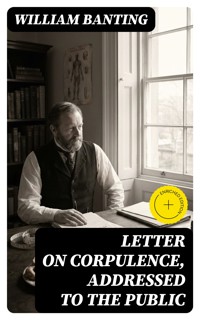
In his groundbreaking work, 'Letter on Corpulence, Addressed to the Public,' William Banting presents a compelling treatise that combines personal narrative with scientific inquiry. Published in 1863, Banting's letter is a pioneering exploration of the relationship between obesity and diet, advocating for a low-carbohydrate regimen that contrasted sharply with the prevailing dietary norms of his time. Written in an accessible and persuasive style, the letter is both a memoir of Banting's own struggles with weight and an earnest call to reconsider contemporary dietary practices, marking a significant contribution to the fields of nutrition and health. William Banting, an English undertaker, faced lifelong challenges with obesity, prompting him to embark on a transformative journey that culminated in his novel approach to weight loss. His personal experience, bolstered by an emerging understanding of metabolism and the effects of different food types, provided the impetus for this influential work. Banting's advocacy for low-carbohydrate diets not only reflects his personal triumph over corpulence but also foreshadows later developments in nutritional science and dietetics. 'Letter on Corpulence' is essential reading for anyone interested in the history of dietary science, public health, or personal wellness. Banting's insights remain startlingly relevant today, making this letter a timeless guide for those seeking to understand the complexities of weight management and its implications for health. In this enriched edition, we have carefully created added value for your reading experience: - A succinct Introduction situates the work's timeless appeal and themes. - The Synopsis outlines the central plot, highlighting key developments without spoiling critical twists. - A detailed Historical Context immerses you in the era's events and influences that shaped the writing. - A thorough Analysis dissects symbols, motifs, and character arcs to unearth underlying meanings. - Reflection questions prompt you to engage personally with the work's messages, connecting them to modern life. - Hand‐picked Memorable Quotes shine a spotlight on moments of literary brilliance. - Interactive footnotes clarify unusual references, historical allusions, and archaic phrases for an effortless, more informed read.
Das E-Book können Sie in Legimi-Apps oder einer beliebigen App lesen, die das folgende Format unterstützen:
Veröffentlichungsjahr: 2022
Ähnliche














Letter on Corpulence, Addressed to the Public
Table of Contents
Introduction
In Letter on Corpulence, Addressed to the Public, William Banting frames a private struggle made public—the effort to master a stubborn bodily condition through orderly self-experiment and candid testimony—staking the authority of lived experience against the comforts of habit and received counsel, tracing how small choices of table and glass shape health and dignity, and appealing to readers with a promise of clarity, restraint, and accountability, that a plain account of what worked for one person might responsibly guide others without presumption, panic, or miracle cures, and without claiming to replace medical judgment or the evolving science of nutrition.
First issued as a short pamphlet in 1863 and set within Victorian England’s energetic print culture, Letter on Corpulence belongs to the genre of practical health writing and public addresses rather than formal medical treatises. Banting, a London tradesman writing beyond professional circles, offers a compact narrative of his difficulty with excessive weight and the regimen that relieved it. The work circulated widely, drawing notice from readers and physicians and quickly passing through new editions. Its form—an open letter to the public—locates it at the crossroads of domestic life and civic conversation, where private remedies are weighed in a distinctly social forum.
The premise is straightforward: Banting recounts years of frustration with remedies that failed to reduce his corpulence, then describes adopting a new dietary arrangement on medical advice and the steady improvements that followed. The voice is plain, courteous, and unmistakably personal, eschewing ornament in favor of dates, measures, and everyday observations. He writes as a layman to lay readers, explaining what he ate and avoided, how he structured meals, and how he monitored change, while insisting on modesty of claim and respect for professional oversight. The tone is earnest without alarmism, pragmatic without austerity, built to be tested in ordinary life.
Readers will notice themes that resonate beyond diet. The book treats self-observation as a civic act: one person’s careful record becomes a contribution to communal knowledge. It explores the tension between deference to medical expertise and the authority of personal data, suggesting that respectful partnership can emerge from disciplined self-care. It also addresses the moral language that often shadows discussions of weight, preferring practical management to judgment. The central tool is regimen—regularity in eating and drinking, and attention to substance as well as quantity—presented as a humane technology for restoring ease in movement, sleep, and work without recourse to extravagance.
Historically, the pamphlet is notable for articulating, in accessible prose, a regimen that restricts certain carbohydrates—especially sugar and starchy foods—in favor of other staples, an approach that would later be associated with low-carbohydrate dieting. Without invoking theory, Banting reasons from observation, linking what is consumed to how the body responds over time. The clarity of the menu structure and the careful tallying of effects made the work a touchstone for public debate, inviting both endorsement and criticism. It is less a doctrine than an experiment shared at scale, and its influence stems from that combination of simplicity, transparency, and reproducibility.
For contemporary readers navigating a crowded marketplace of nutritional advice, Banting’s letter remains valuable as a model of patient narrative that records methods, limits, and outcomes with uncommon clarity. It demonstrates how personal evidence can be organized responsibly, how claims can be bounded, and how public health conversations gain when practitioners and laypeople listen to each other. It also offers a lens on present debates about carbohydrates, portion control, and sustainability of regimens, reminding us that diet reform has always been entangled with culture, economics, and everyday convenience. The enduring lesson is methodological: clear goals, careful tracking, and measured communication.
Approached today, Letter on Corpulence offers a brisk, articulate read that combines narrative candor with practical instruction, inviting reflection rather than demanding conformity. Readers can expect a compact account of a difficulty met with method; a regimen described in terms plain enough to adapt thoughtfully; and a civil tone that treats health as a shared concern. Without promising universals or final explanations, Banting contributes an early, influential example of how ordinary people can participate in shaping health knowledge. To meet the book on its own terms is to consider how evidence is gathered in daily life, and how responsibly to share it.




