


79,99 €
Mehr erfahren.
- Herausgeber: John Wiley & Sons
- Kategorie: Geisteswissenschaft
- Sprache: Englisch
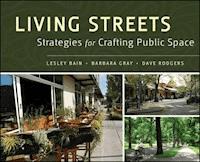
The only book of its kind to provide an overview of sustainable street design Today, society is moving toward a more sustainable way of life, with cities everywhere aspiring to become high-quality places to live, work, and play. Streets are fundamental to this shift. They define our system of movement, create connections between places, and offer opportunities to reconnect to natural systems. There is an increasing realization that the right-of-way is a critical and under-recognized resource for transformation, with new models being tested to create a better public realm, support balanced transportation options, and provide sustainable solutions for stormwater and landscaping. Living Streets provides practical guidance on the complete street approach to sustainable and community-minded street use and design. Written by an interdisciplinary team of authors, the book brings insights and experience from urban planning, transportation planning, and civil engineering perspectives. It includes examples from many completed street design projects from around the world, an overview of the design and policy tools that have been successful, and guidance to help get past the predictable obstacles to implementation: Who makes decisions in the right-of-way? Who takes responsibility? How can regulations be changed to allow better use of the right-of-way? Living Streets informs you of the benefits of creating streets that are healthier, more pleasant parts of life: * Thoughtful planning of the location, uses, and textures of the spaces in which we live encourages people to use public space more often, be more active, and possibly live healthier lives. * A walkable community makes life easier and more pleasant for everyone, especially for vulnerable populations within the larger community whose transportation limitations reduce access to jobs, healthy food, health care, recreation, and social interaction. * Streets present opportunities to improve the natural environment while adding to neighborhood character, offering beauty, providing shade, and improving air quality. If you're an urban planner, designer, transportation engineer, or civil engineer, Living Streets is the ultimate guide for the creation of more humane streetscapes that connect neighborhoods and inspire people.
Sie lesen das E-Book in den Legimi-Apps auf:
Seitenzahl: 470
Veröffentlichungsjahr: 2012
Ähnliche




















Table of Contents
Title Page
Copyright
Dedication
Acknowledgments
Overview
Chapter 1: Placemaking in the Public Right-of-Way
The Function of Places
Why Invest in a Quality Public Realm?
Placemaking and Design
Encouraging the Use of Public Space
Reclaiming Right-of-Way for Public Places
Considering All the Elements in the Right-of-Way
Chapter 2: Mobility
Connecting People to Places
Why Have Walkable, Bikeable Communities?
The Size and Shape of Movement
The Pace of Movement
A Shift in Thinking
Chapter 3: Natural Systems
Reconnecting Cities to Nature
Urban Biodiversity
Natural Systems and Opportunities in the Right-of-Way
Why Reconnect Nature and the City?
Chapter 4: Elements
Places to Move Through
Materials
Intersections
Bicycle Facilities
Signage
Street Furniture
Street Trees and Landscaping
Swales and Rain Gardens
Curbs, Gutters, and Alternatives
Parking
Chapter 5: Influences
Considering Context
Policy Foundation—Policies That Influence Street Design
Codes, Guidelines, and Standards
Reality Factors
Chapter 6: Typologies
Residential Streets
Green Streets
Alleys
Main Streets
Thoroughfares
Festival Streets
Chapter 7: Case Studies
Mint Plaza
Nord Alley
Central Annapolis Road
78th Avenue SE Shared Use
High Point
Barracks Row
New York City
Terry Avenue North
Chapter 8: What's Next
Biophilic Cities: More Nature in the City
New Technologies
Building the Dream
Conclusions
Resources
Index
This book is printed on acid-free paper.
Copyright © 2012 by John Wiley & Sons, Inc. All rights reserved
Published by John Wiley & Sons, Inc., Hoboken, New Jersey
Published simultaneously in Canada
No part of this publication may be reproduced, stored in a retrieval system, or transmitted in any form or by any means, electronic, mechanical, photocopying, recording, scanning, or otherwise, except as permitted under Section 107 or 108 of the 1976 United States Copyright Act, without either the prior written permission of the Publisher, or authorization through payment of the appropriate per-copy fee to the Copyright Clearance Center, 222 Rosewood Drive, Danvers, MA 01923, (978) 750-8400, fax (978) 646-8600, or on the web at www.copyright.com. Requests to the Publisher for permission should be addressed to the Permissions Department, John Wiley & Sons, Inc., 111 River Street, Hoboken, NJ 07030, (201) 748-6011, fax (201) 748-6008, or online at www.wiley.com/go/permissions.
Limit of Liability/Disclaimer of Warranty: While the publisher and the author have used their best efforts in preparing this book, they make no representations or warranties with respect to the accuracy or completeness of the contents of this book and specifically disclaim any implied warranties of merchantability or fitness for a particular purpose. No warranty may be created or extended by sales representatives or written sales materials. The advice and strategies contained herein may not be suitable for your situation. You should consult with a professional where appropriate. Neither the publisher nor the author shall be liable for any loss of profit or any other commercial damages, including but not limited to special, incidental, consequential, or other damages.
For general information about our other products and services, please contact our Customer Care Department within the United States at (800) 762-2974, outside the United States at (317) 572-3993 or fax (317) 572-4002.
Wiley publishes in a variety of print and electronic formats and by print-on-demand. Some material included with standard print versions of this book may not be included in e-books or in print-on-demand. If this book refers to media such as a CD or DVD that is not included in the version you purchased, you may download this material at http://booksupport.wiley.com. For more information about Wiley products, visit www.wiley.com.
Library of Congress Cataloging-in-Publication Data:
Bain, Lesley, 1955-
Living streets : strategies for crafting public space / Lesley Bain, Barbara Gray, Dave Rodgers.
p. cm.
Includes bibliographical references and index.
ISBN 978-0-470-90381-0 (acid-free paper); 978-1-118-18008-2 (ebk); 978-1-118-18009-9 (ebk); 978-1-118-18181-2 (ebk); 978-1-118-18200-0 (ebk); 978-1-118-18201-7 (ebk)
1.City planning. 2.Sustainable urban development. 3.Community development.I. Gray, Barbara, 1966- II. Rodgers, Dave, 1969- III. Title.
HT165.5.B35 2012
711'.4—dc23
2011040421
Acknowledgments
Many thanks to my husband, Joe Iano, my role model for becoming an author, and a great support in every way. This book would never have happened without him. Thanks to Allen, for his excellent editing skills; to Paul, for his willingness to climb fire escapes for a good photo angle; and to Ethan for his patience.
Thanks to the Silva boys—Alexander, Sam, and especially A.J.—for creating the time and space to make this project happen and for graphic expertise.
Many thanks to Grace Crunican for lending a quiet place to work for a few weeks, to Peg Staeheli for input and counsel, to the Gray family, especially Neil and Ellen, who read, listened, and gave great advice, to Kirk McKinley who takes great photos and was willing to give up a sunny Saturday to sort through them for us, and to Darby Watson who found the right word at the right time.
A shout out to i-sustain, and Patricia Chase in particular, as well as the SCAN Design Foundation, for helping decision makers in the Northwest see some of the world’s best streetscapes first-hand, and bringing inspiration back home. Thanks to the Northwest Institute for Architecture and Urban Design (NIAUSI), for the time as a fellow to study and ponder the intimate streetscapes of Civita and Tuscany. Thanks to Todd Vogel and the International Sustainability Institute, for the vision and tenacity to change unused spaces into great gatherings and galleries. Thanks also to the Sustainable Cities Design Academy, for bringing together innovative minds to make better cities and public spaces, including the Central Annapolis Road project.
Thanks to all who spoke to us about their projects to make better streets and cities, and to those who shared their photos.
We hope that this book can be one of many contributions to a shift in thinking about the right-of-way as public space. Kudos to those who are on the forefront of using streets for new public places, for transportation choices, and for reconnecting our cities with nature. Their examples and hard lessons learned can foster wide-scale adoption of better use of the network of land for a significant improvement in the quality of life in our communities.
Overview
Photo courtesy of Gustafson Guthrie Nichol
For decades, the car has reigned over an asphalt and concrete realm on city streets. With the quality of urban living and sustainable development becoming increasingly important, communities are discovering new potential for urban streets.
More is being demanded from land in the right-of-way, and in some cities, demand is beginning to outpace available space. Pedestrian space has taken on increased value, not only for walking from one destination to the next, but for space in which to linger and interact. Cyclists are demanding more and safer bicycle routes. How much parking is to be provided, where it is to be located, and who is to be able to use it has sparked controversy. Transit typically uses the same lanes as private cars, but transit-only lanes help buses navigate more efficiently and safely on streets designed primarily for private vehicles. Streets are increasingly being seen as a resource for conveying and infiltrating stormwater, rather than taking away runoff in drains and below-grade storm sewer pipes.
As the structure of city form, streets are critical to urban transformation. For most of the past century, we have taken for granted that the primary purpose of a street is to move cars and other vehicles safely and efficiently, and to provide places to park near every destination. Through most of history, this has not been the case. Our approach to street use and design is not a given, but a choice, and its costs have been high in terms of the quality of urban life, social interaction, health, and the natural environment. Today, as society hopes to move toward a more sustainable way of life, it is necessary to challenge the assumptions embedded in current thinking. Those necessary challenges are beginning to be made by a growing range of people.
There has long been a disconnect between transportation engineers and the urban design community regarding the place of the automobile in the city. Generations of urbanists have valued the aesthetic qualities of towns and squares, and the age-old public places where people have met for exchange and interaction. In this way of thinking, the proliferation of the car has acted as a destructive force on irreplaceable community spaces.
“The main issue is that the right to have access to every building in the city by private motorcar, in an age where everyone possesses such a vehicle, is actually the right to destroy the city.”
—Lewis Mumford, 19571
There is no doubt that people across the globe value the historic, human-scale environments developed before the age of the automobile. Travelers regularly choose to spend time in venerable pedestrian environments, including car-free Venice, Italy, and the pedestrian-friendly streets of Paris, France. Even the top destination for world travel, New York’s Times Square, with 35 million visitors, has recently chosen to pedestrianize its famed intersection.
While urban advocatessuch as Jane Jacobs and Lewis Mumford have long declared the automobile to be a problem in the city, professional transportation plannersviewed vehicle efficiency as the problem to be solved, with progress easily measured in traffic volumes, travel time, level of service, and safety statistics. The tools developed for transportation planning in the latter half of the twentieth century only reinforce that the primary function of any transportation system is to make vehicle access safe, easy, and efficient.
Citizens have aligned with both of these conflicting points of view, often simultaneously and with an unintended dose of hypocrisy. For instance, people want to be able to drive everywhere, but they also don’t want anyone else to park in their neighborhood. Many suburban neighborhoods forbid parking on the street, even with roads that are double the width needed for residential traffic.
To this paradox is added the new shift toward sustainable living. This factor brings more potential contradictions into the mix. Should we make greener cities and towns, or denser cities and towns? How much of the street should be for pedestrians, for bicycles, and for cars?
Designers and planners everywhere are beginning to recognize the importance of taking new approaches to streetscape design. Often, ideas for street reuse come out of local community efforts, and encounter resistance from City Hall. Many designers—civil engineers, transportation engineers, architects, landscape architects, and urban designers—are pushing to accommodate multiple uses in the street. People in local government are trying to promote change in street design, but are finding obstacles to the acceptance of alternative designs for the right-of-way.
In the course of researching the various innovative ways that people are using the right-of-way, we have found that there are three ways to utilize the space in the street well. First is mobility. Mobility has expanded to include multiple modes of travel—not just the car, but also pedestrians, bicycles, and transit. Second is placemaking. There are many opportunities for people to enjoy streets as memorable public spaces for sitting or gathering. Third is supporting natural systems. The space in the right-of-way is rich in opportunity for reconnecting the city to the functions and beauty of nature.
This book is intended for the full range of people looking for new ways to use the public right-of-way. Examples of streets that successfully contribute to more sustainable communities are growing in number, adding to an increasing body of knowledge that can help others identify and overcome obstacles to new approaches.
This book covers a wide range of approaches to streets that are healthier, more pleasant parts of public life: greener streets, pedestrian-friendly streets, bicycle-oriented streets, and streets that contribute to a vibrant community. Streets and communities are intertwined, and neither can successfully be considered in isolation of the other. We can do better than the singular approach of auto-dominated streets for every condition that has until recently dominated the conversation. We hope that the discussion in this book and the examples provided will create further dialogue, inspiring more successful examples and healthier communities.
Why should we reconsider how to use the street?
When streets are healthy, people are healthy.
People have become more sedentary, often driving rather than walking between everyday destinations. Reduced physical activity contributes to the current rise in obesity and chronic diseases. This change reflects not merely a lapse in our judgment, but the long-term effects of living in the unhealthy surroundings we have designed and created for ourselves. The lack of a good walking environment and the arrangement of land uses discourage people from walking as a primary way of moving from place to place. Thoughtful planning of the location, uses, and textures of the spaces in which we live encourages people to make healthier choices.
People need options to driving.
Not everyone can drive. Young people below driving age, the elderly, people with some types of physical disabilities, and people without the means to own a vehicle comprise a significant segment of society. A walkable community makes life easier and more pleasant for everyone, but especially for vulnerable populations within the larger community, whose transportation limitations reduce access to jobs, healthy food, health care, recreation, and social interaction.
Public transit and cycling are receiving increased attention as important alternatives to driving. The “Complete Streets” movement (see Chapter 5) is one example of a growing awareness that streets need to accommodate all modes of transportation in a safe and gracious manner.
Increased density requires a better public realm.
Several demographic trends support reconsideration of street use. The popularity of the “live downtown” movement, which advocates denser residential use in cities, has brought people to city centers where a full range of activities can be found within walking distance. Denser development near transit stops is another growth area. As new places to live are built in cities, the amount and quality of open spaces have not increased in proportion to the number of new residents. Successfully addressing this need will add to the health, vibrancy, and commercial success of these urban spaces, beginning an upward cycle that benefits everyone.
Streets present opportunities to contribute to the natural environment.
From added landscape to better treatment of rainwater, streets can greatly contribute to the environment. Greenery brings multiple benefits—adding to neighborhood character, providing shade, and improving air quality. By improving the environment of our cities, we can increase the health and value of communities while simultaneously protecting the environment.
1The Highway and the City, 1957.
Chapter 1
Placemaking in the Public Right-of-Way
Streets are more than just places to drive. Streets are spaces in themselves, and a valuable part of the public realm. This simple concept is lost in much of the common understanding of the right-of-way. Mobility is thought of as the only function, but movement is one of several roles that the right-of-way can play. The paradigm becomes quite different if street design is approached from a multi-use, spatial standpoint rather than a single-purpose traffic function. The right-of-way becomes more than just something to move through as efficiently as possible. It can be considered as a network of spaces with a mix of uses and users, with spatial qualities and unique contexts. Streets can be conceived and designed to best support the life of communities in a variety of roles. It is a paradigm that needs exploring.
Placemaking means making spaces where people want to spend time. What makes a place where people choose to spend their time? A successfully conceived place often has qualities that are memorable—someone could describe it to you and you would know exactly where they meant. Often, there is something unusual about the space, a rich character that makes the space stand out from the places around it. A beautiful and distinctive view, large trees, or historic buildings can give voice to the local community and its culture. A well-designed spot, if it reflects the character and needs of the unique local culture, can provide a sense of place and setting around which that culture can center itself. Placemaking springs from understanding the local conditions and recognizing the opportunities that these conditions and cultures offer (Figure 1-1).
Figure 1-1
The Function of Places
In a healthy city, creating good public space in the right-of-way cannot be an afterthought. People want to live in places that cultivate connectedness—to the physical city itself as well as the people in it, says urbanist Dan Bertolet. True cities, small and large alike, have the power to bring people together.1 It is the interchange of ideas and shared experience that brings vibrancy to urban areas, and it takes shared spaces to accomplish what cities do best.
Great urban areas have a variety of types and sizes of public spaces. Large parks and playgrounds, libraries, community centers, and schools are public spaces outside of the right-of-way. These public spaces are important hearts of civic life. The right-of-way plays a less recognized but equally critical role as both connective tissue and as a place in its own right.
In the densest cities, the right-of-way offers opportunities for much needed open space. The City of New York has the equivalent of 64 square miles of right-of-way, occupying as much space as fully 50 Central Parks. In cities as dense as New York, finding enough open space to serve everyone is very challenging. The City of New York has found that underutilized portions of right-of-way can be reclaimed for plaza spaces. These transformed spaces are an important part of the Citys effort to offer quality open space within a 10-minute walk for all residents ().
Lesen Sie weiter in der vollständigen Ausgabe!
Lesen Sie weiter in der vollständigen Ausgabe!
Lesen Sie weiter in der vollständigen Ausgabe!
Lesen Sie weiter in der vollständigen Ausgabe!
Lesen Sie weiter in der vollständigen Ausgabe!
Lesen Sie weiter in der vollständigen Ausgabe!
Lesen Sie weiter in der vollständigen Ausgabe!
Lesen Sie weiter in der vollständigen Ausgabe!
Lesen Sie weiter in der vollständigen Ausgabe!




