


46,99 €
Mehr erfahren.
- Herausgeber: John Wiley & Sons
- Kategorie: Fachliteratur
- Sprache: Englisch
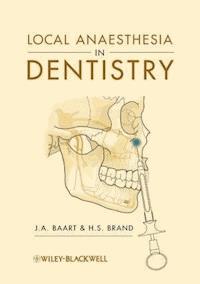
Local Anaesthesia in Dentistry is a practical guide for both students and general practitioners to this essential area of clinical practice.
Highly illustrated in full colour throughout, the book provides clear and practical guidance to the administration of local anaesthesia. The book introduces the reader to the concept of nerve conduction and pain as well as providing an explanation of the anatomy of the trigeminal nerve. Further chapters cover such key areas of practice as regional anaesthesia, local anaesthesia in children, pharmacology, local and systemic complications, general practical aspects, the prevention of side effects and legal aspects.
Sie lesen das E-Book in den Legimi-Apps auf:
Seitenzahl: 225
Veröffentlichungsjahr: 2013
Ähnliche



















Contents
Foreword
Editors and authors
Editors
Authors
Dedication
Introduction: a short history of local anaesthesia
Further reading
1 Pain and impulse conduction
1.1 Pain receptors
1.2 Nerve impulse transmission
1.3 Perception of pain
1.4 Nociception in the orofacial area
2 Anatomy of the trigeminal nerve
2.1 Introduction
2.2 The central part of the trigeminal nerve
2.3 The peripheral part of the trigeminal nerve
2.4 Deep areas
3 Pharmacology of local anaesthetics
3.1 Classification
3.2 Pharmacodynamics
3.3 Pharmacokinetics
3.4 Additives to local anaesthetics
3.5 Additives to topical anaesthetics
4 General practical aspects
4.1 Use of local anaesthetics
4.2 Indications and contraindications
4.3 Instruments
4.4 Topical anaesthesia
4.5 Position of the patient and dentist
4.6 Verification of effectiveness
5 Local anaesthesia in the upper jaw
5.1 Introduction
5.2 Incisors and canines
5.3 Premolars
5.4 Molars
5.5 The impacted third molar of the upper jaw
6 Local anaesthesia in the lower jaw
6.1 Introduction
6.2 Incisors and canines
6.3 Premolars
6.4 The direct and indirect technique
6.5 Molars
6.6 Third molars in the lower jaw
7 Additional anaesthetic techniques
7.1 Maxillary nerve block
7.2 Infraorbital nerve block
7.3 Nasopalatine nerve block
7.4 Mental nerve block
7.5 Gow-Gates technique
8 Local anaesthesia for children
8.1 Introduction
8.2 Experience of pain and fear in children
8.3 Techniques
8.4 Observation of the child
8.5 Complications of mandibular block anaesthesia
9 Local complications
9.1 Needle breakage
9.2 Pain during administration
9.3 Insufficient anaesthesia
9.4 Excessive spread of anaesthesia
9.5 Iatrogenic damage and self-inflicted damage of anaesthetised tissues
9.6 Persistent sensitivity disorders
9.7 Skin paleness (‘blanching’)
9.8 Tissue necrosis
9.9 Haematoma formation and trismus
9.10 Infection
10 Systemic complications
10.1 Introduction
10.2 Vasovagal collapse
10.3 Hyperventilation syndrome
10.4 Toxicity
10.5 Systemic effects of vasoconstrictors
10.6 Allergic reactions
10.7 Prevention of side effects
11 Patients at risk
11.1 Introduction
11.2 Cardiovascular disease
11.3 Hypertension
11.4 Cerebrovascular accident
11.5 Increased bleeding tendency
11.6 Liver diseases
11.7 Diabetes mellitus
11.8 Hyperthyroidism
11.9 Hypoproteinaemia
11.10 Pregnancy
11.11 Use of medication
12 Legal aspects of local anaesthesia
12.1 Judges and courts
12.2 Competency to give local anaesthesia
12.3 Liability
12.4 Avoiding legal problems in the use of local anaesthesia
Further reading
Index
This edition first published 2009
© 2009 Blackwell Publishing Ltd
© 2006 Bohn Stafleu van Loghum, Houten
This edition of Lokale anesthesie in de tandheelkunde/Local anaesthesia in dentistry, edited by J.A. Baart and H.S. Brand is published by arrangement with Bohn Stafleu van Loghum BV, Het Spoor 2, Postbus 246, 3990 GA Houten, The Netherlands.
Translation of this edition undertaken by Blackwell Publishing Ltd.
Blackwell Publishing was acquired by John Wiley & Sons in February 2007. Blackwell’s publishing programme has been merged with Wiley’s global Scientific, Technical, and Medical business to form Wiley-Blackwell.
Registered office
John Wiley & Sons Ltd, The Atrium, Southern Gate, Chichester, West Sussex, PO19 8SQ, United Kingdom
Editorial offices
9600 Garsington Road, Oxford, OX4 2DQ, United Kingdom
2121 State Avenue, Ames, Iowa 50014-8300, USA
For details of our global editorial offices, for customer services and for information about how to apply for permission to reuse the copyright material in this book please see our website at www.wiley.com/wiley-blackwell.
The right of the author to be identified as the author of this work has been asserted in accordance with the Copyright, Designs and Patents Act 1988.
All rights reserved. No part of this publication may be reproduced, stored in a retrieval system, or transmitted, in any form or by any means, electronic, mechanical, photocopying, recording or otherwise, except as permitted by the UK Copyright, Designs and Patents Act 1988, without the prior permission of the publisher.
Wiley also publishes its books in a variety of electronic formats. Some content that appears in print may not be available in electronic books.
Designations used by companies to distinguish their products are often claimed as trademarks. All brand names and product names used in this book are trade names, service marks, trademarks or registered trademarks of their respective owners. The publisher is not associated with any product or vendor mentioned in this book. This publication is designed to provide accurate and authoritative information in regard to the subject matter covered. It is sold on the understanding that the publisher is not engaged in rendering professional services. If professional advice or other expert assistance is required, the services of a competent professional should be sought.
Library of Congress Cataloging-in-Publication Data
Lokale anesthesie in de tandheelkunde. English.
Local anaesthesia in dentistry / [edited by] J.A. Baart, H.S. Brand.
p. ; cm.
Originally published in Dutch: Lokale anesthesie in de tandheelkunde /
J.A. Baart, H.S. Brand (redactie). 2006.
Includes bibliographical references and index.
ISBN 978-1-4051-8436-6 (pbk. : alk. paper)
1. Anesthesia in dentistry. 2. Local anesthesia. I. Baart, J.A. (Jacobus Andries), 1950– II. Brand, H.S. III. Title.
[DNLM: 1. Anesthesia, Dental. 2. Anesthesia, Local. WO 460 L863 2008a]
RK510.L6513 2008
617.9′676–dc22
2008013077
A catalogue record for this book is available from the British Library.
Lokale anesthesie in de tandheelkunde ISBN 9031340936
1 2009
Illustrated by P. Brugman, A.A. van Horssen and M. Kunen
Foreword
The significance of local anaesthesia in the world of dentistry can hardly be underestimated. Local anaesthesia ensures, for one thing, that dental treatment may be a comfortable and painless experience for the patient. It also enables the dentist to carry out the treatment in a calm and concentrated manner.
The use of local anaesthesia in dentistry for adults and children requires a thorough knowledge of anatomy, pharmacology and the manner in which the anaesthetic must be administered. Besides this, of course, it is also necessary to possess knowledge of the local and systemic complications and of the use of local anaesthesia in so-called patients ‘at risk’. This book deals extensively with all these topics, as well as legal aspects.
Local Anaesthesia in Dentistry is aimed mainly at dentists and dental students. The book will also be of service to those training to be a dental or medical specialist. The editors, J.A. Baart and H.S. Brand, must be complimented for the design of the book and for the collaboration they secured from the authors, all experts in this subject. They have succeeded in providing the reader with the necessary information in a balanced way. Indeed, it is an easy-to-read and clearly illustrated manual.
Finally, the publishers deserve recognition for the handsome layout.
Amsterdam, Summer 2008
Prof. Dr I. van der Waal
Editors and authors
Editors
J.A. Baart, Academic Centre for Dentistry Amsterdam/Vrije Universiteit Medical Centre, Department of Oral and Maxillofacial Surgery, Amsterdam, The Netherlands.
H.S. Brand, Academic Centre for Dentistry Amsterdam, Department of Oral and Maxillofacial Surgery and Department of Basic Dental Sciences, Amsterdam, The Netherlands.
Authors
H.P. van den Akker, Academic Centre for Dentistry Amsterdam/Academic Medical Centre, Department of Oral and Maxillofacial Surgery, Amsterdam, The Netherlands.
L.H.D.J. Booij, Radboud University Medical Centre Nijmegen, Department of Anaesthesiology, Nijmegen, The Netherlands.
J.F.L. Bosgra, Academic Centre for Dentistry Amsterdam/Vrije Universiteit Medical Centre, Department of Oral and Maxillofacial Surgery, Amsterdam, The Netherlands.
W.G. Brands, General Dental Practitioner/Part-time Judge, Civil Section, Court of Utrecht, The Netherlands/Radboud University Medical Centre Nijmegen, Department of Social and Preventive Dentistry, Nijmegen, The Netherlands.
T.M.G.J. van Eijden†, Academic Centre for Dentistry Amsterdam, Department of Functional Anatomy, Amsterdam, The Netherlands.
J.F.M. Fennis, Radboud University Medical Centre Nijmegen, Department of General Internal Medicine, Nijmegen, The Netherlands.
F.W.A. Frankenmolen, Paediatric Dental Centre, Beuningen, The Netherlands.
A.L. Frankhuijzen, Vrije Universiteit Medical Centre, Department of Pharmacology, Amsterdam, The Netherlands.
G.E.J. Langenbach, Academic Centre for Dentistry Amsterdam, Department of Functional Anatomy, Amsterdam, The Netherlands.
Dedication
Dedicated to the memory of Theo van Eijden (1951–2007) – researcher, teacher and friend.
Introduction: a short history of local anaesthesia
J.A. Baart and J.F.L. Bosgra
General anaesthesia already existed before local anaesthesia became available. Actually, general anaesthesia was introduced by the American dentist Horace Wells. In 1844, together with his wife Elizabeth, he witnessed a demonstration whereby the circus owner Colton intoxicated a number of volunteers with laughing gas. One of the volunteers hit himself hard on a chair but did not even grimace. Horace Wells noticed this and concluded that a patient, having inhaled laughing gas, might be able to undergo an extraction without pain. A few days later Wells took the experiment upon himself and asked a colleague to extract one of his molars after he had inhaled some laughing gas. It was a success. Wells independently organised some additional extraction sessions, after which the Massachusetts General Hospital invited him for a demonstration. This demonstration turned out to be a fiasco. The patient was insufficiently anaesthetised since not enough laughing gas was administered. Wells’ life, which had initially been so successful, became a disaster. The physician Morton, a previous assistant to Wells, absconded with the idea of general anaesthesia, but used ether instead of laughing gas for a ‘painless sleep’. Morton denied in every possible way that he had stolen the idea from Wells. Wells was greatly incensed by this. Furthermore, Wells was no longer able to practise as a dentist. He became a tradesman of canaries and domestic products and became addicted to sniffing ether. Eventually he was imprisoned for throwing sulphuric acid over some ladies of easy virtue. At the age of 33 years he made an end to his life in prison by cutting his femoral artery.
Lesen Sie weiter in der vollständigen Ausgabe!
Lesen Sie weiter in der vollständigen Ausgabe!
Lesen Sie weiter in der vollständigen Ausgabe!
Lesen Sie weiter in der vollständigen Ausgabe!
Lesen Sie weiter in der vollständigen Ausgabe!
Lesen Sie weiter in der vollständigen Ausgabe!
Lesen Sie weiter in der vollständigen Ausgabe!
Lesen Sie weiter in der vollständigen Ausgabe!
Lesen Sie weiter in der vollständigen Ausgabe!
Lesen Sie weiter in der vollständigen Ausgabe!
Lesen Sie weiter in der vollständigen Ausgabe!
Lesen Sie weiter in der vollständigen Ausgabe!
Lesen Sie weiter in der vollständigen Ausgabe!




