


131,99 €
Mehr erfahren.
- Herausgeber: John Wiley & Sons
- Kategorie: Fachliteratur
- Serie: AVS - Advances in Vetinary Surgery
- Sprache: Englisch
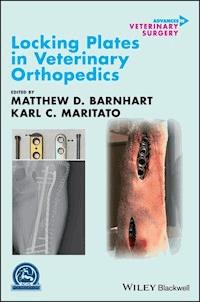
Locking Plates in Veterinary Orthopedics is a comprehensive and state-of-the-art guide to all aspects of using locking plates to treat orthopedic conditions in dogs, cats, and large animals. * Offers a proven approach to using locking plates in veterinary practice * Highlights practical clinical applications with illustrative clinical cases * Includes information on the history, principles, and materials as well as specific techniques * Presents data on both traumatic and non-traumatic applications * Provides instructive color photographs to demonstrate the procedures
Sie lesen das E-Book in den Legimi-Apps auf:
Seitenzahl: 529
Veröffentlichungsjahr: 2018
Ähnliche



















Table of Contents
Cover
Foreword
Preface
1 A Brief History of Veterinary Locking Plates Applications
References
Section I: Principles of Locking Plate Application
2 Pitfalls of Locking Plate Applications
References
3 The Biology of Locking Plate Applications
References
4 Dynamic Compression vs. Locking Plating − Is One “Better”?
4.1 Introduction
4.2 The LC‐DCP
4.3 The LCP
4.4 DCP vs. LCP
4.5 Conclusion
References
5 Minimally Invasive Plate Osteosynthesis
5.1 Introduction
5.2 Biology and Biomechanics in MIPO
5.3 Surgical Technique
5.4 MIPO Technique with Locking Plates
References
Section II: Principles of Locking Plate Applications in Large Animals
6 Principles of Locking Plate Applications in Large Animals
6.1 Principles
6.2 Clinical Applications
6.3 Conclusion
References
Section III: Current Veterinary Locking Plate Instrumentation and Implants
7 The Advanced Locking Plate System (ALPS)
References
8 The Fixin Implant System
8.1 Fixin Implants and Instrumentation
8.2 Surgical Technique
References
9 The Liberty Lock System
References
10 The Polyaxial (PAX) Advanced Locking System
References
11 The String of Pearls (SOP) System
11.1 Introduction
11.2 Description of the System
11.3 Design Features of the SOP Locking Plate System
11.4 Perceived Limitations/Controversies
11.5 Range of Clinical Application
11.6 Clinical Guidelines
11.7 Conclusions
References
12 The Synthes Locking Compression Plate (LCP) System
12.1 Other Locking Compression Plate Manufacturers
12.2 Applications of Implants
12.3 Tips for Implant Removal
12.4 Locking Compression Plate Indications
References
Section IV: Trauma Applications: Clinical Case Examples
IV‐A Appendicular Skeletal Fractures
13 Humerus Fractures
13.1 Introduction
13.2 Anatomy
13.3 Surgical Approach
13.4 Biomechanics
13.5 Distal Humeral Fractures
13.6 Conclusion
References
14 Radius/Ulna Fractures
14.1 Introduction
14.2 Biological Osteosynthesis in R‐U Fracture Repair
14.3 Reduction Techniques for Radius Fractures Stabilized with a Locking Plate
14.4 Mechanical Construct Consideration When Using Locking Plates for the Treatment of Radius‐Ulna Fractures
14.5 Ulnar Fracture Fixation
14.6 Conclusion
References
15 Femur Fractures
15.1 Introduction
15.2 Anatomy
15.3 Biomechanics
15.4 Materials
15.5 Surgical Approach
15.6 Application on the Femur
15.7 Proximal
15.8 Shaft
15.9 Distal
15.10 Postsurgical Care and Monitoring
15.11 Complications & Limitations
References
16 Tibia Fractures
16.1 Relevant Anatomy
16.2 Minimally Invasive Plate Osteosynthesis of Diaphyseal Fractures
16.3 Proximal and Distal Fractures with a Short Fracture Segment
16.4 Revision of Fracture Complications
16.5 Surgical Correction of Tibial Deformity
References
IV‐B Axial Skeletal Fractures
17 Pelvic Fractures
References
18 Maxillofacial and Mandibular Fractures
18.1 Anatomical Considerations
18.2 Biomechanics
18.3 Materials
18.4 Surgical Approach
18.5 Application on the Mandible
18.6 Application on the Maxillofacial Bones
18.7 Three‐Dimensional Printing for Preoperative Planning
References
19 Spinal Fractures and Luxations
19.1 Preoperative Planning
19.2 Approaches to the Vertebral Column
19.3 Reduction
19.4 Locking Plate Application
19.5 Lumbar Spine
19.6 Placement of a 3.5 mm LCP
19.7 Thoracic Spine
19.8 Placement of a 3.5 mm SOP Plate
19.9 Problem Solving with Locking Plates
19.10 Postoperative Assessment
References
Section V: Nontrauma Applications: Clinical Case Examples
V‐A Corrective Osteotomies
20 Tibial Plateau Leveling Osteotomy for Cranial Cruciate Ligament Rupture
20.1 Introduction
20.2 Locking TPLO Plate Design
20.3 Clinical Benefits of Locking TPLO Plates
20.4 Complications of Locking TPLO Plates
20.5 Specific Clinical Applications of Locking TPLO Plates
20.6 Conclusion
References
21 Double Pelvic Osteotomy for Hip Dysplasia
References
22 Distal Femoral Osteotomy for Patella Luxation
22.1 Introduction
22.2 Anatomy
22.3 Surgical Approach
22.4 Ostectomy Technique
References
V‐B Arthrodesis
23 Arthrodesis
23.1 Shoulder Arthrodesis
23.2 Elbow Arthrodesis
23.3 Carpal Arthrodesis
23.4 Stifle Arthrodesis
23.5 Tarsal Arthrodesis
References
V‐C Spinal Diseases
24 Atlantoaxial Subluxation
24.1 Introduction
24.2 Anatomy
24.3 Biomechanics
24.4 Materials
24.5 Surgical Approach
24.6 Application
24.7 Postoperative Care
References
25 Caudocervical Spondylomyelopathy
25.1 Introduction
25.2 Biomechanics of the Cervical Spine
25.3 Classification of CSM
25.4 Decision‐Making
25.5 Patient Positioning and Surgical Anatomy
25.6 Distraction Stabilization Techniques
25.7 New Implants and Surgical Planning
25.8 Surgical Techniques
25.9 Outcomes
25.10 Conclusion
References
26 Lumbosacral Stabilization
26.1 Introduction
26.2 Clinical Examination
26.3 Decision‐Making
26.4 Surgical Planning: Patient Positioning and Surgical Approach
26.5 Surgical Techniques
26.6 Outcomes
26.7 Conclusion
References
Index
End User License Agreement
List of Tables
Chapter 03
Table 3.1 Effect of implant material, implant type and surgical approach on the infection rates and the relative number of colony forming units required to achieve a 50% infection rate in rabbits.
Chapter 04
Table 4.1 Definition of commonly used biomechanical terms.
Chapter 07
Table 7.1 Showing the available ALPS sizes and its common applications.
Chapter 12
Table 12.1 Synthes drill bit and screw sizes.
Chapter 17
Table 17.1 Comparison of veterinary locking systems in regards to properties important to pelvic fracture repair.
Chapter 21
Table 21.1 Double pelvic osteotomy (DPO) vs. triple pelvic osteotomy (TPO): Pros and cons.
List of Illustrations
Chapter 01
Figure 1.1 (a–d) Four of the primary founders of AOVEET. Geri Kasa, Feri Kasa, Ortun Pohler, Bjorn von Salis.
Figure 1.2 (a, b) One of the first documented fracture cases in a dog repaired using AO principles and plates; a femur fracture in a Spitz, performed on February 3, 1969, by Dr. Geri Kasa with a four‐hole 4.5 mm round hole plate.
Figure 1.3 The first AOVET course held in the United States at The Ohio State University, 1970.
Chapter 02
Figure 2.1 The recommended screw density for locking plate (LP) is different than that for dynamic compression plating (DCP). This fracture repair violated this principle, leading to major stress concentration within the implant at the fracture site and its subsequent failure. See pages 34–36 to learn more.
Figure 2.2 Maximizing plate length is particularly important when applying LP. This humerus fracture is a challenging one and may have been best served with bilateral plates. However, at the very least, the LP used was too short, based on the recommended plate length to fracture segment length ratios. See page 43 to learn more.
Figure 2.3 As previously stated, LP application provides a very different biological environment for healing compared to the DCP. This means less reconstruction and more elastic plate osteosynthesis principles need be applied. This tibia fracture may have been well reconstructed but was doomed to failure because of the way the LP was utilized. Maximizing the number of screw holes that are filled when using DCPs is typically the norm. By contrast, screw number and position is more critical when using LPs. See pages 34–36 and 130–132 to learn more.
Figure 2.4 One of the things that a surgeon needs to adjust to when using a LP is the difference in “feel” during screw insertion. The physical nuances of the DCP bone‐screw interaction that confirm appropriate cortical engagement cannot be relied upon. This was well demonstrated by Voss in a 2009 publication, which warned of the potential dangers of inadequate screw fixation because the surgeon cannot necessarily feel how well the screw engages the bone [2]. Note that the three most distal screws did not engage bone yet; they would have had felt tight because of their locking within the plate. Obviously this would never go unappreciated during a DCP application. See page 27 to learn more.
Figure 2.5 The mechanics of the single‐beam construct created by a LP are fundamentally different from that of DCP application. Note the progressive bending of this LP without apparent failure at the screw level. Were a DCP to fail in this case, it would likely experience obvious loss of bone‐screw stability before any bending took place. Additionally, LPs tend to be less stiff than their similarly sized DCP counterparts, again taking into consideration their different goals relative to elastic bridging and biological osteosynthesis. See pages 31–32 to learn more.
Chapter 03
Figure 3.1
(a)
Left: Section of a sheep tibia three months after plating with a traditional plate showing extensive osteoporosis corresponding to the width of the plate.
(b)
Right: Similar section of the tibia, one year after plate application showing the progressive replacement of the porotic bone with new living bone.
Figure 3.2 Surface appearance of sheep tibia seven hours following plating and injected with disulfin blue immediately prior to euthanasia. Each tibia was plated with either a traditional plate or an experimental plate with the underside designed to lift the plate above the bone surface by 1 mm.
(a)
Blood flow impairment can be inferred from the large defect in disulfin uptake in the cortex immediately underneath the plate following application of a plate with a solid underside in contact with the bone.
(b)
Minimal blood flow impairment occurred following plating with the experimental plate that minimize the contact area between the plate and the bone.
(c)
and
(d)
Cross section of the tibia after plating with the conventional plate
(c)
and the limited contact plate
(d)
.
Figure 3.3 View of the underside of the DCP (Bottom), LC‐DCP (middle) and LCP (Top). The area colored in red represent the theoretical zones of contact between the plate and the bone. Although the LCP and the LC‐DCP have a similar underside, the locking screws in the LCP allow the plate to sit above the periosteum if desired.
Figure 3.4
(a)
Histological section of a sheep tibia 12 weeks following plating with a DCP. Note the extensive area of porosis under the plate.
(b)
Histological section of a sheep tibia 12 weeks following application of as PC‐Fix showing minimal porosis of the cortex underneath the plate.
(c)
Section of the cortex underneath the plate at the level of the fracture of sheep tibia stabilized with a DCP. Note the lack of bridging at 12 weeks and the minimal callus production.
(d)
Section of the cortex underneath the plate at the level of the fracture of sheep tibia stabilized with a PC‐Fix. The cortex is fully bridged with new callus. Note the presence of periosteal callus immediately underneath the plate (top of the image).
Figure 3.5 One‐month postoperative radiographs of a distal radial fracture treated with a locking plate in a bridging fashion. Note the absence of callus at the level of the cortex immediately underneath the plate compared to the well developed callus on the opposite cortex.
Figure 3.6 Illustration of the “combination hole” of the Synthes LCP™ allowing the plate to be used as a compression plate, a locking bridging plate, or hybrid plate.
Figure 3.7 Aggressive resorption of the bone at the junction between the live and necrotic bone may lead to the formation of a large, contiguous sequestrum underneath the plate.
Chapter 04
Figure 4.1 The original plate developed by Hansmann [3], providing only basic, monocortical bridging connection across a fracture.
Figure 4.2 Comparison of the footprints of the DCP and the limited contact dynamic compression plate (LC‐DCP). The LC‐DCP reduces the DCP footprint by 50%.
Figure 4.3 The frictional force is directly proportional to the normal force. The frictional force, F
f,
is parallel to the surface and is in a directly opposite direction to the net applied external force, F
e.
The normal force, F
n
, is force exerted by each surface, directed perpendicular to the surface. F
f
and F
n
are related via a proportional constant,
μ
(frictional coefficient), such that F
f
=
μ
F
n
.
Figure 4.4
(a)
Bending load applied to plate–screw–bone constructs.
(b)
Locking angular stable screws generate compressive forces in the bone resisting pullout.
(c)
Conventional LC‐DCP with nonlocked screws rotate within the plate with the bone in each thread subjected to shear stress.
Figure 4.5 Bending the internal fixator to avoid parallel screw insertion. (a) In osteoporotic bone, parallel insertion of all locked screw may be disadvantageous; (b) The pullout resistance of the construct can be improved when the plate slightly is bent forth and back resulting in divergent and convergent locked screw directions.
Figure 4.6 Variable angle locking compression plate (VA‐LCP) plate combi hole. Four columns of threads in locking hole provide four points of locking between the VA LCP Plate and the specially designed variable angle locking screw.
Figure 4.7 In a low diameter bone the tip of the screw can contacts the opposite bone cortex before the screwhead engages in the plate hole thread. This leads to the destruction of the bone thread in the near cortex and complete loss of anchorage of the screw.
Figure 4.8 Malalignment between bone axis and plate.
(a)
Malalignment between bone axis and plate leads to an eccentric plate position;
(b)
At the far end of the plate, a monocortical screw will not anchor in bone in such circumstances.
Figure 4.9 Example of an ulnar fracture repair with a locking screw placed entirely within the lateral cortex of the radius, resulting in catastrophic radial fracture. Note also that the inserted screw is shorter than the predrilled screw hole.
Figure 4.10 Specially designed LCP spaces can be placed in the locking holes to ensure the plate remains at an optimal distance of 2 mm or less away from the bone. Once other locking screws are placed to hold the plate in position, the spacers can be removed and replaced with locking screws.
Figure 4.11 Importance of cortical thickness on the working length of monocortical screws. The working length of monocortical screws depends on the thickness of the bone cortex.
(a)
In normal bone, this working length is sufficient;
(b)
In osteoporotic bone, the cortex is very thin and thus, the working length of a monocortical screw is insufficient. This difference of the working length is important when osteoporotic bones mainly loaded in torque have to be stabilized.
(c)
In normal bone, the length of anchorage of the screw thread is sufficient to withstand rotational displacement.
(d)
In case of osteoporosis, this working length is very short due to the thin cortex, and under torque the bone thread soon will wear out and secondary displacement and instability will occur
(d)
.
Figure 4.12 Plate strain in three‐point bending. When the segment to be bent is short
(a, b)
the relative deformation (strain) is high and the implant is increasingly likely to undergo fatigue failure. When the plate spans a longer comminuted fracture area
(c, d)
the same three‐point bending leads to an equal absolute deformation (angulation) of the plate. But, the deformation is distributed over a longer distance leading to low implant strain and higher resistance against fatigue.
Figure 4.13
(a)
Plate failure during repair of a right ilial fracture in a canine;
(b)
screw fatigue resulting in breakage at the screwhead post TPLO in a canine;
(c)
screw breakage in a mandibular fracture in an equine; and
(d)
catastrophic plate failure following a two‐plate repair of a pastern fracture necessitating arthrodesis in an equine (red arrow).
Chapter 05
Figure 5.1 Cranio‐caudal radiograph of a three year‐old Domestic Short‐Haired Cat presenting with a comminuted distal diaphyseal tibial fracture. The fracture was reduced manually and a precontoured veterinary cuttable plate (DePuySynthes VET, Oberdorf, BL, Switzerland) was applied to the medial aspect
(a)
. Cranio‐caudal radiograph of a five‐year‐old Domestic Short‐Haired Cat presenting with a mildly comminuted distal diaphyseal tibial fracture. Multiple fissures extend from the fracture site into the proximal fragment. The fracture was reduced manually and Advanced Locking Plate System (KYON, Zurich, ZH, Switzerland) was applied
(b)
. Note that exact contouring is necessary with the nonlocking implant
(a)
while only approximate contouring is adequate in the locking implant because plate standoff is tolerated
(b)
.
Figure 5.2 Minimally invasive plate osteosynthesis in a tibial fracture of a cat. Metzenbaum scissors are used for creation of the epiperiosteal soft tissue.
Figure 5.3 Orthogonal radiographs of a two‐year‐old Domestic Short‐Haired Cat presenting with
(a)
a distal oblique radius and
(b)
ulna fracture. The hanging limb technique
(c)
was used for fracture reduction. Intraoperative fluoroscopy was used to assess reduction and implant position
(d, e)
. Double plating in minimally invasive fashion was selected due to the small metaphyseal fragment
(f, g)
.
Figure 5.4 Temporary reduction devices. The pin stopper (A) (Fixin, Intrauma, Rivoli, TO, Italy) can be used to secure the plate by using a pin inserted in a sleeve locked with a clamp. The push‐pull device (DePuySynthes VET, Oberdorf, BL, Switzerland) allows securing the plate by applying compression to the implant.
Figure 5.5 Intraoperative images and fluoroscopy of a three‐year‐old Domestic Long‐Haired Cat presenting with a comminuted distal tibial fracture.
(a)
The implant is approximately contoured to allow bone contact at the level of the most proximal and distal holes in the preoperative planning. In surgery, the implant is inserted with the most proximal hole centered over the bone at the level of the anatomical landmark determined in the preoperative planning;
(b)
Point‐to‐point reduction forceps are used to pull the distal fragment distally until the determined distal anatomical landmark is level with the most distal hole;
(c, d, e)
Point‐to‐point reduction forceps are used to reduce the distal fragment to the plate and a pin is inserted to secure the bone to the plate;
(f)
Screws are then inserted for final fixation.
Figure 5.6 Cranio‐caudal radiograph of a two‐year‐old Domestic Short‐Haired Cat presenting with a proximal comminuted femoral fracture. The proximal fissures, the deficiency of the medial cortex, and the proximity to the joint obviates the benefits of monocortical screws.
Chapter 06
Figure 6.1 Locking compression plate (LCP) geometry. The underside of the LCP has undercuts that limit the surface area of bone contact. These cutouts occur at the points in between holes, helping to homogenize cross‐sectional area for the length of the plate.
Figure 6.2 Plate/screw PIPJ arthrodesis. A three‐hole 4.5 mm narrow (PIPJ‐specific) LCP was applied dorsally for arthrodesis of the proximal interphalangeal joint. Abaxial transarticular screws were placed in lag fashion to compress the palmar aspect of the joint.
Figure 6.3 Tension band wire used in metacarpophalangeal arthrodesis. Due to anatomical constraints the LCP must be applied dorsally, on the bending surface of the joint. Here, a palmar tension band wire was used to mitigate cyclic bending forces on the plate.
Figure 6.4 Partial carpal arthrodesis. 4.5 mm narrow locking compression plates (LCPs) were applied dorsomedially and dorsolaterally.
Figure 6.5 Distal tarsal arthrodesis. Locking head screws were placed through the horizontal portion of the locking T‐plate into the central tarsal bone. A cortex screw was placed in the third hole in the load position to compress the DITJ and TMTJ before inserting another locking screw in the third tarsal bone.
Figure 6.6 Luxation of the distal tarsal joints.
(a, b)
A 12‐hole 4.5 mm narrow LCP was applied to the plantarolateral aspect of the tarsus to stabilize the distal tarsal joints after luxation.
Figure 6.7 Cervical vertebral instability/malformation. The kerf cut cylinder (KCC), a partially threaded modification of the original Bagby Basket, was used for fusion of sixth and seventh cervical vertebrae.
Figure 6.8
(a)
Fourth cervical vertebra fracture and LCP fixation. Fracture of the caudal body of the fourth cervical vertebra.
(b)
A 10‐hole 4.5 mm narrow LCP was applied ventrally for fusion of the fourth and fifth cervical vertebrae.
Figure 6.9 Comminuted fracture of the middle phalanx. The fractures were reduced and stabilized with cortex screws in lag fashion, then plated with two 4.5 mm narrow locking compression plates (LCPs) applied dorsally. Arthrodesis of the PIPJ was performed due to the high likelihood of development of arthritis but also to make use of the distal aspect of the proximal phalanx for plate application and construct stability.
Figure 6.10 Distal diaphyseal MCIII fracture in a foal: 4.5 mm narrow LCPs were applied dorsally and laterally. The stacked combi‐hole at the distal aspect of nine‐hole plate allowed for close approximation of the plate to the distal physis.
Figure 6.11 Comminuted fracture of the olecranon. An 11‐hole 4.5 mm narrow locking compression plate (LCP) was applied caudally. The plate is loaded in almost pure tension.
Figure 6.12 Comminuted mid‐diaphyseal radial fracture: 5.5 mm broad LCPs were applied dorsally and laterally.
Figure 6.13 Mid‐diaphyseal humeral fracture. An intramedullary interlocking nail was combined with cranial application of a 5.5 mm LCP.
Figure 6.14 Supraglenoid tubercle fracture case series. One
(a, c,
and
d)
or two
(b)
4.5 mm narrow LCPs were applied in transverse orientation with
(a
and
c)
or without
(b
and
d)
a tension band wire.
Figure 6.15 Distal femoral locking plate for scapular neck fracture repair. The broad head of the DFLP implant allows for engagement of the distal fragment with more screws.
Figure 6.16 Comminuted mid‐diaphyseal tibial fracture in a weanling. A 14‐hole 5.5 mm broad LCP was contoured and applied from the dorsolateral cortex proximally to the dorsal cortex distally and a 10‐hole 4.5 mm broad LCP was applied medially.
Figure 6.17 Mid‐diaphyseal femoral fracture in a foal. This fracture was double plated with a 4.5 mm broad LCP laterally and a 4.5 mm narrow LCP cranially.
Chapter 07
Figure 7.1 Detail of the back side of a plate showing its shape aimed to minimize plate to bone contact. The locking mechanism between the last screw‐thread and the plate hole is also observed.
Figure 7.2 Good vascularized periosteum is observed after plate removal in a radius.
Figure 7.3
(a)
and
(b)
Clinical application of an ALPS plate in a femur. The Sherman‐shape of the plate allows for contouring it in all planes.
Figure 7.4 The different drill guides are shown. The guides for locking screws
(a)
must be held by hand in position during the drilling.
(b)
The guides for cortical screws allow for angulation in both planes, centering the screws in the plate hole. These guides are also used to position lag screws. The guides in the lower row
(c)
are used to drill the bone holes eccentrically in the plate hole and in this manner to create interfragmentary compression.
Figure 7.5 Reference chart for clinical application of ALPS.
Chapter 08
Figure 8.1 Note the conical‐shaped head within the bushing that is threaded into the plate. The coupling/locking mechanism is engaged via divergent angles.
Figure 8.2 This demonstrates the plate and bushing combination. D refers to the designated bushing extractor for ease of replacing or removing the bushings.
Figure 8.3 Combination compression and locking tibial plateau leveling osteotomy (TPLO) plate.
Figure 8.4 Double pelvic osteotomy (DPO) plate. Note the compression screw hole.
Figure 8.5 Note the micro system drill guide and the corresponding laser line on the 1.3 mm drill bit.
Chapter 09
Figures 9.1
(a)
and
(b)
Postoperative lateral and craniocaudal radiographic projection of a repaired tibia fracture.
Figures 9.2
(a)
and
(b)
Postoperative lateral and craniocaudal radiographic projection of a repaired humeral condylar fracture.
Figures 9.3
(a)
and
(b)
Postoperative lateral and ventrodorsal radiographic projection of a repaired mandibular fracture.
Figures 9.4
(a)
and
(b)
Postoperative lateral and craniocaudal radiographic projection of a tibial plateau leveling osteotomy (TPLO).
Chapter 10
Figure 10.1 Illustration of multidirectional stability of polyaxial (PAX) screw within plate.
Figure 10.2 Example of a large‐handled driver
(a)
compared to a palm‐sized
(b)
. The former should be used with the PAX system to help ensure adequate insertion torque is generated by hand.
Figure 10.3 PAX trauma 3.5 mm reconstruction
(a)
, extension
(b)
, and limited contact straight
(c)
plates.
Figure 10.4 PAX plate benders are adjustable to all sizes of PAX plates and reconstruction‐style plates can be contoured in all planes.
Figure 10.5 A highly comminuted fracture stabilized with a 3.5 mm polyaxial straight plate (PAX SP) and intramedullary pin. Note the multiple bicortical screw placement despite the relatively large IM pin size. This was possible because of the ability to angle the screws in multiple directions as need to avoid the pin.
Chapter 11
Figure 11.1 Cut‐away section of a 3.5 string of pearls (SOP) plate, with screw in situ. The base is threaded to accept a standard cortical bone screw and the inner surface of the pearl features a small ridge – the aperture reduces from 6.00 to 5.85 mm diameter – against which the 6.00 mm screwhead will impinge and lock.
Figure 11.2 Cranio‐caudal radiographs of a Y‐T fracture of the distal humerus of a 36 kg Labrador retriever fixed with two string of pearls (SOP) plates (one 3.5 and one 2.7) and 11 screws.
Figure 11.3 Lateral radiograph of an acetabular fracture in a 48 kg cross breed fixed with a single 2.7 string of pearls (SOP) and five screws.
Figure 11.4 Seven weeks follow‐up cranio‐caudal radiographs of a comminuted fracture of the tibia and fibula fixed using the string of pearls (SOP)‐rod technique.
Figures 11.5
(a)
and
(b)
Lateral and ventro‐dorsal radiographs of a two‐space (C5–6 and C 6–7) distraction‐fusion surgery fixed with two, 2.7 string of pearls (SOP) plates and nine screws.
Chapter 12
Figure 12.1 Synthes locking compression plate.
Figure 12.2 New Generation Devices locking plate.
Figure 12.3 AO plate applications. Locking only (3a). Combination locking and compression (3b).
Figure 12.4 A three‐year‐old SF Rhodesian Ridgeback. Pre‐ and postoperative radiographs of a highly comminuted midshaft femoral fracture.
Figure 12.5 Two‐year‐old M Terrier 4.8 kg. Pre‐, immediate post‐, and three‐week postoperative radiographs of a short oblique distal diaphyseal radius and ulna fractures.
Figure 12.6 Three‐year‐old female Labrador 25.1 kg. Pre‐ and postoperative radiographs of a reducible mid‐diaphyseal humeral fracture with fissure fracture in distal segment.
Figure 12.7 3 yo SF Rhodesian Ridgeback cross 26.7 kg. Pre‐ and postoperative radiographs of a midbody ‐ oblique fracture of left ilium.
Figure 12.8 Two‐year‐old CM GSD 43.1 kg. One‐month and 11‐month postoperative radiographs.
Chapter 13
Figure 13.1 Normal anatomy of the humerus.
Figure 13.2 Pre‐ and postoperative radiographs of a feline humeral fracture. Postoperative radiographs show a combination repair with a 2.0 mm Synthes locking compression plates (LCP).
Figure 13.3 Pre‐ and postoperative radiographs of a distal condylar Y fracture in a dog. The condylar portion was repaired with a compression screw, and then a 2.0 mm string of pearls (SOP) plate was added with a combination of unilateral and bilateral cortical screws.
Figure 13.4 A postoperative radiograph demonstrating an alternative method of repairing a distal condylar Y fracture in a dog with a compression screw in the condylar fracture combined with the addition of a 2.7 mm Polyaxial Advanced Locking System (PAX) plate.
Chapter 14
Figure 14.1 Medio‐lateral
(a)
and cranio‐caudal
(b)
radiographic images of a radius‐ulna fracture treated with a splint for 16 weeks. There is a hypertrophic nonunion with moderate periosteal proliferation on the cranial aspect of the proximal radial fragment and obliteration of the medullary cavity at the fracture ends.
Figure 14.2 Construct failures in a dog
(a, b)
and a cat
(c, d)
with distal radius and ulna fractures. The short bone plate used in the dog failed through a screw hole adjacent to the fracture site, despite its adequate thickness. Fatigue failure can be explained by the high stress concentration at the level of the fracture site due to the short working length of the plate that functioned as a bridging implant in this case where a small defect was present on the caudal radial cortex postoperatively. In the cat
(c, d)
, the bone fractured just proximal to the bone plate. This failure is partly explained by an abrupt change in construct strength and stiffness at the level of the plate extremity. This phenomenon is commonly observed in small‐breed animals with distal radius‐ulna fractures, where a short bone plate is selected. Note the presence of four holes beneath the plate on the lateral projection (c) corresponding to drill holes and subsequent repositioning of the bone plate due to suboptimal initial fracture reduction.
Figure 14.3 Preoperative radiograph
(a)
, intraoperative images
(b, c)
and postoperative radiographs
(d)
of a radius and ulna fracture treated using minimally invasive plate osteosynthesis (MIPO) in a dog. A distraction frame using partial rings and two motors was secured to the radius with one transverse K‐wire per fragment
(b)
. Two small approaches to the proximal and distal radial metaphyseal regions were made on the cranial radial surface. A 2.0 locking compression plate was inserted into an epiperiosteal tunnel over the cranial radial surface
(c)
. The extensor tendons were preserved during the procedure. Immediate postoperative radiographs
(d)
show adequate restoration of alignment and apposition. The plate bone ratio (PBR) is high (82%), and the plate screw density is low (0.4).
Figure 14.4 Distraction frame using full
(a, b)
or partial
(c–e)
rings can be used to restore radial alignment during minimally invasive fracture repair. Full rings, however, compromise access to the metaphyseal regions
(a)
, making implant insertion and fixation difficult. Using partial rings can offset this issue, providing unrestricted access to the surgery sites if placed adequately
(e)
. It is advisable to select the orientation of each ring based on the planned surgical approach
(c)
. The proximal ring opening is better located cranio‐laterally, while the distal ring opening should be placed cranio‐medially.
Figure 14.5 The radius features a slight cranial curvature with a mild rotation. When using long, it is advisable to contour the plate with a twist
(a)
to accommodate for the radial anatomy. The postoperative radiographs
(b)
show proper restoration of alignment and adequate apposition of the short oblique radial fracture. The locking plate was twisted and bent to follow the radial anatomy proximally. Note the presence of an intermediate screw (arrowhead) used to increase construct.
Figure 14.6 Postoperative radiographs of four different constructs using locking plates for the treatment of radius and ulna fractures. The construct stiffness is incremental from left to right. In the first case
(a)
, a small (2.0 mm) plate was chosen with a long working distance between the innermost screws. A high compliance was selected in this young dog to foster rapid secondary bone healing and protect the bone–screw interfaces. A stiffer construct was created with the second case
(b)
by using intermediate screws, closer to the fracture site. Note the presence of a drill path (arrowhead) extending into the ulna at the level of the second screw. This technical mistake should be avoided, as it could result in postoperative complications. The addition of an ulnar intramedullary rod
(c)
further increases construct stiffness. The rod diameter should be chosen to maximize canal fill at the level of the fracture site. In larger patients like the Great Dane
(d)
, we will often resort to bone plate fixation of the ulnar fracture to further increase construct stability.
Figure 14.7 Preoperative
(a)
, postoperative
(b)
, and follow‐up radiographs
(c)
of a proximal radius and ulna fracture treated with a bone plate and screw. The proximal screws were too long and created a displacement of the ulna during surgery (arrow). While the radius fracture healed adequately, the ulnar fracture presents with a delayed union six weeks postoperatively, and there is a severe reaction of the cranial ulnar surface at the level of the proximal screw (circle), secondary to chronic mechanical interference. This phenomenon is responsible for residual lameness, and implant removal is necessary to allow full recovery.
Figure 14.8 Preoperative radiographs (a, b) of a distal radius and ulna nonunion in a Chihuahua. A 1.5 mm locking compression plate was used with two screws per fragment to stabilize the fracture after debridement of the nonunion and grafting with autogenous cancellous bone graft
(c, d)
.
Chapter 15
Figure 15.1
(a)
and
(b)
Lateral and PA view of a right closed mid‐diaphyseal transverse closed femoral shaft fracture with moderate caudal and proximal displacement of the distal femoral fracture segment. Skin staples indicate the presence of lateral aspect thigh concurrent soft tissue trauma repair.
Figure 15.2
(a)
and
(b)
Immediate postoperative films of femoral fracture repair construct. An IM pin in combination with a medially applied locking plate (LP) with mixed use of cortical and locking screws has been utilized.
Figure 15.3 Intra‐operative appearance of a medial femoral shaft approach with intra‐operative use of a multistrand multifilament surgical suture to aid in fracture segment reduction prior to placement of a medial locking plate. The surgical suture can be maintained or removed following fracture repair construct completion according to surgeon preference.
Figure 15.4
(a)
and
(b)
Follow‐up radiographs six weeks postsurgical repair. Fracture site appearance, implant location, and femoral alignment appear appropriate and unchanged from postsurgery (Figure 15.2a and b). Progressive bone deposition is apparent and of an appropriate degree.
Chapter 16
Figure 16.1 Minimally invasive plating techniques using a locking plate in a simple tibial fracture in a mature dog. This approach involves a small, medially located skin incision over the proximal and distal aspects of the tibia, remote from the fracture site. A soft tissue tunnel is created between the periosteal surface of the tibia and the overlying muscular fascia/vascular bundles, connecting the two incisions. A plate is then slid along the surface of the tibia, and screws are applied through the proximal and distal incisions. A locking plate usually functions as a bridging plate but can function as a compression plate, depending on fracture configuration, plate type, and application method.
Figure 16.2 Minimally invasive plating techniques using a locking plate in a comminuted tibial fracture in a mature cat, applied in a bridging plate function. This approach involves a small, medially located skin incision over the proximal and distal aspects of the tibia. An additional small skin incision over the fracture site can be made to aid appropriate reduction and alignment. A carefully countered plate is then slid along the surface of the tibia, and screws are applied through the proximal and distal incisions.
Figure 16.3 Intramedullary (IM) pin and locking plate combination. Minimally invasive plating techniques can be combined with IM pin to facilitate fracture reduction, reduce the necessity of precise plate countering, and extend fatigue life of implants. Through small skin incisions
(a)
, a countered locking plate alone
(b)
, an IM pin and an uncountered locking plate
(c)
, or an IM pin and a countered locking plate can be applied in tibial fractures
(d)
.
Figure 16.4 A locking T‐plate applied in a “buttress” fashion after failure of pin fixation in a physeal comminuted fracture in a four‐month‐old large‐breed puppy. The plate was applied to a very short segment of proximal metaphysis without violating physis, on the side of the comminution in order to function as a buttress plate. The patient demonstrated an excellent limb function at two months after plate fixation.
Figure 16.5 Distal diaphyseal/metaphyseal fractures of the tibia and fibula repaired with two lag screws and a “neutralization” plate in a mature dog. Note there are only two locking screws in the short distal segment, but postoperative radiographs show stable bone‐implant construct and adequate bone healing at six weeks postsurgery.
Figure 16.6 Revision of implant failure of an undersized and undercountered locking plate applied to the medial aspect of the tibia with a comminuted distal diaphyseal fracture in a mature dog. Plate failure (bending) and resultant valgus deformity were revised with a much larger, better‐countered locking plate. Postoperative radiographs show stable bone‐implant construct and progressive bone healing with maintenance of excellent limb alignment.
Figure 16.7 Revision of nonunion and chronic infection of distal tibia in a mature dog. Chronic draining from double plate site was originally treated with plate removal, which resulted in an immediate refracture. A countered locking plate was applied to the medial aspect of the tibia and the infection was treated with systemic antibiotics based on culture/sensitivity tests for over eight weeks. Postoperative radiographs show adequate bone healing and resolution of infection.
Figure 16.8 Revision of delayed union and osteomyelitis of tibia in a mature dog. Open fracture of the tibia with significant soft tissue loss was originally treated with external skeletal fixators and vacuum‐assisted closure system, which resulted in chronic osteomyelitis, malalignment, and delayed union at six weeks after the injury. A large locking plate was applied to the medial aspect of the tibia with antibiotics impregnated absorbable beads around the infection sites. Postoperative radiographs show progressive bone healing and resolution of infection at six weeks after the plating, and the patient demonstrated excellent limb function.
Figure 16.9 Pes valgus treated with corrective closing wedge ostectomy in a 1.5‐year‐old large‐breed dog. The short distal segment was fixed with a countered locking T‐plate, resulting in immediate improvement in limb alignment. Postoperative radiographs showed stable bone‐implant construct and adequate healing of the ostectomy at three months postsurgery.
Figure 16.10 Pes varus treated with corrective opening wedge osteotomy in a mature Miniature Dachshund. The distal short segment was fixed with a countered locking T‐plate, and autogenous cortico‐cancellous bone graft was applied to the gap, resulting in immediate improvement in limb alignment.
Chapter 18
Figure 18.1 Repair of traumatic left mandibular fracture in a cat.
(a)
The tri‐dimensional CT image demonstrates the comminuted fracture of the left mandible.
(b)
Repair using a 2.0 mm locking titanium miniplate and 2.0 mm titanium screws.
Figure 18.2 Immediate segmental mandibular reconstruction in a dog.
(a)
Following segmental mandibulectomy, a 2.4–3.0 mm titanium locking reconstruction plate is secured to the mandible using 3.0 mm locking titanium screws based on previously drilled holes.
(b)
A compression‐resistant matrix infused with rhBMP‐2 is placed at the defect site in order to regenerate bone at the defect site.
Figure 18.3 Reconstruction of defect nonunion mandibular fracture in a dog.
(a)
The tridimensional CT image demonstrates the defect nonunion of the right mandible.
(b)
Repair using 2.0 mm locking titanium miniplate and 2.0 mm titanium screws using a rhBMP‐2 infused compression resistant matrix.
Figure 18.4 Severe maxillofacial fractures repair in a dog.
(a)
The tridimensional CT image demonstrates multiple maxillofacial fractures.
(b)
Repair using several 2.0 mm nonlocking titanium miniplates and 2.0 mm titanium nonlocking screws at the zygomatic arch and the temporal bone component.
(c)
Repair of the frontal sinus.
(d)
Postoperative CT demonstrating the reconstructed maxillofacial bones.
Chapter 19
Figure 19.1 Illustration of the three‐compartment classification depicting the ventral, middle, and dorsal compartment of canine vertebrae.
Figure 19.2 Placement of a 10‐hole 3.5 mm LCP in a canine lumbar spine model spanning L1 (left of image) to L5 (right of image).
(1)
The plate is placed on the lateral aspect of the lumbar spine in a canine bone model spanning L2 to L5. The plate is not contoured and is placed just below the articular and at the base of the transverse processes. Two small Kirschner wires (K‐wires) are used to hold the plate in position temporarily. They are placed in the outermost holes as far toward the ends as possible.
(2)
A threaded drill guide is placed into the second most cranial combi hole. This guide is used to tilt the plate to the desired angle before a 2.8 mm drill bit is used to drill the hole.
(3)
The depth gauge is used to carefully probe the walls of the bone tunnel for possible breaches.
(4)
The cranial screw is now in place and the drill guide is placed into the threaded part of the combi‐hole next to the most caudal hole.
(5)
After drilling, the depth gauge is used again to assess drill tunnel integrity prior to placing the locking screw.
(6)
The caudal screw has been placed. The K‐wires can now be removed since the plate is locked into position.
(7)
The most cranial and caudal screws can now be placed. Note that the hole made by the K‐wire in the caudal hole is located in the dynamic compression part of the hole and that the locking screw will be placed in the treaded part of the hole. In the cranial hole, the drill tunnel will incorporate the K‐wire hole.
(8)
Two screws each are now placed in the most cranial and caudal vertebrae. The remaining screws can be placed into holes, which will not interfere with the intervertebral disks.
(9)
Final implant construct. Note the four unfilled screw holes (*) located over or too close to intervertebral disk spaces. Only one screw per vertebrae could be applied in the centrally located vertebrae for the size of spine in this model.
(10)
View from dorsal showing the position of the uncontoured 10 hole 3.5 mm LCP plate on the lateral aspect of the vertebral column.
Figure 19.3 Placement of a 10‐hole 3.5 mm SOP plate in the canine thoracolumbar (TL) spine spanning T13 (left of image) through L3 (right of image).
(1)
Hypodermic needles identify the intervertebral disk spaces. Note the neurovascular bundles, which have been carefully prepared.
(2)
The plate has been contoured to fit the natural kyphotic curvature of the spine in this region. Placement of the plate will be immediately below the articular processes at the base of the transverse processes.
(3)
Drilling of the first screw hole in the most cranial aspect of the plate. In this case, temporary plate fixation was aided by placing a small K‐wire in the caudal most hole. The K‐wire still allows changes in plate position and angulation. The first hole was drilled without a drill guide with focus on the desired angle of the screw within the vertebral body. With correct position and angle, this first screw will place the plate in the correct position for subsequent screws.
(4)
The K‐wire was removed and the most caudal screw is placed. Since the plate position is now locked in place regarding the angulation, the SOP drill guide can now be used to assure proper screw position within the plate.
(5)
The SOP plate has been applied with seven screws. Note that three plate holes are left without a screw, as these would have been placed too close or in the intervertebral disk space.
Chapter 20
Figure 20.1 Examples of commercially available locking tibial plateau leveling osteotomy (TPLO) plate designs.
(a)
String of pearls TPLO plate (Orthomed, Huddersfield, West Yorkshire);
(b)
Unity cruciate plate (New Generation Devices, Glen Rock, NJ);
(c)
Synthes locking TPLO plate (DePuy Synthes Vet, West Chester, PA);
(d)
TPLO Curve
TM
plate (Biomedtrix, Whippany, NJ). The proximal portions of plates c and d are precontoured to fit the shape of the proximomedial tibia.
Figure 20.2 Immediate postoperative
(a
and
b)
and eight‐week follow‐up radiographs
(c
and
d)
from a tibial plateau leveling osteotomy (TPLO) performed on a 36 kg female spayed Labrador retriever using a Synthes 3.5 mm locking TPLO plate with hybrid locking fixation. Locking screws were used in the proximal portion of the plate and conventional cortical screws were used to achieve axial compression in the distal portion of the plate. Uncomplicated direct bone healing occurred across the osteotomy site.
Figure 20.3 Intraoperative photograph
(a)
and immediate postoperative radiographs
(b
and
c)
of a TPLO stabilized with TPLO Curve
TM
plate. This plate has two compression holes to allow compression across both the cranial and distal aspects of the osteotomy and is coated with a silver‐based plasma antimicrobial coating.
Figure 20.4 Immediate postoperative
(a
and
b)
and 12‐week follow‐up radiographs
(c
and
d)
from a TPLO performed on a 68.2 kg female spayed Mastiff using a single Synthes 3.5 mm broad TPLO plate. Four locking screws were used in the proximal segment and one locking screw (screw #7) was used with three conventional cortex screws in the distal segment. Uncomplicated healing and excellent clinical function was achieved.
Figure 20.5 Bone models showing TPLO stabilized with locking screws
(a
and
c)
and conventional screws
(b
and
d)
placed through the same drill holes in the proximal segment. Axial and torsional alignment of the bone, osteotomy rotation, and compression across the osteotomy are only maintained with the locking construct.
Figure 20.6 Immediate postoperative
(a, c)
and three‐week postoperative
(b, d)
radiographs taken following TPLO in a seven‐year‐old dog. Fixation failure of the locking TPLO construct occurred due to slicing of the implants through the bone. Note the relatively unchanged position of the proximal screws, the lateral and caudal collapse of the plateau segment, and the fracture of the proximal fibula.
Figure 20.7 Mediolateral
(a)
and craniocaudal
(b)
tibial radiographs of a 45.5 kg 5.5‐year‐old male castrated Labrador retriever with cranial cruciate ligament (CCL) rupture and grade II/IV medial patellar luxation. Postoperative radiographs (c and d) show correction of both conditions; the TPLO is stabilized with hybrid locking fixation.
Chapter 21
Figure 21.1
(a, b)
Approximately six‐week postoperative double pelvic osteotomy (DPO) and triple pelvic osteotomy (TPO) radiographs. Note lack of a ischial osteotomy and hemicerclage wire with the DPO.
Figure 21.2 Some examples of locking DPO plates:
(a)
New Generation Device’s DPO plate,
(b)
PAX DPO plate,
(c)
Freedom Lock DPO plate, and (d) ALPS DPO plate.
Chapter 22
Figure 22.1 Intraoperative exposure of the cranio‐lateral aspect of the distal left femur with open arthrotomy and previously performed recession wedge trochleoplasty.
Figure 22.2
(a
and
b)
Full right limb posterior–anterior alignment radiograph
(a)
and isolated femoral shaft with 16° measured femoral varus. The center of rotation and angulation (CORA) in the frontal plane is seen close to the proximal pole of the patella.
Figure 22.3
(a
and
b)
Lateral and cranial view of the distal left femur with an attached Slocum tibial plateau leveling osteotomy (TPLO) jig in the correct location. The lateral aspect closing‐wedge ostectomy is scored onto the bone surface using a sagittal saw to ensure accurate ostectomy performance.
Figure 22.4 Intraoperative placement of a lateral distal femoral osteotomy (DFO) plate following ostectomy wedge reduction with temporary jig retention.
Figure 22.5 Completed placement of a lateral femoral DFO plate following jig removal.
Figure 22.6
(a
and
b)
Lateral and PA view immediately postoperatively of right femoral DFO for excessive varus correction with medial‐placed locking DFO plate and trans‐ostectomy stabilization pin.
Figure 22.7
(a
and
b)
Follow‐up lateral and PA radiographs six weeks post‐DFO. Ostectomy site appearance, implant location and femoral alignment appears appropriate and unchanged from post‐surgery (Figure 22.6a and b). Progressive bone deposition is apparent and of an appropriate degree. Six (6) degrees of femoral varus are measured.
Figure 22.8 Severe distal femoral varus resulting in multiple failed attempts to correct a grade 3 MPL.
Figure 22.9
(a–c)
3D CT scan of a grade 3 MPL. Red lines show the alignment of the quadriceps mechanism. The yellow lines indicate the amount of tibial tuberosity transposition required to realign the patella into trochlear groove. The required amount of lateral translation of the tuberosity cannot be achieved, and the trochlear groove continues to be malaligned with the quadriceps mechanism. Quadriceps angle (Q angle) of the a grade 3 MPL. The yellow line represents the existing quadriceps alignment before and after a DFO. Notice how the Q angle post‐osteotomy is now equal to the preexisting quadriceps alignment.
Figure 22.10 A medial approach to the distal femur. Femur is exposed with minimal dissection and the periosteum is left intact.
Figure 22.11 A six‐hole #5 or 6 Advanced Locking Plate System (ALPS) plate is fixed to the medial femoral cortex. Notice holes three and four are left open. The CORA osteotomy location lies between those two holes. A medial or lateral approach to the stifle can be done to inspect the trochlear groove and remainder of the stifle joint.
Figure 22.12 The lateral approach to the distal femur. The transverse osteotomy and the second wedge osteotomy are easily and accurately performed with the femoral alignment maintained by the previously applied medial plate.
Figure 22.13 Application of the lateral ALPS plate is performed by first compressing the plate to the bone with standard cortical screws (gold color) placed proximal and distal to the osteotomy. The distal standard cortical screw has been replaced with a monocortical locking screw (green color). The smaller‐diameter standard cortical screw can also be used to apply compression across the osteotomy site. Notice both in‐plane and out of plane bending of the ALPS plate to allow for very distal fixation.
Figure 22.14 Postop distal femoral corrective osteotomy (DFCO). Note the mild amount of in‐plane bending needed to keep the plate caudal to the lateral trochlear groove.
Figure 22.15 One‐month postop DFCO. Nearly healed osteotomy with a return to normal function.
Figure 22.16
(a, b,
and
c)
Failed traditional MPL repair in a 5 kg toy breed referred for DFCO. Two‐months postop DFCO with healed osteotomy and normal function. In‐plane bending allows for distal position of ALPS plate.
Chapter 23
Figure 23.1 Cranial‐caudal
(b, d,
and
f)
and lateral
(a, c,
and
e)
radiographs of the glenohumeral joint of a five‐year‐old Miniature Pincher mix with a history of a progressive left thoracic limb lameness. Preoperatively
(a
and
d)
, a medial luxation of the shoulder is documented. Glenohumeral arthrodesis
(b
and
e)
was performed using a polyaxial (PAX) locking straight plate (PAX system®, Securos Surgical). Radiographic evaluation day 56 postoperative
(c
and
f)
documented stable implants and complete union of the arthrodesis.
Figure 23.2 Cranial‐caudal
(a, b,
and
c)
and lateral
(d, e,
and
f)
radiographs of the elbow joint of a two‐year‐old terrier. Preoperative radiographs
(a
and
d)
identify a chronic malunion secondary to failed repair of a type A1 distal extra‐articular fracture of the humerus. Immediate postoperaitve radiographs of the elbow arthrodesis
(b
and
e)
performed using a PAX straight plate. Kirschner wires were used to achieve temporary fixation prior to plate application. Radiographic evaluation day 56 postoperative
(c
and
f)
documented stable implants and complete union of the arthrodesis.
Figure 23.3 Lateral
(a)
and cranial‐caudal
(b)
radiographs of the carpus of six‐year‐old Irish Wolfhound presented for a non‐weight‐bearing right thoracic limb lameness. Carpal hyperextension of 60° was documented. Patient size necessitated the use of two PAX straight plates.
Figure 23.4 Cranial‐caudal
(a, b,
and
c)
and lateral
(d, e,
and
f)
radiographs of the stifle joint of a 10‐year‐old Shih‐Tzu with grade V outerbridge wear secondary to chronic immune mediated polyarthropathy. Immediate postoperaitve radiographs of the stifle arthrodesis
(b
and
e)
performed using a PAX straight plate and Kirschner wires. Radiographic evaluation day 60 postoperative
(c
and
f)
documented stable implants and complete union of the arthrodesis.
Chapter 24
Figure 24.1
(a
and
b)
Sagittal and axial MRI images of a dog with AA luxation. Note the dorsal tipping of the dens into the spinal canal causing ventral compression of the spinal cord.
Figure 24.2 Securos butterfly atlantoaxial PAX locking plate in 12, 14, and 16 mm sizes.
Figure 24.3
(a
and
b)
Postoperative lateral and ventrodorsal radiographic projections showing proper plate placement and reduced AA disc space.
Chapter 25
Figure 25.1 MRI investigation of dynamic and static cervical spondylomyelopathy (CSM). The variable presentation of CSM in flexion
(a)
, in neutral positioning
(b)
, and when extended
(c)
is demonstrated. Protrusion of the C6–C7 intervertebral disc is apparent, which worsens on extension and is accompanied by increased signal within the cord consistent with gliosis.
Figure 25.2 Traction application during MRI imaging.
(a)
Spinal cord impingement is visible at C6–C7 associated with intervertebral disc protrusion.
(b)
When 20% traction was applied to the same patient, the degree of impingement is reduced and continuity of CSF fluid signal is largely restored. The use of traction may help identify patients suitable for treatment using distraction‐fusion and stabilization.
Figure 25.3 MRI presentation, DAWS. Sagittal T2‐weighed MRI scan in sagittal
(a)
and transverse
(b)
planes showing multiple intervertebral sites with ventral loss of hyperintense signal (fat/csf) due to spinal cord compression at C5–C6–C7. Transverse image of the same patient at C5–C6 reveals dorsal and ventral extradural spinal cord compression due to intervertrbral disc protrusion and ligamentous hypertrophy. Hyperintensity of the spinal cord parenchyma is indicative of gliosis.
Figure 25.4 MRI and CT imaging, OAWS.
(a)
Transverse T2‐weighed magnetic resonance image (MRI) showing dorsolateral extradural compression with central hyperintense signal in the spinal cord indicative of gliosis (white arrow).
(b)
Computer tomographic (CT) scan of the same patient demonstrates dorso‐lateral facet hypertrophy and reduction of the spinal canal and neuroforaminal dimensions.
Figure 25.5 Patient positioning for surgery. Accurate positioning is required for distraction‐fusion surgery in CSM cases. The patient is placed in dorsal recumbency with adequate padding supporting the caudal cervical spine and cranial thorax. Cranial cervical spine extension relative to the trunk provides ventral cervical spine exposure. The head and thoracic limbs are secured firmly and proximal humeral access is available for autograft harvest.
Figure 25.6 Custom fixation unit for single intervertebral fusion. Cervical Fitzateur and FITS™ (Fitz Intervertebral Traction Screw).
(a)
The cervical Fitzateur system comprises three elements; an intervertebral spacer (FITS device), plate and saddle. Locking screws are used to secure the saddles to adjacent vertebrae.
(b)
The angle of screw application is designed to maximize bone engagement, avoid incursion of the spinal canal and avoid convergence with the FITS spacer (Image a, arcs A and B).
(c)
Locking screws are divergent in the transverse axis and secured within the vertebral pedicle with care taken to avoid interfering with the vertebral canal and facet joints. The leading edge of the FITS device is flush but does not penetrate the ventral border of the vertebral canal
(b
and
c)
.
Figure 25.7 Interlinking FITS spacers and Fitzateur system. A single Fitzateur device can be linked through a rod and locking plate‐saddle system and secured to adjacent FITS spacers. The modular interlinking system combines to provide immediate decompression of the spinal cord, distraction fusion and stabilization across multiple vertebrae.
Chapter 26
Figure 26.1 Typical MRI findings in DLSS. T2 weighted
(a–c)
and STIR (d) MRI scans of a typical presentation of degenerative lumbosacral stenosis (DLSS).
(a)
Sagittal plane demonstrating marked compression of the cauda equina dorsal to L7‐S1 intervertebral space. Nucleus pulposus signal is reduced and irregular.
(b)
Transverse plane through L7‐S1 disc with dramatically reduced nucleus pulposus signal and obliteration of both the spinal canal and the L7 neuroforamina, which normally manifest nerve roots within fat signal.
(c)
Parasagittal plane manifesting hypointensity of lateralized disc protrusion within the neuroforamen when compared with more cranial segments.
(d)
Dorsal plane demonstrating near‐complete discontinuation of nerve root and fat signal at junction of conus medullaris and cauda equina.
Figure 26.2 Fixation modalities in lumbosacral fusion.
(a)
Facet screw fixation.
(b)
Noncustomized pedicle screw with fixed‐angle connecting rod and clamp.
(c)
Contoured SOP plate with fixed‐angle pedicle screws.
(d)
Multi‐angled pins secured with PMMA.
Figure 26.3 Measurement of L7‐S1 endplate distraction on CT scan.
(a)
Dorsal plane measurements across the FITS™ spacer demonstrated over 80% increase from pre‐operative values.
(b)
Sagittal plane measurements of entire intervertebral space (solid white) and dorsal segment (dashed) on sagittal view was up to twice that of the pre‐operative distance and persistent at six months.
Figure 26.4 CT scan in the sagittal plane. Demonstration of the reduction in lumbosacral angle following application of the FITS‐Fitzateur™ system.
(a)
Lumbosacral angle measured comparing the intersection of two lines projected across the dorsal aspect of the lumbar and sacral vertebral segments.
(b)
Angle postoperatively. Angle reduction is sustained through six‐month follow up.
Figure 26.5 CT scan Parasagittal view.
(a)
Lateralized stenosis of the neuroforaminal aperture obscuring nerve root outflow at L7.
(b)
Application of FITS spacer between L7‐S1 vertebral bodies generates ventral distraction of the impinged functional spinal unit. Realignment of vertebral bodies into greater flexion enhances neuroforaminal dimensions measured in the cranial‐caudal and dorso‐ventral plane. Significant opening of the neuroforaminal aperture was sustained at six months following surgery.
Figure 26.6 The Fitzateur™ dorsal fixation construct and the Fitz Intervertebral Traction Screw (FITS) spacer.
(a)
Schematic of the variable angle pedicle screw and locking system. Customization of the locking angle enables the surgeon to adapt the angle of pedicle screw placement.
(b
) Radiograph of dorsal fixation using the Fitzateur system. Dorsal fixation is achieved by careful pedicle screw placement into the vertebral bodies of L7 and the sacrum and linkage by the rod and locking clamp assembly. Screw size and angle are patient specific and derived from CT scan assessment to maximize bone purchase and avoid violation of any neural structures. Bilateral screws are linked by a unique “dumbbell” rod and clamp system dorsally between adjacent vertebral segments.
Figure 26.7 CT scan, dorsal plane, pre‐
(a)
and post‐
(b)
operatively.
(b)
Axial placement of FITS spacer between L7‐S1 end plates with concurrent placement of a cross‐locking screw directed caudoproximal to distocranial through the central aperture of the FITS™ device preventing screw backout. Accurate vertebral body screw placement is demonstrated within the cortices of L7 and S1 vertebral bodies.
Figure 26.8 Multidirectional clamp‐rod lumbosacral fixation system with tapered self‐distracting screw spacer device. This constitutes a unique adjustable rod and locking system enabling variability in screw angle placement.
(a)
Demonstrates the individual components of the pedicle screw, rod, and locking system. (Fitzateur™)
(b)
Schematic of the screw‐washer‐clamp assembly.
(c)
Some examples of the various distraction devices available (Fitz Intervertebral Traction Screw, FITS).
Figure 26.9 Lumbosacral distraction fusion using Fitz Intervertebral Traction Screw (FITS™) and Fitzateur assembly.
(a)
CT reconstruction following successful lumbosacral distraction fusion. FITS device in situ following dorsal annulectomy of L7‐S1 with 2.4 mm locking screw applied to prevent device migration. Bilateral screws placed within vertebral bodies are linked with the angle‐variable rod and clamp system designed to permit appropriate rod contouring.
(b)
Transverse plane CT scan of 7th lumbar vertebra demonstrating convergent screw placement within vertebral body.
(c)
Screws placed into the alar wings of S1 are divergent in the transverse axis. Bicortical screw placement is achieved in both L7 and S1 enhancing pullout strength and construct integrity (note that in larger dogs, bicortical fixation is not always achieved in the sacrum but should always be achieved in the L7 vertebral body).
Figure 26.10 Multidirectional functionality of FITS – Fitzateur™ pedicle screws relative to clamp‐rod fixation.
(a)
Schematic of Fitzateur™ and FITS assembly in‐situ. Variable angulation of pedicle screws in L7 is independent of screw angulation in sacral body.
(b)
and
(c)
The angles between the rod, screw, and clamp construct allow for a screw‐rod angle variation 37–124°. This linear angularity combines with a rotational freedom afforded by the spherical screw‐clamp integration and dumbbell style connecting rod providing multiple degrees of freedom in construct morphology and screw placement.
Guide
Cover
Table of Contents
Begin Reading
Pages
iii
iv
viii
ix
ix
x
xi
xiv
xv
xv
1
2
3
4
5
7
9
10
11
12
13
14
15
16
17
18
19
20
21
22
23
24
25
26
27
28
29
30
31
32
33
34
35
36
37
38
39
41
42
43
44
45
46
47
48
49
50
51
53
54
55
56
57
58
59
60
61
62
63
64
65
66
67
69
71
72
73
74
75
77
78
79
80
81
83
84
85
86
87
88
89
90
91
92
93
94
95
97
98
99
100
101
102
103
105
106
107
108
109
110
111
112
113
114
115
116
117
118
119
121
122
123
124
125
126
127
128
129
130
131
132
133
134
135
136
137
138
139
141
143
144
145
147
148
149
150
151
152
153
155
156
157
158
159
160
161
162
163
165
167
168
169
170
171
172
173
175
176
177
178
179
180
181
182
183
184
185
186
187
188
189
190
191
193
194
195
196
197
198
199
201
203
204
205
206
207
208
209
210
211
212
213
214
215
216
217
218
219
221
222
223
224
225
226
227
228
229
230
231
232
233
234
235
236
237
238
239
240




