


39,99 €
Mehr erfahren.
- Herausgeber: John Wiley & Sons
- Kategorie: Fachliteratur
- Sprache: Englisch
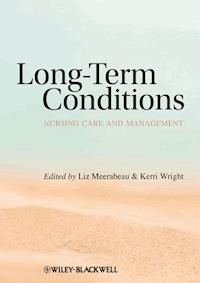
"This book is a very welcome tool, which will enable health professionals to understand the complexity, challenge and rewards of proactively managing long-term conditions. Putting this knowledge into skilled practice, in partnership with patients, will transform the lives of many individuals and their families, and thus fulfil the fundamental purpose of nursing." --From the Foreword by Professor Rosemary Cook CBE, Director, the Queen's Nursing Institute and Visiting Professor of Enterprise, University of Northumbria Long-Term Conditions is a comprehensive, practical guide for nurses and healthcare professionals on the care and management of people with chronic illness. It explores case management, individual care and management, the role of the 'expert patient', quality-of-life issues, counselling skills, self-management, and optimum self-care. Long-Term Conditions discusses the three main long-term conditions currently resulting in most hospital admissions: diabetes, respiratory, and coronary heart disease, with a focus on empowering the patient to self-manage. Key Features: * A comprehensive guide to the care and management of long-term conditions * Focuses on the management of the conditions from the patients' perspective * Practical and accessible in style
Sie lesen das E-Book in den Legimi-Apps auf:
Seitenzahl: 672
Veröffentlichungsjahr: 2011
Ähnliche



















Contents
Cover
Series
Title Page
Copyright
Foreword
Notes on contributors
Acknowledgements
Introduction
Chapter 1: Long-term conditions in perspective
Introduction
The global challenge: demographic change
The demand for health care
Health inequalities
Health care systems
Home care
Informal care and social care
Policy and practice developments in managing LTCs
Nursing provision
The role of the third sector
Conclusion
Chapter 2: Case management
Introduction
Case management overview
Evaluating case management
Case management approaches
Active ingredients of case management
Case finding
Risk
Conclusion
Chapter 3: Changing approaches to the management of long-term conditions
Introduction
A critique of the medical model
The biopsychosocial model
Conclusion
Chapter 4: Sociological insights
Introduction
The doctor–patient relationship
Role theory
Seeking help
Deviance and stigma
Economic effects of long-term illness
Illness as biographical disruption
The experience of long-term illness
Patients as experts
Person-centred care
Conclusion
Chapter 5: Psychological effects of long-term conditions
Introduction
On being ill long-term
Psychological consequences of an LTC
The nature of the relationship between an LTC and psychological effects
The experience of an LTC
Behavioural aspects of an LTC
Emotional aspects of an LTC
Cognitive aspects of an LTC
Personality and its role in LTCs
LTCs and their influence on personality
Interventions in LTCs
Consequences to the person of having an LTC
Implications for the professional of caring for someone with an LTC
Supporting the psychological well-being of people with LTCs
Assessment of mental health
Conclusion
Chapter 6: Counselling skills
Introduction
Grief theory and adapting to change
The theory of Elizabeth Kübler-Ross
The work of Colin Murray Parkes
The contribution of J. William Worden
Counselling theory: Person-centred perspectives
Blocks in the practitioner
Communication skills
Specific counselling skills
Counselling theory: Psychodynamic perspectives
Counselling theory: Cognitive behavioural perspectives
Conclusion
Chapter 7: Living with long-term conditions: Tommy's story
Foreword by Kerri Wright
Tommy's story
Long-term conditions
Personal story
Expert Patients Programme (EPP)
Depression
Smoking
Present
Chapter 8: Self-management and current health care policies
Introduction
Shattered life and self-identity
Implications for professional practice
Self-management approaches
Conclusion
Chapter 9: Managing common symptoms of long-term conditions
Introduction
Fatigue
Depression
Stress
Pain
Breathlessness (Dyspnoea)
Physical activity
Chapter 10: Medicines management
Introduction
What do patients want to know about their medicines?
What can go wrong with medicines used?
What does medicines management involve?
Medication review
Suggested answers to the case studies
Medicines management services
Medicines information resources
Chapter 11: Management of heart failure
Introduction
Epidemiology
Aetiology
Symptoms and classification of heart failure
Diagnosis
Overview of pharmacological treatment
Promoting concordance in patients with heart failure
Device therapy
Patient education
Supporting patients and carers
Palliative care
Organising services
Conclusion
Chapter 12: Management of respiratory disease
Introduction
Epidemiology
Risk factors
Chronic obstructive lung disease (COPD)
Living with COPD
Aims of management
Long-term oxygen therapy (LTOT)
Smoking cessation
Pulmonary rehabilitation
Diet and nutrition
Management of COPD – NICE guidelines
Pharmacological management
Asthma
Living with asthma
Conclusion
Chapter 13: Management of diabetes
Introduction
Definition of diabetes
How is diabetes diagnosed?
Treatment of diabetes
Education
Patient self-monitoring of blood glucose
Type 2 diabetes: treatment of hyperglycaemia
Diet
Exercise
Antihyperglycaemic medication
Treatment with insulin
Chronic complications of diabetes
Acute complications of diabetes
Driving
Situations which make diabetes more difficult to control – hospital admission or illness
How should illness be managed?
Pregnancy
Conclusion
Index
‘We can envision in chronic illness and its therapy a symbolic bridge that connects the body, self and society. This network interconnects physiological processes, meanings and relationships so that our social word is linked recursively to our inner experience. Here we are privileged to discover powers within and between us that can either amplify suffering or disability or dampen symptoms and therefore contribute to care.’
Arthur Kleinman (1988:xiii)The Illness Narratives – Suffering, Healing and the Human Condition Basic Books, New York
This edition first published 2011 © 2011 by Blackwell Publishing Ltd
Blackwell Publishing was acquired by John Wiley & Sons in February 2007. Blackwell’s publishing program has been merged with Wiley’s global Scientific, Technical and Medical business to form Wiley-Blackwell.
Registered office: John Wiley & Sons, Ltd, The Atrium, Southern Gate, Chichester, West Sussex, PO19 8SQ, UK
Editorial offices: 9600 Garsington Road, Oxford, OX4 2DQ, UK The Atrium, Southern Gate, Chichester, West Sussex, PO19 8SQ, UK 2121 State Avenue, Ames, Iowa 50014-8300, USA
For details of our global editorial offices, for customer services and for information about how to apply for permission to reuse the copyright material in this book please see our website at www.wiley.com/wiley-blackwell.
The right of the author to be identified as the author of this work has been asserted in accordance with the UK Copyright, Designs and Patents Act 1988.
All rights reserved. No part of this publication may be reproduced, stored in a retrieval system, or transmitted, in any form or by any means, electronic, mechanical, photocopying, recording or otherwise, except as permitted by the UK Copyright, Designs and Patents Act 1988, without the prior permission of the publisher.
Designations used by companies to distinguish their products are often claimed as trademarks. All brand names and product names used in this book are trade names, service marks, trademarks or registered trademarks of their respective owners. The publisher is not associated with any product or vendor mentioned in this book. This publication is designed to provide accurate and authoritative information in regard to the subject matter covered. It is sold on the understanding that the publisher is not engaged in rendering professional services. If professional advice or other expert assistance is required, the services of a competent professional should be sought.
Library of Congress Cataloging-in-Publication Data Long-term conditions : nursing care and management/edited by Liz Meerabeau and Kerri Wright. p. ; cm. Includes bibliographical references and index. ISBN 978-1-4051-8338-3 (pbk. : alk. paper) 1. Chronic diseases–Nursing. 2. Long-term care of the sick. I. Wright, Kerri. II. Meerabeau, Liz. [DNLM: 1. Chronic Disease–economics. 2. Chronic Disease–therapy. 3. Health Care Costs. 4. Health Policy. 5. Patient Education as Topic. 6. Self Care. WT 500] RT120.C45L66 2011 616′.044–dc22 2010049567
A catalogue record for this book is available from the British Library.
This book is published in the following electronic formats: ePDF 9781444341003; Wiley Online Library 9781444341034; ePub 9781444341010
Foreword
This is a very important book. Although there have always been people with long-term conditions (LTCs) on nurses’ caseloads, it is only in recent years that we have recognised the breadth and depth of these individuals’ needs, and understood how much further we could go to meet them. For too many years, health professionals saw their interactions with people with LTCs as episodic, repetitive and unrewarding.
A better understanding of the nature and impact of these conditions on individuals has changed both attitudes and practice. We are more focused on prevention, both primary and secondary, for diseases once accepted as unavoidable. We are more proactive in finding people with LTCs, and instituting management to reduce their impact. And, most importantly, we now recognise that people with these conditions know a great deal about them, and are usually able and willing to take much more control than we had ever guessed. The advent of portable assistive technology, which can be used at home with minimal training, has helped enormously to shift the knowledge and power in disease management from the professional to the patient.
The timing of these changes is important. The number of people with LTCs in the United Kingdom and worldwide is set to grow exponentially. Lifestyle factors, including obesity and inappropriate diet, environmental challenges as well as some unknown causes, are all leading to sharp rises in conditions such as diabetes, asthma and heart disease. In a world with rising health care demand but caps on health care spending, managing LTCs well is a professional imperative for the sake of the individual patient and the wider health system.
This book is a very welcome tool, which will enable health professionals to understand the complexity, challenge and rewards of proactively managing LTCs. Putting this knowledge into skilled practice, in partnership with patients, will transform the lives of many individuals and their families, and thus fulfil the fundamental purpose of nursing.
Professor Rosemary Cook CBE, Honoris Causa, MSc, PGDip, RGN Director, the Queen’s Nursing Institute and Visiting Professor of Enterprise University of Northumbria, Newcastle, UK
Notes on contributors
Natasha Ascott
is a Clinical Nurse Specialist in pain management at Basildon and Thurrock University Hospital.
Ben Bruneau
is a Senior Lecturer at the University of Greenwich. Ben has a broad interest in the field of personality research, and is a chartered psychologist.
Harry Chummun
is a Senior Lecturer at the University of Greenwich. Harry has an interest in stress management and the genetics of health and well- being, and publishes in this area.
Shivaun Gammie
is a registered pharmacist and currently works as a Clinical Lecturer at the Medway School of Pharmacy. Shivaun has worked as a senior medicines management pharmacist and has a strong interest in promoting evidence-based therapeutics.
Lynne Jerreat
is the Lead Diabetic Specialist Nurse at Queen Elizabeth Hospital, South London. Lynne is also the author of the popular text `Diabetes for Nurses' which is currently in its second edition. Lynne regularly teaches pre- and post-registration nurses at the University of Greenwich.
Tommy Magee
lives in South-East London with his collie dog, Holly. Tommy set up the AA meeting currently still running in Hertfordshire, and is active on a number of committees, using his experiences to advise professionals on health issues. Tommy is an expert patient trainer on the Expert Patient Programme in South London, and regularly shares his story and insights with pre- and post-registration nurses at the University of Greenwich.
Liz Meerabeau
is Dean of the School of Health and Social Care at the University of Greenwich. Liz has a clinical background as a health visitor and a research interest in the sociology of health and illness.
Liz Nicholls
is an independent nurse practitioner, working in general practice for nearly 20 years. She has a very broad experience of helping clients to manage and control their long-term conditions (LTCs). Her main interests are nurse education and respiratory care.
Val Sanders
is a senior accredited BACP counsellor and supervisor in private practice, in addition to her work as a senior lecturer in Therapeutic Counselling at the University of Greenwich. For the past 2 years she has delivered training sessions in counselling skills to post-registration nurses on an LTC course. She has a specialist interest in bereavement, death and dying, and has experience of working with people living with cancer.
Susan Simpson,
Nurse Consultant in Cardiac Care at South London Healthcare Trust, is the nursing lead for the management of patients with heart failure for this Trust and has a large clinical caseload.
Pia Sweet
is a Consultant Anaesthetist and Pain Specialist working at South London Health NHS Trust. Pia regularly teaches pain management on post-registration courses at the University of Greenwich.
Jenny Taylor
is a Senior Physiotherapist and Head of the Allied Health Professions team at St Christopher's Hospice in South London.
Kerri Wright
is a Senior Lecturer at the University of Greenwich. Kerri has a clinical background as a district nurse, and has an interest in the therapeutic relationship between nurses and patients and how this can enhance well-being.
Acknowledgements
Thanks to Rona Dury, Theresa Massey, Alice Neave for their helpful comments on drafts and to Garry Bodenham for recording the interview with Tommy. Also to Monique Petit, Louise Ramage and Emma Pattison for help in editing.
Introduction
It is a curious experience to have written a book during a time when the government was expected to change after many years, knowing that if that change came, many of the policy aspects of the book were likely to change as well, and the documents we refer to may fairly soon become unavailable. Organisations we refer to may also disappear. In addition, clinical guidance is also continually being updated and although we have used the most up-to-date guidance in this book, we are aware that this may soon be superseded and we would direct you to check for any updates.
As we write this Introduction, we do now know the new government's plans for the NHS, as the white paper, Equity and Excellence: Liberating the NHS appeared in July 2010. The most commented-upon intention is the devolution of health care commissioning in England to consortia of GPs and the abolition of primary care trusts and strategic health authorities – a high-risk strategy which may exacerbate health inequalities, since the quality of general practice is worst in many areas where the social disadvantage is greatest. There is, however, a stated aim in the white paper to put patients and the public first, in particular by making shared decision-making the norm: no decision about me without me. This fits well with the ethos of this book and supporting people with long-term conditions (LTCs).
There has also been much discussion about the election pledge ‘the Big Society’, in which communities will be encouraged to take action on problems rather than relying on the state; how this will work when many third sector organisations will be getting less funding remains to be seen. Local authority budgets will also be greatly reduced, putting the interface between health and social care at risk. In addition, public health measures such as minimum pricing for alcohol and improvements in food quality have been rejected, so we may return to an individualistic approach to public health, rather than the societal approach referred to in the discussion on health inequalities in our book.
Despite the future changes and the number of ‘unknowns’, the heart of the book, which is the experiences of people with LTCs, and the need for us to provide the best care we can, will not change. The demographic pressures of an older population, and more people developing LTCs, will remain, as will the complexity of care and support which many people need. In order to do justice to our subject, we have concentrated on the care of adults and on physical illnesses, although we recognise the importance of mental illness and the difficult interrelationship between social disadvantage, physical illness and mental illness, particularly depression.
The discussion in this book moves from a global and national perspective on some of the issues around LTCs, in chapters 1–3 (‘Long-term conditions in perspective’, ‘Case management’ and ‘Changing approaches to the management of long-term conditions’), to a more personal and individualistic approach to supporting people living with an LTC with chapters and 5 (‘Sociological insights’ and ‘Psychological effects of long-term conditions’) focusing on the effects that living with an LTC can have on individuals and their families. We also move from a generic approach to the care and management of people with LTCs in chapters 6–10, with many issues pertinent to all LTCs, to a more specific and clinical focus on three main LTCs in the final three chapters.
Due to the scope of this book, we have used a range of terminology according to the chapter focus and terms that are more commonly used. To this end, we have used such terms as illness, long-term conditions and chronic illness throughout the book, and referred to patients rather than people when more appropriate to do so.
The aim of this book is for nurses to gain a wider perspective on the issues and experiences of people who are living their life with LTCs. We are keen for the focus to be on the person with an LTC and the management and care of their condition to be aimed at enabling the person to live their life as they choose. With this aim there becomes not one truth for the best way to manage specific LTCs, but many truths which are individual to each person. These truths need to be understood and respected, and used with clinical knowledge to plan and manage care. To this end, the focus must be for nurses to develop a true partnership with people living with LTCs based on acceptance, empathy and respect. This involves nurses listening to people's stories and valuing their personal and unique understanding of their condition and how they manage their life with this.
Liz MeerabeauKerri Wright
Chapter 1
Long-term conditions in perspective
Liz Meerabeau
School of Health and Social Care, University of Greenwich, Eltham, London, UK
Introduction
All developed countries, whatever their political system and overall approach to health policy, face challenges in meeting the rising costs of health care. This increase in health care costs generally exceeds the rate of economic growth; contributing factors include increasing proportions of older people in the population, the development of expensive medical technologies and drugs, and increasingly well-informed people who demand access to these developments in health care. High Quality Care for All (Department of Health, 2008a), also known as the Darzi Report after the junior health minister who led the NHS Next Stage Review, identifies six challenges common to all advanced health care systems: rising expectations, demand driven by demographics, the continuing development of the ‘information society’, advances in treatments, the changing nature of disease and changing expectations of the health workplace (i.e. staff expect a better work-life balance).
An important element of the changing patterns of disease is the increase in prevalence of long-term conditions (LTCs); LTCs are one of the eight priorities for the NHS. Dowrick et al. (2005) consider that the management of what they term chronic illness is beginning to develop its own identity as an important component of health care, and that despite clinical differences, there are many similarities in the problems people with different LTCs face and the strategies needed in providing care. These include the proactive identification of relevant populations, supporting the relationships between people with LTCs and health and social care, the development of evidence-based guidelines intended to prevent exacerbations, and the promotion of empowerment, for example through self-management.
This chapter discusses changes in the need for health care due to demographic change and persistent inequalities in health, before going on to outline some of the changes both in service delivery generally and in the provision of health care for LTCs more specifically, such as the use of targets by governments, and the growth of patient-focused care. Generally, like the rest of this book, the chapter has an English focus, in which policy initiatives and service developments include user participation (Department of Health, 2003) and National Service Frameworks (NSFs) with specific standards, for example for coronary heart disease (Department of Health, 2000a) and for LTCs (Department of Health, 2005a). Comparisons with the other three UK countries are also made briefly, and the global context is also discussed.
The global challenge: demographic change
Within the overall trend towards older populations, the most rapidly growing segment is that of people over 80: the Organisation for Economic Co-operation and Development (OECD)(1988) estimated that whereas in 1980 the cohort of older people was made up of 34% aged between 65 and 69, 48% between 70 and 79 and 18% 80 or over, by 2050 these percentages would be 26%, 43% and 31%, respectively.
More recently, An Ageing World: 2008 (US Census Bureau, 2009) highlights a huge shift to an older population, with great consequences. In the next 30 years, the number of people over 65 in the world will almost double to 1.3 billion, and in 10 years time, older people will outnumber children for the first time. This will affect family structure, patterns of work and retirement. Europe has 23 of the 25 ‘oldest’ countries in the world (including all of the countries of western Europe, with the exception of Ireland and Denmark). In the United Kingdom, the nineteenth ‘oldest’ country, by 2040 there will be 46 people aged 65 and over for every 100 people of working age (defined as aged 20 to 64); in Germany, the figure will be 58, and in Japan, 68. (This ratio is called the older dependency ratio.) This compares with 16 in South Africa and 23 in India. Japan, Singapore, France, Sweden and Italy all now have life expectancies at birth of more than 80 years. However, although the proportion of older people in the populations of developing countries is much lower, because of the size of these populations, overall most of the increase in the number of older people in the world is actually in these poorer countries. China is one of the fastest ageing countries in the world, since its fertility rate has been below the replacement rate since 1991, due to its long-standing one-child policy. In Japan, 22.5% of the 127 million people are over 65, whereas only 13% are under 15.
Lesen Sie weiter in der vollständigen Ausgabe!
Lesen Sie weiter in der vollständigen Ausgabe!
Lesen Sie weiter in der vollständigen Ausgabe!
Lesen Sie weiter in der vollständigen Ausgabe!
Lesen Sie weiter in der vollständigen Ausgabe!
Lesen Sie weiter in der vollständigen Ausgabe!
Lesen Sie weiter in der vollständigen Ausgabe!
Lesen Sie weiter in der vollständigen Ausgabe!
Lesen Sie weiter in der vollständigen Ausgabe!
Lesen Sie weiter in der vollständigen Ausgabe!
Lesen Sie weiter in der vollständigen Ausgabe!
Lesen Sie weiter in der vollständigen Ausgabe!
Lesen Sie weiter in der vollständigen Ausgabe!




