


26,99 €
Mehr erfahren.
- Herausgeber: John Wiley & Sons
- Kategorie: Geisteswissenschaft
- Sprache: Englisch
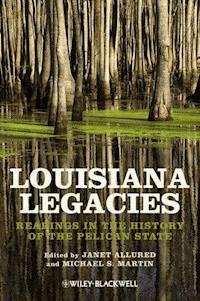
Showcasing the colorful, even raucous, political, social, and unique cultural qualities of Louisiana history, this new collection of essays features the finest and latest scholarship.
- Includes readings featuring recent scholarship that expand on traditional historical accounts
- Includes material on every region of Louisiana
- Covers a wide range of fields, including social, environmental, and economic history
- Detailed, focused material on different areas in Louisiana history, including women’s history as well as the state’s diverse ethnic populations
Sie lesen das E-Book in den Legimi-Apps auf:
Seitenzahl: 614
Veröffentlichungsjahr: 2012
Ähnliche




















Contents
Cover
Half Title page
Title page
Copyright page
Editors’ Preface
Part One: Louisiana’s Colonial Context
The Frontier Exchange Economy of the Lower Mississippi Valley Before 1783
I
II
III
IV
The Moral Climate of French Colonial Louisiana, 1699-1763
Oliver Pollock’s Plantations: An Early Anglo Landowner on the Lower Mississippi, 1769-1824
Part Two: Women, Race, and Class in Early Louisiana
Desiring Total Tranquility—and Not Getting It: Conflict Involving Free Black Women in Spanish New Orleans
A Female Planter from West Feliciana Parish: The Letters of Rachel O’Connor
The Murder of a “Lewd and Abandoned Woman”: State of Louisiana v. Abraham Parker
Part Three: Transformation of The Louisiana “Creole”
Early New Orleans Society: A Reappraisal
In My Father’s House: Relationships and Identity in an Interracial New Orleans Creole Family, 1845-1875
Part Four: Violent Louisiana
“I Would Rather be Among the Comanches”: The Military Occupation of Southwest Louisiana, 1865
From The Barrel of A Gun: The Politics of Murder in Grant Parish
Feuding Is Our Means of Societal Regulation: Elusive Stability in Southeastern Louisiana’s Piney Woods, 1877-1910
An Inhospitable Land: Anti-Italian Sentiment and Violence in Louisiana, 1891-1924
Part Five: Progressives and Race
When Plessy Met Ferguson
Homer Adolphe Plessy
John Howard Ferguson
The Rest of the Story: Kate Gordon and the Opposition to the Nineteenth Amendment in the South
In Pursuit of Louisiana Progressives
Part Six: Modern Louisiana Politics
“What he did and what he promised to do …”: Huey Long and the Horizons of Louisiana Politics
Huey Long: A Political Contradiction
“When I Took the Oath of Office, I Took No Vow of Poverty”: Race, Corruption, and Democracy in Louisiana, 1928-2000
The Politics of Poverty and History: Racial Inequality and the Long Prelude to Katrina
Part Seven: Transitions in Race Relations
Racial Repression in World War Two: The New Iberia Incident
Transitional Generations: African American Workers, Industrialization, and Education in the Northern Louisiana Lumber and Paper Industries, 1930–1950
Part Eight: Culture and Environment in Modern Louisiana
Making the “Birthplace of Jazz”: Tourism and Musical Heritage Marketing in New Orleans
Commercialization of Cajun Cuisine
Who Destroyed the Marsh?: Oil Field Canals, Coastal Ecology, and the Debate over Louisiana’s Shrinking Wetlands
LOUISIANA LEGACIES
This edition first published 2013 © 2013 John Wiley & Sons, Inc.
Edition history: Harlan Davidson, Inc. (1e, 1995)Harlan Davidson, Inc. was acquired by John Wiley & Sons in May 2012.
Wiley-Blackwell is an imprint of John Wiley & Sons, formed by the merger of Wiley’s global Scientific, Technical and Medical business with Blackwell Publishing.
Registered OfficeJohn Wiley & Sons Ltd, The Atrium, Southern Gate, Chichester, West Sussex, PO19 8SQ, UK
Editorial Offices350 Main Street, Malden, MA 02148–5020, USA9600 Garsington Road, Oxford, OX4 2DQ, UKThe Atrium, Southern Gate, Chichester, West Sussex, PO19 8SQ, UK
For details of our global editorial offices, for customer services, and for information about how to apply for permission to reuse the copyright material in this book please see our website at www.wiley.com/wiley-blackwell.
The right of Janet Allured and Michael S. Martin to be identified as the authors of the editorial matter in this work has been asserted in accordance with the UK Copyright, Designs and Patents Act 1988.
All rights reserved. No part of this publication may be reproduced, stored in a retrieval system, or transmitted, in any form or by any means, electronic, mechanical, photocopying, recording or otherwise, except as permitted by the UK Copyright, Designs and Patents Act 1988, without the prior permission of the publisher.
Wiley also publishes its books in a variety of electronic formats. Some content that appears in print may not be available in electronic books.
Designations used by companies to distinguish their products are often claimed as trademarks. All brand names and product names used in this book are trade names, service marks, trademarks or registered trademarks of their respective owners. The publisher is not associated with any product or vendor mentioned in this book. This publication is designed to provide accurate and authoritative information in regard to the subject matter covered. It is sold on the understanding that the publisher is not engaged in rendering professional services. If professional advice or other expert assistance is required, the services of a competent professional should be sought.
Library of Congress Cataloging-in-Publication Data
Louisiana legacies : readings in the history of the Pelican State / edited by Janet Allured & Michael S. Martin ; advisory editors, Light Townsend Cummins, Judith Kelleher Schafer, Edward F. Haas.p. cm.“Edition history: Harlan Davidson, Inc. (1e, 1995).”Includes bibliographical references and index.ISBN 978-1-118-54189-0 (pbk. : alk. paper) 1. Louisiana—History. 2. Louisiana—Biography. I. Allured,Janet. II. Martin, Michael S., 1972-F369.L886 2013976.3—dc232012037670
EDITORS’ PREFACE
Although all of the articles in this volume were written by scholars of Louisiana history and originally appeared in peer-reviewed journals or books published by academic presses, the essays we chose to include in this reader are not only written in an accessible style but tell compelling stories that any student of history will find intriguing. The collection may be used as a supplement to the standard college-level textbook, Louisiana: A History, but even the casual reader will find the essays entertaining as stand-alone pieces that offer an in-depth examination of Louisiana’s storied past. Heavy on social history, the collection also includes important pieces on the antics of Louisiana politicians, from the Longs to their latter-day counterpart, Edwin Edwards.
Some of the essays are classics, so well-written, with subjects so intriguing, that they continue to enlighten and entertain modern students of history. Carl Brasseaux’s glimpse into the moral lapses of French colonial Louisiana and Joseph Tregle’s piece on the mythical “Creole” of Louisiana, for example, still generate lively classroom discussions, decades after their original publication. Other articles represent new themes, cutting-edge research, and novel interpretations. The convoluted and constantly shifting history of gender and race in Louisiana law and custom; the state’s propensity for violence and murder; its music, food, and indulgent cultures, and its marketing of the same, are relatively new subjects of scholarly inquiry. The volume concludes with a balanced, thoughtful piece on a timely and controversial subject, the state’s long disregard for protection of the natural environment. Written by renowned environmental historian Tyler Priest and his student, Louisiana native Jason Theriot, the final article examines the many variables responsible for coastal erosion and wetlands loss.
As editors, we selected pieces we know will be appropriate for and stimulating to undergraduates and a more general readership. To increase the book’s accessibility, we removed footnotes and some of the supporting data that is typical of scholarly articles, letting the narrative flow and allowing the focus to fall where it should: on the drama of the story and the explorations of ideas. Those who are interested in pursuing the scholarship further are encouraged to consult the original publication, the citations for which are given on the first page of every selection.
The essays in this collection are grouped in parts that proceed chronologically; the themes of each part are emphasized in an introduction that provides a brief overview of the period, the substance of the individual articles, and some ideas to ponder while reading.“Questions to consider” follow each individual essay, designed for instructors who may assign them in an undergraduate Louisiana history class.
We hope you find these pieces as entertaining as we do. We invite you to contact us with feedback about how we might improve the next edition of this volume.
Janet Allured Professor of HistoryMcNeese State UniversityLake Charles, LA [email protected]
Michael S. Martin Associate Professor of HistoryDirector, Center for Louisiana StudiesUniversity of Louisiana at LafayetteLafayette, LA [email protected]
PART ONE
LOUISIANA’S COLONIAL CONTEXT
Although Europeans had ventured into the lower Mississippi Valley in the century and a half before their arrival, the Le Moyne brothers, Pierre and Jean-Baptiste, led the expedition that would establish the first permanent European settlement in the region in 1699. The Le Moynes, better known by their aristocratic titles of Sieur d’Iberville and Sieur de Bienville, are considered the founding fathers of the French colony of Louisiana, and their actions there set in motion a collision of cultures and populations with far-reaching effects.
The colony of Louisiana held only a tenuous place in the imperial designs of the French monarchy. As such, it remained underdeveloped from a European mercantilist perspective, and historians for centuries deemed it a failure. Daniel Usner, however, chooses to evaluate French colonial Louisiana on the basis of its internal economy, and he shows how a “frontier exchange economy,” made up of small-scale, personal interactions actually fostered cross-cultural contacts. In describing American Indians, Europeans, and Africans on the edge of European empires engaging in day-to-day exchanges, Usner emphasizes the fluidity, rather than rigidity, of the boundaries between their lives.
Carl Brasseaux’s essay on the moral climate of French colonial Louisiana shows how the Louisiana settlers, situated as they were on the periphery of the French empire, ignored—sometimes unintentionally, but often purposely—the moral strictures of the Catholic Church and the colonial governments. Brasseaux shows that this disregard for traditional morality, manifested most often in extramarital sex, drunkenness, and gambling, reflected in part the makeup of the population of Europeans who ended up in Louisiana, notably the convicts, prostitutes, and soldiers. But it was also a characteristic transmitted to the colonists by the coureurs des bois, French trappers who lived either on their own or among the Indians much of the time. Brasseaux’s essay points to the fact that once established as the norm by the 1720s, the permissive morality became so ingrained in the colonial psyche that it was handed down to succeeding generations of newcomers to the colony.
The Louisiana colony became a dominion of the Spanish empire in 1763, although Spanish authority was not truly consolidated until the rule of General Alejandro O’Reilly in 1769 and 1770. Over the three decades that followed, the Spanish governors of Louisiana instituted a series of reforms to bring Louisiana into line with the Spanish imperial system. Among these reforms were the institution of liberal immigration policies, designed to grow the colony’s population in order to increase its agricultural output to enhance its position as a buffer between New Spain (with its capital at Mexico City) and the English North American colonies along the eastern seaboard. As a result, immigrants from around the Atlantic world established themselves in the lower Mississippi Valley. Some of these peoples came to Louisiana by choice, such as the Acadians or the Canary Islanders, others by force, such as the African and Caribbean slaves.
Among the most notable groups of immigrants to Louisiana during the era of Spanish control, and perhaps the most surprising, were the English speakers from the British colonies. They arrived in increasingly large numbers in the 1780s and 1790s. Some of them, like Oliver Pollock, the subject of Light Cummins’s essay, came even earlier. Pollock, a financial backer of the patriot cause during the American Revolution, established himself in the area of the lower Mississippi Valley then known as West Florida in 1769. Between that year and 1824, under the British, Spanish, and American governments, he amassed landholdings and created substantial plantations, made considerable profits as a merchant, lost most of his personal wealth as a result of his support for the American cause, and then reemerged as a major economic player in the region. Cummins contends that Pollock is representative of other Anglo immigrants to Louisiana before the American Revolution.
THE FRONTIER EXCHANGE ECONOMY OF THE LOWER MISSISSIPPI VALLEY BEFORE 1783
by Daniel J. Usner
Even the most devoted historians of Louisiana are quick to point out that the colony in the Mississippi Valley constitutes “a study in failure” or “a holding action” in comparison with the English colonies along the Atlantic seaboard. Louisiana suffered from a low priority in the mercantile designs of both France and Spain. Immigration and population growth proceeded slowly, exportation of staple products to Europe fluctuated, and subsistence agriculture predominated over production of cash crops. But Louisiana’s sparse populace and tentative transatlantic commerce can actually be used to the historian’s advantage, allowing one to turn more attentively to dimensions of economic life that have been neglected in the lower Mississippi Valley as well as in other colonial regions of North America. Studies of economic change in North American colonies concentrated for a long time on linkages with home countries and with each other through the exportation of staple commodities. Historians are now turning to economic relationships that developed within regions, with greater attention to activities not totally dependent upon production for the Atlantic market.
Here I will examine the formation of a regional economy that connected Indian villagers across the lower Mississippi Valley with European settlers and African slaves along the Gulf Coast and lower banks of the Mississippi. The term frontier exchange is meant to capture the form and content of economic interactions among these groups, with a view to replacing the notion of frontier as an interracial boundary with that of a cross-cultural network.… Small-scale face-to-face marketing must be taken seriously, especially for understanding how peoples of different cultures related to and influenced each other in daily life.
… [T]he lower Mississippi Valley is here defined as an economic region that was shaped by common means of production and by regular forms of trade among its diverse inhabitants.… In 1763 the lower Mississippi Valley was partitioned into the Spanish province of Louisiana and the English province of West Florida. The latter colony, therefore, must be included in any study of the region’s economy. The persistence of frontier exchange across the political boundary can too easily be overlooked when Louisiana and West Florida are treated separately.
The focus of this study falls not directly on familiar economic settings—the fur trade for Indians and plantation agriculture for blacks—but rather on the interstices in which people exchanged small quantities of goods in pursuit of their livelihood. A brief summary of how the formal network of towns and outposts took shape is accompanied by an outline of population changes in the lower Mississippi Valley. Then the reader is asked to follow more closely the multiple directions of interaction through which deerskins and foods circulated from group to group. Over most of the eighteenth century, exchanges of these two kinds of products contributed strongly to the notable fluidity of social relations among lower Mississippi Valley inhabitants. It must be emphasized, however, that exchanges occurred under, and often despite, very unequal social conditions because a colonial elite worked steadily to enforce bondage upon black Louisianians and West Floridians, dependency upon Indians, and subordination upon a mixed lot of white settlers.…
I
Sent by France late in 1698 to establish a military post near the mouth of the Mississippi River and to forestall Spanish and English advances in the region, naval captain Pierre Le Moyne d’Iberville encountered dismal prospects for what he hoped would become a colony. Already overextended imperially and facing shortages of food at home, France was not prepared to deliver supplies with any regularity to the Gulf Coast. Like many other nascent colonial ventures before it, Iberville’s isolated outpost therefore depended heavily upon trade with neighboring Indian villages for its survival. Soldiers and sailors either purchased food directly from Indians or acquired peltry from them to exchange for imported grains and meats. During the second decade of the eighteenth century, this trade expanded from localized exchange with villages near the Gulf into an extensive network of interior posts that not only facilitated the movement of deerskins to the coast but functioned as marketplaces for the exchange of food.…
Lesen Sie weiter in der vollständigen Ausgabe!
Lesen Sie weiter in der vollständigen Ausgabe!
Lesen Sie weiter in der vollständigen Ausgabe!
Lesen Sie weiter in der vollständigen Ausgabe!
Lesen Sie weiter in der vollständigen Ausgabe!
Lesen Sie weiter in der vollständigen Ausgabe!
Lesen Sie weiter in der vollständigen Ausgabe!
Lesen Sie weiter in der vollständigen Ausgabe!
Lesen Sie weiter in der vollständigen Ausgabe!
Lesen Sie weiter in der vollständigen Ausgabe!
Lesen Sie weiter in der vollständigen Ausgabe!
Lesen Sie weiter in der vollständigen Ausgabe!
Lesen Sie weiter in der vollständigen Ausgabe!
Lesen Sie weiter in der vollständigen Ausgabe!
Lesen Sie weiter in der vollständigen Ausgabe!
Lesen Sie weiter in der vollständigen Ausgabe!
Lesen Sie weiter in der vollständigen Ausgabe!
Lesen Sie weiter in der vollständigen Ausgabe!
Lesen Sie weiter in der vollständigen Ausgabe!
Lesen Sie weiter in der vollständigen Ausgabe!
Lesen Sie weiter in der vollständigen Ausgabe!
Lesen Sie weiter in der vollständigen Ausgabe!
Lesen Sie weiter in der vollständigen Ausgabe!
Lesen Sie weiter in der vollständigen Ausgabe!
Lesen Sie weiter in der vollständigen Ausgabe!
Lesen Sie weiter in der vollständigen Ausgabe!
Lesen Sie weiter in der vollständigen Ausgabe!
Lesen Sie weiter in der vollständigen Ausgabe!
Lesen Sie weiter in der vollständigen Ausgabe!
Lesen Sie weiter in der vollständigen Ausgabe!




