


1,99 €
Mehr erfahren.
- Herausgeber: DigiCat
- Kategorie: Gesellschafts- und Liebesromane
- Sprache: Englisch
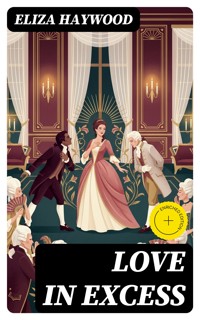
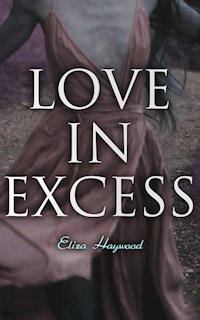
Eliza Haywood's "Love in Excess" is a captivating work of early 18th-century literature that intricately explores the complexities of human emotions and societal norms surrounding love and desire. The narrative weaves together multiple storylines, primarily following the passionate entanglements of its protagonist, the charming yet impulsive Melantha. Haywood's writing style is characterized by its vivid characterizations, witty dialogue, and an acute psychological insight into her characters' motivations and dilemmas, embodying the conventions of the romance genre while also critiquing the moral codes of her time. Haywood, a prominent figure in the development of the novel as a literary form, was deeply influenced by her own experiences as a woman in a male-dominated society. Her tumultuous relationships and keen observations of social dynamics undoubtedly informed her portrayals of passionate love and female agency seen in "Love in Excess." As one of the first female novelists, Haywood's contributions to literature offer a unique perspective, merging her understanding of desire with a critique of the ethics surrounding it. Readers seeking an engaging exploration of love's intricacies should not overlook "Love in Excess." With its rich character development and insightful commentary on the nature of romance, this novel invites readers to reflect on their own perceptions of love, desire, and societal expectations, making it a timeless addition to the canon of women's literature. In this enriched edition, we have carefully created added value for your reading experience: - A succinct Introduction situates the work's timeless appeal and themes. - The Synopsis outlines the central plot, highlighting key developments without spoiling critical twists. - A detailed Historical Context immerses you in the era's events and influences that shaped the writing. - A thorough Analysis dissects symbols, motifs, and character arcs to unearth underlying meanings. - Reflection questions prompt you to engage personally with the work's messages, connecting them to modern life. - Hand‐picked Memorable Quotes shine a spotlight on moments of literary brilliance. - Interactive footnotes clarify unusual references, historical allusions, and archaic phrases for an effortless, more informed read.
Das E-Book können Sie in Legimi-Apps oder einer beliebigen App lesen, die das folgende Format unterstützen:
Veröffentlichungsjahr: 2023
Ähnliche










Love in Excess
Table of Contents
Introduction
Love in Excess transforms the volatile collision of desire and decorum into a relentless examination of how passion, reputation, and power strain against one another in a society where every feeling risks becoming a public spectacle, every promise must contend with competing claims of duty and ambition, and the heart’s private urgencies press against rules designed to regulate bodies, gazes, and words, so that even kindness can compromise honor, restraint can inflame pursuit, and the pursuit of virtue, paradoxically, reveals how intensely people crave, measure, disguise, and judge the excesses that both animate and endanger social life.
Written by the British author Eliza Haywood and first published in three parts between 1719 and 1720, Love in Excess belongs to the early eighteenth-century tradition of amatory fiction, a popular strain of prose romance that foregrounds desire, intrigue, and the hazards of reputation. Although produced within London’s vibrant print culture, its action unfolds in a refined French milieu recognizable by its salons, courts, and strict codes of conduct, where rank and appearance are currencies as potent as money. The result is a narrative shaped by continental elegance and English market savvy, alert to both theatrical display and the realities of social constraint.
At the center stands a celebrated young nobleman whose beauty, wit, and candor make him irresistible to admirers and dangerous to himself, for admiration quickly thickens into competing attachments he cannot easily refuse or reconcile. Around him move women whose desires are as vivid as their risks are acute, each calculating how to survive a world that equates virtue with visibility and silence with safety. The early chapters trace how intersecting attractions ignite misunderstandings, confidences, and tests of loyalty, establishing a web of obligations and temptations in which honor, inclination, and self-preservation pull in different directions without yet foreclosing any single path.
Readers encounter a swift, dramatic style that marries psychological attention to the rhythm of suspense: scenes pivot on glances, confidences, and sudden reversals, while the narrator probes motives with an intensity that feels both critical and sympathetic. The prose is ornate yet agile, attuned to bodily sensation and moral reflection alike, and the plot advances through a sequence of closely staged encounters that build momentum rather than digress. The tone is earnest, urgent, and often theatrical, inviting absorption in heightened feeling without losing sight of the social calculus that disciplines it, producing a reading experience that is at once headlong and deliberative.
Love in Excess examines how reputation governs intimacy, how consent can be clouded by dependence and persuasion, and how appearances both protect and imperil those who must negotiate them. It treats desire not as a simple impulse but as a social force, a currency circulated through surveillance, rumor, and strategic performance. Reason and passion are less opposites than sparring partners, each strengthening the other’s resolve, and the novel’s conflicts arise from mismatched power rather than simple moral weakness. Throughout, Haywood interrogates the marriage market, the costs of emotional labor, and the difficulty of telling sincerity from calculation when livelihoods are at stake.
For contemporary readers, the book speaks clearly to enduring questions about gendered double standards, the ambiguity of agency under pressure, and the ways communities police behavior through stories that travel faster than facts. Its world of watchful rooms and whispering corridors resembles our own circuits of judgment, where reputations can be made or unmade by the choreography of attention. The novel’s emphasis on boundaries, persuasion, and accountability provides a historical vantage on current conversations about desire and power, while its frank acknowledgment of pleasure and fear helps explain why people keep testing limits even when the consequences are visible to everyone.
As a landmark of amatory fiction and a vital chapter in the early development of the English-language novel, Love in Excess offers both literary history and narrative propulsion, rewarding readers who relish intricate emotion as much as swift plot. It invites one to read for patterns—how pursuit alternates with retreat, how confession shadows concealment—and to hear the moral overtones that accompany every risk and respite. Approached with patience for its rhetorical flourish and openness to its strategic exaggerations, the book discloses a precise intelligence about social survival, making its vision of excessive feeling not an indulgence but a method of understanding.
Synopsis
Love in Excess; or, The Fatal Enquiry by Eliza Haywood, published in three parts in 1719–1720, sets its intrigues within a refined aristocratic world where letters, visits, and reputation govern desire. Its central figure, the accomplished Count D’Elmont, attracts fervent attention that soon tests the boundaries between gallantry and responsibility. Haywood opens with a brisk succession of encounters, introducing young women whose hopes are shaped by family authority and social surveillance. The narrative balances vivid scenes of pursuit with reflective pauses that examine motive, self-command, and the hazards of misinterpretation, establishing a sustained inquiry into how private passion collides with public decorum.
Early episodes revolve around clandestine correspondence that entangles D’Elmont with a hopeful admirer and with a second young lady mistakenly implicated in the exchange. Misread signs lead to an impulsive nocturnal rendezvous, where curiosity and inexperience edge too near scandal. The swift response of guardians and kin underscores how fragile a woman’s standing can be and how easily rumor becomes judgment. Meanwhile, the original letter-writer, a wealthy beauty whose desire is strong and calculating, remains largely concealed, guiding events from the margin. Haywood uses these reversals to pose questions about consent, responsibility, and the unequal risks borne by women within courtly pursuit.
Subsequent chapters shift from flirtation to formal obligation. Circumstances draw D’Elmont into a publicly acknowledged alliance that alleviates suspicion but constrains his liberty. In this altered household, a virtuous young woman placed under his protection becomes the quiet center of the book’s moral pressure. Their growing, mutually felt attachment is tempered by scruples of duty, gratitude, and inequality. Haywood underscores the ethical ambiguity of power, as small permissions—an extended conversation, a private reading, a shared walk—acquire dangerous weight under constant observation. The heroine’s self-command becomes a counterpoint to the count’s ardor, testing whether admiration can be kept separate from possession.
Around this core relationship, intertwining plots multiply the risks of discovery. Rival suitors circulate, confidantes trade secrets, and stewards, cousins, and companions carry messages that do not always reach their intended hands. Anonymous notes are intercepted, promises are forged and retracted, and reputations hinge on a doorway left ajar or a visit extended too long. Domestic interiors and secluded gardens become stages for negotiations of desire and honor, while religious retreat is brandished by families as a corrective for perceived impropriety. Haywood continually foregrounds how surveillance, gossip, and the choreography of polite sociability act as instruments of both protection and harm.
The narrative’s middle movement intensifies through absences, mistaken inferences, and tests of constancy. Jealousy and suspicion provoke imprudent stratagems, even as genuine remorse and attempts at reparation complicate easy judgments of character. The count wrestles with the limits of gallantry when faced with real consequences, and the women around him reckon with how to preserve dignity without renouncing feeling. Haywood’s interest lies less in punishing passion than in charting its transformations—how desire can harden into rivalry, soften into tenderness, or redirect into ambition. The atmosphere thickens with near-exposures and partial confessions, delaying resolution while sharpening the stakes of choice.
As the final part unfolds, legal and spiritual authorities reenter the frame, and talk of separation, seclusion, or removal shadows private intentions. Bonds formed through gratitude and solemn promise are weighed against the claims of inclination and the wish to act without dishonor. Misunderstandings are gradually clarified by conversation and testimony rather than coincidence, and earlier injuries demand acknowledgment. Without disclosing the final turns, Haywood guides her characters toward outcomes that hinge on sincerity, patience, and timely candor. The book thus steers between libertine license and rigid austerity, asking what room remains for mutual happiness within strict codes of reputation.
Beyond its plot, Love in Excess exemplifies early eighteenth-century amatory fiction, foregrounding women’s interior lives and the social mechanics that shape their choices. Haywood’s attention to epistolary mediation, surveillance, and the theater of politeness anticipates later developments in the English novel, while preserving a brisk, scene-driven tempo. The work endures for its clear-eyed portrayal of asymmetry in desire and power, and for its consideration of reform—whether a charming rake can become worthy of the constancy he awakens. Without spoiling its resolutions, the novel’s questions about agency, rumor, and negotiated virtue remain resonant wherever love is filtered through public scrutiny.
Historical Context
Eliza Haywood’s Love in Excess; or, The Fatal Enquiry appeared in London in three parts between 1719 and 1720, at the outset of Britain’s Georgian era under George I. The lapse of prepublication licensing in 1695 had spurred an expanding print marketplace of booksellers, coffeehouses, and periodicals, enabling new prose forms to reach a broad urban readership. London’s commercial presses issued small, affordable volumes that traveled through provincial shops and social networks. Haywood’s debut entered this vibrant milieu, where readers were attuned to continental fashions, debates on manners, and narratives of courtship. The novel’s polished, cosmopolitan surface reflects the capital’s appetite for stylish, emotionally charged storytelling.
Love in Excess belongs to the early eighteenth-century current often called amatory fiction, associated with Aphra Behn and Delarivier Manley, whose prose tales of desire and power circulated widely. Drawing on French romance conventions and the language of gallantry, such works explored attraction, reputation, and negotiation within elite society. They offered concentrated scenes of encounter, jealousy, and letter-writing, while suspending overtly political matters that had marked some Restoration narratives. By framing passion as a social force with consequences, Haywood aligned with readers interested in refined sentiment and the risks of intrigue. Her novel adapts these recognizable motifs to a brisk, contemporary, metropolitan tempo.
Haywood emerged as one of the most visible professional women writers of her generation, later grouped with Behn and Manley as the “fair triumvirate of wit.” The expanding book trade offered women opportunities to publish, but it also drew censure from satirists and moralists. Alexander Pope targeted Haywood in The Dunciad (first edition 1728), emblematic of anxieties about popular fiction, sexuality, and literary commerce. Love in Excess achieved notable popularity, going through multiple editions within a few years. Its focus on female interiority, social surveillance, and the stakes of reputation registers both the opportunity and the scrutiny that accompanied women’s authorship and readership.
The narrative operates against institutions that structured early eighteenth-century elite life. Under English common law, coverture curtailed married women’s legal autonomy, while guardianship and arranged matches shaped alliances and inheritances. Although published for British audiences, the story’s aristocratic French setting reflects fashionable Anglophone fascination with continental codes of honor, salon etiquette, and Catholic religious houses as spaces of education or seclusion. Such frameworks supplied recognizable constraints and temptations for readers. The novel underscores how rank, patronage, and kinship govern courtship and consent, showing desire negotiated within systems that privilege family strategy, reputation, and surveillance over personal inclination.
Polite sociability was theorized and popularized by early eighteenth-century periodicals such as The Spectator (1711–1712; 1714), which promoted conversational ease, self-command, and gendered ideals of virtue. Coffeehouses, clubs, and theaters fostered public discussion about taste, morality, and the hazards of masquerade culture and clandestine correspondence. Against this backdrop, Love in Excess dramatizes collisions between passionate impulse and the dictates of decorum. Its scenes of secrecy, misreading, and confession probe how reputation is made or marred in a world that prizes polished behavior. The novel engages these debates by testing the limits of “polite” restraint when confronted with urgent desire.
Publication coincided with the South Sea Company frenzy and crash of 1720, emblematic of volatility in Britain’s credit economy and public discourse about speculation, luxury, and moral restraint. Though Love in Excess does not treat finance, its very title and emphasis on immoderation resonated with contemporaneous anxieties about appetite and control. The Hanoverian settlement and Whig ascendancy stabilized governance while intensifying party print culture, which rewarded vivid, marketable narratives. Haywood’s brisk plotting, emotional intensity, and attention to consequence fit readers alert to the dangers of overreaching desire—whether in markets or in private life—without tying the fiction to specific political allegiances.
Like many early novels, Love in Excess appeared in installments, with Part I (1719) followed by Parts II and III (1720). Issuing a story in separate volumes suited a competitive market that valued immediacy, novelty, and readerly anticipation. The narrative uses scenes of conversation, exchanges of letters, and strategic retreats to structure momentum, techniques familiar from stage comedy and romance abridgements. Haywood’s clear, rapid prose and concentrated settings match period preferences for portable books to be discussed in sociable circles. The work thus exemplifies how formal choices—division into parts, emphasis on affect—aligned with commercial strategies and evolving habits of consumption.
The novel’s success helped consolidate Haywood’s standing long before she turned to editorial projects and the didactic Female Spectator (1744–1746). Contemporary reprints attest to sustained demand, while later critics traced its role in shaping the eighteenth-century novel of passion. Love in Excess reflects its age by staging conflicts between individual inclination and the social mechanisms that discipline it—rank, guardianship, institutional religion, and codes of politeness. It implicitly critiques double standards that expose women to greater peril for the same transgressions. Without prescribing policy or reform, the work illuminates how early Georgian culture negotiated desire, reputation, and moral self-command.
Love in Excess
TO Mrs. Eliz. Haywood, ON HERNOVELCALL’DLove in Excess, &c.
By an unknown Hand. To the most Ingenious Mrs Haywood, on her NOVEL Entitled,Love in Excess:
VERSESWrote in the Blank Leaf of Mrs. Haywood’s Novel.
Part the First.
In the late War between the French and the Confederate[1] Armies, there were two Brothers, who had acquir’d a more than ordinary Reputation, under the Command of the great and intrepid Luxembourgh[2]. But the Conclusion of the Peace taking away any further Occasions of shewing their Valour, the Eldest of ’em, whose Name was Count D’elmont, return’d to Paris, from whence he had been absent two Years, leaving his Brother at St. Omer’s, ’till the Cure of some slight Wounds were perfected.
The Fame of the Count’s brave Actions arriv’d before him, and he had the Satisfaction of being receiv’d by the King and Court, after a Manner that might gratify the Ambition of the proudest. The Beauty of his Person, the Gayity of his Air, and the unequal’d Charms of his Conversation, made him the Admiration of both Sexes; and whilst those of his own strove which should gain the largest share in his Friendship; the other vented fruitless Wishes, and in secret, curs’d that Custom which forbids Women to make a Declaration of their Thoughts. Amongst the Number of these, was Alovisa, a Lady descended (by the Father’s Side) from the Noble Family of the D’ La Tours[3] formerly Lord of Beujey, and (by her Mothers) from the equally Illustrious House of Montmorency[4]. The late Death of her Parents had left her Coheiress (with her Sister,) of a vast Estate.
Alovisa, if her Passion was not greater than the rest, her Pride, and the good Opinion she had of her self, made her the less able to support it; she sigh’d, she burn’d, she rag’d, when she perceiv’d the Charming D’Elmont behav’d himself toward her with no Mark of a distinguishing Affection. What (said she) have I beheld without Concern a Thousand Lovers at my Feet, and shall the only Man I ever endeavour’d, or wish’d to Charm, regard me with Indifference? Wherefore has the agreeing World join’d with my deceitful Glass to flatter me into a vain Belief I had invincible Attractions? D’elmont sees ’em not! D’elmont is insensible. Then would she fall into Ravings, sometimes cursing her own want of Power, sometimes the Coldness of D’elmont. Many Days she pass’d in these Inquietudes, and every time she saw him (which was very frequently) either at Court, at Church, or publick Meetings, she found fresh Matter for her troubled Thoughts to work upon: When on any Occasion he happen’d to speak to her, it was with that Softness in his Eyes, and that engaging tenderness in his Voice, as would half persuade her, that, that God had touch’d his Heart, which so powerfully had Influenc’d hers; but if a glimmering of such a Hope gave her a Pleasure inconceivable, how great were the ensuing Torments, when she observ’d those Looks and Accents were but the Effects of his natural Complaisance, and that to whomsoever he Address’d, he carried an equality in his Behaviour, which sufficiently evinc’d, his Hour was not yet come to feel those Pains he gave; and if the afflicted fair Ones found any Consolation, it was in the Reflection, that no Triumphant Rival could boast a Conquest, each now despair’d of gaining. But the impatient Alovisa disdaining to be rank’d with those, whom her Vanity made her consider as infinitely her Inferiors, suffer’d her self to be agitated almost to Madness, between the two Extreams of Love and Indignation; a thousand Chimeras came into her Head, and sometimes prompted her to discover the Sentiments she had in his Favour: But these Resolutions were rejected, almost as soon as form’d, and she could not fix on any for a long time; ’till at last, Love (ingenious in Invention,) inspir’d her with one, which probably might let her into the Secrets of his Heart, without the Shame of revealing her own.
* * * *
The Celebration of Madam the Dutchess of Burgundy’s Birth-day being Solemniz’d with great Magnificence; she writ this Billet[5] to him on the Night before.
* * * *
To Count D’elmont.
Resistless as you are in War, you are much more so in Love; Here you conquer without making an Attack, and we Surrender before you Summons; the Law of Arms obliges you to show Mercy to an yielding Enemy, and sure the Court cannot inspire less generous Sentiments than the Field. The little God lays down his Arrows at your Feet, confesses your superior Power, and begs a Friendly Treatment; he will appear to you to morrow Night at the Ball, in the Eyes of the most passionate of all his Votresses; search therefore for him in Her, in whom (amongst that bright Assembly) you would most desire to find Him; I am confident you have too much Penetration to miss of him, if not bypass’d by a former Inclination, and in that Hope, I shall (as patiently as my Expectations will let me) support, ’till then, the tedious Hours.
Farewell.
This she sent by a trusty Servant, and so disguis’d, that it was impossible for him to be known, with a strict Charge to deliver it to the Count’s own Hands, and come away before he had read it; the Fellow perform’d her Orders exactly, and when the Count, who was not a little surpriz’d at the first opening it, ask’d for the Messenger, and commanded he should be stay’d; his Gentleman (who then was waiting in his Chamber,) told him he ran down Stairs with all the speed imaginable, immediately on his Lordship’s receiving it. D’elmont having never experienc’d the Force of Love, could not presently comprehend the Truth of this Adventure; at first he imagin’d some of his Companions had caus’d this Letter to be wrote, either to sound his Inclinations, or upbraid his little Disposition to Gallantry; but these Cogitations soon gave Place to others; and tho’ he was not very vain, yet he found it no difficulty to perswade himself to an Opinion, that it was possible for a Lady to distinguish him from other Men. Nor did he find any thing so unpleasing in that Thought as might make him endeavour to repell it; the more he consider’d his own Perfections, the more he was confirm’d in his Belief, but who to fix it on, he was at a Loss as much as ever; then he began to reflect on all the Discourse, and little Railleries that had pass’d between him and the Ladies whom he had convers’d with since his Arrival, but cou’d find nothing in any of ’em of Consequence enough to make him guess at the Person: He spent great part of the Night in Thoughts very different from those he was accustom’d to, the Joy which naturally rises from the Knowledge ’tis in one’s Power to give it, gave him Notions which till then he was a Stranger to; he began to consider a Mistress as an agreeable, as well as fashionable Amusement, and resolv’d not to be Cruel[2q].
In the mean time poor Alovisa was in all the Anxiety imaginable, she counted every Hour, and thought ’em Ages, and at the first dawn of Day she rose, and calling up her Women, who were amaz’d to find her so uneasy, she employ’d ’em in placing her Jewels on her Cloaths to the best Advantage, while she consulted her Glass after what Manner she should Dress, her Eyes, the gay; the languishing, the sedate, the commanding, the beseeching Air, were put on a thousand times, and as often rejected; and she had scarce determin’d which to make use of, when her Page brought her Word, some Ladies who were going to Court desir’d her to accompany them; she was too impatient not to be willing to be one of the first, so went with them immediately, arm’d with all her Lightnings, but full of unsettled Reflections. She had not been long in the Drawing Room, before it grew very full of Company, but D’elmont not being amongst ’em, she had her Eyes fix’d towards the Door, expecting every Moment to see him enter; but how impossible is it to represent her Confusion, when he appear’d, leading the young Amena, Daughter to Monsieur Sanseverin, a Gentleman, who tho’ he had a very small Estate, and many Children, had by a partial Indulgence, too common among Parents, neglecting the rest, maintain’d this Darling of his Heart in all the Pomp of Quality. The Beauty and Sweetness of this Lady was present-Death to Alovisa’s Hope’s; she saw, or fancy’d she saw an usual Joy in her Eyes, and dying Love in his; Disdain, Despair, and Jealousie at once crowded into her Heart, and swell’d her almost to bursting; and ’twas no wonder that the violence of such terrible Emotions kept her from regarding the Discourses of those who stood by her, or the Devoirs that D’elmont made as he pass’d by, and at length threw her into a Swoon; the Ladies ran to her assistance, and her charming Rival, being one of her particular Acquaintance, shew’d an extraordinary assiduity in applying Means for her Relief, they made what hast they cou’d to get her into another Room, and unfasten her Robe, but were a great while before they could bring her to herself; and when they did, the Shame of having been so disorder’d in such an Assembly, and the Fears of their suspecting the Occasion, added to her former Agonies, had rack’d her with most terrible Revulsions, every one now despairing of her being able to assist at that Night’s Entertainment, she was put into her Chair, in order to be carry’d Home; Amena who little thought how unwelcome she was grown, would needs have one call’d, and accompany’d her thither, in spight of the Intreaties of D’elmont, who had before engag’d her for his Partner in Dancing; not that he was in Love with her, or at that time believ’d he cou’d be touch’d with a Passion which he esteem’d a Trifle in it self, and below the Dignity of a Man of Sense; but Fortune (to whom this Lady no less enamour’d than Alovisa) had made a thousand Invocations, seem’d to have allotted her the glory of his first Addresses; she was getting out of her Chariot just as he alighted from his, and offering her his Hand, he perceiv’d hers trembled, which engaging him to look upon her more earnestly than he was wont, he immediately fancy’d he saw something of that languishment in her Eyes, which the obliging Mandate had describ’d: Amena was too lovely to make that Belief disagreeable, and he resolv’d on the Beginnings of an Amour, without giving himself the trouble of considering the Consequences; the Evening being extreamly pleasant, he ask’d if she wou’d not favour him so far as to take a turn or two within the Palace-Garden; She who desir’d nothing more than such a particular Conversation, was not at all backward of complying; he talk’d to her there for some time, in a manner as could leave her no room to doubt he was entirely Charm’d, and ’twas the Air such an Entertainment had left on both their Faces, as produc’d those sad Effects in the jealous Alovisa. She was no sooner led to her Apartment, but she desir’d to be put to Bed, and the good natur’d Amena, who really had a very great kindness for her, offer’d to quit the Diversions of the Ball, and stay with her all Night; but the unfortunate Alovisa was not in a Condition to endure the Presence of any, especially her, so put her off as civilly as her Anxiety would give her leave, chusing rather to suffer her to return to the Ball, than retain so hateful an Object (as she was now become) in her sight; and ’tis likely the other was not much troubled at her Refusal. But how, (when left alone, and abandon’d to the whirlwinds of her Passion,) the desperate Alovisa behav’d, none but those, who like her, have burn’d in hopeless Fires can guess, the most lively Description wou’d come far short of what she felt; she rav’d, she tore her Hair and Face, and in the extremity of her Anguish was ready to lay violent Hands on her own Life. In this Tempest of Mind, she continu’d for some time, till at length rage beginning to dissipate it self in Tears, made way for cooler Considerations; and her natural Vanity resuming its Empire in her Soul, was of no little Service to her on this Occasion. Why am I thus disturb’d? Mean Spirited as I am! Said she, D’elmont is ignorant of the Sentiments I am possess’d with in his favour; and perhaps ’tis only want of Incouragement that has so long depriv’d me of my Lover; my Letter bore no certain Mark by which he might distinguish me, and who knows what Arts that Creature might make use of to allure him. I will therefore (persu’d she, with a more cheerful Countenance) direct his erring Search[1q]. As she was in this Thought (happily for her, who else might have relaps’d) her Women who were waiting in the next Room, came in to know if she wanted any thing; yes, answer’d she, with a Voice and Eyes wholly chang’d, I’ll rise, one of you help me on with my Cloaths, and let the other send Charlo to me, I have instant Business with him. ’Twas in vain for ’em to represent to her the Prejudice it might be to her Health to get out of her Bed at so unseasonable an Hour, it being then just Midnight: They knew her too absolute a Mistress not to be obey’d, and executed her Commands, without disputing the Reason. She was no sooner ready, than Charlo was introduc’d who being the same Person that carry’d the Letter to D’elmont, guess’d what Affair he was to be concern’d in, and shut the Door after him. I commend your Caution, said his Lady, for what I am now going to trust you with, is of more concernment than my Life. The Fellow bow’d, and made a thousand Protestations of an eternal Fidelity. I doubt it not, resum’d she, go then immediately to the Court, ’tis not impossible but in this hurry you may get into the Drawing Room; but if not, make some pretence to stay as near as you can ’till the Ball be over; listen carefully to all Discourses where you hear Count D’elmont mention’d, enquire who he Dances with, and above all, watch what Company he comes out with, and bring me an exact Account. Go, continu’d she hastily, these are all the Orders I have for you to Night, but to Morrow I shall employ you farther. Then turning to her Escritore, she sat down, and began to prepare a second Letter, which she hop’d wou’d be more lucky than the former. She was not long writing, Love and Wit, suggested a World of passionate and agreeable Expressions to her in a Moment: But when she had finish’d this so full a Discovery of her Heart, and was about to sign her Name to it; not all that Passion which had inspir’d her with a Resolution to scruple nothing that might advance the compassing her Wishes, nor the vanity which assur’d her of Success, were forcible enough to withstand the shock it gave her Pride; No, let me rather die! Said she, (starting up and frighted at her own Designs) than be guilty of a Meanness which wou’d render me unworthy of Life, Oh Heavens! To offer Love, and poorly sue for Pity! ’tis insupportable! What bewitch’d me to harbour such a Thought as even the vilest of my Sex wou’d blush at? To pieces then (added she, tearing the Paper) with this shameful Witness of my Folly, my furious Desires may be the destruction of my Peace, but never of my Honour, that shall still attend my Name when Love and Life are fled. She continu’d in this Temper (without being able to compose herself to rest) till Day began to appear, and Charlo returned with News which confirmed her most dreaded Suspicions. He told her that he had gain’d admittance to the Drawing Room several Times, under pretence of delivering Messages to some of the Ladies; that the whole Talk among ’em was, that D’elmont, was no longer insensible of Beauty; that he observ’d that Gentleman in very particular Conference with Amena, and that he waited on her Home in his Chariot, her own not being in the way, I know it, said Alovisa (walking about in a disorder’d Motion) I did not doubt but that I was undone, and to my other Miseries, have that of being aiding to my Rival’s Happiness: Whatever his Desires were, he carefully conceal’d ’em, till my cursed Letter prompted a Discovery; tenacious as I was, and too, too confident of this little Beauty! Here she stop’d, and wiping away some Tears which in spight of her ran down her Cheeks, gave Charlo leave to ask if she had any more Commands for him. Yes (answer’d she) I will write once more to this undiscerning Man, and let him know, ’tis not Amena that is worthy of him; that I may do without prejudicing my Fame, and ’twill be at least some Easement to my Mind, to undeceive the Opinion he may have conceiv’d of her Wit, for I am almost confident she passes for the Authoress of those Lines which have been so fatal to me; in speaking this, without any further Thought, she once more took her Pen, and wrote these Words.
* * * *
To CountD’elmont.




