


Erhalten Sie Zugang zu diesem und mehr als 300000 Büchern ab EUR 5,99 monatlich.
- Herausgeber: IVP
- Kategorie: Religion und Spiritualität
- Sprache: Englisch
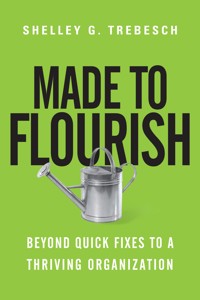
Every organization is made to flourish. But when problems arise, quick fixes and poor leadership training can drag it down. The key to a thriving team is to look below the surface at the hidden dynamics that can cause it to lose focus, turn inward or even cease to exist. Budget problems, personality conflicts, mission drift, government regulations—all these and more can tempt us to respond rapidly and superficially.Shelley Trebesch offers leaders the tools needed to develop practical solutions that actually work. She provides a model for getting a firm hold on the complexities inherent in any team. Diagrams help readers visualize key dynamics while vivid case studies illustrate how to put the book into practice.Here is the book that gives churches, NGOs, mission agencies, parachurch groups, other nonprofits, businesses and teams within these groups what they need. Trebesch charts the path to the life-giving, holistic, fruitful abundance that God intended for organizations and everyone in them.
Sie lesen das E-Book in den Legimi-Apps auf:
Seitenzahl: 276
Veröffentlichungsjahr: 2015
Das E-Book (TTS) können Sie hören im Abo „Legimi Premium” in Legimi-Apps auf:
Ähnliche














MADE TO FLOURISH
BEYOND QUICK FIXES TO A THRIVING ORGANIZATION
SHELLEY G. TREBESCH
To Mom and Dad,
who help me pursue flourishing.
CONTENTS
1 A Vision to Flourish
2 Languishing or Flourishing?: Predicting the Ripple Effects of Change
3 The ECO Model at Work
4 Flourishing People
5 DNA: The Life Force of Flourishing Organizations
6 Putting Your DNA to Work
7 The Discipline of Flourishing—Organization and Capacity Development
8 Making Organization Development Work for You
9 The Ecosystem of Flourishing—Culture
10 Making Culture Work for You
11 The Ecosystem of Flourishing—Structure
12 The Nuts and Bolts of Structure
13 The Future of Flourishing—Innovation and Entrepreneurs
14 Flourishing: A Daily Reality
15 One Organization’s Story
16 Flourishing Organizations
Acknowledgments
Appendix 1: Technical Aspects of Flourishing
Appendix 2: Flourishing Developmental Assessment Tool
Notes
Index
Praise for Made to Flourish
About the Author
More Titles from InterVarsity Press
Copyright
- 1 -
A VISION TO FLOURISH
Focus on Unreached Peoples (FUP) began when eight university graduates sensed God’s call to pray for, research and plant churches among unreached peoples. The organization grew steadily, eventually numbering four hundred people (along with support staff) serving in fifteen creative-access nations.
Thirty years into the work, FUP experienced a 25 percent decrease in all areas of the organization (personnel, finances, new frontiers, etc.). The decline began when forty missionaries living in two neighboring African countries were forced to evacuate due to civil war. Two missionaries were killed in the conflict before they were able to leave the country.
The thirty-eight missionaries were immediately redeployed, although some chose to leave the mission due to the trauma. Other missionaries were given assignments within the organization—mostly in leadership and administration—and some were reassigned to safer countries with strong Christian presences (mostly to offer support to already-existing churches). The civil war was rarely spoken of again; everyone seemed to forget and move on. As the personnel and resources in the organization continued to decline, the leadership made decisions to consolidate and assigned the few new workers to contexts where there were already personnel. They didn’t start work in any new countries.
Contributions continued to decrease along with the operating budget. Support staff were laid off. Missionary budgets had not been increased for ten years. The atmosphere in the organization was tense. Most sensed and promoted attitudes of scarcity, comparison and begrudged sharing, noticing “who got what.” Of course, everyone felt they did not have enough—and they probably didn’t.
New initiatives focused on fundraising and training staff for effective support development. Five years into the decline, the board hired a new CEO who had a track record for generating income. He did, but by this point morale was so low, money could not resolve the situation.
Here was a classic leadership challenge: the law of unintended, unexpected consequences. Obviously the well-intentioned organizational leaders of FUP needed to act quickly for the safety of the missionaries caught in the midst of civil war. Did they realize, however, that they were employing a quick fix? That their redeployment interventions would have the overall, long-term impact of a 25 percent decrease in all areas of mission and potentially jeopardize the vision for which FUP exists? That the impact of the redeployment of the trusted partners of the African nationals would be betrayal and distrust? That their financial partners would become skeptical and invest elsewhere?
Stop and Think
Consider your organization or team. Try to identify some “quick fixes” and notice their repercussions, their ripple effects.
Often, leaders initiate change in their organizations or teams as a reaction to an event, a response to crisis. New policies are written or new structures implemented with minimal projection toward consequences or future outcomes. Another common approach is for leaders to search for breakthroughs and pursue the latest fads, the strategies that seem to work in the “church down the street.” Many organizational changes happen in response to the symptoms of events—what is easily observable or seen. As previously stated, these are quick fixes. If an organization is to flourish, it has to go beyond quick fixes. It has to see more deeply and listen more intently.
Made to Flourish
What does it mean to flourish?1 One definition is “to live within an optimal range of human functioning, one that connotes goodness, generativity, growth, and resilience.”2 Not surprisingly, the opening chapters of Genesis also offer a sense of what flourishing means.
Then God said, “Let the earth put forth vegetation: plants yielding seed, and fruit trees of every kind on earth that bear fruit with the seed in it.” And it was so. . . . And God said, “Let the waters bring forth swarms of living creatures, and let birds fly above the earth across the dome of the sky.” . . . Then God said, “Let us make humankind in our image, according to our likeness; and let them have dominion over the fish of the sea, and over the birds of the air, and over the cattle, and over all the wild animals of the earth, and over every creeping thing that creeps upon the earth.” . . . God blessed them, and God said to them, “Be fruitful and multiply, and fill the earth and subdue it; and have dominion over the fish of the sea and over the birds of the air and over every living thing that moves upon the earth.” (Gen 1:11, 20, 26, 28)
Jesus also envisions flourishing in Luke’s Gospel when he references Isaiah 61:1-2.
The Spirit of the Lord is upon me,
because he has anointed me
to bring good news to the poor.
He has sent me to proclaim release to the captives
and recovery of sight to the blind,
to let the oppressed go free,
to proclaim the year of the Lord’s favor. (Lk 4:18-19)
Flourishing is also our ultimate hope as pictured in the book of Revelation.
Then I saw a new heaven and a new earth; for the first heaven and the first earth had passed away, and the sea was no more. . . .
“See, the home of God is among mortals.
He will dwell with them;
they will be his peoples,
and God himself will be with them;
he will wipe every tear from their eyes.
Death will be no more;
mourning and crying and pain will be no more,
for the first things have passed away.” (Rev 21:1, 3-4)
God created the world and all of us in it to flourish. Jesus came to restore flourishing to a broken world and to point us in that direction before God finally rights all wrongs and accomplishes fully what he initially set out to do at creation.
When we flourish, we experience emotional, psychological and social well-being. We are full of life—peaceful, cheerful, satisfied and productive.3 We accept ourselves as we are, knowing our strengths and weaknesses. We engage challenges, enjoy learning and embrace an overall sense of purpose. We expect our days to be useful and hopeful. Flourishing people have strong relationships and connectedness to community, contributing as well as receiving. They are curious about differences and suspend judgment for optimized learning. Sound appealing? Sound like what God might intend life to be?
Humans—created in God’s image—are meant to flourish, and in that flourishing, they learn and become cocreators with God.4 In flourishing environments, we pursue meaning and purpose. We innovate and adapt to adjust in new situations or when faced with challenges. Organizations oriented toward the kingdom of God, whether churches, NGOs, mission agencies, other nonprofits or businesses, ultimately should flourish. In other words, in a flourishing organization or team, everything and everyone is thriving.5
What does that look like? Organizations are communities of people called together for a purpose. Christian organizations—churches and companies—exist for the greater purposes of God’s kingdom. They live and work in God’s freedom-producing, life-giving, holistic reign, experiencing the wildness, adventure, fruitfulness and abundant life of God’s kingdom while inviting others to do so as well.
Flourishing organizations are thrilling in that they pursue meaningful, kingdom-of-God-oriented purposes. They make a difference in society and individual lives. A called community that participates in God’s mission is unique. The way it participates in the kingdom and partners with God for kingdom purposes is as individual as human beings themselves, and it must live this uniqueness to demonstrate the full breadth of God’s image. Ultimately, Christian organizations should be flourishing and thriving because that reflects their Creator’s image.
Flourishing organizations are
vibrant, reproducing, kingdom-of-God communitiescalled together to live in God’s reign and join God’s mission to proclaim and live in his kingdom and to, by God’s enabling grace,pursue their unique, God-given purpose andproduce God’s vision of the futurewhile creating an environment where individuals thrive.Flourishing organizations are fun, satisfying, safe environments in which individuals are restored and embrace transformation into the image of Christ. They live the authentic Jesus life—attractive, joyful, contagious.
Quick Fixes
All too often, however, that’s not how leaders think about organizations, especially when problems or crises arise. That’s what happened to the leaders of FUP. Their approach of using quick fixes is all too common. They rapidly employed reactionary solutions to correct a situation. Quick fixes by definition lack research and analysis and therefore a deep awareness of the complexity inherent in every organization, department or team. Ronald Heifitz and Marty Linsky call these technical changes or solutions because they are based on know-how that already exists.6 Quick fixes may give the initial appearance of relieving the problem in the context of crisis, but in a matter of time the same (or new) problems surface again.
Quick fixes are often faddish. We see a strategy working in another organization, so we are tempted to try it out in our own context—even though our situation may be very different. As a result, the outcome is often disappointing. Researchers working with Jim Collins found that “no single defining action, no grand program, no one killer innovation, no solitary lucky break, no miracle moment” would lead an organization to greatness.7 Therefore, the hard work of comprehensive research and discernment is necessary before leaders intervene with organizational change.
Another issue can make it difficult for organizations to flourish. After over twenty-five years of starting, leading, growing and consulting in numerous organizations, often internationally, I continually see leaders with little, if any, leadership training. Rather, they are called to captain their organizations or teams because of their character and frontline experience in other contexts. Full of good intentions and a lot of energy, such leaders still find their troubles outweighing their successes. The complexities of the venture can be overwhelming.
Made to Flourish brings to light the mysteries and complexities of organizational leadership and offers overall perspective for those who lead organizations who want to accomplish kingdom-of-God purposes. Made to Flourish encourages “adaptive leadership, . . . the practice of mobilizing people to tackle tough challenges and thrive.”8
The structure of Made to Flourish is straightforward and can be read as a whole or in parts based on the challenges you face. Chapter two introduces a model (the Ecology of Organizations, ECO) for flourishing organizations, while subsequent chapters explore the components of this model in-depth. Beyond chapter two, each chapter includes three elements: (1) live case studies that illustrate common quick fixes, (2) presentations of an aspect of organizational dynamics that promotes flourishing, and (3) effective best practices and exercises related to the dynamic being explored.
It is my prayer that Made to Flourish will help you and your teams listen and think deeply about your organization, beyond the quick fixes, and thus call forth life. It is my hope that as a result your organization will flourish.
- 2 -
LANGUISHING OR FLOURISHING?
Predicting the Ripple Effects of Change
Campus by the Sea, a camping facility run by InterVarsity Christian Fellowship on Catalina Island off the coast of Southern California, had a problem.1 Rattlesnakes had been on the island for time out of mind. In the mid-1930s, some enterprising folk brought in wild pigs to keep the snake population under control. The plan worked great. Fewer snakes.
But then the wild pigs started to roam all over, invading campgrounds and other areas. So some enterprising folk used a dog, Cinder, to keep the pigs at bay. The plan worked great. Fewer pigs.
But Cinder left lots of little presents lying around, making things very unpleasant for guests at the campground. So some workers were given the task of cleaning up after the dog. The plan worked great. Fewer little presents from Cinder for people to step in.
But then the pigs got the better of Cinder. Within weeks of Cinder’s retirement, the pigs were back.
All of this took place over the course of decades, with each group of leaders not fully aware of what previous groups had done before to solve the problems. Many lessons could be learned from this tale, I’m sure, not the least of which is that a judicious knowledge of the history of your enterprise can come in handy. It also illustrates the law of unintended consequences. We fail to foresee what might result from certain decisions we make.
Figure 2.1. Direct cause and effect
Organizational leaders, especially from the West, tend to view events as linear cause and effect (see figure 2.1).2 Educational systems have taught them that a cause produces an effect. In reality, however, the effect becomes another cause, which produces another effect. This produces another cause, which produces another effect and so on. Like the problem at Campus by the Sea with the snakes that produced a problem with pigs that produced a problem with a dog, events are never purely linear—an effect becomes a cause and then an effect, in more of a circular fashion. In systems thinking, this is called a cause-effect loop (see figure 2.2).
Figure 2.2. A cause-effect loop
When we receive information about an experience that indicates a need for change, we take actions, which produce particular results. But reality is not linear as figure 2.3 portrays. New information based on the results leads to actions, which lead to further results. It’s more like a circle than a straight line, more like a never-ending spiral. More like figure 2.4. When we analyze in a systems mindset, reality encompasses the past, present and future.
Figure 2.3. A straight-line model
As we know, only 10 percent of an iceberg is above water; 90 percent is below. Likewise, when we analyze an event, we must discern the unseen interrelationships and connections, keeping in mind the past and present, and projecting toward the future. To move beyond quick fixes toward flourishing (that is, effective growth, change and development), organizational leaders must seek to reveal and understand the 90 percent of the organization that is below the surface, beyond the obvious events. To prevent quick fixes, they must understand the inner connections and inner relationships present in the organization—the cause-effect loops.
Figure 2.4. A circular model
The model I present in this book for understanding these loops and the 90 percent below the surface is called the Ecology of Organizations (ECO). It shows inner relationships and connectedness so that leaders can trace influence and predict repercussions. That’s how we move away from quick fixes. I use the word ecology to convey that the cause-effect nature of organizations is, by definition, organic and not mechanical. Organizations are not machines. You don’t pull a lever at one end and get a gizmo at the other. Organizations are active, dynamic organisms that need nurture and care, that are affected by both their DNA and by their environment. Organizations entail many complex, interactive processes that are often not easily quantifiable.
Yet even in growing and changing organisms like plants and animals, there are repeated cycles of growth, producing fruit and dormancy—or of birth, growth and death. Likewise, following the connections in cause-effect loops is a process we can repeat, enabling us to observe, interpret and intervene, which is the essential process of adaptive leadership.3
Regarding FUP (Focus on Unreached Peoples) that we met in chapter one, for example, what impact did the change in organizational structure (redeployment) have on its vision and mission? Did the structural change promote or hinder the vision? Did the change align with FUP’s values? How did the change in policy (redeployment to safer countries) affect the morale or experience of members in the organization? Or of the Africans who remained in their home countries during the turmoil? Did it enable them to flourish and participate meaningfully in the mission? As a good garden needs the right balance of ingredients (water, soil, sunlight, fertilizer, weed control and more), so a flourishing organization requires the right balance of ingredients, each of which is a cause-effect loop of constant movement and feedback.
Vision and Mission
In the rest of this chapter I will build the ECO model piece by piece until we have the whole. We will then look at each of the pieces in more detail in subsequent chapters.
Let’s start then with the first piece, the vision and mission loop (figure 2.5). This lies in the center, at the heart of the organization. Mission and vision impact everything that happens in the organization. At the same time, what happens in the organization also impacts the mission and vision. It is not just one way. For example, structural changes without reference to the mission and vision of an organization may impact them negatively and over time cause the mission and/or vision to drift. The organization may not accomplish the outcomes for which it exists. In chapter five I will say much more about vision and mission, helping distinguish these two terms that are sometimes equated with one another. But I don’t want to slow us down with that at the moment. Let’s move on to the next piece of the ECO model.
Figure 2.5. The vision and mission loop
Internal Paradigms
The next cause-effect loop consists of faith assumptions and values, what I call the internal paradigms loop because it represents controlling mindsets that inevitably influence decision making and actions (see figure 2.6). These are the unseen (internal) factors that influence external actions. Faith assumptions are biblical and theological truths that provide foundation for the organization and influence organizational decision making and actions. Examples might include the following:
God transforms lives.Individuals contribute to the whole by using their gifts.All people/nations must have the opportunity to hear the gospel.Figure 2.6. The internal paradigms loop
Values are standards or principles that cause us to make decisions or act the way we do. They describe what matters most: the kind of people we are, the type of work we do and how we behave as we do the work. They determine our behavior—and, as we’ll see in the coming sections, our behaviors influence our values.
In terms of the movement in the cause-effect loop, faith assumptions tend to create, produce, strengthen and influence values. Likewise, values have similar effects on faith assumptions. This sometimes hidden cause-effect loop affects people, for example, more visibly through policies and procedures. Chapter five will discuss in more detail how this loop interacts with the vision and mission loop.
The Organization Action Loop
While vision and mission as well as faith assumptions and values can sometimes be hard to detect, members of an organization are often very aware of what goes on in the organization action loop (figure 2.7). Organizational dynamics and experiences make up this loop and include policies, procedures, governance, structure and the like. These enable an organization to function efficiently and accomplish its purpose. Policies and procedures might include the following:
Assessments—evaluation, feedback and plans for development regarding people’s workHuman resources policiesBudget and planning processesDelivery of ministry or servicesFigure 2.7. The organization action loop
These dynamics then influence the other part of the loop: the experiences of people. These are the events and practices that influence and shape people within organizations. For example, suppose an organization has an effective overall development and training process that includes thorough orientation, initial training that equips members to do the mission and accomplish the vision, yearly developmental reviews and planning, and ongoing training that further develops and refines members in their selected career paths. Presumably then, members experience growth and development, which further strengthens the organizational dynamics related to people development. In chapter seven we will consider the organization action loop in more detail.
Ultimately, internal paradigms and organizational actions are not inanimate objects, and neither is an organization. It is a living system. Internal paradigms are embedded in people. Organizational actions are designed and carried out by people—individuals and leaders. Therefore, the Ecology of Organizations fully connects around people—which is the cause-effect loop highlighted next.
The People Loop
We began by saying that vision and mission are at the center of the organization. In purposeful, flourishing organizations, leaders and individuals connect with and live the vision and mission (see figure 2.8). Vision and mission are not just nice statements printed on posters. They are the reasons for which God called the organization into existence. Therefore, vision and mission should be innate aspects of every member of an organization. However, consider the cause-effect aspect of the loop. If leaders and individuals do not live the vision and mission, if they do not replicate the vision and mission in new generations, over time the vision and mission will change and so will, inevitably, the organization. This “drift” may propel the organization into a state where it exists for itself but not its God-given purpose.
Figure 2.8. The people loop
J. Robert “Bobby” Clinton defines leadership as “a dynamic process in which a man or woman with God-given capacity influences a specific group of God’s people toward His purposes for the group.”4 Leaders are influenced by the organization’s vision, mission, faith assumptions and values. As a result they create experiences and organizational dynamics. These in turn influence individuals and strengthen or establish faith assumptions, values, vision and mission. Leaders are key in organizations since their actions (flowing from faith assumptions and values) create organizational culture, structures, procedures, policies and so forth. They are often the initiators of experiences that cause individuals in the organization to grow and develop.
Individuals have an effect on the loop too. In healthy organizations, change is initiated by the grassroots as well as by the leaders. When people are influenced by the organization’s vision, mission, faith assumptions and values, they then create organizational dynamics and experiences that influence leaders. That in turn strengthens or establishes their vision, mission, values and faith assumptions. The cause-effect loop flows in both directions, and individuals and leaders both influence the whole organization.
Often those in difficult situations who are not in leadership feel powerless to affect their situation or bring change to the whole. However, in a living organism, every part influences the whole. As Paul said in 1 Corinthians 12,
The body does not consist of one member but of many. If the foot would say, “Because I am not a hand, I do not belong to the body,” that would not make it any less a part of the body. And if the ear would say, “Because I am not an eye, I do not belong to the body,” that would not make it any less a part of the body. If the whole body were an eye, where would the hearing be? If the whole body were hearing, where would the sense of smell be? But as it is, God arranged the members in the body, each one of them, as he chose. If all were a single member, where would the body be? As it is, there are many members, yet one body. The eye cannot say to the hand, “I have no need of you,” nor again the head to the feet, “I have no need of you.” On the contrary, the members of the body that seem to be weaker are indispensable, and those members of the body that we think less honorable we clothe with greater honor, and our less respectable members are treated with greater respect; whereas our more respectable members do not need this. But God has so arranged the body, giving the greater honor to the inferior member, that there may be no dissension within the body, but the members may have the same care for one another. If one member suffers, all suffer together with it; if one member is honored, all rejoice together with it. (1 Cor 12:14-26)
The ECO model (figure 2.9) reveals connections and demonstrates that even a small change or life-producing action infuses the whole organization—even when people feel they have no power or cannot readily observe their influence.
Figure 2.9. The Ecology of Organizations (ECO) model
Context
Admittedly, introducing the ECO model in a book has two-dimensional limitations. But imagine the picture as three-dimensional, interlocking, interinfluencing loops, much like a gyroscope. All the loops connect to and influence the whole. What happens in one loop impacts all the loops, the whole, like a child’s hanging mobile. This “whole” represents an organization—with its people (leaders and individuals), mission, vision, faith assumptions, values, organizational dynamics (structure, policies and procedures) and the rest.
Of course the organization exists in a context; therefore, not only do the parts (the inner cause-effect loops) influence the whole, the context influences the organization and the organization influences the context (yes, another cause-effect loop!). Influences, of course, can either be positive, negative or neutral. Economic downturns, natural disasters and government regulations, all beyond an organization’s control, nonetheless impact the organization and require the organization’s response. As we saw in chapter one, a civil war in two neighboring African countries dramatically influenced FUP. Figure 2.10 shows the ECO model in its environment.
Figure 2.10. The influence of environment on an organization
That organizations exist in a particular context is a given, a fact. The level of connection between the environment and the organization, however, depends on the organization and particularly on its DNA (mission, vision, faith assumptions and values—to be addressed in chapter five) and therefore, practices. Growing, reproducing—that is, flourishing—organizations deeply connect with their contexts so as to bear witness to the kingdom of God in a way that matters. They flex, innovate and adapt in order to remain responsive and influential in their contexts, even when there are changes in technology, cultural values and international politics. In fact, flourishing organizations thrive in the midst of difficult contextual realities because they remain vision centered and connect with the opportunities in crises.
When leaders are aware of the total range of dynamics at work in an organization, they can get below the surface and deal with problems and crises in a way that avoids the quick fixes—and all their unintended consequences. Perhaps you have a repeating dilemma in your organization—a problem that persists regardless of the interventions that have been brought to bear on it. Applying the ECO model to your organization’s history brings greater insight, allowing you to understand the inner dynamics, which may suggest more fruitful interventions.
Stop and Think
Take a minute to note down problems in your organization that persist regardless of applied interventions. Regarding the problem, which cause-effect loop seems to be most in play? Notice this loop’s connectedness to the other loops in the ECO model. How are they affected?
This chapter has had a lot to absorb in a short span, but I wanted to give an overview of where we were going before we looked in depth at each of the parts. Before we do that, however, let’s take a look at how the ECO model applies in the case study we’ve been considering—Focus on Unreached Peoples. That’s what’s ahead in the next chapter.
- 3 -
THE ECO MODEL AT WORK
Because the civil war made for an unsafe situation, the leaders of Focus on Unreached Peoples (FUP), which we were introduced to in chapter one, redeployed workers in safer countries with strong Christian presences. When revenue fell, they then consolidated personnel and ceased opening up work in new countries. Hoping to reverse the decline in personnel and funding, eventually staff received more training for support development.
All of these changes were quick fixes that didn’t look into deeper issues. More than that, going back to figure 2.10, we can see that all the changes the leaders made were also part of the organizational dynamics and experiences cause-effect loop. They made structural and training changes, none of which were effective in stopping the decline.
The board made one more intervention, however. It hired a new CEO, part of the people cause-effect loop. It seems, however, that this intervention likely would not help the organization get back on track because of the reasons for which the CEO was hired—to generate income, not to address the vision, mission, faith assumptions and values. We don’t know whether the new CEO had the organization’s DNA; it may have even been difficult to know what the DNA was at this point in its crisis-clouded history. Inherently he did, however, have his own faith assumptions and values, which would have had an overall effect on FUP.
What would have happened if organizational leaders had used the ECO model or paused to analyze the ripple effects of their decision making on the whole organization and its future?
Let’s begin by analyzing the first intervention, the redeployment of missionaries in safer, already Christianized countries. This became something of a long-term strategy. The leadership didn’t consider how this change in structure and strategy might affect other cause-effect loops. They failed to ask what impact the decision would have on the mission “to pray for, research and plant churches among unreached peoples.” Nor did they consider what the decision revealed about the organization’s faith assumptions and values. Had those assumptions and values changed in a way that led to the redeployment decision? Did the organizational leaders anticipate the ripple effects (cause-effect loops) their decisions would have on various contexts, such as the locals in the two African nations they had worked in as well as the prayer and financial partners connected to the forty missionaries?
When the first intervention brought less-than-satisfying results, other interventions were made in organizational dynamics and finally in the people loop by hiring a new CEO. All interventions addressed surface issues, the events easily observable and easily changed. Yet the deeper issues of mission and vision—for what and for whom did FUP exist?—and faith assumptions and values remained unexamined in the crisis and in the years to come.
While the FUP case study is fictional, it demonstrates all-too-common propensities in organizations. First, FUP did not replicate its DNA, by which I mean the combination of faith assumptions and values along with vision and mission (something we’ll look at in more detail in chapter five). God calls organizations and communities into existence for a purpose. This purpose must be fulfilled. This story must be told. The mission, vision, faith assumptions and values must be passed on to new generations. If that DNA is lost, the organization ceases to flourish.
Second, not surprisingly, the superficial or reactive decisions—the quick fixes—just didn’t work. Insightful and effective interventions require analysis and study of the repercussions of decisions. We must understand the effects in every aspect of the organization and project these effects toward the future. The purpose of this book is to unpack the ECO model, because I have seen how helpful it can be in facilitating this process.
Anticipating Change
While many changes in the organizational context are straightforward and make use of well-known solutions, other changes require deeper research, collaboration and experiments in order to address adaptive challenges.1 The ECO model helps us understand inner dynamics so we can apply adaptive solutions—changes that can affect the whole organization in fundamental, positive ways.
Practically speaking, many factors may indicate a need for organizational change; for example, the need to respond to opportunities related to the vision, implementing new strategies that can enable the mission to be achieved, or the presence of cumbersome procedures that block efficient and effective pursuit of the vision.
Acme Christian University began eighty years ago as a mission school focused on sending people overseas to plant churches and establish hospitals.2 That bent toward activism has continued to be part of the fabric of the institution even as it has grown into a full-fledged university. Teachers and staff have been attracted to the university because its mission and ethos are active and productive. Everyone works long hours, accomplishes a lot and is energized by the camaraderie of the work. But now the HR department has reported to the administration that in the last four years there has been a marked increase in attrition.




