


18,99 €
Mehr erfahren.
- Herausgeber: John Wiley & Sons
- Kategorie: Geisteswissenschaft
- Sprache: Englisch
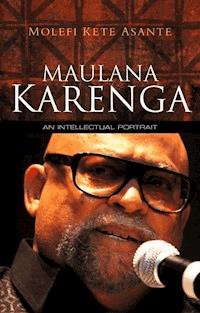
In this book, the most prolific contemporary African American scholar and cultural theorist Molefi Kete Asante leads the reader on an informative journey through the mind of Maulana Karenga, one of the key cultural thinkers of our time. Not only is Karenga the creator of Kwanzaa, an extensive and widespread celebratory holiday based on his philosophy of Kawaida, he is an activist-scholar committed to a "dignity-affirming" life for all human beings. Asante examines the sources of Karenga's intellectual preoccupations and demonstrates that Karenga's concerns with the liberation narratives and mythic realities of African people are rooted in the best interests of a collective humanity.
The book shows Karenga to be an intellectual giant willing to practice his theories in order to manifest his intense emotional attachment to culture, truth and justice. Asante's enlightening presentation and riveting critique of Karenga's works reveal a compelling account of a thinker whose contributions extend far beyond the Academy. Although Karenga began his career as a student activist, a civil rights leader, a Pan Africanist, and a culturalist, he ultimately succeeds in turning his fierce commitment to truth toward dissecting political, social, and ethical issues. Asante carefully analyzes Karenga's important works on Black Studies, but also his earlier works on culture and his later works on ethics, such as The Husia, and Odu Ifa: The Ethical Teachings.
Sie lesen das E-Book in den Legimi-Apps auf:
Seitenzahl: 332
Veröffentlichungsjahr: 2013
Ähnliche



















MAULANA KARENGA
This book is dedicated to members of the Us, who heard these ideas long before any of us recognized the significance of Maulana Karenga’s cultural project.
MAULANA KARENGA
AN INTELLECTUAL PORTRAIT
MOLEFI KETE ASANTE
polity
Copyright © Molefi Kete Asante 2009
The right of Molefi Kete Asante to be identified as Author of this Work has been asserted in accordance with the UK Copyright, Designs and Patents Act 1988.
First published in 2009 by Polity Press
Polity Press
65 Bridge Street
Cambridge CB2 1UR, UK
Polity Press
350 Main Street
Malden, MA 02148, USA
All rights reserved. Except for the quotation of short passages for the purpose of criticism and review, no part of this publication may be reproduced, stored in a retrieval system, or transmitted, in any form or by any means, electronic, mechanical, photocopying, recording or otherwise, without the prior permission of the publisher.
ISBN-13: 978-0-7456-5933-6
A catalogue record for this book is available from the British Library.
Typeset in 10.75 on 14 pt Adobe Janson by Servis Filmsetting Ltd, Stockport, Cheshire Printed and bound by MPG Books Group, UK
The publisher has used its best endeavours to ensure that the URLs for external websites referred to in this book are correct and active at the time of going to press. However, the publisher has no responsibility for the websites and can make no guarantee that a site will remain live or that the content is or will remain appropriate.
Every effort has been made to trace all copyright holders, but if any have been inadvertently overlooked the publishers will be pleased to include any necessary credits in any subsequent reprint or edition.
For further information on Polity, visit our website:www.politybooks.com
CONTENTS
Foreword by Ama Mazama, Temple University
Preface
Acknowledgements
1 Karenga and the Drawing of Cultural Grounds
2 The Cultural Narrative
3 Controlling Intellectual Territory
4 Creating Historical Possibilities
5 Implementing the Lessons
Notes
Bibliography of Key Writings
References
Index
FOREWORD
Only five intellectual movements among African Americans in the last century have been fully transformative: Marcus Garvey’s pan-African movement, Martin Luther King’s civil rights movement, Elijah Muhammad’s religious nationalism, Maulana Karenga’s Kawaida, and Molefi Kete Asante’s Afrocentricity. In the sense that these intellectual and activist traditions have been at the forefront of changing the operational, social, religious, legal, or symbolic nature of the African American community, they have been transformative.
These movements have been articulated alongside, almost parallel to, the general revolutions in the history of American social science. The first movement, that is, Garvey’s pan-Africanism, operated along the lines of the industrial revolution for the production of commodities, inasmuch as Garvey’s principal concern was not “back to Africa” but the industrial and commercial development of African people. King was concerned with the projection of African Americans as “integrated” into the White American society and social structure, with little or no attention to culture; Muhammad sought to change the rhetoric of integration to what he saw as the inevitable separation of Blacks and Whites brought about by the overwhelming nature of Christian racism. Separation, which already existed in segregated situations, was seen as a necessity for survival. It was left to Kawaida and Afrocentricity, which came along during the time of the mass technological revolution for the production of culture, to appreciate the possibility of the transformation of African Americans in such a way that place, situation, or location could only be minimized so long as the people themselves were located in the center of their own history. These movements understood that the transformation of the mass of the people depended upon the symbolic environment itself. This is the beginning of the meaning of Kawaida, culture, tradition, and reason, for African people. Kawaida preceded Afrocentricity but anticipated it in much the same way as Harold Cruse had anticipated Kawaida, or the necessity for it, with his call for a revolutionary African American ideology.
Maulana Ndabezitha Karenga undertook the task of discovering in the crevices of African history the particular forces that represented strengths. He could do this only by a thorough reflection of the nature of the African American historical situation. What was it that Karenga found in African American history that prompted the Kawaida solution? This monograph, by one of the major contemporary scholars of African history and culture, makes the first serious probe into the concrete intellectual ideas of Maulana Karenga as a contribution to the advancing revolution in the way African people view themselves. Molefi Kete Asante has compressed an enormous amount of information from Karenga’s corpus to place him in the proper historical and scholarly context of his times.
When not adequately reinforced by the political and social instruments that govern interpretation, explanation, and evaluation, the intellectual faces numerous challenges to both historical actions and cultural artifacts that exist as a part of a person’s comprehensive work. Asante has grappled with the national and international forces that created the cultural transformative ideas of Maulana Karenga to bring us the first real discussion of his intellectual contribution. One of the main international advances he makes is to cast Karenga’s work in a larger than African American context. Asante sees Karenga as using the foundations of the best African traditions, not simply African American, as a way to grasp the entirety of the African’s response to five hundred years of European domination.
African Americans have frequently been outside of the main institutions in the United States that convey historical moment, such as the libraries, museums, media corporations, and major educational research centers. These are the instruments that define a people’s history for posterity. However, there have always been memory-keepers, the oral traditions, the speeches, the tapes, the videos, the music, and the lay teachers to remind us of our legacies. Thus it is important, as Asante implores the reader, to remember what the cultural situation was immediately before Kawaida came into existence as a new philosophical reality for African people.
Ama Mazama
PREFACE
I am a child of the 1960s in terms of my orientation, convictions, inclinations, and aspirations for humanity. In the most iconic of ages, Maulana Karenga has, against the odds, done what most humans have not done and cannot do. He has carved out of the anonymity in which we are all born and the ambiguity of our complex times a persona that captures the juncture between the end of one age and the beginning of another.
My first memory of Maulana Karenga was his voice, urgent and unique, on audio tapes distributed by friends and colleagues and played on Wollensaks players to knots of students at UCLA. I did not know him personally during the 1960s, but I was more than aware of the power of his rhetoric and the magnetism of his ideas. The role destiny seems to have in our lives is remarkable because several events would later bring about a convergence of our actions and intellectual involvements in the African world. From 1969 to 1973 I was the director of the Center for African American Studies at the University of California, Los Angeles, having been selected for the post by a coalition of community groups and university administrators. I became the editor of the Journal of Black Studies and started publishing scholars in the field with an eye toward creating a discipline out of the aggregation of courses that had emerged across the nation in various departments. Subsequently, in late l973, I moved to the State University of New York at Buffalo as head of the Department of Communication.
Once away from California, with time to assess the impact of the radical emergence of young African American leaders such as Maulana Karenga, Bobby Seale, Kwame Ture, and H. Rap Brown, I also took the occasion to familiarize myself with their writings and speeches. I knew most about the leaders of the Student Nonviolent Coordinating Committee because, as a student at UCLA in the late 1960s, I had been president of our UCLA chapter. During the time I was heading the Center for Afro American Studies I was a friend to many members of the organization Us and of the Black Panthers. Indeed, some of the cadres that worked in my office and received funding as researchers were student members of these two groups. Nevertheless, it was only at Buffalo that I came to know Karenga’s true essence as an intellectual leader. On more than one occasion I heard him lecture in upstate New York and engaged him in conversation around culture and transformation.
By 1977 Karenga had become an international African leader. The Nigerian government invited him to the FESTAC (Festival of Black and African Arts and Culture) in Lagos, which he attended as the head of the African American colloquium delegation. It was at this colloquium where I saw him give one of the most brilliant lectures I had ever witnessed on the state of African Americans, and I decided I should make a thorough study of the contours of his cultural work. His impact across the African world was immediate and powerful, causing the numerous delegations from Africa, the Caribbean, and the Americas to admire his ability to articulate problems in political thinking and cultural actions and to propose solutions to African issues. During the colloquium, Karenga was instrumental in creating a radical caucus to present a collective progressive view of projects developed by African Americans, Cubans, Brazilians, Ethiopians, Somalis, Afro-British, and the Blackfellows of Australia. After the conference, Radio Nigeria and Radio Guinea played Karenga’s colloquium presentation for nearly a month.
Ten years or so later Karenga and I met at the meeting in Dakar, Senegal, of the International Committee of the Third Festival under the direction of the Senegalese scholar Pathé Diagne. At this conference of nearly fifty international African scholars Karenga and I were among the small African American delegation of five people, including the filmmaker Haile Gerima from Howard University. The conference resolutions reflected the arguments that we both had made for the need to transcend the categories that had been defined by Eurocentric thinkers for Africa. It was a victory of monumental proportions considering the heaviness of Eurocentricity in the minds of many African people. Karenga was elated and so was I; we rejoiced in the fact that we had been able to bring the Cubans, Brazilians, Jamaicans, Guineans, Nigerians, and other African populations to the side of a radical revivification of African thought and to lay the basis for further cooperative work.
Therefore this monograph is a small volume intended to introduce the reader to some of the more important philosophical ideas of Maulana Karenga. This is not a biography; it is an attempt to gain a clearer appreciation and understanding of Karenga’s ideas, particularly those that have so changed the Black community over the past forty years. I have spared neither criticism nor praise, but have avoided a hagiographic look at his work. Nevertheless, I have provided the reader with ample clarifications, documentary references, and possible lines of argument and counterarguments should one seek to know more about the intellectual origins and contours of Karengean thought, i.e., Kawaida philosophy.
ACKNOWLEDGEMENTS
Maulana Ndabezitha Karenga is an intellectual and political activist who is always at work, writing, speaking, editing, teaching, and consulting; the fact that I have been able to spend time with him on occasion is due to his constant companion and partner in life and all things beautiful, Tiamoyo. I am grateful for her support and vigilance in protecting the legacy of her husband’s work. She is a scholar and leader in her own right. I want to acknowledge Maisha Ongoza, the chair of the Philadelphia chapter of Us organization for her witness, strength, and resilience in interpreting Kawaida. I also acknowledge the Brooklyn chair of Us, Dr Segun Shabaka, for his work in making available contextual information. Dr Ama Mazama and Dr Lewis Ricardo Gordon, both of Temple University, have been discussants and critics, supporters and interpreters, along my way. I thank them for their useful work. I owe a special debt to Professor M. K. Asante, Jr, of Morgan State University, whose film The Black Candle has pushed me to complete this project ahead of schedule. He is an incredible son and a brilliant filmmaker. I acknowledge him and his work on the Kwanzaa project. I owe my wife, Ana Yenenga, credit for making my life wonderful, joyous, and free of mundane stresses as I have worked, sometimes all night, on completing this project.
1
KARENGA AND THE DRAWING OF CULTURAL GROUNDS
Maulana Karenga is the preeminent African American cultural theorist and one of the towering figures in the science of social and cultural reconstruction of our era. There are no peers to his influence in shaping a cultural discourse that has become a stable of African American tradition. In fact, no single individual thinker has, without media promotion and American mainstream endorsement, molded intellectual discourse and shaped the African American cultural agenda as has Karenga. His reputation rests on his intellectual range and productivity, his achievements as a scholar-activist, and the urgency of his arguments for human dignity. Although it can be claimed that his preeminent position stems from his charismatic presence and his political organization, this is only a part of the narrative of effectiveness in his work. He is celebrated as an orator, a leader and an activist, to be sure, but it is in the quality of his thought about culture, community, and ethics and the breadth of his knowledge of African history and society that one sees the clarity and immense range of Karenga’s intellectual topography. Like all original thinkers, Karenga has studied a vast number of traditions and is a master of the close reading of texts from various cultures and eras. He has explored the writings and works of Emmanuel Levinas, Jacques Derrida, and Michel Foucault as well as contemporary African philosophers such as Kwasi Wiredu, Kwame Gyekye, Lewis Gordon, and Cornel West, but his engagement with culture and community relies more squarely on the historical and ethical experiences of African people. This has given his writings a kind of discursive power that is rare among modern scholars. He is as comfortable discussing Khunanup, Orunmila, and Amenomope as he is Aristotle or Confucius, although he rarely strays from his principal subject, the recovery and reconstruction of African culture – continental and diasporan (Karenga, 2006a, 2003, 1999). Engaging the contemporary political and public policy debates in the United States, the Darfur crisis in Sudan, or global justice, Karenga shows an easy grace in moving from one subject to the next with insight and wisdom (Karenga, 2008a). Thus, while he is able to discuss numerous subjects, he is best when he uses those themes to highlight his own important work in the field of Africology. If there is one characteristic of his writing and speaking that marks him as unique among his peers, it is his original capacity to grasp the core of any argument and to present that argument succinctly and in such a way that his eventual dissecting of it seems effortless. As I hope to demonstrate, this ability is characteristically Karenga and is grounded in his hermeneutic style of argument, which he defines as “a language and logic of liberation” (ibid., p. 8). Taking Malcolm X’s (1968:133) appeal for a distinction between “the logic of the oppressed” and the “logic of the oppressor” as a point of departure, Karenga sees Malcolm’s call for a “liberational logic” as also a call for a “liberational language” (2008a, p. 8). Thus he writes that “thinking freely requires a language of freedom. The catechism of impossibilities of the established order can only be broken if we have a liberational language which opposes and overcomes it. Likewise, only with the engagement of a liberational language and logic can we break through the conceptual imprisonment that an inadequate or constraining language imposes on us” (ibid.). Given this reasoning, Kawaida and Karenga place great emphasis on language, logic, and definitions.
Lesen Sie weiter in der vollständigen Ausgabe!
Lesen Sie weiter in der vollständigen Ausgabe!
Lesen Sie weiter in der vollständigen Ausgabe!
Lesen Sie weiter in der vollständigen Ausgabe!
Lesen Sie weiter in der vollständigen Ausgabe!
Lesen Sie weiter in der vollständigen Ausgabe!
Lesen Sie weiter in der vollständigen Ausgabe!
Lesen Sie weiter in der vollständigen Ausgabe!




