


16,99 €
Mehr erfahren.
- Herausgeber: John Wiley & Sons
- Kategorie: Geisteswissenschaft
- Sprache: Englisch
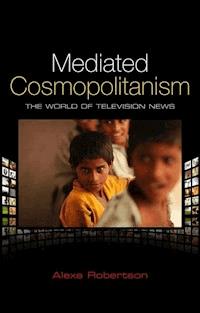
Media power in the global era has to do with how people understand the world, their place in it, and their relation to the others who populate it. Making connections with distant places and people is the work of cosmopolitan imagination, which involves seeing the world through the eyes of others. In this book, Robertson engages with the growing literature on cosmopolitanism to address these issues, combining theoretical debates with an innovative empirical portal. Based on the analysis of over 2000 news reports broadcast on national and global channels and interviews with journalists and audience members, Mediated Cosmopolitanism illustrates that the same everyday stories about the world can take on different meanings in different cultures. It argues that if we are to understand how media actors may help people to make the connections that underpin a cosmopolitan outlook, attention must be paid to evidence that some actors may not, and that national broadcasters could be more active agents of cosmopolitanism than global channels.
Accessibly written, the book will be essential reading for advanced undergraduate and masters students, particularly of media studies, but also of sociology, politics and international relations.
Sie lesen das E-Book in den Legimi-Apps auf:
Seitenzahl: 316
Veröffentlichungsjahr: 2013
Ähnliche



















Mediated Cosmopolitanism
Mediated Cosmopolitanism
The World of Television News
ALEXA ROBERTSON
polity
Copyright © Alexa Robertson 2010
The right of Alexa Robertson to be identified as Author of this Work has beenasserted in accordance with the UK Copyright, Designs and Patents Act 1988.
First published in 2010 by Polity Press
Polity Press
65 Bridge Street
Cambridge CB2 1UR, UK
Polity Press
350 Main Street
Malden, MA 02148, USA
All rights reserved. Except for the quotation of short passages for the purpose of criticism and review, no part of this publication may be reproduced, stored in a retrieval system, or transmitted, in any form or by any means, electronic, mechanical, photocopying, recording or otherwise, without the prior permission of the publisher.
ISBN-13: 978-0-7456-5953-4
A catalogue record for this book is available from the British Library.
Typeset in 11 on 13 pt Bembo by
Servis Film setting Limited, Stockport, Cheshire.
Printed and bound by MPG Books Group, UK
The publisher has used its best endeavours to ensure that the URLs for external websites referred to in this book are correct and active at the time of going to press. However, the publisher has no responsibility for the websites and can make no guarantee that a site will remain live or that the content is or will remain appropriate.
Every effort has been made to trace all copyright holders, but if any have been inadvertently overlooked the publisher will be pleased to include any necessary credits in any subsequent reprint or edition.
For further information on Polity, visit our website: www.politybooks.com
Contents
List of illustrations
Preface
Acknowledgements
1
Introduction: Nourishing the Cosmopolitan Imagination
2
Reporting the World Back to Itself: Comparing News Coverage to Domestic and Global Publics
3
The Woman with the Samsonite Suitcase: Journalists, Viewers, and Imagining How it is to be the Other
4
A Wave of Cosmopolitan Sentiment: Television Coverage of the Asian Tsunami
5
Old Wars in News Programmes: Cosmopolitanism, Media and Memory
6
Brushing away the Flies: Concluding Thoughts
Notes
References and Bibliography
Index
List of illustrations
Tables
Table 2.1
Material on which chapter 2 is based
Table 3.1
Distribution of reports about Europe in SVT’s Rapport
Table 3.2
The different sorts of people interviewed in SVT’s Rapport news items about Europe
Table 4.1
The distribution of news items pertaining to the tsunami catastrophe in the main evening news programmes of eight broadcasters
Table 4.2
Percentage of all items in which a given country is the focus of a news item about the tsunami
Table 4.3
Percentage of tsunami reports on each channel in the sample in which a given problem/problem category is identified
Table 4.4
Responsibility for solving the problems depicted in tsunami reports
Table 4.5
Percentage of tsunami reports in each channel in which a given actor/type of actor is mentioned as a source of assistance
Table 4.6
Distribution of actors
Table 5.1
Distribution of items mentioning the anniversary of D-Day in the main evening news programmes of six broadcasters
Figures
Figure 2.1
Distribution of news in the 285 broadcasts, seen in terms of spatial location
Figure 4.1
The proportion of broadcasts devoted to news about the tsunami
Plates
Plate 1.1
A Sudanese fighter seen in close-up, yet cut off from the viewer, and without a mouth to engage the viewer in dialogue
Plate 2.1
The pedagogical BBC reporter teaches viewers about ‘forgotten wars’
Plate 2.2
East meets West on Swedish Television’s Rapport as the Kuscer family leave the old bloc and meet their Italian friends in the new Europe
Plate 2.3
India on the eve of the effection
Plate 2.4
Kiran Misra talks about developments in the Indian economy, as well as their impact on the lives of the Indian middle class
Plate 2.5
The ‘realist’ BBC narrator positions himself between the viewer and distant others
Plate 5.1
The BBC’s Charles Wheeler on the beach at Normandy
Plate 5.2
Karl Mass during an interview in a Normandy cemetery
Plate 5.3
Mary Crofton talking about her part in D-Day
Plate 5.4
The fallen support a new generation
Plate 5.5
Symbolizing French–German relations in wartime
Plate 5.6
Symbolizing French–German relations in peacetime
Plate 5.7
EuroNews urges viewers to remember historical atrocities and reflect on how reconciliation has become possible
Plate 6.1
A starving child with flies on her face
Preface
The world was watching when Barack Obama became US president in 2009. Aware that his inauguration was being followed live by over a billion viewers across the globe, Obama addressed not just Americans, but also the ‘other peoples and governments’ who were watching that day, ‘from the grandest capitals’ to the small village in Africa where his father was born. A political scientist sitting with her laptop in front of the television in one such capital (albeit only moderately grand) e-mailed a colleague in Washington and asked what it was like to be there at that moment. The political scientist in Washington replied that she was not in fact experiencing the inauguration with the crowds on the Mall a few blocks from her office, but in front of the television at home. Although they were an ocean and several time zones apart, it transpired that the women were taking part in the historic occasion in virtually the same space, and certainly at the same time.
It may have been unprecedented for the black son of an immigrant to become the president of the most powerful nation on earth, but there was nothing unusual about the experience of the two women. For quite a while, people separated by geography had been sharing events in real time, thanks to developments in communications that had become as ubiquitous as they were rapid. Most people in the developed world, and many in less developed countries, had come a long way from the nineteenth-century breakfast table at which the man famously depicted by Anderson ([1983] 2006) underwent his ritual of reading the morning newspaper. Anderson’s man would meet only a fraction of the other members of his nation, but when he read his paper he did so confident that his fellow citizens were doing the same. By virtue of such routine media consumption, the newspaper-reader had become part of a community of the imagination. It was a national community, and the image of this man is deployed by Anderson in an account of nationalism. A number of scholars, however, have intimated that the image might work when transposed onto a larger canvas.
Television has no borders, as regulators have found, at times to their chagrin; nor should it, in the view of the European Commission.1 Audiences that have grown steadily in size and geographical scope since Anderson’s man opened his paper have watched together as Princess Diana was mourned, as the Twin Towers fell, as people were swept away in the Asian tsunami, as Obama placed his hand on Lincoln’s Bible, as Neda died on the streets of Tehran, and as legions of athletes and musicians competed in World Cup football matches and Eurovision song contests.
Such global mediated communion – be it on occasions of political gravitas or when Li Ning lit the Olympic cauldron in Beijing – is a central feature of the process which, according to Beck (2006), is making people cosmopolitans ‘by default’. Beck’s is a contested claim, and some are troubled by his insistence that it is possible to become a cosmopolitan without being aware of it. But the German sociologist shares with his critics an interest in conscious rather than unconscious or ‘latent’ forms of cosmopolitanism. Whether writing about the preconditions for cosmopolitan democracy, the emergence of a global public or the cultivation of a cosmopolitan awareness, such scholars maintain that, under globalization, citizens must be able, in ordinary ways, to form solidarities and connections with others who are distant (Stevenson 2003: 97).
This book is about the role that media actors can play in the making of such connections. Its point of departure is that television journalists are among the most powerful of societal sense-makers, and that the stories they tell about the world could help people relate to distant others or lead them to question whether those others are so distant after all. But it also explores the possibility that journalists rooted in different media cultures, or speaking to different audiences, may use the semiotic materials circulating in the global mediascape in different ways.
While concerned specifically with the role of the media – or, to be precise, television news – the underlying aim of the book is nevertheless to contribute to the larger scholarly discussion of cosmopolitanism. That discussion has a number of weaknesses.
First, scholars from different fields have had a tendency to talk past each other and often fail to engage with the insights of colleagues who are asking similar questions from different disciplinary vantage points. As Hannerz (2004a, 2005) puts it, there is a ‘fault line’ between political and cultural understandings of the term, and regrettable blind spots have been the result.
Second, the most significant contributions to the study of cosmopolitanism have, on balance, been theoretical. The empirical work that has been done is seldom substantial and – in an age when we are inundated by a plethora of media messages – has been based largely on anecdotal evidence which focuses on distant suffering and conflict.
Third, claims about the preconditions for the development of cosmopolitan consciousness are routinely couched in general terms. Little attention has been paid to how they may vary from one country or culture to another.
While not pretending to overcome such problems, an effort has been made here to avoid compounding them. The focus of the book is on news stories that have both a political and a cultural register, and it thus attempts to integrate insights from both political and cultural conceptions of cosmopolitanism. The study presented in the following pages engages with the substantial literature on cosmopolitanism and other theoretical realms pertinent to the inquiry, but it approaches that literature through an unusual empirical portal.
Scholarship in this field tends to have to do with global issues and a myriad of actors, so it is for good reason that it often takes a bird’s-eye view. But the work of imagination does not allow itself to be studied from such a vantage point, at least not empirically. It must be seen close up, and the voices of individual workers of the imagination, and the fruits of their labour, must be made discernible and placed in a meaningful context. For this to be possible, the scope must be radically narrowed. This book focuses on just two sorts of imagination workers – journalists and the people for whom they make news reports – and most of all the stories that are evidence of that imagining. At the same time, the focus is radically expanded in comparison with most other empirical studies of cosmopolitanism, as the insights contributed here are based on the analysis of over 2,000 news reports broadcast on eight different channels, some targeting national and others global audiences. The quantitative analysis of superficial features of those news items has been combined with closer readings of the narrative traits of representative stories.
The book’s main thesis is that, if we are to understand how media actors may help make the connections that underpin a cosmopolitan outlook, we must be attentive to evidence that not all do. The point is not that media globalization is a myth, as Hafez (2007) has admittedly good reasons for arguing, but that it is an empirical question. Rather than assuming that global broadcasters are those most liable to foster cosmopolitan ways of seeing and empathizing, we should entertain the possibility that broadcasters targeting national audiences in their safe front rooms (or wherever the screen in current use is situated) might be just as inclined to address their viewers as members of a larger community, or to ask them to imagine such allegiance. If this possibility is to be recognized and explored, it is not enough to look at what is being reported; we should also examine the narrative techniques involved in telling such stories.
The news stories in focus here were broadcast on television. Their selection begs a number of difficult questions. What is television today? And how are the people who use it to be conceived of – as citizens or media consumers; as members of the public or of the audience; or as producers of media texts in their own right?2 When the Berlin Wall toppled and media globalization was taking off, television was central to the directive governing media policy in Europe. Two decades later, Television Without Frontiers was upgraded and became the Audiovisual Media Services Directive. The challenge identified by policy-makers was no longer to regulate media production and distribution in an age when satellite broadcasting was demonstrating the porousness of national borders. It was now to retain some degree of control over a mediascape in which 6,500 channels and a host of other digital outlets had become available to Europeans, who could now decide what they wanted to see and when they wanted to see it (Robertson 2010).3
While the technological and economic developments reflected in such policy changes are by no means insignificant, the media actors in focus in this book are nevertheless television journalists working for ‘traditional’ public service broadcasters, targeting national audiences, and mainstream global broadcasters whose moorings are in the public service tradition, even though they rely, to varying degrees, on commercial revenues.4 They represent continuity, in that most have been operating for decades (and, in the case of the national broadcasters, date back to the days when their viewers had only one channel to watch). But they also represent change, as they have had to adapt to radically altered technological, economic and political circumstances. Ongoing transformations in the media landscape notwithstanding, actors such as these broadcasters continue to play a central role in the sort of processes dealt with here. In times of turbulence and transformation, people continue to turn to familiar faces and voices for interpretation and reassurance.5 This, at least, is the point of departure for what follows. That most of the channels are based in Northern Europe can be seen as a limitation on the scope of the inquiry. On the other hand, the political and media cultures in which they are based vary in interesting ways, and, while the sample admittedly, and unavoidably, excludes a good part of the world’s media cultures, it is nevertheless an antidote to the predominance of studies of Anglo-American media.
The red thread throughout the book is the interplay between three key notions – cosmopolitanism, imagination and narrative – and their relationship to the world portrayed in television news. Chapter 1 introduces them more thoroughly, by reviewing scholarship relevant to each notion and to the study as a whole. Chapter 2 looks at everyday reporting over a period of six weeks in three national and three global channels and examines the narrative techniques that may bring the world closer or keep it at arm’s length. In so doing, it explores the role of journalists in the spatial dimension of cosmopolitanization. Chapter 3 takes a closer look at one of the news cultures featured in the preceding chapter, and more specifically at the relationship between the people who report the world, the people for whom the world is reported, and the reports themselves. Chapter 4 contrasts the everyday or ‘banal’ understandings that were in focus in earlier chapters with news coverage in the ten days following the Asian tsunami, when ‘unconscious’ or latent cosmopolitanism (following Beck’s train of thought) became conscious or active and gave rise, at least momentarily, to a global public. Chapter 5 asks whether cosmopolitanism, and the sort of news narratives that may have a bearing on it, could have a temporal as well as a spatial dimension. It reflects on the finding that history is often invoked when narrating the world of today, and in particular examines its symbolic role in live coverage of the anniversary of a bygone war. Chapter 6 pulls together the threads unravelled in the first five chapters and ends with a question: If we are to make connections with people elsewhere, what should be expected of journalism in the global era?
It is, of course, not only scholars who are concerned about the power of communication and the political work of the imagination. Governmental and non-governmental actors all operate on this wavelength, and it has been said that the contest to control imagery in a global setting is the predominant political struggle of our time. Journalists are also keenly aware of the responsibility that rests on their shoulders (or in their viewfinders, or in the hand that holds the microphone or hovers over the keyboard). The evidence of this is abundant and can be found in programme policy documents, trade publications, training handbooks, interview material and trailers for the channels’ own programmes. In one of these, broadcast shortly after operations began in the autumn of 2006, a British journalist working for Al Jazeera English encapsulated the challenge: ‘You have to report the world from many different perspectives in order to report the world back to itself.’ The question that serves as the leitmotif of the book is: How is that work best done?
Acknowledgements
Ulf Hannerz is a major presence in these pages, and not only because of his theoretical contributions to the study of cosmopolitanism or his initiative in putting together a project team to explore its empirical foundations. Had he not encouraged me, one dark December day, to stick to my idea of presenting my work in the form it takes here, it would have remained a collection of scattered articles and conference papers, obscure to all but the most determined googler. He was also the first reader of the manuscript, which benefited from his comments. Annika Björkdahl, Lilie Chouliaraki, Martin Hall, Maria Hellman, Annabel Herzog, Frank Möller and Kristina Riegert read various parts of the text fragments that preceded that draft; apart from their feedback, their interest in this research was invigorating. The intellectual stimulation and moral support provided by Alexandra Segerberg and Nina Burge, culturally competent political scientists, was more important than they can imagine. I appreciate the time taken and openness shown by the journalists, farmers, librarians, musicians, construction and factory workers and pensioners whose stories form the foundation of chapter 3, which is based on an article previously published in the Swedish Statsvetenskaplig Tidskrift. A vote of thanks is due Minna Frydén, Alexandra Martin, Spela Mezik, Helena Onn, Veronica Persson, Carly Sawyers and Jasmine Tournaj for their patient and altruistic assistance in coding the material reported in chapter 4. The intellectual resources on offer in the classroom are often underestimated and, unbeknown to them, my students at the Department of Political Science at Stockholm University have contributed to this study with their curiosity and enthusiasm. The two wise but anonymous reviewers who read the entire manuscript provided suggestions that not only improved the book but were also a pleasure to follow up on. I am also grateful to Caroline Richmond for her attention to detail, as well as Andrea Drugan at Polity Press for fielding a manuscript that landed, without warning, on her desk late one Friday afternoon, and for providing prompt and encouraging feedback in the months that followed.
Watching television for a living is not always as much fun as one would think, and watching as much as I have was only possible thanks to grants from the Swedish Research Council and the Bank of Sweden Tercentenary Foundation (including an additional grant that made it possible to reproduce the images in plates 1.1, 2.1, 2.3, 2.5 and 5.1, courtesy of BBC News, and plates 2.2, 2.4, 5.2 and 5.3, courtesy of SVT); the support of Claes Linde and Anncristin Länta; the cheerful technical assistance of June Head, Ulrike Klingemann, Michael Lundin and Roland Fredriksson; and, most of all, the wizardry of Bernard Devine, who is the Dumbledore of the Stockholm University Media Library.
Last but not least, I would like to thank my children, Nick and Clarie, for agreeing to share their bedrooms with VCRs and computers that digitize broadcasts day and night, and my husband Claes Åkesson, who struggles valiantly to get the family to pay attention to the news that is unfolding today, and not just the old news in the Media Library. It is also largely thanks to Claes that Nick and Clarie are growing up to be cosmopolitans of the actually travelling variety and not just mediascapers. This book is for them.
We were not always burdened by debt, dependent on foreign aid and handouts; in the stories we tell of ourselves we were not the crazed and destitute radicals you see on your television channels but rather saints and poets and – yes – conquering kings.
Mohsin Hamid, The Reluctant Fundamentalist (2007)
1
Introduction: Nourishing the Cosmopolitan Imagination
Lesen Sie weiter in der vollständigen Ausgabe!
Lesen Sie weiter in der vollständigen Ausgabe!
Lesen Sie weiter in der vollständigen Ausgabe!
Lesen Sie weiter in der vollständigen Ausgabe!
Lesen Sie weiter in der vollständigen Ausgabe!
Lesen Sie weiter in der vollständigen Ausgabe!
Lesen Sie weiter in der vollständigen Ausgabe!
Lesen Sie weiter in der vollständigen Ausgabe!




