


136,99 €
Mehr erfahren.
- Herausgeber: John Wiley & Sons
- Kategorie: Fachliteratur
- Sprache: Englisch
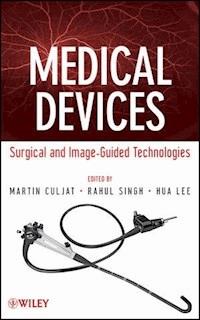
Addressing the exploding interest in bioengineering for healthcare applications, this book provides readers with detailed yet easy-to-understand guidance on biomedical device engineering. Written by prominent physicians and engineers, Medical Devices: Surgical and Image-Guided Technologies is organized into stand-alone chapters covering devices and systems in diagnostic, surgical, and implant procedures. Assuming only basic background in math and science, the authors clearly explain the fundamentals for different systems along with such topics as engineering considerations, therapeutic techniques and applications, future trends, and more. After describing how to manage a design project for medical devices, the book examines the following: * Instruments for laparoscopic and ophthalmic surgery, plus surgical robotics * Catheters in vascular therapy and energy-based hemostatic surgical devices * Tissue ablation systems and the varied uses of lasers in medicine * Vascular and cardiovascular devices, plus circulatory support devices * Ultrasound transducers, X-ray imaging, and neuronavigation An absolute must for biomedical engineers, Medical Devices: Surgical and Image-Guided Technologies is also an invaluable guide for students in all engineering majors and pre-med programs interested in exploring this fascinating field.
Sie lesen das E-Book in den Legimi-Apps auf:
Seitenzahl: 700
Veröffentlichungsjahr: 2012
Ähnliche



















Table of Contents
Title Page
Copyright
Preface
Contributors
Chapter 1: Introduction to Medical Devices
1.1 History of Medical Devices
1.2 Medical Device Terminology
1.3 Purpose of the Book
Chapter 2: Design of Medical Devices
2.1 Introduction
2.2 The Medical Device Design Environment
2.3 Basic Design Phases
2.4 Postmarket Activities
2.5 Final Note
Chapter 3: Minimally Invasive Devices and Techniques
3.1 Introduction
3.2 Basic Principles
3.3 Laparoscopic Instrumentation
3.4 Innovative Applications
3.5 Summary and Future Applications
Chapter 4: Surgical Instruments in Ophthalmology
4.1 Introduction
4.2 Cataract Surgery
4.3 Vitreoretinal Surgery
4.4 Other Ophthalmic Surgical Procedures
4.5 Conclusion
Chapter 5: Surgical Robotics
5.1 Introduction
5.2 Background and Leading Concepts
5.3 Commercial Systems
5.4 Trends and Future Directions
Chapter 6: Catheters in Vascular Therapy
6.1 Introduction
6.2 Historic Overview
6.3 Catheter Interventions
6.4 Catheter and Guide Wire Shapes and Configurations
6.5 Conclusion
Chapter 7: Energy-Based Hemostatic Surgical Devices
7.1 Introduction
7.2 History Of Energy-Based Hemostasis
7.3 Energy-Based Surgical Methods and Their Effects on Tissues
7.4 Electrosurgery
7.5 Future of Electrosurgery
7.6 Conclusion
Chapter 8: Tissue Ablation Systems
8.1 Introduction
8.2 Evolving Paradigms in Cancer Therapy
8.3 Basic Ablation Categories and Nomenclature
8.4 Hyperthermic Ablation
8.5 Fundamentals of In Vivo Energy Deposition
8.6 Hyperthermic Ablation: Optimizing Tissue Ablation
8.7 Radiofrequency Ablation
8.8 RFA: Basic Principles
8.9 RFA: In Vivo Energy Deposition
8.10 Optimizing RFA
8.11 Other Hyperthermic Ablation Techniques
8.12 Laser Ablation
8.13 Hypothermic Ablation
8.14 Chemical Ablation
8.15 Novel Techniques
8.16 Tumor Ablation and Beyond
Chapter 9: Lasers in Medicine
9.1 Introduction
9.2 Laser Fundamentals
9.3 Laser Light Compared to Other Sources of Light
9.4 Laser-Tissue Interactions
9.5 Lasers in Diagnostics
9.6 Laser Treatments and Therapy
9.7 Conclusions
Chapter 10: Vascular and Cardiovascular Devices
10.1 Introduction
10.2 Biocompatibility Considerations
10.3 Materials
10.4 Stents
10.5 Closure Devices
10.6 Transcatheter Heart Valves
10.7 Inferior Vena Cava Filters
10.8 Future Directions-Thin Film Nitinol
10.9 Conclusion
Chapter 11: Mechanical Circulatory Support Devices
11.1 Introduction
11.2 History
11.3 Basic Principles
11.4 Engineering Considerations in Mechanical Circulatory Support
11.5 Devices
11.6 The Future of MCS Devices
11.7 Summary
Chapter 12: Orthopedic Implants
12.4 Introduction
12.2 Basic Principles
12.3 Implant Technologies
12.4 Summary
Chapter 13: Endoscopy
13.1 Introduction
13.2 Ancient Origins
13.3 Modern Endoscopy
13.4 Principles of Modern Endoscopy
13.5 The Imaging Chain
13.6 Endoscopes for Today
13.7 Endoscopy'S Future
Chapter 14: Medical Ultrasound Devices
14.1 Introduction
14.2 Basic Principles of Ultrasound
14.3 Ultrasound Transducer Design
14.4 Applications of Medical Ultrasound
14.5 The Future of Medical Ultrasound
Chapter 15: Medical X-ray Imaging
15.1 Introduction
15.2 X-RAY Physics
15.3 Two-Dimensional Image Acquisition
15.4 Image Acquisition Technologies and Techniques
15.5 Basic 2D Processing Techniques
15.6 Real-Time X-RAY Imaging
15.7 Three-Dimensional X-RAY Imaging
15.8 Conclusion
Chapter 16: Navigation in Neurosurgery
16.1 Basics of Neurosurgery
16.2 Introduction to Neuronavigation
16.3 Neuronavigation Systems
16.4 Implementation of Neuronavigation
16.5 Augmented Reality and Virtual Reality
16.6 Summary/Future
References
Index
Cover Design: Michael Rutkowski
Cover Image: Flexible rectoscope, courtesy of KARL STORZ Endoscopy-America, Inc.
Copyright © 2013 by John Wiley Sons, Inc. All rights reserved
Published by John Wiley Sons, Inc., Hoboken, New Jersey
Published simultaneously in Canada
No part of this publication may be reproduced, stored in a retrieval system, or transmitted in any form or by any means, electronic, mechanical, photocopying, recording, scanning, or otherwise, except as permitted under Section 107 or 108 of the 1976 United States Copyright Act, without either the prior written permission of the Publisher, or authorization through payment of the appropriate per-copy fee to the Copyright Clearance Center, Inc., 222 Rosewood Drive, Danvers, MA 01923, (978) 750-8400, fax (978) 750-4470, or on the web at www.copyright.com. Requests to the Publisher for permission should be addressed to the Permissions Department, John Wiley Sons, Inc., 111 River Street, Hoboken, NJ 07030, (201) 748-6011, fax (201) 748-6008, or online at http://www.wiley.com/go/permission.
Limit of Liability/Disclaimer of Warranty: While the publisher and author have used their best efforts in preparing this book, they make no representations or warranties with respect to the accuracy or completeness of the contents of this book and specifically disclaim any implied warranties of merchantability or fitness for a particular purpose. No warranty may be created or extended by sales representatives or written sales materials. The advice and strategies contained herein may not be suitable for your situation. You should consult with a professional where appropriate. Neither the publisher nor author shall be liable for any loss of profit or any other commercial damages, including but not limited to special, incidental, consequential, or other damages.
For general information on our other products and services or for technical support, please contact our Customer Care Department within the United States at (800) 762-2974, outside the United States at (317) 572-3993 or fax (317) 572-4002.
Wiley also publishes its books in a variety of electronic formats. Some content that appears in print may not be available in electronic formats. For more information about Wiley products, visit our web site at www.wiley.com.
Library of Congress Cataloging-in-Publication Data:
Culjat, Martin, 1977
Medical Devices: Surgical and Image-Guided Technologies / Martin Culjat, Rahul Singh, Hua Lee.
p. cm.
Includes bibliographical references.
ISBN 978-0-470-54918-6 (hardback)
1. Medical instruments and apparatus- Textbooks. 2. Surgical instruments and apparatus- Textbooks. I. Singh, Rahul, 1975- II. Lee, Hua. III. Title.
R856.C85 2012
610.28′4-dc23
2012020590
Preface
Recent decades have seen considerable advances in the development of medical devices and technologies. Innovations in instrumentation, implantable devices, and imaging systems have led to new diagnostic and therapeutic techniques and even new medical disciplines. Because of these and other advances in medicine, an increasing number of conditions can now be treated and patient outcomes continue to improve. Researchers, engineers, and clinicians in the biomedical engineering field are now developing the next generation of technologies that will enable procedures never imagined and make modern medicine accessible to more people worldwide. A challenge is to realize these innovations while reducing rather than increasing the cost of health care.
This book is intended primarily for the growing number of undergraduates, graduate students, medical students, and researchers who are interested in medical device design. Currently, there is a lack of concise, modern, device-focused texts that are written for such an audience. As the complexity of medical technologies continues to increase, there will be an acute need for individuals with the knowledge and skills necessary to lead this growing field.
The content of this text was inspired by research activities at the UCLA Center for Advanced Surgical and Interventional Technology (CASIT). To gauge a preliminary assessment of the effectiveness of this book's technical coverage, the editors and several of the authors participated in a one-quarter seminar course at the UC, Santa Barbara during the fall of 2008, receiving superb ratings and reviews. The class attracted students from all engineering majors, as well as the pre-med program, with a breadth of audience and interest level that this book carries through gracefully.
The technical content in this book is presented in a comprehensive manner, consistent with junior/senior undergraduate and first-year graduate students' background level in mathematics, physics, chemistry, and biology. The chapters are written and organized in the form of independent modules, such that lectures can be configured with a high degree of flexibility from year to year. Each chapter was written by one or more clinical or engineering experts, primarily from the fields of biomedical engineering, electrical engineering, mechanical engineering, computer science, surgery, and radiology.
The book is organized into five sections, each with a separate focus. The first section Introduction to Medical Devices features two chapters. Chapter 1 provides a brief introduction on the history, future, and terminology related to medical devices, and Chapter 2 provides a thorough overview of factors to consider during the medical device design process, including topics such as regulatory affairs and manufacturing. The second section focuses on Minimally Invasive Devices and Techniques and features four chapters. Chapter 3 discusses principles and tools of laparoscopic surgery, Chapter 4 describes minimally invasive techniques in ophthalmology, Chapter 5 discusses surgical robotics and their application to minimally invasive surgery, and Chapter 6 describes interventional applications of catheters and catheter technologies. Energy Delivery Devices and Systems are described in the third section. This section contains chapters on electrosurgical tools used for cautery and coagulation of tissues (Chapter 7), devices used to ablate tissues such as tumors (Chapter 8), and lasers and their application to medicine (Chapter 9). The fourth section, Implantable Devices and Systems features chapters on implantable devices for vascular and cardiovascular procedures (Chapter 10), circulatory assist devices for heart failure (Chapter 11), and orthopedic implants, such as hip replacements and spinal fusion devices (Chapter 12). The final section covers Imaging and Image-Guided Techniques and includes four chapters. Chapter 13 focuses on endoscopic devices and systems for minimally invasive procedures; Chapter 14 on ultrasound devices used for both imaging and therapy; Chapter 15 on X-ray imaging technologies, including fluoroscopy, mammography, and computed tomography (CT); and Chapter 16 on techniques for image fusion and image-guided navigation of instruments during neurosurgery.
This book does not attempt to cover all of the medical devices and technologies in use today. Instead, the chapters were carefully selected such that a broad spectrum of representative topics in biomedical engineering could be discussed comprehensively. These topics are highly relevant to the state-of-the-art minimally invasive, image-guided, and interventional techniques that are used today.
The editors would like to thank everyone at the CASIT for their input into the development of this project. Additional thanks goes to Ms. Susan Ly for her assistance with copy editing.
Martin Culjat
Rahul Singh
Hua Lee
Contributors
Part I
Introduction To Medical Devices
Chapter 1: Introduction
Martin Culjat
Center for Advanced Surgical and Interventional Technology (CASIT), University of California, Los Angeles, CA
1.1 History of Medical Devices
The fields of medicine and surgery are as old as the origin of man. There are surviving records of medical procedures and theories dating back thousands of years, from the ancient Egyptians to the Babylonians, Hebrews, Indians, Chinese, and Greeks. Internal diseases were poorly understood and often blamed on supernatural beings and treated by medicine men during religious ceremonies. External injuries and diseases, on the other hand, were often treated surgically with techniques developed independently by multiple civilizations, some using concepts similar to those used currently. Application of dressings to wounds has been nearly universal throughout the history of man, with recorded evidence of the usage of leaves, clay, tar, bark, snow, sand, down feathers, and animal hides (Bishop, 1960). Both cobwebs and heated cautery irons have been used to control bleeding in multiple cultures, and suture needles have been developed using tools such as bone splinters and thorns. Insect jaws have been used as sutures in at least three continents, typically by encouraging a termite to bite through the wound with its powerful jaws and subsequently removing its body. Fracture fixation has been practiced by many civilizations, using materials such as hardened animal hides, clay, and wood. Many other early surgical tools have been discovered across the world, such as bark and feather quills for wound drainage and cleaning by the North American Lakota Indians, as well as bamboo, shells, sharks' teeth, and bones as surgical scalpels in New Britain in the South Pacific. Relatively modern embodiments of surgical tools were used as far back as Roman times, with metal forceps, scalpels, speculas, surgical needles, urinary catheters, and cautery irons discovered in the buried ruins of Pompeii, dating from the first century CE (Greenhill, 1875).
The Middle Ages was a relatively slow period in the advancement of medical tools and interventions. More significant was the increasing study and understanding of anatomy, physiology, pharmacology, surgery, and other fields relevant to medicine. These advances were particularly evident in the Middle East and Europe, where comprehensive texts were written on these topics, often to be lost, rediscovered, and translated. Persian and Arabic physicians were credited with many significant achievements in medicine during the Islamic Golden Age from the eighth century CE until the Mongol invasions in the thirteenth century. In Europe, the birth of universities in the twelfth century and the Renaissance in the fourteenth century likewise encouraged the study and advancement of medicine. Consequently, surgical and patient care techniques slowly began to improve, leading to better patient outcomes. These improvements began to accelerate in the nineteenth century.
Before the nineteenth century, surgery was largely performed without anesthesia, in nonsterile environments, and without the benefit of preoperative visualization of internal anatomy of the patient. The introduction of analgesics such as ether and chloroform in the 1840s was a major advance, as patients were no longer subjected to tremendous pain while conscious, and surgeons were able to perform longer and more complex procedures. Before this time, the best surgeons were often those who could operate the fastest, and surgery was mostly limited to a few procedures, such as bladder stone removal, vessel ligation, leg amputation, and excision of superficial tumors (Tilney, 2011). The acceptance of asepsis, or sterilization, in the late nineteenth century significantly reduced postoperative deaths, which had often occurred at hospitals in as many as 80% of patients. The discovery of the X-ray in 1895 and the subsequent birth of radiology enabled physicians for the first time to study the anatomy of the body. Together, these achievements transformed the surgical discipline and led to a rapid expansion of interventions that could be successfully performed.
Throughout history, war was a major catalyst for advances in medicine and surgery, allowing physicians and surgeons to practice and popularize experimental tools, drugs, and techniques, many of which still benefit the global population at present. The introduction of firearms and canons in the Battle of Crécy in 1346 and machine guns in the 1870 Franco-Prussian War underscored the need for improved battlefield care, as these weapons led to more severe wounds, more rapid infections, and deaths due to tetanus (Tilney, 2011). The Crimean War in the 1850s highlighted the poor conditions on and off the battlefield, where large armies were used and the wounded were cared for in overcrowded, unsanitary conditions. During this war, five out of six deaths resulted from cholera, dysentery, and malaria, and above-knee amputations had a 90% mortality rate because of infection. Typhus, typhoid, and dysentery caused two-thirds of deaths in the American Civil War, and many others died from wound infections. However, this period of warfare also saw the introduction of nursing teams, the foundation of the Red Cross, improved surgical techniques, and the occasional use of analgesics and antisepsis. World War I saw significant improvements in asepsis, successful abdominal and plastic surgery techniques, the introduction of blood transfusions, and large-scale immunization of soldiers against typhoid. World War II led to improved burn management, use of blood banking and intravenous fluids, a better understanding of pharmaceuticals, and the standardization of care. Introduction of plastic fluid bags, tubing, and tools following World War II was a major development in asepsis, as contamination from patient to patient was virtually eliminated.
In the twentieth century, advancements in antibiotics, pharmaceuticals, and anesthesia improved outcomes for patients worldwide and brought modern medicine to a more global population. At the same time, innovations in materials, manufacturing, electronics, and computing accelerated the use of technology in medicine and led to the birth of the medical device industry. Some notable technological advances in the twentieth century include electrocardiology (ECG) (1903), stereotactic surgery (1908), endoscopy (1910), electroencephalography (EEG) (1929), dialysis machines (1943), disposable catheters (1944), defibrillators (1947), ventilators (1949), hip replacements (1962), artificial heart (1963), diagnostic ultrasound (1965), balloon catheters (1969), cochlear implants (1969), laser eye surgery (1973), positron emission tomography (PET) (1976), magnetic resonance imaging (MRI) (1980), surgical robotics (1985), and intravascular stents (1988) (Challoner, 2009).
Recent technological innovations have spawned entirely new approaches to surgery. For example, traditional open surgeries that are associated with large incisions and extensive patient trauma have recently began to give way to minimally invasive techniques, such as laparoscopy. In these procedures, small “keyhole” incisions are made on the patient's body, significantly reducing trauma and recovery times. Precision tools have been developed to operate through these small openings and allow clinicians to perform an array of tasks from outside of the body. Interventional devices, such as catheters, are now commonly fed deep into the vasculature from needle incisions in the skin to deliver medication, measure pressure, or widen obstructed blood vessels. Some techniques, such as tissue ablation, can now be performed either laparoscopically, with a catheter, or even noninvasively from outside of the skin surface. Many minimally invasive procedures have already began to move toward robotic control or automation.
Implantable devices have also continued to mature. The use of new biocompatible and nonthrombogenic materials and coatings has led to vast improvements in a range of implant technologies, from coronary stents to hip replacements and cardiac assist devices. Computer-aided design, finite-element modeling, and precision machining have enabled implant designers to better customize implantable devices for individual patients or conditions. Likewise, miniaturization of electronics, improved battery technologies, and advanced telemetry systems have enabled the implantation of robust sensing and stimulation systems, such as cardiac pacemakers, deep brain stimulators, and cochlear implants.
Some of the greatest changes in modern medicine have occurred in the field of imaging. Improvements in 3D imaging techniques, such as computed tomography (CT) and MRI, have given clinicians an unprecedented view of patients' internal anatomic and pathophysiologic processes. In addition to facilitating diagnosis, imaging techniques have been adapted to guide interventions, facilitating more targeted and less invasive delivery of therapy. A current trend is an increased use of image fusion, or the combination of multiple imaging technologies. These techniques merge data from disparate sources such as ultrasound, MRI, CT, and PET, to give a more complete picture of a patient's disease state. Image fusion can be used as a preoperative, intraoperative, or postoperative tool in fields such as neurosurgery and prostate surgery.
All of these technological advances have led to rapid worldwide growth in the medical device industry. At present, the global medical device industry has estimated worldwide sales greater than $300 billion (Zack's Equity Research, 2011). The US medical device market is the world's largest market, with an estimated value greater than $105 billion in 2011 (Espicom Healthcare Intelligence, 2011). Both the US and worldwide markets are expected to continue to grow rapidly because of the development of new products, aging populations, geographic expansion, and emerging markets.
The next two decades will likely see the introduction of a new generation of medical technologies. Some potential advances include micro- and nanoscale implantable devices and coatings, tissue-engineered organs, increased use of portable and wearable devices, devices enabling new minimally invasive and noninvasive surgical and therapeutic techniques, advances in real-time image fusion, automation of surgical tasks, and telesurgery. Medical devices and technologies will be increasingly available to the growing worldwide population through the use of lower cost materials and manufacturing techniques, as well as by increased competition from manufacturers in countries with lower labor costs. Additional cost savings and improved worldwide access can be achieved by developing simpler devices or techniques that can be used by a broader range of clinicians with lower skill sets or less training. Medical simulation and telementoring technologies may further broaden access to clinicians in rural or underserved areas, by providing these clinicians with high quality training tools and remote guidance from expert surgeons and physicians.
1.2 Medical Device Terminology
The US Food and Drug Administration (FDA), which governs the manufacture and distribution of medical technology, describes a medical device as “an instrument, apparatus, implement, machine, contrivance, implant, in vitro reagent, or other similar or related article, including a component part, or accessory, that is intended for use in the diagnosis of disease or other conditions or in the cure, mitigation, treatment, or prevention of disease, in man or other animals or intended to affect the structure or any function of the body of man or other animals. Also, it does not achieve any of its primary intended purposes through chemical action within or on the body of man or other animals and is not dependent on being metabolized for the achievement of any of its primary intended purposes” (FDA, 2010).
In other words, a medical device is any product, not including drugs or vaccines, used in the care or treatment of patients (or animals) for disease prevention, or for diagnosis of a disease or condition. This definition includes products such as bandages, bedpans, and in vitro laboratory kits, as well as prosthetic limbs, pacemakers, and X-ray systems.
A convenient way to categorize today's medical devices is with the North American Industry Classification System (NAICS) (U.S. Census Bureau, 2007). This system assigns products with a six-digit code, based on the industry and/or business sector that the product falls within. According to the International Trade Association (ITA) of the US Department of Commerce, all medical devices fall within one of eight NAICS categories (ITA, 2009). These categories are as follows:
In Vitro Diagnostic Substances
: Includes chemical, biological, or radioactive substances used for diagnostic tests performed in test tubes, petri dishes, machines, and other diagnostic test-type devices (NAIC 325413). This group comprised roughly 10% of the US medical device market in 2007, measured by the value of shipments (ITA, 2009).
Surgical Appliances and Supplies
: Includes a wide range of products such as orthopedic devices, prosthetic appliances, surgical implants, surgical dressings, crutches, surgical sutures, personal industrial safety devices (except protective eyewear), hospital beds, and operating room tables (NAIC 339113). These products made up 28% of the US medical device market in 2007 (ITA, 2009).
Ophthalmic Goods
: Includes prescription eyeglasses, contact lenses, sunglasses, eyeglass frames, reading glasses made to standard powers, and protective eyewear (NAIC 339115). Ophthalmic goods made up approximately 5% of the total market in 2007 (ITA, 2009).
Dental Equipment and Supplies
: Includes dental equipment and supplies used by dental laboratories and offices, such as dental chairs, dental instrument delivery systems, dental hand instruments, dental impression material, and dental cements (NAIC 339114). This group accounted for 5% of the market in 2007 (ITA, 2009).
Dental Laboratories
: Includes dentures, crowns, bridges, and orthodontic appliances customized for individual application (NAIC 339116). These comprised about 4% of the market in 2007 (ITA, 2009).
Surgical and Medical Instruments
: Includes medical, surgical, ophthalmic, and veterinary instruments and apparatus, except for electromedical, electrotherapeutic, and irradiation products (defined later). Examples include syringes, hypodermic needles, anesthesia apparatus, blood transfusion equipment, catheters, surgical clamps, and medical thermometers (NAIC 339112). This group was 26% of the medical device market in 2007 (ITA, 2009).
Electromedical and Electrotherapeutic Apparatuses
: Includes MRI equipment, medical ultrasound equipment, pacemakers, hearing aids, electrocardiographs, electromedical endoscopic equipment, and other related products (NAIC 334510). This group comprised roughly 19% of the medical device market in 2007 (ITA, 2009).
Irradiation Apparatuses
: Includes X-ray devices, CT systems, fluoroscopy systems, and other diagnostic or therapeutic products using β-rays, γ-rays, X-rays, or other ionizing radiation (NAIC 334517). These devices made up about 8% of the medical device market in 2007 (ITA, 2009).
Clearly, there are various types of products that are classified by NAICS and ITA as medical devices. However, many medical devices are not necessarily considered devices in the engineering sense of the word. Some, including dental cements and acoustic scanning gels, are materials. Others may be considered supplies, such as surgical masks, surgical drapes, and test kits, or general equipment, such as hospital beds and surgical tables. The bulk of the remaining products are used directly for diagnostic, therapeutic, or surgical action on patients and can be classified as tools, instruments, devices, or systems. These types of products are mostly confined within the latter three NAICS categories—surgical and medical instruments, electromedical and electrotherapeutic apparatus, and irradiation apparatus. There are notable exceptions—implantable devices, such as breast implants and stents, fall within the surgical appliances and supplies group and surgical instruments used for dental applications, such as dental drills, fall within the dental equipment and supplies group.
The terms tools, instruments, devices, and systems are used frequently in this book and can be thought to fit into a technological spectrum of varying complexity (Fig. 1.1). In general, tools are the simplest and usually do not have moving parts. The term instrument can be interpreted broadly, but often has moving parts and may use electric power. Both tools and instruments are usually controlled by a clinician to perform an action on a patient. In engineering, the term device is usually reserved for more complex active products that are powered or that are capable of transduction of energy from one form into another. However, in medicine, many passive products are also considered as devices, especially those that are implantable. Systems are the most complex, are usually powered, and sometimes include one or more tools, instruments, or devices. Many instruments or devices cannot operate or be controlled without a full system in place. However, it should be acknowledged that these four terms are often used interchangeably, and the fact that any of these four terms can be used synonymously with the term medical device adds further confusion. A spectrum representing these terms is illustrated in Figure 1.1, along with a few examples that fall within each category, or across multiple categories. Note that the term apparatus, which is used by the NAICS, is a general term that also encompasses all four terms but is not used commonly in engineering or in this book.
Figure 1.1 Examples of tools, instruments, devices, and systems that fall within the spectrum of medical technologies. Complexity increases from left to right. All of these technologies are often included under the umbrella of the term medical device. Note that passive implantable devices, such as vascular stents and artificial hips, are usually considered devices rather than supplies, tools, or instruments, because of their high complexity and usage.
This book focuses on medical instruments, devices, and systems used for the most advanced techniques practiced at present in medicine and surgery, including minimally invasive, image-guided, and interventional procedures. These terms are also often confused and should be clarified as well. Minimally invasive procedures are those in which tools, instruments, or devices are inserted through small incisions to perform procedures with minimal patient trauma. Some examples of minimally invasive instruments or devices are biopsy needles, laparoscopic instruments, microsurgical instruments in ophthalmology, and catheters. Image-guided procedures are procedures performed with the assistance of an imaging technique, such as ultrasound, fluoroscopy, CT, or MRI. Real-time image-guided techniques are performed with the imaging device or system capturing images during the procedure, or intraoperatively. Image-guided procedures may also be performed with the images captured before the procedure, or preoperatively. Interventional procedures are typically performed with both minimally invasive and image-guidance techniques. A good example of an interventional device is a vascular catheter, as most are inserted through small incisions made with a needle, and under the guidance of ultrasound or fluoroscopy. Another example is a probe used during stereotactic neurosurgery, which is inserted into the brain through a small incision in the skull under the guidance of 3D CT or MRI image data. Devices that are placed using interventional techniques, such as stents that are placed using catheters, are considered interventional devices.
Finally, some clarification is given regarding the study of medical devices. Bioengineering and biomedical engineering are broad fields that focus on the design and development of medical devices and technologies, used for any of a number of medical applications. Both are multidisciplinary, in that they include or overlap with many other fields. In bioengineering/biomedical engineering graduate programs, students can have backgrounds in many disciplines such as mechanical engineering, electrical engineering, chemical engineering, computer science, materials science, physics, physiology, biology, and chemistry. Some have backgrounds in business, law, or medicine.
Bioengineering is often used synonymously with biomedical engineering. However, bioengineering is a broader term that encompasses biomedical engineering and is defined as the investigation of biological topics using engineering principles. Bioengineering includes not only medical devices as defined by the FDA but also fields such as biotechnology, which is related to the development of pharmaceuticals and pharmaceutical-based products. Biomedical engineering, on the other hand, is the application of engineering principles directly to human health and focuses more on medical devices than on bioengineering. The distinction between the two fields is perhaps best illustrated by the development of artificial organs. Artificial organs such as electromechanical artificial hearts, ventricular assist devices, or prosthetic limbs use mechanical- or electrical-based technologies and, therefore, fall more specifically under the realm of biomedical engineering. The growth of artificial organs and tissue using biological materials, referred to as tissue engineering, is primarily a bioengineering discipline and has not yet been commercialized or categorized by NAICS. This book deals mostly with the biomedical engineering and traditional medical devices, as defined by the FDA and categorized by NAICS, but is also highly relevant to the greater bioengineering field.
1.3 Purpose of the Book
It is not possible to thoroughly describe the full spectrum of medical devices in a single textbook. We have therefore attempted to focus on the most advanced technologies, particularly those that are applicable to minimally invasive, image-guided, and interventional techniques. The aim of this book is to introduce readers to the instruments, devices, and systems used in various medical disciplines and to provide a brief historical context and glimpse into the future within each field.
Chapter 2: Design of Medical Devices
Gregory Nighswonger
KARL STORZ Endoscopy-America, Inc., El Segundo, CA
2.1 Introduction
From mankind's earliest attempts at the practice of medicine, in China, Greece, Egypt, India, Europe, and elsewhere, records show evidence of primitive instruments having been developed to assist in some of those efforts. Vestiges of a few of those ancient implements can still be recognized in some modern surgical tools. Materials have become more sophisticated, and design principles have certainly evolved to become more highly formalized and structured. Yet, the fundamental purpose of medical devices has remained the same: to serve as a tool for physicians and surgeons, aiding them in research, diagnosis, and treatment of disease and injury.
The purpose of this chapter is to outline some of the essential steps in taking a device concept through development to manufacture and preparation for market, with emphasis on those steps that are unique to medical technology as opposed to nonmedical products. Many of these steps are taken for virtually all medical devices, but certain processes will differ in scale and complexity. For example, the development of new, improved surgical forceps will entail far fewer members of the development team and less sophisticated processes than will the development of a full magnetic resonance imaging (MRI) system or video endoscope.
2.2 The Medical Device Design Environment
The design and development of medical devices take place within a rather special environment, very unlike that of most other types of products. This environment encompasses a complex array of government (state and federal in the United States, as well as international agencies) regulation and oversight, applicable standards (again, US and international) and similar influences that guide and define the design process. Of course, the impact of this environment will be more or less significant, depending on the nature of the device once again and the potential market envisioned.
As the design process begins, consideration must be given to the specific regulatory bodies that will eventually provide oversight of the path to market. Similar consideration must be given to the standards that will be relevant to the intended device.
Lesen Sie weiter in der vollständigen Ausgabe!
Lesen Sie weiter in der vollständigen Ausgabe!
Lesen Sie weiter in der vollständigen Ausgabe!
Lesen Sie weiter in der vollständigen Ausgabe!
Lesen Sie weiter in der vollständigen Ausgabe!
Lesen Sie weiter in der vollständigen Ausgabe!
Lesen Sie weiter in der vollständigen Ausgabe!
Lesen Sie weiter in der vollständigen Ausgabe!
Lesen Sie weiter in der vollständigen Ausgabe!
Lesen Sie weiter in der vollständigen Ausgabe!
Lesen Sie weiter in der vollständigen Ausgabe!
Lesen Sie weiter in der vollständigen Ausgabe!
Lesen Sie weiter in der vollständigen Ausgabe!
Lesen Sie weiter in der vollständigen Ausgabe!
Lesen Sie weiter in der vollständigen Ausgabe!
Lesen Sie weiter in der vollständigen Ausgabe!
Lesen Sie weiter in der vollständigen Ausgabe!
Lesen Sie weiter in der vollständigen Ausgabe!
Lesen Sie weiter in der vollständigen Ausgabe!
Lesen Sie weiter in der vollständigen Ausgabe!




