


94,99 €
Mehr erfahren.
- Herausgeber: John Wiley & Sons
- Kategorie: Fachliteratur
- Sprache: Englisch
"An excellent primer on medical imaging for all members of the medical profession . . . including non-radiological specialists. It is technically solid and filled with diagrams and clinical images illustrating important points, but it is also easily readable . . . So many outstanding chapters . . . The book uses little mathematics beyond simple algebra [and] presents complex ideas in very understandable terms."
—Melvin E. Clouse, MD, Vice Chairman Emeritus, Department of Radiology, Beth Israel Deaconess Medical Center and Deaconess Professor of Radiology, Harvard Medical School
A well-known medical physicist and author, an interventional radiologist, and an emergency room physician with no special training in radiology have collaborated to write, in the language familiar to physicians, an introduction to the technology and clinical applications of medical imaging. It is intentionally brief and not overly detailed, intended to help clinicians with very little free time rapidly gain enough command of the critically important imaging tools of their trade to be able to discuss them confidently with medical and technical colleagues; to explain the general ideas accurately to students, nurses, and technologists; and to describe them effectively to concerned patients and loved ones. Chapter coverage includes:
- Introduction: Dr. Doe's Headaches
- Sketches of the Standard Imaging Modalities
- Image Quality and Dose
- Creating Subject Contrast in the Primary X-Ray Image
- Twentieth-Century (Analog) Radiography and Fluoroscopy
- Radiation Dose and Radiogenic Cancer Risk
- Twenty-First-Century (Digital) Imaging
- Digital Planar Imaging
- Computed Tomography
- Nuclear Medicine (Including SPECT and PET)
- Diagnostic Ultrasound (Including Doppler)
- MRI in One Dimension and with No Relaxation
- Mapping T1 and T2 Proton Spin Relaxation in 3D
- Evolving and Experimental Modalities
Das E-Book können Sie in Legimi-Apps oder einer beliebigen App lesen, die das folgende Format unterstützen:
Seitenzahl: 1105
Veröffentlichungsjahr: 2013
Ähnliche



















Contents
Cover
Title Page
Copyright
Dedication
Epigraph
Preface
Acknowledgments
Introduction: Dr. Doe's Headaches: An Imaging Case Study
Computed tomography
Picture archiving and communication system
T1, T2, and FLAIR MRI
MR spectroscopy and a virtual biopsy
Functional MRI
Diffusion tensor MR imaging
MR guided biopsy
Pathology
Positron emission tomography?
Treatment and follow-up
Chapter 1: Sketches of the Standard Imaging Modalities: Different Ways of Creating Visible Contrast Among Tissues
“Roentgen has surely gone crazy!”
Different imaging probes interact with different tissues in different ways and yield different kinds of medical information
Twentieth-century (analog) radiography and fluoroscopy: contrast from differential attenuation of X-rays by tissues
Twenty-first century (digital) images and digital planar imaging: computer-based images and solid-state image receptors
Computed tomography: three-dimensional mapping of X-ray attenuation by tissues
Nuclear medicine, including SPECT and PET: contrast from the differential uptake of a radiopharmaceutical by tissues
Diagnostic ultrasound: contrast from differences in tissue elasticity or density
Magnetic resonance imaging: mapping the spatial distribution of spin-relaxation times of hydrogen nuclei in tissue water and lipids
Appendix: selection of imaging modalities to assist in medical diagnosis
References
Chapter 2: Image Quality and Dose: What Constitutes a “Good” Medical Image?
A brief history of magnetism
About those probes and their interactions with matter…
The image quality quartet: contrast, resolution, stochastic (random) noise, artifacts – and always dose
Quality assurance
Known medical benefits versus potential radiation risks
Chapter 3: Creating Subject Contrast in the Primary X-ray Image: Projection Maps of the Body from Differential Attenuation of X-rays by Tissues
Creating a (nearly) uniform beam of penetrating X-rays
Interaction of X-ray and gamma-ray photons with tissues or an image receptor
What a body does to the beam: subject contrast in the pattern of X-rays emerging from the patient
What the beam does to a body: dose and risk
Chapter 4: Twentieth-century (Analog) Radiography and Fluoroscopy: Capturing the X-ray Shadow with a Film Cassette or an Image Intensifier Tube plus Electronic Optical Camera Combination
Recording the X-ray pattern emerging from the patient with a screen-film image receptor
Prime determinants/measures of image quality: contrast, resolution, random noise, artifacts, …and, always, patient dose
Special requirements for mammography
Image intensifier-tube fluoroscopy: viewing in real time
Conclusion: bringing radiography and fluoroscopy into the twenty-first century with solid-state digital X-ray image receptors
Reference
Chapter 5: Radiation Dose and Radiogenic Risk: Ionization-Induced Damage to DNA can cause Stochastic, Deterministic, and Teratogenic Health Effects – And How To Protect Against Them
Our exposure to ionizing radiation has doubled over the past few decades
Radiation health effects are caused by damage to DNA
Stochastic health effects: cancer may arise from mutations in a single cell
Deterministic health effects at high doses: radiation killing of a large number of tissue cells
The Four Quartets of radiation safety
References
Chapter 6: Twenty-first Century (Digital) Imaging: Computer-Based Representation, Acquisition, Processing, Storage, Transmission, and Analysis of Images
Digital computers
Digital acquisition and representation of an image
Digital image processing: enhancing tissue contrast, SNR, edge sharpness, etc.
Computer networks: PACS, RIS, and the Internet
Image analysis and interpretation: computer-assisted detection
Computer and computer-network security
Liquid crystal displays and other digital displays
The joy of digital
Chapter 7: Digital Planar Imaging: Replacing Film and Image Intensifiers with Solid State, Electronic Image Receptors
Digital planar imaging modalities
Indirect detection with a fluorescent screen and a CCD
Computed radiography
Digital radiography with an active matrix flat panel imager
Digital mammography
Digital fluoroscopy and digital subtraction angiography
Digital tomosynthesis: planar imaging in three dimensions
References
Chapter 8: Computed Tomography: Superior Contrast in Three-Dimensional X-Ray Attenuation Maps
Computed tomography maps out X-ray attenuation in two and three dimensions
Image reconstruction
Seven generations of CT scanners
Technology and image quality
Patient- and machine-caused artifacts
Dose and QA
Appendix: mathematical basis of filtered back-projection
References
Chapter 9: Nuclear Medicine: Contrast from Differential Uptake of a Radiopharmaceutical by Tissues
Unstable atomic nuclei: radioactivity
Radiopharmaceuticals: gamma- or positron-emitting radionuclei attached to organ-specific agents
Imaging radiopharmaceutical concentration with a gamma camera
Static and dynamic studies
Tomographic nuclear imaging: SPECT and PET
Quality assurance and radiation safety
References
Chapter 10: Diagnostic Ultrasound: Contrast from Differences in Tissue Elasticity or Density Across Boundaries
Medical ultrasound
The US beam: MHz compressional waves in tissues
Production of an ultrasound beam and detection of echoes with a transducer
Piezoelectric transducer elements
Transmission and attenuation of the beam within a homogeneous material
Reflection of the beam at an interface between materials with different acoustic impedances
Imaging in 1 and 1 × 1 dimensions: A- and M-modes
Imaging in two, three, and four dimensions: B-mode
Doppler imaging of blood flow
Elastography
Safety and QA
Chapter 11: MRI in One Dimension and with No Relaxation: A Gentle Introduction to a Challenging Subject
Prologue to MRI
“Quantum” approach to proton nuclear magnetic resonance
Magnetic resonance imaging in one dimension
“Classical” approach to NMR
Free induction decay imaging (but without the decay)
Spin-echo imaging (still without T1 or T2 relaxation)
MRI instrumentation
Reference
Chapter 12: Mapping T1 and T2 Relaxation in Three Dimensions
Longitudinal spin relaxation and T1
Transverse spin relaxation and T2-w images
T2* and the gradient-echo (G-E) pulse sequence
Into two and three dimensions
MR imaging of fluid movement/motion
Chapter 13: Evolving and Experimental Modalities
Optical and near-infrared imaging
Molecular imaging and nanotechnology
Thermography
Terahertz (T-ray) imaging of epithelial tissues
Microwave and electron spin resonance imaging
Electroencephalography, magnetocardiography, and impedance imaging
Photo-acoustic imaging
Computer technology: the constant revolution
Imaging with a crystal ball
References
Suggested Further Reading
Index
Copyright © 2013 by John Wiley & Sons, Inc. All rights reserved
Published by John Wiley & Sons, Inc., Hoboken, New Jersey Published simultaneously in Canada
No part of this publication may be reproduced, stored in a retrieval system, or transmitted in any form or by any means, electronic, mechanical, photocopying, recording, scanning, or otherwise, except as permitted under Section 107 or 108 of the 1976 United States Copyright Act, without either the prior written permission of the Publisher, or authorization through payment of the appropriate per-copy fee to the Copyright Clearance Center, Inc., 222 Rosewood Drive, Danvers, MA 01923, (978) 750-8400, fax (978) 750-4470, or on the web at www.copyright.com. Requests to the Publisher for permission should be addressed to the Permissions Department, John Wiley & Sons, Inc., 111 River Street, Hoboken, NJ 07030, (201) 748-6011, fax (201) 748-6008, or online at http://www.wiley.com/go/permission.
The contents of this work are intended to further general scientific research, understanding, and discussion only and are not intended and should not be relied upon as recommending or promoting a specific method, diagnosis, or treatment by health science practitioners for any particular patient. The publisher and the author make no representations or warranties with respect to the accuracy or completeness of the contents of this work and specifically disclaim all warranties, including without limitation any implied warranties of fitness for a particular purpose. In view of ongoing research, equipment modifications, changes in governmental regulations, and the constant flow of information relating to the use of medicines, equipment, and devices, the reader is urged to review and evaluate the information provided in the package insert or instructions for each medicine, equipment, or device for, among other things, any changes in the instructions or indication of usage and for added warnings and precautions. Readers should consult with a specialist where appropriate. The fact that an organization or Website is referred to in this work as a citation and/or a potential source of further information does not mean that the author or the publisher endorses the information the organization or Website may provide or recommendations it may make. Further, readers should be aware that Internet Websites listed in this work may have changed or disappeared between when this work was written and when it is read. No warranty may be created or extended by any promotional statements for this work. Neither the publisher nor the author shall be liable for any damages arising herefrom.
For general information on our other products and services or for technical support, please contact our Customer Care Department within the United States at (800) 762-2974, outside the United States at (317) 572-3993 or fax (317) 572-4002.
Wiley also publishes its books in a variety of electronic formats. Some content that appears in print may not be available in electronic formats. For more information about Wiley products, visit our web site at www.wiley.com.
Library of Congress Cataloging-in-Publication Data
Wolbarst, Anthony B.
Medical imaging: essentials for physicians / Anthony B. Wolbarst, Andrew R. Wyant, Patrizio Capasso.
p. ; cm. ISBN 978-0-470-50570-0 (cloth: alk. paper) – ISBN 978-1-118-48024-3 (ebook) – ISBN 978-1-118-48027-4 (emobi) – ISBN 978-1-118-48028-1 (epdf) – ISBN 978-1-118-48026-7 (obook) I. Wyant, Andrew R. II. Capasso, Patrizio. III. Title. [DNLM: 1. Diagnostic Imaging – methods. 2. Image Enhancement – methods. WN 180] 616.07′54–dc23 2012047813
Printed in the United States of America
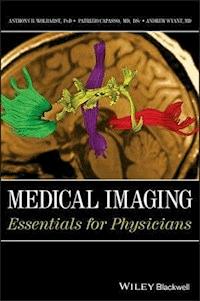
Front cover image: Photo kindly provided by Charles Smith, MSEE, MD, and David Powell, PhD, of the Magnetic Resonance Imaging and Spectroscopy Center (MRISC), University of Kentucky, Lexington
Back cover image: Courtesy of Brian Gold, PhD, University of Kentucky
Cover design: Michael Rutkowski
Illustrations by Anthony Wolbarst and Gordon Cook
We dedicate this effort to
Ling and Zea, who mean everything (ABW),
Tara, Pier Andrea, and Melanie, who have all of my love (PC),
My amazing wife Krystal and our six wonderful children (AW),
and to the patients and healthcare-providers it may serve.
“Everything should be made as simple as possible, but no simpler.”
On educating, attributed to Albert Einstein
“Everything should be made as simple as possible, but no simpler.”
On educating, attributed to Albert Einstein
Acknowledgments
A number of friends and colleagues have helped us, in some cases a great deal, with the preparation of this book, and also with reviewing the chapters. The following may look like just a list of names, but in reality we dealt with each of these people, sometimes closely, and every one of those interactions was important to us and hopefully pleasant for them. It is with heartfelt appreciation that we thank the following for their time, efforts, and good ideas:
Mathew Maxwell, Chief Resident in the Department of Radiology at UK, for his heroic efforts in scrounging up a number of excellent clinical case images, and collaboration in their interpretation.
Nathan Yanasek, who kindly went through the two MRI chapters carefully and made a number of thoughtful, detailed suggestions that have improved them significantly. Likewise, Fred Fahey helped us regarding nuclear medicine.
Two medical physics graduate students of one of us (A.B.W.), Xin Xie, PhD, and Thomas Baker, MS, went through the whole thing, caught many typos, and provided numerous ideas for making the presentation clearer.
In addition, Bruce Curran, Peter Hardy, Joseph Hornak, Yang Jiang, Phil Judy, Kevin F. King, Baojun Li, Christine Luerman, Walter Miller, David Powell, Gerald Schlenker, Partha Sinha, Charles Smith, Michael Steckner, Margaret Szabunio, Lifeng Yu, Charles Willis, Robert Zamenhof, and Jie Zhang all provided considerable help and guidance. Again, thank you all.
And finally, an especial thanks to Mel Clouse for his encouragement and support on this project. They have meant a great deal.
We are greatly indebted to Thom Moore, Gill Whitley, Jane Kerr of Castlecrab, Wales, wherever that may be, and the other folks at Wiley who have been supportive, accommodating, and wise in guiding us through this process; one couldn't ask for a better team of publishers.
And finally, our profoundest thanks to our three wives, without whom this effort would never have gotten beyond the dream stage. They have been unfailingly encouraging, patient, and understanding throughout, and they have helped to turn an arduous burden into a labor of love.
INTRODUCTION
Dr. Doe's Headaches
An Imaging Case Study
Computed tomography
Picture archiving and communication system
T1, T2, and FLAIR MRI
MR spectroscopy and a virtual biopsy
Functional MRI
Diffusion tensor MR imaging
MR guided biopsy
Pathology
Positron emission tomography?
Treatment and follow-up
Jane Doe, for several decades the sole physician in a small town in rural eastern Kentucky, began having mild but disruptive headaches that responded completely to Advil or Tylenol. After they continued for two months, she referred herself to the small community clinic 30 miles away.
The patient presented to the clinic's internist as a healthy 52-year-old woman in no apparent distress, apart from mild hypertension that was controlled by medication. Other aspects of her physical examination were unremarkable. In particular, neurologic examination revealed no focal deficits. She followed a good diet and exercised moderately several times a week. She claimed to be happily married to her best friend, and reported no major stresses or anxieties, apart from those arising from a daughter fortunately emerging from teenagehood.
Computed tomography
Uncomfortable with the duration of the problem, the internist ordered an immediate unenhanced computed tomography (CT) scan of the brain.
A CT machine is a highly specialized X-ray instrument. Like an ordinary radiographic or fluoroscopic device, it produces X-rays, which can be thought of as minute, particle-like bundles of energy that can flow through matter unimpeded – until, that is, they collide with atoms. X-rays tend to interact more frequently with bone or pieces of metal, and thereby be removed from the X-ray beam, than with soft tissues, which are less dense and are composed of lighter elements like hydrogen, carbon and oxygen; for this reason, the beam creates a shadowgram that reveals such differences.
Suppose a child may have swallowed some dangerous objects lying on a desk, possibly including tacks and razor blades within paper wrappers. You take an antero-posterior (AP) radiograph in the region of interest, but cannot tell for sure, from that image alone, what he ingested. You are very concerned about radiation exposure, especially in one so young, but feel it is necessary to have a better idea about what you are dealing with before proceeding. You take a lateral radiograph, and hope to make sense of the pair of images together (Figure 0.1). What entities (and in what configuration) could possibly give rise to this particular set of radiographs?
Figure 0.1 While a single radiograph of a child's stomach taken from one angle may not reveal much with certainty, a few pictures together may allow you to determine what he had swallowed – or rather, the spatial distribution of attenuating materials within the body that could give rise to this set of X-ray images, obtained from multiple vantage points.
A CT carries out this program to extremes, in effect obtaining shadowgrams from hundreds of angles around the patient; its computer's mathematical reconstruction algorithm then calculates how much X-ray attenuation must be occurring at every point within the body to result in this particular set of many such planar shadowgrams. That is, from a vast amount of measured data, CT reconstructs and displays maps of the local rates of interaction of the X-rays with matter throughout one or more adjacent transverse slices of tissue, all at the same time. And that, in turn, provides separate two-dimensional maps of the various tissue types within every slice, with good contrast between materials that differ significantly in composition, and with no visual patterns from over- or underlying tissues to obscure what is of interest.
For technical reasons, older CT machines did not examine a tall block of the body, but only a pancake transverse slice of tissues a centimeter or so high; modern devices can capture 10 cm or more of body in 64, or even hundreds, of slices with a single rotation of the gantry.
The computer is not clever enough to reveal anything medical about what it finds; all it can do, rather, is to determine how readily the material at any point can soak up or scatter X-rays, a purely physical measurement and computation. Making sense of it all is up to the physician.
For Dr. Doe, sixteen transverse CT slices of the brain were obtained on a rather antiquated machine. Nearly all the scans were normal, apart from a probable right posterior temporo-occipital irregularity adjacent to the occipital horn of the right lateral ventricle, appearing in two adjacent slices. There was no radiologist on-site, and the internist arranged for Dr. Doe to undergo a magnetic resonance imaging (MRI) examination right away at a large, tertiary hospital center. He copied the CT images onto a DVD, to take with her.
Picture archiving and communication system
The next day her husband drove her the three hours to the University of Kentucky (UK) Medical Center in Lexington. But, in his haste, he misplaced the DVD of the CT study, so we cannot display it here.
Unlike her rural clinic, modern imaging centers tend now to be fully digital, and they rely heavily on a computer-based picture archiving and communications system (PACS), rather than on film, for nearly all of their activities (Figure 0.2). A PACS is a data management network that interconnects the various digital image acquisition and processing devices, local workstations, short-term image storage, and long-term archiving. It allows live viewing and image manipulation at any workstation, and can rapidly call up from storage images obtained earlier. Its teleradiology capabilities allow it to send and receive images instantaneously for examination by colleagues down the hall or across the country. It can even transfer them to a computer-assisted detection (CAD) artificial intelligence program to aid in detecting and perhaps identifying irregularities in images – acting, in effect, as a second pair of trained eyes.
Figure 0.2 A picture archiving and communications system (PACS) links together the various devices and activities of a modern imaging center.
A state-of-the-art PACS and associated radiology information system (RIS) also welcome input of pathology slides, colonoscopy photographs, and other diagnostic image information, including digitized versions of prior X-rays for comparison, and links to similar systems in other departments. After she arrived at the UK Medical Center, all of Dr. Doe's subsequent images, along with lab results and other medical records, were stored safely and kept available for immediate retrieval on the Department of Radiology's PACS and RIS.
The CT had already performed an essential service by drawing attention to the possible irregularity, and in any case, the MRI studies would be far more revealing of soft-tissue lesions. MRI can create contrast between normal background tissues and abnormalities in a number of related but dissimilar ways, and these can yield somewhat different but complementary kinds of clinical information. She began with three standard, distinct image techniques known as T1-weighted, T2-w, and FLAIR.
T1, T2, and FLAIR MRI
For an MRI study, a patient is placed within the bore of an extremely powerful superconducting magnet: the magnetic field of a standard 1.5 tesla (1.5 T) device is 30 000 times that of the earth.
The nuclei of the hydrogen atoms of the water, lipid, and other molecules in her tissues are just isolated protons. But they act like spinning charged bodies, and since any moving charge produces its own magnetic field, they behave somewhat like sub-microscopic compass needles. The protons tend to align along the strong external field of the magnet, but carefully sculpted short pulses of radio waves can drive their spin axes briefly away from the direction of the field, which is when the interesting things begin to happen.
Most of MR involves the imaging of inter- and intracellular water, so we'll stick with that for now. Various biophysical interactions between the water and the other cellular constituents encourage the water protons to relax back toward their original preferred orientation along the main field. There are several friction-like mechanisms that affect such proton spin relaxation, each with its own characteristic rate of relaxation or, equivalently, its own proton relaxation time. Every cell type creates a unique internal physico-chemical environment, moreover, and the values of the several proton relaxation times for it depend on the kind of tissue found there, and even on its state of health or the presence of disease. It is the mapped spatial variations in the relaxation times of various tissues that give rise to the sometimes remarkable degree of contrast appearing in most MR images.
The two clinically dominant relaxation processes, in particular, take place with relaxation times called T1 and T2. An MR image that emphasizes the variations in the value of T1 at the different points throughout a slice of tissues is said to be T1-weighted. So, too, for a T2-weighted image. A FLAIR (FLuid Attenuation Inversion Recovery) image is similar to these but provides the advantage of suppressing signals from aqueous fluids; in the brain, for example, it can eliminate the appearance of cerebrospinal fluid, thereby enhancing periventricular lesions like some gliomas and multiple sclerosis plaques.
Dr. Doe's T1 and T2 images supported the CT report, noting additionally the extension of the well-circumscribed 1.7 × 1.1 cm lesion to the ependymal lining of the ventricle (Figure 0.3a). There was a significant mass effect, but no midline shift or hydrocephalus. The T1 scan was then repeated following the injection of 20 ml of gadolinium contrast agent, and there was little change. Higher-grade neoplasms in the brain are more likely to disrupt the blood–brain barrier, and are thus associated with more avid contrast enhancement. The failure of the region to take up the agent suggested that there was no breach of the blood–brain barrier, which implied that the lesion was probably not a high-grade neoplasm, a hopeful sign.
Figure 0.3 Two MRI images of the same thin (1 mm), transverse slice. (a) T1-weighting reveals a hypointense right posterior temporo-occipital lesion, adjacent to occipital horn of the right lateral ventricle. (b) A FLAIR sequence, in which signals from CSF and other fluids are suppressed, yields a somewhat different type of MRI contrast, better demonstrating the lesion, which is now hyperintense. Courtesy of Charles Smith, Peter Hardy, David Powell, University of Kentucky, MR Imaging and Spectroscopy Center (MRISC).
The FLAIR study proved to be clinically even more revealing, and the reading radiologist felt that it indicated a lower-grade glioma protruding into the ventricle, with consideration (although less likely) of a tumefactive demyelinating lesion in the differential (Figure 0.3b). There were also several small punctuate T2 signal abnormalities scattered throughout the subcortical white matter of the cerebral hemispheres, possibly representing chronic small-vessel ischemic changes or conceivably further areas of demyelation.
MR spectroscopy and a virtual biopsy
The gold standard in identifying a tumor is a physical biopsy, of course, but an MRI virtual biopsy can provide excellent preliminary information quickly and non-invasively. This advanced procedure, known also as MR spectroscopy (MRS), exploits the other most fundamental process that, in addition to proton relaxation, underlies MRI.
One way to view protons in an external field is that they behave like sub-microscopic spinning gyroscopes that are precessing in a gravitational field. A top precesses one sixth as fast in the weaker field of the Moon as when on Earth; similarly, the precession of proton spins is highly sensitive to the exact strength of the local magnetic field. Now, the uneven circulation of electrons (again, moving charges) throughout a biomolecule will affect the local magnetic fields at the various points within it. This results in parts-per-million shifts in the rates of precession of protons in different local molecular environments. These changes are usually far too small to show up with MRI images, but an MRS machine is more refined, and exquisitely responsive to these slight chemical shifts.
The proton resonance spectrum of acetic acid (CH3COOH), for example, appears as two peaks, close in local magnetic field and therefore in proton precession frequency, but clearly distinct, whose amplitudes are in the ratio 3:1 (Figure 0.4a). The three protons within the methyl (CH3–) group all experience the same swirl of electrons and identical local environments. The electron flow within the –COOH group is a bit different, however, and its single proton resides in a slightly lower local field. Hence the two lines in the spectrum are separated in frequency, indicating the different local magnetic fields and rates of precession.
Figure 0.4 MR spectroscopy. (a) MRS reflects the uneven circulation of electrons within a molecule (here, acetic acid) that give rise to small differences in local magnetic field, hence in parts per million (ppm) shifts in proton Larmor frequency of precession. (b) MRS is performed here on two adjacent small volumes of tissue in the right posterior temporo-occipital region, adjacent to occipital horn of the right lateral ventricle. The measured spectra are adjusted so that the amplitudes of the N-acetylaspartate (NAA) peaks are the same. The spectrum from this region of healthy tissue appears normal. (c) That from the region of the abnormality, however, displays differences in the heights of the creatine plus phospho-creatine (Cr) and the choline (Cho) peaks that are suggestive of a glioma. This “virtual biopsy” was subsequently confirmed through examination of a tissue sample.
For brain tissue away from the lesion, the proton spectra for N-acetylaspartate (NAA), creatine and phospho-creatine (Cr), and choline (Cho) appeared normal (Figure 0.4b). The lesion itself, however, reveals a statistically significant irregularity in the relative concentrations (areas under the peaks) of Cr and Cho (Figure 0.4c). The spectral signatures for numerous normal and abnormal tissues have been studied, and the pattern seen here is indicative of a glioma, but of indeterminate stage.
Functional MRI
Treatment of a tumor depends on its type, grade, stage, and anatomical location. In this case, its position is such that therapy such as surgery or radiation might well result in the loss of one of her two fields of vision. While Dr. Doe could accept that, she made it unambiguously clear that she would not agree to any action that would seriously jeopardize her ability to read; she would prefer to leave the disease untreated, and take her chances. So before proceeding to a needle biopsy, which itself could impose a risk to reading vision, she underwent two non-invasive MRI-based studies that would help to determine the distance of optically active regions from the apparent tumor. The first was functional MRI (fMRI).
While oxyhemoglobin is magnetically practically neutral (diamagnetic), deoxyhemoglobin is paramagnetic, producing a small additional magnetic presence when the molecule happens to be sitting in a strong magnetic field. When brain tissues are active, they consume extra oxygen and transform oxyhemoglobin into deoxyhemoglobin, and fMRI can detect where such changes are occurring; this provides an altogether different type of MRI contrast.
In an fMRI study, a subject is made to experience a periodic mental process of some sort, such as by repeatedly tapping her finger, and variations in the MR signal are monitored (Figure 0.5a). Resulting deviations in the balance of the two kinds of hemoglobin may produce detectable tissue contrast where associated parts of the brain are being triggered. What may not be expected is that neurons are not simply burning more oxygen there; as will be seen later, the brain is much more clever than that, and the process is actually more subtle and interesting.
Figure 0.5 Contrast in functional MRI (fMRI) comes from the detection of changes, induced by certain stimuli, in the consumption of oxygen and in the patterns of blood flow in specific parts of the brain. (a) The periodic change in MRI signal strength from a small region of the brain results from a stimulus of the same periodicity. (b) The image of a 1 mm thin sagittal slice of Dr. Doe's brain that indicates that one area activated by a visual stimulus, in green, lies close to her lesion (arrow).
Dr. Doe underwent fMRI with two separate stimuli, self-directed finger tapping and visual images. From the scale to the left, it is evident that the temporal variations (which is what is of interest here) in the MRI signal are much smaller than the average value of the signal itself, so effective noise-rejection and statistical information-processing programs must be invoked. The finger-tapping task demonstrated robust activation within the expected region of the motor cortex of the cerebral hemispheres. Her response to an intermittent visual stimulus, shown here in a 1 mm thin sagittal fMRI slice through the lesion, indicates that one optically active region of the brain lies nearly adjacent to it (Figure 0.5b).
Diffusion tensor MR imaging
In view of the discouraging fMRI results, it was felt to be important to carry out a diffusion tensor image (DTI) study for her. With DTI, contrast arises from the uni-directional diffusion of water molecules along the axons of a nerve trunk, against a background of other water molecules that are diffusing isotropically, in all directions. A sagittal, thin-slice DTI corroborated the earlier fMRI finding that Dr. Doe's probable glioma lies directly adjacent to, and possibly infiltrating, superior portions of the optic radiation (Figure 0.6).
Figure 0.6 With diffusion tensor imaging (DTI) of the optic radiation, contrast arises between the water molecules that happen to be diffusing along trunks of axons and the others that are diffusing isotropically.
MR guided biopsy
After viewing all the evidence, and particularly the DTI, a neurosurgeon felt that with MRI guidance of the needle, she could very probably obtain a tissue biopsy sample at little risk to the optic radiations, and Dr. Doe agreed to the two-step process. First, under local anesthesia, a rigid, non-magnetic head-frame was screwed firmly into the skull providing a fixed coordinate system within which to localize the lesion (Figure 0.7a). A sub-assembly was attached to the frame that could provide positional markers visible to the MRI device, and so any point within the head can be expressed as a set of x-, y-, and z-coordinates relative to the frame, to within one millimeter. MR images were now taken with the technique known as MP RAGE, and from the resulting images the surgeon decided exactly where she would obtain the sample, and the path she would follow in getting there.
Figure 0.7 A stereotactic thin-needle biopsy device consists of a frame screwed rigidly into the skull plus two separate attachments. (a) The first attachment consists of an array of slightly magnetic “rulers” embedded in plastic planes, which can be read precisely by the MRI device during the study. These make possible precise localization of a target point within the lesion. (b) With the frame still in place, the first assembly was removed and the second attached. This one can guide insertion, within the OR, of a needle along any direction such that its tip will end up within 1 mm of the target point. Courtesy of Elekta.
Then, with the MRI-imaging sub-assembly removed but the frame still fixed to the skull, the stereotactic biopsy needle assembly was attached in the operating room (Figure 0.7b). A medical physicist experienced in the use of the equipment made the necessary calculations, based on the images just obtained, and he and the surgeon set the required angles and distance limiters on the mechanical needle-control assembly. Soon thereafter, the surgeon obtained the sample without incident.
Pathology
The biopsy provided only minute fragments of tissue (Figure 0.8). A few showed an increase in cellularity, and were characterized by small to medium-sized nuclei lying in an eosinophilic (pink-staining) background. Other fragments were paucicellular but contained large pleomorphic cells with hyperchromatic nuclei. The nuclei of the commonly seen multinucleated cells were more densely staining and atypical, and some appeared to be undergoing degeneration. No mitoses were found, and neither endothelial proliferation nor necrosis was seen. There was increased reactivity of the GFAP immunostain in most fragments, most prominently in the more densely cellular foci. The MIB-1 immunostain labeled only a few cells, and the GMS stain revealed nothing abnormal.
Figure 0.8 Photomicrograph from one of Dr. Doe's biopsy slides.
Initially there was no certain consensus among the pathologists on a tissue diagnosis. Their final report was that while grading this type of lesion is difficult, since most low-grade gliomas usually do not have this degree of cellular pleomorphisms and nuclear atypia, it was most likely a grade 1, or possibly grade 2, astrocytoma.
Positron emission tomography?
A final diagnostic test was considered, but rejected. Tumors commonly oxidize glucose at a faster rate than do healthy tissues of the same type, and positron emission tomography (PET) is a nuclear medicine modality highly sensitive at detecting excessive cellular uptake of it. The sugar is labeled with radioactive fluorine-18, and injected fluorodeoxyglucose (18FDG) concentrates preferentially in fast-metabolizing neoplasms. The fluorine nucleus decays with the emission of a positron, which immediately collides with an electron, its anti-particle; the two self-annihilate, giving birth to a pair of X-ray-like annihilation photons, which fly away from the site of the interaction in opposite directions. If the two are detected simultaneously by a PET imager, they will contribute to the formation of a PET image of the region that had taken in the radiopharmaceutical. Another source of tissue contrast!
PET findings would probably have little or no effect on the patient's treatment, however, and Dr. Doe and her physicians decided against pursuing it.
Treatment and follow-up
What to do? There evolved general agreement that a reasonable strategy would be to do nothing for now, to wait and see. Surgery, radiation therapy, and chemotherapy could all have serious deleterious effects even if she retained her ability to read and, after all, there was a good chance that the tumor might grow extremely slowly.
Dr. Doe followed that advice. She has had follow-up MRI examinations twice annually for the past 3 years, during which time the images have not changed appreciably. She did learn, upon returning home, that a number of other people in her building were also experiencing headaches. The epidemic ended, as did Dr. Doe's own headaches, when the large construction project next door, which occasionally produced noxious fumes, came to an end. So the ultimate cause of Dr. Doe's initial problem was never fully confirmed.
* * *
Hopefully, this actual medical case will encourage you to delve into what follows. The rest of the book will explore in greater depth the workings of the various extraordinary imaging devices that inform so much of medical care, and will display their diagnostic power by considering many examples of clinical applications. It should be a good read, since there are few things as fascinating, or as significant, as the cutting edge tools of modern high-technology medicine.
Lesen Sie weiter in der vollständigen Ausgabe!
Lesen Sie weiter in der vollständigen Ausgabe!
Lesen Sie weiter in der vollständigen Ausgabe!
Lesen Sie weiter in der vollständigen Ausgabe!
Lesen Sie weiter in der vollständigen Ausgabe!
Lesen Sie weiter in der vollständigen Ausgabe!
Lesen Sie weiter in der vollständigen Ausgabe!
Lesen Sie weiter in der vollständigen Ausgabe!
Lesen Sie weiter in der vollständigen Ausgabe!
Lesen Sie weiter in der vollständigen Ausgabe!
Lesen Sie weiter in der vollständigen Ausgabe!
Lesen Sie weiter in der vollständigen Ausgabe!
Lesen Sie weiter in der vollständigen Ausgabe!
Lesen Sie weiter in der vollständigen Ausgabe!




