


Erhalten Sie Zugang zu diesem und mehr als 300000 Büchern ab EUR 5,99 monatlich.
- Herausgeber: Kamera Books
- Kategorie: Geisteswissenschaft
- Sprache: Englisch
Movie Movements: Films That Changed the World of Cinema is a one-stop guide to the major movements that have shaped our sense of what cinema is and can be. It introduces the reader to definitions of the founding concepts in Film Studies such as authorship and genre, technological impacts and the rise of digital cinema, social influences and notions of the avant-garde, and cinema's emergence as a major art form that reflects and shapes the world. It explores, in concise and clear sections, how major works from the classic French realist La Regle de Jeu to the dazzling animation of Norman McLaren and the memorial documentary of Shoah, were conceived, developed and produced, and eventually received by the public, critics and film history. Offering a concise overview of a vast and compelling subject, it's a book for both the film enthusiast and the Film Studies student.
Sie lesen das E-Book in den Legimi-Apps auf:
Seitenzahl: 259
Veröffentlichungsjahr: 2011
Das E-Book (TTS) können Sie hören im Abo „Legimi Premium” in Legimi-Apps auf:
Ähnliche


















James Clarke
MOVIE MOVEMENTS
FILMS THAT CHANGED THE WORLD OF CINEMA
For Jenny, who brought colour to a monochrome life.
ACKNOWLEDGEMENTS
Thank you to Hannah Patterson for commissioning this project and to Anne Hudson for her patience and precision. Thanks also to the fine folks in the library at Hereford College of Arts: Jo Lacy, Becky Roberts and Ashley Nunn, and, finally, to Innes Jones, Steve Hanson and Mark Woods.
CONTENTS
Title Page
Dedication
Acknowledgements
1 Introduction
2 Realism (French poetic realism, British realism, Neorealism):La Règle du Jeu; Kes; Rome, Open City; The Plague Dogs
3 Expressionism:Metropolis; The Passion of Joan of Arc;The Tales of Hoffmann
4 Avant-garde and Art Cinema:The Seventh Seal; Norman McLaren, Stan Brakhage, Frédéric Back
5 Surrealism:La Belle et la Bête; Un Chien Andalou; the films of the Brothers Quay
6 Documentary:Koyaanisqatsi; Night Mail; Nanook of the North; Shoah;Into Great Silence; We Are the Lambeth Boys
7 Soviet Montage:The Man With the Movie Camera; Battleship Potemkin
8 National Cinema Movements:France (1960s, Jules et Jim);Australia (1970s, Picnic at Hanging Rock);Germany (1970s/80s Wings of Desire);USA (1970s, The Hired Hand);Japan (1950s Seven Samurai);Mexico (2000s Pan’s Labyrinth)
9 Digital Cinema and the Future:Atanarjuat: The Fast Runner; Waking Life
Further Reading
Copyright
INTRODUCTION
Tracking shots are a question of morality. Jean-Luc Godard1
One reason to go to the movies is because we seek more poetry, joy and transcendence in our lives. Jim Kitses2
As soon as it is formed, the skin of history peels off as film. André Bazin3
I don’t make the film. I’m only its conscious organiser. Jean-Luc Godard4
Just imagine…
In the darkness of a film-museum warehouse in Buenos Aires, in the spring of 2008, a pair of hands lifted the lid from a dusty box. The treasure hunter smiled. This was the discovery they had dreamed of, always believing it might be real. From the box, the hands lifted the can and pushed the dust away from its lid, revealing a tattered and fading label on which was marked the ten-letter word: Metropolis.
Granted, perhaps I’m over-dramatising this significant moment in film history and film preservation; but the fact remains: on that spring day in Buenos Aires, a lost treasure was at last recovered and the full picture has now been revealed. The full narrative of a landmark film, and its place in the grand tradition of movie movements, could be seen. Eighty-two years after its original release, Metropolis could finally be screened in its complete form, the full span of its human drama playing out against its immense, intricately designed and mesmerising future world. Metropolis, like all of the films explored in this book, has, I think, the power to transform the medium, transport the audience and transcend the immediate context of being ‘just’ a film.
Consider a Renaissance painting. That was the first image I was asked to think about when I enrolled as a student of film at the University of Warwick. Our teacher, VF Perkins (the last time I saw him, in the summer of 1993, I’m happy to recall that he was wearing a Foghorn Leghorn T-shirt), ran a series of still images on screen and encouraged us to think about how they functioned. We were perplexed. We were there to study films – pictures that moved and had sound too. Soon enough, however, we began to get into the flow of thinking that he was hoping we’d find. During the following session, we were asked to select a photograph from a magazine of our choice. Our assignment was to write a short essay about the qualities we perceived in the image, explaining how the image prompted us to respond. Finally, as we edged towards the end of our first term, with VF teaching, we began to think about moving pictures, excavating ideas about, and responses to, the ways in which they beguiled us. The real epiphany, though, came when VF put the austere domestic Japanese drama Late Spring ( 1952) on a level playing field with the playful and ultra-Hollywood movie musical The Pirate (Vincente Minnelli, 1948), claiming that both movies offered insights into human experience and did so via an inventive and rigorous filmic style. I guess you could say that we were treasure hunting. Perhaps that’s the key activity that we, and the cinema, have in common.
No matter what the form, the genre, the era, the intention, the reception or the source of origin, films send their characters, and, by necessary extension, their audiences, on journeys to unlock ways of seeing themselves and the world. It’s a journey that never ends, appealing to both our voyeurism and our narcissism.
We watch films, then, to uncover their secrets and to enjoy and understand their re-imaginings of the world. We also make efforts to work out how the mysterious allure of storytelling functions as it spins its charms, threading them through our daily lives and often delivering a sucker punch to the soul. Often we don’t even realise this is happening. We’re just grateful for being entertained, whether by the ‘seriousness’ of a Bergman film or the outright kinetic comedy of a Chuck Jones film.
The movies are about us. You and I. We are the movies. I use that word ‘movie’ sincerely: moving pictures are the form and they move our thoughts and feelings to new places.
Telling stories is an essential part of what it is to be human and the enjoyment in sharing stories is one way of connecting our individual, sometimes enclosed, experience with the wider world. Narratives are one of the primal and powerful ways in which we strive to understand our place and our relationship to our own selves and to others, as we are and as we would like to be. In his creatively empowering book, The Origin of Stories, Brian Boyd writes that ‘Art becomes compulsive because it arouses pleasure, and it arouses pleasure because, like play, it fine-tunes our systems’5
This Kamera Books title explores the ways in which a range of key iconic movies from around the world have opened our hearts and minds, fine-tuned our systems (to borrow from the excerpt above), and served to advance, and evolve, the place, impact and possibilities of cinema globally.
In a landmark essay about cinema, the film theorists Jean-Luc Comolli and Paul Narboni indicate that ‘every film is political, inasmuch as it is determined by the ideology which produces it’.6 For Comolli and Narboni, our sense of reality depends on the dominant ideology at work in a given culture. As with so much else, context is all, and movies are as potent in their political resonances as any other perceived work of art. What I’m trying to get at here is that I believe movies matter – and that’s why I care about what they can mean to audiences.
The qualities that Jim Kitses suggests a film possesses, as quoted above, are, I think, very true of the films discussed and cited in this book.
Jean Renoir, the film director of titles such as La Grande Illusion (1937) and La bête humaine (1938), once encouraged fellow filmmaker Bernardo Bertolucci to always leave a door open on his film set. When Bertolucci asked why, Renoir explained that this would allow the unexpected and the spontaneous to weave its way into the essentially predetermined world of film production. Who knew what might pass by, or occur just beyond the world of recreated, re-staged, re-imagined life? Certainly, Renoir’s is a good creative lesson and, like many such lessons, serves as a pretty viable life lesson too. What Renoir was getting at underpins many, if not all, of the films explored in this book. I’m okay with being sweepingly sentimental here: the films written about on these pages enrich life and light up our hearts and minds.
Films, then, can be many things: a compass, a comfort, a confounding confection, a challenge, a compulsion to review the world. The American philosopher Stanley Cavell wrote that ‘the question of what becomes of objects when they are filmed and screened has only one source of data for its answer namely the appearance and significance of just those objects and people that are in fact to be found in the succession of films, or passages of film, that matter to us.’7
Film gives our imaginations the chance to elevate and expand themselves, to open out the range of our sensibilities, and variously transform our everyday experiences and feelings. This remains the great allure of motion pictures, whether a faithful recreation of life in a north-Canadian Eskimo culture or a comically absurd ‘animated’ allegory of the Cold War.
Motion pictures are emotion pictures, each one couched in the language of a particular moment in time. Films are also intellectual experiences, social experiences, economic experiences, political experiences and spiritual experiences. Just view Carl Theodor Dreyer’s film The Passion of Joan of Arc (1928) alongside Ingmar Bergman’s The Seventh Seal (1957) to get a glimmer of that capacity.
To reinforce the point that the more things change the more they stay the same, it’s worth relating the following information. In the days of the earliest cinema, as the nineteenth century drew to a close and the twentieth century began, the Mexican newspaper El Monitor Republica described the Kinetoscope, as it was called then, in a manner that remains relevant to the current, emerging, digital-cinema age of performance capture and of computer gaming: ‘The illusion is complete and the effect marvellous. The images come to life before your eyes and move, walk and dance as if they were flesh and bone… there seems to be a soul in the body of the little figures.’8
Consider a quiet scene in a movie about the fury and confusion of war. Two soldiers from opposing armies sit in a window and seek to understand one another and the complex and fragile situation in which they are engulfed. A flower blossoms delicately in the background, expressing as much about the scene as any dialogue could – perhaps more. It’s a thoughtful, simple and elegant composition, and this moment at the heart of La Grande Illusion is fuelled by what we might think of as an essential human truth: that the greatest revelation of character comes in life’s quietest and smallest moments. In so many of the films discussed in this book, those moments are their particular strength, and maybe even their preoccupation. It’s in the recreation and re-imagining of these precious moments that we might say film has its most realistic and affecting power.
Film changes over time. It carries ideas and sends opinions racing around the bloodstream of the culture. Film evolves, responding to its environment and moment in time. For sure, film moves, and various movie movements have played their part in the formation of an intricate range of issues that cinema plays out against, reinforcing and challenging prevailing values and sensibilities.
This book is a guide to a number of major films that have memorably affected the ways in which reality is represented and invoked on the cinema screen. Many of the films in this book are what we might think of as examples of the ‘art’ film. As Richard Dyer notes in an essay about why it’s worth taking the time to study and think about the movies: ‘Both reviewing and film studies concern themselves with film as art. The notion of art is notoriously loaded – it carries an inextinguishable overtone of value, so that we may say that the term “art” in practice designates art that is approved of.’9
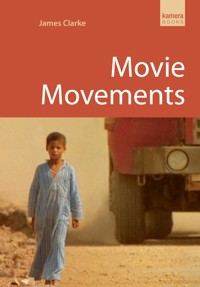
We live in a world where cinema has a critical and central place in our cultures and our daily lives. We readily scan an image at speed, constructing values, connections and points of interest in it. The image on the cover of this book potentially sparks a series of powerful responses that remind us of how movies embed themselves in our attempts to understand the sprawl of life. More than TV, more than music, and certainly more than sport, cinema was the power that moved me as a young person and in turn connected me to a wide range of ideas and other enthusiasms. Perhaps this was on account of what Daniel Frampton calls film’s capacity to become ‘the explanation of our position in the world… focusing, editing, camera movement, sound, framing – all “think” a certain relation to the story being told’.10
We’re at a point, then, where we can try to work out why cinema fascinates and why it’s ‘important’. Movies matter not only on account of their artistic merits, but also because of their relationships to the contexts in which they were originally created and the ways in which they have subsequently found a line through time and the passage of history.
In just over a century, film has embraced a rich and diverse range of genres, styles and sensibilities, and now, in this moment of the Internet and channels such as YouTube, the venues for exhibition are changing once more. You no longer have to be able to access a huge, complex filmmaking resource to produce material, and you can now effectively distribute your work from your laptop. The novice director from a small rural town can make their work available for all to see as easily as the most well-promoted and established filmmaker in a sprawling city. Of course, this does not guarantee a sudden new wave of brilliance; but it does provide the opportunity, at least, to get one’s work out there.
For the past 20 years, film viewing habits and viewing options have evolved. Perhaps now more than ever we have incredible choice and access to films. Where television would once screen a diverse range of films each week, the tendency now is to look to the range of DVD rental and purchase options available. As such, more and more new titles are being added to the film catalogue and there seems to be a hunger on the part of audiences to know how movies are made and how they make their connections with us. Perhaps the most exciting thing of all is that the study of film is becoming more embedded in compulsory education; in time, we might even begin to take this for granted, just as we currently take the study of literature for granted.
As of this writing, the photographic imperative is beginning to merge with something more painterly in particular forms and aspects of emerging digital cinema. We live in interesting movie-making and movie-watching times. André Bazin, in his work What Is Cinema?, distinguished between two kinds of film: those that embodied faith in reality (in the camera recording what actually existed in front of the lens) and those that embodied faith in the image, in the plasticity and infinite capacities for film to be manipulated. What would André have made of Avatar (2009)? We might want to cite Soviet montage as a clear example of this.
The films explored in this book are as artful and significant to our imaginative and cultural lives as the finest literature, music and painting. All of the movie movements explored here – and it is not a comprehensive or exhaustive list, but one that I hope proves nevertheless a helpful starting point – testify to the enduring fascination and mesmerising appeal of cinema. Roland Barthes wrote that: ‘Mass culture is a machine for showing desire. Here is what must interest you, it says, as if it guessed that men are incapable of finding what to desire themselves.’11 Whatever shape or colour, the movies bear out Barthes’s observations.
What, though, is our criteria for a movie movement to be defined as such? What is the narrative that underpins this term – movie movements? A sensible place to start is by identifying that a movement moves. That is to say, it changes over time and typically a movement (in cinema, in literature) is often a short-lived ‘reality’, a light that burns very brightly but ‘extinguishes’ relatively quickly. Each of the films written about in this book explores the traditions of a given film form and the ways in which these are subsequently evolved, adapted and challenged by filmmakers and, ultimately, by audiences.
The movies considered in these pages are bound up in, and bound together by, what we might think of as a sense of modernism – an idea about western life that has developed since the eighteenth century when the world became more industrialised than it had ever been before, and which was also shaped by the forces of capitalism and an increasingly urban life. Modernism has been usefully defined as a creatively self-conscious format which rejected ‘the idea that it is possible to represent the “real” in any straightforward manner. Representation […] is to be understood as an aesthetic expression or conventionalised construction of the “real”’.12 Some films revel in these settings, others offer distinct alternatives, but all the films cited somehow celebrate and showcase the power of cinema to transport, mould, manipulate and illuminate. In thinking about these sources of fascination, it’s worth bearing in mind that ‘the aesthetic dimension of a film never exists apart from how it is conceptualised, how it is socially practised, how it is received; it never exists floating free of historical and cultural particularity’.13
The big-picture narrative of movie movements, then, the quality that binds them together, comprises several threads, all of which interweave the formal (the film as a film in and of itself) with the social and ideological (the context). The numerous movements of film history and evolution extend far beyond the reach of this book but are, I think, unified by: a conscious wish on the part of the filmmakers to challenge established understandings about the place and potential of film at a given moment in time; the influence of commercial, technological, industrial and ideological forces; and, perhaps most evidently, a desire to rethink and refresh the ways in which a film can be expressive typically in terms of an acute effort to represent human perception, thinking and feeling.
Cinema has now become firmly anchored in its global context. New and evolving channels of access and cross-cultural contact could either make the world ever more homogenised or could allow for the particulars and specifics that make every culture distinct and fascinating to shine through. We’re at a point where a Bollywood movie might abruptly reference a visual-effects flourish from an ultra-Hollywood movie such as The Matrix (1999). Similarly, the Bollywood mode might revise and adapt for its home audience a number of very popular Hollywood movies. With digital technology becoming ever more affordable and portable, it means that we can enjoy a wonderful British film like Seachd: The Inaccessible Pinnacle (Simon Miller, 2007), resonantly anchored in a specific culture and geography. The realistic audience for this film isn’t a blockbuster, multiplex one (though would any filmmaker really shirk this opportunity if given a choice?), but a smaller, more specific one. The economics of digital production and the revenue stream of home video make such a project more viable than ever before.
For the most part, the films explored in this book are readily available, inviting people to experience them who have not already done so. Movie Movements: Films That Changed the World of Cinema considers not only enduring ‘classics’, but other, less well-regarded (perhaps even unexpected and unknown) titles that have been produced as the result of a fusion of a particular place and sense of what cinema can be. This book, then, explores the contexts in which some of the most compelling and expressive films have been produced, from live-action classics such as Jules et Jim (François Truffaut, 1962) to the hard-hitting, digitally shot Inuit adventure movie Atanarjuat: The Fast Runner (Zacharias Kunuk, 2001).
If you’re a reader just setting out to explore the vast terrain of film, there’s the hope that this book might be for you. Similarly, if you are studying film (theory and practice; the one informs the other and that’s how the wheel turns) as part of a course at a college or university, it might well address a number of key areas that you will be considering and encouraged to think about. It hopes, then, to serve as a first stop, a primer, rather than an uber-detailed exploration of just one or two essential areas of the subject.
This book concisely outlines the key aesthetic and wider contextual issues relating to a number of specific films, and also drops into the mix a range of animated films in the hope that readers will be reminded that animation is filmmaking too.
In the discussion of each film, its concept, conditions of production and eventual reception and influence will come into play. All being well, the book you now hold in your hands will help set you on your way to viewing and reading more widely as you navigate movieland.
Travelling full circle, I’ll come back to the insights of VF Perkins. This is an excerpt from his book about the Orson Welles film The Magnificent Ambersons (1942). The observation that Perkins makes applies to so many films and is near fundamental, serving almost as a mission statement, an ethos: ‘The thrills and rewards of criticism come from trying to rise to achievements we know to be larger than our understanding.’14
Notes
1 Jean-Luc Godard, quoted by Jim Emerson, www.blogs-suntimes.com/scanners/2010/02/the_morality_of_deep_focus_and.html
2 Jim Kitses, Horizons West: Directing the Western from John Ford to Clint Eastwood, BFI, 2004, pp.21–2
3 André Bazin, quoted by David Forgacs, Rome Open City, BFI, 2000, p.23
4 Jean-Luc Godard, quoted by Douglas Morrey, French Film Directors: Jean-Luc Godard, Manchester University Press, 2005, p.173
5 Brian Boyd, On the Origin of Stories: Evolution, Cognition and Fiction, Belknap Press: Harvard, 2009, p.95
6 Jean-Luc Comolli and Paul Narboni in Film Theory and Criticism, edited by Leo Braudy and Marshall Cohen, Sixth Edition, Oxford University Press, 2004, p.813
7 Stanley Cavell, ‘What Becomes of Things on Film’ from Themes Out Of School: Effects and Causes, University of Chicago Press, 1988, pp.182–3.
8 Steve Neale, Cinema and Technology: Image, Sound, Colour, BFI Macmillan, 1985, p.50
9 Richard Dyer, The Oxford Guide to Film Studies, Oxford University Press, 1998, pp.4–5
10 Daniel Frampton, Filmosophy, Wallflower Press, London, 2006, p.6
11 Roland Barthes, quoted by Pam Cook and Mieke Bernink, The Cinema Book, BFI, 1999, p.33
12 Chris Barker, Cultural Studies: Theory and Practice, Sage, 2009, p.185
13 Richard Dyer, op cit, p.9
14 VF Perkins, The Magnificent Ambersons, BFI, 1999, p.18
REALISM
‘There are many sides to reality, choose the one that’s best for you,’15 observed playwright Eugene Ionesco, and it’s a line that fits neatly with our thinking about the range of storytelling approaches that cinema offers.
Amidst the range of movie movements on offer, and the diverse ways of emphasising meaning and offering a specific viewpoint on, or presentation of, a subject, realism is a key aesthetic form that has functioned as a cornerstone of western expression across literature and the visual arts. It continues to hold a central position, and dominates the mode of popular cinema’s expressive approaches. Even the most lavish fantasy, such as the adaptation of Tolkien’s Lord of the Rings novels, is rendered in a realistic visual style. Historically, ‘the impulse towards realism occurred during a prolonged period of social and structural change’16 when people moved from their rural communities to the cities to find work in the nineteenth century as the Industrial Revolution took hold.
Even if we only engaged in drawing up a realism-themed ‘list’, we could tick off film-specific examples such as Italian neorealism, British kitchen-sink realism and poetic realism. What they all seem to have in common is some notion of, and application of, the idea of realism. Furthermore, their commonalities are bound up in connections ranging far beyond cinema to take in the influences of painting, politics and literature. It might also be wise to hold in mind that realism takes many forms: social realism, neorealism, documentary realism – they all serve as tags to variations on a theme.
One of the landmark thinkers on the subject of cinema, striving to work out the ‘DNA’ of film, was André Bazin, who was a co-founder of the film journal Cahiers du cinema. Bazin’s two-volume work What Is Cinema? is a touchstone of film writing and includes the following concise and clear-sighted statement, which shows an understanding about so much of what cinema essentially is and the implications of the idea and practice of realism: ‘The significance of what the camera discloses is relative to what it leaves hidden.’17 He observed that filmmaking was about ‘the creation of an ideal world in the likeness of the real’.18
For Bazin, the example of Soviet montage represented faith in the image, the process of manipulating film to the point of foregrounding its plasticity and illusory power. By contrast, a filmmaker such as Jean Renoir would be regarded as demonstrating a faith in reality, capturing performances in real space and time, in a sense minimising the process of mediation, and striving for a psychological realism. We watch characters laugh and cry and we understand them. Bazin was careful to observe that montage always alluded to an event rather than showing it or recreating it in that way. Hence, our sense of realism relates to our desire for authenticity and accuracy. What would André Bazin make of the digital-cinema age we currently live in, where image making in the movies has perhaps more in common with painting and illustration than with photography? Certainly, Bazin’s interests have been built on and developed, cheered and challenged. Ultimately, for Bazin, understanding film realism was a profound philosophical process, and many of the films discussed here will foreground aspects of the realist sensibility.
Fascinatingly, the film La Règle du Jeu was dedicated to Bazin. However, for all of the effort made by thinkers such as Bazin and others (Sarris, Farber, Wilson, Perez, Staiger, Thumim et al), the American philosopher Stanley Cavell contends that film studies is still not given the respect that the medium deserves.
To get a grasp on reality in the movies, it’s useful to take a cue from discussions of art and realism in painting from the vantage point of art historian EH Gombrich. He has made a number of useful observations that can be readily applied to cinema and our understanding of how realism in the movies functions. According to Gombrich, we can consider realism as ‘the value of uncompromising artistic sincerity as against the deft handling of traditional clichés’.19 This is an observation that holds true for films such as Kes (1969) and Rome, Open City (1946).
Defining what is real, then, is a fundamental human experience, and the tradition of cinematic realism is connected to Bazin’s efforts to untangle the collective knot of thought on the matter. Importantly, and perhaps now more than ever, it rings true as a distinction.
When we think about cinematic realism it’s as both a visual and sonic expression of the reality of things described and shown, and the reality of the inner lives of the characters.
La Règle du Jeu (1939)
Directed by: Jean Renoir
Written by: Jean Renoir
Produced by: Jean Renoir and Carl Koch
Edited by: Marthe Huguet and Marguerite Renoir
Cinematography: Jean Bachelet
Cast: Marcel Dalio (Chesnaye), Nora Gregor (Christine), Jean Renoir (Octave), Roland Toutain (André Jurieu), Paulette Dubost (Lisette)
Synopsis
The film begins in Paris. It is 1939 and thirty-something aviation hero André Jurieu arrives safely from his solo, twenty-three-hour transatlantic flight. The woman André loves is not there to greet him, but his steadfast friend Octave is. Across town, Robert Chesnaye and his wife Christine live the high-life in Paris. Christine is the woman André is in love with and had hoped would be there to give him a hero’s welcome. Robert has planned a weekend away at his chateau and amongst the many guests will be his good friends Octave and André. The weekend begins and what unfolds is a cascade of romantic entanglements in which tragedy and comedy interweave. Overseeing the knot of revelations and falsehoods is Octave. Critically, Chesnaye gives a poacher a job as a servant and the servant begins to flirt with the wife of the gamekeeper, Schumacher. André mopes around the country house and finally tells Christine that he loves her and wants to leave with her to start a new life. Chesnaye accepts the news about André and Christine with great civility. The film climaxes with Christine telling Octave that it is he whom she really loves. Schumacher subsequently mistakes Christine for his wife, Lisette, and thinks that she and Octave are having an affair. Tragedy ensues as the perils, pleasures and pains of love crystallise.
Concept
Renoir’s films have often featured in lists of the greatest films ever made, yet his name will most likely be virtually unknown to many contemporary filmgoers. Today, Renoir’s movies would be marketed as ‘art house’, perhaps implying something obscure about them. However, Renoir’s films possess great accessibility and feeling and are steeped not only in a sense of cinema’s potential but also the humanistic traditions of literature. The characterisation found in Renoir’s films tends to possess a richness and contradiction that we would not be surprised to encounter in ‘classic’ works of literature such as were written by Jane Austen or Thomas Hardy, and this literary affinity evidences itself very clearly as La Règle du Jeu begins by quoting the French writer Beaumarchais. Throughout, the film also succeeds in evoking something of the comic, criss-crossing, romantic misunderstandings of the play A Midsummer Night’s Dream. Like his literary antecedents, Renoir uses the machinery of storytelling to untangle the subtleties and difficulties, triumphs and stupidities of human interaction, exploring the ways in which we connect with, and so often disconnect from, the people to whom we are closest, the ones we love the most. Herein, we can identify a fundamental sense of how Renoir’s contribution to the life of realism in cinema works. The broad span of narrative filmmaking had always functioned on a cause and effect pattern, powerfully underpinned by our expectations of a given genre (horror, western, thriller, science fiction, romance, tragedy, comedy), but Renoir focused with a kind of surgical precision on exploring the cause and effect of human choices.
Jean Renoir is synonymous, then, with the idea of humanistic cinema. We might even suggest that he is a cinematic equivalent of writers like Charles Dickens, Willa Cather, George Eliot, Leo Tolstoy and Mark Twain.




