


23,99 €
Mehr erfahren.
- Herausgeber: John Wiley & Sons
- Kategorie: Fachliteratur
- Sprache: Englisch
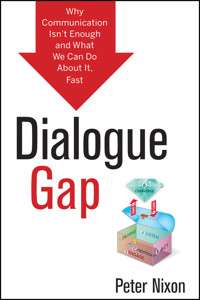
The book consolidates the practical tips and concepts that shaped the authors work with organizations and individuals around the world. It is written to allow people to benefit from what hitherto was only available to some of the wealthiest organizations. The ideas presented in this book will help the reader better conduct dialogue with themselves and others leading to optimal outcomes for all. Written for the mass market, this book is a must-read for CEO's and senior staff. It reinvigorates the trainer's approach to interactions with people on all spectrums within the negotiation.
Sie lesen das E-Book in den Legimi-Apps auf:
Seitenzahl: 314
Veröffentlichungsjahr: 2012
Ähnliche


















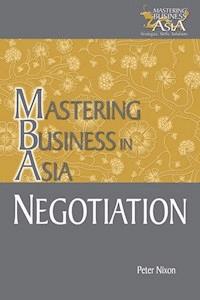
Copyright © 2005 John Wiley & Sons (Asia) Pte Ltd
Published in 2005 by John Wiley & Sons (Asia) Pte Ltd
2 Clementi Loop, #02-10, Singapore 129809
All rights reserved.
No part of this publication may be reproduced, stored in a retrieval system, or transmitted in any form or by any means, electronic, mechanical, photocopying, recording, scanning, or otherwise, except as expressly permitted by law, without either the prior written permission of the Publisher, or authorization through payment of the appropriate photocopy fee to the Copyright Clearance Center. Re?s for permission should be addressed to the Publisher, John Wiley & Sons (Asia) Pte Ltd, 2 Clementi Loop, #02-01, Singapore 129809, tel: 65-6463-2400, fax: 65-6463-4605, E-mail: [email protected].
This publication is designed to provide accurate and authoritative information with regard to the subject matter covered. It is sold with the understanding that the Publisher is not engaged in rendering professional services. If professional advice or other expert assistance is required, the services of a competent professional person should be sought.
Other Wiley Editorial Offices
John Wiley & Sons, Inc., 111 River Street, Hoboken, NJ 07030, USA
John Wiley & Sons Ltd, The Atrium, Southern Gate, Chichester PO19 BSQ, England
John Wiley & Sons (Canada) Ltd, 22 Worcester Road, Rexdale, Ontario M9W ILI, Canada
John Wiley & Sons Australia Ltd, 33 Park Road (PO Box 1226), Milton, Queensland 4046, Australia
Wiley-VCH, Pappelallee 3, 69469 Weinheim, Germany
Library of Congress Cataloging-in-Publication Data:
ISBN-13 978-0-470-82171-8
ISBN-10 0-470-82171-X
Table of Contents
Title
Copyright
Dedication
About the Series
Preface
Acknowledgements
Chapter 1: Negotiating in Asia: Introduction
What do we mean by “Asia”?
Why Negotiating in Asia is Harder than in other Markets
Conclusion
Endnotes
Chapter 2: Successful Negotiators and the Stages of Negotiation
Successful Negotiators
The Stages of Negotiation
Conclusion
Endnotes
Chapter 3: The Preparation Stage
Preparing to Negotiate in Asia
Preparing the People
Preparing the Content
Preparing the Process
Conclusion
Endnotes
Chapter 4: The Introduction Stage
Get off to a Good Start
Minimum Requirements for the Introduction Stage
Recommended Agenda to Start Your Negotiations
Important Considerations about Introducing the People
Important Considerations about Introducing the Process
Important Considerations about Introducing the Content
Conclusion
Endnotes
Chapter 5: The Objection Stage
Conflict Continuum: What to look for in Asia
Diagnosing the Sources of Objection and Conflict
Impact of Choice on the Objection Stage
Conflict May Be Expressed As Discomfort
Positive Aspects of the Objection Stage in Asia
Negative Aspects of The Objection Stage In Asia
Managing And De-Escalating Conflict
Burning Bridges
Conclusion
Endnotes
Chapter 6: The Creation Stage
Optimizing the Value and Durability of Your Negotiations
Managing People in the Creation Stage
Managing the Process in the Creation Stage
Creative Thinking Exercises for Negotiation Teams
Ideate (“Ideas” + “Create”)
Innovative Negotiation Rules for the Creation Stage
Managing Content in the Creation Stage
Introducing New Issues and Exchanging Concessions in the Creation Stage
Knowing when to Conclude the Creation Stage
Conclusion
Endnotes
Chapter 7: The Contracting and Follow-up Stage
The Beginning of the End
Managing Process in the Contracting and Follow-up Stage in Asia
Managing Content in the Contracting and Follow-up Stage in Asia
Managing People in the Contracting and Follow-up Stage in Asia
Endnote
Chapter 8: Communication
Introduction
Receiving Information
Speaking Effectively
Two-Way Communication
Conclusion
Endnotes
Chapter 9: Tactics
The Art of War
Understanding Types of Tactics
Categories of Tactics
How to Choose the Right Tactics
Commonly used Tactics
Five Great Tactics to use in Asia
Tactics our Asian Clients say they Wish they had Used More Often
Traditional Tactic Categories
Conclusion
Endnotes
Chapter 10: Information
Knowledge Management
Knowing what you Don’t Know
Testing Assumptions and Agreeing what you Know
Learning from Experience: Post-Negotiation Meeting Audit
Maintaining Team Confidentiality
Sample Term Sheets
Conclusion
Endnotes
Chapter 11: People
Understanding Oneself
Understanding other Stakeholders
Understanding Peoples Underlying Motivations
Links between Motivational Orientations and Negotiation
Orientation and Needs
Maintaining Self-Control
Teams in Negotiations
Conclusion
Endnotes
Chapter 12: Situation
Introduction
The View from on High: Process Observer
The View from Below: Telescopic Analysis
Managing Negotiation Meetings
Process Options Available to Negotiators
Tools and Technologies for Meetings
Culture
Politics
Conclusion
Endnote
Chapter 13: Conclusion
Top 10 Negotiation Preparation ?ions
To have or to be
APPENDIX 1: Your Negotiation Toolkit
Top 10 Negotiation Preparation ?ions
Twenty Common Killer Assumptions
Recommended Agenda to Start your Negotiations
Telescopic Situation Analysis
Negotiation Observation Form
Post-Negotiation Meeting Audit Form
APPENDIX 2: Sample Negotiation Situations
Introduction
Service Companies
Manufacturing and Consumer Goods Companies
Index
Acknowledgments
“Rise free from care before the dawn and seek adventures …”
Henry David Thoreau (1854)
Thoreau’s words got me traveling along a road to over 50 countries and territories. On my travels I have benefited from the assistance and wise counsel of fellow travelers. In particular, I wish to thank the partners and staff at Coopers & Lybrand (Montreal, Geneva, Hong Kong) where I got the chance to earn a professional degree and begin my international experience. Drs. David West and Robin Stuart-Kotze taught me the business of consulting. To learn from two of the world’s best consultants continues to be a joy and a privilege. I learned a lot about negotiation as a client of Leo Hawkins and Michael Hudson at ENS who so impressed me, I joined them for five years. During this period in the early 1990s, I realized the need for people to improve their negotiation skills and became interested in contributing to the knowledge base in this subject. The ENS workshop continues to be one of the leading negotiation training courses in the world. Since that time, I have my clients, colleagues, and fellow researchers to thank. By sharing your challenges, I have been motivated to create solutions leading to more effective dialogue in the global marketplace of the 21st century.
I wish to thank my wife Marie and our three children, Ni Si, Long Tim, and Jean-Pierre, who surrendered their precious time with their dad to allow me to write. Thank you to Phillip Li and the staff at The Potential Network who made the task of finishing my first book a lot easier. I also wish to thank my associates at Potential, especially Scott Lumsdaine, with whom I have been able to discuss many of the ideas contained here in their initial stages over the years.
Finally, this book would not have been possible without the professional guidance, support, and hard work of the staff at John Wiley & Sons (Asia) Pte Ltd. I wish to thank Nick Wallwork for persevering with me over the years, Robyn Flemming for her editing, and C.J. Hwu, Janis Soo, Karen Yeo, and others for bringing the project to fruition.
About the Series
This exciting series provides comprehensive coverage of primary business functions, as well as vital business topics. Each subject is dealt with in a unique Asian context, making it an ideal addition to the business library of all business professionals and MBA students.
Each book is written by an Asian-based thought leader and includes the names of many top consulting companies, business schools and Asian corporate giants. The authors in the series draw on their wealth of experiences to provide a comprehensive overview of the subject and crucial strategic advice for Asia’s next generation of leaders.
This book is dedicated to family and friends who have participated over the years in the AJN Dinner School of Management. It was there that Albear and Winkie first taught us that the solution is in the dialogue. If readers of this book in turn teach their children that the solution is in the dialogue, the world will be a better place.
Preface
In the aftermath of the Enron, WorldCom, and other corporate governance failures that hit our capital markets in recent years, I approached Nick Wallwork at John Wiley & Sons with an idea to publish a book called “Whistle Blower.” In the book, an Asian business owner named Kai comes to the realization that unless he does something to improve dialogue within his organization, there will be a few possible outcomes. One outcome, based upon luck, would see the company carry on much as before. The other possible outcomes were that something bad would be developing, but he wouldn’t know and thus wouldn’t be able to stop it; or that something good would be developing, but again he wouldn’t know and thus wouldn’t be able to support it. The situation described in the story is based on countless situations that I have witnessed in organizations in Asia and other parts of the world where dialogue is suffering. Nick counter-proposed that I write a book on negotiations as part of Wiley’s “Mastering Business in Asia” series and you are now looking at the result of that early negotiation.
This book attempts to pull together negotiation best practices and case scenarios from throughout the 15 years I have worked as a negotiation consultant and trainer in Asia. I hope that you will find it useful for negotiating not just in Asia, but anywhere in the world. As a Westerner with a background, education, and family upbringing in the professions, studying negotiation in Asia has provided me with a constant bifocal lens through which I am able to compare West and East. Of particular interest to me is the long history of trading in Asia, of which many Asians – whether they be of Hindu, Buddhist, Confucian, or Muslim faith – have had first-hand experience.
One of the attributes of a successful negotiator is good communication skills. In Asia, with all the differences of race, culture, religion, economic development, language, and so on, great communication is critical to successful negotiating. The other attributes of successful negotiators that I cover in this book include the ability to use a variety of tactics, to process large amounts of information effectively, and to negotiate with different types of people (including those you dislike) in different types of situations. To help readers prepare beyond their own experience, I provide several negotiation case scenarios in Appendix 2 and invite you to try your hand at negotiating successful outcomes. The most practical tips will likely be taken from the five chapters covering the stages of negotiation. In these I outline how to prepare and introduce your negotiations, how to handle objection and conflict (in what Westerners refer to as conflict-averse Asia), and how to create value through synergies of differing ideas. Finally, I provide some tips for moving from dialogue to contract.
In the globally interconnected world of the Asian century, negotiation is the most important skill that people can learn. The problems we face will find their solutions in dialogue, and so our success in overcoming these problems will be determined by our ability to manage those dialogues. Only when the right people talk about the right issues in the right way, and at the right time and place, will optimal and sustainable outcomes be achieved.
I hope that you share some of my passion for the subject of negotiation and find some of the ideas and recommendations contained in these pages of relevance to and useful in situations you are faced with from day to day around the world and especially in Asia.
Peter Nixon, CA, MSc.
Hong Kong, 2005
Chapter 1
Negotiating in Asia: Introduction
Ifind negotiating in Asia to be more challenging than negotiating in other parts of the world, especially Europe and the United States. Sometimes the challenge is fun; other times it leads to tremendous stress and loss. The reasons I find negotiating in Asia to be more challenging derive, I believe, from the socio-economic history of the region and the cultural and linguistic diversity of its people. Indeed, in a world that is embracing globalization, Asia provides the blueprint for the future because of its diversity and intensity, and its need and desire to improve.
What do we mean by “Asia”?
Asia itself requires some defining. It is a vast region spreading from India, Sri Lanka, Pakistan, and Bangladesh up through the countries of Central Asia to Japan, down through Korea, Taiwan, and China to South Asia, where we find Indonesia, the Philippines, Myanmar, Cambodia, Laos, and Malaysia. The region also includes the international cities of Singapore and Hong Kong, and increasingly incorporates Australia and New Zealand as Asia-Pacific countries.
Lesen Sie weiter in der vollständigen Ausgabe!
Lesen Sie weiter in der vollständigen Ausgabe!
Lesen Sie weiter in der vollständigen Ausgabe!
Lesen Sie weiter in der vollständigen Ausgabe!
Lesen Sie weiter in der vollständigen Ausgabe!
Lesen Sie weiter in der vollständigen Ausgabe!
Lesen Sie weiter in der vollständigen Ausgabe!
Lesen Sie weiter in der vollständigen Ausgabe!
Lesen Sie weiter in der vollständigen Ausgabe!
Lesen Sie weiter in der vollständigen Ausgabe!
Lesen Sie weiter in der vollständigen Ausgabe!
Lesen Sie weiter in der vollständigen Ausgabe!
Lesen Sie weiter in der vollständigen Ausgabe!
Lesen Sie weiter in der vollständigen Ausgabe!
Lesen Sie weiter in der vollständigen Ausgabe!




