


26,99 €
Mehr erfahren.
- Herausgeber: John Wiley & Sons
- Kategorie: Fachliteratur
- Serie: Wiley Trading Series
- Sprache: Englisch
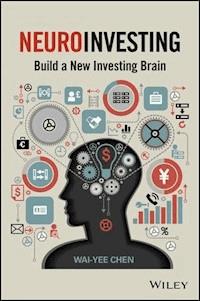
Rewire your brain for investing success As an investment advisor to high net worth individuals, Wai-Yee Chen has spent years watching her clients make investment decisions--some good decisions and some not-so-good decisions. Though confronted by the same market variables, those clients often make very different choices with very different results. Here, Chen argues that it's usually not the data that affects investor decision-making as much as the way investors themselves think. In NeuroInvesting, Chen argues that investors can change the way they think in order to change the way they invest. She presents four elements that affect investor decision-making and reveals how investors can rewire their brains to make better investing decisions for better returns. * Uses neuroscience to explain how successful investors think different * Written by an experienced investment advisor who works at one of Australia's premier retail brokers * Explains investing using real-world stories about investors from an advisor's perspective When it comes to investing, how you think has a huge impact on how you make investing decisions. Based on the real science of how people think, NeuroInvesting offers every investor a chance to change the way they invest by changing the way they think.
Sie lesen das E-Book in den Legimi-Apps auf:
Seitenzahl: 363
Veröffentlichungsjahr: 2013
Ähnliche



















Contents
Cover
Title Page
Copyright
Dedication
Foreword
Preface
Mapping the NeuroInvesting Manual
Acknowledgments
About the Author
Also by Wai-Yee Chen
Part I: Being at Ease
Chapter 1: Money and Me
My Money Personality
The Big Five Personality Traits
Money and Me
Part II: The Tension Caused by Impulsiveness
Chapter 2: Thrills, Ego, and Impulse
What Is Impulsiveness?
What about Impulse?
Keeping Impulse and Impulsiveness at Tension
The Impulse Meter
Chapter 3: Impulsiveness and Our Brain
Impulsiveness and Dopamine
Dopamine Neurons
Dopamine and the Trader
Dopamine Withdrawal Symptoms
Novelty-Seeking Gene?
Dopamine's Engine Room and Neuronetwork
Chapter 4: Beating Impulsiveness
Taut and Alert
The Effect of Serotonin
The Right Brain Comes to the Rescue
Engaging the Rational Brain
Setting Rules and Sticking to Them
Emotional Pain and Fear
In Conflict
Brain Loop
Be Open
Play Your Own Game
Part III: The Tension of Fear
Chapter 5: How Did Fear Get Here?
A Big Expectation
A Clean Slate?
Prevalent Fears
Personal Fears
Chapter 6: Are Fears Bad?
Passing Up Good, Profitable Opportunities
Buying at the Top
Buying Products with High Yields
Counterproductive Trading
Unnecessary Protections
Fear Incapacitates
Inability to Accept Losses
Fear Causes Brain Freeze
The Costs of Fear
Chapter 7: Reacquaint Yourself with Fear
The Pandora's Box of Fear
The Engine Room of Fear
The Process of Fear
The Making of Fear Memories
How Real Are Memories?
Recreating Trading Memories
Other Fear Management Techniques
Part IV: Instincts Held in Tension
Chapter 8: Emotions and Beliefs
Emotions
What Are Emotions?
The Emotional Neuronetwork
Value of Emotions
Emotional Expression of Goals
Our Beliefs: The Unspoken Goal
Instinct Encapsulates All
Chapter 9: Expressions of Instincts
A Culture of Anti-Instinct
Your Instinct Awaits
Expressing Instincts
The Emotional Brain and Instincts
Instincts in Trading
From Instincts to Mimicry
Mirror Neurons in Trading
The Workings of Mirror Neurons
Practice Instincts
Avoid Instinct Killers
Avoiding Anti-Instincts
Chapter 10: Nurturing Your Skills in NeuroInvesting
How to Be an Excellent Instinctual Investor
NeuroInvesting Is a Journey
Chapter 11: Summary of the 12 NeuroInvesting Trading Strategies
Appendix A: Big Five Inventory Questionnaire (Adapted)
The BFI Scale Scoring Instructions
Appendix B: Barratt Impulsiveness Scale (Revised)
Appendix C: The Maudsley Medical Questionnaire*
Appendix D: Word Connection List*
Appendix E: Body Perception Questionnaire
Scoring Guide
Index
Cover image: © iStockphoto.com/VLADGRIN Cover design: Wiley
Copyright © 2013 by John Wiley & Sons Singapore Pte. Ltd.
Published by John Wiley & Sons Singapore Pte. Ltd.
1 Fusionopolis Walk, #07–01, Solaris South Tower, Singapore 138628 All rights reserved.
No part of this publication may be reproduced, stored in a retrieval system, or transmitted in any form or by any means, electronic, mechanical, photocopying, recording, scanning, or otherwise, except as expressly permitted by law, without either the prior written permission of the Publisher, or authorization through payment of the appropriate photocopy fee to the Copyright Clearance Center. Requests for permission should be addressed to the Publisher, John Wiley & Sons Singapore Pte. Ltd., 1 Fusionopolis Walk, #07–01, Solaris South Tower, Singapore 138628, tel: 65–6643–8000, fax: 65–6643–8008, e-mail: [email protected].
Limit of Liability/Disclaimer of Warranty: While the publisher and author have used their best efforts in preparing this book, they make no representations or warranties with respect to the accuracy or completeness of the contents of this book and specifically disclaim any implied warranties of merchantability or fitness for a particular purpose. No warranty may be created or extended by sales representatives or written sales materials. The advice and strategies contained herein (investment or medical) may not be suitable for your situation. The author of this book does not dispense medical advice or prescribe the use of any technique as a form of treatment for physical, emotional, or medical problems. The intent of the author is only to offer information of a general nature to help you better understand yourself and to become a more effective investor. You should consult with a professional where appropriate. In the event you use any of the information, techniques and strategies in this book for yourself and in your investments, the author, her employer, and the publisher assume no responsibility for your actions. Neither the publisher nor the author or her employer shall be liable for any damages arising herefrom.
Other Wiley Editorial Offices
John Wiley & Sons, 111 River Street, Hoboken, NJ 07030, USA John Wiley & Sons, The Atrium, Southern Gate, Chichester, West Sussex, P019 8SQ, United Kingdom John Wiley & Sons (Canada) Ltd., 5353 Dundas Street West, Suite 400, Toronto, Ontario, M9B 6HB, Canada John Wiley & Sons Australia Ltd., 42 McDougall Street, Milton, Queensland 4064, Australia Wiley-VCH, Boschstrasse 12, D-69469 Weinheim, Germany
ISBN 978–1–118–33921–3 (Cloth) ISBN 978–1–118–33922–0 (ePDF) ISBN 978–1–118–33924–4 (ePub)
To the creator of our amazing brain
Foreword
When I was in college, what really interested me was how people functioned and did things. Why were some people successful and others not? How could success be duplicated? Why did some people think one, while others thought a different way? As a result, I majored in psychology but was very disappointed in what I was taught because the predominant model of the day was behaviorism. This meant that you studied patterns of stimulation and reward to understand behavior. The net result was to develop a set of rules that said “if you did this form of stimulation, you get that sort of response.” I wasn't impressed applying this theory to laboratory rats. Later, after getting my undergraduate degree, I worked with mentally challenged children and found that it worked even less effectively.
As a result, I decided to get my doctoral degree in biological psychology. I'd get around behaviorism and learn how the brain actually worked. But what I got was more of the same. You stimulate this part of the brain and you get this response. You cut out that part of the brain and you eliminate this sort of behavior. Again, I wasn't impressed.
My breakthrough came when I began to study neurolinguistic programming (NLP), which I call the science of modeling. It enabled me to model such things as successful trading, how to develop a system to fit you, how to position size to meet your objectives, and even the wealth process. It's been a fascinating journey.
One of the things that I learned very early from NLP was the presupposition that “the map is not the territory.” What this means is that what goes on inside your head does not necessarily represent what is happening in the world. It's just a map, and it might not be a good map. For example, you never really trade the markets; you trade your beliefs about the markets. And your beliefs may or may not be useful. Most traders and investors, especially those who listen to the mainstream media, or go through a financial education, have many nonuseful beliefs. And by nonuseful, I mean that they create problems that wouldn't otherwise exist. And that doesn't mean that people who aren't educated about the markets are much better off, either.
Perhaps you have seen the movie classic The Matrix, where the hero, Neo, was given a choice: take the red pill and see the world as it truly is, or take the blue pill and wake up in bed believing whatever he wanted to believe. Of course, Neo takes the red pill, and the adventure begins. Now, what if there were a real matrix and a real red pill? In my book, Trading Beyond the Matrix, I put forth the idea that everything is illusion and that what we experience is the programming produced by our beliefs. And when you understand this idea, you can start to reprogram yourself, like Neo, to operate within the matrix at a superhuman level.
The brain is an incredible instrument, but it is also a fabricator of reality. Yet you must interact with the market using your brain. And that's where Wai-Yee Chen's book, NeuroInvesting, comes into play. You create your reality by using your brain to give meaning, form beliefs, and make judgments.
The market is really billions of ticks of movement in various trading instruments. You try to make sense of it by using a price bar to represent a particular time period in the market—be it a minute or a month of time. But in doing so, you have already simplified reality. This form of simplification often doesn't make sense to you, so you transform the price bars into various indicators, such as moving averages, or perhaps you try to gather fundamental data and give meaning to that. But in some way, you try to make sense out of the markets.
Ms. Chen's eighth trading strategy, given in this book, says: Examine the truth of your thoughts and memories. She writes: “What you believe to be true and remember are just that, your beliefs and memories; they must be subservient to universal realities and truths, at least when you are investing.”
Van K. Tharp, Ph.D.
Author of Trading Beyond the Matrix: The Red Pill for Traders andInvestors; Supertrader; Trade Your Way to Financial Freedom, The Peak Performance Course for Traders and Investors, and The Definitive Guide to Position Sizing™ Strategies.
Preface
Investors or not, as humans we have two deep yearnings. We are all born with them and are ruled by them. We can't seem to escape their grasp. These two deep needs are the need for survival and the need for happiness. In this book I refer to them as the need for more and the need to be more.
Every thought, act, and emotion emanates from these two sources, which may sometimes seem to be opposing each other. If there were a “Bell Curve of Human Needs,” I would put survival and happiness at either end of the curve. As an archer pulls the string of the bow and aims, the tension between these two instincts is the power and strength that gathers within the archer. The tighter the tension between the two ends of the bow, the further the arrow will go, and the more likely that we will achieve our target.
That's our aim in both life and in investing: to gracefully and confidently handle the tension between the two needs, giving us the precision and the power to get us to the target. The survival instinct drives us to grow more, invest more, make more money, and attain more. Without the tension to keep it going, it weakens and allows disappointment and fear to set in when the “more” we want is not yet achieved or simply the fear of losing them dominates, even when we have attained them. We need the tension to keep us away from this unproductive fear.
The happiness instinct drives us to reach for social significance, career achievements, and to seek value and worth in life. When not at tension, they loosen up into sloppiness and lack of discipline and we are subject to the danger of excessive and impulsive behaviors, addictions, a lopsided value of life, and the traps we boxed ourselves into through seeking happiness.
Life, as in investing, is about maintaining the tension between these two instincts.
Many struggle through life and most do not come close to achieving the success they could have had. But do you know we all instinctually (consciously or not) hold on to and maintain this tension?
The pivot point lies in our brain. Its job is to help us remain in that stance. Be ready to shoot with tension in our bow. Our whole three-in-one brain is made for this role. Its job is in bringing the wide-reaching and well-connected neuronetwork into its service and at its disposal, to be ready to aim for the target, at all times.
Our emotional brain is sophisticated, skillful, and sensitive to who we are. It works with us and is ready to work for us, when we are ready to call upon it.
The problem is that, as investors, we wish to chase undervalued assets, yet we miss this one asset that is most significant and important. Our own emotional brain. If you wish to find an undervalued asset, consider your emotional brain! We should take the time to understand, study, use, and access this one asset more than any stocks, bonds, funds, or instruments that we could ever own. Over time, the more we use our emotional brain and get to know it, the more it will appreciate in value and deliver wealth that is beyond any asset type.
Mapping the NeuroInvesting Manual
This book is a manual for anyone who wants to go on the journey of discovering and appreciating our emotional brain and its rich network and rewards. This is one gift we are endowed with, free of charge. The skill, precision, and power of this gift comes from NeuroInvesting. This is a stimulating journey of discovery, insights, and practical trading strategies.
Part One, Being at Ease: We want to invest while feeling at ease with self and money. We start by examining our Money Personality (Chapter 1). Each of us has a unique Money Personality. We examine how much of that current personality is gene-motivated or influenced by culture, nurturing experiences, or environment, and, most important, whether we can change it. Our Money Personality is put into perspective by learning about the Big Five Personality Traits in discovering which of the five aspects and combinations thereof have a higher tendency in pushing or bringing us toward the three tensions (divided into three parts of the book) faced by all investors. The Big Five Personality Traits are applied and used throughout the book in case studies and in explaining the behavioral traits of investors (some names and details have been changed to protect the privacy of the subjects). This sets the scene and prepares us for the appreciation and understanding of our emotional brain network.
The following chapters are divided into the three types of tensions in an investor's bow. We all face these, experience these, and are in desperate need of understanding how to keep them in balance.
Part Two, The Tension from Impulsiveness. Impulsiveness is a symptom of our quest to achieve survival and happiness. Impulsive behaviors from the need to be safe and the seeking of status and value in life loosen the tension of the bow. The loss of tension due to impulsiveness becomes a serious problem as it detracts investors from achieving true goals. This sloppiness in the investor's bow is caused by a distinct neuronetwork in our emotional brain.
Thrills, Ego, and Impulse are the subjects of Chapter 2, which examines the differences between impulsive behaviors and impulse. The former is a behavioral sloppiness while good impulse is an asset we can't live without. How do we maintain a balance between the two?
Chapter 3 Impulsiveness and Our Brain explains the neuronetwork of impulsiveness. What happens in our brain when we are impulsive? Are we driven to it or are we driven by it?
Chapter 4 is about Beating Impulsiveness. How do we keep the bow string in a state of tension, with impulsiveness under control and meanwhile enhancing our good impulses?
Part Three, The Tension of Fear, is not the kind of fear experienced because of our survival instinct. Instead, these are fears caused by doubt, anxiety, and disappointments that loosen the tension of the bow. Unproductive fear and anxiety is one emotion we need to quell while working at increasing the dosage of the healthy instinctual quick-reacting “fear” that keeps us nimble and safe.
How Did Fear Get Here?, the topic of Chapter 5, is an important question that leads us to trace the journey of fear within us. Are they collective or individual fear prints? Will they remain forever or are we able to vanquish them forever or rewire our brains?
Chapter 6 examines the question Are Fears Bad? We need to be convinced of the answer before we can work at keeping fear at the correct state of tension in our lives.
To deal with fear effectively, you need to Reacquaint Yourself with Fear, the subject of Chapter 7. We examine the roles memories play in our fears and whether our fears exist only in our own brain. A five-point plan is provided for those ready to take on the task of keeping fear from interfering with our judgments.
Part Four, Instincts in a State of Tension, describes the tension we all need to maintain as investors. Our bowstring is at the right tautness, our stance is perfectly positioned for the shot, and our aim is sharpened by our alerted emotional brain. While this skill eludes many, it is readily available for all. What's most needed is to trust in our most valuable assets, a trust that comes through awareness and practice.
Chapter 8, Emotions and Beliefs: These are the two silent and often ignored voices of an investor. How do they affect you? Are your emotions just feelings and are your beliefs truths?
Chapter 9, Expressions of Instincts: How does instinct actually work for an investor? What are the “instinct killers”?
Chapter 10, Nurturing Your Skills in NeuroInvesting: Keeping the bowstring in a state of tension with impulsiveness, fear, and instincts requires you to take a look at your Mental Personality. How does one pursue the NeuroInvesting journey?
Plus, the 12 Trading Strategies for NeuroInvesting are positioned throughout the book. As you develop your grip on NeuroInvesting, your emotional brain and its rich network will not only be sharpened, but your stance and shots will be more far-reaching and more accurately aimed toward your bull's-eye, the twin goal of the more and to be more that we all desire to achieve.
Best wishes on your journey!
Acknowledgments
To the scientists who constantly push the boundaries of research in their discoveries, and pursue a deeper understanding of the intricacies and workings of the brain, I am indebted to your work, which forms the scientific basis of this book. I thank those whose work I have quoted in this book and the many more whom we will continue to read and hear about, who will continue to help all humanity have a greater knowledge of who we are.
My clients, friends, contacts, people whom I have met and spoken to, whose stories I have shared, and your personal experiences, despite them not being your proudest moments. Your generosity in sharing your stories will help others in journeys similar to yours escape the same traps, frustrations, and mental anguish.
And to all those who have journeyed with me in the growth and metamorphosis of my Money and Mental Personality in the last many years.
Thank you.
About the Author
Wai-Yee Chen is an investment adviser, an educator in finance, and an options and equities trader. Wai-Yee is a regular TV guest commentator for business channels CNBC and SKY, and a coach to fellow advisers and investors.
Qualified as a CPA (Certified Practicing Accountant), Wai-Yee holds degrees in accounting (University of Newcastle, Australia) and a Masters of Applied Finance (Macquarie University, Australia). Her postgraduate qualifications include a diploma in financial planning and derivatives accreditation with the Australian Stock Exchange.
Having worked with and advised many individual investors over the decade and used options as part of her investment menus, Wai-Yee wrote her first book in 2010, OptionsWise: How to Invest Sensibly, to have a voice for the use of options as a protective and passive income tool, against the normal connotation of their being aggressive and dangerous.
For her, dealing with clients and investors every day is like being in a scientific lab of human conditions; these experiences and observations have brought Wai-Yee to pursue deeper self-learning in the areas of psychology, philosophy, and neuroscience. She has gained immense practical knowledge from this lab of human conditions, which has provided many an opportunity to experiment and test her hypothesis and theories over the years. Wai-Yee now shares her findings in her new book, NeuroInvesting. It leverages off her more than a decade-long experience in trading options and equities, and in advising clients with different personality profiles, psychology, and behavioral traits.
Wai-Yee is currently an investment adviser with Ord Minnett, a premier stockbroking firm in Australia (jointly owned by NYSE-listed JPMorgan and ASX-listed IOOF) and lives in Sydney with her husband and three children: two girls and a little boy. Her website is www.waiyeechen.com.
Also by Wai-Yee Chen
OptionsWise: How to Invest Sensibly (Oex, 2010), www.optionswise.com.au
PART I
BEING AT EASE
CHAPTER 1
Money and Me
“What is your risk profile?”
My client tells me he has been asked this question so many times by investment advisers over the years that he is weary of being asked yet again. Sitting across him as his investment adviser (and being obliged to ask), I smile. I agree with him.
He tells me, “I just want to make money and obviously to lose as little as possible, and if at all possible, none.”
Lesen Sie weiter in der vollständigen Ausgabe!
Lesen Sie weiter in der vollständigen Ausgabe!
Lesen Sie weiter in der vollständigen Ausgabe!
Lesen Sie weiter in der vollständigen Ausgabe!
Lesen Sie weiter in der vollständigen Ausgabe!
Lesen Sie weiter in der vollständigen Ausgabe!
Lesen Sie weiter in der vollständigen Ausgabe!
Lesen Sie weiter in der vollständigen Ausgabe!
Lesen Sie weiter in der vollständigen Ausgabe!
Lesen Sie weiter in der vollständigen Ausgabe!
Lesen Sie weiter in der vollständigen Ausgabe!
Lesen Sie weiter in der vollständigen Ausgabe!
Lesen Sie weiter in der vollständigen Ausgabe!
Lesen Sie weiter in der vollständigen Ausgabe!
Lesen Sie weiter in der vollständigen Ausgabe!
Lesen Sie weiter in der vollständigen Ausgabe!
Lesen Sie weiter in der vollständigen Ausgabe!
Lesen Sie weiter in der vollständigen Ausgabe!
Lesen Sie weiter in der vollständigen Ausgabe!




