


8,49 €
Mehr erfahren.
- Herausgeber: Atlantic Books
- Kategorie: Gesellschafts- und Liebesromane
- Sprache: Englisch
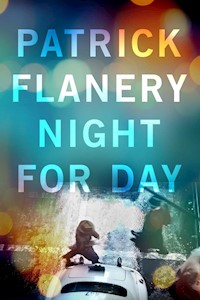
Los Angeles, 1950. Over the course of a single day, two friends grapple with the moral and professional uncertainties of the escalating Communist witch-hunt in Hollywood. Director John Marsh races to convince his actress wife not to turn informant for the House Committee on Un-American Activities, while leftist screenwriter Desmond Frank confronts the possibility of exile to live and work without fear of being blacklisted. As Marsh and Frank struggle to complete shooting on their film She Turned Away, which updates the myth of Orpheus to the gritty noir underworld of post-war Los Angeles, the chaos of their private lives pushes them towards a climactic confrontation with complicity, jealousy, and fear. Night for Day conjures a feverish vision of one of the country's most notorious periods of national crisis, illuminating the eternal dilemma of both art and politics: how to make the world anew. At once a definitively American novel, echoing Philip Roth and Raymond Chandler, it also nods to the mythic landscapes of Dante and the iconoclastic playfulness of James Joyce. With as much to say about the early years of the Cold War as about the political and social divisions that continue to divide the country today, Night for Day is expansive in scope and yet tenderly intimate, exploring the subtleties of belonging and the enormity of exile-not only from one's country but also from one's self.
Das E-Book können Sie in Legimi-Apps oder einer beliebigen App lesen, die das folgende Format unterstützen:
Veröffentlichungsjahr: 2019
Ähnliche


















PATRICK FLANERY is the author of the critically acclaimed novels I Am No One, Fallen Land and Absolution, which was shortlisted for the 2014 International IMPAC Dublin Literary Award and Royal Society of Literature Ondaatje Prize. In 2019 he also published a memoir, The Ginger Child: On Family, Loss and Adoption. Born and raised in the US, he has lived in Britain since 2001. His work has appeared in Granta, Zoetrope: All-Story, the Guardian, the Spectator, Newsweek, the Washington Post and the Los Angeles Times. He is Professor of Creative Writing at Queen Mary University of London and Professor Extraordinary at the University of Stellenbosch.
Also by Patrick Flanery
FictionI Am No OneFallen LandAbsolution
Non FictionThe Ginger Child: On Family, Loss and Adoption
First published in hardback in Great Britain in 2019 by Atlantic Books, an imprint of Atlantic Books Ltd.
This paperback edition published in 2020.
Copyright © Patrick Flanery, 2019
The moral right of Patrick Flanery to be identified as the author of this work has been asserted by him in accordance with the Copyright, Designs and Patents Act of 1988.
All rights reserved. No part of this publication may be reproduced, stored in a retrieval system, or transmitted in any form or by any means, electronic, mechanical, photocopying, recording, or otherwise, without the prior permission of both the copyright owner and the above publisher of this book.
This novel is entirely a work of fiction. The names, characters and incidents portrayed in it are the work of the author’s imagination. Any resemblance to actual persons, living or dead, events or localities, is entirely coincidental.
With thanks to the editors of Film Comment for permission to quote from the article ‘Some Visual Motifs of Film Noir’ by J. A. Place and L. S. Peterson in Vol. 10, No. 1, January–February 1974.
The quotation from My Secret Beat: A Notebook of Prose and Poems by Michael Burkard, Copyright © 1990 by Michael Burkard, is used by permission of W. W. Norton & Company, Inc.
1 2 3 4 5 6 7 8 9
A CIP catalogue record for this book is available from the British Library.
Paperback ISBN: 978 1 78239 6 086EBook ISBN: 978 1 78239 6 079
Printed in Great Britain
Atlantic BooksAn imprint of Atlantic Books LtdOrmond House26–27 Boswell StreetLondonWC1N 3JZ
www.atlantic-books.co.uk
forAndrew
‘Above all, it is the constant opposition of areas of light and dark that characterizes film noir cinematography. Small areas of light seem on the verge of being completely overwhelmed by the darkness that threatens them from all sides. Thus faces are shot low-key, interior sets are always dark, with foreboding shadow patterns lacing the walls, and exteriors are shot “night-for-night.” Night scenes previous to film noir were most often shot “day-for-night”; that is, the scene is photographed in bright daylight, but filters placed over the camera lens, combined with a restriction of the amount of light entering the camera, create the illusion of night.’
– J.A. Place and L.S. Peterson, ‘Some Visual Motifs of Film Noir’
‘For in some recognitions comes a refusal, and your life had become such a refusal, a conversion of day for night, night for day, and there was no beginning and no end. And there isn’t, except you were not able to see that way.’
– Michael Burkard, ‘The Sun’
PART ONE:
Day
1
The last time I saw you was the day my life ended. I say that it ended but you understand this is only a figure of speech. Say instead that my life up to that point came to an end but in the intervening decades my body has kept walking around in the world, although I have now reached an age when such movement occurs at what feels like a nearly geological pace. If I manage a mile in forty-five minutes I have accomplished something significant. That last day we spent together we both still had the energy of our youth, the resilience of our bodies, never imagining how quickly our energy might begin to dissipate or how long and unswerving the decline would prove. To say that I have wished to hear from you without ever expecting you to phone or write suggests I believed the onus was on you to initiate contact, as if I felt no sense of responsibility to do so myself. This was never the case. Shame has kept me silent, distant from you and Helen and all the people I used to call friends, though even to call you friends fails to admit of the strength of our bond, the way we managed for a few brief years to craft the closest thing to family I have known since leaving the home of my parents.
Over the course of the preceding night I began to formulate what I knew I must do. I can no longer recall whether this private planning – plans I did not share with you until far too late – was the spur for the argument we had, or if the argument itself prompted the decision. You would tell me now, I suspect, that even asking the question suggests a denial of guilt. Perhaps you will reply to this letter and tell me what you think, whether and how I should judge myself in the last months of my life. It was not my intention when I decided to write that I would return to grievances, because I know after all these years that you are, if not entirely innocent, at least more so than I. So this is my defense, an explanation of how I came to the decision I made that day so many years ago, and an apology for the consequences that have marked us both.
Let me start much earlier, back when we met, four years before the day we parted, on the set of a film in which you had only one line but a line I nonetheless wrote, and in seeing the boy they had cast – for then you could have been no more than twenty-two – I rewrote the line to suit the face cast to speak it. And you, performing a naïveté as intoxicating as gardenias in twilight, slouched across the soundstage and asked me the meaning of those words I had blown into your mouth. That was the first time we spoke, although we had noticed each other on the lot at various points, since your arrival fresh from military service, unscathed because you never reached a battlefield. You caught my eye, and I flatter myself to think I might have caught yours. We knew what we were before you ever spoke to me – at least I knew what you were even if you might have been unsure of me. It was not how you walked or spoke but the way your gaze lingered when it fell upon my face.
Because following the eye as it traveled could lead us into the arms of a sting if we were reckless or unlucky, it was natural to distrust our instincts, to doubt the pull of our attraction. You were young and beautiful enough that I thought it possible you were no one I should allow myself to follow. I understood that I was attracted to you and hoped you might be attracted to me, but there was no guarantee that you were conscious of any attraction you might feel, and I could not trust you knew yourself well enough to accept what you were. Dark skin and pale hair and eyes the shade of California lilacs. Who could fail to notice? We bumped into each other at the newsstand one December morning when you were buying a copy of Life with Ingrid Bergman dressed as Joan of Arc on the cover and I noticed how embarrassed you were to be seen holding a magazine like that, or perhaps it was because a woman was on the cover, or because that woman was dressed as a man. I remember thinking you needed someone to show you how to comb your hair differently, to move the part from the center and off to the left, and then, when I saw you again a few weeks later, catching your eye in the commissary, you had done just that. In changing your hair, you looked more yourself, self-contained without being smug. You were having lunch with Helen that day, the two of you cast in the same film, and because Helen was already my friend I drummed up the courage to ask her a few days later who you were. A kid from Montana, she said, a farm boy. A ranch boy to be precise, with two brothers. But does he have a girlfriend? I asked Helen. I remember the way she turned to me. We were sitting in my living room after a Christmas party to which only five people came. I had filled the picture window with poinsettias and bought a white-flocked tree hung with red ornaments and matching lights. Helen let her head tilt back and half closed her eyes. No, the farm boy does not have a girlfriend. Why do you ask? And then she must have seen me blush because she whispered, Oh, is that it? Well, I can’t say for sure but you might have a chance.
Before we ever spoke I imagined you in denim and cowboy boots and a plaid shirt with a bandanna around your neck, a Stetson on your head and a lazy way of sitting in the saddle, one hand on the reins of your appaloosa, one gripping a copy of Life. That evening in December 1946 I could not have imagined how only a year later I would be in bed with you in that same house, discovering you were not the innocent you appeared, that I should have had no fear about whether you accepted yourself or not. That was the miracle. So long as the truth remained hidden you were more at ease with who you were than I have ever managed to be. It was only outside of the house that you became your public self, and that man bore as little resemblance to the one I knew as Ingrid Bergman to Joan of Arc.
In my living room that Christmastime, I was conscious of Helen’s hand shaking where it lay on the back of the sofa. What’s wrong, I asked. Her lips drew taut and her chin quivered. Why don’t we get married, she said, it would make things so much easier for you.
I was sensitive enough not to laugh at the suggestion because I could see what it cost her. But you know that wouldn’t work, Helen, I’m not suitable for marriage, not to someone like you. That’s just it, she said, I’m not someone like me. I’m someone like you.
Weak for a man in uniform? I joked, and her eyes began to water. You know what I mean, Desmond. I’m as unmoved by men as you are by women. I wouldn’t put it quite that way, I said, taking her hand in mine and holding it until it stopped shaking. I love you too much to risk making you hate me. Why would I ever hate you? she asked. Anyone who lives with me long enough eventually hates me. I’m sure that’s not true, she said, and besides, who have you lived with apart from your parents? No one, I admitted, except the man who cleans my house and cooks my food and if you ask Max tomorrow he’ll tell you he could do without me.
Helen laughed and we never spoke again of her proposal. I could not have imagined that only six months later, the night after you and Helen were married, I would be in bed with you in my own house, because the two of you did not yet have a house of your own, and we presumed it safe enough to suggest I was a friend of the couple letting them stay before they departed on their honeymoon.
The night before my last day in Los Angeles, not even four years after we first spoke to each other, we argued about the terms of our arrangement. In the months leading up to that night in April 1950 I had allowed myself to believe I was on the margins because you and Helen and Barbara were able to live together while I had to retreat to my own house. I feared this meant you did not really love me. Perhaps I was looking for a way of cracking a rift between us, seeking fodder for an argument that would allow me to escape with a conscience less burdened by guilt. When we fought, which was not very often, it felt as if my chest were wired up with electrodes, the air supercharged with electricity and the anger between us waiting for a spark. Because I had risked being too intimate in public, at the studio, on set, I can no longer remember, you found me at fault. I had been standing too close, perhaps I touched your hand or your shoulder, maybe I spoke words that betrayed an intimacy whose exposure to the scrutiny of strangers you feared, and not without cause. I accused you of being more concerned about your own reputation than mine and you said that wasn’t fair and I said that didn’t make it untrue and you said you were just as concerned for my wellbeing as your own and I said that’s a fucking lie and you took my head in your hands and for an instant I had a vision of you head-butting me hard and knocking me out but instead you kissed me just as violently, cutting your lips into mine with an anger that made me almost afraid of you, but then you held the kiss and softened it and I let you keep gripping my head, your fingertips pressing into my scalp, consuming your rage because that was what I had learned to do since we first fell in love.
So much fury for such an angelic man.
Don’t resent me for saying what you must know is true.
When we were exhausted by fighting, we went to bed, not speaking as we undressed, you snapping your slacks tight and draping them over a hanger that clattered in the closet as you put it away, the door shutting too sharply, and then we were in bed, in your house with its walls of glass, a window cracked open to admit fresh air and the sound of the Pacific. You rolled over to press the length of your body against mine and I sighed with relief.
So my last day in Los Angeles began with me inside you and you inside me in the happiest hour of sadness I have ever known. I sensed the end was coming and you did not. If it were possible to do this for the rest of my life, exploring your body from within as you explored mine, I would, but then the swell started in my gut, a sensation of pleasant seasickness, that weightlessness of the stomach rising as an illusion of being borne away by tides took hold. Then the swell crested and whatever was watery turned to light. I squeezed my eyes shut and in the eclipse of that moment a measure of me rushed into you. After we finished, we lay chest against chest and you angled your head to kiss me.
That was the day my life ended.
I could hear the ocean crashing and, down the hall, Helen and Barbara talking in their own darkness. You nuzzled my neck and whispered, I trust you completely.
I could never forget the words because they broke my heart. You too, kid, I said, and you scowled. Don’t call me that, Desmond. Maybe I smiled, let’s say I did, or perhaps I apologized and kissed you again, gripping you tighter, and told you I had to work. How could I sleep knowing it was the last time I would make love to the man who might have been my husband in another world and time? My ear pressed against your body, I listened as your heart stepped down to a slower dance, felt you relaxing, legs twitching as you began to drop into sleep.
Don’t leave, you mumbled.
Now, too late, I know that I should have stayed.
I have to work, I said.
You’re so diligent.
Who else will put words in your mouth?
I love you, Desmond.
I love you, too, I hope I said. I hope I told you that as often as I felt it. Even in the wake of a fight I was no less in love with you than in the long stretches of days when no disagreements flared between us.
Four hours later, four in the morning, fourteen days into the fourth month of the fiftieth year of the twentieth century and the last day of my life in Los Angeles, I was sitting at the library table in your Pacific Palisades living room trying to type as quietly as possible on my portable Remington, rewriting scenes you were meant to perform later that day.
Because I knew what was coming, I had been meditating for several weeks on beginnings and endings, knowing already that I was approaching the point where I would have to take flight or face whatever our government might inflict. At that moment I had told no one because I could not risk telling anyone before you. In the living room, looking out on the swimming pool and the dark bank of sky above water, staring at my own scarecrow reflection, I knew the time when I should have told you had passed several weeks earlier.
When that house was built, I remember Helen thought it a magnificent joke, a home more glass than wall, nothing but windows facing west, open to anyone who might scale the fence around the property to look at our queer band apart. And now, instead of writing the scene I had to revise, I was thinking about how I would tell you what I could no longer conceal. With one hand I was drinking cold coffee while pecking the keys with the other, trying to figure out what to say to you at the same time I was censoring myself, struggling to make the story of underworld Los Angeles we were all trying to finish appear less worldly to the censors. Beneath the scene heading INT. LOS ANGELES – DAY I had typed a screed of rambling thoughts about the primacy of language. I no longer have the draft but I remember the gist.
In the beginning was the word. True for creation, true for cinema. Once sound entered the pictures, the word came before images, and even in the days before sound, words were the foundation of pictures since the people making the images first had to think what to shoot, how to point and focus a camera, whether to cut a shot here or there, place it in sequence before this one or that one, and all that thinking about images necessarily happened through language, thoughts spoken or articulated silently but no less verbally in the mind. That great queer Wittgenstein said something like this, how the limit of our ability to express thought must be described through language, and beyond that limit there is only nonsense: The limits of my language, he wrote, mean the limits of my world.
I ripped the page of nonsense from my typewriter, wadded it up, and threw it in the wastepaper basket. Once more I typed the location at the top of a blank page, rewriting what I had already written countless times over the past months. Night became day, exterior interior, sex a less thrilling connection. None of these lastminute revisions were my idea. You may remember that ever since the start of production Porter had been haranguing us, claiming that without the changes he and the censors were demanding the project would fall afoul of every moral guardian and legion of decency self-elected to police what ordinary Americans consume when they close themselves together in a dark public place. I never felt you understood what such pressure did to me, or perhaps you understood in logical terms but could not appreciate how traumatizing it was to work under the force of the censor’s gaze. It had a deranging effect, making me see titillation in the most innocuous lines, or driving me to encode double-entendres in language so arcane I hoped none of the puritans in the Production Code Administration would ever figure it out. Lately, I had started to believe that the only safe creative territory was one populated solely by books, in whose pages more daring material could still be recorded in ways history has suggested may yet have greater durability than the reams of celluloid that bought us both such comfortable, dishonest lives. I say that not to rebuke either you or me for the choices we made, since no better choice seemed possible. The choice was to lie or to live in the wilderness.
On that morning in April 1950 I had realized the lies were taking too much from me, that pretending we were nothing but friendly professional acquaintances to all but the tiniest circle of intimates was not only exhausting but also dementing. In feigning that we were nothing to each other, part of my brain began to believe this was true, so that the suspicion you did not love me as much as I loved you infected all of my thinking about you.
In the end, the political threat in combination with the personal one was enough to make me conclude I had no better choice than exile. Americans do not like to believe that their own would ever feel compelled to flee. Most cannot conceive that law-abiding citizens might find themselves in a moment when logic seems to have twisted inside out and everything we think we know about our country appears no longer true. Overnight, a nation so recently an ally had become our enemy. The ideology it followed would become a crime in a country that claimed freedom of religion and freedom of speech as its highest principles. We had smashed through the mirror and into the darkest wonderland we could collectively imagine.
I caught myself staring again at my reflection in your wall of glass. A man not yet middle-aged, still with a slender body and a full head of sandy-red hair, sat naked except for your silk dressing gown, which I had swiped from the chair where it lay in your bedroom. The irony was not lost on me: although sleeping with one of the studio’s leading men I was rewriting his lines in the middle of the night because the Head of Production said it was too risqué to suggest an ex-serviceman might want to go to bed with his wife’s sister. I had written the part especially for you, hoping it would give us a thicker layer of insulation, that the performance of Orph Patterson’s virility would convince any who might have cause to doubt – gossip columnists in particular – that you were no less interested in women than one assumed men like Gregory Peck or Kirk Douglas might be.
Beneath the scene heading the new page was blank, glaring white under the lamp. I reread the previous one. On paper the dialogue you would speak flowed, the progression of scenes made sense given the changes Porter had forced me to make, the narrative logic was intact. The shit was fine. The shit would do. Most days it scarcely mattered what quality of shit I put on the page because the director, or actors, or Porter or Leo Krug would rewrite at will without touching a typewriter, cutting and adding as if they knew my business better than me. Sometimes you did so yourself, and I never let you see how much the liberties you took lacerated my pride. John Marsh, although my friend and collaborator, was among the worst offenders. He would stand on set and tell you not to say the line I had written because it now struck him as unnatural, and rather than asking me to come up with an alternative, offered one himself, a phrase either hackneyed or homespun. In the case of the film we were then trying to finish, John had already claimed half-credit for the script without writing one line. Ideas were enough. Conversations about plot and setting. Half-drunken arguments about the structure of a character’s arc. What a certain kind of man calls ‘spitballing’, throwing ideas in the air and seeing what sticks to the ceiling. That was John’s idea of writing. When I came to Hollywood from New York I quickly learned that this was the way: words attributed to me in a film’s credits were never entirely mine. The name Desmond Frank hid the labor of a dozen women and men typing furiously in the Writers’ Building, and most of the time they were never, any of them, making up original stories, just adapting the ideas of people too principled to sell out and migrate West.
Days come upon me now when I wish I had never made that journey, when I think I would have been better off staying in New York, that if I had done so I might never have been forced to leave America. Then I look up at my library here in Florence and see one of the photographs of you in your youth, one of the dozens of reproductions of your face that decorate my walls, you in all your multiple selves, archiving the faces of your own ancestry (even, I like to think, archiving the history of our love for each other), and the regret bends into a feeling more complex, less polarized. Light and shade. Day and night.
I have never stopped loving you, Myles, even as I have been forced by the choices I made a lifetime ago to seek out the love of other men, not one of whom has burned as furiously through my heart as you did. What you do not know, what I never had the heart to tell you, is that you were not my first love, nor my greatest. By the time you and I met, that love was long dead.
In the years before I moved to Los Angeles, having returned from Ithaca to Manhattan, back to my childhood bedroom on the Upper East Side because no one expected I would actually look for a job, I passed most afternoons escaping to the baths to find some relief from my sadness, and in the mornings wrote The Argosy, the novel that made my name. In writing about two college rowers from opposite sides of the tracks who fall in platonic love only for their friendship to end in the histrionics of tragedy, I was trying to tame the grief I felt. I took the problem of our both being men and turned it into a story of friendship thwarted by class, even as the characters were undisguisedly me and the boy I had loved, the feelings and affection between them legible as romantic for anyone with the sense to look for such things. When the studio paid me a small fortune for the film rights, that windfall propelled me westward from my parents’ home and ultimately to you, Myles, the second greatest love of my life.
On that morning after we had fought, as I sat looking out at your swimming pool in the dark, I was certain The Argosy would never be a movie. It had been years in development and, as you may remember, no one could conceive of how to make the story play on screen without adding a female love interest. Faggots, was what Krug said the last time I had spoken to him about it. Without a dame, everyone will think it’s a flick about faggots. It went without saying that such a thing was impossible. I had tried several times to write the script myself until Krug had decided I was not up to the job and took me off my own project. I don’t believe you’re man enough, Mr. Frank, Krug said, and ordered me to get the hell out of his office.
The dismissal struck me as ironic. Although I knew that I was male, I have always struggled to think of myself as a man. That is not to say I have ever been effeminate, or would prefer to be a woman – by accident rather than design I have tended to present myself to the world in a way that is not obviously queer. What I mean is that when I walked down the street in 1950 people may have seen a man but inside I felt no different than I had at eighteen, even sixteen, as though still trying to find my place in the world, brokenhearted and terrified of the risk you and I took every time we were together. Even now, at this great age, the disjunction between the face I see in the mirror and the self that I actually experience whiplashes my mind.
That morning in your house, however, I understood that I had reached a moment when I could no longer allow myself to think as a boy, in other words with all the idealism and hopefulness and optimism we tend to ascribe to the young. To make such a change required accepting my time in America had reached its end. If I did not leave, I was certain to face summons for doing no more than my birthright, thinking and associating freely, trying to imagine a better world. The only solution was to escape somewhere I could become anonymous, recommitting myself to books and turning my back on the movies forever. That is what I had decided while you were asleep upstairs, ignorant of all that I planned. But as soon as I thought of leaving you behind, parting seemed as impossible as staying, and the struggle between these two impulses tore at my heart until it was nearly dawn and my fingers collapsed on the Remington’s keyboard. The last work I would do for the studio was finished and my hands began to shake as I stacked the new pages together. I knew what I was thinking without wishing to own the thought.
In the face of two impossible choices that each seem destined to present a future too painful or dangerous to bear, there always remains one solution. The idea kept coming, bubbling up, almost physically present, like a hemorrhage or cardiac event, even when I resisted holding it in my consciousness, and the force of that idea, the strength of the intention, sent me to the sliding door. I opened it and crossed the terrace, slipped out of your dressing gown, stepped into the water at the shallow end, waded across the pool and allowed my head to drop beneath the surface until I reached the deep end where I sat, fingers typing across the concrete as angels circled above me screeching, beaks plucking insects from the water, all those synchronized swimmers, Esther Williams and her rubbercapped cadres splashing around before finding themselves in midair and dangling from the talons of Republic XF-12 Rainbows dispatched to return them to some central processing unit of military intelligence where their costumes would be searched for red understitching on a blue suit, what subversive costuming, male stunt doubles in pink frills and headpiece!
The temptation to open my mouth and breathe the water into my lungs came upon me.
Because of the burden of secrecy and obfuscation, the toll of living publicly a version of the self that lacked so much of the greater self, which had to remain hidden, I had been imagining what it might be like to kill myself for more than a decade. And because for me the disparities between the public and private self were not only about desire but also about belief, in the years since Congress grilled the Hollywood Ten, all friends of mine, I had been thinking about killing myself more frequently. In the days since the Supreme Court had dismissed the appeals of the Ten and doomed them to time in federal prison I did it almost hourly. I had these thoughts when I was inside you and you were inside me. I fantasized about killing myself even when I felt happiest.
Under the water, my chest began to ache. A stream of air escaped. A few seconds more and it would all be over, but then the thought of you or Helen or Barbara finding me face-down in your pool stopped me. It would be impossible to cover up a scandal like that. Gossip columnists would suggest a love nest and ambiguous couplings and the last thing I wanted was to complicate your already complicated lives. If someone was going to suffer or sacrifice, it should be me alone, and alone meant doing whatever I must away from here.
You see how I thought. I worried about your secret. I thought always of protecting your reputation. It did not occur to me that finding my body would be anything other than a problem to be managed because it was too dangerous to believe you might truly love me. If I believed that, I could never have left.
I pushed myself back to the surface and gasped. It was the closest I had come. Closer than almost swerving off Mulholland two nights earlier or nicking my wrist with a paring knife in the kitchen three days previously. Closer than taking twice my usual dose of sleeping pills over Easter weekend. I watched as a light came on in your room. My head bobbing in the water, arms and legs churning to stay afloat, I told myself I should go get into bed with you, let you open me up, make love one last time before our story was over. Instead I climbed out of the pool, stood wet in the morning air, put on your dressing gown, and went back inside to look over the pages I had rewritten. Light skimming over the mountains struck through eucalyptus boughs, casting a red sheen across the waves to the west that developed into a faint ruby glow on the living room walls. Interior – A house on a cliff. Pacific Palisades. Dawn. In the distance, a horizon of water caressing sky, two dark bodies approaching without ever meeting.
When I looked up from the pages you were standing next to me in khaki slacks and a white T-shirt that grazed your torso like gauze across stone. I wanted to put my hands all over that dark open brow, cover your hunted eyes, lock you in a room, never let you out. You’re all wet, you said. Do you remember how I stood and parted your lips with my own, or the way you pulled away after a moment, as if you already knew? Maybe I recited a line of poetry, Frühling, Geliebter!… Unendliche Schöne! Maybe you asked me what it meant and I said it was just a poet you wouldn’t know, my infinite beauty. If that’s what I said, forgive me. I withheld knowledge not because I doubted your intelligence but out of a selfish desire to preserve your innocence. Now you should know, it was Goethe on Ganymede, the loveliest of mortal men, abducted by Zeus to preserve his beauty among the gods. You relaxed as I held you. Through the dressing gown I felt the dampness on my skin penetrate your cotton shirt, and wished, despite myself, that one of us could be reborn, bury ourselves in solid ground, one body pass through another and emerge anew, a woman, so that the world would leave us alone. But there was no consolation in fantasy. I pushed my body against yours but you said we were out of time, and I wondered how you knew.
At breakfast in the corner of your kitchen you and Helen were brushed and sleek, two human tigers reading the trades as if industry news could tell us anything of substance about our standing in the world. What’s your call? Helen asked and you said it was eight. Men always get it easier, Barbara complained, biting into a corner of toast. Did you know Porter’s wife just left him? Helen asked. It won’t be easy to find another woman who hates herself enough to play Mrs. Cherry. He wasn’t always a monster, I said, and the three of you looked at me as if wondering what I knew.
It seemed so natural, the four of us coupled off and eating breakfast together. We imagined ourselves free inside the glass walls of your house, but what kind of liberty is such cloistered isolation? When I asked you this question the night before you shouted, Don’t play that card, and that was when things got heated. I had been trying to imagine a world in which one man might call himself the husband of another. It was neither semantically nor theoretically impossible. The original meaning of husband was the head of a household, so why could there not be two husbands of a single house, two heads being always better than one? But such a household was impossible when one of those hypothetical husbands was a man recognized on every street corner in a country that did not believe two men should share a house unless they were father and son, or two brothers, and even two brothers set up alone might attract the suspicion of such crusaders as believe the best job of a red-blooded American man is to marry and provide for a wife, from the Old English wif, for strong, once meaning only woman (and so, for the sake of Helen and Barbara, why not a household of two strong women and no head?). Husband became the name of a man wed to a wife hundreds of years after a wife had become a woman wed to a man.
You’re confusing me, you’d said. Randolph Scott and Cary Grant lived together once.
That’s in the past. No one believes in bachelor roommates these days.
Anyway, a word means what it means, doesn’t it?
I shook my head. A word often means more than one thing. Meaning was more malleable before codification and definition and setting down on the page. As long as language remained in the head, on the lips, it was more fluid, mercurial, ambiguous. Film recaptures some of that ambiguity, particularly when meaning has to be conveyed through suggestion and elision, when even the reminder of the origin of every man and woman on the planet, the simple navel, cannot be shown in American movies because it’s too like orifices lower on the body, never mind that anyone can wander down to Muscle Beach and stare at all the male navels they could hope to see. But not in the movies, and that is Joseph Breen’s doing, I said, Breen who thinks a navel too like a cunt or an asshole, who cannot abide the idea that men might have penetrable orifices as well as women, who wants us to imagine we were all delivered by storks to the cabbage field, every one of us a virgin vegetal birth, already saved because never touched by sin.
You screwed up your face in confusion. Forgive me. I never meant to lecture you.
At least you did not hold it against me. Even though Helen and Barbara were still there in the kitchen that morning you turned, put your lips against mine, pulled me into you, and said, Maybe we should go back to bed again.
No, better not. You and Helen have calls, and I have appointments. John wants to see the rewritten pages first thing.
What if this is your last day on earth? you whispered into my ear, and I truly wondered whether you knew, if I might have been talking in my sleep earlier that week. Or had you been watching me at the bottom of the pool, counting the seconds and calculating how long I had before my time was up? Your heart fluttered against mine. That was the moment I should have told you, the three of you, all of us together.
Instead I said only, It’s not my last day on earth, Myles, but it might be my last on the lot.
You laughed and sun broke through the window, gilding your hair so you reminded me of an altarpiece saint. You never had any idea how beautiful you were. Fountain of that stream…named Desire, overflows. If I’d said it you would have asked me who the poet was and I would have had to tell you it wasn’t poetry, at least not the kind you imagined, but philosophy. You looked at my empty cup.
Would you like another? you asked, rising from the table and slipping across the room.
Square your hips, Helen said, your gait’s too sultry for a downon-his-luck veteran wronged by the fates.
But wasn’t that also the idea? In casting you as Orph Patterson, we were transfusing the ordinary with a dose of the divine so that men and women in movie theaters across the country would imagine for the space of ninety minutes that your character was a man just like their brothers and husbands and sons, a man come back from the war having seen and done unspeakable things that must nonetheless be suggested clearly enough to send a shiver down the backs of all those necks as you stared just off to the left of the camera’s gaze, as if probing the deepest fathoms of Orph’s imagined consciousness. What did you think in those moments when the camera recorded your expression? Did you silently recite the following line? Did you try to inhabit the life of the character I invented for you? Or were you always yourself, marking time until the next cue?
I assume that you must have sent Helen to talk to me before I left that morning because you could not bear to ask me what I was planning. She found me in the carport, my hair still damp from the pool.
How many times have I told you it’s not nice to leave without saying goodbye, Desmond? Helen had that way of raising her left eyebrow and pursing her mouth, which made her as ghoulish as Norma Desmond ready for a close-up. If you’re planning something, don’t keep Myles in the dark. He doesn’t deserve that from you.
When she said this I was certain all of you must have guessed and been discussing it among yourselves in my absence. I told her I had to go, indicating the pages for the rewritten scenes and glancing up the drive at the gate, hoping there weren’t photographers lurking. One night earlier that week I had dreamed of sealing the whole house in black cloth, to keep all that Pacific light from exposing our lives.
Find a way to tell him whatever you’ve got to say.
How do I tell him I have to leave and don’t know when I’ll see him again?
Helen trembled at the words and I realized she’d only been fishing. What the hell does that mean? she asked, clinging to my sideview mirror.
It means I’ve concluded I can’t risk sticking around.
That sounds a little extreme.
I told her it was not a decision I’d made overnight, although in a way I had.
You sound so flippant, Desmond. You should remember that even if he isn’t yours, you are definitely my husband’s first love. If you’re not careful you’ll break his heart. He didn’t even know what he was until he met you.
That isn’t true, Helen.
You always seemed more confident than I was, so joyful when we were alone together, but Helen insisted I had given you permission to be yourself.
When you’re not around, Myles sits by the pool reading and rereading your books. He said to me once, I know if I read them enough times I’ll understand him one day. You’re a mystery to him.
Is it true, Myles? I never thought you’d read my books, but when I told Helen this she laughed and said you’d already worn out one copy of The Argosy and knew it backwards.
Dammit, Desmond, stop crying.
The two of us stood in the shade of the carport, blushing in the breeze that whipped off the ocean.
I wish it were easier.
Don’t we all? At least give Myles fair warning. He’ll need a week or two to prepare. A month if you’ve got it.
I couldn’t bring myself to tell her we were long past any such notice period. Time was up.
If only one of us could turn into a woman.
Helen snorted and wiped her cheeks. All these categories. I don’t see why categories matter so much. Why don’t you just marry Barbara and the four of us can build houses next to each other and dig a tunnel between them? Wouldn’t that solve everything?
But to me that sounded just as fantastic as being reborn in the body of the opposite sex. All such miracles are the stuff of fantasy, and ours was a desperately real life. It was a truth you reminded me of in your own way, telling me once when we were in bed, not long after we first declared ourselves to each other, that you could never disappear entirely into a character.
That’s not what audiences want, Desmond. They want to see me every time I appear on screen, just different versions of me. It’s what people expect of a star.
2
Are you alone now, Myles? I mean not only are you alone when you read this but are you alone despite your marriage to Helen? I see that you two are still together. I remember that Barbara died many years ago. I know almost nothing beyond that. The little I can gather from magazines and newspapers suggests you and Helen still live in the same house in Pacific Palisades after all these years, always such creatures of habit, and she has written to me with that return address I could never forget. It would be nice to hear from you, she says, after your silence all these years. Forgive me for asking, is it only she who wishes to hear from me and not you as well? I tear open her letters and find such scant lines, revealing nothing about her or you or the life you’ve made in my absence, while imploring me to tell her about myself. Why must the responsibility of communication and narration, the telling of a life, be entirely mine?
In the press I have seen references to your family ranch, inherited after the death of your parents. One profile describes it as a refuge to which you retreat from your life in Los Angeles. Between the lines I infer this is where you have sequestered your real life, or your real love, whoever he may be, hidden in that Montana cabin. When you are there I hope you are not alone, as I myself am not alone.
I now have a companion I hesitate to call a lover, although he would be hurt to know this. While I love Alessio, because he is much younger, I am never certain his love for me is genuine. He is an artist but without the temperament I might have expected from one who closes himself in a room each day and comes out in the evening paint-scarred and sweating, presenting me with canvases so brutal in their imagery I sometimes go to sleep wondering if I will wake the next morning. And yet the physical trace of his work, the exhaustion in his arms as he prepares dinner for us, is the only sign of drama. In all other ways he is a presence of calm and nurture, caring for me as if I were an infant, stroking my hair into order and washing me when I cannot manage it myself. I trust him with the greatest and most shameful of intimacies. Perhaps you will say he is after my money. I wonder this myself but try to silence such doubts before they have a chance to ruin what is otherwise a relationship of balance and care. No passion left, or at least not the physical kind. I am grateful for a kiss, an embrace, grateful that he does not flinch when I reach for him, that he is not miserly with his body and lets me look and caress as I wish, as it seems to please him. Does he have a father complex, I wonder, or even a grandfather complex? I asked him as much and he laughed, charming in his amusement. But don’t be so ridiculous, Desmond, I love you because you are loveable not because I am seeking the love of my fathers and grandfathers. They were all loving men. I mean not men-loving-men, he clarified. No, I understand, I said, they loved you. But completely, he said, and they were always affectionate. So don’t imagine I am seeking in you something they failed to give me. I love you for you. Not for my money? Not even a little?, I think to myself, despite myself. At least I have the sense never to say it aloud.
Alessio shook his head when I started writing this letter to you a few days ago. What do you always say, Desmond? Sleeping dogs. If you have not heard from Myles in all these years then why should you bother him now? Because, Alessio, I will be dead sooner than later and I would like to say what I must while the chance remains, and in any case, Helen has opened the door, she has said it would be nice to hear from me, and although she does not say whether Myles wishes that as well, it is what I choose to infer. You must promise me, Alessio said, fingers embedded with pigment stroking my face as if I were young and beautiful, one of the angelic artists who flock around him rather than an old prophet, wrinkled and stumbling, you must promise me if it becomes too much, if you start not sleeping again, or if I find you weeping at your desk over these pages, then you will stop and talk no more of it ever. I smiled at him, one of those conciliatory smiles that flash and fade quickly and so betray the falseness of their feeling. I cannot promise, but I will try, I said, and he leaned over to kiss me on the mouth. You have me, he said, and I am not going anywhere, not ever.
So you see, I am not alone, and I hope you are not alone, that Helen and your children are not the only people who care for you, as Alessio cares for me.
In beginning to write this letter to you, I went looking through my files and discovered a manila folder from the 1950s that had escaped my memory. When I opened it, relishing the particular odor of paper from the last century, American paper that smells to my nose different to any other, I was astonished by the series of fragments I found. Some would call them stories but I am not sure that is what they are. Inventions, speculations, assaults. Each one has a date at the end. A few I remember writing once I have read them, others still come to me with a shock – not only because I cannot recall them but because I no longer recognize the state of mind I must have been suffering at the time. Perhaps I thought they would become a novel or collection of stories, but I also sense that in writing them I might have been trying to settle scores as much as to understand, and so I describe people we knew in ways that would have been unpublishable during their lifetimes without disguising identities, but I also write about people I did not know, with whom I had only scant encounters, or people only related to others I did know or met only once. In each of these cases I can see myself trying to understand what had happened to me, to you, to all of us. They were written following my departure, some in spring and early summer of 1950, others a few years later, typed up on my portable Remington and put away to rot. How quickly the worlds we invent can disappear from view. I wonder if you feel this about parts you played, if you look at yourself in a film from those years and have no memory of the person you must have been on the day when a camera captured you riding pell-mell on horseback across a river, or the morning you were climbing from a bomber with your face artfully grease-smeared, or the evening when you closed your hands around the neck of a man so much like yourself he might have been your twin. Do you always know what you were thinking in those moments captured on film, or is the person you were then unreachable now? Do you recall the date and place of each performance, seeing those moments whole in an instant that you can stretch and reinhabit at will?
To remember that day when I last stood by your side and kissed you, I have to step out of the present, forget Alessio upstairs in his studio with its view over the city, and slip into a state of mind closer to trance. It is only through letting consciousness fall away that I begin to see clearly what happened, but just as I grasp your image, the way you looked that morning, you threaten to turn fugitive and escape my mind. If only I could live that day again, not only to do everything differently, but to remember you more clearly, in your ungraspable singularity. The closest I can come to repeating those hours is to submit myself to the dangerous will to dream, here, fingers on my keyboard, summoning you back to my mind. Why did I not work harder to learn you by heart in the years you were mine, that I might now play you more convincingly for my own if for no one else’s consolation, play you as automatically and instinctively as I make a pot of coffee or brush my teeth? That would be impossible, of course, and I know that even dreaming you now, trying to dream in order to recapture who you were when I saw you last, you exceed my capacity to know, to understand. I cannot reduce you to a trope, to Myles Haywood as he appears in the photographs covering my walls or Myles Haywood as he moves, framed and edited, chopped apart and reassembled with varying degrees of continuity and fragmentation on my television screen. So I project the details of my memory onto you now, hoping I will capture, by chance, even a few of the same images you may recall when you remember that day.
And I know you must remember it.
The sun was in my eyes as I pulled out of your driveway and turned from Chautauqua onto Sunset. In half an hour I should have been at John Marsh’s house, in time for me to discuss the rewritten scenes with him in the car and still arrive at the studio by seven-thirty, grab something more substantial than toast and black coffee in the commissary and sit through the morning on set before the lunch during which I was certain the studio heads were going to tell me that unless I could satisfy the right people, and only if I was willing to betray my own beliefs, I could find a different line of work. My agent Stan had already made it clear that no other studio was going to hire me: every one of them would condemn me for being Red, even though by that time I was no longer a member of any party, and if that failed to stick then I was certain someone would eventually discover our secret and find a way to condemn me for being a man who loved men.
Did the studio know the truth about you from the beginning, Myles, from the moment they decided you were going to be more than a body in the background? Did they know before your engagement to Helen was announced? Was your marriage their idea or yours – or even Helen’s? I asked Helen this at the engagement party after watching her gulp three martinis so fast I felt drunk myself. She narrowed her eyes and kissed me on the cheek. That was not an answer, or perhaps it was the clearest answer I could have hoped for. At the time I wondered if it was her way of telling me I could have been her husband myself if only I’d had the sense. Now I suspect she was just as sad and confused by it all as I was, as I suppose you must have been too.
Driving east on Sunset that morning I had to squint against the glare. Even with the visor down, the angle of the sun turned the windshield’s layer of dust into a scrim of diamond. At the switchback beneath the polo grounds an eagle flew up from the side of the road, veering towards the car, and at the last instant I swerved into the oncoming lane to miss it. In turning I thought of that moment on Mulholland earlier in the week when I was coming back from John’s, imagining you and Helen and Barbara already at home, how it would feel to ring the bell at your gate and steer down the long drive, take my berth in the carport, and find you in the living room watching television, relaxed with each other in a way I could never be since there was always the prospect of my next departure, the fear of photographers catching me as I was coming or going and having to explain myself if the pictures ever slipped into the hands of Hedda Hopper or Louella Parsons. When I left John’s that evening I intended, perhaps not quite with full consciousness, to drive off the road. I went up to Mulholland thinking it was a sensible way out, an exit that would cause you the least distress because it could be explained as an accident. If I left behind no suicide note you might allow yourself to believe I’d had one too many bourbons with John and perhaps chose that route – so out of the way if I was just going home – to see the view and take the air, as if I ever cared about views or airs. But as my wheel went off the road onto the gravel that night, I braked hard, anxious that you would blame yourself for what I had done, and that was something I could not risk.
To avoid colliding with the eagle on Sunset I did end up driving off the road, pumping the brakes just before hitting the trunk of an old eucalyptus. A strip of bark sailed down onto the hood as the left front tire collapsed, while up in the tree the eagle ripped the guts from a snake.
Since I had no spare tire, I started walking towards home. Twenty minutes later, not halfway there, a car pulled to the side of the road and a gentleman in the front passenger seat rolled down the window. He was wearing a homburg and little round glasses and a brushy moustache. The driver, whom I had at first mistaken for another man, was the gentleman’s daughter. I recognized them both from parties we had all attended. These were not parties you would have enjoyed, Myles, but ones where all the artistic and intellectual misfits who fled Europe before the war gravitated for sympathy and moral support.




