


4,49 €
Mehr erfahren.
- Herausgeber: neobooks
- Kategorie: Gesellschafts- und Liebesromane
- Serie: Natascha K – Dark Romance Romane
- Sprache: Deutsch
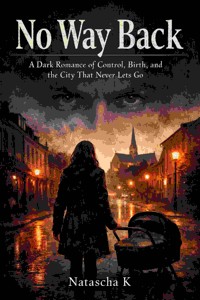
Nothing held her anymore. And yet leaving became impossible. In the northern German town of Bad Doberan, streets remember what people try to forget. When Klara escapes a toxic relationship and hides in a protected home during the final weeks of her pregnancy, she believes distance will keep her safe. But paper travels faster than fear, and control rarely needs proximity. As institutions, streets, and silent witnesses close in, Klara is forced to navigate power, dependency, and desire while her body prepares for birth. Matthias does not chase her loudly. He waits. He coordinates. He belongs to the system that claims neutrality while deciding who has access to her body, her child, her future. Set against real streets and places in Bad Doberan, this dark romance explores coercive control without glorifying violence, intimacy without safety, and love that feels both necessary and dangerous. The story builds toward a hospital birth where no choice is clean, no door fully closed, and survival does not mean freedom. This is not a redemption story. It is a story about holding a line when everything pushes back. Attention: The author uses artificial intelligence for creating most of his texts (and is required to disclose this use).
Das E-Book können Sie in Legimi-Apps oder einer beliebigen App lesen, die das folgende Format unterstützen:
Seitenzahl: 429
Veröffentlichungsjahr: 2026
Ähnliche







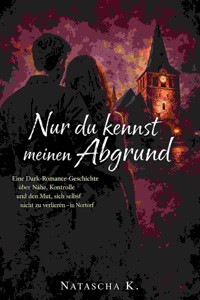

No Way Back
Subtitle: A Dark Romance Story Set in Bad Doberan
Trigger Warnung
This novel contains themes that may be disturbing to some readers, including emotional manipulation, power imbalance, toxic attachment, psychological tension, and sexual situations between consenting adults.
The purpose of this Trigger Warnung is to protect readers who may be vulnerable to these themes. This book is not intended for children, adolescents, or readers who may be harmed by intense emotional material.
There is no glorification of violence. The focus lies on emotional experience, inner conflict, and the consequences of choices.
Foreword
Bad Doberan is a quiet town if you only look once.
Tree-lined streets. The slow rhythm of the Molli railway. The Münster standing calm and unmoved, as if it has seen everything already.
But towns like this remember.
They hold onto footsteps, glances, things that were never said out loud.
This story grew out of that silence.
Out of places that look harmless in daylight and feel different after dark. Out of people who learned early how to stay composed, how to endure, how to want things they should not want.
No Way Back is not a story about being saved.
It is about staying. About choosing. About the moment when leaving is still possible, and the moment after that, when it is not.
Disclaimer
This is a work of fiction.
All characters, events, and dialogues are fictional, even when inspired by real places in and around Bad Doberan. Any resemblance to real persons, living or dead, is purely coincidental.
This book was written with the assistance of artificial intelligence. The author remains responsible for the selection, editing, and final form of the text. Artificial intelligence was used as a creative tool, not as an autonomous author.
This novel is intended for adult readers only.
It explores dark romantic themes without promoting or endorsing harmful behavior.
Imprint:
V. i. S. d. P.: Marcus Petersen-Clausen, Ginsterweg 7, 30900 Mellendorf/Wedemark (DE) - Tel.: 491796162178
Dieses Dokument ist lizenziert unter dem Urheberrecht!
(c) 2025 Marcus Petersen-Clausen
(c) 2025 Köche-Nord.de
Table of Contents
Chapter One: The Street That Did Not Let Go
Chapter Two: Lindenallee After Dusk
Chapter Three: Mollistraße, Where the Tracks Remember
Chapter Four: The Door on Mollistraße
Chapter Five: Under the Münster, After Midnight
Chapter Six: The City Tightens
Chapter Seven: Lindenallee, Before the Lights Change
Chapter Eight: Dammchaussee, Where She Does Not Wait
Chapter Nine: Mollistraße at Night, Where Silence Is Used
Chapter Ten: Alexandrinenplatz, Where She Cracks in Public
Chapter Eleven: Dammchaussee, Under the Flickering Lamp
Chapter Twelve: Beethovenstraße, Where the City Starts Talking
Chapter Thirteen: Parkentiner Weg, Where the Body Speaks First
Chapter Fourteen: Bad Doberan, Where She Stays
Chapter Fifteen: Mollistraße, Where She Ends It
Chapter Sixteen: The Kamp, Where the Town Uses Her Name
Chapter Seventeen: The Letter on Parkentiner Weg
Chapter Eighteen: Beethovenstraße, Where Protection Leaves a Mark
Chapter Nineteen: Mollistraße, Where Questions Become Knives
Chapter Twenty: Mollistraße, Where They Choose the Same Wound
Chapter Twenty-One: Lindenallee, Where the Body Sets the Pace
Chapter Twenty-Two: Dammchaussee, Where Care Turns Into a Frame
Chapter Twenty-Three: Parkentiner Weg, Where Paper Arrives Too Fast
Chapter Twenty-Four: Parkentiner Weg, Where the Door Decides
Chapter Twenty-Five: Doberaner Münster, Where They Pretend It’s a Choice
Chapter Twenty-Six: Alexandrinenplatz, Where the Town Learns Her Name
Chapter Twenty-Seven: Mollistraße, Where It Feels Like Safety
Chapter Twenty-Eight: Beethovenstraße, Where Calm Becomes a Contract
Chapter Twenty-Nine: Beethovenstraße, Where She Learns What He Bought
Chapter Thirty: Kamp, Where She Loses Something Quiet
Chapter Thirty-One: Parkentiner Weg, Where She Chooses Disappearance
Chapter Thirty-Two: The Road Out, Where Safety Has Rules
Chapter Thirty-Three: Parkentiner Weg, Where the Town Reaches Through the Phone
Chapter Thirty-Four: Alexandrinenplatz, Where the City Breaks Inside Her
Chapter Thirty-Five: Mollistraße, Where Violence Leaves a Mark
Chapter Thirty-Six: Beethovenstraße, Where the City Sends Paper Instead of People
Chapter Thirty-Seven: Alexandrinenplatz, Where the Report Becomes a Shadow
Chapter Thirty-Eight: Parkentiner Weg, Where She Signs Too Early
Chapter Thirty-Nine: Beethovenstraße to the Hospital Corridor, Where the City Reclaims the Body
Chapter Forty: Beethovenstraße, Where the Body Decides and the Door Stays Half Open
Epilogue: Bad Doberan, Where Nothing Is Closed
Chapter One: The Street That Did Not Let Go
The first thing she noticed was the sound.
Not loud. Not sudden. Just wrong enough to make her slow down.
Dammchaussee looked the same as always. Too wide for the few cars that passed. Trees standing close together, their branches touching above the road like they had agreed on it years ago. The pavement was still damp from the morning rain. Her shoes left no real marks. Just a darker shade that faded after a few steps.
She had walked this street before. Many times.
But not like this.
Klara stopped near the bend where the old villas began. Yellow brick. White frames. Curtains pulled halfway, as if the houses themselves were watching without wanting to be seen. She adjusted the strap of her bag on her shoulder. A small movement. Automatic. Her fingers stayed there longer than necessary.
Someone stood across the street.
Not close. Not far enough to ignore.
He leaned against the fence of one of the larger houses, the ones that had survived every renovation trend since the nineties. His jacket was dark, open at the collar. Hands in his pockets. Head slightly lowered, like he was studying the ground, or pretending to.
Klara told herself to keep walking.
Her body hesitated.
When she moved again, his head lifted. Just enough. Their eyes met for a fraction of a second. He did not smile. Did not look away. His gaze stayed where it was, steady, uninviting, precise.
She felt it then.
Not fear. Not curiosity. Something narrower.
She passed him. The space between them felt measured, deliberate. She caught the faint smell of smoke and cold air. Her shoulder tensed, waiting for contact that never came.
Behind her, footsteps followed. Not close. Not matching her pace. Just present.
At the next corner, near the path that led toward the Kurpark, she stopped again. Pretended to search her bag. The footsteps stopped too.
Silence stretched. Then shifted.
“You dropped something,” a male voice said.
She turned. Slowly.
He held nothing in his hands.
His face was calm. Early thirties, maybe. Dark hair cut short, not fashionable, not careless. A small scar near his eyebrow. Old. He watched her like he expected resistance and patience at the same time.
“I didn’t,” she said.
“I know.”
A pause. The kind that asks for something without naming it.
“Then why did you stop me?”
“I didn’t,” he said. “You stopped yourself.”
Her fingers tightened around the strap of her bag. She felt the pressure in her wrist. The way her pulse reacted, sharp and inconvenient.
“Do I know you?” she asked.
He shook his head once. Minimal. Controlled.
“Not yet.”
The word settled between them. Not threatening. Not kind.
Behind him, the street remained unchanged. Cars passed. A bicycle bell rang somewhere near Alexandrinenplatz. Life continued with an indifference that felt intentional.
“I have to go,” Klara said.
He stepped aside. Gave her space. Too much of it.
“I know,” he said again.
She walked past him a second time. Faster now. Her breath stayed even, trained by years of pretending things did not matter. She did not look back.
She still knew he was watching.
At the edge of the park, she stopped under the bare branches of an old tree. Her reflection stared back at her from the dark glass of a parked car. Pale. Focused. Unchanged.
Nothing had happened.
That was the problem.
Chapter Two: Lindenallee After Dusk
Klara had promised herself she would not take this way.
The Lindenallee was longer than necessary, curved just enough to feel deliberate, as if the town had once decided that people should slow down here whether they wanted to or not. The trees stood in two rigid lines, tall and old, their trunks darkened by decades of rain and exhaust and winters that never quite left. In summer the leaves closed overhead like a ceiling. Now, in early spring, the branches were bare. Nothing to hide behind.
She walked anyway.
Her coat was buttoned too high. She could feel the fabric against her throat each time she swallowed. The sound of her steps echoed more than it should have, even though the street was not empty. A couple passed her, talking quietly. An older man walked a dog that ignored everything except the edge of the grass. A car rolled by slowly, headlights already on.
Normal.
Ordinary.
Her body refused to accept it.
She kept seeing him where he was not. At the corner near the Stadtbibliothek. Between the parked cars. Reflected in shop windows that had been closed for years. Each time she realized it was only a shadow or a trick of the light, something in her tightened instead of relaxing.
At the end of the Lindenallee, the street opened toward the Münsterplatz. The brick of the Doberaner Münster rose heavy and immovable against the evening sky. The building had always unsettled her. Not because of belief or history. Because it did not explain itself. It simply stood there, unchanged, waiting for people to move around it.
She crossed the square diagonally, ignoring the path that tourists usually followed. Her shoes clicked against stone. The sound felt too loud again. She slowed, then stopped near one of the benches facing the church wall.
She told herself she needed a break.
Her body did not sit down.
“You keep choosing the long way.”
The voice came from behind her. Close enough that she could feel the space shift.
She did not turn right away. Her hands curled slightly at her sides. She watched her breath leave faint traces in the cold air before it disappeared.
“I didn’t hear you,” she said.
“I know.”
She turned then.
He stood a few steps away, not touching the bench, not blocking her path. Same jacket. Same calm posture. His hands were still in his pockets, shoulders relaxed, like he had been waiting without effort.
“You’re following me,” Klara said.
He tilted his head a fraction. Considered.
“I’m walking,” he replied. “So are you.”
“That’s not the same thing.”
“No,” he agreed. “It isn’t.”
Her gaze moved over his face again, more deliberately this time. The scar. The line of his mouth, neither soft nor sharp. His eyes stayed on hers, steady, unembarrassed.
“Why are you here?” she asked.
“Bad Doberan is small,” he said. “Paths cross.”
“That’s not an answer.”
A pause. Longer now.
“I live on Mollistraße,” he said. “Near the tracks.”
She knew the area. The old houses close to the railway, paint peeling in careful ways, gardens kept too tidy for people who claimed not to care. The Molli passed there several times a day, slow and loud and impossible to ignore.
“And I live near the Kamp,” she said. “That doesn’t explain this.”
“No,” he said again. “It doesn’t.”
The silence that followed felt intentional. As if he had decided she would have to fill it if she wanted it gone.
“What do you want?” she asked.
He studied her face, not intrusively, but thoroughly. His gaze lingered at her eyes, her mouth, the way her jaw tightened as she waited.
“You noticed me,” he said. “That’s usually enough.”
Her breath shifted. Shorter. Sharper.
“You stopped me on Dammchaussee,” she said. “You didn’t have to do that.”
“I wanted to see if you would stop,” he replied.
“And?”
“You did.”
The answer landed heavier than it should have.
She looked past him toward the Münster again. The building did not react. It never did.
“I don’t do this,” she said. “Talking to strangers. Letting myself get distracted.”
He stepped a little closer. Not enough to touch her. Enough that she noticed the change in temperature between them.
“You’re doing it now,” he said.
Her fingers twitched. She did not step back.
“What’s your name?” she asked, and immediately resented the question.
“Matthias,” he said. “And yours?”
She hesitated. A habit she had trained herself into over years. Pause first. Decide later.
“Klara.”
He repeated it once. Quietly. As if testing the sound.
“Are you meeting someone?” he asked.
“No.”
“Then you’re free.”
The word did not feel like an offer.
She shifted her weight, finally sat down on the bench. The stone was cold through her coat. Matthias stayed standing. Above her now. Not looming. Just positioned.
The bells of the Münster rang once. Then again. Low. Measured.
“People will see us,” she said.
“They already do,” he replied. “They just don’t care.”
She knew that was true. The town was full of moments no one interfered with. It had always been like that.
“Why me?” she asked quietly.
Matthias did not answer right away. His gaze moved briefly to the square, to the street that led back toward the Lindenallee, then returned to her.
“Because you look like someone who knows how to stay,” he said. “Even when leaving would be easier.”
Her throat tightened. She swallowed.
“You don’t know anything about me.”
“No,” he said. “But I will.”
The certainty in his voice was not loud. It did not need to be.
She stood up abruptly. The bench scraped faintly against stone.
“This is a mistake,” she said.
He stepped aside again. Gave her space. Always space.
“Then go,” he said.
She walked away. Across the square. Toward the street that led past the cafés and empty storefronts. Her pace was quick but controlled. She did not run.
She reached the corner near the Kamp and stopped. Just for a second. Long enough to realize her hands were shaking.
Behind her, the Münster bells rang again.
She did not turn around.
She already knew he was not following this time.
That knowledge stayed with her all the way home.
Chapter Three: Mollistraße, Where the Tracks Remember
Klara woke before the alarm and lay still, listening.
Not to the usual things. Not the radiator. Not the distant hum of a car passing on the way toward Rostock. She listened for something that was not supposed to be there, and when she heard nothing, it did not calm her.
The room smelled faintly of detergent and cold fabric. Her curtains were not fully closed. A pale strip of streetlight cut across the wall, thin and exact. It made her think of the way Matthias had stood near the Münster bench, leaving space like he owned the air around him.
She got up, dressed without turning on the main light, and checked her phone. No messages. Nothing she could blame her unease on.
At the sink, she washed her hands longer than necessary. The water was too cold. She let it run until it warmed, then turned it off quickly, like she had been caught.
She told herself she would take the bus later. She told herself she had no reason to go near Mollistraße.
An hour later, she was walking toward the station anyway.
Bad Doberan looked washed out in the morning. The sky was low, cloud cover pressed flat, the kind of grey that makes the town feel smaller. She passed the Kamp again, the wide open green that always looked like it had been designed for people who wanted to be watched. The bare trees stood like silent witnesses. A few early walkers moved along the paths, heads lowered, hands tucked into pockets.
She kept her pace measured, neither hurried nor slow. She forced her shoulders down. She had learned how to carry herself so the world would not ask questions.
At the crossing near Beethovenstraße, a car slowed and let her pass. The driver did not look at her. Still, she felt exposed. As if there were a spotlight she could not see.
Her destination was not the Bahnhof itself, not the bus platforms or the main entrance. She turned earlier, onto the side street that led toward the Molli track. The rails cut through parts of Bad Doberan like an old scar that had become a feature. Tourists loved it. Locals adapted around it.
She followed the faint metallic line until the houses tightened in. Mollistraße. Narrower, quieter. The kind of street where people kept their windows clean and their curtains in control.
She stopped near a small bakery, more out of habit than hunger. The windows were fogged from heat and yeast. Someone inside was stacking rolls. The smell drifted out as the door opened for a man with a newspaper under his arm.
Klara did not go in.
She stood beside the wall, hands in her coat pockets, trying to look like someone waiting for a friend. She had no friend to wait for. She hated herself for the detail.
A distant bell sounded. Not the Münster this time. The small warning bell of the Molli, approaching.
The train appeared a moment later, slow and bright in its red paint, steam rising into the cold air. It moved like it had all the time in the world. People turned their heads without thinking. A child waved. An older woman lifted her phone to take a picture as if she had never seen it before.
Klara watched it pass and felt her chest tighten, a reflex she could not explain. The sound, the rhythm, the unhurried certainty of it.
When the last carriage rolled by, she turned her head and saw him.
Matthias stood across the street near a small gate, one hand resting on the top rail, the other still in his pocket. He was not looking at her yet. He watched the Molli disappear around the bend like he was listening to something beyond the sound.
The scene should have felt staged. It did not. It felt like a continuation, as if she had stepped into a chapter she had already begun.
She waited for him to look at her.
He did not, not immediately.
When he finally did, his gaze did not sharpen. It did not change at all. That was worse. He looked as if he had expected her and the world had simply delivered what it was supposed to.
Klara crossed the street before she decided to. The movement was sudden, impatient. Her foot slipped slightly on damp asphalt. She recovered fast. Still, it annoyed her.
“I didn’t come here for you,” she said when she was close enough.
Matthias’ mouth moved almost imperceptibly, not quite a smile. More like an acknowledgment of a predictable lie.
“I didn’t say you did,” he replied.
A pause. His eyes moved briefly to her hands, still buried in her pockets.
“You’re cold,” he said.
“I’m fine.”
He nodded once, as if accepting the answer without believing it. Then he did something small and strange. He rubbed his thumb along the edge of his scar near the eyebrow. Not nervous. Just a gesture that suggested routine, the way someone touches a place that reminds them where they have been.
Klara noticed it and looked away too fast.
“Why are you here?” she asked again, sharper than last time.
Matthias tilted his head, listening. Not to her, to the street. The bakery door opened again. The scent of warm bread hit the air, then vanished when it closed.
“My building is two houses down,” he said. “This isn’t far.”
She stared at him. “So you just stand outside and wait.”
“I walk,” he said. “Like you.”
She felt anger rise, quick and clean. It gave her something to do. She stepped closer, forcing him to react.
He didn’t.
That was the first real crack in her control. Not that she moved closer, but that she had wanted him to flinch. She wanted proof he was a man, not a fixed point.
“You said you live near the tracks,” she said. “So you watch people pass.”
“I listen,” he corrected.
“To what.”
Matthias’ gaze shifted, but not away. Down, slightly, to the line of her throat where the coat collar pressed.
“To the way people change their steps when they think no one sees,” he said.
Her pulse changed. She hated that he had noticed it. She hated that she believed him.
“Stop talking like that,” she said.
“Like what.”
“Like you know me.”
Matthias’ eyes held hers. The calm in him stayed intact, but something behind it moved. A small detail, like a door that had not been fully closed.
“I know where you live,” he said quietly.
The words were not shouted. They were not dramatic. They were simply placed there.
Klara did not breathe for a moment.
Then she laughed, once, short and empty. “That’s not impressive. This town is small.”
Matthias nodded as if she had scored a point. “It is.”
He watched her face. She could feel him tracking the micro-movements she could not stop. The tightening of her jaw. The way her gaze flickered toward the bakery window and back.
“You took Parkentiner Weg yesterday,” he said. “Not the fastest route.”
She stared at him.
That was too specific. It did not sound like a guess. It sounded like someone who had seen her from a distance, who had followed without needing to be near.
“Why would you pay attention to that,” she asked.
Matthias shrugged slightly. “Because you choose detours when you want to think.”
Klara swallowed. The collar of her coat felt suddenly too tight.
“You’re stalking me,” she said.
“No,” he replied. “I’m noticing you.”
There was a difference, and she hated that she understood what he meant.
A car drove past slowly and turned toward the inner town. The street remained quiet. Someone in a nearby garden shook out a rug. A normal morning. A normal town. The sound of the rug snap echoed once, then faded.
Klara looked at Matthias again. His hair was slightly damp from mist. His hands remained in his pockets like he was holding something there. His stance was stable, feet planted evenly. He wore no visible jewelry, no watch. That absence felt intentional.
“Do you have a job,” she asked, and immediately hated herself for giving him a normal question.
Matthias blinked once. Slow. “Yes.”
“What.”
A pause again. He seemed to consider how much to give. Then he answered in a way that did not clarify anything.
“I work with documents,” he said.
“Everyone works with documents,” she replied.
Matthias’ mouth moved again, faintly amused. “True.”
Klara felt the irritation return, mixed with something else that made her skin feel too close.
“Are you always like this,” she asked. “This calm.”
Matthias’ gaze flickered away for the first time, not far. Just to the side, toward the tracks. The Molli’s rails gleamed faintly.
“No,” he said. “But I can be.”
The answer should have reassured her. It didn’t.
She took her hands out of her pockets. Her fingers were cold, slightly red at the knuckles. She flexed them once, then let them fall.
“Tell me why,” she said. “Why you picked me.”
Matthias studied her again, the way he had done on Münsterplatz. But now there was less distance between them. She could see details she had not seen before. A faint shadow under his eyes, like he slept too little. The thin line at the edge of his mouth, tension held back.
“You looked back,” he said finally.
Klara frowned. “What.”
“At the Kamp,” he said. “Two weeks ago. You crossed the path near the pond and you looked back. Not because you forgot something. Because you thought someone was behind you.”
Klara’s stomach tightened. She had done that. She remembered the moment. The cold wind. The feeling of being watched. She had blamed it on nothing.
“That wasn’t you,” she said.
Matthias did not deny it. He simply let the silence confirm that she could not be sure.
“You were scared,” he continued, still calm, still quiet. “But you didn’t speed up. You didn’t call someone. You kept walking like you had decided fear would not change your posture.”
Klara felt heat rise to her face, not from embarrassment. From the exposure.
“That’s a weird thing to admire,” she said.
Matthias’ eyes narrowed slightly, not angry. Focused. “I didn’t say I admired it.”
Another pause.
Then, softly, “I recognized it.”
Klara’s breath left her in a thin line.
Recognition. That word suggested similarity. Shared structure. Something mirrored.
“I don’t know you,” she said again, but this time the sentence sounded less like refusal and more like a protest against an inevitability.
Matthias stepped closer. Not too close. Still leaving a space that could be crossed if she wanted. He did not touch her. He did not need to.
“You don’t have to,” he said. “Not yet.”
Klara’s fingers twitched at her sides. She forced them still. Her eyes moved to his hands, still in his pockets. She imagined what they would look like when they were not hidden. She did not want to imagine it. She did anyway.
“Do you do this often,” she asked, voice lower now.
Matthias’ gaze stayed steady. “No.”
“Then what are you doing,” she pressed.
He took his right hand out of his pocket slowly. Not sudden. Not threatening. He held something between his fingers.
A small brass token. A coin-like disc. One side looked worn smooth. The other had faint markings, not clear in the grey light.
Klara stared at it.
Matthias held it out, not toward her hand, just into the space between them.
“You dropped this,” he said.
Klara’s throat tightened.
“That’s what you said last time,” she whispered.
Matthias nodded. “Yes.”
“But I didn’t,” she said, and her voice cracked slightly on the last word. It irritated her more than it should have.
Matthias’ eyes flickered, just for a second, as if he had heard that crack and stored it.
“Take it,” he said.
Klara hesitated. The token was small. Innocent-looking. It should not have mattered.
She reached out and took it anyway.
The brass was cold against her skin. He had been holding it, and it was still cold. That meant he had not held it long. That meant he had taken it out just now. That meant it was a performance.
Klara closed her fingers around it, feeling the edges press into her palm.
“What is this,” she asked.
Matthias watched her hand close. “A key,” he said, then corrected himself. “Not a key. A permission.”
Klara’s breath caught.
“That’s not normal,” she said. “This isn’t normal.”
Matthias’ gaze stayed calm. “Normal doesn’t keep you.”
Klara felt her grip tighten, the token biting into her skin.
“Permission for what,” she asked.
Matthias did not answer immediately. He leaned slightly closer, enough that she could smell the faint trace of smoke again, mixed with something clean. Soap. Cold air.
“To knock,” he said quietly.
Klara stared at him.
“On your door,” she whispered.
“No,” he replied. “On mine.”
Klara’s stomach turned. The street tilted by a fraction. Not physically. Internally. The shift of a boundary.
“You want me to come to your home,” she said.
Matthias nodded once. “Not now.”
When he said it like that, it sounded almost reasonable. Almost safe.
Klara looked past him toward the gate, toward the house behind it. It was an older building, painted a muted cream, windows framed in dark wood. Nothing dramatic. No sign that something inside would change her.
“That’s insane,” she said.
Matthias watched her face as if waiting for the moment she lied to herself again.
“You came here,” he said. “You didn’t have to.”
Klara’s mouth opened, then closed. She felt the words she could use. Work. Errands. Curiosity. She did not say any of them. She refused to give him something to dismantle.
She turned the token in her palm, feeling the worn smooth side and the faint markings. She lifted it slightly to look. The markings were letters, barely visible.
An address.
Not her own.
His.
Mollistraße. Number. Clear enough to read.
Klara’s fingers went cold. She lowered the token again and closed her hand around it.
“That’s manipulative,” she said.
Matthias’ gaze did not change. “Yes.”
The simple agreement disarmed her. She had expected denial. Excuses. A performance of innocence.
“You’re not even pretending,” she said.
“No,” he replied.
Klara’s heart beat harder. She hated the clarity. Pretending would have given her something to fight.
“Why give me this,” she asked. “Why not just tell me.”
Matthias’ eyes moved to her hand again, to the way she held the token like a secret. “Because telling you keeps it in my mouth,” he said. “This puts it in your hand.”
Klara felt her breath shift. Short. Shallow. She forced herself to inhale deeper. The cold air burned slightly.
“You want control,” she said.
Matthias watched her for a long moment. Then he spoke, and his voice dropped, not sensual, just precise.
“I want you to choose,” he said. “Under pressure.”
Klara’s skin prickled. A cold sweat threatened at her back, under the coat.
“That’s not choice,” she said.
Matthias’ thumb brushed his eyebrow scar again. A small tick. A reminder.
“It is,” he replied. “Because you can still walk away.”
Klara stared at him. The street was quiet. The bakery sign creaked slightly in the wind. Somewhere behind them, a door closed.
She realized something then, sudden and unwanted.
He was right. She could walk away.
And she wasn’t.
The token sat heavy in her palm. The address pressed into her skin like a mark.
Klara swallowed, then lifted her gaze.
“What happens if I knock,” she asked.
Matthias held her eyes. Calm. Unmoving.
“You’ll find out,” he said. “And you won’t be able to pretend you didn’t want to.”
Klara’s lips parted. She wanted to say something sharp, something that would cut the moment down to size. Nothing came.
Matthias stepped back, finally creating more distance than before.
He nodded once, as if concluding a meeting.
“Don’t lose it,” he said, looking at her closed hand.
Then he turned and walked away toward the gate. Unhurried. Certain.
Klara stood there, frozen, watching him unlock the gate with an ordinary key, as if the token did not exist, as if what he had given her was not a weapon made of brass and suggestion.
He did not look back when he disappeared behind the door.
Klara stayed in the street for a long time.
Then she turned away, the token still in her fist.
She walked back toward the Kamp by a different route, taking Alexandrinenplatz, letting the wider street space pretend it could breathe for her. The shops were opening. A delivery van unloaded crates. People moved around her like she was invisible.
The town looked normal again.
Her hand did not open.
When she reached the edge of the Kamp, she stopped near the pond. The water was dark, barely rippling. She stared at her reflection and did not recognize the stillness in her face.
She finally opened her hand.
The token lay in her palm, harmless-looking.
Permission.
She closed her fingers around it again, tighter this time, until it hurt.
And she kept walking.
Chapter Four: The Door on Mollistraße
By evening, the town had changed its face without changing anything at all.
Bad Doberan always did that. The same streets, the same walls, the same lamps. But after sunset, the spaces between things grew heavier. The corners seemed sharper. The air got closer to skin. Even the sound of footsteps felt different, as if the stones held onto them longer.
Klara left her apartment too late on purpose.
She told herself that if she went late enough, the idea would lose strength. That if she waited until her body was tired, it would stop insisting. She cleaned the kitchen twice. Folded a blanket that did not need folding. Stood at the window and watched a couple cross the Kamp, their heads bent together under one umbrella like they were hiding inside the same thought.
Then she took her coat and went out.
The stairwell smelled of old paint and damp concrete. Her keys were cold in her hand. She locked the door too carefully, checking the handle once, then again. A small ritual. A quiet negotiation with herself.
Outside, the air was wet. Not rain, not yet. Just the thin, northern moisture that made hair cling to cheeks and made lights blur. The streetlamp near her building threw a weak circle of yellow onto the sidewalk. Her shadow moved inside it, stretched and thin.
She walked toward the Kamp first, not because she needed to, but because she needed to see something open before she walked into something narrow.
The Kamp lay dark and wide, the grass a flat black-green, the paths pale under the lamps. The pond reflected the lights like broken coins. The trees stood bare, their branches reaching up like hands that had forgotten how to close.
Klara crossed slowly, hearing her own steps. A man passed her with a dog. The dog glanced at her once and kept going. No interest. No alarm. The normal indifference of a town that had no reason to protect her.
She reached the far side and took Goethestraße, moving past quiet houses with fenced gardens, past windows lit in small squares. Someone inside one of the houses laughed, a short burst, then nothing. The sound made her jaw tighten. Not from envy. From the reminder that other people lived in a world that stayed consistent.
At Alexandrinenplatz, she paused near the corner. The square was not busy. A car rolled through slowly, tires hissing on wet pavement. The bakery sign on Mollistraße was dark now. Closed. The warmth from the morning had been a different century.
She turned toward the tracks.
The rails were faintly visible, two thin lines catching the streetlights. The Molli was silent now. No bell. No steam. Only the old metal in the ground, reminding the town where to bend.
Klara followed the tracks until Mollistraße narrowed around her. The houses here looked closer together at night. Their façades leaned inward like they were listening. The streetlights were spaced too far apart. Between them were pockets of shadow that did not feel empty.
Her hand was in her coat pocket, fingers curled around the brass token. It had warmed slightly from her skin. The address on it pressed into her palm as if it wanted to leave a mark.
She told herself she could stop at the corner and go home. She even slowed, letting her body test the possibility.
Her feet kept going.
The number on the token matched a house ahead, pale paint, dark frames, a low fence, a gate with a simple latch. Ordinary. That ordinariness felt like a threat. It meant whatever was waiting inside did not need dramatic signals.
She stopped at the gate.
The house did not move. No curtain shifted. No light flicked on. The street was quiet enough that she could hear a distant engine somewhere near the Bahnhofstraße, then nothing again.
Klara looked down at the token in her hand.
Permission.
She hated that word. She hated that it had worked on her without touching her. She hated that she was here at all. But her body was calm in a way it had not been all day. Too calm. Like it had finally reached the place it had been walking toward since morning, and now it could stop pretending.
She pushed the gate open.
The hinge gave a soft sound, a small complaint. The garden path was narrow, lined with stones and low shrubs. Her shoes brushed wet leaves. The porch light was off. The door was darker than the wall around it.
Klara stood in front of it.
She lifted her hand and hesitated.
The door felt like a line painted on the air. If she crossed it, she would not be able to say it was an accident. She would not be able to tell herself later that nothing had happened.
Her knuckles hovered, then tapped once.
The sound was quiet. Too quiet.
She waited. Ten seconds. Twenty. She counted without wanting to. Her breath made a faint cloud.
Then the lock turned.
The door opened just enough to show Matthias’ face, half-lit from inside. The hallway behind him was dim, warm light from a lamp further in. His hair was dry. His shirt was dark, collar open, sleeves pushed up to his forearms. No jacket. As if he had not been outside. As if he had been waiting in this exact posture.
He looked at her hand first. Not her face.
Then his eyes rose slowly and settled on hers.
Klara did not speak.
Matthias did not either.
The silence held. It did not feel awkward. It felt arranged.
He opened the door wider.
He did not step back. He did not invite her with words. He simply moved his body in a way that made the opening available, as if the next action was already decided and she was only late catching up.
Klara’s throat tightened. She stepped inside.
The hallway smelled like soap and old wood. Clean, but not freshly cleaned. The walls held framed prints, black-and-white photographs of Bad Doberan streets and the Molli, the Münster seen from angles tourists did not usually choose. One picture showed the Lindenallee in winter, bare trees like bones. Another showed the tracks cutting through fog. The images felt less like decoration and more like evidence.
Matthias closed the door behind her. The click was small, but her body reacted to it immediately. Her shoulders lifted, then settled. She did not turn around. She knew if she looked at the door, she would think about leaving, and she did not want to feel that tug. Not yet.
“You came,” Matthias said.
His voice was quiet. Not pleased. Not surprised. Just stating a fact that had weight.
Klara held the brass token up without thinking, as if showing it was a defense. “You told me to.”
Matthias’ gaze moved to the token, then back to her. “I gave you a choice.”
“That’s not a choice,” she said, and her voice sounded thinner than she wanted.
He watched her. Calm. Patient. Too patient. As if he could stand here all night while she argued in circles.
“You could have thrown it away,” he said.
Klara’s fingers tightened around the brass. “I should have.”
Matthias’ eyes lowered for a moment, not to the token this time. To her mouth. The glance was brief. It still felt like contact.
“But you didn’t,” he said.
Klara’s jaw clenched. She slipped the token back into her pocket, needing it out of sight.
Matthias turned and walked deeper into the house without looking back. Not fast. Not slow. He assumed she would follow.
Klara stood still for a second, caught by the casual certainty of it. The house felt quiet in a way that made her hyperaware of her own breathing. She forced herself to move.
She followed him into a small living room. Warm light, low. A lamp near a bookshelf. No overhead lights. The furniture was minimal. A sofa, a chair, a small table with a glass of water on it. A closed laptop. A stack of folders. Documents. Work that had been left mid-thought.
Matthias gestured toward the chair. Not with his hand. With his gaze and a slight tilt of his head.
Klara stayed standing.
“Why are you doing this,” she asked.
Matthias leaned against the edge of the table, arms relaxed, not blocking her, not giving her space either. He was positioned so the room belonged to him and she was the variable inside it.
“You’re here,” he said.
“That’s not why,” she replied, and her voice rose slightly on the last word. She hated that it did. She hated giving him evidence.
Matthias’ eyes held hers. “It’s enough.”
Klara felt heat behind her eyes, not tears. Pressure. A sensation like her body was trying to push something out through any exit.
“Don’t talk to me like I’m simple,” she said.
Matthias’ mouth moved in that almost-smile again. “You’re not.”
He straightened and walked past her toward the window. The movement forced her to turn slightly to keep him in sight. He stopped at the curtain and pulled it back just a few centimeters.
Outside, Mollistraße lay dark and wet, streetlight halos floating in the mist. The fence line. The gate. The narrow path she had walked. Her footprints were already gone.
Matthias looked out as if checking something. Then he let the curtain fall back into place.
“You picked a good time,” he said.
Klara’s throat tightened. “What does that mean.”
“The street is quiet,” he replied. “Fewer witnesses.”
Her stomach dropped. Her hand moved instinctively toward her pocket where her phone was. Matthias saw the movement.
He did not react with his hands.
He reacted with his voice.
“If you want to leave, you can,” he said.
The sentence sounded like permission. It felt like a trap. It placed the responsibility on her, heavy and public, even though they were alone.
Klara froze, her fingers still near her pocket. She forced her hand away slowly. Not because she agreed. Because she refused to perform fear for him.
Matthias watched her hand settle back at her side. The look in his eyes changed by a fraction. Not softer. More intent.
“You came in,” he said. “You didn’t ask what happens.”
“I’m asking now,” Klara replied.
Matthias walked closer. Not closing distance quickly. A slow approach. Each step gave her time to move away. She didn’t.
He stopped a meter from her. Close enough that the warmth from his body reached her. Close enough that she could see the faint irregularity in his breathing, as if calm was something he chose, not something he owned.
“You want rules,” he said.
Klara swallowed. “I want to understand.”
Matthias’ gaze dropped to her throat again. The small movement of her swallow. The tension in her neck.
“No,” he said quietly. “You want something to hold onto.”
The words landed with a sharpness that made her chest tighten.
Klara’s fingers curled. She felt the impulse to slap the sentence away, to deny it hard enough that it would stop being true.
Instead she said, “You don’t get to decide what I want.”
Matthias’ eyes lifted to hers. “Then tell me.”
The silence that followed was thick. Her mind offered her safe answers. Curiosity. Mistake. Proving a point. All of them tasted false.
Klara’s mouth opened. Nothing came.
Matthias watched her struggle without helping.
That was the cruelty. Not loud. Not violent. Just the refusal to make it easier.
Klara forced her voice out. “I want you to stop looking at me like you already own the end of this.”
Matthias held her gaze. A long pause. Then his eyes flicked to the side, toward the bookshelf, toward the stack of folders. Like he was checking something in the room, something she could not see.
When he spoke again, his voice was lower.
“I don’t own anything,” he said. “But I know patterns.”
Klara’s skin prickled. “What pattern.”
Matthias stepped closer, just a fraction. Now she could smell him clearly. Soap, smoke, and something faintly metallic, like cold keys.
“The kind where you choose the thing that hurts you,” he said. “Because it feels honest.”
Klara’s breath caught. Her lips parted. She hated that the sentence hit its mark. She hated him for knowing where to press without raising his hand.
“That’s not true,” she said.
Matthias’ eyes did not change. “Then leave.”
He said it gently. That gentleness was worse. It made leaving feel like surrender, not escape.
Klara stood rigid, her heart pounding in her ribs. She pictured herself stepping back into the hallway, opening the door, walking out to Mollistraße, following the rails away, crossing Alexandrinenplatz, cutting through the Kamp, climbing her stairs, locking her door. She pictured it like a film she could watch.
Her feet didn’t move.
Matthias waited.
Klara felt something inside her twist, like a knot tightening.
“You’re enjoying this,” she said.
Matthias blinked once. Slow. “I’m observing you.”
The same phrase. The same correction. It made her want to scream.
“Say it,” she demanded. “Say you want control.”
Matthias’ gaze lingered on her face, then dropped to her hands again, the way her fingers flexed and released, flexed again.
“I want you to be honest,” he said.
Klara let out a short breath that sounded like a laugh and wasn’t. “That’s not honesty. That’s you pulling strings.”
Matthias took another small step. Now the space between them felt thin. Her body reacted before her mind did. Heat at her skin. A sharp awareness of her own mouth, her own pulse, her own swallowing.
“You came here,” Matthias said again, “because you wanted a door to open.”
Klara’s throat tightened. She looked away, just for a second, toward the lamp, toward the soft light on the wall. Anything to break his gaze.
Matthias moved in that moment. Not touching her. He simply stepped into her line of sight again, reclaiming it.
“Look at me,” he said.
The command was quiet.
Klara’s eyes snapped back to him.
Matthias watched her, and for the first time the calm in him faltered. Only a little. His jaw tightened. The muscle near his scar moved.
“You don’t like being told,” he said.
Klara’s chest rose and fell faster. “No.”
“But you follow,” he continued.
Klara swallowed. “Stop.”
Matthias’ eyes held hers. “Make me.”
The words cut through the room. Not because of what they promised, but because of what they demanded.
Klara’s fingers twitched. Her body leaned forward by a fraction, then stopped itself like a leash had snapped taut inside her.
Matthias noticed. His gaze dropped, then lifted again. He saw everything. That was the violation. He saw and he used it.
Klara’s voice came out rough. “You don’t know what you’re doing.”
Matthias’ mouth moved, not smiling. Something harder. “I do.”
He reached up slowly and touched the side of his own face, near the scar, as if grounding himself. The gesture was controlled, but it gave her a strange, unwanted relief. Proof he was not perfectly composed. Proof he could feel something under the surface.
Klara’s eyes locked on that gesture. Her own body reacted, a small tremor in her hand. She hated the response. She wanted to be above it.
Matthias lowered his hand. He did not touch her.
That restraint was another kind of control.
“You’re waiting for me to cross a line,” Klara said.
Matthias’ gaze sharpened slightly. “You’re waiting for a reason.”
Klara’s breath stuttered. She heard the truth in it and hated him for saying it.
“I don’t need a reason,” she snapped.
Matthias’ voice dropped. “Then why did you come at night.”
Klara froze.
The question pinned her to the room. It took away the last thin layer of denial. She could have come in daylight. She could have knocked in the afternoon, when the street was alive, when the Molli might pass, when she could pretend it was casual.
She had chosen the quieter time. The time with fewer witnesses.
Klara’s lips parted. Her tongue felt dry.
Matthias watched her struggle and did not look away.
Klara forced the words out, barely audible. “Because it’s easier to lie to myself in the dark.”
Matthias did not move. The silence after her sentence felt like something had been placed between them, heavy and irreversible.
Then he nodded once.
Not approval. Recognition.
“There,” he said quietly. “That’s the first honest thing.”
Klara’s chest tightened hard. She felt the pressure behind her eyes increase again. Her hands curled into fists.
Matthias stepped to the side, breaking the straight line between them. The room breathed again by a fraction.
“Sit,” he said, softer now.
Klara hesitated, then sat in the chair. The upholstery was firm. It held her in place. Her coat creaked slightly as she shifted.
Matthias went to the kitchen area and poured water into another glass. The sound of liquid was too loud. He set the glass on the table near her without touching her hand. He kept the distance.
“You’re trembling,” he said.
Klara looked down and realized he was right. Her hands shook, small, steady vibrations she could not stop.
“I’m not,” she lied.
Matthias’ eyes stayed on her hands. “You are.”
He said it like a fact that could not be negotiated.
Klara’s fingers tightened around the edge of the chair. “Why are you doing this to me.”
Matthias leaned against the wall opposite her, arms loose, posture calm again. He watched her like she was something he had wanted to understand for a long time.
“Because you already do it to yourself,” he said.
The sentence hit her like a slap without contact.
Klara’s breath left her in a sharp exhale. She looked up at him. Her mouth opened. No sound.
Matthias waited, unhurried.
In the hallway, a clock ticked. Slow. Measured. Like the town itself.
Klara’s voice finally came, small. “You don’t get to use that.”
Matthias’ gaze did not soften. “I’m not using it. I’m naming it.”
Klara’s throat tightened until it hurt. She reached for the water and drank too fast, swallowing hard. The glass trembled against her teeth.
Matthias watched her drink.
When she lowered the glass, he said, “What did you think would happen when you knocked.”
Klara stared at him. Her fingers left faint moisture on the glass.
“I don’t know,” she whispered.
Matthias took a slow breath. His eyes held hers, then dropped to the brass token’s outline in her coat pocket, visible as a slight bulge.
“You kept it,” he said.
Klara’s hand moved toward her pocket automatically, covering it. A possessive gesture she did not mean to make.
Matthias’ gaze sharpened again, like he had seen exactly what he wanted to see.
“Good,” he said.
The word made her stomach turn.
“You’re happy,” she said, voice tight.
Matthias stepped closer, stopping just outside her reach. He leaned down slightly, not invading fully, but enough that she felt his presence in her lungs.
“I’m patient,” he corrected.
Klara’s breath stuttered. She tilted her chin up, refusing to look away. Refusing to give him that.
Matthias’ eyes moved over her face, unhurried, as if memorizing. He did not touch her. He did not have to. The closeness itself was contact.
Then he straightened and stepped back.
“You can go,” he said, as if the whole scene had been a test and the result was already recorded.
Klara blinked. “What.”
Matthias’ voice stayed calm. “You can go. Or you can stay for ten minutes.”
Klara’s pulse jumped. “Why ten.”
Matthias’ gaze held hers. “Because I don’t take more than you can choose while you’re still pretending you have control.”
The sentence was a cage built out of politeness.
Klara’s fingers dug into the chair. She felt the fabric under her nails.
Matthias waited again. He always waited. Like waiting was a way of holding someone without touching them.
Klara’s voice came out low. “And if I stay.”
Matthias’ eyes narrowed slightly, focus tightening.
“Then you’ll learn something,” he said. “About yourself. About me. About how easy it is to confuse relief with safety.”
Klara’s throat tightened hard. She stared at him until her eyes burned.
She did not stand.
She did not leave.
The clock in the hallway ticked.
Matthias watched her, and the quiet in the room felt like it was closing in, slow, careful, inevitable.
Chapter Five: Under the Münster, After Midnight
Klara did not remember deciding to stay.
She remembered the clock ticking. The way Matthias had stepped back as if distance were a gift he could grant or revoke. She remembered the weight of the chair beneath her, the pressure of choice sitting heavier than his body ever could.
Ten minutes passed without ceremony.
Then another.
She did not stand. He did not remind her.
The room had settled into a quieter version of itself. The lamp cast a softer shadow now, stretched longer across the wall. Outside, a car passed on Mollistraße, tires hissing briefly, then silence again.
Matthias spoke first, but not to her.
“The Münster looks different at night,” he said.
Klara blinked. The shift startled her more than a command would have. “What.”
“You’ve seen it,” he continued, still leaning against the wall, not looking at her yet. “During the day it’s heavy. Closed. Touristic. People circle it like it’s an object. At night it breathes.”
Klara swallowed. “Why are you telling me this.”




