



4,49 €
Mehr erfahren.
- Herausgeber: neobooks
- Kategorie: Erotik
- Serie: Natascha K – Dark Romance Romane
- Sprache: Deutsch
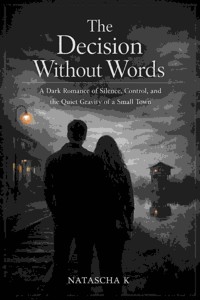
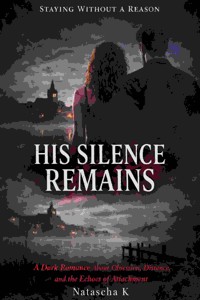
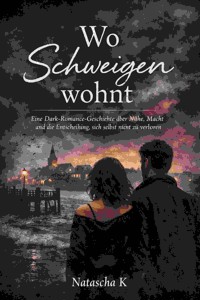
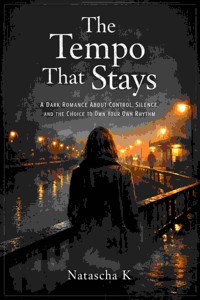
Bruel is a town that does not forget. Streets hold memory, routines shape emotions, and distance rarely means freedom. When Clara returns after years away, she finds Erik still there. Closer than expected. More watchful than before. Their history was never simple. Silence, attraction, control, and unresolved tension connect them more strongly than either admits. As external pressure slowly fades, the town itself begins to influence their choices. Familiar places, shared routines, and subtle social observation create a quiet emotional gravity neither can fully escape. What begins as cautious proximity turns into a relationship defined by ambiguity, closeness, and emotional risk. This Dark Romance explores intimacy without illusion, the persistence of emotional attachment, and how environment shapes connection. Not a story about perfect love. A story about what remains when distance ends. Attention: The author uses artificial intelligence for creating most of his texts (and is required to disclose this use).
Das E-Book können Sie in Legimi-Apps oder einer beliebigen App lesen, die das folgende Format unterstützen:
Seitenzahl: 145
Veröffentlichungsjahr: 2026
Ähnliche










The Distance After
Subtitle:
A Dark Romance of Silence, Control, and What Remains When Someone Leaves
Trigger Warning
This novel contains themes of emotional dependency, psychological tension, grief, implied violence, toxic relationship dynamics, and mature romantic elements. Reader discretion is advised.
Preface:
Stories about closeness rarely begin with certainty. More often they begin with distance, silence, and the subtle tension that forms when two people try to understand what remains between them. The Distance After explores that fragile space. It is not a traditional love story, and it does not aim for perfect resolution. Instead, it focuses on atmosphere, emotional ambiguity, and the quiet influence of place on human connection.
The small northern town setting is not simply a backdrop. It reflects memory, habit, social observation, and the ways environments shape emotional choices. Relationships here unfold slowly, sometimes uncomfortably, often without clear answers.
This novel invites readers to experience emotional proximity, distance, and the complexity that can exist between affection and control. Interpretations may vary, and that openness is intentional.
Disclaimer:
This book is a work of fiction. All characters, events, and situations are fictionalized or artistically adapted. Any resemblance to real persons, living or deceased, or to actual events is coincidental.
This novel explores emotionally complex relationships, psychological tension, and themes that may feel intense or unsettling. It does not promote harmful behavior, manipulation, or unhealthy relationship dynamics. Readers are encouraged to approach the material critically and thoughtfully.
This book was created with the assistance of artificial intelligence technology, specifically ChatGPT. Human creative direction, editorial decisions, and narrative shaping were combined with AI-supported text generation during the writing process. The use of AI does not imply factual accuracy of fictional elements and does not replace professional advice, psychological guidance, or real-world expertise.
The content is intended solely for entertainment, literary reflection, and artistic exploration.
Imprint:
V. i. S. d. P.: Marcus Petersen-Clausen, Ginsterweg 7, 30900 Mellendorf/Wedemark (DE) - Tel.: 491796162178
Dieses Dokument ist lizenziert unter dem Urheberrecht!
(c) 2026 Marcus Petersen-Clausen
(c) 2026 Köche-Nord.de
Table of Contents
Chapter 1: The Space That Stayed
Chapter 2: What Moves Closer
Chapter 3: The Shape of What Watches
Chapter 4: Pressure Lines
Chapter 5: Proximity
Chapter 6: Exposure
Chapter 7: Lines That Break
Chapter 8: The Night That Stayed
Chapter 9: Residual Patterns
Chapter 10: Close Radius
Chapter 11: What Stays Under Skin
Chapter 12: Quiet Gravity
Chapter 13: Convergence
Chapter 14: Pressure Shift
Chapter 15: Fault Lines
Chapter 16: Closer Than Distance
Chapter 17: Soft Gravity
Chapter 18: Low Tide
Chapter 19: Undertow
Chapter 20: Breaking Radius
Chapter 21: Narrower Streets
Chapter 22: The Shape of Staying
Chapter 23: Familiar Ground
Chapter 24: Under the Same Sky
Chapter 25: Quiet Center
Chapter 26: Where the Town Watches Back
Chapter 27: The Town Holds Memory
Chapter 28: The Streets That Remember
Chapter 29: The Town Sets the Pace
Chapter 30: Where the Air Changes First
Chapter 31: When the Town Goes Quiet
Chapter 32: Fault Line
Chapter 33: After the Break in the Air
Chapter 34: The Weight of Familiar Streets
Chapter 35: When Calm Starts To Shift
Chapter 36: Pressure Returns Quietly
Chapter 37: The Last Quiet Before
Chapter 38: The Distance That Stayed
Epilogue: What Stayed
Tourisk Tipps for Brüel
Chapter 1: The Space That Stayed
Brüel did not change quickly.
Fog stayed longer here than elsewhere. It hung over the lake in the mornings, settled between houses, softened edges that were already worn.
Clara noticed it first on the walk along Brüeler See. The water was still. No wind. Even the ducks stayed close to the bank as if something further out made them cautious.
She pulled her jacket tighter although the cold was mild. Habit, not necessity.
Someone had been standing at the railing earlier. She could tell from the faint warmth on the metal when her fingers touched it. That detail bothered her more than it should.
She did not turn around.
Instead she watched the church tower of Stadtkirche Brüel emerge slowly from the mist. Familiar lines. Predictable. Safe, in a way that never felt entirely convincing.
Footsteps behind her. Slow. Not trying to be quiet.
She knew the rhythm.
“Still walking the same route,” Uwe said.
No greeting. No question.
His voice carried that same calm weight she remembered. Controlled. Always slightly too controlled.
Clara kept her gaze forward.
“Yes.”
Silence followed. Not awkward. Not comfortable either.
He stepped beside her. Close enough that his sleeve brushed hers when they moved. Not an accident. Not quite deliberate either.
He smelled faintly of tobacco and something metallic, like cold air inside an old building.
“You left without saying anything,” she said eventually.
“You knew why.”
She did not answer. Because she didn’t. Because she suspected too much.
They reached the benches near the lake. The wood was damp. Neither sat.
A car passed somewhere on Sternberger Straße. The sound faded quickly. Brüel had that effect. Sounds rarely lingered.
Uwe’s hand rested briefly on the railing again. The same spot where she had touched it earlier.
“Hospital in Sternberg reduced another department,” he said suddenly. “Cardiology this time.”
She frowned. The shift in topic felt abrupt, but he often did that. Redirecting before conversations deepened.
“That means longer drives,” she said.
“And fewer specialists. Same everywhere now. Not enough doctors, not enough nursing staff.”
Clara glanced at him. “You sound like you’ve been following it closely.”
“My mother had to wait four months for an appointment. Four months.” His jaw tightened. “By then the issue wasn’t minor anymore.”
“That’s happening a lot. Centralization, closures. People here drive to Schwerin now, sometimes Rostock. For older patients that’s… complicated.”
He gave a short nod.
“And nurses,” she continued. “Burnout, understaffing. I spoke to one last week. Double shifts, constant overtime. She looked like she hadn’t slept in days.”
Uwe watched the water.
“They carry too much responsibility,” he said. “And not enough support.”
The conversation lingered strangely between them. Almost intimate, despite its practicality. Like discussing healthcare shortages created a neutral ground where neither had to address what really stood there.
Clara exhaled slowly.
“Why are you back, Uwe?”
No accusation. Just quiet insistence.
His gaze finally met hers. Not long. Just enough.
“I never completely left.”
That answer did not satisfy. It also did not surprise.
A breeze moved across the lake. The fog shifted. Visibility improved, but the air seemed heavier.
Clara noticed how close he stood now. Closer than before. Heat radiated subtly through layers of clothing. Not inappropriate. Not harmless.
“You’re staying in Brüel?” she asked.
“For now.”
“Where?”
A pause.
“You’ll see.”
That unsettled her more than any clear answer would have.
They began walking again, back toward Markt. The bakery there had just opened. Warm yeast smell drifted across the square.
Normal town life. Predictable rhythms. Yet something underneath felt altered, like a foundation slightly misaligned.
Uwe slowed.
“You still live on Gartenstraße?”
“Yes.”
He nodded, as if confirming information he already had.
The implication hung there.
“You’ve been checking.”
“Making sure you were okay.”
“I didn’t ask for that.”
“No.”
Another silence.
Outside the pharmacy, a notice hung about reduced opening hours. Staff shortage again. Another quiet symptom.
Clara folded her arms.
“You always do this,” she said. “You decide what’s necessary without asking.”
“And you always pretend distance solves everything.”
Their eyes met again. Longer this time.
Something old resurfaced. Familiar tension. Familiar pull.
Dangerously familiar.
He stepped closer. Not touching. The absence of contact felt deliberate.
“You still think about that night?” he asked quietly.
She did not answer.
Because yes.
Because every time she passed the old pier.
Because distance never erased details.
A siren sounded faintly from the direction of the regional road. Ambulance. Another long transport probably.
Clara looked toward the sound. When she turned back, Uwe was watching her with an intensity that made the air feel narrower.
“I came back because some things weren’t finished,” he said.
“That sounds like a threat.”
“Or a promise.”
Before she could respond, her phone vibrated. Unknown number. She hesitated, then answered.
No voice on the other end.
Just breathing.
Slow. Measured.
And then the line went dead.
Clara lowered the phone slowly.
Uwe’s expression had changed. Subtly. But enough.
“You get many silent calls lately?” he asked.
“How did you know it was silent?”
He didn’t answer.
And for the first time since his return, Clara wondered if the distance she had tried to create had ever existed at all.
Chapter 2: What Moves Closer
The town looked different after noon.
Light flattened the mist, but it never completely disappeared. Bruel carried haze like a habit. It settled above roofs, softened the edges of the market square, lingered over Bruel Lake where Clara had met Uwe the day before.
She avoided that path now.
Instead she walked along Garten Street toward Markt, hands in her coat pockets, steps steady but not rushed. She told herself it was an ordinary errand. Pharmacy. Groceries. Nothing else. Still, her eyes kept scanning reflections in shop windows.
No sign of him.
That should have eased something. It didn’t.
At the bakery corner the smell of fresh bread drifted out. Familiar. Grounding. She almost went inside, then noticed a printed notice taped beside the door: reduced hours again, staff shortage. Another small adjustment people here accepted without much protest.
Across the square the old town church tower cut into the pale sky. Bells silent. Afternoon lull.
Her phone stayed quiet today. Too quiet.
She crossed toward Bahnhof Street. The pavement there always seemed slightly uneven, patched over decades. The former clinic stood halfway down the street, a low building with faded brick and windows reflecting more sky than interior. Closed two years now. Services moved to larger hospitals farther away.
Longer drives. Longer waiting lists.
She hadn’t meant to come here. Yet her steps slowed automatically.
A car door shut behind her.
“You pick interesting places.”
Uwe’s voice again. Calm. Close.
Clara did not turn immediately. She studied the building first, then faced him.
“You’re following me.”
“I’m walking. Same as you.”
“That explanation worked once. Not anymore.”
A faint shift at the corner of his mouth. Not quite a smile.
Wind pushed through Bahnhof Street, carrying the metallic scent of cold asphalt. He stood close enough that she could feel warmth through layers again. Familiar positioning. Controlled distance.
“You came here on purpose,” he said.
“Everyone did once. Appointments, checkups. Emergencies.”
“And now?”
“Now people drive forty, sometimes sixty kilometers. If they have a car. If they can afford fuel. If they can wait weeks.”
He nodded slowly.
“My neighbor waited months for a neurologist. By then symptoms had changed. Worse.”
“That happens,” Clara said quietly. “Fewer specialists. Nurses leaving. Burnout. Some hospitals closing entirely.”
His gaze stayed on her, not the building.
“You always notice these things.”
“Someone has to.”
A pause stretched.
“Did you ever think about working somewhere bigger?” he asked.
“Yes.” A small shrug. “But leaving Bruel never felt simple.”
“Because of family?”
She hesitated. “Because of history.”
He absorbed that without comment.
Silence again. It never felt empty with him. Dense, almost tactile. Like something hovering just outside reach.
“Walk with me,” he said.
Not a request. Not an order either. Something in between.
They moved toward Sternberger Street. Traffic there picked up slightly in late afternoon. A bus passed, nearly empty. Inside, a nurse still in uniform leaned her head against the window, eyes closed. Clara noticed details automatically. Fatigue showed differently in medical staff. Posture, hands, the way shoulders carried invisible weight.
Uwe followed her gaze.
“You can spot exhaustion quickly.”
“It has a pattern.”
“Experience?”
“Observation.”
He accepted that, though skepticism flickered briefly.
They passed a small residential block. Curtains half drawn. A bicycle chained loosely to a railing. Everyday life, ordinary surfaces. Beneath it, Clara felt the same quiet tightening she had sensed yesterday.
“You didn’t answer my question before,” she said.
“Which one?”
“Why you really came back.”
His steps slowed. Not stopping. Just enough to change rhythm.
“Some things don’t end cleanly,” he said.
“That’s vague.”
“It’s accurate.”
She faced him fully then. Too close now. Breath visible in the cooling air.
“You disappeared,” she said. “No explanation. No goodbye.”
“And you built distance.”
“Yes.”
“Did it work?”
She didn’t respond.
Because distance hadn’t erased the physical memory of him. His voice, his stillness, the specific way he occupied space without obvious movement.
Wind lifted her hair briefly. His hand rose as if to move it away from her face, then stopped midair. Not touching. That restraint felt heavier than contact.
A car honked somewhere farther down Sternberger Street. The moment broke but didn’t dissolve.
“Coffee?” he asked.
Neutral suggestion. Dangerous normality.
Clara hesitated. Then nodded once.
They chose the small café near Golchen Way, one of the few still open daily. Inside smelled of roasted beans and something sweet. Only two other customers. Quiet enough that conversation carried without effort.
They sat opposite each other. Table small. Knees almost touching.
A waitress mentioned staff shortages casually while taking their order. Fewer shifts covered, longer hours. Same story repeated across the region.
When she left, Uwe spoke first.
“Healthcare here is thinning out,” he said. “You notice it everywhere.”
“Yes.”
“Does it worry you?”
“It should worry everyone.”
“Personal reasons?”
Clara stirred her coffee although it didn’t need stirring.
“People rely on proximity,” she said. “Especially older residents. When services move away, isolation grows.”
“And you?”
“I adapt.”
He studied her face as if measuring truth against tone.
“Adaptation isn’t always protection.”
“Neither is closeness.”
Their knees touched briefly under the table. Neither moved away immediately. Heat spread through fabric. Subtle. Persistent.
His voice dropped slightly.
“You still think I’m dangerous?”
“I think you’re… unresolved.”
“That’s not the same.”
“No.”
Silence again. Dense. Charged.
The waitress returned with coffee. Cups placed carefully between them, interruption polite but noticeable. Clara exhaled slowly only after the woman left.
“You never answered about the calls,” Uwe said.
“They’ve stopped today.”
“Maybe not stopped. Just waiting.”
The phrasing unsettled her.
“You sound certain.”
“I pay attention.”
“To me?”
“Yes.”
Direct. Unflinching.
The café suddenly felt smaller.
They finished coffee without much more conversation. Outside, dusk had begun settling. Streetlights flickered on one by one along Golchen Way.
Uwe walked her back toward Garten Street without asking. Again that assumption of proximity. She didn’t resist.
Her building appeared ahead, windows reflecting the last pale light.
“So,” he said quietly, “this is where distance lives now.”
“Or where it pretends to.”
A faint nod.
He stopped at the entrance but didn’t move closer.
“Goodnight, Clara.”
Simple words. Uncomplicated tone. Yet something underneath remained unresolved.
She entered the building without looking back.
Staircase familiar. Third step creaked as always. Hallway smelled faintly of detergent and old wood. Routine details.
At her door she paused.
An envelope lay on the floor.
No stamp. No writing outside.
Just her address printed neatly.
Clara stood very still. Listening. Building silent.
Finally she picked it up. Paper heavier than expected.
Inside her apartment she locked the door, placed the envelope on the kitchen table, stared at it longer than necessary.
Then she opened it.
A photograph slid out.
Her and Uwe.
Taken at the old pier near Bruel Lake.
Recent. Not years ago.
Recent enough that she remembered wearing that coat last week.
She had never seen anyone there with a camera.
Her phone vibrated again.
Unknown number.
She answered.
Silence.
Breathing.
Closer this time.
And a whisper she barely caught:
“He didn’t tell you everything.”
The line cut.
Clara looked at the photograph again.
Someone had been watching.
Longer than she thought.
Chapter 3: The Shape of What Watches
The photograph stayed on the kitchen table longer than it should have.
Clara did not touch it again after placing it there. Distance sometimes helped with objects, rarely with implications.
Night settled over Bruel slowly. Streetlights along Garten Street flickered on in uneven rhythm. One lamp near her building always lagged a few seconds behind the others, as if reluctant.
She watched that delay from the window.
Her phone remained silent now. No more calls. That silence pressed harder than the breathing earlier.
The photograph showed the old pier by Bruel Lake. Angle slightly elevated, as if taken from the tree line. She remembered that afternoon clearly. Cold wind. Uwe standing too close. Her body aware of him before her thoughts caught up.
Someone had been there.
Watching.
Waiting.
Clara finally picked up the photo again. The gloss caught the ceiling light. A second detail emerged: faint reflection on the water surface. A shadow. Possibly a person. Possibly nothing.
A knock sounded.
Not loud. Not hesitant either.
Measured.
She knew the rhythm before opening.
Uwe stood in the hallway. Dark coat, collar turned up, expression unreadable.
“You shouldn’t open doors that quickly,” he said.
Silence passed between them before she stepped aside. He entered without waiting for invitation. Familiar habit. Subtle boundary shift.
“You got something,” he said.
Not a question.
Clara did not answer immediately. She returned to the kitchen, lifted the photograph, handed it to him.
He studied it longer than expected. His face did not change much, yet tension gathered around his eyes.
“When was this taken?” she asked.
“Recently.”
“That’s not an answer.”
“It’s accurate.”
She crossed her arms. “Someone sent it to me.”
“I assumed.”
“Did you?”
A pause.
“Yes.”
The certainty unsettled her again.
Uwe placed the photograph back on the table carefully, aligning its edge with the wood grain. Controlled gesture. Precise.
“You’re not surprised,” Clara said.
“I rarely show surprise.”
“That’s not the same.”
“No.”
Silence thickened. Close air. Subtle pressure.
“Are you involved?” she asked quietly.




