


15,99 €
Mehr erfahren.
- Herausgeber: John Wiley & Sons
- Kategorie: Fachliteratur
- Sprache: Englisch
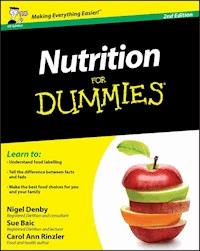
In this fully updated second edition, expert dieticians Sue Baic and Nigel Denby provide no-nonsense advice, equipping you with all the information you need to make informed decisions about your diet. The book acts as a sound reference point if you want to know the facts about food, and debunks the myths behind fad diets.
Nutrition For Dummies, 2nd Edition provides a detailed understanding of the nutritional breakdown of different food groups and examines the relationship food has with one's physical and mental wellbeing. The book also advises you on how to establish healthy eating patterns and how to maximise the health benefits of what you eat.
This new edition includes approx 20% new and updated material, including new chapters on nutrition in institutions and how to eat healthily on the go. New content also includes up-to-date health guidelines and government policies, information on probiotics and over the counter weight loss drugs, plus advice on how to eat well on a budget.
Nutrition For Dummies, 2nd Edition includes:
Part I: The Basic Facts about Nutrition
Chapter 1: What's Nutrition, Anyway?
Chapter 2: Digestion: The 24-Hour Food Factory
Chapter 3: Why You Eat What You Eat and Like What You Like
Part II: What You Get from Food
Chapter 4: Powerful Protein
Chapter 5: The Lowdown on Fat and Cholesterol
Chapter 6: Calories: The Energisers
Chapter 7: Carbohydrates: A Complex Story
Chapter 8: The Alcohol Truth: The Whole Truth
Chapter 9: Vigorous Vitamins
Chapter 10: Mighty Minerals
Chapter 11: Phabulous Phytochemicals
Chapter 12: Water Works
Part III: Healthy Eating
Chapter 13: What Is a Healthy Diet?
Chapter 14: Making Wise Food Choices
Chapter 15 : Ensuring Good Nutrition Whoever You Are
NEW! Chapter 16: Eating in Institutions
NEW! Chapter 17: Being Nutritionally Savvy on the Go
Part IV: Processed Food
Chapter 18: What Is Processed Food?
Chapter 19: Cooking and Keeping Food
Chapter 20: Weird Science: Examining Food Additives
Part V: Food and Health
Chapter 21: Food and Allergies
Chapter 22: Food and Mood
Chapter 23: Food and Medicine
Chapter 24: Food and Dietary Supplements
Part VI: The Part of Tens
Chapter 25: Ten Nutrition Web Sites You Can Trust
Chapter 26: Ten Superfoods
Chapter 27: Ten Fad Diets: The Truth Behind the Headlines
Sie lesen das E-Book in den Legimi-Apps auf:
Seitenzahl: 590
Veröffentlichungsjahr: 2010
Ähnliche

















Nutrition For Dummies, 2nd Edition®
Table of Contents
Introduction
About This Book
Conventions Used in This Book
What You Don’t Have to Read
Foolish Assumptions
How This Book Is Organised
Part I: The Basic Facts about Nutrition
Part II: What You Get from Food
Part III: Healthy Eating
Part IV: Processed Food
Part V: Food and Health
Part VI: The Part of Tens
Icons Used in This Book
Where to Go from Here
Part I: The Basic Facts about Nutrition
Chapter 1: What’s Nutrition, Anyway?
Why Nutrition Matters
You are what you eat
What’s an essential nutrient?
Other interesting substances in food
Your nutritional status
Finding Nutrition Facts
People you can trust about nutrition
Research you can trust
Chapter 2: Digestion: The 24-Hour Food Factory
Introducing the Digestive System
The digestive organs
Digestion: A performance in two acts
Understanding How Your Body Digests Food
The eyes and nose
The mouth
The stomach
The small intestine
The large intestine
Combating Digestive Problems
Alleviating common discomforts
Helping to manage irritable bowel syndrome (IBS)
Balancing your gut bacteria with probiotics and pre biotics
Chapter 3: Why You Eat When You Eat and Like What You Like
Understanding the Difference between Hunger and Appetite
Refuelling: The Cycle of Hunger and Satiety
Recognising hunger
Knowing when you’re full
Beating those between-meal energy lows
Maintaining a healthy appetite
Responding to Your Environment on a Gut Level
In the bleak mid-winter
Exercising more than your mouth
Nursing your appetite back to health
Tackling Taste: How Your Brain and Tongue Work Together
The four (or five) basic flavours
Your health and your taste buds
Tricking your taste buds
Determining Deliciousness
Listening to your body
Turning up your nose to tastes
Changing the Menu: Adapting to New and Exotic Foods
Part II: What You Get from Food
Chapter 4: Powerful Protein
Looking Inside and Out: Where Your Body Puts Protein
Putting Protein to Work: How Your Body Uses Protein
Piling In the Protein: What Happens to the Proteins You Eat
Examining Protein Types: Not All Proteins Are Created Equal
Essential and non essential proteins
High-quality and low-quality proteins
Complete proteins and incomplete proteins
Deciding How Much Protein You Need
Calculating the correct amount
Dodging protein deficiency
Boosting your protein intake: Special considerations
Avoiding protein overload
Chapter 5: The Lowdown on Fat and Cholesterol
Finding the Facts about Fat
Understanding why your body needs fat
Releasing energy from fat
Focusing on the fats in food
Getting the right amount of fat
Finding fat in all kinds of foods
Defining fatty acids
Cholesterol: The Misunderstood Nutrient
Cholesterol and heart disease
Living with lipoproteins
Diet and cholesterol
Chapter 6: Calories: The Energisers
Counting the Calories in Food
Empty calories
Every calorie counts
How Many Calories Do You Need?
Resting energy expenditures
Energy for work
Calculating your Body Mass Index
Measuring your waist circumference
Looking closer at the weight/height relationship
Controlling your weight effectively
Losing Weight by Controlling Calories
Chapter 7: Carbohydrates: A Complex Story
Considering Carbohydrates
Carbohydrates and energy: a biochemical love story
How glucose becomes energy
Having too much of a good thing
Other ways your body uses carbohydrates
Finding the carbohydrates you need
Some problems with carbohydrates
Who needs extra carbohydrates?
Dietary Fibre: The Non-nutrient in Carbohydrate Foods
The two kinds of dietary fibre
Getting fibre from food
How much fibre do you need?
Chapter 8: The Truth: The Alcohol Truth
Creating Alcoholic Drinks
Fermented alcohol products
Distilled alcohol products
Foods used to make alcoholic drinks
Hic! How Much Alcohol is in That Bottle?
Moving Alcohol through Your Body
Flowing down the hatch from mouth to stomach
Stopping for a short visit at the energy factory
Rising to the surface
Encountering curves in the road
Alcohol and Health
Moderate drinking: Some benefits, some risks
My head hurts! Having a hangover
Alcoholism and nutrition
Avoiding alcohol
Chapter 9: Vigorous Vitamins
Taking a Look at the Vitamins Your Body Needs
Fat-soluble vitamins
Water-soluble vitamins
Get Your Vitamins Here
Too Much or Too Little: Avoiding Two Ways to Go Wrong with Vitamins
Vitamin deficiencies
Big trouble: Vitamin megadoses
Special Circumstances: Taking Extra Vitamins as Needed
I’m taking medication
I’m a toddler
I’m a smoker
I’m vegan
I’m a couch potato who plans to start exercising
I’m pregnant
I’m breast-feeding
I’m approaching menopause or getting on a bit
I’m well but worried
Chapter 10: Mighty Minerals
Taking Inventory of the Minerals You Need
Introducing the major minerals
Introducing the trace elements
Mineral Overdoses and Underdoses
Avoiding mineral deficiency
Knowing how much is too much
Munching More Minerals: People Who Need Extra
You’re a strict vegetarian
You’re a woman
You’re pregnant
You’re breastfeeding
You’re menopausal
Chapter 11: Phabulous Phytochemicals
Phytochemicals Are Everywhere
Perusing the Different Kinds of Phytochemicals
Antioxidants
Hormone-like compounds
Sulphur compounds
Dietary fibre
Plant sterols
Chapter 12: Water Works
Investigating the Many Ways Your Body Uses Water
Maintaining the Right Amount of Water in Your Body
A balancing act: The role of electrolytes
Dehydrating without enough water and electrolytes
Getting the Water You Need
Taking in Extra Water and Electrolytes as Needed
You’ve got an upset stomach
You’re exercising or working hard in a hot environment
Part III: Healthy Eating
Chapter 13: What Is a Healthy Diet?
Introducing the Guidelines for a Healthy Diet
Stepping Out Towards a Healthier Lifestyle
Eat a variety of foods
Eat the right amount for a healthy weight
Eat plenty of food rich in starch and fibre
Let the Eatwell Plate guide your food choices
Eat plenty of fruit and vegetables
Walking Away from Unhealthy Food
Don’t eat too many fatty foods
Counting the fat calories
Don’t have sugary foods and drinks too often
If you drink alcohol, drink sensibly
Choose and prepare foods with less salt
Relaxing Once in a While
A Few Words about Activity
Calorie-burning in action
Finding activities you enjoy
Working out why you need to work out
Chapter 14: Making Wise Food Choices
Introducing the Eatwell Plate
Taking a close look at the Eatwell Plate
Tailoring the Eatwell Plate to your needs
Understanding Food Labels
Negotiating the traffic lights
Checking out guideline daily amounts
Understanding Nutritional Claims on Food Labels
Using the Eatwell Plate and Food Labels in Practice
Healthy shopping
Healthy meal planning
Healthy snacking
Eating Well Despite the Credit Crunch
Chapter 15 : Ensuring Good Nutrition Whoever You Are
Homing In on the Dietary Reference Values
I’m Trying for a Baby
I’m Pregnant
I’m Breastfeeding
I’m Weaning My Baby
Baby led weaning
My baby is vegetarian or vegan
Foods to avoid giving your baby
I’m Feeding My Toddler
My toddler is vegetarian or vegan
Foods to avoid giving your toddler
I’m Feeding My School Child
I’m a Man
I’m an Older Person
Chapter 16: Being Nutritionally Savvy for When You’re Out and About
Being Fit for Business: Nutrition in the Workplace
Telling your employer what you want
I’m an employer – what can I do?
Grabbing food at your desk
Considering what’s in your morning coffee
Watching what you drink
Fuelling Up: Nutrition on the Road
Taking food with you
Selecting from service stations
Staying alert
Feasting on fast food
Table for two?
Chapter 17 : Looking at Standards in Schools and Other Institutions
Knowing about Nutrition for Tiny Tummies
Realising the state of children’s diets
Noting the lack of nutritional standards for young children
Using a food-group approach
Finding a nursery that knows nutrition
Setting the Standard in Schools
Considering food served in schools: Lunches and snacks
Offering healthier foods with increased vitamin and mineral content
Thinking about food brought from home: Packed lunches
Serving Up Better Hospital Food: Leading by Example in the NHS
Visiting friends or family in hospital – how can you help?
Caring for Older People: Standards in Residential Homes
Eating on the March: Nutrition in the Armed Forces
Fighting fit
Drinking up
Supplementary information
Going Beyond Porridge: Dietary Recommendations for the Prison Service
Part IV: Processed Food
Chapter 18: What Is Processed Food?
Preserving Food: Five Methods of Processing
Temperature control
Removing the water
Controlling the air flow
Chemical warfare
Irradiation
Making Food Better, and Better for You
Intensifying flavour and aroma
Adding nutrients
Combining benefits
Making foods functional
Faking It: Alternative Foods
Fake fats
Substitute sweeteners
Chapter 19: Cooking and Keeping Food
What’s Cooking?
Cooking with electromagnetic waves
Cooking away contaminants
Exploring How Cooking Affects Food
Cook me tender: Changing texture
Enhancing flavour and aroma
Altering the palette: Food colour
Choosing Cookware: How Pots and Pans Affect Food
Aluminium
Copper
Ceramics
Enamelware
Glass
Iron cookware
Nonstick
Stainless steel
Plastic and paper
Protecting the Nutrients in Cooked Foods
Maintaining minerals
Those volatile vitamins
Keeping Food Fresh
Cold comfort: Chilling and freezing
Canned food: Keeping out contaminants
Chapter 20: Weird Science: Examining Food Additives
Exploring the Purpose of Food Additives
Colours and flavours
Preservatives
Some other additives in food
Determining the Safety of Food Additives
Toxins
Carcinogens
Allergens
Going Hyper: Food Additives and Children
Gene Cuisine: Debating Genetically Modified Food
Looking at the pros and cons
Knowing what’s GM and what’s not
Considering Organic Options
Seeking Sustainability
Probing provenance
Eating less meat?
Reducing food waste
Part V: Food and Health
Chapter 21: Food and Allergies
Finding Out More about Food Allergies
Investigating allergies and intolerances
Understanding how a reaction occurs
It’s all in the family: Inheriting food allergies
Being aware of the dangers of food allergies
Considering Foods Most Likely to Cause Allergic Reactions
Testing, Testing: Identifying Food Allergies
Coping with Food Allergies and Intolerances
Chapter 22: Food and the Brain
How Chemicals Alter Mood
How Food Affects Mood
Alcohol
Caffeine
Carbohydrate and protein
Looking to the Future: New Research into Food and Mood
Essential fatty acids
Selenium and folate
Breakfast
Chocolate
Linking Diet, Learning and Behaviour
Using omega 3 to help with learning difficulties
Reducing antisocial behaviour in young people?
Chapter 23: Food and Medicine
Examining Diets with Beneficial Medical Effects
Using Food to Prevent Disease
Eating to reduce the risk of cancer
DASHing to healthy blood pressure
Preventing Another Heart Attack
Easing symptoms of the common cold
Food as the Fountain of Youth
Looking after your skin
Keeping your mind young
Food and Drug Interactions
How a food and drug interaction happens
Food fights: Drugs versus nutrients versus drugs
The Last Word on Food versus Medicine
Chapter 24: Dietary Supplements
Looking at Why People Use Dietary Supplements
When food isn’t enough: Using supplements as insurance
Using supplements instead of medicine
Supplement Safety: An Iffy Proposition
Choosing the Most Effective Supplements
Pick a well-known brand
Check the ingredient list
Look for the expiry date
Check the storage requirements
Choose a sensible dose
Beware of the health claims on supplements
Good Reasons for Getting Nutrients from Food Rather than Supplements
Cost
Unexpected bonuses
Safety
Part VI: The Part of Tens
Chapter 25: Ten Nutrition Websites You Can Trust
British Dietetic Association
British Nutrition Foundation
Diabetes UK
Food and Drink Federation
Food Standards Agency
Grub4Life
Heart UK / British Heart Foundation
NHS Choices – Live Well
United States Department of Agriculture Nutrient Database
World Cancer Research Fund
Chapter 26 : Ten Superfoods
Apples
Bananas
Baked Beans
Brazil Nuts
Broccoli
Coffee
Oats
Olive Oil
Sardines
Yoghurt
Chapter 27: Ten Fad Diets: The Truth Behind the Headlines
The Atkins Diet
The ‘Bit of Your Body You Hate’ Diet
The Blood Group Diet
The Cabbage Soup Diet
Nutritionally incomplete and very much a quick fix: Detox Diets
The Hay Diet, a.k.a. the Hollywood Diet
Low Glycaemic Diets
The Maple Syrup Diet
Meal Replacement Diets
The Zone
Nutrition For Dummies®, 2nd Edition
by Nigel Denby, Sue Baic, and Carol Ann Rinzler
Nutrition For Dummies®, 2nd Edition
Published by: John Wiley & Sons, Ltd
The Atrium Southern Gate
Chichester
West Sussex PO19 8SQ England
E-mail (for orders and customer service enquires): [email protected]
Visit our Home Page on www.wileyeurope.com
Copyright © 2011 John Wiley & Sons, Ltd, Chichester, West Sussex, England.
The Eatwell Plate, sourced from the Food Standards Agency, is Crown copyright material and is reproduced under the terms of the Click-Use Licence.
Published by John Wiley & Sons, Ltd, Chichester, West Sussex
All Rights Reserved. No part of this publication may be reproduced, stored in a retrieval system or transmitted in any form or by any means, electronic, mechanical, photocopying, recording, scanning or otherwise, except under the terms of the Copyright, Designs and Patents Act 1988 or under the terms of a licence issued by the Copyright Licensing Agency Ltd, 90 Tottenham Court Road, London, W1T 4LP, UK, without the permission in writing of the Publisher. Requests to the Publisher for permission should be addressed to the Permissions Department, John Wiley & Sons, Inc., 111 River Street, Hoboken, NJ 07030, (201) 748-6011, fax (201) 748-6008, or online at http://www.wiley.com/go/permissions.
Trademarks: Wiley, the Wiley Publishing logo, For Dummies, the Dummies Man logo, A Reference for the Rest of Us!, The Dummies Way, Dummies Daily, The Fun and Easy Way, Dummies.com and related trade dress are trademarks or registered trademarks of John Wiley & Sons, Inc. and/or its affiliates in the United States and other countries, and may not be used without written permission. All other trademarks are the property of their respective owners. Wiley Publishing, Inc., is not associated with any product or vendor mentioned in this book.
Limit of Liability/Disclaimer of Warranty: The publisher, the author, AND ANYONE ELSE INVOLVED IN PREPARING THIS WORK make no representations or warranties with respect to the accuracy or completeness of the contents of this work and specifically disclaim all warranties, including without limitation warranties of fitness for a particular purpose. No warranty may be created or extended by sales or promotional materials. The advice and strategies contained herein may not be suitable for every situation. This work is sold with the understanding that the publisher is not engaged in rendering legal, accounting, or other professional services. If professional assistance is required, the services of a competent professional person should be sought. Neither the publisher nor the author shall be liable for damages arising herefrom. The fact that an organization or Website is referred to in this work as a citation and/or a potential source of further information does not mean that the author or the publisher endorses the information the organization or Website may provide or recommendations it may make. Further, readers should be aware that Internet Websites listed in this work may have changed or disappeared between when this work was written and when it is read. Some of the exercises and dietary suggestions contained in this work may not be appropriate for all individuals, and readers should consult with a physician before commencing any exercise or dietary program.
Wiley also publishes its books in a variety of electronic formats. Some content that appears in print may not be available in electronic books.
British Library Cataloguing in Publication Data: A catalogue record for this book is available from the British Library
ISBN: 978-0-470-97276-2 (hardback), ISBN: 978-0-470-97434-6 (ebk),
ISBN: 978-0-470-97304-2 (ebk), ISBN: 978-0-470-97305-9 (ebk)
Printed and bound in Great Britain by TJ International, Padstow, Cornwall
10 9 8 7 6 5 4 3 2 1
About the Authors
Nigel Denby trained as a dietitian at Glasgow Caledonian University, following an established career in the catering industry. He is also a qualified chef and previously owned his own restaurant.
His dietetic career began as a Research Dietitian at the Human Nutrition Research Centre in Newcastle upon Tyne. After a period working as a Community Dietitian, Nigel left the NHS to join Boots Health and Beauty Experience where he led the delivery and training of Nutrition and Weight Management services.
In 2003 Nigel set up his own Nutrition consultancy, delivering a clinical service to Hammersmith and Queen Charlotte’s Hospital Women’s Health Clinic and the International Eating Disorders Centre in Buckinghamshire, as well as acting as Nutrition Consultant for the Childbase Children’s Nursery Group.
Nigel also runs his own private practice in Harley Street, specialising in Weight Management, PMS / Menopause and Irritable Bowel Syndrome.
Nigel works extensively with the media, writing for the Sunday Telegraph Magazine, Zest, Essentials, and various other consumer magazines. His work in radio and television includes BBC and ITN news programmes, Channel 4’s Fit Farm, BBC Breakfast, and BBC Real Story.Nigel’s first book, The GL Diet, was published by John Blake in January 2005.
Sue Baic is a Senior Lecturer in Nutrition and Public Health in the Department of Exercise, Nutrition and Health Sciences at the University of Bristol. She has a first degree from Bristol University followed by a Master of Science in Human Nutrition from London University. Sue is a Registered Dietitian (RD) with over 20 years’ experience in the field of nutrition and health in the NHS and as a freelance consultant. She feels strongly about providing nutrition information to the public that is evidence based, up to date, unbiased, and reliable.
As a member of the British Dietetic Association she has spoken and written for the media on a variety of nutrition related health issues. Sue lives in Bristol and spends much of her spare time running up and down hills in the Cotswolds in an attempt to get fit.
Carol Ann Rinzler is a noted authority on health and nutrition and holds an MA from Columbia University. She writes a weekly nutrition column for The New York Daily News and is the author of more than 20 health-related books, including Controlling Cholesterol For Dummies, Weight Loss Kit For Dummies, and the highly acclaimed Estrogen and Breast Cancer: A warning for women. Carol Ann lives in New York with her husband, wine writer Perry Luntz, and their amiable cat, Kat.
Authors’ Acknowledegments
From ND
Thanks go to my writing partner, Sue, for always spotting my typos and for her meticulous attention to detail!
From SB
My part of this book is dedicated to my mother, Pat, who encouraged me to invest the time and effort to enable me to pursue a career that I love. I would also like to thank John and Rosie for their support while I was writing this book and for laughing at my stories even when they’ve heard them before. Thanks also go to Nigel for asking me to join him in this venture and providing encouragement and much humour along the way.
We would both like to thank the excellent team at Wiley, especially Rachael Chilvers, Alison Yates, Jo Jones and Nicole Hermitage for their part in bringing this book to fruition.
From CAR
Thanks to my husband, Perry Luntz, a fellow writer who, as always, stayed patient as a saint and even-tempered beyond belief while I was racing pell-mell (and not always pleasantly) to deadline.
Publisher’s Acknowledgments
We’re proud of this book; please send us your comments through our Dummies online registration form located at www.dummies.com/register/.
Some of the people who helped bring this book to market include the following:
Acquisitions, Editorial, and Media Development
Project Editor: Jo Jones
Commissioning Editor: Nicole Hermitage
Assistant Editor: Ben Kemble
Proofreader: Charlie Wilson
Technical Editor: Brigid McKevith
Production Manager: Daniel Mersey
Publisher: David Palmer
Cover Photo: © Wolfgang Kraus - Fotolia.com
Cartoons: Ed McLachlan
Composition Services
Project Coordinator: Lynsey Stanford
Layout and Graphics: Carl Byers, Lavonne Roberts
Proofreader: Jessica Kramer
Indexer: Ty Koontz
Introduction
Once upon a time people simply sat down to dinner, eating because they were hungry or just for the pleasure of it. Nobody said, ‘I wonder how much trans fat is in the margarine’, or asked whether the bread had a low glycaemic index. Today, the dinner table can be a battleground between health and pleasure. For many people, the fight to eat what does them good rather than what tastes good has become a lifelong struggle.
This book is designed to end the war between your need for a healthy diet and your equally compelling need for tasty meals. In fact, armed with a little insider knowledge you’ll find that what’s good for you can also be good to eat – and vice versa.
About This Book
Nutrition For Dummies doesn’t aim to send you back to the classroom, sit you down, and make you take notes about what to eat every day from now until you’re old and grey. Instead, this book means to give you the information you need to make wise food choices – which always means choices that please the palate as well as the body. Some of what you’ll read here is about thebasics: the roles of vitamins, minerals, proteins, fats, carbohydrates, and even plain water. You’ll also read tips about how to put together a nutritious shopping list and how to include all the foods you enjoy as part of a healthy balanced diet.
For those who know absolutely nothing about nutrition except that it deals with food, this book is a starting point containing sound information you can trust. For those who know more than a little about nutrition, this book is a refresher course to bring you bang up to date on what’s happened in the field since you last checked.
Conventions Used in This Book
We use the following conventions throughout the text to make things consistent and easy to understand:
All web addresses appear in mono font.
New terms appear in italic and are closely followed by an easy-to-understand definition.
Bold is used to highlight key words and phrases in a list, as well as the action parts of numbered steps.
Nutritionists commonly use metric terms such as gram (g), milligram (mg), and microgram (mcg) to describe quantities of protein, fat, carbohydrates, vitamins, minerals, and other nutrients.
Nutritionists measure food in 100-gram portions. So ‘a portion’ in this book means a 100-gram dollop unless we state otherwise.
What You Don’t Have to Read
You want to get to the important stuff but you’re too pushed for time to read it all? We know that feeling and so we’ve tried to make it that bit easier for you. Some parts of this book are fun or informative but not necessarily vital to your understanding of nutrition. For example:
Text in sidebars: The sidebars are the shaded boxes that appear here and there. They share anecdotes and observations but aren’t essential reading.
Anything with a Technical Stuff icon attached: This information may be interesting but it’s not critical to your understanding of nutrition.
Foolish Assumptions
Every book is written with a particular reader in mind, and this one is no different. As we wrote this book, we made the following basic assumptions about who you are and why you paid out your hard-earned money for an entire volume about nutrition:
You didn’t study nutrition at school or university but now you’ve discovered that you have a better chance of staying healthy if you know how to put together a well-balanced, nutritious diet for you and your family.
You’re confused by conflicting advice on vitamins and minerals, not to mention newer dietary issues such as antioxidants and low carb diets. You need a reliable road map through the nutrient maze.
You want basic information, but you don’t want to become an expert in nutrition or spend hours digging your way through medical textbooks and journals.
How This Book Is Organised
The following is a brief summary of each part in Nutrition For Dummies. You can use this guide as a fast way to check out what you want to read first. We’ve designed this book so you don’t have to start with Chapter 1 and read straight through to the end. You can dive in absolutely anywhere and still come up with tons of tasty information about how food helps your body work.
Part I: The Basic Facts about Nutrition
Chapter 1 defines nutrition and what we mean by essential nutrients. This chapter also tells you how to read a nutrition study and how to find reliable information on nutrition you can trust. Chapter 2 is a really clear guide to how your digestive system works to transform food and drink into the nutrients you need to sustain a healthy body. Chapter 3 explores the reasons why you eat when you eat, the difference between hunger and appetite, and why you like the foods you like.
Part II: What You Get from Food
Chapter 4 gives you the facts about protein: where you get it and what it does in your body. Chapter 5 does the same job for dietary fat, and Chapter 6 looks at calories – the energy supply to your body. Chapter 7 explains carbohydrates: sugars, starches, and that indigestible but totally vital substance, dietary fibre. Chapter 8 outlines the risks and, yes, some newly proven benefits of alcohol.
Chapter 9 is about vitamins, the substances in food that control so many vital chemical reactions in your body. Chapter 10 is about minerals, substances that go to build so many of our tissues. Chapter 11 explains phytochemicals, newly identified but very important substances in food. Chapter 12 is about water, the essential liquid that comprises as much as 70 per cent of your body weight. This chapter also describes the functions of electrolytes, special minerals that maintain your fluid balance (the correct amount of water inside and outside your body cells).
Part III: Healthy Eating
Chapter 13 discusses what makes a healthy diet. This chapter is based on recent recommendations from the top nutritional organisations so you know it’s good for you! Chapter 14 shows you how to use a food balance model and read food labels to make wise choices when shopping, cooking, and snacking. Chapter 15 gives you the information to ensure optimum nutrition whoever you are. It examines the key dietary recommendations appropriate for every life stage. Chapter 16 explores how to eat well when you’re out and about – at work in restaurants or on the road. Chapter 17 discusses ways to achieve good nutrition standards in institutions like schools and hospitals
Part IV: Processed Food
Chapter 18 asks and answers this simple question: what is processed food? Chapter 19 shows you how cooking, freezing and canning affect the way food looks and tastes, as well as its nutritional value. We also take a peek inside the world of GM food. Chapter 20 gives you the lowdown on food additives – what do they do and are they safe?
Part V: Food and Health
Chapter 21 explains why people are allergic to certain foods and presents strategies for identifying and avoiding the problem foods. Chapter 22 is about how eating or drinking certain foods and drinks may affect your mood – a hot topic these days with nutrition researchers. Chapter 23 looks at food and medicine. It explores which special diets can be used to treat medical problems (as well as which can’t). It also covers how foods can interact with drugs and investigates which medications are the most likely to affect your nutritional status. Chapter 24 looks at dietary supplements: who might need them, how they’re regulated, and how to choose the most effective types.
Part VI: The Part of Tens
You can’t have a For Dummies book without The Part of Tens! This part provides ten great nutritional web site addresses, lists ten superfoods – mouthwatering foods we think have positively magical health benefits – and gives you the bottom line on ten trendy weight-loss diets.
Icons Used in This Book
Icons are a handy For Dummies way to catch your attention as you slide your eyes down the page. The icons come in several varieties, each with its own special meaning:
Nutrition is full of stuff that ‘everybody knows’. This masked marvel clues you in to the real facts when (as often happens) ‘everybody’s wrong!’
This little guy looks smart because he’s marking the place where you find explanations of the terms used by nutrition experts.
This icon alerts you to clear, concise explanations of technical terms and processes – details that are interesting but not necessarily essential to your understanding of a topic. In other words, skip them if you want, but try a few first.
Check out these snippets of useful information that you might want to bear in mind.
Bull’s-eye! This is time and stress saving information that you can use to improve your diet and health.
This is a warning icon, alerting you to nutrition pitfalls such as supplements that may do more damage than good to your health.
Where to Go from Here
Ah, here’s the best part. For Dummies books aren’t linear (a fancy way of saying that they don’t proceed from A to B to C . . . and so on). In fact, you can dive right in anywhere, say at L, M, or N, and still make sense of what you’re reading because we’ve made sure each chapter delivers a complete message.
For example, if carbohydrates are your passion, go right to Chapter 7. If you want to know how to understand food labels, skip to Chapter 14. If you’ve always been fascinated by food additives, your choice is Chapter 20. You can use the Table of Contents to find broad categories of information or the Index to look up more specific things.
If you’re not sure where you want to go, you may want to start with Part I. It gives you all the basic info you need to understand nutrition and points to places where you can find more detailed information.
Part I
The Basic Facts about Nutrition
In this part . . .
To use food wisely, you need a firm grasp of the basics. In this part, we look at why good nutrition is important and define what we mean by essential nutrients. We explore ways in which you can tell whether information about nutrition is reliable. We also give you a detailed explanation of digestion (how your body turns food into nutrients). Finally in this section, we explain why you eat when you eat – the realm of hunger and appetite – and why you find certain foods more appetising than others – the world of taste and smell.
Chapter 1
What’s Nutrition, Anyway?
In This Chapter
Exploring why nutrition matters
Understanding the value of food
Finding reliable sources of nutrition information
Making sense of nutritional studies
As you read this book you’ll follow a fantastic journey through the body – a journey that carries food from your plate to your mouth, through your digestive system and into every tissue and cell. Along the way, you’ll have an opportunity to see how your organs and digestive systems work. You’ll discover why some foods are particularly important to your health. And most importantly you’ll find out how to manage your diet so that you can get the biggest return (nutrients) from your investment (food).
Why Nutrition Matters
Technically speaking, nutrition is the science of how the body takes in and uses food. All living things need food and water just to stay alive. If you want to live well, then you need not only food but good food, meaning food with the essential nutrients. Without these nutrients:
Your bones can become brittle (not enough calcium or vitamin D).
Your gums may bleed (not enough vitamin C).
You may feel tired and short of breath (not enough iron).
Lesen Sie weiter in der vollständigen Ausgabe!
Lesen Sie weiter in der vollständigen Ausgabe!
Lesen Sie weiter in der vollständigen Ausgabe!
Lesen Sie weiter in der vollständigen Ausgabe!
Lesen Sie weiter in der vollständigen Ausgabe!
Lesen Sie weiter in der vollständigen Ausgabe!
Lesen Sie weiter in der vollständigen Ausgabe!
Lesen Sie weiter in der vollständigen Ausgabe!
Lesen Sie weiter in der vollständigen Ausgabe!
Lesen Sie weiter in der vollständigen Ausgabe!
Lesen Sie weiter in der vollständigen Ausgabe!
Lesen Sie weiter in der vollständigen Ausgabe!
Lesen Sie weiter in der vollständigen Ausgabe!
Lesen Sie weiter in der vollständigen Ausgabe!
Lesen Sie weiter in der vollständigen Ausgabe!
Lesen Sie weiter in der vollständigen Ausgabe!
Lesen Sie weiter in der vollständigen Ausgabe!
Lesen Sie weiter in der vollständigen Ausgabe!
Lesen Sie weiter in der vollständigen Ausgabe!
Lesen Sie weiter in der vollständigen Ausgabe!
Lesen Sie weiter in der vollständigen Ausgabe!
Lesen Sie weiter in der vollständigen Ausgabe!
Lesen Sie weiter in der vollständigen Ausgabe!
Lesen Sie weiter in der vollständigen Ausgabe!
Lesen Sie weiter in der vollständigen Ausgabe!
Lesen Sie weiter in der vollständigen Ausgabe!
Lesen Sie weiter in der vollständigen Ausgabe!
Lesen Sie weiter in der vollständigen Ausgabe!
Lesen Sie weiter in der vollständigen Ausgabe!
Lesen Sie weiter in der vollständigen Ausgabe!
Lesen Sie weiter in der vollständigen Ausgabe!




