


9,99 €
Mehr erfahren.
- Herausgeber: 50Minutes.com
- Kategorie: Sachliteratur, Reportagen, Biografien
- Serie: History
- Sprache: Englisch
Keen to learn but short on time? Get to grips with the life of Oliver Cromwell in next to no time with this concise guide.
50Minutes.com provides a clear and engaging analysis of the life of Oliver Cromwell. In 1642, the established order in England was overturned when Parliament raised an army against King Charles I. The charismatic military and political leader Oliver Cromwell rose to prominence in the ensuing civil war, and took power once the conflict was over. This Puritanical ruler united the British Isles and increased British influence overseas, but his strict and often brutally repressive actions mean that he continues to divide opinion even today.
In just 50 minutes you will:
• Discover the reasons for the disagreements between King Charles I and his Parliament
• Find out about the decisive role Cromwell played during English Civil War
• Evaluate his leadership during the Commonwealth and Protectorate, and the legacy he left behind
ABOUT 50MINUTES.COM | History & Culture
50MINUTES.COM will enable you to quickly understand the main events, people, conflicts and discoveries from world history that have shaped the world we live in today. Our publications present the key information on a wide variety of topics in a quick and accessible way that is guaranteed to save you time on your journey of discovery.
Das E-Book können Sie in Legimi-Apps oder einer beliebigen App lesen, die das folgende Format unterstützen:
Seitenzahl: 34
Veröffentlichungsjahr: 2017
Ähnliche












Oliver Cromwell
Key information
Born: 25 April 1599 in Huntingdon.Died: 3 September 1658 in London.Role: English general and Member of Parliament; Lord Protector of the Commonwealth of England, Scotland and Ireland from 1653 to his death.Main achievement: the establishment of a military junta whose conquests laid the foundation for the British Empire.Introduction
Oliver Cromwell is undoubtedly one of the most enigmatic figures in English history. Sometimes hated, sometimes admired by different generations of historians and constantly reinvented depending on the requirements of a given context, Cromwell is a very ambiguous character. It is particularly difficult to separate the bloodthirsty tyrant from the hero who preceded him.
An austere puritan with iron discipline, Cromwell emerged from the ranks of the revolutionary army and managed to rise to the highest levels of power thanks to his unrivalled political pragmatism. He was a skilled communicator who attributed each of his military victories, no matter how small, to God, and claimed that he had been divinely chosen. Both a mystical figure and a Machiavellian genius, in 1653 Cromwell became the absolute sovereign of the British Isles. In spite of the power he held, he refused the English crown when it was offered to him in 1657.
His political outlook was defined by fanatical idealism, which was nonetheless tempered in practice by a high degree of prudence. Although he presented himself as the champion of Protestantism and hoped to correct the population’s morals and create a federation of all the Protestant nations, he managed to conclude diplomatic agreements with the Catholic powers (France and Spain).
Opinions about this complex and inexhaustible figure are likely to remain divided for many years to come.
Biography
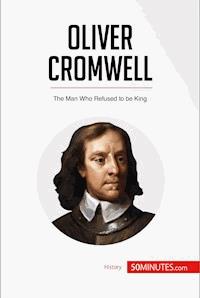
Portrait of Oliver Cromwell.
Between fortune and misfortune
Cromwell was born in Huntingdon, England on 25 April 1599. Although he was a member of the gentry, he inherited next to nothing of his family’s extensive wealth, which had been largely squandered by one of his grandfathers.
The gentry
In England, there was a difference between noblemen, gentlemen and the middle classes. Until the 15th century, the class of gentlemen did not really exist, as these gradually appeared following the social rise of several middle-class families, who were anxious to buy their place in the nobility and attribute to themselves an illustrious, and sometimes fictitious, family tree. As such, the gentry was the order of the gentlemen, meaning nobles whose main activity was not war, but enrichment based on the ownership of land, acquired through purchase, marriage or any other arrangement. In France, this mixing between the nobility and the middle classes remained impossible during the ancien régime (1515-1789), as nobles were strictly forbidden from taking part in any commercial, industrial or entrepreneurial activity.
Forced to abandon his studies at Cambridge to take care of his mother and his seven unmarried sisters, Cromwell returned to his native region, where he married Elizabeth Bourchier (1598-1665), the daughter of a London merchant, with whom he had nine children.
During the 1620s, he fell ill and suffered from a major bout of depression. He came out of this more puritanical than ever, convinced that he was accompanied by God throughout every stage of his life, in both his misfortunes and his triumphs.
After falling into poverty, Cromwell sold almost all his property in 1631 and resolved to work on the land himself as a farmer. Five years later, he inherited a substantial amount of property from an uncle in Ely, where he moved. Now free from want and with the benefit of a large family network, he was elected to the Short Parliament in 1640, then to the Long Parliament, which was convened a few months later.
Did you know?




