


Erhalten Sie Zugang zu diesem und mehr als 300000 Büchern ab EUR 5,99 monatlich.
- Herausgeber: 404 Ink
- Kategorie: Geisteswissenschaft
- Serie: Inklings
- Sprache: Englisch
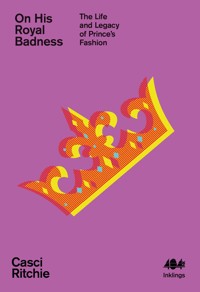
Prince was devoted to the art of dressing. A multi-million selling artist and musical trailblazer, he used fashion as an added storytelling tool. On His Royal Badness explores how Prince's distinctive style disrupts hegemonic, heteronormative and Black masculinities, and considers his own reverence for fashion and self-expression. As a lifelong fan and academic specialising in the field, Casci Ritchie believes Prince's transgressive acts of dress warrant further exploration and acknowledgement within fashion, and here she begins that journey, from ornate ear cuff down to bespoke heel. Taking core pieces from his wardrobe, she embarks on a greatest hits compilation of how the simplest pieces can tell the most incredible stories, and how they act as their own marker for Prince's career and surrounding cultural impact. Fearless in style and experimentation, Prince's impact upon contemporary fashion deserves a closer look and this is just that. Unaffiliated with the Prince estate.
Sie lesen das E-Book in den Legimi-Apps auf:
Seitenzahl: 110
Veröffentlichungsjahr: 2021
Das E-Book (TTS) können Sie hören im Abo „Legimi Premium” in Legimi-Apps auf:
Ähnliche




















On His Royal Badness
Published by 404 Ink Limited
www.404Ink.com
@404Ink
All rights reserved © Casci Ritchie, 2021.
The right of Casci Ritchie to be identified as the Author of this Work has been asserted by her in accordance with the Copyright, Designs and Patent Act 1988.
No part of this publication may be reproduced, distributed, or transmitted, in any form or by any means, electronic, mechanical, photocopying, recording, or otherwise, without first obtaining the written permission of the rights owner, except for the use of brief quotations in reviews.
Please note: Some references include URLs which may change or be unavailable after publication of this book. All references within endnotes were accessible and accurate as of June 2021 but may experience link rot from there on in.
Editing: Heather McDaid
Typesetting: Laura Jones
Cover design: Luke Bird
Interior illustrations: Casci Ritchie
Co-founders and publishers of 404 Ink: Heather McDaid & Laura Jones
Print ISBN: 978-1-912489-32-9
Ebook ISBN: 978-1-912489-33-6
404 Ink acknowledges support for this title from Creative Scotland via the Crowdmatch initiative.
On His Royal Badness
The Life and Legacy of Prince’s Fashion
Casci Ritchie
Contents
On His Royal Badness
Introduction
Chapter 1: Leg Warmers
Chapter 2: Trench Coat
Chapter 3: Cloud Suit
Chapter 4: Heels
Chapter 5: Polka Dots
Chapter 6: Butt-Out
Chapter 7: Chain Hat
Chapter 8: Rave
Chapter 9: Super Bowl
Chapter 10: Third Eye
Conclusion
References
Acknowledgements
Further Reading
Print your own Prince
About the Author
About the Inklings series
Introduction
Prince means a million different things to millions of different people. In his 57 years on this earth, Prince achieved stratospheric success as a recording artist, selling over 150 million records worldwide and leaving behind a prolific legacy as a trailblazer of popular music. Prince’s artistry remains limitless, and through performance, lyrics and fashion, he challenged conventional notions of hegemonic masculinities within popular culture. Firmly in control of his image both on and off stage, the musician’s distinct wardrobe rewrote contemporary perceptions of how Black male musicians should look, sound and behave. Each look was a visual embodiment of his artistry, from ornate ear cuff down to bespoke heel. The clothing was just as integral as his music. In learning about Prince’s sartorial legacy, we can learn more about Prince both as an artist and individual, and more so how his fashion interacted with and rebelled against the world around.
Prince was devoted to the art of dressing. Fearless in style experimentation, he did it all: belly tops, 4-inch heels, turtlenecks, unitards, pussy bows, silk pyjamas, DIY trench coats, kaftans, cowl necked jumpsuits, sports jerseys, corsets, zoot suits, hip chains… The man was versatile. Tactility was key within his clothing; playing with a diverse range of unconventional menswear fabrics such as PVC, lace, mesh, brocade, spandex, fringe and lamé. He championed the use of technologically advanced second-skin fabrics such as modal and digital-printed silk jerseys. Importantly, Prince’s clothing had to move with the artist, whether that was 10 feet up in the air mid-split or a 3am after the after-show party. Societal limitations of twentieth-century menswear did not register on Prince’s style radar. Throughout his life he was known to borrow clothing from his lovers and openly buy off-rack womenswear – it simply did not matter to him, he effortlessly made the garments look good regardless. He immersed himself in fashion magazines from all over the world, creating his tear-off scrapbooks of personal favourites to send to designers. As an artist, he understood the importance of personal style, especially as a mode of universal communication and commodity to his fans. Later in his life, Prince dropped hidden album announcements by literally wearing them, such as the NAACP Image Awards 3121 monochromatic jacket in 2005. Prince created his own unique lexicon of fashion, remaining true to himself regardless of trend or industry influence.
I feel strongly that Prince’s transgressive acts of dress warrant further exploration, discussion and acknowledgement within fashion studies and beyond. Whilst critical attention has rightfully been paid to his music, background and identity, there remains comparatively little focusing specifically on Prince’s style; On His Royal Badness will hopefully form part of this ongoing conversation. I will examine the self-created style of Prince through sequential eras, focusing on key garments worn in music videos such as the cloud suit worn in ‘Raspberry Beret’ and pivotal live performances, including the Super Bowl XLI halftime show. A focus will be placed on the stories behind these looks, and the wider context within which many of them sit. Each chapter will focus on a particular outfit, garment or accessory and will chronologically chart Prince’s developing style, inspirations and influences on contemporary culture. This is by no means a comprehensive study of Prince’s extensive wardrobe, more like a greatest hit compilation. Let’s class this as The Hits Disc One for the time being.
So why am I spending all my free time researching what was inside Prince’s wardrobe? Quite simply, I love Prince. He has remained a constant companion throughout my life. Some of my earliest memories oddly enough feature Prince thanks to my parents’ eclectic music tastes (Cypress Hill, Skunk Anansie, George Michael, Cocteau Twins, John Lee Hooker … and Prince). I can remember squishing my face up to the television, the screen static bubbling away on my grubby little hands as I watched Prince’s scandalous MTV Video Music Awards performance of ‘Gett Off’. Yes, the one where his bum is out. Of course, Prince’s music is key to my adulation of the artist, but I am equally enamoured, nay obsessed, with Prince’s radical self-expression through personal style. Prince’s overt displays of unapologetic glamour similarly resonated with me alongside my teenage discovery of Old Hollywood femme fatales. People did not look like Bacall or Prince in the real world, but perhaps it was possible? I remember the first time I watched Purple Rain, I think around the age of fourteen. Watching Prince writhe on stage, dripping in sweat and rhinestones, I wondered why my parents did not let me in on that particular little secret. People really could look like that?
Discovering that people dressed like that, that I could dress like that, was hugely influential to me and cemented my obsession with vintage clothes, and only strengthened my love of Prince. Charity shops became dream destinations after school where I would hunt high and low for any remnants of ‘Sex Shooter’ style outfits (I ended up with a pile of scratchy nylon 1980s teddies from Marks and Spencer), amassing a collection of costume jewellery, lace and 1980s polyester finery. As I progressed through high school and onto university, I chose to study fashion design, sticking up print outs of The Purple One in my studio space. I made life-long friends on the second night of staying in halls of residence thanks to my trusty Prince DVD collection. An excellent icebreaker! I went on to study fashion at postgraduate level, completing a MA in lingerie design and MLitt in dress and textile histories with Prince’s influence never far away.
Shortly before Prince passed in 2016, I began to seriously dig deeper into Prince’s fashion, realising that very little context and oral history had been collected. I began to interview Prince affiliates, scour auction sites for historical clothing sales and watch hours and hours of Prince footage (it’s a hard life), trying to piece together the life of Prince through clothes. I have presented my purple research at various academic conferences across the UK, Europe and America; my research has also been published in books and peer-reviewed journals (more on that at the end, for those interested!). The first stepping-stones in a lifetime of collating the history of a sartorial icon.
I made my own purple pilgrimage to the Twin Cities in 2018. To this day, I still cannot believe I got that chance to visit Minneapolis, Prince’s home city. Everywhere I turned there were signs of the home-town hero; cashiers with immaculate metallic purple manicures embellished with tiny Love Symbols; the Minneapolis Sound pouring out from local bars and restaurants 24/7; strolls through Uptown; an Uber driver who used to hang with musician Morris Day. His presence was felt was everywhere. As fans flocked to Paisley Park, Prince’s iconic studio complex and home, I saw fathers and daughters adorned in lace, best friends dressed in matching Lovesexy ensembles, lone travellers meeting new friends proudly wearing customised denim jackets, meticulously hand-painted with purple iconography. Even in death, Prince’s impact could be seen and felt. Through fashion, he created a visceral visual conversation that all fans could understand. Witnessing this display of reverence and adoration through clothing and self-expression was incredibly moving for me. This is where I truly realised the lasting impact that Prince’s fashion has made within the lives of millions of people.
In an attempt to marry up my past life as a fashion student and everyone’s desire to dress The Purple One up I have included some hand-drawn paper-dolls and coordinating outfits to tap into your creative juices along the way. I encourage you to douse these pocket-sized Prince’s in glitter, colour outside the lines and string them all up next to your bed. I mean it – pictures, please. This, along with my research into Prince’s sartorial universe, is my small way of giving thanks to His Royal Badness for all the sweaty nights on the dancefloor; sing-a-longs in bubble baths, failed dress-ups and constant self-discovery through his art.
Chapter 1: Leg Warmers
Freshly signed with Warner Bros in a landmark six-figure recording deal, Prince is photographed by Robert Whitman on the streets of Minneapolis in the of Autumn 1977, the young musician captured on the cusp of unimaginable stardom. We see a young Black man dressed typically in the funkified bohemian style popular of the ‘70s – fashionable flares, chunky platforms, denim jacket, conservative knitwear and prominent afro. Just your typical fashion-conscious young teen. Although it was clear there was something enigmatic about the charismatic boy wonder from Minneapolis, at this stage Prince was not dressing in his now-legendary exuberant manner. Unique styling is, however, present within these photos – Prince’s eclectic jewellery collection including hearts, stars, crucifix chains and pendants, a solid ID bracelet, a pinkie ring and his now-signature quirk of layering upper body garments.
Twin Cities Pioneer Press reported, ‘Prince plays a number of instruments and sings, but has not been seen in performance in the Twin Cities’, the explanation being that his ‘ambition was to be a national recording star and he did not want to wear out his talent in local clubs.’1 Minneapolis had to wait a while for the homegrown talent to make an appearance as a signed artist. Nearly a year after the release of his debut album For You in April 1978, Prince made his debut on a local stage with two benefit concerts at the Capri Theater (a former picture house in North Minneapolis still active today) on 5-6 January 1979.
Prince appeared to have rummaged through some of the city’s eclectic thrift stores for the formative performances, wearing second-hand decorative button-down blouses and vests more reminiscent of the later 1960s and early 1970s style. Visually, Prince looked more or less like a typical fresh-faced musician of the time, dressed in familiar hand-me-downs from the bygone counterculture that inspired him greatly as a child. Both nights he performed in skintight denim jeans, a rarity when we now think of Prince’s expansive and often unorthodox wardrobe. Prince was known to favour bespoke clothing designed and created solely for his vision and unique frame. This was a creative practice demonstrated from an early age where, as recalled by Prince’s cousin Charles 'Chazz' Smith (drummer of Prince's first band Grand Central), the young musician commissioned local schoolgirls to sew customised fashions for Grand Central.2 Jeans were accessorised with ribbed woollen leg warmers worn high upon his thighs, paired with chunky heeled boots – more cowboy boot than the elegant pump we have grown accustomed to. The musician’s stage presence was clear for all to see from the get-go. Minneapolis Star journalist Jon Bream attended both events, writing that Prince, ‘strutted across the stage with grand Mick Jagger-like moves and gestures. He was cool, he was cocky, and he was sexy.’3 Fashion historian Valerie Steele remarked on the period, ‘The early 1970s “funkification” … simply accentuated the blatantly erotic, in-your-face sexual possibilities of dress. For example, enormous flares in the trousers legs served to focus the eye on the contrasting ultra-tight fit around the crotch and bottom’.4 Up to this point, Prince’s clothing had largely echoed popular youth styles of the times including bell-bottom flares, Santana-esque stacked platform boots and thrift store finds. What made Prince different from the offset was his unwavering sense of self and effortless style, an attribute former classmates remarked upon whilst Prince was a student of Central High School in 1972, wearing ‘globular afro and wispy moustache … dress shirt with huge collar points, baggy pants, platform shoes and neckbands.’5 Chris Moon, a record producer who helped Prince shape his musical persona, described the performer as ‘painfully, painfully shy and extremely introverted’.6




