


68,99 €
Mehr erfahren.
- Herausgeber: John Wiley & Sons
- Kategorie: Fachliteratur
- Sprache: Englisch
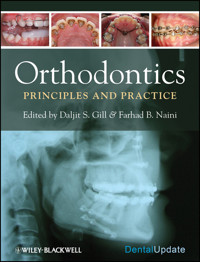
This latest addition to the Dental Update books series provides a clear and thorough guide to contemporary orthodontic principles and practice. Written as a highly practical clinical manual, it covers patient assessment, diagnosis and treatment planning of both standard class malocclusions and specific entities such as impacted teeth, digit sucking habits and asymmetries, as well as appliance techniques, complex and multidisciplinary care, and retention.
Orthodontics: Principles and Practice is written by a range of international specialists in the field. It is an essential guide to the subject for dentists seeking to improve their knowledge of orthodontics, as well as dentistry students and trainee orthodontists.
Key features
• Covers the full process of orthodontic treatment from initial patient assessment to post-treatment stability
• Provides up to date, evidence based and clinically relevant information
• Presented in a clear practical format for use as a clinical manual
• Written by international orthodontic specialists
• Highly illustrated in full colour throughout
Sie lesen das E-Book in den Legimi-Apps auf:
Seitenzahl: 618
Veröffentlichungsjahr: 2012
Ähnliche


















Table of Contents
Cover
Title page
Copyright page
Contributors
Preface
Dedication
Part 1: Growth and Development
1 An introduction to human craniofacial growth and development
THE BIG PICTURE
A CORNERSTONE OF THE GROWTH PROCESS
THE THREE PRINCIPAL REGIONS OF FACIAL AND NEUROCRANIAL DEVELOPMENT
CRANIOFACIAL LEVELS
THE TWO BASIC CLINICAL TARGETS
CHILD-TO-ADULT CHANGING PROPORTIONS
TOOTH MOVEMENT
DRIFT
GROWTH ROTATIONS
FINAL THOUGHTS
2 Development of the dentition
INTRODUCTION
THE STAGES OF OCCLUSAL DEVELOPMENT
FACIAL GROWTH AND THE DEVELOPMENT OF OCCLUSION
SUMMARY
Part 2: Diagnosis and Treatment Planning
3 Aetiology of malocclusion
INTRODUCTION
CLASS I MALOCCLUSIONS
CLASS II DIVISION 1 MALOCCLUSIONS
CLASS II DIVISION 2 MALOCCLUSIONS
CLASS III MALOCCLUSIONS
CLINICAL SIGNIFICANCE
4 Patient assessment
INTRODUCTION
EXTRAORAL ASSESSMENT
INTRAORAL EXAMINATION
5 Facial aesthetics: historical and theoretical considerations
INTRODUCTION
HISTORICAL BACKGROUND
IMPORTANCE OF FACIAL AESTHETICS
6 Smile analysis
INTRODUCTION
THE LIP LINE
THE SMILE ARC
TOOTH SIZE AND SYMMETRY
THE MIDLINES
BUCCAL CORRIDORS
GINGIVAL AESTHETICS
EMBRASURES, CONNECTORS AND CONTACTS
CONCLUSION
7 The psychology of facial appearance
THE IMPORTANCE OF FACIAL AESTHETICS
DENTOFACIAL DEFORMITY AND ITS MANAGEMENT
ABNORMAL RESPONSES TO FACIAL/DENTOFACIAL DEFORMITY
CONCLUSION
8 Orthodontic records
INTRODUCTION
DIGITAL PHOTOGRAPHS
CLINICAL MEASUREMENTS
STUDY MODELS
SUMMARY
9 Cephalometric analysis
INTRODUCTION
THE CEPHALOSAT
USES OF CEPHALOMETRY
CEPHALOMETRIC ANALYSIS
ASSESSMENT OF ANTEROPOSTERIOR SKELETAL PATTERN
ASSESSMENT OF VERTICAL SKELETAL PATTERN
ASSESSMENT OF INCISOR POSITION
SOFT TISSUE ANALYSIS
EVALUATION OF GROWTH AND TREATMENT CHANGES
10 Space planning for the dentition (space analysis)
INTRODUCTION
ROYAL LONDON SPACE PLANNING
CONCLUSIONS
11 The index of orthodontic treatment need
DEVELOPMENT OF THE IOTN
CLINICAL APPLICATION OF IOTN
NOT MANAGED TO AWARD AN IOTN GRADE?
12 Principles of orthodontic treatment planning
PATIENT CONCERNS
PATIENT MOTIVATION
MEDICAL HISTORY
GENERAL DENTAL HEALTH
GROWTH ESTIMATION
PROBLEM LIST
TREATMENT AIMS
TREATMENT OPTIONS
INFORMED CONSENT
13 Orthodontically related root resorption
INTRODUCTION
INCIDENCE, DISTRIBUTION AND SEVERITY OF OIIRR
RADIOGRAPHIC DIAGNOSIS OF OIIRR
PATHOGENESIS OF OIIRR
PHYSICAL PROPERTIES OF OIIRR CEMENTUM
FACTORS INFLUENCING THE DEGREE OF OIIRR
ORTHODONTIC RELAPSE AND OIIRR
REPAIR OF OIIRR
CLINICAL CONSEQUENCES OF OIIRR
PREVENTION AND MANAGEMENT OF OIIRR
14 The dento-legal and ethical aspects of orthodontic treatment
INTRODUCTION
FACTS AND MYTHS
WHAT GOES WRONG?
WHEN (AT WHAT STAGE) DOES IT GO WRONG?
STANDARDS AND THE LAW
ETHICS, DIFFERING VIEWS AND THE REGULATORY ENVIRONMENT
TREATING CHILDREN
ADULT ORTHODONTICS
RETIREMENT
CONSENT
SPECIALISTS AND GENERALISTS
CLINICAL RECORDS
Part 3: The Management of Malocclusion
15 Class I malocclusion
FEATURES OF CLASS I MALOCCLUSION
PRINCIPLES OF TREATMENT IN CLASS I MALOCCLUSIONS
EXTRACTIONS OTHER THAN PREMOLARS
CORRECTION OF CANINE RELATIONSHIPS
INCISOR ALIGNMENT
SPACE CLOSURE
LOCAL FACTORS AND MALOCCLUSIONS
16 Class II division 1 malocclusion
AETIOLOGY
ASSESSMENT AND DIAGNOSIS
TREATMENT
17 Class II division 2 malocclusion
INTRODUCTION
AETIOLOGY
TREATMENT PLANNING
RETENTION AND STABILITY
ACKNOWLEDGEMENTS
18 Class III malocclusion
INTRODUCTION
AETIOLOGY
ASSESSMENT
TREATMENT
ACKNOWLEDGEMENT
19 Facial asymmetry
INTRODUCTION
DEVELOPMENTAL CAUSES
PATHOLOGICAL CAUSES
FUNCTIONAL CAUSES
MANAGEMENT OF ASYMMETRIES
CONCLUSION
20 Interceptive orthodontics
INTRODUCTION
WHAT DO WE KNOW ABOUT GROWTH?
THUMB/FINGER SUCKING
CROSSBITES
ANTERIOR CROWDING
SERIAL EXTRACTION – A MODERN APPROACH
THE UNERUPTED CENTRAL INCISOR
INFRAOCCLUSION OF PRIMARY LOWER SECOND MOLARS
FUSION, GEMINATION AND MORPHOLOGY ISSUES
SOFT TISSUES
LEEWAY SPACE AND THE USE OF INTRAORAL ANCHORAGE ARCHES
SAGITTAL PROBLEMS – CLASS II
SAGITTAL PROBLEMS – CLASS III
ECTOPIC TEETH
MISSING TEETH
CONCLUSION
21 Impacted teeth and their orthodontic management
INTRODUCTION
PREVALENCE
DIAGNOSIS
TREATMENT PLANNING
SURGICAL EXPOSURE AND ATTACHMENT BONDING
MANAGEMENT
22 Anterior open bite malocclusion
INTRODUCTION
AETIOLOGY
METHODS OF TREATMENT
STABILITY
23 Deep overbite malocclusion
INTRODUCTION
AETIOLOGY
INDICATIONS FOR TREATMENT
METHODS OF OVERBITE REDUCTION
APPLIANCES AND TECHNIQUES FOR OVERBITE REDUCTION
CONSIDERATIONS IN TREATMENT PLANNING
STABILITY OF OVERBITE CORRECTION
CONCLUSION
24 Hypodontia
INTRODUCTION
AETIOLOGY OF HYPODONTIA
ORAL ANOMALIES ASSOCIATED WITH HYPODONTIA
MEDICAL CONDITIONS ASSOCIATED WITH HYPODONTIA
MANAGEMENT OF HYPODONTIA
25 Orthognathic management
INTRODUCTION
JOINT ORTHODONTIC-ORTHOGNATHIC CLINIC
PRESURGICAL ORTHODONTICS
PRESURGICAL JOINT ORTHODONTIC-ORTHOGNATHIC CLINIC
MODEL SURGERY AND WAFER CONSTRUCTION
SURGERY
POSTSURGICAL ORTHODONTICS
RECALL
CONCLUSION
26 The multidisciplinary management of cleft lip and palate deformity
INTRODUCTION
INCIDENCE
PRESENTATION
PROBLEMS ASSOCIATED WITH CLEFT LIP AND PALATE
MANAGEMENT
RECENT DEVELOPMENTS
27 The multidisciplinary management of obstructive sleep apnoea
INTRODUCTION
AETIOLOGY OF OSA
CLINICAL SYMPTOMS
DIAGNOSIS
TREATMENT
Part 4: Appliance Techniques
28 Biological responses during orthodontic tooth movement
UPDATE ON BONE PHYSIOLOGY
BIOLOGICAL RESPONSES DURING ORTHODONTIC TOOTH MOVEMENT
OPTIMAL FORCES FOR INDUCING TOOTH MOVEMENT
29 Orthodontic anchorage
INTRODUCTION
ANCHORAGE IN CLASS I CASES
ANCHORAGE IN CLASS II CASES
ANCHORAGE IN CLASS III CASES
SUMMARY
30 Orthodontic bone anchorage
INTRODUCTION
BONE ANCHORAGE DEVICES
PARAMETERS AFFECTING BONE ANCHORAGE SUCCESS
MINI-IMPLANTS: CLINICAL STEPS
INTEGRATING BONE ANCHORAGE INTO ORTHODONTIC TREATMENT
31 The straight wire appliance
INTRODUCTION
SLOT SITING FEATURES
AUXILIARY FEATURES
CONVENIENCE FEATURES
STAGES OF TREATMENT IN THE USE OF THE STRAIGHT WIRE APPLIANCE
MODIFICATIONS OF THE CLASSIC STRAIGHT WIRE APPLIANCE
32 Self-ligating brackets
INTRODUCTION
THE DEFICIENCIES OF CONVENTIONAL LIGATION
CORE ADVANTAGES OF SELF-LIGATION
CONCLUSION
33 The Tip-Edge appliance
INTRODUCTION
DERIVATION AND DESIGN
OUR PATIENT
SUMMARY AND CONCLUSION
34 Clear aligners
INTRODUCTION
PROCESS
INDICATIONS
CONCLUSION
35 Functional appliances
WHAT ARE FUNCTIONAL APPLIANCES?
INDICATIONS AND DESIGNS OF FUNCTIONAL APPLIANCES
TIMING OF TREATMENT
TYPES OF FUNCTIONAL APPLIANCE
EFFECTS OF FUNCTIONAL APPLIANCES
DURATION OF TREATMENT
SUGGESTED TREATMENT PROTOCOL
36 Lingual appliance techniques
INTRODUCTION
IMPACTED CANINES
SELF-LIGATION
CASE PRESENTATIONS
CONCLUSION
37 Stability and retention
INTRODUCTION
DEFINITION OF RELAPSE
HOW STABLE IS ORTHODONTIC TREATMENT?
WHY DO ORTHODONTIC CASES RELAPSE?
RISK FACTORS FOR RELAPSE
CONSENT FOR ORTHODONTIC RETENTION
METHODS OF REDUCING RELAPSE AFTER TREATMENT
LONG-TERM MAINTENANCE OF RETAINERS
CONCLUSIONS
Index
This edition first published 2011 © 2011 Daljit S. Gill, Farhad B. Naini and Dental Update
Blackwell Publishing was acquired by John Wiley & Sons in February 2007. Blackwell’s publishing program has been merged with Wiley’s global Scientific, Technical and Medical business to form Wiley-Blackwell.
Registered office: John Wiley & Sons, Ltd, The Atrium, Southern Gate, Chichester, West Sussex, PO19 8SQ, UK
Editorial offices: 9600 Garsington Road, Oxford, OX4 2DQ, UK
The Atrium, Southern Gate, Chichester, West Sussex, PO19 8SQ, UK
2121 State Avenue, Ames, Iowa 50014-8300, USA
For details of our global editorial offices, for customer services and for information about how to apply for permission to reuse the copyright material in this book please see our website at www.wiley.com/wiley-blackwell.
The right of the author to be identified as the author of this work has been asserted in accordance with the UK Copyright, Designs and Patents Act 1988.
All rights reserved. No part of this publication may be reproduced, stored in a retrieval system, or transmitted, in any form or by any means, electronic, mechanical, photocopying, recording or otherwise, except as permitted by the UK Copyright, Designs and Patents Act 1988, without the prior permission of the publisher.
Designations used by companies to distinguish their products are often claimed as trademarks. All brand names and product names used in this book are trade names, service marks, trademarks or registered trademarks of their respective owners. The publisher is not associated with any product or vendor mentioned in this book. This publication is designed to provide accurate and authoritative information in regard to the subject matter covered. It is sold on the understanding that the publisher is not engaged in rendering professional services. If professional advice or other expert assistance is required, the services of a competent professional should be sought.
Library of Congress Cataloging-in-Publication Data
Orthodontics : principles and practice / edited by Daljit S. Gill, Farhad B. Naini.
p. ; cm. – (Dental update)
Includes bibliographical references and index.
ISBN-13: 978-1-4051-8747-3 (hardback : alk. paper)
ISBN-10: 1-4051-8747-6 (hardback : alk. paper) 1. Orthodontics. I. Gill, Daljit S. II. Naini, Farhad B. III. Series: Dental update (Wiley-Blackwell)
[DNLM: 1. Orthodontics–methods. 2. Orthodontic Appliances. 3. Tooth Diseases. WU 400]
RK521.O778 2011
617.6'43–dc23
2011019197
A catalogue record for this book is available from the British Library.
This book is published in the following electronic formats: ePDF 9781444346091; ePub 9781444346107; Mobi 9781444346114
Contributors
David R. Bearn, PhD, MSc, BDS, MOrth RCS (Eng.), F (Orth) DS RCPS, FDS RCS (Edin.), FHEA, Professor of Orthodontics, University of Dundee, Scotland
Adrian Becker, BDS, LDS, DDO, Clinical Associate Professor Emeritus, Department of Orthodontics, Hebrew University Hadassah School of Dental Medicine founded by the Alpha Omega Fraternity, Jerusalem, Israel
Philip E. Benson, PhD, FDS (Orth), Reader and Honorary Consultant, School of Clinical Dentistry, University of Sheffield, Sheffield, UK
Daniel Burford, BDS, MSc, FDS, MSc MOrth, FDS (Orth), RCS (Eng.), Consultant Orthodontist, Medway NHS Foundation Trust, Gillingham, Kent, UK
Robert A.C. Chate, BDS, DOrth RCS (Eng.), DDOrth RCPS (Glasg.), MOrth RCS (Eng.), M Surg Dent RCS Ed, FDS RCS Ed., Consultant Orthodontist, Essex County Hospital, Colchester, UK
Stella Chaushu, DMD, MSc, Associate Professor and Chairperson, Department of Orthodontics, Hebrew University Hadassah School of Dental Medicine founded by the Alpha Omega Fraternity, Jerusalem, Israel
Lam L. Cheng, MDSc (Hons), BDSc (Hons), BDent St, MRACDS (Ortho), Morth RCS Edin, Honorary Associate Lecturer, Discipline of Orthodontics, Faculty of Dentistry, University of Sydney, Australia
Richard R.J. Cousley, BSc, BDS, MSc, FDS, MOrth, FDS (Orth) RCS, Consultant Orthodontist, Peterborough and Stamford Hospitals NHS Foundation Trust, Peterborough, UK
Susan J. Cunningham, PhD, BChD, FDS RCS, MSc, MOrth RCS, FHEA, Professor/ Honorary Consultant, Orthodontics, UCL Eastman Dental Institute, London, UK
M. Ali Darendeliler, BDS, PhD, DipOrth, CertifOrth, PrivDoc, Professor and Chair, Discipline of Orthodontics, Faculty of Dentistry, University of Sydney, and Head, Department of Orthodontics, Sydney Dental Hospital, Australia
Leandra Dopazo, DDS, MS, Clinical Assistant Professor, Department of Orthodontics, University of Florida, Gainesville, Florida, USA
Donald H. Enlow, PhD, Professor Emeritus, Department of Orthodontics, Case Western Reserve University, Cleveland, Ohio, USA
Nigel Fox, BChD, MSc, FDS RCPS, MOrth RCS (Eng.), Specialist Orthodontist, Select Orthodontics, Middlesbrough, UK
Daljit S. Gill, BDS (Hons), BSc (Hons), MSc (Lond.), FDS RCS (Eng.), MOrth RCS (Eng.), FDS (Orth) RCS (Eng.) Consultant Orthodontist and Honorary Senior Lecturer, UCLH Eastman Dental Hospital and UCL Eastman Dental Institute, London, and Honorary Consultant, Great Ormond Street Hospital, London, UK
Urban Hagg, DDS, Odont Dr (Lund.), FDS RCS (Edin.) (Hon), FHKAM, FCDSHK (Ortho), Chair and Professor in Orthodontics, Faculty of Dentistry, University of Hong Kong, Hong Kong, SAR, China
Mark G. Hans, DDS, MSD, Professor and Chairman, Department of Orthodontics, Case Western Reserve University, Cleveland, Ohio, USA
Nigel W.T. Harradine, BDS, FDS, MB BS, MSc, MOrth, Consultant Orthodontist Bristol Dental Hospital and School, Bristol, UK
Norman John Hay, BDS, FDS RCS (Eng.), MSc (Lond.), MOrth RCS (Eng.), FDS (Orth) RCS (Intercollegiate), Consultant Orthodontist, Great Ormond Street Hospital, London and Specialist in Orthodontics, Blandy House Dental Practice, Henley-on-Thames, London, UK
Sarah Hepburn, BSc, BDS, MFDS RCS (Eng.), MSc, MOrth, MSc Lingual, Principal of a Private Practice, Director of Harley Street Orthodontic Clinic, London, UK
Nigel Hunt, PhD, BDS, FDS RCPS, FDS RCS (Edin.), FDS RCS (Eng.), MOrth, FHEA, Chairman of Division of Craniofacial and Developmental Sciences, Head of Unit of Orthodontics, UCL Eastman Dental Institute, London, UK
Anthony Ireland, PhD, FDS MOrth (RCS Eng.), Consultant/Reader, Department of Child Dental Health, Bristol Dental Hospital and Consultant Orthodontist, Royal United Hospital, Bath UK
Shamique Ismail, BDS, FDS RCS, MSc, MOrth, RCS, FDS (Orth) RCS, Consultant Orthodontist, North West London Hospitals NHS Trust, UK
Ama Johal, BDS, MSc, PhD, FDS, MOrth, FDS (Orth) RCS, Senior Clinical Lecturer/Honorary Consultant Orthodontist, Barts & The London School of Medicine and Dentistry, Institute of Dentistry, Queen Mary University of London, London, UK
Robert Kirschen, BDS, MSc, MOrth, FDS RCS, Specialist in Orthodontics, Reigate Specialist Orthodontic Practice, Surrey, UK
Robert Lee, MDS, MOrth, FDS, Professor and Consultant Orthodontist, Barts & The London, Centre for Oral Growth & Development, Institute of Dentistry, London, UK
Kevin Lewis, BDS, LDSRCS, FDS RCS (Eng.), FFGDP (UK), Dental Director of Medical Protection, London, UK
Simon J. Littlewood, BDS, FDS (Orth), RCPS, MOrth RCS, MDSc, FDS RCS, Consultant Orthodontist, St Luke’s Hospital, Bradford, UK
Gavin J. Mack, BDS, MSc, MFDS, MOrth, FDS (Orth), RCS, Consultant Orthodontist, King’s College Hospital, London, UK
James McDonald, BDS, FDS RCS (Edin.), FDS, LDS, DOrth RCS (Eng.), Professor and Consultant Orthodontist, Dental Hospital, Edinburgh, UK
Niall J.P. McGuinness, PhD (QUB), DDS (U.Edin.), MScD (U.Wales), BA, BDentSc (U.Dubl.), FDS (Orth) RCPS (Glasg.), MOrth RCS (Edin.), Consultant Orthodontist and Honorary Senior Lecturer, Edinburgh Postgraduate Dental Institute, Edinburgh, UK
Grant T. McIntyre, BDS, FDS RCPS, MOrth RCS, PhD, FDS (Orth) RCPS, Consultant Orthodontist, Dundee Dental Hospital and School, Dundee, Scotland
Declan Millett, BDSc, DDS, FDS RCPS (Glasg.), DOrth RCS (Eng.), MOrth RCS (Eng.), Professor of Orthodontics, Cork University Dental School and Hospital, University College Cork, Ireland
Howard Moseley, BChD, MSc, FDS (Orth) RCPS, MOrth, FHEA, Consultant Orthodontist, Watford General Hospital, West Hertfordshire Hospitals NHS Trust and Consultant Orthodontist/Honorary Senior Lecturer, Eastman Dental Institute/University College Hospitals NHS Trust, London, UK
Peter A. Mossey, BDS, PhD, FDS RCS (Edin.), MOrth RCS (Eng.), FFD (Orth) RCSI, FDS RCPS (Glas.), FHEA, Professor of Craniofacial Development University of Dundee, Scotland
Alison Murray, BDS, MSc, FDS RCPS, MOrth RCS, Consultant Orthodontist, Derbyshire Royal Hospital, Derbyshire, UK
Farhad B. Naini, BDS (Lond.), MSc (Lond.), FDS RCS (Eng.), MOrth RCS (Eng.), FDS (Orth) RCS (Eng.), GCAP (KCL), FHEA, Consultant Orthodontist, Kingston and St George’s Hospitals, London, and Honorary Senior Lecturer, Craniofacial Anatomy, Biology and Development, St George’s Medical School, University of London, London, UK
Stephen L. Newell, BDS (Hons), MSc, FDS MOrth RCS (Eng.), Consultant Orthodontist, Medway NHS Foundation Trust, Gillingham, Kent, UK
Joseph Noar, MSc, BDS, FDS RCS, DOrth, MOrth RCS, FHEA, Consultant in Orthodontics and Honorary Senior Lecturer, Eastman Dental Hospital, University College London Hospitals NHS Trust, London, UK
Richard Parkhouse, BDS Hons (Lond.), FDS DOrth RCS (Eng.), FDS RCS (Edin.), Formerly Consultant Orthodontist, Glan Clwyd Hospital, Wales, UK
Jonathan Sandler, BDS (Hons) MSc, FDS RCPS, MOrth RCS, Consultant Orthodontist, Chesterfield Royal Hospital, Bakewell, UK
Jonathan R. Sandy, PhD, FDS, MOrth RCS (Eng.), FMedSci, Professor of Orthodontics, School of Oral & Dental Science, University of Bristol, Bristol, UK
Manish Valiathan, DDS, DOrth, MSD, DMD, Assistant Professor, Department of Orthodontics, Case Western Reserve University, Cleveland, Ohio, USA
Timothy T. Wheeler, DMD, PhD, Professor and Chair, Department of Orthodontics, University of Florida, USA
Dirk Wiechmann, DDS, Department of Orthodontics, Hanover Medical School, Hanover, Germany and Honorary Associate Professor, Faculty of Dentistry, University of Hong Kong, Hong Kong
Ricky W.K. Wong, BDS, MOrth, PhD, MOrth RCS (Edin.), MRACDS (Ortho), FRACDS, FHKAM, FCDSHK (Ortho), Associate Professor in Orthodontics, Postgraduate Programme Director in Orthodontics, Faculty of Dentistry, University of Hong Kong, Hong Kong, SAR, China
Preface
Orthodontics was the first established specialty within dentistry. The extensive and arduous training required to gain proficiency in orthodontic practice is precisely because of the significant and consequential responsibility of providing the highest level of care for patients.
It is important to dispel any myths at the outset – Orthodontics is not easy and misguided attempts to undertake orthodontic treatment without adequate understanding and training will inevitably result in problems for the patient and, at best, considerable confusion for the clinician.
Orthodontics: Principles & Practice has been designed to serve as an affordable, yet comprehensive reference for orthodontists in clinical practice and training, and dentists with a special interest in orthodontics. The text has been organized into four sections covering the entire spectrum of orthodontics, representing growth and development, diagnosis and treatment planning, the management of malocclusions and appliance techniques. In each of these sections the clinician will find chapters devoted to the critical core knowledge of each specific orthodontic problem or technique. Each chapter is logically arranged and evidence-based, describing the scientific and practical foundations of the subject area at hand.
The distinguished authors invited to prepare the chapters for this text are renowned experts in their respective fields; many have been leaders in developing the techniques and procedures that they describe. We appreciate the hard work and diligence of the contributing authors in preparing manuscripts for this textbook.
Our heartfelt thanks to the staff at Wiley-Blackwell, particularly Lucy Nash, Sophia Joyce, Lotika Singha and Anne Bassett, for believing in our mission and for working hard to bring this text to fruition. Special thanks to Professor Trevor Burke for supporting this project from the outset.
Experience, the mother of wisdom, may be defined as the action of putting our assimilated and reflective knowledge and practice to the test. It is our wish that the scientific and practical information in this book, together with credible clinical training, will provide the stepping stones towards sound clinical experience, and help develop the aptitudes, skills and judgement that may only be ‘by industry achieved’.
We are donating the royalties for this book to Changing Faces, the leading UK charity that supports and represents people who have disfigurements to the face, hand or body from any cause, thereby complementing medical and surgical interventions by addressing the psychological and social challenges posed by such disfigurements.
DSG/FBN
2011
Dedication
To our families and our profession
Part 1: Growth and Development
1
An introduction to human craniofacial growth and development
‘Growth’ is a general term implying simply that something changes in magnitude. It does not, however, presume to account for how it happens. For the clinician, such a loose meaning is often used quite properly. However, to try to understand ‘how’ it works, and what actually happens, the more descriptive and explanatory term ‘development’ is added. This connotes a maturational process involving progressive differentiation at the cellular and tissue levels, thereby focusing on the actual biological mechanism that accounts for growth.
‘Growth and development’ is an essential topic in many clinical disciplines and specialties, and the reason is important. Morphogenesis is a biological process having an underlying control system at the cellular and tissue levels. The clinician intervenes in the course of this control process at some appropriate stage and substitutes (augments, overpowers or replaces) some activities of the control mechanism with calculated clinical regulation. It is important to understand that the actual biological process of development itself is the same. That is, the histogenic functioning of the cells and tissues still carry out their individual roles, but the control signals that selectively activate the composite of them are now clinically manipulated. It is the rate, timing, direction and magnitude of cellular divisions, and tissue differentiation that become altered when the clinician’s signals modify or complement the body’s own intrinsic growth signals. The subsequent course of development thus proceeds according to a programmed treatment plan by ‘working with growth’ (an old clinical tenet). Of course, if one does not understand the workings of the underlying biology, any real grasp of the actual basis for treatment design and results, and why, is an illusion. Importantly, craniofacial biology is independent of treatment intervention strategy. Therefore, although some clinicians may argue about the relative merits of different intervention strategies (e.g. extraction versus arch expansion), the biological rules of the game are the same.
Morphogenesis works constantly towards a state of composite, architectonic balance among all of the separate growing parts. This means that the various parts developmentally merge into a functional whole, with each part complementing the others as they all grow and function together.
During development, balance is continuously transient and can never actually be achieved because growth itself constantly creates ongoing, normal regional imbalances. This requires other parts to constantly adapt (develop) as they all work toward composite equilibrium. It is such an imbalance itself that fires the signals which activate the interplay of histogenic responses. Balance, when achieved for a time, turns off the signals and regional growth activity ceases. The process recycles throughout childhood, into and through adulthood (with changing magnitude) and finally on to old age, sustaining a changing morphological equilibrium in response to ever-changing intrinsic and external conditions. For example, as a muscle continues to develop in mass and function, it will outpace the bone into which it inserts, both in size and in mechanical capacity. However, this imbalance signals the osteogenic, chondrogenic, neurogenic and fibrogenic tissues to immediately respond, and the whole bone with its connective tissues, vascular supply and innervation develops (undergoes modelling) to work continuously towards homeostasis.
By an understanding of how this process of progressive morphogenic and histogenic differentiation operates, the clinical specialist thus selectively augments the body’s own intrinsic activating signals using controlled procedures to jump-start the modelling process in a way that achieves an intended treatment result. For example, in patients with maxillary transverse deficiency, rapid palatal expansion can be used to separate the right and left halves of the maxilla (displacement). This in turn initiates a period of increased remodelling activity in the midpalatal suture and dentoalveolus.
The genetic and functional determinants of a bone’s development (i.e. the origin of the growth-regulating signals) reside in the composite of soft tissues that turn on or turn off, or speed up or slow down, the histogenic actions of the osteogenic connective tissues (periosteum, endosteum, sutures, periodontal ligament). Growth is not ‘programmed’ within the bone itself or its enclosing membranes. The ‘blueprint’ for the design, construction and growth of a bone thus lies in the muscles, tongue, lips, cheeks, integument, mucosae, connective tissues, nerves, blood vessels, airway, pharynx, the brain as an organ mass, tonsils, adenoids and so forth, all of which provide information signals that pace the histogenic tissues responsible for a bone’s development.
A major problem with therapeutic modification of the growing face can be relapse (rebound subsequent to treatment). The potential for relapse exists when the functional, developmental or biomechanical aspects of growth among key parts are clinically altered to a physiologically imbalanced state. The possibility of instability exists because clinicians strive to bring about a state of aesthetic balance that at times produces physiological imbalance. Rebound is especially strong when the underlying conditions in the ‘genic’ tissues that led to the pretreatment dysplasia still exist and thus trigger the growth process to rebound in response to the clinically induced changes in morphology. The ‘genic’ tissues are attempting to restore physiological balance, thereby returning in a developmental direction towards the pretreatment state or some combination between. Physiological compensation is, in effect, a built-in protective mechanism that allows the final occlusion of the teeth to vary only a mere few millimetres, despite enormous variation in the human face (see Figure 1.1).
Figure 1.1 Summary of factors involved in clinical modification of the growth process.
The evolutionary design of the human head is such that certain regional clinical situations naturally exist. For example, variations in headform design establish natural tendencies toward different kinds of malocclusions. The growth process, in response, develops some regional imbalances, the aggregate of which serves to make corrective adjustments. A Class I molar relationship with an aesthetically pleasing face is the common result in which the underlying factors that would otherwise have led to a more severe Class II or III malocclusion still exist but have been ‘compensated for’ by the growth process itself. The net effect is an overall, composite balance.
As pointed out above, clinical treatment can disturb a state of structural and functional equilibrium, and a natural rebound can follow. For example, a premature fusion of some cranial sutures can result in growth-retarded development of the nasomaxillary complex because the anterior endocranial fossae (a template for midfacial development) are foreshortened, as in the Crouzon or Apert syndrome. The altered nasomaxillary complex itself nonetheless has grown in a balanced state proportionate to its basicranial template, even though abnormal in comparison with a population norm for aesthetics and function. Craniofacial surgery disturbs the former balance and some degree of natural rebound can be expected. The growth process attempts to restore the original state of equilibrium, since some extent of the original underlying conditions (e.g. the basicranium) can still exist that was not, or could not be, altered clinically. These are examples in which the biology of the growth process is essentially normal, either with treatment or without, but is producing abnormal results because of altered input control signals.
THE BIG PICTURE
No craniofacial component is developmentally self-contained and self-regulated. Growth of a component is not an isolated event unrelated to other parts. Growth is the composite change of all components. For example, it might be perceived that the developing palate is essentially responsible for its own intrinsic growth and anatomical positioning, and that an infant’s palate is the same palate in the adult simply grown larger. The palate in later childhood, however, is not composed of the same tissue (with more simply added), and it does not occupy the same actual position. Many factors influence (impact) the growing palate from without, such as developmental rotations, displacements in conjunction with growth at sutures far removed, and multiple remodelling movements that relocate it to progressively new positions and adjust its size, shape and alignment continuously throughout the growth period.
Similarly, for the mandible, the multiple factors of middle cranial fossa expansion, anterior cranial fossa rotations, tooth eruption, pharyngeal growth, bilateral asymmetries, enlarging tongue, lips and cheeks, changing muscle actions, headform variations, an enlarging nasal airway, changing infant and childhood swallowing patterns, adenoids, head position associated with sleeping habits, body stance and an infinite spread of morphological and functional variations all have input in creating constantly changing states of structural balance.
As emphasised above, development is an architectonic process leading to an aggregate state of structural and functional equilibrium, with or without an imposed malocclusion or other morphologic dysplasia. Very little, if anything, can be exempted from the ‘big picture’ of factors affecting the operation of the growth control process and no region can be isolated. Meaningful insight into all of this underlies the basis for clinical diagnosis and treatment planning. Ideally, the target for clinical intervention should be the control process regulating the growth and development of the component out of balance. However, gaps in our understanding of these processes limit the clinician’s ability to treat malocclusions in this manner. Since cause is unknown, clinicians target the effect of the imbalance. Therefore, a thorough understanding of the process and pattern of facial growth serves as the foundation for craniofacial therapies.
A CORNERSTONE OF THE GROWTH PROCESS
A grasp of how facial growth operates begins with distinguishing between the two basic kinds of growth movement: remodelling and displacement (Figure 1.2). Each category of movement involves virtually all developing hard and soft tissues.
Figure 1.2 Diagrammatic depiction of displacement and remodelling – the two basic types of growth movement.
For the bony craniofacial complex, the process of growth remodelling is paced by the composite of soft tissues relating to each of the bones. The functions of remodelling are to: (1) progressively create the changing size of each whole bone; (2) sequentially relocate each of the component regions of the whole bone to allow for overall enlargement; (3) progressively shape the bone to accommodate its various functions; (4) provide progressive fine-tune fitting of all the separate bones to each other and to their contiguous, growing, functioning soft tissues; and (5) carry out continuous structural adjustments to adapt to the intrinsic and extrinsic changes in conditions. Although these remodelling functions relate to childhood growth, most also continue on into adulthood and old age in reduced degrees to provide the same ongoing functions. This is what is meant in freshman histology when it is stated that bones ‘remodel throughout life’, but without an explanation of the reasons. Added to this, now, is that all soft tissues also undergo equivalent changes and for all of the same reasons.
In Figures 1.3 and 1.4 note that many external (periosteal) surfaces are actually resorptive. Opposite surfaces are depository. This is required in order to sculpt the complex morphology of the facial bones.
Figure 1.3 Summary diagram of the resorptive (darkly stippled) and depository (lightly stippled) fields of remodelling.
(From Enlow DH, Kuroda T, Lewis AB. The morphological and morphogenetic basis for craniofacial form and pattern. Angle Orthod 1971;41:161. Reproduced with permission from the Angle Foundation.)
Figure 1.4 Black arrows are surface resorptive and white arrows are depository.
As a bone enlarges, it is simultaneously carried away from other bones in direct articulation with it. This creates the ‘space’ between bones and allows bony enlargement to take place. The process is termed displacement (also called ‘translation’). It is a physical movement of a whole bone and occurs while the bone simultaneously remodels by resorption and deposition. As the bone enlarges in a given direction within a bony interface, it is simultaneously displaced in the opposite direction (Figure 1.5). The relationships underscore why facial articulations (sutures and condyles) are important factors; they are often direct clinical targets.
Figure 1.5 Illustrates the displacement of the mandible downwards and forwards with upward and backward remodelling.
The process of new bone deposition does not cause displacement by pushing against the articular contact surface of another bone. Rather, the bone is carried away by the expansive force of all the growing soft tissues surrounding and attached to it by anchoring fibres. As this takes place, new bone is added immediately (modelling), the whole bone enlarges and the two separate bones thereby remain in contact. The nasomaxillary complex, for example, is in sutural contact with the floor of the cranium. The whole maxillary region, in toto, is displaced downwards and forwards away from the cranium by the expansive growth of the soft tissues in the midfacial region (Figure 1.6a). This then triggers new bone growth at the various sutural contact surfaces between the nasomaxillary composite and the cranial floor (Figure 1.6b). Displacement thus proceeds downwards and forwards an equivalent amount as maxillary remodelling simultaneously takes place in an opposite upward and backward direction (i.e. towards its contact with the cranial floor).
Figure 1.6 Illustrates the displacement of the nasomaxillary complex downward and forwards (A) with upward and backward (B) remodelling.
Similarly, the whole mandible (Figure 1.5) is displaced ‘away’ from its articulation in each glenoid fossa by the growth enlargement of the composite of soft tissues in the developing face. As this occurs, the condyle and ramus grow upwards and backwards (relocate) into the ‘space’ created by the displacement process. Note that the ramus also changes in both shape and size due to the remodelling process as it relocates posterosuperiorly. It becomes longer and wider to accommodate the increasing mass of masticatory muscles inserted onto it, the enlarged breadth of the pharyngeal space and the vertical lengthening of the nasomaxillary part of the growing face.
A beginning student is always confused because it is repeatedly heard and read that the face ‘grows forwards and downwards’. It would seem reasonable, then, that the growth activity of the mandible and the maxilla would be in their anterior, forward-facing parts. However, it is mostly the displacement movement that is forwards and downwards, thereby complementing the predominantly posterosuperior vectors of remodelling. This is one fundamental reason, as mentioned above, that all joint contacts and bone ends are of basic significance in the growth picture. They are the points away from which displacement proceeds and, at the same time, the sites where remodelling lengthens a given bone. Thus, they are key locations where clinical procedures can alter the growth process.
THE THREE PRINCIPAL REGIONS OF FACIAL AND NEUROCRANIAL DEVELOPMENT
The major but mutually interrelated form/function components involved in development are the brain with its associated sensory organs and basicranium, the facial and pharyngeal airway, and the oral complex. Although discussed below separately, they are, of course, developmentally inseparable. The fact that all three are interrelated becomes important when applying growth concepts to clinical situations since the developmental factors underlying most craniofacial dysplasias involve all three. In addition, very few clinical procedures address malocclusions at the level of the cranial base.
The brain and basicranium
The configuration of the neurocranium (and brain) determines a person’s headform type which, in turn, sets up many of the proportionate and topographical features characterising facial type. A long and narrow basicranium (dolichocephalic) with its more elongate and open-angle configuration, for example, programmes the developmental process so that it characteristically leads to an anteroposteriorly and vertically elongated facial pattern and a more frequent built-in tendency for mandibular retrusion (Figure 1.7, top panel). A rounder basicranium (brachycephalic) is characterised by a proportionately wider but anteroposteriorly shorter configuration, a more closed basicranial flexure, and a vertically and protrusively shorter but wider midface (nasomaxillary complex). These features generally underlie a more orthognathic (or less retrognathic) profile or, in the extreme, a tendency for mandibular protrusion (Figure 1.7, bottom panel).
Figure 1.7 The underlying tendency for dolichocephaly towards Class II malocclusions with increased lower vertical facial height and brachycephaly towards Class III malocclusions with decreased lower vertical facial height.
(From Enlow DH, Dale J. In: Ten Cate R. (ed.) Oral Histology, 4th edn. St. Louis: CV Mosby, 1994, with permission.)
These characteristic features exist because the basicranium is the template that establishes the shape and perimeter of the facial growth fields. The mandible articulates by its condyles onto the ectocranial side of the middle endocranial fossae and the bicondylar dimension is thus determined by this part of the cranial floor. The nasomaxillary complex is suspended from the anterior endocranial fossae, and the width of the facial airway, the configuration of the palate and maxillary arch, and the placement of all these parts are thus established by it.
The airway
The facial and pharyngeal airway is a space determined by the multitude of separate parts comprising its enclosing walls. The configuration and dimensions of the airway are thus a product of the composite growth and development of many hard and soft tissues along its pathway from nares to glottis.
Although determined by surrounding parts, those parts in turn are dependent on the airway for maintenance of their own functional and anatomical positions. If there develops any regional childhood variation along the course of the airway that significantly alters its configuration or size, growth then proceeds along a different course, leading to a variation in overall facial assembly that may exceed the bounds of normal pattern. The airway functions, in a real sense, as a keystone for the face. A keystone is that part of an arch which, if of proper shape and size, stabilises the positions of the remaining parts of the arch. In Figure 1.8 a few of the many ‘arches’ in a face can be recognised and the bony remodelling (+ and –) producing them. Horizontally and vertically, the arch form of the orbits, the nasal and oral sides of the palate, the maxillary arch, the sinuses, the zygomatic arches and so forth are all subject to airway configuration, size and integrity. Note that the airway is strategically pivotal to all of them.
Figure 1.8 The depository (+) and resorptive (–) areas of the midface in coronal section.
Two easy personal tests can be performed illustrating the airway as a significant factor in programming the developmental course of the facial ‘genic’ tissues. This is useful in explanations of malocclusion aetiology for patients or their parents. First, starting with an open mouth, close the lips and jaws (note that your tongue will likely rise against the palate) and, momentarily, swallow. This evacuates the oral air into the pharynx, creating an oral vacuum. The effect is to stabilise the mandible and hold it in a closed position with minimal muscle effort. Now, open the jaws and lips, feeling a rush of air into the mouth. To hold the lower jaw in this ‘mouth breathing’ posture requires a different pattern of muscle activity, and the osteogenic, chondrogenic, periodontal, fibrogenic and other histogenic tissues thereby receive a correspondingly different pattern of signals. This causes different developmental responses to a different functional morphology adapted to the conditions. As emphasised before, the operation of the growth process itself functions normally. It is the nature of the activating signals that produces emerging deviations in the course of development that results in any morphological variation and perhaps malocclusion.
The second test is similar. Swallow with your teeth in occlusion and your lips touching. Next, swallow with your teeth and lips apart. Open-jawed swallows are possible, but can be difficult when one is accustomed to a closed mouth. Note the very different pattern of masticatory and hyoid muscle actions required. As with the mouth breathing test outlined above, altered signals are generated, and the genic tissues work toward a different balance combination, producing a variation in facial morphology. A factor often overlooked by clinicians is that these altered signals may result in different treatment responses to the same intervention. For example, patients’ response to a removable orthopaedic appliance such as a bionator or twin block may vary dramatically based on their mode of breathing.
The oral region
In addition to the basicranial and airway factors described above affecting mandibular and maxillary shape, size and positioning, other basic considerations are involved. If a brain and basicranial asymmetry exists, this condition can either be passed on to cause a corresponding facial asymmetry, or compensated by the facial developmental process to either offset or reduce its magnitude. For the latter, remodelling adjustments produce an actual opposite asymmetry in the nasomaxillary complex and/or mandible that counteracts the basicranial condition. Advances in craniofacial imaging such as cone beam computed tomography have made it easier for clinicians to identify the site of facial asymmetry and plan treatment accordingly.
For the maxilla, if not developmentally compensated or only partially so, the maxillary arch can become deviated laterally, matching the lateral asymmetry of the anterior endocranial fossae. Or, vertically, one side can become lowered or elevated relative to the other, including the orbits, palate and maxillary arch. For the mandible, the middle endocranial fossae determine the placement of the temporomandibular joints and, if asymmetrical, one or the other will be lower or higher, forward or back. Whole mandible alignment necessarily follows if not fully or partially adjusted by remodelling during development.
Many other such compensatory adjustments by the remodelling process occur throughout growth and development in many ways. These involve the development of certain regional imbalances to offset others, resulting in a composite overall structural and functional equilibrium.
CRANIOFACIAL LEVELS
When the face is in balance, there exists a descending, cause-and-effect stratographic arrangement of structural levels in the design of the face. Beginning with the frontal lobes of the cerebrum, the floor of the anterior endocranial fossae adapts in size and shape during their interrelated development. The ectocranial side of this floor is the roof of the nasal chambers, thus programming the perimeter of that key facial part of the airway. This configuration, in turn, is projected inferiorly to the next level, establishing the proportions and configuration of the nasal side of the palate. Then, the perimeter of the apical base of the maxillary dental arch is set by the oral side of the hard palate, all representing configurational projections from the anterior endocranial fossae. The next level following is maxillary intercanine width, and then mandibular intercanine width, all preprogrammed in configuration and in proportion to the basicranium.
The mandible has a component not represented in the maxilla, and that is its ramus. The anteroposterior size of the ramus develops by an amount approximating the horizontal span of the pharynx, which has a programmed anteroposterior dimension established by its ceiling, which is the ectocranial side of the middle endocranial fossae underlying the temporal lobes of the cerebrum. The ramus, thus, places the mandibular arch in occlusion with the maxillary arch following a pattern set up by the basicranium. Vertically, the developing ramus lowers the corpus by progressive amounts, adapting to the vertical growth of the middle cranial fossae (clivus) as well as the vertical expansion of the nasal airway and developing dentition.
The face, thus, is a stratified series of vertical levels all sharing a common developmental template. This makes possible a workable morphogenic system having a structural design allowing large numbers of separate parts to develop together in harmony and to carry out respective functions while it happens.
THE TWO BASIC CLINICAL TARGETS
There is one developmental concept that needs to be addressed with particular emphasis because of its great significance to the old clinical axiom ‘working with growth’. While a factor such as the basicranium can prescribe and determine a ‘growth field’ in the contiguous facial complex, as described above, it is within the boundaries of that field that remodelling then engineers the shape and size and functional fit of all parts and develops them through time. However, it can be misunderstood if one presumes that all ‘local growth’ is regulated solely by a single local, intrinsic growth system. Remember, there are two kinds of growth activity: localised, regional remodelling (‘genic’ tissues); and the displacement movements of all the separate parts as they remodel. Thus, there are two corresponding histogenic recipients of clinical intervention.
To illustrate this fundamental concept, the incisor and premaxillary alveolar region of the maxilla develops into its adult shape and dimensions by the local remodelling process. But the principal source of the considerable extent of its downwards and forwards growth movement is by displacement, and that comes from biomechanical forces of growth enlargement occurring outside the premaxillary region itself. Thus, most of the growth movements responsible for the anatomical placement of this region, along with, passively, its teeth, are not controlled within its own tissues or any genetic blueprint therein, even though this might be a natural presumption. Two clinical targets thereby exist for orthodontists: local remodelling and, separately, the displacement of some whole part produced by the sum of developmental expansions occurring everywhere. There are certain clinical procedures that relate specifically to one or the other target and some that involve both. For example, rapid palatal expansion mimics displacement; incisor retraction primarily involves remodelling of the anterior portion of the alveolar arch, and functional appliance treatment involves both remodelling of the alveolar process and displacement of the mandible, triggering changes in the remodelling of the ramus.
These two basic growth movements are difficult to separate in clinical interventions since the majority of therapeutic procedures require the teeth to be used to deliver biomechanical forces to the surrounding tissues. This limits the clinician’s ability to separate displacement from modelling using traditional cephalometric techniques. It is likely that the new three-dimensional imaging modalities currently available will help with this problem.
CHILD-TO-ADULT CHANGING PROPORTIONS
The three principal craniofacial growing parts (brain and basicranium, airway, oral region) each has its own separate timetable of development even though all are inseparably bound as an interrelated whole. Some body systems, such as the nervous and cardiovascular systems, develop earlier and faster compared with others, including the airway and oral regions. The reason is that airway growth is proportionate to growing body and lung size, and the oral region is linked to developmental stages involving the fifth and seventh cranial nerves and associated musculature, the suckling process, dental eruption stages and masticatory development.
The infant and young child are characterised by a wide-appearing face because of the precociously broad basicranial template, but the face otherwise is vertically short (Figure 1.9). This is because the nasal and oral regions are yet diminutive, matching the smallish body and pulmonary parts, and with masticatory development in a transitory state. The vertical height of the mandibular ramus is still relatively short because it is linked in developmental feedback with the shorter, later-maturing nasal and dental regions. Masticatory musculature is proportionately sized and shaped to progressively match increasing function and to interplay developmentally with the ramus.
Figure 1.9 Infant, child and adult skulls showing the changes in both size and proportion that occur with growth and development.
(Courtesy of William L. Brudon. From Enlow DH. The Human Face. New York: Harper & Row, 1968, with permission.)
During later childhood and into adolescence, vertical nasal enlargement keeps pace with growing body and lung size, and dental and other oral components have approached adult sizes and configuration. The mandibular arch is lowered by increasing vertical ramus length. Overall, the early wide face has become altered in proportion by the later vertical changes. The end effect is particularly marked in the dolichocephalic long-headed and long-face patterns and less so in the brachycephalic headform type.
TOOTH MOVEMENT
To begin, a tooth is moved by either or both of two developmental means: by becoming actively moved in combination with its own remodelling periodontal connective tissue and alveolar socket; and by being carried along passively as the entire maxilla or mandible is displaced anteroinferiorly during facial morphogenesis. Another basic and clinically significant concept is that bone and connective tissues (such as the periodontal connective tissue, periosteum, endosteum and submucosa, all of which participate directly and actively in a tooth’s movement) have an intrinsic remodelling process that, when activated, move themselves as a growth function. When a tooth is moved, these other contiguous parts move with it by their own ‘genic’ remodelling process to sustain relationships. A tooth, however, cannot move itself in a comparable manner by its own remodelling. Teeth erupt ‘fully grown’ and are mobile, but not motile. A tooth is moved by biomechanical forces external to the tooth itself and there is an elaborate ‘biology’ in the composite process that produces a tooth’s growth movements. A tooth must move (drift, erupt, etc.) during maxillary and mandibular growth in order to become properly placed in progressively changing anatomical positions. Whether the force producing the tooth’s change in position is intrinsic or clinically induced, the biology is the same. As mentioned again because the point is important, it is the nature of the activating signals that is different, and this causes either the multiple array of genic tissues to alter the course of remodelling or the displacement process of a whole bone to become altered in direction or magnitude.
DRIFT
A worthy advance was made when it was realised that teeth undergo a process of drift. For many years this fundamental concept was limited to horizontal (mesial and distal) movements and the essential function was held to be a stabilisation of the dental palisade to compensate for interproximal attrition. Added to this, now, is that drift has a basic growth function. It serves to anatomically place the teeth in occlusion as the maxilla and mandible enlarge. Such movements are significant considering that a jawbone lengthens considerably from prenatal to adult sizes. Also, the original drift concept was for horizontal movement. This is in addition to ‘eruption’ and should not be so termed. Vertical drift is a basic growth movement the clinician ‘works with’ because it can be modified by clinical intervention (i.e. orthodontic treatment).
Just as teeth undergo a drifting movement, the bone housing them also moves. Unlike a tooth, however, bone moves by the remodelling action of its enclosing osteogenic membranes, and this is also a direct target for clinical intervention. The intrinsic coordination of these bone–tooth movements is remarkable.
GROWTH ROTATIONS
Growth rotations occur throughout the craniofacial region and fall into two categories: remodelling rotations and displacement rotations. They are particularly important in orthodontics when they occur in the mandible. Small rotations occur in everyone during growth, however, when these are significant they can have a large impact on facial form. For example, a significant clockwise mandibular growth rotation can lead to a long face and an anticlockwise rotation to a short face deformity. Growth rotations can also have a significant effect on determining the direction of tooth eruption.
FINAL THOUGHTS
It has been emphasised in the preceding pages that facial growth is a process requiring intimate morphogenic interrelationships among all of its component growing, changing and functioning soft and hard tissue parts. No part is developmentally independent and self-contained. This is a fundamental and very important principle of growth. As underscored earlier, the growth process works toward an ongoing state of composite functional and structural equilibrium. In clinical treatment, no key anatomical part can be fully segregated and altered without affecting ‘balance’ with other parts and their state of physiological equilibrium as well. In essence, orthodontic treatment seeks to maximise the effectiveness of anatomical compensations to achieve an aesthetically harmonious masticatory system.
Further Reading
Enlow D, Hans M. Essentials of Facial Growth, 2nd edn. Needham Press, Ann Arbor, MI, 2008.
2
Development of the dentition
INTRODUCTION
Occlusion, in the context of dentistry, has been simply defined as the ‘contacts between teeth’ albeit between the opposing arches.1 The arrangement of the contacts between the upper and lower dentition when the teeth are in a position of maximal intercuspation is described as the static occlusion, and the pattern of the contacts that guide the movement of the mandible away from this position of maximal intercuspation is termed the dynamic occlusion.
Static occlusion can be described and classified through the assessment of incisor and molar relationships (Figures 2.1, 2.2) and the widely accepted static occlusal goals of orthodontic treatment are the six keys to occlusion described by Lawrence Andrews (Box 2.1).2 Dynamic occlusion can be assessed clinically through the careful observation of the pattern of tooth contacts when the mandible is raised into centric occlusion and is then protruded anteriorly or moved laterally.
Box 2.1 The six keys of normal occlusion
1. Molar relationship:
The distal surface of the distobuccal cusp of the upper first permanent molar occludes with the mesial surface of the mesiobuccal cusp of the lower second permanent molar.2. Crown angulation (mesiodistal tip):
The gingival portion of each crown is distal to the incisal portion and symmetrically varied with each tooth in the arch.3. Crown inclination (labiolingual or buccolingual):
Incisor teeth with sufficient inclination to prevent overeruptionUpper canines and premolars have similar degree of lingual inclination, with increased lingual inclination for the molarsLower posterior teeth from the canine to the molars have progressively increasing lingual inclination4. No rotations of teeth
5. No spaces between teeth
6. Flat occlusal plane.
Figure 2.1 Incisor classification.
Class I: the lower incisor edges occlude with or are immediately below the cingulum plateau of the upper incisors.
Class II division 1: the lower incisor edges lie posterior to the cingulum plateau of the upper incisors, with the upper incisors being proclined or of an average inclination. The overjet is increased.
Class II division 2: the lower incisor edges lie posterior to the cingulum plateau of the upper incisors, with the upper incisors retroclined. The overjet is usually minimal but may be increased.
Class III: the lower incisor edges lie anterior to the cingulum plateau of the upper incisors, with the upper incisors. The overjet is reduced or reversed.
Figure 2.2a–c Molar classification.
(a) Class I: the mesiobuccal cusp of the maxillary first permanent molar lies in the buccal groove of the mandibular first permanent molar.
(b) Class II: the mesiobuccal cusp of the maxillary first permanent molar is mesial to the buccal groove of the mandibular first permanent molar.
(c) Class III: the mesiobuccal cusp of the maxillary first permanent molar is distal to the buccal groove of the mandibular first permanent molar.
Normal occlusal development is intrinsically related to the development of the dentition. The chronology of normal dental development is given in Table 2.1.
Table 2.1 The chronology of dental development
Max, maxillary; mand, mandibular; wks, weeks; mths, months; yrs, years.
Although the teeth and the contacts between the upper and lower dentition provide a means of classifying and assessing the static and dynamic occlusion, a complete assessment of a patient’s occlusion requires consideration of the periodontium, orofacial musculature, the temporomandibular joints and the underlying pattern of skeletal growth.
THE STAGES OF OCCLUSAL DEVELOPMENT
Primary Dentition (2.5 Years to 6 Years)
Intra-arch Alignment (Crowding/Spacing/Inclination of Incisors)
The fully developed primary dentition is established from the approximate age of 2.5 years. Ideally the arches are spaced, with the term ‘primate space’ or ‘anthropoid space’ being used to describe the space that is localized mesial to the upper primary canine and distal to the lower primary canine. Spacing in the primary dentition is desirable, with an excess of 6 mm of space in each arch being a favourable indication that the developing permanent dentition will be well aligned. An absence of space in the primary dentition has been associated with a 70% likelihood of crowding when the permanent dentition becomes established.3 Within the upper and lower arches the primary teeth have a typically upright appearance.4
Inter-arch Relationship (Overjet/Overbite/Molar Relationship)
The incisor relationship in the primary dentition can be indicative of the likely arrangement when the permanent dentition develops if the overjet or reverse overjet is significant. Otherwise, minimal variations in overjet measurements have little predictive value, with a normal range of overjet being between 0 and 4 mm.
The overbite is relatively increased as the primary dentition erupts and typically this gradually reduces prior to the exfoliation of the incisors as a result of attrition and some forward growth of the mandible. Oral habits such as digit or pacifier sucking are common in this age group and if these persist anterior open bites develop.
The buccal occlusion in the primary dentition is often characterized by the mesiobuccal cusp of the upper second primary molar occluding in the buccal groove of the lower second primary molar, with the distal surfaces of both the upper and lower second primary molars being in the same vertical plane. This arrangement is due to the lower second primary molar being significantly larger than the upper second primary molar and is not necessarily predictive of a developing Angle’s Class II molar relationship.
Functional Occlusion
Functional occlusion is difficult to assess in the primary dentition stage due to the changes that occur to the morphology of the teeth as a result of attrition and the underlying growth and development of the alveolar processes and the mandible and maxilla. In addition, young children can have a tendency to posture the mandible when asked to ‘bite together’ and this can complicate occlusal assessment.
While open bites that develop as a result of an ongoing oral habit will resolve if the habit is broken prior to the eruption of the permanent incisors, the lateral crossbites that can also develop as a consequence of the habit are more persistent and may be associated with a functional displacement of the mandible.
Transitional Dentition (6 Years to 12 Years)
Intra-arch Alignment (Crowding/Spacing/Inclination of Incisors)
An awareness of the typical changes that can occur during this transitional phase of dental development can enable a practitioner to reassure parents and patients that potentially unsightly appearances will improve spontaneously with further growth, and also enables appropriate referrals to be made for interceptive treatment (see Chapter 20) as required.
The lower permanent incisors develop in a lingual position relative to the primary incisors and as they erupt their alignment is typically irregular and they can appear mildly crowded. The lower incisors can then spontaneously align as space is created through three processes:
A small increase in the transverse dimension between the canines of approximately 2 mm as permanent teeth erupt into a more lateral position within the arch.The permanent incisors erupt into a more labial position ensuring a larger arc of a circle is available to accommodate the larger-sized teeth and the inclination of the incisors is more proclined. This can contribute 1–2 mm of space to relieve crowding.The primate space, localized distal to the lower primary canine, is utilized and the erupting incisors cause the canines to migrate distally in the arch, contributing to the increase in intercanine width and providing approximately 1 mm of space.5These distinct mechanisms can increase the space available for the lingually positioned, mildly crowded permanent incisors, which are commonly seen in 8–9 year olds, to align spontaneously (Figure 2.3).
Figure 2.3 Relief of lower incisor crowding in the mixed dentition. (a) Mild (1–2 mm crowding of the lower permanent incisors in the early mixed dentition. (b) Lower incisor crowding is relieved through: (i) increase in intercanine width as the permanent canines erupt laterally in the arch; (ii) the permanent incisors move labially after eruption; (iii) the permanent canines use the primate spaces distal to the primary canines.
The upper primary incisors are typically spaced and the primate spaces are positioned mesial to the upper primary canines. This tends to ensure there is always sufficient space for the upper central incisors to erupt, and usually enough space to accommodate the lateral incisors. If crowding exists and space is limited for the lateral incisors, these teeth can be palatally excluded from the line of the arch.
A diastema is normal as the upper central incisors erupt and this may partially close with the eruption of the lateral incisors and tends to fully close as the permanent canines erupt. It has been suggested that a diastema of 2 mm or less is likely to close spontaneously as the dentition develops, whereas a diastema greater than 2 mm is likely to persist in the absence of clinical intervention.6
The upper lateral incisors can appear flared and distally tipped as the unerupted canines press on the distal aspect of the lateral incisor roots and this transitory, irregular arrangement has been termed the ‘ugly duckling’ stage of dental development.
From the age of 8–9 years the developing permanent canines should be palpable buccally. Other clinical indications to their position are the inclination of the lateral incisors and whether the primary canines are becoming increasingly mobile as a consequence of their roots being resorbed by the developing permanent canine. Concerns about the location of the developing canines after a clinical examination should be followed up with specialist advice and appropriate radiographic investigations.
Inter-arch Relationship (Overjet/Overbite/Buccal Segments)
A transitory open bite is common (17–18%) during the transition from the primary dentition to the permanent dentition.7 This can be due to incomplete eruption of the incisors, and normal development will cause the open bite to resolve as the eruption process is completed. A persisting digit habit can act as mechanical interference to the eruption of the incisors and can lead to the development of an increased overjet and a persisting, typically asymmetrical open bite that will ‘fit’ around the offending digits when in situ. The eruption of the permanent incisors is an important stage of dental development to concentrate on eliminating persisting oral habits as the potential for spontaneous improvement in the open bites exists as the permanent incisors erupt.
The buccal segment relationships are represented by the occlusal relationships of the first permanent molars and described according to Angle’s classification. The establishment of the molar relationship is guided by the occlusal relationship of the second primary molars and also influenced by the forward growth of the mandible and the mesial migration of the mandibular dentition, particularly the lower first molar migrating into the available leeway space (Figure 2.4).
Figure 2.4 Establishing molar relationship in the mixed dentition.
Mild infraocclusion of primary molars is a common occurrence in the mixed dentition and is not necessarily a cause for concern. If the permanent successor is present a conservative approach can be adopted and the permanent tooth can be expected to erupt normally.8 Intervention may be indicated if the adjacent permanent teeth significantly ‘tip’ into the available space for the successor which can happen when the infraoccluded teeth slip below the contact points of the adjacent teeth.
Functional Occlusion
The functional occlusion in the mixed dentition can be disrupted by the ongoing processes of tooth exfoliation and eruption, which can cause disturbances in the intercuspal position and can cause transient displacements to be present.
The upper incisors can erupt in to a crossbite relationship with the lower incisors. If clinically appropriate, removable appliances can be used to ‘push’ the upper incisors over the bite and this can eliminate the functional displacement, prevent tooth wear and potential gingival recession, while improving dental aesthetics.
Similarly buccal crossbites may be associated with a functional displacement and expansion appliances can eliminate these displacements during this transitional stage of development, allowing the upper and lower arches to be coordinated and preventing the crossbite from becoming established in the permanent dentition.
Permanent Dentition (12 Years to 25 Years)
Intra-arch Alignment (Crowding/Spacing/Inclination of Incisors)




