


35,99 €
Mehr erfahren.
- Herausgeber: John Wiley & Sons
- Kategorie: Fachliteratur
- Sprache: Englisch
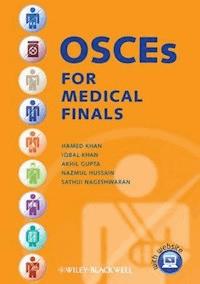
OSCEs for Medical Finals has been written by doctors from a variety of specialties with extensive experience of medical education and of organising and examining OSCEs.
The book and website package consists of the most common OSCE scenarios encountered in medical finals, together with checklists, similar to OSCE mark schemes, that cover all of the key learning points students need to succeed. Each topic checklist contains comprehensive exam-focussed advice on how to maximise performance together with a range of ‘insider's tips' on OSCE strategy and common OSCE pitfalls.
Designed to provide enough coverage for those students who want to gain as many marks as possible in their OSCEs, and not just a book which will ensure students ‘scrape a pass', the book is fully supported by a companion website at www.wiley.com/go/khan/osces, containing:
- OSCE checklists from the book
- A survey of doctors and students of which OSCEs have a high chance of appearing in finals in each UK medical school
Sie lesen das E-Book in den Legimi-Apps auf:
Seitenzahl: 371
Veröffentlichungsjahr: 2012
Ähnliche



















Table of Contents
Cover
Companion website
Title page
Copyright page
Contributors
Acknowledgements
Preface
Part 1: Examinations
Top tips
Generic points for all examination stations
1 Cardiovascular
Summary of common conditions seen in OSCEs
Hints and tips for the exam
Identifying valvular lesions
Scars
2 Respiratory
Summary of common conditions seen in OSCEs
Hints and tips for the exam
Inspection
Timing
Lobectomies and pneumonectomies
‘Creps and clubbing’
3 Abdominal
Summary of common findings seen in OSCEs
Summary of common conditions seen in OSCEs
Common conditions leading to chronic liver disease
Hints and tips for the exam
Hepatomegaly and splenomegaly
Renal cases
Rare findings
Abdominal scars
Abdominal masses
Stomas
4 Peripheral nervous system
Upper limbs
Lower limbs
Summary of common conditions seen in OSCEs
List of common cases
Common patterns of weakness, and common causes for them
Summary of common conditions and findings in the peripheral nervous system
UMN vs LMN signs
Gait in examination of the peripheral nervous system
Hints and tips for the exam
UMN
LMN
Grading power using the Medical Research Council scale
Grading reflexes
Know your tracts
Increased tone in UMN lesions
What is pronator drift?
Remember the pain factor
Bladder, bowel and sexual function
5 Central nervous system
Summary of common conditions seen in OSCEs
Cranial nerves
Where is the lesion?
Common eye signs
Horner’s syndrome
Visual field defects
Hearing
Hints and tips for the exam
Know the names of the cranial nerves
But you don’t have to examine in that order
See some pathology – real or otherwise
Diplopia could be myogenic or neurogenic
The ‘outer image’ is produced by the abnormal eye
Simple versus complex ophthalmoplegia
Internuclear ophthalmoplegia
Master the technique from a neurologist
Know your neuroanatomy
Possible variations at this station
6 Ophthalmoscopy
Summary of common conditions seen in OSCEs
Hints and tips for the exam
Communication, communication, communication . . .
Get your technique right
Be clear and systematic when describing your findings
7 Cerebellar
Summary of common conditions seen in OSCEs
Hints and tips for the exam
Describing gait
Types of gait
Looking for an intention tremor
Neuroanatomy
When in doubt, think cerebellum
8 Speech
Summary of common conditions seen in OSCEs
Dysphasia: language problem
Dysarthria: articulation (difficulty coordinating muscles of speech)
Dysphonia: speech volume (weak respiratory muscles and vocal cords)
Hints and tips for the exam
Look around for clues
Remember the three components of speech
Confusion versus speech defect
Finding the right words
Make sure the patient is orientated and can hear you
Be calm, professional and empathetic
Take your time and listen carefully
Multidisciplinary team
9 Thyroid
Summary of common conditions in OSCEs
Key investigations
Key treatment modalities for thyroid disease
Hints and tips for the exam
Performing a slick examination
Potential variations at this station
10 Breast
Summary of common conditions seen in OSCEs
Hints and tips for the exam
Patient welfare and dignity
Techniques for palpation
Describing the lump
Breast screening
11 Rectal
Summary of common conditions seen in OSCEs
Summary of relevant investigations and management
Hints and tips for the exam
Do NOT forget to request a chaperone
Cauda equina syndrome
Communicate clearly when explaining how the examination will be carried out
Ask if the patient is in any pain
Tell the patient before you insert or remove your finger from the back passage, and say what you are doing as you proceed through the examination
Inform the patient clearly when the examination is complete
Potential variations at this station
12 Hernia
Summary of key points for OSCEs
Summary of common groin lumps
Key features and location of different types of hernia
Hints and tips for the exam
Standing or supine?
Request a chaperone
Remember that hernias are more common on the right side, and more common in males
Investigations and management
13 Testicular
Summary of common conditions seen in OSCEs
Making a diagnosis
Hints and tips for the exam
Chaperone
Respect the mannequin
Know the basics of the lymphatic system
Describing a lump
14 Vascular (arterial)
Lower limb
Summary of common conditions seen in OSCEs
Features of arterial and venous lower limb disease
Important investigations to remember for this station
Basic management of peripheral vascular disease
Hints and tips for the exam
Adequate exposure
Inspect systemically
Ulcers
Palpating peripheral pulses
Buerger’s test
How to measure an ABPI
15 Vascular (venous)
Lower limb
Summary of common conditions seen in OSCEs
Hints and tips for the exam
Inspect thoroughly
Examine a varicose as an autonomous entity
Remember that a large proportion of venous pathology coexists with arterial pathology
16 Ulcer
Summary of common conditions seen in OSCEs
Describing the edges of an ulcer
Hints and tips for the exam
Find out about function/activities of daily living
Be clear and systematic in your description of the ulcer
17 Shoulder
Summary of common conditions seen in OSCEs
Hints and tips for the exam
Know your scars
Know your muscle groups
Know your special tests
Know your shoulder nerves and how they could be affected by a shoulder injury
Winging of the scapula
Referred pain
Thoracic outlet syndrome – a rare but serious condition
18 Hand
Summary of common conditions seen in OSCEs
Hints and tips for the exams
Doing the examination
Performing the special tests
Presenting the findings
Common variations at this station
19 Hip
Summary of common conditions seen in OSCEs
Painful hip
Gait abnormalities you may encounter in a hip station
Hints and tips for the exam
Know your anatomy
Special tests
Management of hip fractures
20 Knee
Summary of common conditions seen in OSCEs
Hints and tips for the exam
One knee or both knees?
Don’t inspect for too long
Joint line tenderness
Examining effusions
Assessing the menisci
Gait
Remember the joint above and the joint below
Variations at this station
21 Confirming death
Hints and tips for the exam
Potential variations at this station
Part 2: Histories
Top tips
Generic points for all history stations
22 General lethargy and tiredness
Summary of common conditions seen in OSCEs
Hints and tips for the exam
Don’t forget depression and psychiatric causes
Basic initial investigations for fatigue
23 Weight loss
Summary of common conditions seen in OSCEs
Hints and tips for the exam
Go through the systems
Energy in: dietary history
Energy out: exercise
Don’t forget possible psychiatric causes of weight loss
24 Chest pain
Summary of common conditions seen in OSCEs
Hints and tips for the exam
Key points to demonstrate safety
Key points to demonstrate good communication skills
25 Palpitations
Summary of common conditions seen in OSCEs
Relevant investigations you may need to discuss at this station
Hints and tips for the exam
Potential variations at this station
26 Cough
Summary of common conditions seen in OSCEs
Key investigations
Hints and tips for the exam
27 Shortness of breath
Summary of common conditions seen in OSCEs
Key investigations
Hints and tips for the exams
There may be more than one aetiology
Know your emergencies
28 Haemoptysis
Summary of common conditions seen in OSCEs
Hints and tips for the exam
29 Diarrhoea
Summary of common conditions seen in OSCEs
Hints and tips for the exam
What does the patient mean by diarrhoea?
Acute versus chronic
‘Red flags’
30 Abdominal pain
Summary of common conditions seen in OSCEs
Acute abdominal pain
Chronic abdominal pain
Investigations to consider for abdominal pain
Hints and tips for the exam
Work through the systems
Don’t forget non-abdominal causes of abdominal pain
Managing an acute abdomen
Women’s health
Pregnancy test
Ectopic pregnancy
Deciding where the pain originates from
31 Abdominal distension
Summary of common conditions seen in OSCEs
Hints and tips for the exam
Remember the ‘5 Fs and 1 T’ of abdominal distension
Women’s health
Elderly + bloating = high possibility of malignancy
Acute causes
Differentiating between small bowel and large bowel obstruction on abdominal X-ray
Ascites – transudates versus exudates
Splenomegaly and hepatomegaly
32 Haematemesis
Summary of common conditions seen in OSCEs
Hints and tips for the exam
Make sure it is definitely haematemesis
Don’t forget the blood in your blood tests!
Group and save (also known as ‘group and hold’ and ‘type and screen’)
Cross-match
Risk-scoring systems
Rockall score for upper gastrointestinal bleed
Child–Pugh grading for cirrhosis and variceal bleeding
Kings College Hospital criteria for liver transplantation
33 Rectal bleeding
Summary of common conditions seen in OSCEs
Hints and tips for the exam
Be sensitive
Type of bleeding
Remember to take a general gastroenterological history
34 Jaundice
Summary of common conditions seen in OSCEs
Hints and tips for the exam
35 Dysphagia
Summary of common conditions seen in OSCEs
Hints and tips for the exam
Malnutrition
Liquids or solids or both?
36 Headache
Summary of common conditions for OSCEs
Hints and tips for the exam
Combined oral contraceptive pill and migraines
Don’t forget trauma
37 Loss of consciousness
Summary of common conditions seen in OSCEs
Hints and tips for the exam
Collateral/witness history
Rare symptoms
38 Tremor
Summary of common conditions seen in OSCEs
Hints and tips for the exam
Parkinson-plus syndromes
39 Dizziness
Summary of common conditions seen in OSCEs
Vertigo
Faintness
Lateral instability
Hints and tips for the exam
40 Joint pain
Summary of common conditions seen in OSCEs
‘Surgical sieve’
Hints and tips for the exam
41 Back pain
Summary of serious causes of back pain
Examination of a patient with back pain
Hints and tips for the exam
Assessing possible cauda equina syndrome: what information to have at hand when referring the patient to neurosurgery
Clearing the cervical spine
Immobilising the spinal patient
Neurogenic shock versus spinal shock
Ankylosing spondylitis
Key investigations: when in doubt about the integrity of neural structures, go for an MRI
‘Yellow flags’
Cauda equina syndrome
Common causes of ‘simple’ musculoskeletal back pain
42 Pyrexia of unknown origin
Summary of common conditions seen in OSCEs
Infections (25%)
Neoplasms (20%)
Connective tissue disease (20%)
Miscellaneous (15%)
Occupation-associated illness
Hints and tips for the exam
Definition of PUO
Devising a list of differential diagnoses
Examining patients with PUO
Key investigations for patients with PUO
43 Ankle swelling
Summary of common conditions seen in OSCEs
Hints and tips for the exams
Ask about the duration of ankle swelling
Remember to take a thorough drug history
Work through the history systematically
Do NOT forget pregnancy and pre-eclampsia
Potential variations at this station
44 Needlestick injury
Hints and tips for the exam
Potential variations at this station
45 Preoperative assessment
Summary of key points for OSCEs
The ASA classification
Preoperative investigations
If you encounter problems
Premedication
Postoperative review
Hints and tips for the exam
Part 3: Communication skills
Top tips
Ethics and law
Generic points for all communication skills stations
46 Breaking bad news
Summary of common conditions seen in OSCEs
Hints and tips for the exam
SPIKES – an easy-to-remember generic structure
Acknowledge lack of knowledge
How long do I have?
Don’t bombard the patient with too much information
Don’t be too optimistic
47 Explaining medication
Summary of common medications seen in OSCEs
Hints and tips for the exam
Potential variations at this station
Scenarios you may encounter at this station
48 Explaining a procedure
Summary of common procedures/operations seen in OSCEs
Procedures
Operations
Hints and tips for the exam
Pass/fail points
Other important points
49 Inhaler technique and asthma medication
Hints and tips for the exam
Potential variations at this station
50 Exploring reasons for non-compliance
Summary of common conditions in OSCEs
Hints and tips for the exam
Solutions
Needles
Work through and devise solutions for each problem individually
Directly observed therapy
Be ‘patient-centred’
51 Counselling for an HIV test
Hints and tips for the exam
Potential variations at this station
52 Post mortem consent
Hints and tips for the exam
Keep your explanation clear and simple
Empathy is essential (again)!
What if the relative refuses a mandatory post mortem?
Referring a death to a coroner
53 Explaining a DNAR (Do Not Attempt Resuscitation) decision
Hints and tips for the exam
When to discuss resuscitation status with patients
When is resuscitation inappropriate?
Reviewing a resuscitation status
Summary of key points
54 Explaining post-myocardial infarction medication
Hints and tips for the exam
Special points to remember for this station
Scenarios you may encounter at this station
55 Dealing with an angry patient
Summary of common conditions seen in OSCEs
Hints and tips for the exam
Control yourself
Be aware of your own emotions
Apologise
Don’t blame your colleagues
Know the complaints procedures
Significant event analysis
Stay safe
56 Carrying out a handover
Summary of common conditions seen in OSCEs
Hints and tips for the exam
Part 4: Procedures
Top tips
Preparation
Generic points for most procedures stations
57 Urinary catheterisation
Summary of key points for OSCEs
Know the relevant anatomy
Indications and contraindications
Potential complications
Hints and tips for the exam
Equipment
Technique
After catheterisation
Types of catheter
58 Insertion of nasogastric tube
Summary of key points for OSCEs
Indications and contraindications for NG tube insertion
Potential complications of NG tube insertion
Hints and tips for the exam
Technique
Methods of confirming placement
59 Venepuncture/phlebotomy
Hints and tips for the exam
Venepuncture in general
Technique
60 Intramuscular injection
Summary of key points for OSCEs
Table of drugs that can be administered via the intramuscular route
Hints and tips for the exam
61 Intravenous cannulation
Summary of key points for OSCEs
Sites for intravenous cannulation
Indications for and contraindications to cannulation
Potential complications of intravenous cannulation
Hints and tips for the exam
Technique
Safety
Cannula care
Cannula flow rates
62 Intravenous drug administration
Summary of key points for OSCEs
Types of drug administration
Hints and tips for the exam
Risks of intravenous drug administration
63 Arterial blood gas analysis
Hints and tips for the exam
Practise on actual patients
Do not forget to perform Allen’s test
Know how to calculate the anion gap if presented with metabolic acidosis
Always ask about results from previous ABGs and mention you would like to perform further ABGs after starting management
Summary of common conditions seen in OSCEs
Potential variations at this station
64 Measuring peak expiratory flow rate
Summary of key points for OSCEs
Uses of peak flow measurement
Interpretation of the result
Limitations of peak flow measurement
Spirometry
Hints and tips
Technique
Interpretation
65 Performing and interpreting ECGs
Summary of common ECGs seen in OSCEs
Hints and tips for the exam
Potential variations at this station
66 Scrubbing up in theatre
Summary of key points for OSCEs
Hints and tips for the exam
About scrubbing up in general
Technique
Equipment
67 Suturing
Summary of key points for OSCEs
Indications and contraindications
Types of suture
Choice of local anaesthetic
Suturing technique
Tetanus
Hints and tips for the exam
68 Basic life support
Summary of key points for OSCEs
Hints and tips for the exam
69 Advanced life support
Summary of key points for OSCEs
The algorithm
Reversible causes
Cardiac arrest rhythms
Defibrillation
CPR
The non-shockable side of the algorithm
Key drugs
Hints and tips for the exam
70 Completing a death certificate
Hints and tips for the exam
Index
Companion website
This book is accompanied by a companion website:
www.wiley.com/go/khan/osces
featuring:
• Downloadable checklists from the book
• Survey showing which OSCE stations have a high chance of appearing in finals
This book is also available as an e-book.
For more details, please see
www.wiley.com/buy/9780470659410
or scan this QR code:
This edition first published 2013 © 2013 by John Wiley & Sons, Ltd.
Wiley-Blackwell is an imprint of John Wiley & Sons, formed by the merger of Wiley’s global Scientific, Technical and Medical business with Blackwell Publishing.
Registered office: John Wiley & Sons, Ltd, The Atrium, Southern Gate, Chichester, West Sussex, PO19 8SQ, UK
Editorial offices: 9600 Garsington Road, Oxford, OX4 2DQ, UK
The Atrium, Southern Gate, Chichester, West Sussex, PO19 8SQ, UK
111 River Street, Hoboken, NJ 07030-5774, USA
For details of our global editorial offices, for customer services and for information about how to apply for permission to reuse the copyright material in this book please see our website at www.wiley.com/wiley-blackwell.
The right of the author to be identified as the author of this work has been asserted in accordance with the UK Copyright, Designs and Patents Act 1988.
All rights reserved. No part of this publication may be reproduced, stored in a retrieval system, or transmitted, in any form or by any means, electronic, mechanical, photocopying, recording or otherwise, except as permitted by the UK Copyright, Designs and Patents Act 1988, without the prior permission of the publisher.
Designations used by companies to distinguish their products are often claimed as trademarks. All brand names and product names used in this book are trade names, service marks, trademarks or registered trademarks of their respective owners. The publisher is not associated with any product or vendor mentioned in this book. This publication is designed to provide accurate and authoritative information in regard to the subject matter covered. It is sold on the understanding that the publisher is not engaged in rendering professional services. If professional advice or other expert assistance is required, the services of a competent professional should be sought.
Library of Congress Cataloging-in-Publication Data
OSCEs for medical finals / Hamed Khan ... [et al.].
p. ; cm.
Objective structured clinical examinations for medical finals
Includes bibliographical references and index.
ISBN 978-0-470-65941-0 (pbk. : alk. paper) – ISBN 978-1-118-44190-9 (eMobi) – ISBN 978-1-118-44191-6 (ePDF/ebook) – ISBN 978-1-118-44192-3 (ePub)
I. Khan, Hamed. II. Title: Objective structured clinical examinations for medical finals.
[DNLM: 1. Clinical Medicine–Examination Questions. 2. Clinical Competence–Examination Questions. 3. Communication–Examination Questions. 4. Medical History Taking–Examination Questions. 5. Physical Examination–Examination Questions. WB 18.2]
616.0076–dc23
2012024677
A catalogue record for this book is available from the British Library.
Wiley also publishes its books in a variety of electronic formats. Some content that appears in print may not be available in electronic books.
Cover design by Sarah Dickinson
Contributors
We are grateful to the following doctors and medical students for their contributions to this book.
Contributors to the chapters
Shifa Rahman
Manpreet Sahamey
Ruth-Mary deSouza
Gillian Landymore
Ravi Naik
Contributors to the medical school tables
Saba Ali
Ali Alidina
Nina Arnesen
Svitlana Austin
James Best
Kerry Bosworth
Lisa Burton
Sangeetha Chandragopal
Emily Clark
Laura Clarke
Rebecca Critchley
Nicola Davis
Ruth-Mary deSouza
Pippa Dwan
Matthew Everson
Martin Fawcett
Clare Fernandes
Lyndsey Forbes
Rachel Friel
Ushma Gadhvi
Harminder Gill
Catherine Hatzantonis
Elizabeth Hockley
Laura Hopkins
Towhid Imam
Zara Jaulim
Michelle Kameda
Jennifer Kelly
Pamini Ledchumykanthan
Almas Malik
Sathiji Nageshwaran
Ravi Naik
Sania Naqvi
Siva Nathan
Allan Nghiem
Gary Nicholson
Clarissa Perks
Anna Rebowska
Elissa Scotland
Charly Sengheiser
Nadir Sohail
Charlotte Spilsbury
Sarah Thompson
Elizabeth Khadija Tissingh
Christine Wahba
John Wahba
Siobhan Wild
Anna Willcock
Ahila Yogendra
Acknowledgements
We are immensely grateful to the multitude of friends and colleagues who helped us with various aspects of this book. They include the following:
All of the patients who kindly permitted us to use their photos in this book
All the staff at Eversley Medical Centre who assisted us with finding patients with signs that could be photographed – specifically Dr John Chan, Dr Colette Boateng and practice nurses Pauline Kearney and Cheryl Mirador
Dr Vivek Chayya and Dr Alison Barbour for their advice on gastroenterology
Dr Sara Khan, Dr Kartik Modha, Dr Nazia Khan and Dr Siva Nathan for their help in recruiting contributors
Saiji Nageshwaran and Vaitehi Nageshwaran for reviewing several of the chapters
Mr Ian Skipper for his unparalleled IT expertise and assistance
Dr Khalid Khan for helping us develop the idea from which this book was derived, and for reviewing, proofreading and critiquing the final manuscript
All of our parents and families, without whose patience and support this project would never have succeeded
We are also grateful to the Medical Womens Federation, Tiko’s GP Group and the Muslim Doctors Association for helping us recruit contributors through their organisations.
Preface
The student begins with the patient, continues with the patient, and ends his studies with the patient, using books and lectures as tools, as means to an end.
Sir William Osler
Few will disagree that the recent overhauls in medical training, together with higher numbers of medical students being trained, has made medicine far more competitive than before. Medical students today have to make definitive career choices much earlier on than they would have had in years gone by, and to start building a portfolio of achievements such as audits and publications very early on at medical school. Time has become even more precious than it was before, and it is understandable that medical students today will opt for concise focused textbooks rather than sprawling prosaic texts, some of which have been used over many generations and gained an almost legendary status.
This book is perhaps unique in that it has been written by a group of doctors who range from those in career-grade posts who have completed postgraduate training and have been OSCE examiners themselves, to those who have very recently sat their finals. We have collated our experiences to create a textbook that we have made as focused, easy to read and, above all, as exam-orientated as possible. While doing this, we have worked hard to ensure that we include everything necessary not only to pass finals, but also to achieve excellent marks and hopefully merits and distinctions.
The structure is based on four sections – clinical examinations, histories, communication skills and procedures. At the beginning of each of these sections, there is a ‘Top Tips’ page that has generic advice for any OSCE station of that section which would help you boost your marks and performance regardless of what the station is.
Each section is divided into chapters based on the stations we feel are most likely to appear in OSCEs at medical schools. Practice makes perfect – and more so in OSCEs than in any other form of assessment. That is why we have started each chapter with a checklist of items reflecting the areas you are likely to be marked on. You should use these to perfect and consolidate your routines, and also when practising OSCEs with friends and on patients. You should ideally do this in a pair or a group of three, with one student doing the station as a candidate and one allocating mock ‘marks’ using the checklists to assess the candidate’s performance.
Following this in each section, we have included tables that summarise the most common conditions that are likely to present in finals OSCEs. We have ensured that the information on the conditions in these tables is as focused and exam-oriented as possible. There is also a ‘Hints and tips for the exam’ section in which we have summarised key advice and common pitfalls that finalists tend to make.
We hope that this book will make your revision not only thorough and focused, but also enjoyable. We have spent a lot of time working with our publishers to make the text as vibrant, colourful and easy to read as possible, with a plethora of tables, illustrations and photos that will not only make it easy to remember key ideas and principles, but also make the topic more interesting.
We wish you the very best of luck with your finals OSCEs, and hope that you find this book both enjoyable and useful.
Hamed Khan
Part 1: Examinations
Top Tips
Do:
Memorise the steps
:
The most important thing that OSCE examiners are looking for is an ability to carry out a full examination with reasonable technique and speed. At finals level, you will be forgiven for missing a few signs, and the vast majority of the marks on the mark schemes are allocated for going through the motions and doing all the ‘steps’. In contrast, at postgraduate level, for example for the MRCP exam, you would be expected to pick up all the major signs, and be penalised heavily for missing them.
Always suggest a number of possible differential diagnoses
:
Very few doctors will be able conclusively to put their finger on a diagnosis after examining a patient for 10 minutes without a history. Offering a number of differentials means that you have a higher chance of at least mentioning the correct one, even if it is not at the top of your list. It will also show a healthy awareness of your own limitations.
Practise, practise and practise
:
The best way to do this is by seeing patients, having a friend to assess you using our checklists and then getting critical (but constructive) feedback from them. Swapping roles and watching colleagues examine is more useful than most students think, as it will reinforce the steps of the examination, and you may see them use techniques and skills that you would not otherwise have thought of. Doing all the major examinations should become such a normal routine for you that you can do it without thinking about what the next step will be – just like riding a bicycle or driving a car.
Don’t:
Don’t be nervous
:
Most people have problems in OSCEs not because of poor technique or knowledge, but because of anxiety and nervousness. Don’t be overwhelmed by the occasion, and don’t be intimated by an examiner’s grilling. You will find it much easier to focus on your technique and findings if you are relaxed, and most examiners only grill students who are doing well, as they do not waste their breath on those whom they have decided are a lost cause!
Don’t worry about minutiae
:
Medicine is not an exact science, and different doctors have different ways of examining patients, most of which yield the right conclusions. At undergraduate level, all the examiners are looking for is a decent, fluent technique that appears to be well practised. Don’t spend ages trying to figure out exactly how much the chest should expand, or whether the cricoid–sternal notch distance is three finger breadths or four.
Don’t hurt the patient
:
This is the only unforgivable sin in the OSCE. Its always a good idea to start your examination by asking if the patient is in pain anywhere, and reassuring them that if you unintentionally cause pain during the examination, you will be happy to stop. Students often have a tendency to ignore patients saying ‘Ouch!’ and pretending that they have not heard it, but this is definitely the worst thing you can do. If you do cause pain, acknowledge it immediately, apologise unreservedly and offer to stop – both examiners and patients will appreciate your honesty and professionalism.
Generic Points for All Examination Stations
1
Cardiovascular
Summary of Common Conditions Seen in OSCEs
Hints and Tips for the Exam
Identifying Valvular Lesions
Trying to learn all the murmurs and all the conditions associated with them is futile and only really necessary if you are a cardiologist. Trying to correctly differentiate whether murmurs are ejection systolic or pansystolic, end-diastolic rather than mid-diastolic, is also difficult and is not necessary for finals and perhaps even PACES.
The easiest and most logical way of diagnosing the correct valvular lesion from the murmur is by answering the following two questions:
Right Versus Left
LEFT-sided murmurs are louder in EXPIRATION.
RIGHT-sided murmurs are louder in INSPIRATION.
This is because more blood flows into the intrathoracic cavity and lungs on inspiration, and hence more blood flows through the right-sided heart valves as these supply the lungs. The converse is true for left-sided murmurs.
It is vital to ask patients to hold their breath when using this test, but you must not ask them to do this for too long as this can cause the patient pain and you will fail the exam. Its often a good idea to hold your own breath at the same time so that you will know when it is getting too long to allow your patient to breath normally.
Timing the Murmur
Timing murmurs is something that both students and experienced doctors have difficulty with. Just remember to palpate the pulse when listening to the heart sound, and see if you hear the murmur at the same time as you feel the pulse.
If the murmur is WITH the pulse, it is a SYSTOLIC murmur.
If the murmur if NOT WITH the pulse, it is a DIASTOLIC murmur.
Use a central pulse such as the carotid or brachial to do this, otherwise it will not be accurate.
Diastolic Murmurs
A number of conditions can cause diastolic murmurs, but the most common ones are AR and MS – this can be easily memorised using the mnemonic ‘ARMS’.
Diastolic murmurs are very difficult to elicit for even the most experienced doctors, and if you can hear a murmur easily, it is most likely to be systolic. However, if you do manage to identify a diastolic murmur, it is handy to remember that MS murmurs are much quieter than AR murmurs, and if you can auscultate a diastolic murmur throughout the chest, it is much more likely to be AR than MS.
Valve Replacements
If you see a midline sternotomy scar, you should immediately bring your ear close to the patient’s chest and listen carefully for the clicking noise that is indicative of the closing of a metallic valve replacement – this can easily be heard without a stethoscope.
Also remember that you should not hear a murmur with a replaced valve unless it is leaking.
Identifying Which Valve Has Been Replaced
Remember that the pulse correlates with the first heart sound, which is the mitral valve closing. (The second heart sound is the aortic valve closing.)
If the loudest sound of the valve closing correlates with the pulse, it is the first heart sound, indicating that the mitral valve has been replaced.
If the loudest sound of the valve does not correspond with the pulse, it is the second heart sound, indicating that the aortic valve has been replaced.
The location of the loudest sounds may also be helpful. Bioprosthetic valves sound the same as normal heart valves, so it would be unfair for examiners to expect you to identify them.
Apex Beat
The apex beat is palpable in the 5th intercostal space, and is displaced to the apex in MR. Various characters of the apex beat have been described, such as ‘heaving’ and ‘thrusting’; differentiating between them is extremely difficult and probably beyond the scope of a 10-minute OSCE. Other than this, it is more likely to cause confusion than add anything substantive.
The best course of action is to describe where the apex beat it, and whether it is palpable or not. An impalpable apex beat is often caused by obesity, hyperinflation of the lungs, dextrocardia or poor technique.
Scars
Figures 1.1–1.5 show scars and other signs that you will need to note on your examination of the patient.
Figure 1.1 Graft scar from leg vein removal in coronary artery bypass grafting
Figure 1.2 Chest scar in coronary artery bypass grafting
Figure 1.3 Xanthelasma
Figure 1.4 Corneal arcus
Figure 1.5 Indication of pacemaker insertion
Questions You Could Be Asked
Q. Which organism causing infective endocarditis is associated with underlying bowel cancer?
A. Streptococcus bovis – a colonoscopy should be considered in all patients presenting who are found to have Streptococcus bovis.
Q. What is the most common cause of tricuspid regurgitation?
A. Most cases of tricuspid regurgitation are ‘functional’, due to dilatation of the right ventricle (so that the tricuspid valves flop downwards). This could arise for a number of reasons, such as right heart failure, congestive heart failure and pulmonary hypertension.
Q. How should a patient with suspected heart failure be investigated in primary care?
A. According to the NICE guidelines (NICE, 2010), the primary investigation of choice is the blood level of brain natriuretic peptide (BNP)– patients with normal results are unlikely to have heart failure, and those with a BNP level >400 pg/mL should be investigated urgently (within 2 weeks).
Reference
National Institute for Health and Clinical Excellence (2010) Chronic heart failure: Management of chronic heart failure in adults in primary and secondary care. Available from http://www.nice.org.uk/nicemedia/live/13099/50526/50526.pdf (accessed June 2012).
2
Respiratory
Summary of Common Conditions Seen in OSCEs
Hints and Tips for the Exam
Inspection
Inspection can often provide the diagnosis at the respiratory station. There are some key stereotypical features of a few conditions that can give the case away.
Findings
Condition
Young, thin, short patient with a PEG site near the umbilicus and a tunnelled catheter at the axilla or on the chest
Bronchiectasis secondary to cystic fibrosis
Middle-aged patient with full sputum pot
Bronchiectasis
Cushingoid features (high BMI, bruising, striae) and bruising (from steroid use)
Pulmonary fibrosis
Features of rheumatological disease, e.g. rheumatoid hands (ulnar deviation, swollen metacarpophalangeal joints, swan neck deformity) or scleroderma (beak-shaped nose, small mouth, tight skin, telangiectasia)
Pulmonary fibrosis
Elderly patient with tar-stained fingernails and an oxygen cylinder at the bedside
COPD
Characteristic scars (with pictures)
Lobectomy/pneumonectomy
Timing
A common problem at the respiratory station is timing as students find it difficult to listen to carefully all the breath sounds in enough places during the 5–10 minutes they have.
Once you have completed your inspection, start examining from the back. Most physicians will agree that it is easier to percuss and auscultate at the back as you have more surface area available. In addition, the position of the heart often makes it difficult to establish findings in the left lower zone of the lung anteriorly.
One of the ways you can minimise collateral time losses is by reducing the time spent in changing the patient’s position. When the patient is lying down, palpate, percuss and auscultate the anterior aspect of the chest. When he or she is sitting forwards, palpate, percuss and auscultate the posterior aspect, and examine for lymphadenopathy at the same time.
Lobectomies and Pneumonectomies
These are very common in OSCEs as patients are usually stable and ambulant, and the examination findings are obvious. Students are often surprised when they do not hear decreased breath sounds at the site of lobectomy scars, which they may have done during their ward attachments. This is because, after a few months or years, patients with lobectomies develop compensatory hyperinflation, and lung tissue fills up areas it was removed from. This will not be the case immediately after lobectomy surgery as sufficient time has not surpassed for compensatory hyperinflation to occur.
The scar from a pneumonectomy can be very similar to the scar from a lobectomy (Figure 2.1), although they can immediately be distinguished by the fact that chest expansion and breaths sounds are usually completely absent on the side of a chest that has undergone a pneumonectomy.
Figure 2.1 Lobectomy scar: side view (a) and back view (b)
‘Creps and Clubbing’
Remember that bilateral crepitations and clubbing that occur together most commonly present in patients with bronchiectasis or pulmonary fibrosis.
Questions You Could Be Asked
Q. Why are spontaneous pneumothoraces more common in tall men?
A. There are a number of theories for this. One is that the difference between the intrapleural pressure of the apex and the base is greater in taller people, making it easier for a pneumothorax to form spontaneously. Another is that any anatomical defects or blebs will become more stretched if the length if the lung is longer, as is the case in taller individuals.
Q. Why might you hear breath sounds over an area of the lung that has been excised in a lobectomy?
A. See ‘Lobectomies and pneumonectomies’ above.
Q. Name three causes of bibasal crepitations with clubbing in a patient.
A. See ‘Creps and clubbing’ above.
3
Abdominal
Summary of Common Findings Seen in OSCEs
Chronic liver disease
Hepatomegaly
Splenomegaly
Nephrectomy scar/features of end-stage renal failure (ESRF)
Enlarged kidneys
Transplanted kidneys
Ascites
Hernia
Stoma
Surgical scars
Summary of Common Conditions Seen in OSCEs
Common Conditions Leading to Chronic Liver Disease
To make things easier, we have summarised here the key clinical features and investigations of chronic liver disease that you can use in the viva/questions part at the end of the OSCE generically, regardless of what the cause of the liver disease is. Table 3.1 outlines common conditions leading to chronic liver disease – the most common ones are marked with an asterisk. This will be especially useful for students aiming for a merit or distinction, as it helps to diagnose not only chronic liver disease, but also the underlying cause.
Table 3.1 Common conditions leading to chronic liver disease
Hints and Tips for the Exam
Hepatomegaly and Splenomegaly
Hepatomegaly and splenomegaly are also very common findings at this station in finals. We have discussed various key tips below to help you in both the diagnosis and the discussion.
Examining Large Livers and Spleens
Start low in the right iliac fossa, so that you do not miss giant organomegaly.
Use the radial aspect of your index finger – but if that doesn’t work, use your finger with your hands pointing up towards the patient’s head.
Keep your fingers absolutely still as the patient breathes in and out.
Make sure that you move your hand upwards superiorly by no more than 2 cm as the patient breathes in and out. If you leave too large a distance as you move up, there is a risk that you may miss the edge of the liver or spleen.
For the liver, percussion is almost as discriminatory as palpation. It is also useful to differentiate between lung hyperinflation pushing the liver down, and true hepatomegaly. The superior aspect of the liver usually lies between the 4th and 6th ribs, and continues down to the last rib at the inferior border of the rib cage; hence, there should be dullness in all of this area. Hyperinflation pushing down the liver is confirmed if percussion is resonant significantly below the 6th rib.
For the spleen, use your left hand to stabilise the left ribs in order to prevent them from being pushed towards the left as you palpate the spleen with your right hand. If you still have difficulty, roll the patient on to the right side and repeat this.
When you do find an enlarged liver or spleen, estimate the size of hepatomegaly in centimeters rather than ‘finger breadths’, which vary from person to person (depending on how big their fingers are!).
Avoid the business of trying to identify the liver characteristics (e.g. whether it ‘firm’, ‘hard’ or ‘soft’, or pulsatile, or nodular or smooth). Doing this in an exam will make the patient uncomfortable and use up your valuable time without achieving very much. Once a large liver or spleen has been identified, the most logical way of defining its characteristics would be to carry out some sort of imaging – usually an ultrasound of the abdomen.
Systematic Differentiation of the Underlying Causes of Hepatomegaly and Splenomegaly
A large liver and/or spleen is a very common finding at finals OSCE stations. Make sure that you have a generic system for categorising the causes, so that you can reel off a list of differential diagnoses quickly, confidently and systematically.
Always try to use all the signs to help you devise a differential diagnosis. However, if you find an enlarged spleen or liver and have no clue what the cause is, go for conditions that can cause hepatomegaly and splenomegaly either individually or together – the first column of
Table 3.2
summarises these.
Don’t be too pedantic when distinguishing between gigantic, moderate and mild splenomegaly. Identifying splenomegaly and giving a reasonable list of differential diagnoses and investigations will usually be enough to score a decent pass. Distinguishing between mild/moderate and gigantic splenomegaly will help to get you into the merit/distinction range. Remember that the spleen has to be at least double or triple its normal size to be palpable.
Remember to piece the other parts of your examination together to complete the diagnostic jigsaw. All the conditions that cause hepatomegaly or splenomegaly have several peripheral signs so look out for these and use them to support your differential diagnosis.
Table 3.2 Causes of hepatomegaly and splenomegaly
Figure 3.1 Scar from splenectomy after a road traffic accident, also showing the drain insertion site
Renal Cases
Although students often worry about getting a ‘renal case’ in finals, it can often be a blessing in disguise. The differential diagnosis is relatively straightforward, and the signs are easy to elicit.
Fundamentally, there are only two findings in renal cases – those of ESRF, and ballotable enlarged kidneys.
End-Stage Renal Failure
There are potentially three findings that are all attributable to ESRF:
Nephrectomy scar
(
Figure 3.2
)
:
Inspect carefully for this, making sure that you look all the way around the lumbar/flank regions through to the back. Finding a nephrectomy scar is alone sufficient to devise a full list of differential diagnoses and a management plan.
Palpable transplanted kidney
:
This is usually near the groin/iliac fossa with a small scar at the site.
Signs of dialysis use
(arteriovenous fistula, right internal jugular vein line, CAPD scars;
Figure 3.3
)
:
A slicker way of describing this is ‘renal replacement therapy’, which covers them all – and also sounds more impressive!
Figure 3.2 Nephrectomy scar
Figure 3.3 Right internal jugular tunnelled catheter (for dialysis)
Whichever of these signs the patient has, the underlying condition is always ESRF.
The four most common causes of ESRF are as follows:
Once you have got to this stage, your investigations and management should be guided by your differential diagnosis. However, if you are still struggling, merely discuss the generic investigations and management strategies for patients with ESRF, as discussed in the summary table above.
Ballotable/ Enlarged Kidneys
Ballotable enlarged kidneys can be palpated in the lateral lumbar regions. As with ESRF, you only need to remember a short list of differential diagnosis:
APKD
Renal cell carcinoma
Bilateral hydronephrosis (secondary to obstruction, e.g. by an external mass, prostate enlargement, etc.)
Amyloidosis (primary or secondary)
The key investigations with all of these are imaging (CT of the kidney, ureter and bladder/IVU) and renal biopsy, with the management depending on the underlying cause.
Rare Findings
Clubbing versus pseudoclubbing
:




