


Erhalten Sie Zugang zu diesem und mehr als 300000 Büchern ab EUR 5,99 monatlich.
- Herausgeber: Luath Press
- Kategorie: Geisteswissenschaft
- Sprache: Englisch
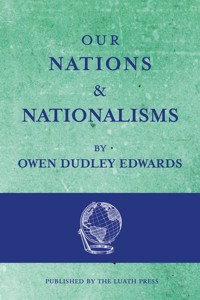
'Nationalism' is an increasingly unpopular word. Few would apply the label of 'nationalist' to themselves, and fewer still to any part of our history before the 1700s. But then, where does it come from? And what does it mean for us today? With one eye on the present as he unpicks the past, Owen Dudley Edwards finds nationalism to be older than recorded history and broader than modern geography. Our Nations and Nationalisms traces the phenomena back as far as the Old Testament and the works of Homer and Virgil, through the attempts of Shakespeare and James VI & I to found the first British Union, and into the Celtic legends that helped form the identities held in the UK today. Taking wide-ranging examples from ancient to modern, from home and abroad, Dudley Edwards interrogates nationalism in action, asking what it really is and how it has impacted upon all of our lives, wherever we live or were born This demonised word, he argues, is a fact of human nature. It may take a variety of forms, but we are all, in some sense, 'nationalists'; it is incumbent upon each of us to find ways to use this fact in the interests of humanity, and not a single nation.
Sie lesen das E-Book in den Legimi-Apps auf:
Seitenzahl: 492
Veröffentlichungsjahr: 2022
Das E-Book (TTS) können Sie hören im Abo „Legimi Premium” in Legimi-Apps auf:
Ähnliche
















OWEN DUDLEY EDWARDS, FRSE, FRHISTS, FSA (Scot.) is a Roman Catholic, born in Dublin on 27 July 1938. His father Robert was a founder of modern Irish professional historiography, his mother Sheila a Gaelic scholar and social historian. He was a pupil at national schools, and then at Belvedere College and University College Dublin. He studied and taught History at the Johns Hopkins University in Baltimore, Maryland, USA, and subsequently taught at the University of Oregon, the University of Aberdeen, California State University at San Francisco, and the University of South Carolina, and from 1968 to 2005 at the University of Edinburgh where he is now an Honorary Fellow. He broadcasted for Radio Telefis Eireann, the BBC and various US and Canadian networks, and wrote for the Irish Times, the Scotsman, Tribune, the New York Times, the Radio Times etc. He married Barbara (‘Bonnie’) Lee in 1966. They have three Scottish children, and four grandchildren. He is a Fellow of the Royal Society of Edinburgh, a member of the Scottish National Party, and of Plaid Cymru. He is currently writing a book on Sir Walter Scott’s relations with Ireland. He worked in the Yes campaign in 2014 and found it like the Civil Rights movements he knew in the USA and in Northern Ireland, the protest movements against the war in Vietnam in the USA, Ireland and Scotland, and the anti-Apartheid movement in Ireland.
By the same author:
Celtic Nationalism (with Gwynfor Evans, Ioan Rhys and Hugh MacDiarmid Routledge and Kegan Paul, 1968)
The Mind of an Activist: James Connolly, (Gill & Macmillan, 1971)
The Sins of Our Fathers: Roots of Conflict in Northern Ireland, (Gill & Macmillan, 1970)
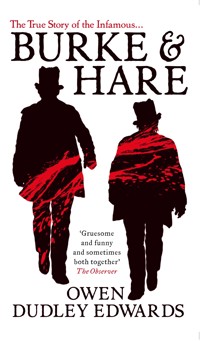
Burke & Hare, (Birlinn, 2014)
The Quest for Sherlock Holmes: A Biographical Study of Arthur Conan Doyle, (Penguin, 1984)
P. G. Wodehouse, (Marting. Brian & O’Keeffe, 1977)
Macaulay (‘Historians on Historians’ Series, Weidenfeld & Nicolson, 1988
Eamon De Valera, (University of Wales Press, 1987)
City of a Thousand Worlds: Edinburgh in Festival, (Mainstream publishing, 1991)
The Edinburgh Festival (with Robbie Jack, Canongate, 1990) Hare and Burke (Play, Diehard, 1994)
British Children’s Fiction in The Second World War, (Edinburgh University Press, 2007)
How David Cameron Saved Scotland, (Luath 2015)
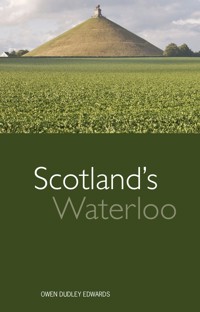
Scotland’s Waterloo, (Luath, 2015)
Saint Johnny, (Grace Note, 2015)
To two great creators
my wife Bonnie Dudley Edwards
and my leader Alex Salmond
First published 2022
ISBN: 978-1-80425-042-6
The author’s right to be identified as author of this book under the Copyright, Designs and Patents Act 1988 has been asserted.
Typeset in 11 point Sabon by Lapiz
© Owen Dudley Edwards 2022
Contents
FOREWORD
by Alex Salmond
INTRODUCTION
Defining Nations and Nationalism
CHAPTER ONE
Talking about Nationalism
CHAPTER TWO
Unionism is Nationalism: from Colin Kidd to Gordon Brown
CHAPTER THREE
Is God a nationalist?
CHAPTER FOUR
Nationalism from Homer’s workshop
CHAPTER FIVE
Romanising Britain
CHAPTER SIX
King James, Shakespeare and The Great British Play
CHAPTER SEVEN
From Ireland to Scotland: The Nationalisms of War and Peace
Timeline of relevant events
Acknowledgments
History is Philosophy from examples.
Dionysius of Halicarnassus (attrib, c 330BCE)
‘I’m beginning to understand the game scientifically. What a noble game it is, too!’
‘Isn’t it? But it’s more than a game. It’s an institution’, said Tom.
‘Yes’, said Arthur, ‘the birthright of British boys old and young, as habeas corpus and trial by jury are of British men.’
‘The discipline and reliance on one another which it teaches are so valuable, I think’, went on the master, ‘it ought to be such an unselfish game. It merges the individual in the eleven, he doesn’t play that he may win, but that his side may.’
Thomas Hughes, Tom Brown’s Schooldays (1857)
I hear it was charged against me that I sought to destroy institutions;
But really I am neither for nor against institutions;
(What indeed have I in common with them? – Or what with the destruction of them?)
Only I will establish in the Mannahatta and in every city of these States inland and seaboard,
And in the fields and woods, and above every keel little or large that dents the water,
Without edifices or rules or trustees or any argument,
The institution of the dear love of comrades.
Walt Whitman, ‘I Hear it was Charged Against Me’, Leaves of Grass (1891–92)
A Final Note
Vladimir Putin’s despicable invasion of Ukraine in 2022 began after this book had been completed and revised by me, and the Foreword had been written by my friend Alex Salmond, under whose leadership my party, the Scottish National Party, was elected to government of Scotland in 2007, and in 2011 was elected majority Government. I was greatly honoured when Alex interviewed me on the Russian TV show he chaired at that time, and whence he resigned when Putin began his mass-murder in Ukraine. Our work does not endorse the crimes of Putin, similarly Agatha Christie did not endorse the crimes of Stalin when at the request of the UK Foreign Office she wrote ‘Detective Stories in England’ (1945) for a Soviet journal.
Putin’s conduct is a ruthless expression of his Russian nationalism. It no more indicts nationalism than does the brave resistance of the Ukrainians against him. You can no more outlaw nationalism for the behaviour of nationalists than you can outlaw humanity for the conduct of humans. As a Russian nationalist, Putin invokes the traditions of Ivan the Terrible, Peter the Great, Catherine the Great, the Romanov Czars in general, and Stalin whose Russian nationalist priorities gave him a hold on power lacked by the internationalist Bolsheviks Lenin and Trotsky. Putin is not a Communist even by the lip-service accorded by officials of the Union of Soviet Socialist Republics in its last days, but he is happy for a Union akin to Oliver Cromwell’s as imposed on Scotland and Ireland however lacking in personal Puritanism. His readiness to accuse his Ukrainian victims of Nazism expresses his actual realisation that in this war he is the heir of Hitler, both in attacking Ukraine, and in his slaughter of civilians.
We should study conflicting nationalisms in the present war (as everyone except Putin calls it) on a comparative basis. Putin’s denial of the existence of Ukraine recalls Ireland between 1925 and 1965 when the 26 Irish counties forming the Irish Free State (later Eire, later still the Republic of Ireland) insisted that Northern Ireland did not exist, while the Unionist Protestants controlling Northern Ireland practically took a similar view of the 26. Simultaneously Dublin governments and their publicists denounced the actual reduction of Roman Catholics in Northern Ireland to second-class citizenship, and Belfast governments continued to enforce the second-class citizenship while denying its existence save for security needs. The regimes declared that Irish unification or Northern Ireland preservation prevented reforms, without admitting that any were necessary. Frontier territories in Ukraine bordering on Russia show some divided loyalties, and the same is probably true of Russian territories whose Ukrainian inhabitants dare not question the violence Putin practises in Russia’s name. During the thirty years’ war in Northern Ireland from 1970, crimes of Putinesque barbarity were committed by insurgent Catholics and Protestants in the names of coreligionists and fellow-nationals, most of whom abominated them however secretly. On their side UK governments whatever their policies continued to treat nationalism as a social disease from which they themselves were immune, and to deny the constitutional integrity of non-violent nationalism in Wales and Scotland.
We humans are all nationalists, which means that potentially we may be Putins or Daniel O’Connells. If we realise that, we may behave better.
April 2022
ODE
Foreword
PENNING THIS FOREWORD gives me an opportunity to recount a story about the folly of youth.
Back in the mid ’70s I was editing a student newspaper and asked a flamboyant young Edinburgh University historian to contribute an article or two. When speaking to him he asked if I would like to join him in a visit to Hugh MacDiarmid, then residing in his final home in Biggar.
The problem was I had a ticket that very day for the Edinburgh derby at Easter Road and that is where I duly ended up. So I was young and foolish enough to choose a game of fitba between two poorish sides, rather than a once in a lifetime chance to meet Scotland’s towering 20th century poet!
Owen Dudley Edwards was the young academic and his own connection with MacDiarmid was that they had co-authored a book called Celtic Nationalism some time before. In some ways this volume reprises many of the themes set out in that book all of these years ago.
There is a major difference though. This new volume includes the elephant in the room, or at least the elephant which the Celtic nations have been placed in bed with - English and British nationalism.
I did not accept the invitation to write this foreword by way of a belated apology to Owen. I did it because more understanding of the conflicting nations and nationalisms of these islands has never been more timely and more required.
Britain is out of Europe and has yet to find a role or even any rationale for the damage that has been done. In the sense there was any logic to Brexit at all, it was driven jointly by the demons of English exceptionalism and the scarring social and regional disparities of English society.
A full century after partition, Ireland has never been closer to reunification but still remains a distance from full reconciliation. However, in the meantime, the Republic has emerged as a modern, prosperous democratic society shedding all semblance of theocratic backwater. Would that redoubtable Dubliner, Sir Edward Carson, still be upholding Ulster provincialism in these circumstances? That, of course, is one of these daft historical questions but one no doubt that Owen Dudley Edwards would take a decent stab at answering.
In Wales, Labour clings on to supremacy but largely because it has increasingly adopted the clothes of Welsh nationalism. Is that a viable long-term position or will Welsh Labour go the same way as the Scottish comrades, caught in a vice of being out-nationalist by the SNP and out-unionist by the Tories?
All of which makes Labour’s English leader Sir Keir Starmer’s recent denunciation of the ‘the multi-headed hydra of nationalism’ all the more unconvincing, as is his attempt to conflate Johnson’s Conservatives with Sturgeon’s SNP.
In Scotland the SNP is now electorally dominant but politically becalmed, apparently incapable of answering the obvious strategic question of what to do when England says no. Relying on the profound decency and sense of fair play of the plain people of England seems a doomed strategy when they are under the thumb of Albion’s current perfidious leadership.
With all of that happening, or about to happen, there is no-one in these islands better schooled to write this necessary book than Owen Dudley Edwards. His family are steeped in the history of Ireland in all its terrible beauty and thus no-one respects more the steady constitutionalism of Scottish nationalism.
As a happy immigrant to Scotland for more than half a century Owen holds her dedicated civic and community-based pursuit of independence in high regard. Indeed his own attachment to the national cause is based on a nationalism which is more internationalist, more egalitarian and more peaceful than its British competitor.
In that period Owen Dudley Edwards has been on friendly terms not only with many of the substantial nationalist figures of the restless Celtic nations but also with Gordon Brown, the former Prime Minister whose personal mission it has been to protect the survival of the British state.
It is a familiarity which gives context and authority to his learned insights of the politics of identity through British history. Long before the current crop of Westminster political pygmies thought of more muscular unionism James (VI) and (I) ascended to the throne of England as the best taught king in Christendom. He enlisted the greatest literary genius of the day in his plan to forge a single nation out of the disparate and oft warring tribes of Britain.
Four hundred years and more later Scottish nationalists can comfort ourselves with the thought that if the task of eliminating Scottish identity for the supposed greater good eluded James (I) and William Shakespeare it will probably be beyond Boris Johnson and the BBC.
Does that make an eventual nationalist triumph in Scotland inevitable? No just highly probable. Still less does it assist with timescale. But then Owen Dudley Edwards is a historian. It is not his job to tell you what will happen or even when.
But this book will help you enormously with the why.
Alex Salmond
Strichen
October 2021
Introduction: Defining Nations and Nationalism
IF YOU LISTENED to Gioachino Rossini’s Overture to William Tell you would probably understand nations and nationalism better than you will by reading this or any other book, but you would not be able to say or write what you have learned: music criticism is no substitute for music.
So… why another work on nations and nationalism?
HAMLET: Examples gross as earth exhort me.
Shakespeare, Hamlet (1600) IV.IV.46.
The current UK Prime Minister, the Rt Hon Alexander Boris de Pfeffel Johnson, PC, MP, MA (Oxon), Hon LL.D. (Brunel), Hon FRIBA – and the endless swarm of politicians and communications media who regurgitate him – speak of the United Kingdom of Great Britain and Northern Ireland as a ‘nation’, but when forced to mention Scotland, Wales, Northern Ireland or even England will call each one a ‘nation’, and when alluding to them in total ‘four nations’, sometimes as the ‘awesome foursome’ (we are living in a Peter Pandemic probably staffed by Lost Boys). Two and two make four, but how can four be one, especially as one of the four is at least two (Northern Ireland having existed since 1920 because of its mutually hostile Catholic and Protestant nationalisms)? To educate Mr Johnson seems to have been beyond the powers of Eton and Oxford, whatever the official certificates say, but for all of our sakes a fresh attempt should be made. Is he unduly influenced by his fellow-Etonian Eric Blair – more commonly George Orwell – whose 1984 ends with his hero under torture saying two and two do make five? Mr Johnson is now said to have reversed himself on this, as on so much else, and his underlings now tell civil servants to refer to one entity, not four, as though the USA’s President were to give orders to refer only to the USA, and not to individual states. The Prime Minister’s almost invariable use of ‘Britain’ or ‘Great Britain’ where the United Kingdom was meant resulted in some delegates of the G7 Conference in Cornwall (11–13 June 2021) saying Northern Ireland was not in the UK.
Nations may define themselves by language as Welsh nationalism did, and Irish nationalism tried, and Scottish nationalism confronted in several differing forms. Latin is our best common root whether imposed by the Romans as in Britain or imported from them as in Ireland, being the language of medieval western Christendom. The Douai Bible translates the Apocalypse (Revelation 5:9):
And they sang a new canticle, saying: Thou art worthy, O Lord to take the book and to open the seals thereof: because thou wast slain and hast redeemed us to God, in thy blood, out of every tribe and tongue and people and nation.
Repetition of synonyms may seem tautologous to us, but our ancestors used it for emphasis. If we pursue tribe, tongue, people, and nation into Latin and back, we often find the words interchangeable. The Version of the Bible Authorised by King James I (and VI) offers kindred in place of tribe, and most tribes probably began from families, as each tribe descended from one of the 12 sons of Jacob. Ethnos in ancient Greek gives us yet another synonym meaning tribe, people or nation with or without the linguistic factor declared by tongue. ‘Ethnic minority’ is frequently shortened to ‘ethnic’, but everyone is ethnic in one form or another eg:
Did the native Scots find the English or the Irish to be Scotland’s least assimilable ethnic group? And when?
‘Tribe’ may be most sublime in Revelations 7:3–8 when 1,200 of each of the 12 tribes descended from Jacob are ‘sealed the servants of our God on their foreheads’. Lucy Maud Montgomery, Canadian author, Presbyterian minister’s wife, and creator of Anne of Green Gables and its seven sequels, devoted the two opening chapters of Magic for Marigold to a magnificently serious argument amongst almost all of the Scots-descended Lesleys of Prince Edward Island as to what the new baby is to be called. Ultimately the baby’s life, threatened by a sudden illness, is saved by a woman doctor (despite prejudices against such a being) who then marries the bachelor uncle and the infant is given her name ‘Marigold’, and so the second chapter is entitled ‘Sealed of the Tribe’. Montgomery’s stories ripple with clerical comedy but the Lesleys, however individually absurd, almost in spite of themselves convey a grandeur in their tribalism consciously, if sometimes artificially, Scottish in thinking of themselves as a clan (Gaelic for family), headed by an engagingly ribald nonagenarian great-grandmother. And the choice of name also means establishing the child’s claim to be one of God’s elect, the sealed, the saved, but the chapter-title implies that Dr Marigold Woodruff Richards becoming a Lesley is thus also assured of salvation.
‘Tongue’ also has sacred implications, recognised by Elizabeth I in 1563 when (contrary to the orders by her foolish father the late Henry VIII) she authorised the translation of the Bible and associated scripture into Welsh (one of her grandfathers was Welsh, the other Irish). The 20th century Gaelic Revival in Ireland liked religiose slogans, pre-eminently Gan Teanga Gan Tír (without a language, without a country). This linked linguistic nationalism to the confiscation of Catholics’ land for 175 years after the Ulster Plantation of 1607 until native Catholics owned about eight per cent, and Tír-grádh could mean love of country or love of land, patriotism or nationalism.
‘People’ appears usefully in the slogan of Glasgow Rangers Football Club ‘We are the People’, meaning the Protestant people of Ulster migrated to multi-ethnic Glasgow but still mourning the spiritual wounds of departure from their birthplaces with Psalm 94:14: ‘For the LORD will not cast off his people, neither will he forsake his inheritance.’
The idea of the sanctity of the people against its ruling class was in tune with the rise of Labour across our archipelago and the emergence in the USA of the People’s Party or Populists in 1890. The word ‘populist’ is slung around by every pompous ignoramus today. The realities of populism were ably asserted in Scotland as pressure rose for a Scottish Parliament, and on 30 March 1989 in the Hall of the General Assembly of the Church of Scotland before representatives of all religious faiths and none, the Wesleyan Canon Kenyon Wright foretold opposition from Prime Minister Margaret Thatcher (who had started referring to herself in public as ‘we’):
What if that other single voice we all know so well responds, saying ‘We say No, and we are the State’. Well, we say Yes and we are the People.
What is a Nation?
Shakespeare (save perhaps in his sonnets) generally keeps his opinions to himself but equips his characters with theirs (public and private). His Henry V set in 1415 has captains from England, Wales, Scotland and Ireland among Henry’s invading army before taking Harfleur. It was an obvious crowd-pleaser for a people still shaken by their own mortal danger from Spanish invasion in 1588. But the England of Elizabeth I was drained of troops through constant warfare against native Irish for the last nine years of her reign. When Henry V reigned, Scotland was independent and Ireland had little permanent control by England outside Dublin, so that in the play the Scots and Irish captains might be regarded as mercenaries. But Shakespeare’s audience would also have thought of the rebellious Irish of their own day. The Irish Captain Macmorris bridles when Captain Fluellen from Wales remarks (III.II.122–27):
FLUELLEN: Captain Macmorris, I think, look you, under your correction, there is not many of your nation –
MACMORRIS: Of my nation! What is my nation? Ish a villain, and a bastard, and a knave, and a rascal. What ish my nation? Who talks of my nation?
On the face of it, this is a joke for all seasons, characterising the Irish as permanently obsessed by their identity as a nation, not necessarily knowing what they meant by a nation, but ready to fight anyone and everyone who tried to defame or even define it. Henry V leads followers from all parts of the archipelago, but the superiority of the English is asserted, with the Welsh second (Shakespeare had Welsh antecedents, used Welsh legend in King Lear and Cymbeline, and included prose and verse in Welsh (now lost) in Henry IV Part One), Captain Jamy of Scotland third (handled respectfully enough, since by 1600 the next English monarch was pretty certain to be King Jamy of Scotland), and Macmorris fourth.
‘Macmorris’ mixes two Irish Nations, the Gaelic clans of Munster, and the Norman descendants of the Fitzmaurice and Fitzgerald invaders of Ireland in 1169. Elizabeth faced a formidable enemy in James Fitzmaurice Fitzgerald known as ‘Fitzmaurice’, nephew and cousin of Fitzgerald Earls of Desmond, maternal descendant of Gaelic families, Papal crusader killed leading an invasion against her in 1579, ‘Macmorris’ reminding the audience that he is partly of Gaelic descent. Elizabeth’s enforcement of Anglicanism on Ireland diminished mutual hostility between Gaelic and Norman (or ‘old English’) Catholics so that Irish nationalism developed around the defence of Catholicism, its support in invasions from European Catholic potentates including the Pope, and evangelical missions in Ireland from Catholic friars. Macmorris’s dualism was prophetic: the two leading 18th century Irish nationalisms were Jacobite, Catholic, Gaelic, peasant, smuggling; and Hanoverian, Protestant, Anglophone, squirearchical, Anglocentric; in 19th century Ireland they mingled, Protestant ideologues influencing growing Catholic bourgeoisie. From the 16th century nationalism increased in England against Catholic enemies in Europe, and in Scotland against Catholic French domination. Religion also enriched Welsh nationalism, in late 18th century high episcopalianism, and in late 19th century nonconformist revolt against Protestant episcopalian privilege. They are subtle stage nationals, more so than ethnicity elsewhere on the London stage from Shakespeare’s day to Victoria’s.
Tongue means language though its primacy in national options varies greatly. Tribe means an earlier stage in evolution surviving as one tribe declares that other tribes are at an earlier phase of history than itself and therefore merely disposable aborigines. People assumes equality between its component individuals, rapidly becoming paper-thin as snobbery permeates. Nation may demand recognition as a status earned, or capable of being earned. Irish, Scots and Welsh showed themselves original and compelling wordsmiths experimenting in English, becoming journalists and dominating the popularisation of intellect. Dublin’s Nation (1842– 1900) became the best-selling weekly in the archipelago, its title simultaneously claiming that Ireland was a nation, that it had formerly been one, and that it would become one. In theory these were the same identity; in practice they were very different. Charles Gavan Duffy a founding editor of the Nation was frequently, if unsuccessfully, prosecuted for treason, never repudiated his Irish nationalism, became Prime Minister of Victoria (Australia), and was duly knighted. His fellow-Irishman Edwin Lawrence Godkin emigrated to the USA where in 1865 he founded the New York Nation, a strong liberal reformist weekly whose title proclaimed it the paper of all the individual US states, and still flourishes. Charles Stewart Parnell the future Home Rule party leader who dominated UK politics in the 1880s during his rise in the late 1870s declared Ireland’s right to be taken seriously instead of parochially by the Commons: ‘she is a Nation’. Gladstone ended his career leading the Irish demand for Home Rule in 1893 whence the Socialist JL Hammond called his massive history Gladstone and the Irish Nation. To be a nation was an entitlement to some form of national status, whether being taken seriously by the House of Commons, being accorded devolved parliamentary government, or being accepted as an independent power. The Allied powers in World War II called themselves the United Nations and founded the post-war United Nations Organization, whose membership implies that a nation has won international recognition as such. It had almost a sacred implication. The Scottish National Party asserted as much in making membership of the UN its goal.
What is Nationalism?
A nation has been defined as shared memories, though to call it shared memories of shared memories may be nearer the truth. Nationalism is the awareness of at least some of these shared memories in the idea of that nation. This means that nationalism is a religion. Some great scholars have confronted that question – the historian of nationalism Carlton JH Hayes whose last book was Nationalism: A Religion, Conor Cruise O’Brien in his Massey lectures at Harvard God Land – Reflections on Religion and Nationalism, Adrian Hastings in his Wiles Lectures in Queen’s University Belfast The Construction of Nationhood: Ethnicity, Religion and Nationalism, the prolific Professor Anthony D Smith in his more recent work. How can a rational scholar deny religion and nationalism in the public life of Joan of Arc, symbol of French identity asserted against English conquest, burnt by orders of the Inquisition in 1431 and canonised by the Vatican in 1920? Even Communism’s official rejection of religion and nationalism demanded and required a religiose piety for its own doctrines and decisions, and divided itself on national lines.
Nationalism, like its parent, the nation, lived before written history and gave an ethic to ethnicity. It was needed to explain to its youth who their people were, whence they had come and why, what divine demands and crowd responses were entailed and, however deplorably, its vendettas against other nations. It was inseparable from history even when (as in the French Revolution) its votaries proclaimed the death of history and created a new calendar. Nationalism has had its numerous expositors, evangelists and educators, writing anonymously, pseudonymously, or otherwise. The Old Testament is an excellent example, much originating in oral transmission long before it was written, as acts of piety but also of policy: the future had to be guided by the past. National or clan bards played such parts, and historians openly or otherwise created or edited history to further their own politics.
Historians are nationalists in this sense, but what they mean by a ‘nation’ is not necessarily a country, merely that the history they teach and write is self-vindication, sometimes well masked. George Orwell’s Notes on Nationalism, inspirational but not infallible, revealed the author’s English nationalism (which he sometimes peppered with Scotophobia). It categorised nationalism within broad contours, listing as nationalisms Neo-Toryism, Celtic Nationalism, Zionism, Communism, Political Catholicism, Colour Feeling, Class Feeling, Pacifism, Anglophobia, Antisemitism, Trotskyism and appropriate sub-categories such as ‘Irish Nationalism’ classifiable under ‘Celtic Nationalism’. In 1945 there was little sign of common cause between Irish nationalism and Scots or Welsh, the Irish prominently political, Scottish cultural, Welsh linguistic. Irish nationalism in Eire (since 1949 the Republic of Ireland) was a useful doctrine requiring popular deference to ensure political stability, while in Northern Ireland it was an incentive to deny the legitimacy of the substate one way or another, opposing the Unionist majority’s Anglocentric nationalism. Mid-20th century Dublin governments demanded the unification of Ireland and would have been appalled to get it, since it would have shattered the delicate balance of Irish politics, and weakened the political power of Roman Catholicism by including a vociferous Protestant minority.
Orwell also showed that nationalism can breed generalisation:
No modern Irish writer, even of the stature of Yeats or Joyce, is completely free from traces of nationalism.
The logical conclusion is that everyone is a nationalist – which they are, often worshipping two or three different nations at the same time, eg Scotland and the UK (with varying priorities) – but countries house different nationalisms. If we admit Orwell’s categories of ‘Political Catholicism’ or ‘Zionism’ (as we should) multi-icon nationalisms become easier to understand. Orwell’s reduction of nationalism to a unitary faith may not be true, but then his own English nationalism was a little old-fashioned in its monotheism. A nation discovers its nationalism when under attack and particularly when it faces the danger of political, economic, or cultural obliteration. It may not entail a defensive response. A nation finds itself a storehouse for what it values, and its nationalism guards and celebrates of those values. The Scots, threatened with annexation by Edward I, produced at Arbroath in 1320 the first formal declaration of nationalism known to us, expressed in the letter of its leading nobles to Pope John XXII repudiating English rule, swearing allegiance to King Robert Bruce, and promising to dismiss him should he ever accept subordination to England. That promise marks the document as nationalism.
Nationalism in Scotland today defines itself as love for its community; constantly seeking peace among nations; repudiating hate; welcoming those claiming identity with it whether as inhabitants of Scotland or refugees and immigrants; rejecting the manufacture, custody and sale of weapons of mass destruction; retention and expansion of National Health and rejecting its breakup, privatisation, and adulteration by inferior standards; subordinating legalistic chauvinism to international rule of law; using its own independence to aid victims across the world suffering medical, economic and environmental poverty: absolutely committed to non-violence. This is no mere shopping-list: all these beliefs are interdependent. As Pope Francis said of our sister and mother, Earth in his second encyclical Laudato si’:
We have come to see ourselves as her lords and masters, entitled to plunder her at will. The violence present in our hearts, wounded by sin, is also reflected in the symptoms of sickness evident in the soil, in the water, in the air, and in all forms of life.
The English connection brought many benefits to the Scottish people, but today it is shackled to cults of conquest, of competition, of conceit. Scottish nationalism demands liberating Scotland from the mass murder weapons such as TRIDENT forced upon her soil and seas, from alliance with antihuman policies under irrational leaders like former President Donald Trump, from foreign policies shaped by self-imagined up-to-date Machiavellis. The United Kingdom of Great Britain and Northern Ireland perpetually endangers itself by imagining that it is still a great power, like a senile grandfather still trying to play rugby.
Ernst Friedrich Schumacher’s philosophy Small is Beautiful animates Scottish nationalism. The UK is now unfit for purpose as an agent for Scotland’s needs and wishes in foreign economic policy and international legal necessities. Sixty-two per cent of Scots rejected BREXIT in the 2016 referendum and saw the European Union as a common association among the powers with each seeking to further common benefits for themselves and the world, whereas the English majority imagined the EU as a chaffering of hucksters in Anglophobe conspiracy. As regards BREXIT, the Scots knew their own minds far more decisively than the English knew theirs. UK opponents of Scottish nationalism expressed surprise that the Scottish National Party should favour EU membership for Scotland while wanting to leave the UK: Scottish nationalism seeks EU membership as it seeks UN membership – to further international peace, prosperity and environmental responsibility, rejecting the ‘top nation’ mirage significantly relished by Prime Minister Johnson as ‘incredible’ and ‘fantastic’. Scottish nationalism today repudiates a UK racist and imperial past formerly enriching many Scots, but seeks to conserve Scotland’s portion of the endangered UK welfare state. The UK has stopped believing in itself despite politicians’ desperate assertions of its superiority, while Scottish nationalism encourages the Scots to believe in themselves and increase their value for the rest of humanity.
The late great Gwyn Alf Williams questioned history, nationalism, and God knows how much else in his When Was Wales?. He could have written Where Was Wales? The earliest known date in Welsh poetry is roughly 600AD for Aneirin’s Y Gododdin and a larger crop by Taliesin, but Aneirin flourished in or around what is now Edinburgh, while Taliesin flourished between the Clyde and Cumbria. Taliesin declared that he (and thus the Wales of his poems) had been with Noah in the Ark and would be present at the crack of doom, and Aneirin described an invasion of eastern England from Lothian down to defeat in Catterick and the loss of its heroes. Wales mingled a remote past with those of Cornwall and Brittany. Welsh may have travelled more successfully to the USA than did Gaelic, putting out its newspapers in new landscapes such as Racine, Wisconsin. Wales gave its conquerors heroic legends whence to claim profitable antecedents, notably in the 12th century through the legends of King Arthur initially preserved in the Mabinogion, through Geoffrey of Monmouth’s History of the Kings of Britain inventing a past for the island down from mythology into theology, and through those of Gerald of Wales on the topography, exploits and characters of the Norman plunderers of Wales, England and Ireland: their perpetuation served Edward I as prospectus for his fraudulent claims of ancient English sovereignty over Scotland, and the English-Welsh frontiersman William Shakespeare for the basis for King Lear. Wales gave England a Tudor dynasty whose heir fought his way to become Henry VII naming his first-born son Arthur as fitting for the first Tudor Prince of Wales, thus charming the English poet Thomas Gray into triumphant celebrations of Tudors and condemnations of Edward I and his heirs in The Bard. Wales produced rich impassioned linguistic nationalism around the defence of the Welsh language, but it also bred a different nationalism, one fulfilled by reconquest of its lost land of Britain, whether through Henry VII in 1485 or David Lloyd George in 1916.
A false nationalism transfers responsibility for our actions to the state or the governing body. To love a nation requires integrity, not idolatry. Critics (denying their own nationalism) insist that nationalism demands blind obedience and may cite endless self-styled nationalists in history whose messages stifled conscience. In such case, the nationalism self-destructs and thought freezes. Correctly, nationalism involves knowing as well as loving the unit of identification, and using that knowledge to benefit humankind for which the nation is a vantage-point winning respect as well as love from its people. Nationalism is a useful unit for public self-identification: the next stop is the world. If nationalism is to mean anything worthwhile, its believers must realise how easily their pride may prove their shame. Imperialism is not the extension but the negation of its parent nationalism.
A single person may subscribe to quite different and perhaps conflicting nationalisms. A Scot in UK service, civil or military, officially affirms loyalty to the UK but in mind may believe in Scottish Independence. Alternatively, a civil servant in Holyrood may secretly abominate the idea of Scottish independence. Such things may realise themselves in priorities: yesterday a Scot might tell themselves, and everyone else, that they are British, today that Scot may tell themselves that they are Scottish but tell everyone else that they are British, tomorrow they may tell themselves and everyone else that they are Scottish. UK nationalism sometimes liked to rationalise this, or freeze the process, by encouraging the Scot to think of themselves as Scottish by all means, but with its UK identity ultimately superior in speech and thought.
The earliest nations were frequently nomadic. So it proved necessary to claim, repeat, define or imagine where that nation had come from, and what lessons had to be learned from such history, in lists of laws, in bardic verses, or in craft skills. History needs to record losers as well as winners, so Tacitus tried to make his fellow-Romans understand the probable nationalism of the Caledonians defeated by his father-in-law Julius Agricola. The metropolis produces its history, and condemns nationalism in the peripheries for distorting it, but the increase in peripheral nationalism means writing more and more peripheral history whether anti-nationalist, pro-nationalist, or as neutral as could be reached. The rise of Scottish nationalism in the last 50 years has made Scotland an enormously exhilarating historiographical battleground.
Perhaps Scottish nationalism will be finally vindicated when the Scots declare the Union as an investment outliving its value. Scottish Independence seems most likely to be achieved because of the blunders of UK government while wielding non-devolved power, notably war and peace. Scottish nationalism finds Westminster and Whitehall too inefficient to answer Scottish needs, and too perverse to represent them. London Tory intellectuals tell themselves that each of the three devolved governments are ‘an abject failure’, presumably to soften the ground for Boris Johnson should he decide – or be told – to cancel or destroy the Scottish Parliament and Welsh or Northern Ireland Assemblies, which at least in theory he can do whatever his incapacity in practice. The abolition of the devolved governments would probably ensure the suicide of the Union. The choice in Scotland is now between UK nationalism clutching destruction, and Scottish nationalism working to save people and planet at home and across the world.
CHAPTER ONE
Talking about Nationalism
And, behold, the LORD passed by, and a great and strong wind rent the mountains, and brake in pieces the rocks before the LORD; but the LORD was not in the wind: and after the wind an earthquake; but the LORD was not in the earthquake:
And after the earthquake a fire; but the LORD was not in the fire: and after the fire a still small voice.
1 Kings 19: 11–12
NATIONALISM IS OLDER than recorded History, and in fact invented it. Nationalism has always existed among groups of people however small. Their creation of history initially derived from their anxiety to win the fidelity of the future by telling their children about themselves, their families or clans, their doings, their dangers, their disasters, their debts and credits, successes, technology, identity, and their values, and was in full flow long before people knew how to write.
Probably most of the first historians were women. They wanted to keep the children quiet, they would answer their questions as best they could, and may have found they got better obedience by making their children proud of who they were. Some of them would have illustrated their discourses in cave drawings. As GK Chesterton remarked in The Everlasting Man our chief knowledge about cave-dwellers is their love of art. The usual subjects of history-telling were probably about their immediate locality, and about the world or the universe. If the children had been evacuated, their mother, grandmother, elder sister, cousin, aunt, great-aunt might tell them about where they came from, varying between whether the children remembered it or not, loved it or hated it, and judged the forces or persons who caused their migration. Local poets or bards might formalise or mythologise the stories and memories in verse or music. They might not become conscious of coming from a specific nation or country until a stranger told them they were English, Irish, Scots, or Welsh, particularly when they had left their homeland. If discovering identity by receiving contemptuous labels docketing their homelands, the travellers learned to justify their migration by declaring their own superior qualities whether moral or military, and their misfortune at the hands of some petty tyrant. Natives despising immigrants might also find common cause with them in abominating the homeland’s supposed oppressor: Americans admitting no Irish ancestry might join the American-Irish in Anglophobia, and the American-Irish themselves might therefore cling more to Anglophobia than to Hibernophilia as the years continued. The deepest and most abiding impact on migrants might be that of music, quite possibly songs without words. Historians frequently reprove nationalism’s existence, while unable to recognise that it in fact founded our profession.
Nationalism is Everybody Except me
Nationalism is also value-free. There is good nationalism and there is bad nationalism, and there is nationalism that is simultaneously both good and bad. Coarse modern rhetoric likes to classify by praise or blame, but to declare that nationalism by itself is good or bad is to define a blank page by colourings it does not have. Nationalism has also complicated its own issue by frequently sending itself up rotten so that the unwary student may find it impossible to tell whether it is being self-adoring or self-mocking, as in the English national anthem (‘A Song of Patriotic Prejudice’) invented by Michael Flanders and Donald Swann with chorus:
The English, the English, the English are best,
I wouldn’t give tuppence for all of the rest!
The song is openly ridiculous, and its absurd libels on other peoples are obviously intended to be recognised as nonsense, mocking the English themselves insofar as any of them still believe that the Scots are mean or that the Welsh sing flat. (Anyone on the upper deck of a bus in a town where international rugby has just been played will confirm that drunken Scots, English and Irish sing horribly, but no matter how drunk a Welsh crowd, their singing will be glorious.) But the little joke about the Irishman grazes nearer the bone:
He blows up policemen, or so I have heard
And blames it on Cromwell and William the Third!
Flanders retained the ambiguities when introducing that song roughly like this:
In the old days, when I was a boy [in the 1920s], we didn’t bother in England about nationalism, I mean nationalism was on its way out. We got pretty well everything we wanted. And we didn’t go around saying how wonderful we were: everybody knew that!… nowadays, nationalism is on the up and up…
Flanders may have known the words of Arnold J Toynbee in his The Prospects of Western Civilization, re-employed in the 12th volume (Reconsiderations (1961)) of his A Study of History (1934–61):
I remember watching the Diamond Jubilee procession myself as a small [eight-year-old] boy. I remember the atmosphere. It was: well, here we are on the top of the world, and we have arrived at this peak to stay there – forever! There is, of course, a thing called history, but history is something unpleasant that happens to other people. We are comfortably outside all that. I am sure, if I had been a small boy in New York in 1897 I should have felt the same. Of course, if I had been a small boy in 1897 in the Southern part of the United States, I should not have felt the same; I should then have known from my parents that history had happened to my people in my part of the world.
C Vann Woodward used those words as epigraph to his Origins of the New South 1877–1913 in 1951, which transformed the historiography of the Southern United States, partly by dissecting nationalism’s manufacture of history. When nationalism is aware of itself, whether it admits it or not, history asks better questions. The most practical question to ask of a nationalism – or of a religion – is whether it is homicidal or not, or, to be subjective, will it kill me if I do not accept it? It depends on who controls it, and when. The Christian may say that Christianity was founded as non-homicidal by its Founder, Jesus Christ. Persons claiming to be His heirs have been exceedingly homicidal in their use of that inheritance. That indicts them, not Him. Similarly, what people have done with nationalism is the people’s responsibility, not nationalism’s. Modern Scottish nationalism, as expressed in the Scottish National Party, is non-homicidal. A case for SNP begins there, and defines it thereafter. At the heart of its nationalism is the commandment: ‘Thou Shalt Not Kill’. Nor may the party accept the codicil, mockingly expressed in Arthur Hugh Clough’s satire ‘The Latest Decalogue’ (as relevant as when it was written 160 years ago):
Thou shalt not kill, but needst not strive
Officiously to keep alive.
As Clough intended us to realise, those who let others die without trying to help them (and those who make and sell weapons of death with indifference to the human effects) join the killer category, alongside the preachers of killing however artistic their preachments.
Children may not play with trident
Nationalism is usually defined in relation to the nation, and to the nation-state. Nationalisms are categorised as either existing before the nation finds its state, or else existing when upholding and upheld by its nation-state. This has been convenient when nation-states can be packaged into modern history. But, if we admit the nationalism of Unionists, the packaging crumbles. We have only to look at 20th century Irish nationalism since Easter 1916 (born of the world-wide slaughterhouse) and at 20th century Ulster Unionism (born of the UK imperial and military traditions), to see the similarities. They have evolved while secretly or even publicly copying one another, including what were the mutually hostile forms of joyless warped Christianity, closest to one another in the eternal damnation each anticipated for the other. They derived from different military establishments, but when nationalisms are violent their other contrasts shrivel.
Non-violent nationalism must repudiate violent, whether a violent unionism seeking to obliterate its enemies, or a violent anti-imperialism seeking to ape Unionist militarism. One of the most dangerous infections corrupting non-violent nationalism has been patriotic songs of courage and suffering, sung merely as an additional community celebration of nationalism but all too quickly justifying violence. Naturally circumstances make for alterations, and evolutions. Unionist political parties are by nature fitted to discard old policies, but SNP by definition cannot discard the aim of self-rule, and by its nature cannot accept Scotland’s housing, marketing, and potential using of, nuclear arms. Amongst its many common roots with the UK Labour Party are its hatred of war, of the arms trade, and of weapons of mass destruction. But Labour in its yearnings for power outgrew its anti-war antecedents. Its last leader, Mr Jeremy Corbyn, had to promise he would abandon his own anti-nuclear attitudes for practical purposes should he ever become Prime Minister. The sole surviving Labour MP in Westminster from Scotland, the industrious Mr Ian Murray of Edinburgh South (now restored under Sir Keir Starmer to Shadow Secretary of State for Scotland), rejected Mr Corbyn’s capitulation and like his own SNP opponents abominates nuclear weapons in thought, word and vote. (It is a staggering indictment of Mr Corbyn’s leadership of the Labour Party that commandos sworn to Corbynism tried before Election 2019 to have Mr Murray deselected, a clear proof that neither Scotland nor the Labour Party could have any real meaning for them: had they succeeded, Labour would probably have been wiped off the Scottish political map.)
The whole nuclear debate in the UK is in fact a meaningless posturing among shadows since the alleged ‘independent deterrent’ for nuclear warfare, TRIDENT, could not be used without US permission and enablement for use, and yet all Unionist parties are doctrinally bound to debate it as though it could. Today all Unionists – Tory, Labour (with honourable exceptions), Liberal Democrat, brexiteer, UKIP – apparently consider themselves bound to accept US leadership into or out of war, including hiring US weapons of mass destruction, and silence about US restrictions on their use. Recently it was rumoured that if nominally defied on some policy, the USA might stop sharing secrets of intelligence with the UK. In fact, the USA would never share intelligence secrets capable of injuring the USA, and will never stop sharing commercials or propaganda. Tories such as former Secretary of State for Defence Sir Michael Fallon have declared it ‘unpatriotic’ (inflatable to ‘treasonable’) to vote against the UK’s right to hold, sell and use weapons of mass destruction: that certainly is UK nationalism. Nevertheless a few MPs – not always Tory – may find their bank accounts flourish thanks to the unwitting US taxpayer, so that they may help keep UK subservience that bit more subservient.
Volunteers become conscripts
The Scottish National Party was founded in 1928–34, partly in positive pride at having a song (auld and new) to sing around and about Scotland, partly in disillusion after the false promises of World War I for which the United Kingdom had demanded and devoured the lives of so many Scots apparently because UK and European politics had broken down in 1914. The warlords knew their Great War needed to inspire volunteers when it began, with a newly enfranchised (male) electorate – since Gladstone’s Reform Act of 1884 – whence conscripts would be demanded 18 months later. The fundamental faith on which the warlords relied was UK nationalism, sometimes incorporating within itself such portions of English, Welsh, Scots and Irish nationalisms as still accepted the primacy of UK World War interests. August 1914 led many Irish to seek enlistment in the UK armed forces as a logical consequence of their own local nationalisms. The few who took up arms to found an Irish Republic on Easter Monday 1916 were partly impelled to fight against the UK by infection from UK nationalism’s war spirit. Irishmen, called cowards for not enlisting in the UK forces, fought against the UK to show they weren’t cowards.
The most successful, or at any rate the noisiest, nationalism conceived in defiance of Great Britain was the United States of America, born in the Declaration of Independence of 4 July 1776 in which 13 British colonies individually rejected their colonial status, and a split second later united. US nationalism defined itself in the Constitution of 1787 recognising that split-second origin with consequent deference to what were still the original 13 states. US nationalism has been blessed by some of the greatest minds in world history, but it feared serious comprehensive definition, and therefore fought a Civil War in 1861–65, having divided itself in two.
The Anglo-Scottish union a desert island disc
Varieties of nationalism can and frequently do coexist within the same person, one nationalism perhaps holding priority now, another overtaking it, one a palimpsest dominating others, another ousting and replacing that palimpsest. Robinson Crusoe is the obvious reduction. Based on Alexander Selkirk, an actual Scot and sole inhabitant of a desert island, rescued in 1709 after four years of isolation, to be written up in literature by a scribbler of genius formerly an undercover midwife to the birth of the Anglo-Scottish Union of 1707 Daniel Defoe. So, the most famous solitary in English literature derived from a human experience whose future novelist was making a union which would transform the political identity of the isolated maroon, himself ignorant of its making and unknown to his future re-creator.
A country may lose its identity so that its nationalism is subsumed or incorporated into a larger entity. For instance, once upon a time there was England. It was threatened with obliteration in 1603 when the King of Scotland inherited the English kingship. But the two countries retained separate constitutional identities until in 1707 the Scottish Parliament dissolved itself and was united, or, more accurately, enfolded within the English Parliament so that the English Parliament greatly outnumbered its new Scottish members: and in reality there was now a new country, Great Britain, which had existed only on paper since 1604 when James VI and I had proclaimed himself its king (not simply King of Scotland and England as he had been from 1603).
Scotland, as the poorer and weaker country, retained institutions (law, religion, education) now marks of identity, classifications and emphases supposedly – and sometimes actually – superior to existing counterparts among the more numerous, stronger and wealthier English. To be English after 1707 was real, to carry other identities prompted questionable complications. The English continued to call themselves English, but shared a British identity with the Scots. That is to say, the unionist Scots moved Heaven and Earth to declare Britishness, and the English sang along when they liked. The Scot James Thomson swelled the wild war-notes of critics of Prime Minister Sir Robert Walpole who had been forced against his will to take Britain to war in 1739 against Spain in the War of Jenkins’s Ear, Captain Robert Jenkins having given evidence before the House of Commons in 1738 that Spanish naval officials had cut off his ear in 1731 when he was under suspicion of smuggling. Frederick Prince of Wales commissioned a patriotic masque, Alfred, for performance before his Court at his summer residence at Cliveden on 1 August 1740, music by Thomas Augustine Arne, script by Thomson and his fellow-Scot David Mallet, Thomson sole author of the only memorable song (Act II, Scene the Last):
When Britain first, at Heaven’s command,
Arose from out the azure main,
This was the Charter of the land,
And guardian angels sang this strain:
‘Rule, Britannia, rule the waves;
Britons never will be slaves.’
In plainer words, if Jenkins wanted to violate Spanish waters he himself would be inviolate. Mallet revised Alfred for 1755 notwithstanding the intervening deaths of Thomson, Jenkins and Frederick. The original song was a Scottish morality: it implied that Britannia needed to be reminded of her duty to rule the waves, in which she had failed in 1731 whence Jenkins lost his ear. The triumphant revival in 1755 swelled the Zeitgeist inaugurating the Seven Years’ War in 1756, and the execution of the innocent Admiral John Byng ‘for failing to do his utmost’ in 1757. This was nationalism as divine instruction and reprimand: Britannia’s inadequate naval vigilance became a default as blameworthy as Adam’s and Eve’s, inspiring Voltaire’s conclusion that the English shot an admiral from time to time ‘pour encourager les autres’.
The 19th century did not allow British fulfilment of divine orders to appear inadequate, and the world was told that Britannia did indeed rule the waves whether in 1805 with Horatio Nelson’s fatal victory on the Victory or in 1878 with WS Gilbert’s HMS Pinafore, so much so that Woodrow Wilson’s war aims – as expressed in the Fourteen Points in January 1918 – seriously annoyed the UK by including ‘Freedom of the Seas’: it might have risked conflict had the USA not brilliantly spiked UK guns in the Washington Conference of 1921. ‘Rule, Britannia!’ was a wonderful proof of the ability of the Scots to invent British nationalism when more patronage was needed by a Scottish poet. But from 1801 Britannia had lost any legal existence on sea or land, having become the United Kingdom of Great Britain and Ireland, which in 1922 was dwindled into the United Kingdom of Great Britain and Northern Ireland. The individual countries retained some form, or forms, of nationalism painfully primitive by contrast with the up-to-date all-devouring union. Today it is the union whose rhetoric demands allegiance by banality: Prime Minister David Cameron celebrated the triumph of unionism in the 2014 referendum by stating that his infant son had worn tartan underpants in expectation and honour of the victory, Prime Minister Theresa May’s ‘precious, precious union’ sounded increasingly like Gollum yearning for the Ring in Tolkien’s The Hobbit and The Lord of the Rings, Prime Minister Boris Johnson defended the union by normally limiting himself to the one enacted in 1707. We can easily recognise these phenomena as ‘tourist nationalism’, destined for display as national treasures a century hence – underpants, preciosity, the Irish border in the Irish Sea.
When on the threshold of his premiership, Mr Boris Johnson sought a rhetorical brand-name acknowledging the continued geographical existence of England, Northern Ireland, Scotland, Wales, with individual legislatures in various degrees of devolution. He brightly waved ‘the fantastic four’ or ‘the fabulous four’ in the public’s face (threadbare compared to the original Famous Five in Frank Richards’ Greyfriars School, their title appropriated for the works of Enid Blyton). Even more revealing was his summation – ‘this incredible United Kingdom’ – which literally means that he does not believe in it and believes that nobody else could believe in it either, a veritable cloud-cuckoo-land indeed. Someone may have shown him Benedict Anderson’s justly influential treatise on nationalism Imagined Communities for which he has been dutifully seeking to qualify ever since. The unreality persists even at the gravest of crises. Prime Minister Johnson, when addressing the UK on television on 23 March 2020 (and subsequently) on the pandemic and the requirements it necessitated, kept calling himself and his audience ‘British’, and telling them they were a nation, strictly British nationalism, as though Northern Ireland could wallow in extremis until all were slain, for what he cared. It is legally part of the same country despite not being on the island of Britain, and the UK spilled great reservoirs of blood and treasure over the last half-century so that it could remain in the UK while a majority of its people wished it.
Nationalism a protestant unionist creation
The first usage of ‘nationalism’ in English print seems to have been in the title Nationalism in Religion, a 16-page pamphlet preserving a speech delivered on 8 May 1839 before the Annual Meeting of the Protestant Association at Exeter Hall in London by the Reverend Hugh Boyd McNeile, an Ulster-born silver-haired 43-year-old Anglican clergyman, very tall and strong, whose eloquent pastoral life in his prime enlivened the spiritual welfare of his congregation in St Jude’s Liverpool, thence in 1848 to St Paul’s Princes Park, Liverpool, finally crowned at 73 by the Deanship of Ripon at the insistence of Prime Minister Benjamin Disraeli in 1868, despite the misgivings of Queen Victoria. McNeile made an excellent symbolic sponsor at the baptism of nationalism, casting shadows of religion from the past and democracy from the future around it. The religion was a passionately rejuvenated state Protestantism and the democracy anticipated future proletarian pressure to keep the United Kingdom Protestant.
Nationalism (unbaptised) had brooded over his early years. He was born near Ballycastle, a seacoast small town in the Catholic Northeast of Ireland within the predominantly Protestant county of Antrim. Ballycastle was the embarkation point for Rathlin Island, King Robert Bruce’s legendary hiding-place from the troops of Edward I of England, where he supposedly saw the patient spider inspiring him to keep trying in spite of setbacks and defeats. He returned to Scotland, and began to win victories in 1307 when Edward I




