


9,49 €
Mehr erfahren.
- Herausgeber: Hamad Bin Khalifa University Press
- Kategorie: Gesellschafts- und Liebesromane
- Sprache: Englisch
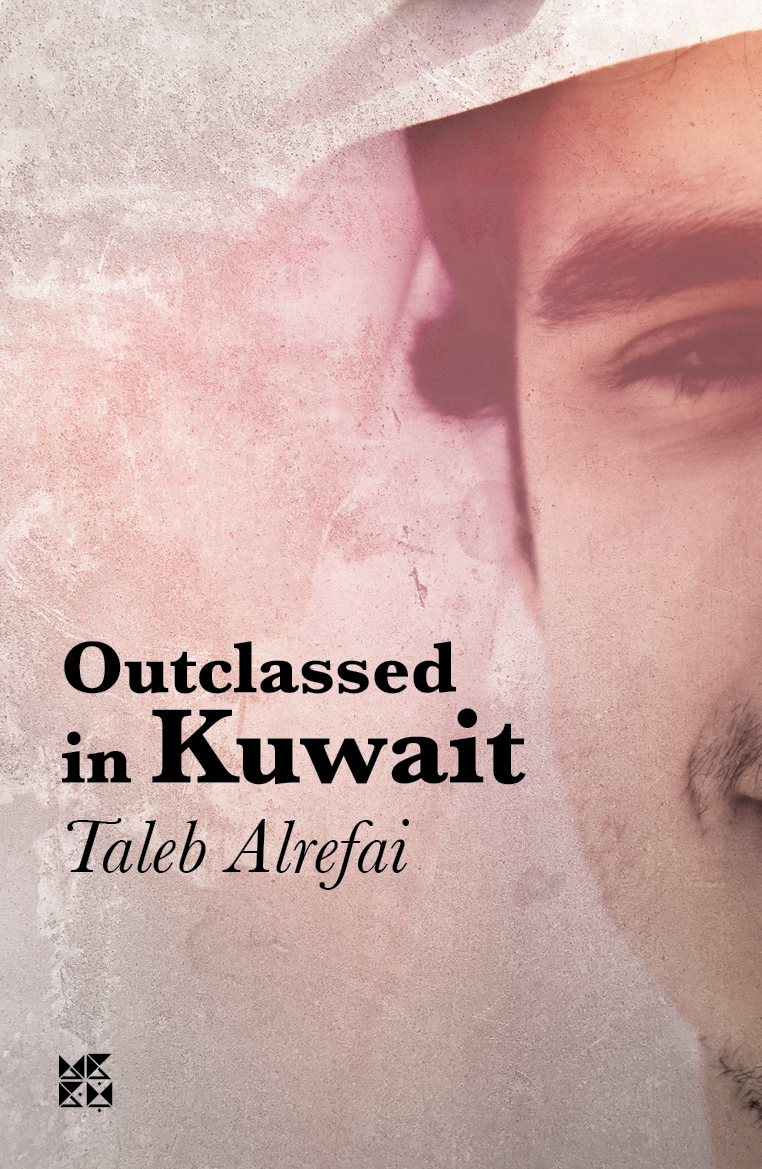
When one of Kuwait’s richest businessmen unexpectedly contacts author Taleb Alrefai, he has an unusual request: write a biographical novel that traces his ascent from poverty into the upper reaches of Kuwaiti society. As fact mixes with fiction, Alrefai is torn over whether writing such a book compromises his integrity as a writer. Alrefai is soon plunged into a world of enormous wealth, soaring ambitions, and frustrated love. It’s not only Alrefai’s reputation at stake: there are powerful people who don’t want this novel to be written, and they will stop at almost nothing to prevent it. Will Alrefai write the book? Will the forces lining up against him allow it?
Das E-Book können Sie in Legimi-Apps oder einer beliebigen App lesen, die das folgende Format unterstützen:
Veröffentlichungsjahr: 2020
Ähnliche



















To my mother Modhy Alfahad and my father Mahmoud Alrefai.
May their souls Rest In Peace.
Chapter 1
Wednesday, March 28, 2007
It was half past two in the afternoon. Exhausted, I was driving home along Morocco Highway, annoyed by the snarled traffic. My mobile rang. I didn’t recognize the number.
“Hello?” I said.
“Taleb Alrefai?” a woman’s soft voice asked.
“Yes,” I replied.
“Good afternoon.”
“And the same to you.”
“This is Khalid Khalifa’s office calling.”
Khalid Khalifa … I recalled his pictures in the newspapers. A businessman prominent in Kuwait in particular and in the Gulf generally. I’d never met him, of course.
“Mr. Khalifa would like to speak with you,” the voice informed me. “Please hold.”
A mellow male voice came on the line. “Good afternoon.”
“Good afternoon to you,” I replied.
“I’m delighted to be speaking with a novelist and writer such as yourself.”
A small amount of pride bubbled up in me. I wouldn’t expect prominent businessmen to know of my writing. I thanked him.
“Mr. Alrefai, I would be honored if we could meet. Could we set a time?” he asked in a friendly tone.
“I’d be happy to.” How had he gotten my mobile number? I wondered.
The traffic was beginning toflow now on Fourth Ring Road.
“Let’s say at my office at eight o’clock this evening,” Mr. Khalifa suggested, rather as if issuing an order.
***
“Did he say why he wants to meet you?” Shoroq, my wife, asked when I told her about the call.
“No. We agreed to meet this evening at his office in the Alraya Complex.”
“Wow. That’s a luxurious complex,” she said.
It was half past seven already. I didn’t want to be late. I stood in front of the mirror combing my hair and noticed a few gray hairs peeking through.
Shoroq was giving our young daughter, Fadia, her dinner in front of the TV in our bedroom.
“You know, sometimes I don’t understand you! How can you go and meet someone without asking him what he wants from you?”
“That’s the way I am,” I said simply, glancing at myself in the mirror.
Shoroq got up and we embraced goodbye. I bent over to kiss my daughter, then Shoroq quickly, before splashing on some cologne and leaving the room.
“Take my car!” Shoroq’s voice echoed down the stairs.
“I will, thanks!”
When I opened the front door, a pleasant March breeze brushed my face.
I would take Fourth Ring Road and then Morocco Highway towards Kuwait City, where the Alraya Complex was located. I hoped to arrive a little early; I never liked to be late.
Maybe Shoroq was right, I thought. It would have been better if I had asked him why he wanted to see me, so I could prepare myself. But whatever the reason, I would never refuse to meet someone like Khalid Khalifa.
Part of me was optimistic. Khalid was a well-known businessman, of course, so I hoped the meeting would bring good news.
When Khalid had spoken to me, he had sounded cordial enough, but still I hoped our meeting wouldn’t last too long. I needed to get home as I had a lot of reading to do and I had to finish my weekly column for the newspaper.
I didn’t know how long I could go on putting up with the feeling of being overloaded. I found it difficult to organize my day. I would wake up at half past five in the morning and go to bed after midnight. I was always tired and found it hard to manage my time. My work at the National Council, my domestic responsibilities, my reading and writing … not to mention my concerns for my older daughter, Farah, who was far away in America. And, of course, the social obligations I could not escape. Reading and writing required your entire life, really.
Sometimes I thought a writer would be best off stranded on an island alone. No family or anyone else to take him away from his shelter.
About seven more minutes and I would reach the Alraya Complex. I felt a headache coming on. I wished I’d taken a Panadol before leaving.
***
After lunch, I had gone into the bedroom, switched my mobile to silent mode, and had a short nap. I had tried to guess the reason behind Khalid’s request to meet with me, but I just fell asleep. In a dream, I saw myself walking in an ancient, crowded Arab market, slippery mud beneath my feet, the place abuzz with the sounds of traditional traders. I suddenly saw my mother sitting in a corner, her lap filled with small white flowers that she was handing out to passers-by in return for coins. I ran towards her to help her stand up, but she refused and looked at me curiously.
“Come, Mother,” I said.
She remained silent, her face filled with curiosity.
“I am Taleb, your son. Come, Mother.”
I put out my hand to her, but it hit the wooden headboard of my bed and I woke up …
***
I decided to listen to some music. I had given up listening to songs many years earlier; I preferred instrumental music. I could often be found searching out CDs of piano, clarinet, saxophone, oud, and nature and folk music.
I was happy to take Shoroq’s Mercedes. My Chevrolet was old, purchased more than five years earlier. American cars begin to sag after the fifth year. I had to get rid of it, but I didn’t think it would fetch more than 1,500 dinars. But that would be enough for the deposit on a new car. I wanted something small. I really liked the Mini Cooper; it felt like a unique kind of car, which was good since I was often alone in the car.
The traffic on Morocco Highway was light. The lights of the Kuwait Liberation Towers, in the heart of Kuwait City, could be seen in the distance.
I drove on as if heading to my office at the National Council for Culture, Art, and Letters. The historic Alsha’b Gate was on my left, the stoic and only remaining witness to the mud wall that once surrounded old Kuwait City. Some kind of monster had attacked the neighborhoods of the old city, gobbled up its quiet homes, and scattered the memories of its people. The old city had simply disappeared.
When Khalid Khalifa had spoken to me that afternoon, his voice had sounded welcoming. I was flattered because very few businessmen in Kuwait were interested in reading or literature. He had probably heard about one of my novels or read one of my articles in the newspaper, so he wanted to meet me, I was guessing. This might be my lucky day, I thought.
I should have called my friend Suleiman to ask about Khalid. He was also a businessman and must have known him.
Good, I would arrive a few minutes early for the meeting. I could see the Alraya Complex now. The parking lot looked a little crowded, but I’d try to find a spot near the lift.
There were few entertainment venues inKuwait, so people enjoyed eatingin restaurants orwandering in the malls and people-watching.
The arrowspointed to the lifts. Getting in, I could check how I looked. I liked mirrors in lifts. Then I reached the rightfloor.
A soothing calmprevailed. I asked the receptionist for Mr. Khalifa’s office and he showed me the way.
“Welcome, Mr. Alrefai,” a woman in her early thirties greetedme. “You look exactly like your photo in the newspaper.”
I smiled. Her fair skin, short blond hair, and upper lip reminded me of Meg Ryan. Thefragranceof expensive incense filled the secretary’s well-furnished room.
“I’ll tell Mr. Khalifayou’re here.”
When she stood up, I noticed her well-proportioned figure.
She has a sexy, beautiful body, I said to myself, and then suppressed the thought.
KhalidKhalifa came out of his office to greet me. “Welcome, Mr. Alrefai,” he said. He was in fact more handsome than his newspaper photos would suggest. “I’m most happy to be visited by a novelist.”
His tall, bulky body filled the doorway. He was wearing the Kuwaiti dishdasha, ghutra, and agal, together with shinyBally shoes. I remembered one of my college girlfriends saying that cleanliness and the shine on a man’sshoes were indicators of his character. Smiling, he put out his hand for me to shake.
“Please come in.” He stepped back so I could enter his office.
I noticed an incense burner, with fragrant smoke still rising. The office was spacious, with several Persiancarpets adorning the floor. On the wall behind Khalid’s desk hung a large oil paintinginwarmcolors.
Sitting down on a sofa facing me, he asked, “Tea, coffee, Perrier?”
“Just water, please.”
This place reeks of wealth, I thought.
A young man in uniform entered, perhapsaPakistani. He stood by the door waiting for Khalid’s order.
“A glass of water,” Khalid said, then turned to me. “We are probably the same age.”
“Perhaps. I was born in 1958.”
“Ah, that makes me twoyears older then.”
I smiled.
“But if we were ever seen together, people would think I’m ten years older than you!”
“No, no. I wouldn’t say so.”
I noticed he was breathing heavily.
There were two identical frames on Khalid’s desk. In the first, there was a black-and-white photo of Egyptian President Gamal Abdel NasserandSheikh Abdullah Al-Salem, formerEmir of Kuwait, and inthe second, a photo of himself wearing a graduationgown and holdinga certificate, a short man wearing spectacles at his side.
The young man came in,carrying aglass of water.
“Will you drink coffeewith me?”
“If you like, thank you.”
When he stood up, the swish of hisdishdasha stirredthe sleeping incense smell.
“Coffee dallah,” he said tohis secretary. Then returningtohis seat, he added, “I’ll tell you what’s on my mind. I would like you towrite a novel about me.”
He said it as if askinga salesmanfor a productandexpecting the salesman to bring it to him from stock. I was taken aback by the request and took a sip of water.
“A novel?”
“Yes.”
“I don’t know if I could really write such a novel.”
He pulled himself up straight and stared at me. There was something mysterious about his request.
“I’ve never written a biographical novel,” I added. “Maybe you mean a straight biography documenting your life?”
“No, a novel,” he replied. So he knew the difference between a novel and a work of non-fiction. I would never have expected a businessman to ask me to write a biographical novel.
“I’m an enthusiastic reader and passionate about novels, you see. I want you to write a novel about me just like the novels you’ve written before.”
I listened carefully to every word he said.
The dream about my mother handing out flowers to passers-by in return for charity came back to me. I thought of myself giving out novels to all comers.
“I’ll tell you the story of my life and you’ll write it as a novel. You will use my real name and you’ll take credit as the author,” he said.
The idea surprised me, and the easy way he said it surprised me even more. He said it as if the novel could be written in one sitting.
“Perhaps you’ve readsomeof my work? Iwrite aboutdistinctive worlds,” I said.
“What kind of worlds?” he asked, focusing closely on my face.
“Some of my writing depicts Kuwaiti people as troubled; some of itdeals withthe sufferings of immigrant workers in Kuwait.”
“Why do you write aboutthose people?” he asked. The way he asked the question irritated me.
“Because I’m one of them and I sharetheir suffering.”
I had second thoughts about my own remark. My life was not that bad.
The two of us fell silent. Then he looked at me and continued. “Poor people live in suffering all the time.” There was a hint of distress in his tone. “Who said that businessmen are happy all the time and free from worry?”
“No one is free from worry, of course,” I agreed. Some businessmen believed they could buy anything, I thought to myself.
“Don’t make a hasty decision,” he said in a friendly tone.“Please, give yourself timeto think about it.”
I remained silent, considering him, his confidence, his influence, his friendly voice, and the smell ofincense around him. Don’t forget his money, a part of me said.
I felt that everything in the office was focusing on me – the silence, the furniture, the colors of the painting, His Highness Sheikh Abdullah Al-Salem, Khalid’s breathing, the smell of incense, the glass of water …
“Have you ever read any of mynovelsor short stories?” I asked.
“I’ve readthree of yournovels, yes, and I follow your weekly newspaper column.”
His quick replymade me feel that he washiding something.
“My daughter, Mai, has readmost ofyour works. She has alarge room full of books and she loves to read.”
“That’s wonderful. How old is she?”
A young man holding a coffee dallah entered the room. At his side,another young man brought in atray with a golden dishfilledwith dates.
Khalid urged me to try them. “Our coffee is goodand the dates areexcellent.”
The young man bent over in front of me and proffered a small coffee cup. The scent of cardamom hit me from the cup. I took a date, placed it inmy mouth,and sipped the bitter coffee before shakingthe cup to indicate I’d had enough.
“Mai’s in her late twenties,” Khalid explained. “It was she who recommended you. She said your novelsdeal courageously with contemporary issues inKuwaiti societyand thatyouinclude autobiographical details inthem.”
The way he spoke about his daughter reminded me of my daughter Farah. I was strangely possessed by a desire to see his daughter.
“Mai will be very happy if you accept my proposal.” There’s a woman behind this story, I thought.
I need time to think, I told myself.
“Mai is my eldest daughter and the closest to my heart.”
“I also have a special relationship with my older daughter,” I said.
“How old is she?”
“Twenty-three.”
“Where does she work?”
“She’s doing a master’s degree in journalism in the States.”
“Kuwait is amazing! The Ministry of Education sends our daughters to study at universities across the world while members of parliament protest againstthe Minister ofEducation not wearingthe veil!”
He talked to me as if we were friends. His behavior confused me. I didn’t know how to build a relationship with someone I’d only just met. I was normally taciturn, withdrawn within myself.
“I’m still waiting for your response,” he said.
I felt I had to be firm and honest. I couldn’t write a novel about him. Who was he that I should write a novel about him? I didn’t want to be aggressive, though, so I said, “I cannot reply just yet. Biographies show the chronological progression of a person’s character. I think any good journalist could help you write your life story.”
“I called you because I want you personally to write my life story in the form of a novel.” What a dilemma, I thought.
“This would be a sizable project. It could take a year, and my work at the National Council consumes all my time. Plus, I’ve never written a biography.”
“I think you have. You wrote a book about the writer Abdul Razzaq Albaseer, didn’t you?”
He seemed to know a lot about me.
“Abdul Razzaq Albaseer is a writer of the Kuwaiti enlightenment,” I said, “and I wrote a book about him, not a novel. It was an appreciation of his role as a cultural pioneer.”
Khalid looked at me.
“To write a novel about you, that’s a completely a different story. Biographies document people’s lives, while novels create an exciting imaginary life.”
He continued looking at me quietly.
“If I wrote a novel about you, could I write whatever I wanted?” I asked.
“We would have to first agree on the basic principle and then go into the details.”
Something in his decisive reply worried me.
“Why do you want me specifically to write about you?”
“As I told you, my daughter … How about I answer all of your questions after we make an agreement?”
“Whether I agree to this or not depends on your answers, though.” I realized I was speaking as if we already had an agreement in principle. In order to escape any firm commitment, I said, “Let’s fix a date for another meeting and we’ll see.”
“When?”
“Are you in a hurry?”
“Everyone is nowadays. Mai and I have already spent more than five months discussing the idea. Shall we meet at the beginning of next week?”
“Yes, OK.”
Standing up, he said, “It’s been a pleasure to meet you.” He put out his hand for me to shake. “I hope you will agree to write my novel. Nothing is given for free, of course. You will be well paid.” Those are the magic words! I said to myself.
The dream about my mother came back to me again. Khalid’s eyes met mine. Think about it! He is a millionaire! said a voice in the back of my head.
“We’ll see. Well, goodbye for now.”




