



Erhalten Sie Zugang zu diesem und mehr als 300000 Büchern ab EUR 5,99 monatlich.
- Herausgeber: Banipal Books
- Kategorie: Gesellschafts- und Liebesromane
- Sprache: Englisch
Impoverished Egyptian teacher Helmy is deperate to find a better life for himself, his wife and little boy, seeing no future at home in Cairo. He dreams of working in oil-rich Kuwait and its boom in construction being the answer, just like many thousands before him. He manages to borrow the huge cost of a visa and is at last on his way to Kuwait City. He has no idea of the nightmare, instead of the dream, that awaits him – the relentless summer sun with temperatures of 56ºC and more, the choking dust and sweat, having to do construction work instead of teaching. And always, no money, and no answers from the many managers Helmy comes up against. Instead of achieving his dream, he falls into trap after trap. The author is himself a character in the novel, an engineer with the construction company who is writing a story about the humiliating and degrading experiences of the migrant foreign workers arriving in Kuwait to make their fortunes.
Sie lesen das E-Book in den Legimi-Apps auf:
Seitenzahl: 220
Veröffentlichungsjahr: 2023
Das E-Book (TTS) können Sie hören im Abo „Legimi Premium” in Legimi-Apps auf:
Ähnliche

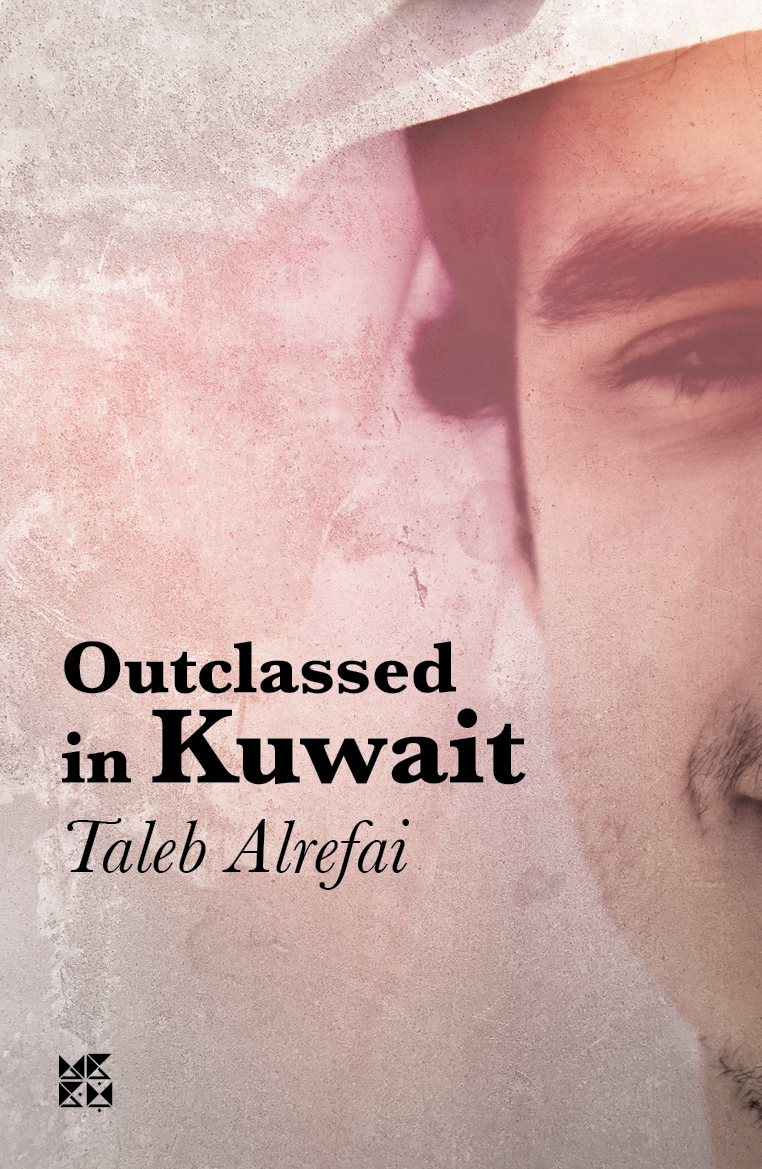


















TALEB ALREFAI
Shadow of the Sun
Shadow of the SunFirst published in English translationby Banipal Books, London, 2023
Arabic copyright © Taleb Alrefai
English translation copyright © Nashwa Nasreldin, 2023Dhil al-Shams, latest edition, was published in Arabic in 2012Original title:
Published by Dar El Shorouk, Cairo, Egypt
The moral right of Taleb Alrefai to be identified as the author of this work and of Nashwa Nasreldin as the translator of this work has been asserted in accordance with the Copyright, Designs and Patents Act, 1988.
No part of this book may be reproduced in any form or by any means without the prior written permission of the publisher
A CIP record for this book is available in the British LibraryISBN 978-1-913043-36-0E-book: ISBN: 978-1-913043-37-7
Front cover artwork Jamal al-Jarrah
Banipal Books
1 Gough Square, LONDON EC4A 3DE, UK
www.banipal.co.uk/banipalbooks/
Banipal Books is an imprint of Banipal PublishingTypeset in Cardo
Printed and bound in Great Britain by Clays Ltd, Elcograf S.p.A.
To my daughter Farah
PREFACE
When I chose to study civil engineering at Kuwait University’s College of Engineering and Petroleum, the thought of what awaited me on the construction sites never occurred to me. In summer, the temperature in the shade would hit 56ºC and above; the sweat of the workers would mix with their blood, and the dust enshroud their food.
I spent fifteen years working for a major Kuwaiti construction company and progressed up the ranks from site engineer to project engineer to chief engineer.
It was rare to see Kuwaiti workers on any site, so I was destined to work with people from some 100 different nationalities who spoke a vast range of languages. In the morning I would stand waiting for the arrival of the workers. I would scan the peeling skin on their faces, their burnt brows, and the white streaks of dried sweat on their clothes. But what always caught my attention was the incredible optimism they brought with them and their warm and friendly conversations with each other. I made so many friends and sat on the ground to eat off the same plates with them, as I thought to myself: “Livelihood brings people together, but also leads to their deaths!”
At the end of 1995, I looked back over the vast scope of the Al-Qurain housing project and said goodbye to my friends – engineers, technicians and workers. I left the field of construction for good, taking up a post at the National Council for Culture, Arts and Literature.
Many faces, voices and incidents pursued me, as if they refused to leave me to get on with my new job in culture. It was then I remembered the story “May You Live Long Abu Ajjaj”, the title story of my first short story collection that was published in 1992. I started thinking about building the world of a novel out of that story, and that is what happened.
In Shadow of the Sun, I am present as a fictional character who lives and interacts with the events of the novel alongside the other characters. I am writing and documenting a bitter part of my own autobiography, with no distance separating me from the lives of its characters, or their suffering and fate. The novel casts light on the lives of thousands of workers who come to the Gulf states with dreams of money and wealth, but who are confronted with the harshness of a desolate reality. It exposes specifically the suffering of migrant workers in Kuwait, be they Arabs or foreigners, and how their every moment is shaped by need, injustice and cruelty. Some commit suicide, but that has no effect on the work on site under the blazing sun that’s like the lash of hell.
Almost a historical document of my life and the lives of the workers with whom I lived for fifteen years, Shadow of the Sun presents a human landscape set in and reflecting Kuwait.
Taleb Alrefai
Kuwait, December 2022
Chapter One
How long will this miserable rumbling in my head go on? I hadn’t imagined that the plane journey would be like this. The high seat rest is obscuring the woman sitting in front of me. All I can see is her black hair and that she’s flustered by her crying baby. I wish I could see her face.
He seems to be engrossed in his reading. Blocking the way to my seat. It was like I expected to see him again. I spotted him sitting there, and then he stood up when I approached and extended a long arm and an outstretched open hand: “Here you go, this is your seat.”
The baby’s crying is making me feel depressed. I wish I could burst into tears. If only I could go back to being a baby again so that a woman would take me to her bosom as I rest my head near her heart.
Last night, Saniya drew me to her heart. It was my final night with her. I can always tell when she wants me; she begins to act anxious, and her breath takes on a particular scent. She sends pleading looks. I wanted her to be honest about her desire for once, to call me to her, like Nema does: “Come here, Helmy.”
Nema, Hajj Metwally’s wife, isn’t like my wife Saniya. Each time I see her is like the first time. I was hungry to see her last night. I wanted to say goodbye to her, to make up with her. To kiss her and smell her perfume one last time. Preoccupied, I sat in the coffee shop. I was silent, as my thoughts played tricks on me. Then I got up, having made up my mind.
My heart pounded when I saw that the lights were off in her bedroom. Making sure no one could see me, I tapped on the window. I pricked up my ears, head lowered, casting my eyes down at the dusty ground. The window remained dark. I headed to the back door, listening out for the sound of incoming footsteps. I was sure that Hajj Metwally was at his shop. The door was steeped in darkness. I pushed it but it resisted stubbornly. I understood that she didn’t want me there, and so my longing for her grew, along with my distress and this maddening desire to see her. My mouth felt parched. I pushed at the door again, but it was still obstinately shut. I saw a shadow approaching, so I sped up to conceal my deceit. I carried on walking, head down and eyes focused firmly on the ground. I tapped on the window again. I knew she was on the other side and that she could hear me. I hoped that the room would suddenly burst with light, but…
Distraught, I returned to our room. I was met by the sight of Saniya’s face, just as agitated as I’d left it, and visibly sadder.
“Hello,” I said, avoiding entering into conversation.
I heard Saad’s voice ring out: “Baba! Baba!”
“Sit down and be quiet!” she shouted at him. He froze in fear.
I sat down in silence on the edge of the bed, transfixed by the room’s stifling amber lighting. Saad toddled towards me, casting fearful glances at his mother. I picked him up, gave him a kiss and sat him down on my lap. She began to pace up and down nervously as she tidied up. I caught a glimpse of my small black suitcase in its spot near the corner of the room. I thought about getting up to replace the blown lamp, but I felt tired.
Saniya was seething.
“I’ve had enough,” she said.
Maybe she’d had an argument with my mother, I thought, or with my sister, Saliha, or Saad might have annoyed her. Maybe it was about me going to Kuwait – her dread, and my silence through it all. I didn’t respond, so she left me with Saad and walked out. He was sitting on my lap. I breathed in the scent at the nape of his neck and began to play with him. Shortly after, she returned with his dinner. I went back to my spot at the edge of the bed. Meanwhile, she fed him angrily. I watched them through the smoke of my cigarette: my wife and my son. Our final night together.
Suddenly, she turned to me.
“Aren’t you going to say anything?” she fumed.
“Please, say something,” she pleaded, her anger having given way to distress. “This is our last night together. I want to hear your voice. Say anything at all.”
“I’ve got nothing to say, Saniya.”
I blurted the words out without thinking and she immediately burst into tears. Saad stopped eating, his frightened eyes roving around the room before they settled on her face.
“Oh, why do I have to have such rotten luck!” she wailed. Then she sprang up, grabbed Saad by the hand, and took him off for a bath. After a while, she brought him back out, wrapped in a towel. Her eyes were still puffy and her nose was red.
“Enough smoking. The room can’t take any more,” she said to me, as she stood Saad up on the floor, naked. She dressed him in his underwear and pyjamas, before carrying him to his bed. But then she brought him back and lifted him up to my face.
“Kiss Baba,” she said.
She sat down by his bed, patting his shoulders and stroking his head. Saniya can’t stand my silence. “I know this is just the way you are,” she once said to me, “but it scares me when you don’t say anything. I can’t tell what you’re thinking. I feel like you don’t love me and that you don’t care whether I’m here or not.”
“Keep an eye on Saad – I’m going for a bath,” she said, standing up. I took her hand in mine. Her fingers felt soft as I drew her gently towards me.
“Come here…”
I pulled her down to sit next to me. I was still in the same spot at the edge of the bed. We looked into each other’s eyes.
“Why are you upset?” I asked her, but she lunged backwards as if my sentence had struck her.
Drawing her to my chest, I stroked her hair as her tears began to fall.
“Saniya,” I said, softly. “You know what I’m like. My own silence annoys me. But this is the first time for me to travel and I don’t know what it’ll be like in Kuwait.”
She relaxed in my arms and her sobbing subsided. Saad was in his bed. A dreadful stillness hung over us. I could hear her breathing. The feeble amber light in the room continued to bother me. A thought occurred to me: I’ll be apart from her for two years. “Saniya, my darling,” I whispered. “It’s out of my hands.”
Sitting up straight, she wiped away her tears. When she spoke, her voice sounded hoarse.
“It’s not you. I’ve been upset all day. You’re going away and leaving me. I don’t know how I’ll live without you.”
She got up suddenly and wiped at her tears again. “May God ease the journey for you.”
Then a shadow of a smile appeared on her face as life beat into her voice: “I’m going for a bath. I won’t be long.”
Snatching herself from my arms, she quickly disappeared. It was clear that she was getting herself ready for us to be intimate. I looked at my little boy Saad as he slept and watched him quietly breathing. She emerged from the bathroom in a brighter mood. Meanwhile, I had changed out of my clothes. I spotted her familiar smile. Her face relaxed as she briskly dried her hair, letting it flow over her shoulders. Making a show of brushing past me, she reached the bed first and climbed in, her body pulsing with passion.
As soon as I got into the bed, she allowed her desire to show. Her hot body and heavy breathing seemed to seep through my skin. As if speaking to herself, she whispered: “Tonight’s the last night. You’re leaving tomorrow.”
“I was afraid it would be my time of the month,” she continued. “And we wouldn’t be able to…”
I took her into my arms, feeling her breath and the heat of her breasts. Our last night. We’d been married for four and a half years. I remember the way my father had taken his decision when I graduated from university, as usual without bothering to consult me. “You need to get married,” he’d ordered me in a cutting tone.
Overnight, marriage became his primary concern. Every time we sat down together, he would begin his onslaught: “What are you waiting for? You’ve graduated now and you have to get married.”
Each time, I wouldn’t say anything but he would carry on: “You’re a teacher now – a big shot. Pick a girl and I’ll do the rest.”
At the time, I used to dream about Saniya. Anticipating her arrival, I’d sit in total silence, pretending to read a book. I would see her when she came over with her mother to visit my mother and sisters. Her long-legged figure would make my heart quiver. I followed every step of her coquettish walk, and my eyes drank in her coal-black hair, her blushing face, and her shy smile. I gazed at her, full of yearning, and if I happened to snatch a glance in return, my heart would throb.
My father’s promises brought her closer to me. “Don’t worry yourself,” he said. “I’ll take care of all of the expenses – the house, the dowry, the furnishings. You’re my only son. Get married, so I can see your children before I die.”
I shouldn’t have succumbed. I should have taken my time and made sure I was financially stable first. Living in my father’s home was oppressive, both to me and Saniya, and it ruined the joy of marriage for me.
The morning after our wedding, I found my mother standing on the other side of our bedroom door. That day, I realised that every step Saniya and I took would be watched. My mother wouldn’t tire of monitoring each breath we took. Several times, Saniya surprised my mother by catching her eavesdropping from behind the door. Saniya would fume: “Unbelievable! What kind of woman is she?”
My mother would vehemently deny it. She swore on her life, accusing Saniya of slander. “It’s not fair, I swear,” she would sob. “Your wife’s making up lies about me.”
Unsure how to respond, I wouldn’t say a word. I knew my wife was honest and wouldn’t lie, but I couldn’t raise my voice at my mother and call her a liar.
My silence would infuriate Saniya, as well as the fact that I hadn’t sided with her. Feeling wounded, she would start crying: “I hate you! For God’s sake, say something. Why won’t you ever say anything?”
She would avoid me for days, keeping well away and leaving me all alone to fend for myself. She ignored me completely, as if I wasn’t even there. She wouldn’t talk to me, or even look my way.
My mother also blamed and chided me at every opportunity: “You’re not a man. You let your wife raise her voice at your mother while you just stand there. Raising you was clearly a life wasted.”
My mother baffled me. I had no idea how she knew the precise time I would arrive at the house. The minute I opened the door, I would find her standing in front of me, poised like a spear. I began to recalculate a million times before coming home with a carrier bag in my hands. She would need to know exactly what was in the bag, and would never forgive us if I took it straight to our room.
Last week, I was coming back from the market, where I’d bought little Saad a shirt and a pair of trousers. I was worried about going away and leaving him without any new clothes. I walked into the house and my mother popped up as usual with her prying eyes.
“Good evening, Mama,” I greeted her, then spotted Saad stepping out of our room. When he saw me, he raced over, shouting: “Baba! Baba!”
Worried he’d hurt himself, I turned and caught him, then lifted him to my chest: “Careful, my darling.”
I saw Saniya peering out from the doorway to our room. I walked over to her, carrying Saad. The bag was still dangling from my hand. I went in and closed the door behind me.
Saad snatched the bag, and insisted on opening it himself. He was so excited, he put on the new shirt and refused to take it off.
“He’s happy, my little darling,” Saniya said. “We’ve forgotten what it’s like to have new clothes.”
I looked at her, feeling a pang of hurt at what she’d said. She brushed aside a strand of hair that had fallen across her forehead.
“Well, you of all people should understand…” I gently chided her.
“I didn’t mean anything by it,” she said, waving her comment away with a hand. She continued to watch Saad with his new clothes. I lit a cigarette. After a while, she stood up and looked at me.
“Did I upset you?” she asked, trying to appease me.
She gave me a smile, then gathered her hair and tied it up in a small bun at the back of her head. This meant she was going to the kitchen to help my mother with dinner.
“Hey, don’t be upset. May God ease our hardship. We’ll wear new clothes when you get back from Kuwait,” she said.
Then she turned away from Saad and me, put on her slippers and walked out of the room. When she came back to call us to dinner I noticed the change in her mood.
“Your mother’s annoyed,” she muttered, “I don’t know what’s wrong with her.”
My father, mother, and my sister Saliha were waiting for us. It seemed that my father had noticed Saad’s clothes.
“Come here,” he said, picking him up. “Congratulations on the new shirt.”
“Thank you, Uncle,” Saniya said.
My mother was bursting with resentment.
“Mama, are you okay?” I asked her. “Are you tired?” “I am no one’s mother,” she replied.
“What happened, Mama?” I asked, stunned at her response.
“Nothing,” she replied, lifting her head to look at my father, who spoke frankly.
“Your mother’s upset.”
With this succinct contribution, my father fell silent.
“Why?” I asked.
“You never buy her anything.”
I realised why my mother was so angry – I remembered the bag.
“Other people are given clothes and presents. All we get are complaints,” my mother grumbled, referring to Saniya.
“He didn’t buy me anything,” Saniya burst out in selfdefence.
“Of course, he didn’t!” my mother replied.
“I swear, he didn’t buy me anything.”
“Saniya, I saw the bag with my own eyes.”
“Those were just some clothes for Saad, Mama,” I said.
“Saniya’s telling the truth.”
“I swear to God that Helmy didn’t buy me a single thing. Thank God for my parents.”
“If they’re buying you things, then why are you rubbing our noses in it?”
“That’s enough,” my father interrupted, his voice booming. “I don’t want to hear any more of this.”
Saniya stood up and leaned over to lift Saad from my father’s lap.
“Excuse me, Uncle,” she said, and then, loud enough that everyone heard: “What kind of a miserable life is this?”
By this point, her face was stony as she continued to vent her anger.
“No one should have to live like this,” she muttered, before storming off.
“Your wife’s so vulgar,” my sister Saliha butted in, scowling at me. “She doesn’t have any respect for anyone anymore.”
“Well, she’s left the respecting to you.”
My retort shut her up and made my father bristle. I glanced at my mother. She was still simmering. Meanwhile, I could hear Saniya crying, which immediately made me lose my appetite.
Why is all this happening to me?
I’ve often dreamt about being on a plane. My first time flying. I didn’t think the flight would be like this; it didn’t occur to me that there would be crowds and narrow seats, or this dizzying, constant rumble that’s clogging my ears. As soon as I found myself hemmed in by the walls of the departure lounge, I was gripped by a tightness in my chest. A wave of melancholy washed over me. I felt like a child, lost in the middle of a busy market. A multitude of faces, busy with their own affairs. My thoughts kept slipping away from me and my heart filled with sorrow. I considered abandoning the plan to go to Kuwait, and returning instead to my village and my father’s house. I hoped that the flight would be cancelled.
My companion on the journey was Awad, my neighbour and friend. We were brought up together. A fairly short man, his stutter was another thing that set him apart. From a young age, he would sink into silence so that no one would hear him stammer. When he did speak, it was to deliver the sparest response.
When I suggested travelling to Kuwait on the same plane as him, he simply nodded and stuttered: “W-w- welcome.”
I turn to him as he sits there daydreaming, a look of despair in his eyes. He seems unhappy, and even his skin looks a few shades darker than usual. I wonder: does grief stamp itself onto the faces of everyone who has to leave their country, until it alters their features?
The departure lounge was crammed with people. As I scanned the faces around me, I suddenly felt like something was jabbing me, or as if I was being stared at. I turned around and saw the man, his head slightly raised, his eyes focused on me. For a few seconds, we both froze.
It was the first time I had set eyes on him. I turned away but I could still feel his stare, as if it were a thorn that had planted itself inside my brain.
As soon as I stepped onto the plane, a blonde air hostess greeted me: “The seat number is on your boarding pass.”
I studied the boarding pass carefully as Awad weaved his way along the narrow aisle ahead of me. It was my first time flying.
“Mr Helmy.”
I pricked up my ears – it sounded like I was expected. A man shook my hand with an apparent familiarity.
“Hello.”
“Here you go,” he said, extending his long arm and gesturing with his outstretched hand. “This is your seat.”
That was the first time I’d seen him. How did he know my name? He greeted me as if he knew me. I hadn’t asked him anything. Maybe he was one of the plane crew, I thought. They must know the names of all the passengers. My name is on the boarding pass.
Three interlinked seats, and mine turned out to be the one by the window. Awad was next to me and the other man, wearing navy trousers and a white shirt, was in the aisle seat.
Maybe he’s Kuwaiti… I can’t tell. But he isn’t in traditional Kuwaiti dress. I didn’t imagine the plane to be like this. The narrow seats are making me feel caged in.
The captain spoke through the intercom: “Welcome aboard this Egyptair flight.”
I listened carefully, but the words emerged sloppy and poorly pronounced, overlapping with each other so that I barely understood what was being said, even though I was an Arabic teacher. Hearing him mangle the Arabic language annoyed me, as he botched up the basic rules of grammar.
“Ff-ff-fasten your s-seatbelt,” Awad reminded me.
A dark-complexioned air hostess stood pointing out the emergency exits and explaining the evacuation procedures in case of a plane crash.
Is that really necessary, I thought to myself. Then I recited a prayer: “In the name of God, the most Gracious, the most Merciful.”
“A life jacket can be found beneath your seat,” the intercom declared.
I don’t know how to reach it.
The young man in the white shirt is slightly older than me, in his early thirties. He has high cheekbones and long wrinkles across his forehead. He’s reading a small book with a white cover. The way he said my name and shook my hand made it seem as if he knew me. Maybe he also pressed down on my hand affectionately. I don’t remember. I have nothing to do with him – I won’t look at him.
As the plane soared into the sky, a strange feeling came over me. It felt like a sharp blade had severed the lines of communication between my family and I, then hurled me into the distance. I wished I could somehow look out and see our home, Saad, and Saniya.
Yesterday, Saniya was crying.
“You’re going to leave me all by myself,” she wept. “A woman is nothing without her husband. I was hoping you wouldn’t go. Your mother’s going to bully me.”
She looked at me. But I kept silent, wallowing in my own pain and powerlessness.
“I don’t know if I can live in your father’s house.” This frightened me. I looked up at her.
“You’ll stay here, no matter what,” I said.
The rumbling of the plane is echoing in my ears and head.
Travelling abroad was my only way out. A highly qualified teacher, with a Bachelor’s degree in Arabic, but earning a measly salary of a hundred and thirty pounds a month. A failure of a teacher. No one cares about Arabic in this miserable age we live in. When it comes to private tutoring, subjects like Maths, Physics, Chemistry, Biology, and English are the ones in demand. My salary vanishes by the end of the first week, then I’m in debt for the rest of the month to Sayed, the guy at the coffee shop, embarrassed to show my face to anyone.
It’s been four and a half years that I’ve lived in this wretched state. Ever since I started working, I stopped putting my hand out to take money from my father. It’s bad enough that we live in his house for free, in one room. Last year, I joined a gameya savings scheme, but gathering together three hundred pounds for my share of the deposits nearly killed me, and my father had to contribute the rest. He built us a small bathroom that connected to our room.
How do people make their money, I wonder?
“Y-y-you can un-un-unfasten your seatbelt,” Awad stuttered.
Two women appeared, pushing a small trolley. They handed out a meal to each passenger.
I’m struggling to collect my thoughts. I feel muddled. For some reason, visions of my family and friends, of our room, and my sessions at the coffee shop, keep racing through my mind. The sound of my son Saad’s laughter keeps coming to me too. It passes through my mind in fragments.
A short while ago, I slid open the small window shade beside me and the view caught my eye. The light outside was a desolate shade of yellow and clouds were racing past. I could only just see the edge of the plane’s wing. Feeling a creeping sense of dread, I quickly pulled down the shade. At take-off, I thought the plane would explode. This is the first time I have left the country. I won’t stay in Kuwait for more than two years.




