


176,99 €
Mehr erfahren.
- Herausgeber: John Wiley & Sons
- Kategorie: Fachliteratur
- Sprache: Englisch
Paddlefish have become of increasing interest to the aquaculture community in recent years, particularly as a potential new source of seafood and caviar. Native to North America, paddlefish show great promise both domestically and internationally as a commercially viable farmed species. Paddlefish Aquaculture examines all aspects of the biology and culture of these fish, exploring their physiology, production, end products and the economics underlying a successful paddlefish operation. Chapters specifically cover paddlefish biology, propagation and early culture techniques, production for meat and caviar, international culture and history, paddlefish food products, bioaccumulants of contaminants in paddlefish, parasites and diseases, and the economics of paddlefish aquaculture. Paddlefish Aquaculture is a timely practical reference for researchers and producers interested in paddlefish.
Sie lesen das E-Book in den Legimi-Apps auf:
Seitenzahl: 578
Veröffentlichungsjahr: 2015
Ähnliche



















Paddlefish Aquaculture
Edited by
Steven D. Mims
Department of Aquaculture (Emeritus), Kentucky State UniversityFrankfort, Kentucky, USA
and
William L. Shelton
Biology Department (Emeritus), University of OklahomaNorman, Oklahoma, USA
Copyright © 2015 by John Wiley & Sons, Inc. All rights reserved
Published by John Wiley & Sons, Inc., Hoboken, New JerseyPublished simultaneously in Canada
No part of this publication may be reproduced, stored in a retrieval system, or transmitted in any form or by any means, electronic, mechanical, photocopying, recording, scanning, or otherwise, except as permitted under Section 107 or 108 of the 1976 United States Copyright Act, without either the prior written permission of the Publisher, or authorization through payment of the appropriate per-copy fee to the Copyright Clearance Center, Inc., 222 Rosewood Drive, Danvers, MA 01923, (978) 750-8400, fax (978) 750-4470, or on the web at www.copyright.com. Requests to the Publisher for permission should be addressed to the Permissions Department, John Wiley & Sons, Inc., 111 River Street, Hoboken, NJ 07030, (201) 748-6011, fax (201) 748-6008, or online at http://www.wiley.com/go/permissions.
Limit of Liability/Disclaimer of Warranty: While the publisher and author have used their best efforts in preparing this book, they make no representations or warranties with respect to the accuracy or completeness of the contents of this book and specifically disclaim any implied warranties of merchantability or fitness for a particular purpose. No warranty may be created or extended by sales representatives or written sales materials. The advice and strategies contained herein may not be suitable for your situation. You should consult with a professional where appropriate. Neither the publisher nor author shall be liable for any loss of profit or any other commercial damages, including but not limited to special, incidental, consequential, or other damages.
For general information on our other products and services or for technical support, please contact our Customer Care Department within the United States at (800) 762-2974, outside the United States at (317) 572-3993 or fax (317) 572-4002.
Wiley also publishes its books in a variety of electronic formats. Some content that appears in print may not be available in electronic formats. For more information about Wiley products, visit our web site at www.wiley.com.
Library of Congress Cataloging-in-Publication Data:
ISBN: 9780813810584
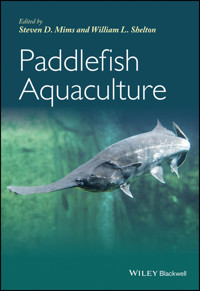
Cover image: Mississippi Paddlefish © mujdatuzel
Contributors
Siddhartha DasguptaDepartment of Aquaculture, Kentucky State UniversityFrankfort, Kentucky, USA
Robert M. DurborowDepartment of Aquaculture, Kentucky State UniversityFrankfort, Kentucky, USA
Deke T. GundersenEnvironmental Studies, Pacific UniversityForest Grove, Oregon, USA
Joshua L. HerringDepartment of Food and Animal Sciences, Alabama A&M UniversityNormal, Alabama, USA
Roman KuchtaInstitute of Parasitology, Biology Center, ASCR, v.v.i.České Budějovice, Czech Republic
Steven D. MimsDepartment of Aquaculture (Emeritus), Kentucky State UniversityFrankfort, Kentucky, USA
Richard J. OndersDepartment of Aquaculture, Kentucky State UniversityFrankfort, Kentucky, USA
Tomáš ScholzInstitute of Parasitology, Biology Center, ASCR, v.v.i.České Budějovice, Czech Republic
William L. SheltonBiology Department (Emeritus), University of OklahomaNorman, Oklahoma, USA
Foreword
The purpose of this book is to provide a historical summary of basic biology of the American paddlefish (Polyodon spathula) including a brief history of commercial exploitation as a backdrop to the various aspects of the culture of this unique fish. Broodstock acquisition currently depends on netting from natural populations. Artificial propagation is the cornerstone of managed culture, but also includes other more specialized reproductive management such as cryopreservation of milt and ploidy manipulations. Nursery production systems and various means of grow-out as well as development of value-added products are important for a complete perspective on culture.
This book should provide a reference for national and international fish culturists, researchers, educators, and students. The focus will be a compendium on the culture of American paddlefish, primarily as a foodfish. Proceedings of an earlier symposium (Dillard et al. 1986) included information on propagation and management, and a more recent American Fisheries Society (AFS) publication on aquaculture (Kelly & Silverstein 2005) included a chapter on the paddlefish (authored by Mims and Shelton). Another AFS book (Paukert & Scholten 2009) focuses on management, exploitation, and conservation of wild populations of paddlefish, but includes one chapter on propagation by Mims and Shelton.
Internationally, more attention has been given to related acipenseriform fishes, the sturgeons, which have been more highly exploited and impacted by anthropogenic development (World Sturgeon Conservation Society; see http://www.wscs.info). However, because of the taxonomic relationships and similar life history traits, paddlefish are often included in these literature sources. Several bibliographies have been developed for paddlefish and provide a good coverage of the literature. The earliest is an appendix in the proceedings publication (Dillard et al. 1986). Two other more recent sources are Georgi and Dingerkus (1996, 2001).
REFERENCES
Dillard, J.G., Graham, L.K., & Russell, T.R. (eds) (1986)
The Paddlefish: Status, Management and Propagation
. North Central Division, American Fisheries Society, Special Publication 7, Bethesda, MD.
Georgi, T.A. & Dingerkus, G. (1996)
The Bibliography of Paddlefishes, Family Polyodontidae
. Doane College, Crete, NE.
Georgi, T.A. & Dingerkus, G. (2001)
Paddlefish Bibliography
. Doane College, Crete, NE.
Kelly, A.M. & Silverstein, J. (eds) (2005)
Aquaculture in the 21
st
Century
. American Fisheries Society, Symposium 46, Bethesda, MD.
Paukert, C. & Scholten, G. (eds) (2009)
Paddlefish Management, Propagation, and Conservation in the 21
st
Century: Building from 20 Years of Research and Management
. American Fisheries Society, Symposium 66, Bethesda, MD.
Preface
The American paddlefish, Polyodon spathula, is one of two living species of paddlefishes in the family Polyodontidae; it is endemic to North America. The other member of the family is the Chinese paddlefish, Psephurus gladius. The American paddlefish is sometimes called the spoonbill catfish, or spoonfish. These unique fishes are among the earliest derived aquatic vertebrates; the American paddlefish is one of the largest (90 kg, 1.8 m long) freshwater fish in the United States and is found in 22 states that have large rivers and impoundments within the Mississippi River basin and adjacent Gulf Coastal drainages. Paddlefish are closely related to sturgeons, a group of fish having a mostly cartilaginous skeleton. The American paddlefish is a zooplankton filter feeder throughout most of its post-juvenile life, while the Chinese paddlefish is piscivorous as an adult.
Paddlefish, like sturgeons, are highly valued for their boneless, firm white meat, and for their darkly pigmented roe, which is processed into caviar. Historically, these fishes have been obtained through capture fisheries of wild populations, but because of their large sizes and late maturation, they have been repeatedly overexploited, beginning in the early 1900s, but more recently in the latter two decades of the 20th century. Many state agencies have closed the fisheries for sturgeons and paddlefish because of the perceived population declines, particularly at the peripheries of the ranges, and also under the threat of contamination by organochlorine pollutants such as polychlorinated biphenyls (PCBs) and chlordane. Illegal poaching of paddlefish increased in the late 1970s after the international caviar trade supplies from Caspian Sea sources were curtailed. In 1992, paddlefish was added to the Appendix II list of the United Nations’ Conference of the Parties of the Convention on International Trade of Endangered Species of Wild Fauna and Flora (CITES). Listing has complicated the international trade of paddlefish and their products because of the government-permitting requirements.
Aquaculture of paddlefish is increasingly becoming an alternative for supplying this species to the foodfish market, but federal and state regulations to protect natural populations from stock depletion often discourage farming. Commercial culture of paddlefish that is not subject to the vacillations of exploitive capture fisheries is needed in order to meet the growing demand for aquatic animal protein, as well as providing a source of quality caviar and other value-added products.
Paddlefish are gaining the interest of fish farmers in the United States, but perhaps even more rapidly in Eastern Europe, Russia, and China. This guide to the culture of paddlefish should meet an important need for fish farmers and educators in the United States and overseas. This book will provide a review of culture-related knowledge from the literature in the context of our personal experience. Available information on production of the American paddlefish outside its native range is included, and limited information on the endangered Chinese paddlefish is provided.
Steven D. Mims and William L. Shelton
Lesen Sie weiter in der vollständigen Ausgabe!
Lesen Sie weiter in der vollständigen Ausgabe!
Lesen Sie weiter in der vollständigen Ausgabe!
Lesen Sie weiter in der vollständigen Ausgabe!
Lesen Sie weiter in der vollständigen Ausgabe!
Lesen Sie weiter in der vollständigen Ausgabe!
Lesen Sie weiter in der vollständigen Ausgabe!
Lesen Sie weiter in der vollständigen Ausgabe!
Lesen Sie weiter in der vollständigen Ausgabe!
Lesen Sie weiter in der vollständigen Ausgabe!
Lesen Sie weiter in der vollständigen Ausgabe!




