



Erhalten Sie Zugang zu diesem und mehr als 300000 Büchern ab EUR 5,99 monatlich.
- Herausgeber: Atlantic Books
- Kategorie: Gesellschafts- und Liebesromane
- Sprache: Englisch
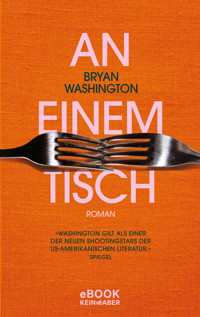
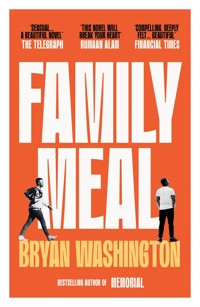
FINALIST FOR THE NATIONAL BOOK AWARD FOR FICTION 'Such a joy' Ocean Vuong 'It'll break and remake your heart' Andrew Sean Greer 'You want this gorgeous book' RO Kwon IN TOKYO, the son works as an English tutor, drinking his nights away with friends at a gay bar. He's entangled with a married man, too. But while he has built a chosen family in Japan, he is estranged from his family in America, particularly his mother, whose preference for the son's troubled homophobic brother pushed him to leave home. Then, in the weeks leading up to Christmas, ten years since they've last seen each other, the mother arrives uninvited on his doorstep. Separated only by the son's cat, the two of them clash. The mother, wrestling with memories of her youth in Jamaica and her own complicated brother, works to atone for her missteps. The son initially struggles to forgive, but as they share meals, conversations and an eventful trip to one of the oldest cities in Japan, both mother and son start to reckon with the meaning of 'home' - and whether, perhaps, they can find it in each other.
Sie lesen das E-Book in den Legimi-Apps auf:
Seitenzahl: 297
Veröffentlichungsjahr: 2026
Das E-Book (TTS) können Sie hören im Abo „Legimi Premium” in Legimi-Apps auf:
Ähnliche


















PALAVER
Also by Bryan Washington
Lot
Memorial
Family Meal
PALAVER
BRYAN WASHINGTON
First published in the United States of America in 2025 by Farrar, Straus and Giroux, 120 Broadway, New York 10271.
First published in trade paperback in Great Britain in 2026 by Atlantic Books, an imprint of Atlantic Books Ltd.
Copyright © Bryan Washington, 2025
All photographs used with permission of the author.
The moral right of Bryan Washington to be identified as the owner and author of this work has been asserted by them in accordance with the Copyright, Designs and Patents Act of 1988.
All rights reserved. No part of this publication may be reproduced, stored in a retrieval system, or transmitted in any form or by any means, electronic, mechanical, photocopying, recording, or otherwise, without the prior permission of both the copyright owner and the above publisher of this book.
This novel is entirely a work of fiction. The names, characters and incidents portrayed in it are the work of the author’s imagination. Any resemblance to actual persons, living or dead, events or localities, is entirely coincidental.
No part of this book may be used in any manner in the learning, training or development of generative artificial intelligence technologies (including but not limited to machine learning models and large language models (LLMs)), whether by data scraping, data mining or use in any way to create or form a part of data sets or in any other way.
1 2 3 4 5 6 7 8 9
A CIP catalogue record for this book is available from the British Library.
Trade paperback ISBN: 978 1 80546 396 2
EBook ISBN: 978 1 80546 397 9
Printed in Great Britain
Atlantic Books
An Imprint of Atlantic Books Ltd
Ormond House
26–27 Boswell Street
London
WC1N 3JZ
www.atlantic-books.co.uk
Product safety EU representative: Authorised Rep Compliance Ltd., Ground Floor, 71 Lower Baggot Street, Dublin, D02 P593, Ireland. www.arccompliance.com
for my friends
You must be nervous now. Anyway, life is very short.
—ADANIA SHIBLI, translated by Paul Starkey
Our days are demarcated in the repetition of little goodbyes.
—AKIRA THE HUSTLER
Soon, no, now, I will try.
—MILENA MICHIKO FLAŠAR, translated by Sheila Dickie
PALAVER
The mother was lost. Each building sat low and square and neutral, dulled in maroons and grays, working against her. This didn’t feel like a dangerous situation—Shin-Ōkubo’s sidewalks were crowded, even at midday. But everything looked the same, and, walking past the same blinking 7-Eleven, once again, she realized that her landmarks were fucked.
Three blocks later, she admitted defeat. Still the mother smiled under her mask at passersby. A few smiled back. But mostly they walked a little faster. And of course she couldn’t ask anyone for directions. A reminder of how thin the line between beauty and chaos could be.
She texted the son for directions.
He didn’t respond.
Not that she’d expected him to.
But a chill crept in, seeping through her coat. The mother turned to a barrage of businesses beside her; their signs sat stacked atop each other, crowded beside a bridge, just above the locals crowding around Ōkubo Station. A train rattled away from its platform, and the mother watched until its final car disappeared, swearing under her breath at the cold.
That’s when she noticed a little blue building across the road.
It had a striped white awning. Bistro glowed in yellow letters.
The mother didn’t speak French. But she couldn’t understand Japanese either. And this, at least, was the most familiar thing she’d seen in Tokyo thus far. She stepped toward the entrance, bundled up and rushing into cascading waves of traffic, dodging kids racing through the intersection.
Maybe an hour later, the son stumbled inside too. He moved loosely, a bit clumsily, and the mother caught a flash of her brother. The son had never been to Jamaica— had only ever seen her life in photos, all of them taken by Stefan—but somehow, thousands of miles away, he’d reproduced that jangling gait.
The son looked annoyed, though. He rattled off something to the man behind the counter, setting his bag beside the mother.
Jesus fucking Christ, he said. Really?
Stop that, said the mother. You should sit.
I only asked you to do one thing.
Your apartment has no heater.
It’s by the window.
Does that matter if I can’t read how to use it?
I left instructions on the fridge, said the son. The sticky note. Christ. One fucking thing.
A stranger would call you a Christian the way you used his name, said the mother.
The son grimaced. He groaned.
Then, glancing at the mother’s coffee, he added: How much was that? Do I need to pay?
That man gave it to me, said the mother, nodding toward the counter.
The chef busied himself arranging pastries. When the son approached him, speaking Japanese, the mother watched as he was waved away.
He didn’t charge me, she called out, but the son ignored her, slapping yen on the counter.
His apartment was a two-minute walk away.
This felt inconceivable to the mother, a trick of the mind.
The building was three stories high: a Taiwanese restaurant leased its first floor. Another family lived on the second. A tiny, humming elevator stood beside the entrance. As the son fumbled through keys, unlocking the entrance, a guy daydreaming at the restaurant’s entrance blinked at them.
The son wasn’t much taller than the mother, but he’d gotten chubby in the last decade. Huddled beside him in the dingy lift, she felt conscious of his size.
You took a wrong turn, said the son, tapping for their floor.
I took many turns, said the mother. Which one was wrong?
The son made a face. Another grimace the mother hadn’t seen before. Then he led her down a padded hallway flanked by a balcony, finally cracking open the door to his home, kicking off his shoes by the entrance. The mother peeked over the railing behind her and felt water on her face, but the winter air was so dry that this couldn’t have been possible.
The son called it his home, but really it was just a big room.
There was barely enough clearance in the doorway for her suitcase. A curtain separated their sleeping spaces. Their plan was that the son would make camp on his sofa, while the mother borrowed his bed. She’d been worried about his snoring—comically loud, even as a child—but the son hadn’t spent that first night at his place. And now, he’d left her in the kitchen while he showered, drying his hair with a hand towel when he finally finished, plodding around in slippers.
This was an incredible thing to see: life being lived by someone you’d reared.
You’re dripping water all over the floor, said the mother.
Taro will lick it up, said the son, nodding to his cat.
Disgusting.
It’s his hobby. You’re in his space.
The kitten watched them from the sofa, cleaning his tail. The mother gave Taro a nod. The cat shut his eyes, sighing.
Listen, said the mother, are you hungry? What do you do for dinner here?
Didn’t you just eat, said the son.
You went and stole me away before my first bite.
Yeah, said the son. Well. Maybe don’t just leave the apartment again without me. At least until you know where you’re going.
What?
I said, don’t—
No, said the mother, I heard you. But surely you aren’t talking to me. With that tone.
The son stopped fiddling with his hair. He crossed his arms, leaning against the counter.
Please, he said.
Please yourself, said the mother. I went out for eggs. And if you had them, or any food at all, then I wouldn’t have left.
I don’t cook. But there’s a FamilyMart right downstairs.
And I’m supposed to know what that means?
No, said the son. And that’s why you should just go back home.
The mother blinked a few times. She had a few ways to respond. But none of them, she recognized, seemed proportional to the context: her reason for flying across the world.
Also, she hadn’t seen him in too long. So much time had passed. The mother wasn’t sure what he’d tolerate. In the past, she’d have yelled at him. Given him a slap. Entirely too much now. Probably then, too.
The son sighed. Then he lit a cigarette, kicking open his balcony door. He smoked on the railing, leaning just over the top of it. As he bent his torso, holding himself against the bar, the mother thought about joining him.
But she didn’t want to startle him. What if he fell? She wouldn’t even know who to call for help.
When he turned around, they met each other’s eyes. The son looked away first.
This was the problem: they hadn’t spoken in many months.
Sometimes, the mother called and the son wouldn’t pick up.
Or she’d think about calling, but the time difference threw her off.
The son really wasn’t in the habit of keeping in touch, but he’d always answer. At least, at first.
Then, one day, he stopped.
This was three years ago. He’d been living in Japan for twelve.
The pair had acquiesced to a rhythm of silences. The mother accepted it. Sometimes, these things happen.
Until just last week, when she saw the son’s name on her phone.
For her caller ID, she’d chosen a photo of him as a toddler. It wasn’t a picture she’d seen, or even thought of, in years. A chill ran through her spine, and she saw him, in her mind, dead. Just a body. Just for a moment.
But she answered anyway.
Pushed the button and didn’t say shit. Couldn’t hear him breathing on the other line. But the call hadn’t been dropped, so the mother knew he was there.
The mother could’ve said many things, and she cycled through all of them, but what she settled on was: I’m at work.
Oh, said the son. Didn’t think about that. Sorry.
This was when she knew. The son hadn’t apologized for anything in many years.
Are you alright, she asked.
I’m fine, he said.
You don’t sound fine.
Don’t tell me how I sound.
That’s better. You’re breathing heavy. Have you been running?
I’m fat. Fat people breathe heavy.
Okay, said the mother. Let’s try this then. Are you safe? What time is it there?
I’m fine, said the son.
It’s four in the morning in Tokyo. Did something happen?
No.
A typhoon? Is it raining? Don’t they have earthquakes over there?
You wouldn’t be able to help me if something like that happened.
Then why, said the mother.
I don’t know, said the son. I just thought I should. That’s all.
Sounds of the city started seeping through her phone. The mother imagined him walking through traffic, or standing on a bridge, or leaning on a door.
That’s when she decided to skip five more minutes of pleasantries.
Hey, she said, this isn’t like last time, right? You haven’t tried to hurt yourself?
The line was silent for a moment.
The mother counted six seconds.
No, said the son.
Sorry, he said. It’s late here. Go back to work, I’ll talk to you later.
And then he hung up.
The mother hadn’t booked a plane ticket in years. A lot had changed. So the first thing she did was call her friend at the dentistry—the other secretary—a woman who spent half the year in Manila with her husband.
They talked about the weather. The dentist. His wife. His girlfriend. After giving Angela a few details, the mother clicked through flights from Houston to Haneda over Google.
Nineteen hours, said the mother. There’s nothing quicker? With no layovers?
Not for what you’re paying, said Angela.
Still, said the mother, in this day and age?
You’re crossing the world. Houston, Los Angeles, Taipei, Tokyo. You want quicker, try WhatsApp.
The mother sighed. In her apartment, Angela leaned into the sofa, sipping her tea. The pair lazed into an easy silence, scrolling through Google.
You really fly all that way for your husband, asked the mother.
Sure, said Angela. And my boyfriend, too.
So, nineteen hours.
The mother could afford to take time off for twelve days. Maybe fourteen, if she insisted. She made a mental list of errands she’d need to finish before leaving, filing them away in her head, when a recurring alarm to check the apartment’s locks blipped across her phone.
Of course she had to do these things herself. She was still learning. This was just the way life was.
* * *
When the mother finally fell asleep, the son grabbed his bag and left, gently shutting the apartment door behind him.
The city’s trains would run for another few hours. He ducked into the local station, past the African market and the pachinko parlors and the Korean shopping duplex. The first wave of office workers had already stumbled home, making space for the contract workers and tourists and third-shift employees, but it wasn’t long before the son was back aboveground, in Shinjuku, where the night recalibrated itself for the party set.
Building signs shifted from shades of gray to glowing neons. Clusters of people stood smoking and laughing, tapping through their phones. After he’d crossed the road, the son walked through several alleys, past an Italian restaurant and a curry udon chain before he reentered the flow of Kabukichō’s foot traffic.
Stepping into a tiny Chinese diner, the son waved past the matron, nodding at a table outside. Another guy with a perm sat there, nursing a sweaty beer by the window.
You’re early, he said, grinning.
Sorry, said the son. That thing we talked about happened.
You don’t have to call your mother a thing, said Taku.
You know what I mean. I’m saying we can’t use my place for a while.
Their waiter brought a plate of wontons to the table, along with two more beers. Both men nodded his way, turning to their drinks.
You’re starting early, said the son.
Eh, said Taku. These are for you.
The son scoffed, but he grabbed a glass anyway, downing it. The seats around them were filled with solo diners, salarymen, and other stragglers from Ni-chōme. Taku lit a cigarette, slid the pack across the table, and the son stared it down for a moment before extracting one himself.
And how are you, said Taku.
The same, said the son.
That’s no good.
Better, then.
And that’s a lie.
How would you feel if you were in my situation?
Well, said Taku, it’s different. My parents don’t want anything to do with Tokyo. They’re country bumpkins.
Of course, said the son, and you’re the prodigal straight child.
That’s not what I mean, said Taku, and the son gave him a long look before he reached for his second beer, inhaling it all in one go.
The son and Taku wouldn’t say they’d been seeing each other, exactly. There wasn’t a label. Usually, after fucking, the son passed Taku a towel, and they’d spend a few minutes chatting as Taku reached for his clothes, lounging around the son’s apartment. Maybe they’d have a cup of tea. Or some coffee. Or some leftover food from the konbini, if the son had any kicking around.
But lately, they’d been lingering. Watching music videos. Or Taku texted in the son’s bed while the son dozed over his laptop. Sometimes, the son messaged Taku in the evenings, to ask if he was free—which he usually wasn’t— but every now and then they’d meet up at a food stall, or an izakaya, sharing a beer before departing again. Taku and his wife lived across town, and this was usually the best they could do.
At first, they’d always split the bill. Then, one day, Taku waved his hand, settling their tab. That’s when their relationship changed. Even if neither of them could tell in the moment.
This time, the son paid for a love hotel, tucked beside the hundreds of gay bars stacked alongside it. After he and Taku fucked—cycling through their usual positions, clinical in their efficiency—they lay side by side, rubbing one another’s thighs while they jerked off. But then it became clear that the son couldn’t finish.
Eventually Taku said, Let’s take a break. Just for a minute.
Don’t even worry about it, said the son. I don’t think it’s happening.
There’s no problem. We did the thing. You’ll come later.
Fuck.
The son wrapped his arms around himself, propped against the bed frame. And Taku rolled onto his stomach, half leaning on the son.
I’m wasting your time, said the son.
You’re not wasting anything, said Taku, playing with the mess on his fingers, wiping some onto the son’s nose until the son finally squirmed, laughing.
Tell me something about your mother, said Taku.
Another hour had passed. Neither of them had moved from the mattress.
Oh, said the son. God. Can we not?
We don’t have to. But I’m curious.
Okay, said the son. She’s Jamaican—
So you’re Jamaican.
Correct, said the son.
Funny.
Funny. She met my dad in Toronto, I think. Then she had my brother—
What? You have a brother?
Can I tell the story?
Taku rose both hands, surrendering. The son adjusted himself, crossing his legs.
Right. Fuck. My brother. Me. Then we moved to Houston, and she’s been in Texas ever since.
Taku shifted on the mattress, sitting up and turning to face the son. Ran his hands across the sheets.
You don’t sound happy to see her, he said.
We aren’t close, said the son.
Then why’d she fly over? It’s a long way.
You wouldn’t travel across the globe for me?
Let’s be serious, said Taku. Just for a second. You said she’s getting older, right? Does she need help?
Ha, said the son. Not from me.
What makes you say that?
Please. I’ve never met anyone more self-sufficient.
Then it’s obvious, said Taku. She must care about you.
His words sounded genuine. The son looked at Taku. Then he put both of his palms on Taku’s face, squishing his cheeks.
No, said the son.
A few moments later, the son and Taku were back on the street.
Ni-chōme’s late-night crowd gelled around them. Despite December’s chill, the air felt muggy.
Hey, said Taku, smiling, I really can’t see you with a brother.
Sounds like a failure of imagination, said the son.
Is he older or younger?
Six years older.
So you’re the baby. Are you two close?
We were, said the son. He’s in prison.
Ah, said Taku. I’m sorry.
You didn’t put him there.
But isn’t it easy to get arrested in America? Especially Black people? You don’t even really have to do anything.
Sure. But he sold some coke laced with fentanyl and got caught. It’s fine.
Taku inhaled deeply. Then he smiled again. He hooked an arm through the son’s elbow, pulling him closer. They walked that way for a few blocks, shielded by the queers jostling around them, passing a drag show whose audience spilled onto the street. Before they made it out of the cluster, Taku pulled his arm away as the two of them skipped down the stairs of Shinjuku-sanchōme Station, idling at the juncture where its train lines diverged.
Okay, said Taku. See you soon, yeah?
The son spaced out for a moment, a little distracted. When he looked up, Taku was still standing there.
OK desu, said the son.
OK desu, said Taku.
Then Taku waved and smiled, tapped his card at the gate, and disappeared.
* * *
Growing up, the son played a game with himself. Upstairs, in the attic above the staircase, his mother’s belongings from Toronto and New York and Jamaica sat crammed in a clutter of boxes.
Navigating the attic was difficult. The floors were rickety. Unstable. Too many places you might fall. But it was dark, and confined—an ideal place to hide from the afternoon.
The son’s parents constantly chastised him for going up there. But whenever they weren’t around, his brother said nothing and watched from the staircase below.
They had an unspoken agreement: falling was something that happened to other people.
The boxes held bills. Portraits. Vinyl records and cookbooks whose pages disintegrated under their fingers. Whole faded photo albums, filled with unknown faces. The son never knew what he might find—and, in one box, tucked away in a far corner, there were notebooks filled with the mother’s handwriting.
Her poems didn’t make any fucking sense. They didn’t rhyme. Didn’t have titles. Lacked any order that he could discern. But the thought of the poems alone was enough to overwhelm the son with feeling, even if he couldn’t exactly put a finger on it: this yelling, bothered, frantic, wrathful woman, sitting down to capture a piece of the world.
One afternoon, the son asked his brother about what he’d found.
Chris had made sandwiches. They chewed them on the back patio, tapping feet against the concrete. The son watched his brother’s face for a reaction, but Chris was silent for so long that the son nearly forgot his question.
Then Chris said, She’s always done that.
What, said the son. Poetry?
Writing. A bunch of weird shit.
I’ve never noticed.
Clearly, dumbass.
The son bit his lip. Houston’s heat drew sweat across his brow. Some days, it made the son want to pry the skin from his face. On other nights, he’d strip, opening the window from his bedroom to the patio’s roof, climbing out and baking on the tiles until he finally fell asleep.
Eventually, Chris looked at the son. Then he smiled.
She stopped, though, said Chris. Right after you were born.
A few weeks after this discovery, the son fell through the attic floor.
It happened suddenly—one moment, he was tiptoeing across the padded wood, and the next he was sprawled on his back on the tile two stories below, with a broken ankle and a sprained wrist.
Chris was out of the house. It’d take hours for anyone to find him. The son would never forget how his body failed to acknowledge the impact when there was no one else around to confirm it. It was only after his brother returned with a friend, reeking of weed, and after this guest screamed at the sight of him, that the son understood. Then Chris coolly called an ambulance while the son, finally, cried in pain.
He spent that night in the hospital. His father drove Chris home. And the mother slept in a chair beside the IV pump, propping her feet on the bed.
They didn’t speak when the doctor stepped in the room, explaining about the break with a smile on his face. And they didn’t speak as nurse after nurse poked their heads in, prodding the son into different positions. It was only after midnight, when a darkness filtered the son’s vision, that the mother finally raised her voice.
She asked what he’d been thinking.
He thought about the poetry. The mother’s fragments.
He told her that he didn’t know.
Exactly, said the mother. Nothing in your head.
She reached toward the son’s ankle, squeezing. He winced, until tears crept down his face, as the mother kept her pressure steady.
You weren’t thinking, said the mother again. That’ll cost you in this life.
A few years passed before he went up to the attic again. When he did, the son found it mostly empty. All of the vinyl and photos and frames were gone. Venturing farther, treading slightly, he saw that the notebooks had disappeared, too.
* * *
The son’s balcony was nearly as large as his living room. A picnic table stood in the center, holding a tin of ashed cigarettes. The balcony overlooked an alley decorated with salons and food stalls. A grassy mat covered the discolored concrete.
No one was on the road at this time of day. The mother could just barely see her breath in the air. She thought of the son spending his mornings smoking, hunched with his face just out of view.
Then she eyed the cigarettes. She pondered slipping one from its pack.
The thought made her chuckle.
Just under her breath. But still.
As she stepped back inside, the son wiped sleep from his eyes by the stove. He seemed different from the boy she’d known, in nearly every conceivable fashion, but still hadn’t grown out of looking perennially drowsy.
A bowl of rice sat on the table. Another held miso soup. But the son stood in a tank top and running shorts, gnawing on a piece of toast. Taro nuzzled his ankles, purring down below.
Don’t tell me that’s all you’re eating, said the mother.
We need to talk, said the son.
Then sit with me.
I’m getting ready for work.
You can take a minute or two.
Look, said the son. I still don’t know why you came all the way here.
The mother pulled chopsticks from a coffee tin, ladling rice into her mouth. After a moment, the son groaned and reached into a drawer, passing her a spoon.
It’s good rice, she said, giving him a long look.
Thank Zojirushi.
You can afford one?
You don’t know how much money I make.
I mean, you live here.
Whatever. It’s a hand-me-down.
You didn’t answer your phone, said the mother. A few days ago. I was worried.
The son’s jaw dropped. He wiped at his face again, steadying himself against the counter.
You can’t be serious with that shit, he said.
Excuse me?
You flew halfway across the world because I didn’t answer my fucking phone?
I pushed you out of my body, said the mother. You don’t think I’d do this for you?
No, said the son. I don’t.
If the mother was honest, his reaction wasn’t entirely unfair.
When he’d moved abroad, she’d asked for photos of his home. The son had texted her three in a hurry, but without an address.
The mother had no idea what his life looked like. Who his friends were. If he had friends. The outline of his daily orbit.
All she’d had were those three photos. In her mind, the son had lived in them for the last seven years.
And it’d been easy, in a way, to let things go: the son was half a world away. All the way over there. It was hard to think about the rain in Japan when she was dealing with the humidity in Houston.
Stepping out of the bathroom, rubbing toner on his cheeks, the son told his mother that he’d adjust her departure date.
You’ll be home before Christmas, he said.
No, man, said the mother. It’s too expensive.
Whatever, said the son. I’ll figure something out.
No, said the mother. You can’t afford the rice cooker for rice, but this is something you can fix?
It won’t be the first time I’m paying for your mistakes.
The mother’s toes curled in her slippers. And the son narrowed his eyes.
She knew he was relying on a script. He’d say something inflammatory. She’d respond in kind. The two of them would argue, until they could no longer comfortably occupy the same space. The only reasonable outcome would be an impossibly expensive ticket back to America.
The mother sipped her tea.
I’m here to see you, she said. I made the time.
Well, said the son, I have work.
Then I’ll take what I can get.
The son narrowed his eyes again. Then he exhaled, like he’d made a decision.
He started moving, disappearing in and out of the bathroom. Slipping into joggers. A sweater. Jacket. Moseying into socks. When he’d tucked a beanie over his head, covering his face with a mask, the son stooped to his knees for Taro, cradling the kitten before he turned back to the mother.
And what will you do all day, he asked.
Show me your little list again, said the mother. I’ll figure something out.
And hey, she added, you lost weight.
This was enough for the son to scowl, pursing his lips.
No, he said. I didn’t.
Of course the mother had done some research before she’d stepped on the plane. An intern she’d mentored at the dentistry, a short guy with large glasses and drooping bangs, had grown up in Saitama.
Tokyo, he’d said, cocking his head at the mother.
Yes, said the mother. In a few weeks. How should I prepare?
I mean, you kind of can’t? It’s kind of its own thing?
That’s not the answer I was looking for, said the mother.
The intern sighed. Then he smiled, crossing his arms. The mother often wondered at the way these charges carried themselves—with the certainty of people who’d grown up with, and had. As kind as some of them were, she couldn’t unsee it.
Okay, said the intern, but why the hell does he live there?
It’s where he could get a job. I think he has someone there. A partner.
Hunh, said the intern, like a boyfriend? He’s gay?
Want me to set you two up?
No.
The intern told her to pack a handkerchief. And he told her about the trains, downloading apps on the mother’s phone. He told her about waiting for changing lights to cross the roads, and how queues looped around curbs and corners. The mother internalized all of these things, taking stock accordingly—but it wasn’t until she arrived that the journey’s immensity washed over her.
When she left Jamaica, she’d only been a kid. Leaving Portmore hadn’t even been her dream. That idea had belonged to Cheryl.
At the beach, they’d trace fingers across a map laid on the sand, poking at the cities they wanted to see. The mother’s hands wandered from Paris to Lagos, to Hong Kong, to Mexico City. Cheryl said New York was the only place to settle.
That’s where culture is, said Cheryl. Nothing for us in France, man.
The French might disagree, said the mother.
You think you’re funny, you know?
You do, too, said the mother.
She and Cheryl watched the waves roll into the shore. Even on a weekday afternoon, the coast was full of locals. It was a portrait they’d seen many times before, imprinted into their rhythms as deeply as the mountains behind them.
Nothing for us in China, said Cheryl.
Nothing for you, said the mother, sucking her teeth.
We have Chinese here.
Nobody’s talking about your uncle, man.
Whatever, said Cheryl. Maybe Canada?
Too cold, said the mother.
You’d adjust.
How about you go there and tell me what it’s like?
Or maybe, said Cheryl, we’ll both go. Decide for ourselves.
Then she leaned against the mother’s shoulder, until the girls sank even deeper into the sand.
The mother walked from the son’s apartment and past the station, dipping toward a block of businesses divided by a crosswalk. There weren’t many people on the road. The ones she passed spoke Mandarin and Hindi and Korean. Some Thai. The dental assistants she worked with chattered in these languages. She’d picked up a phrase or three.
This was, the mother figured, just a part of being in the world. Other bystanders made way for her, nodding or smiling or ignoring her entirely.
She knew how not to be in the way. Even if blending in wasn’t possible, she could fade into the foreground. But stepping past the buildings stacked on top of one another, under telephone wires performing elaborate cat’s cradles, the mother felt her sense of gravity shift.
About an hour later, the mother found herself in front of yesterday’s bistro.
Still just as empty. Piano notes tinkled from a speaker. The same man stood behind the register, arranging mugs by the bar. The mother scanned a menu, fingering some cash the son set aside for her, but when the owner registered her face he only blinked back at her.
The mother asked for a coffee. Then she leaned toward the pastry case, pointing at a croissant.
Those have almonds, said the man. Is that okay?
Ah, said the mother. So you do speak English.
A little, said the man, smiling behind his mask.
Then yesterday, said the mother, you heard my son and me.
Snippets, said the man.
The whole thing?
The man frowned, just for a moment. Then he smiled.
He seemed worried about you, he said.
Ha, said the mother.
When his expression didn’t shift, the mother smiled back, put some change into the tin, and ambled over to a seat by the window.
A few moments later, the man appeared beside the mother with coffee and a tray holding three different kinds of pastries. He introduced himself as Ben.
The croissants are lovely, said Ben, but my regulars like these, too.
God forbid I disagree with a regular, said the mother.
We do the best we can, said Ben.
Are you trying to upcharge me?
I’ve decided you’re taste testing, said Ben. This is labor that I’m asking you to do.
The mother clicked her tongue. Then she took a sip of her coffee, and a bite from the almond croissant.
It’s only work if they’re bad, said the mother.
I’ll trust you to be honest, said Ben.
As he took a seat beside her, the mother reached for the second pastry, a flaky biscuit with sea salt. Then she grabbed the third, a crispy curry bread with Gruyère strewn over the top.
Of course everything was delicious.
Do you treat all of your customers this way, she asked.
Only mothers, said Ben.
The mother narrowed her eyes.
Sorry, said Ben.
You’re fine, said the mother. But jokes are a sign of fluency. You speak more than a little English.
I lived in Vancouver. For a time.
And I lived in Toronto. So you’re a fellow Canadian. How did you find it?
Well, said Ben, I left.
Sounds like we had the same experience.
And now you’re having a very cold one here.
It’s not too bad, said the mother, for a Canadian.
Ben smiled, nodding exactly once. The mother allowed herself to mimic him.
He told her to take as much time as she needed, strolling back to the register. When she glanced at him a few moments later, he was already back at work.
* * *
Most days, the son taught English around the city: he worked with locals who wanted to communicate with their white partners, and company employees who’d been hired for companies abroad, and casual learners looking to expand on a hobby—and, occasionally, foreigners like him, who simply wanted to chat in their native language.
Between word of mouth, the little self-promotion he cobbled together, and an occasional side gig editing typos out of English-language posters, he found enough clients to make a decent living. He could afford his daily needs. An evening drink, a weekly soak at the sentō, and the meals before his fucks with Taku.
The son didn’t judge anyone for why they sought him out, as long as they paid him on time.
At the moment, he only had a handful of students: his first this morning was a woman studying literature. She’d applied for MFA programs in America a few months earlier. Now, they mostly spent her sessions discussing short stories she’d assigned herself, and how long she might still have to wait for results.
They met at a coffee chain directly across from Shinjuku Station. Ami always showed up moments after the son sat down, spreading the reading materials he’d laid out for the day across their table. She was in her early twenties, and the son couldn’t help but find her deeply cool: Ami only ever wore tight jet-black jeans and leather jackets, chains jingling around her neck.
How’d you like last week’s batch, the son asked.
They were good, said Ami.
But, said the son.
I don’t know, said Ami. They moved a little quickly. Everything felt too clean.
That’s okay. Sometimes, plot’s just a way of packaging ideas. Like the letter for an envelope.
That’s not what I mean, said Ami, and she set a hand on her cheek, tapping an earring. I’m saying that they didn’t feel anything like life.
The son had grown used to his students’ tics. English had a way of revealing them quickly. Some dragged their heels across the tile. Others grimaced. Or smiled too wide. Once, a student slammed his fist across the table in pursuit of a gerund, catapulting their drinks across the floor. The son adjusted every future seating arrangement accordingly.
It’s the language, said Ami. Everyone talks like they’re in a diagram.
Diorama?
Yes. That.




