


Erhalten Sie Zugang zu diesem und mehr als 300000 Büchern ab EUR 5,99 monatlich.
- Herausgeber: Instituto de Embalagens LTDA
- Kategorie: Bildung
- Serie: Better Packaging Better World
- Sprache: Englisch
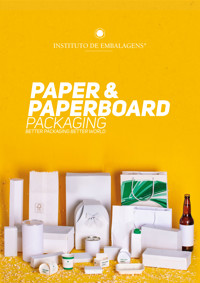
Following the path of the previous publications of the Better Packaging Better World collection, we aim, with this new book, to shed light on paper and paperboard packaging, covering the entire chain, from conception to final disposal. All of the authors dedicated their time to explain the latest developments in this area while Instituto de Embalagens' content curation team was attentive to coherently organize the information. We understand that we must raise awareness among the population and packaging developers, professionals that make choices about packaging in different companies. They must understand the possibilities and applications of paper and paperboard packaging. This book provides information that guides the decision-making process and allows to reach its full potential. We need to have an unbiased and impartial bibliography and a speech to guide the durable goods, consumer, and packaging industries. The coauthors understood the challenge and sought updated information to reach the expected result. We aimed to explain the benefits of paper and paperboard packaging and how we should work to use them in a new world. Better Paper and Paperboard Packaging Better World!
Sie lesen das E-Book in den Legimi-Apps auf:
Seitenzahl: 285
Veröffentlichungsjahr: 2021
Das E-Book (TTS) können Sie hören im Abo „Legimi Premium” in Legimi-Apps auf:
Ähnliche















INSTITUTO DE EMBALAGENS LTDA.
Calçada dos Tagetes, 23
06453-043 – Barueri - SP - Brasil
www.institutodeembalagens.com.br
Embalagens de Papel & Papelcartão - Paper & Paperboard Packaging
Barueri - São Paulo: Instituto de Embalagens, 2021.
ISBN: 978-65-990455-2-3
Projeto: FuturePack Consultoria de Embalagens
Printing: Piffer Gráfica
Book cover printed on paperboard paper: Vitasolid 350 g/m2 da Papirus
Pages printed on: Couché FIT SILK 90 g/m2 da Suzano
Certified by FSC:
Usando chapa offset Kodak Sonora XP
General Direction: Assunta Napolitano Camilo
Coordination: Simone Ruiz
Research: FuturePack Consultoria de Embalagens
Text Editing: Margaret Hayasaki
Revision: Silvia Almeida
Translation: Several
Proofreading: Fernanda Biagio
Editoração: Ana Claudia Martins - FuturePack Consultoria de Embalagens
Graphic Design: Edenilson Santos
Cover: Edenilson Santos - FuturePack Consultoria de Embalagens
Photos: Edenilson Santos e Artine Yaroussalian (cover)
International Data for Cataloging Publication (CIP) (Brazilian Book Chamber, Brazil)
Paper & paperboard packaging [livro eletrônico] / [coordination Simone Ruiz]. -- 1. ed. -- Barueri, SP : Instituto de Embalagens, 2021.ePub
Vários autores.ISBN 978-65-990455-4-7
1. Embalagens - Indústria - Inovações tecnológicas 2. Embalagens de papel - Indústria I. Ruiz, Simone. II. Título: Paper & paperboard packaging.
21-69272CDD-338.476684
Índices para catálogo sistemático:
1. Embalagens de papelcartão : Indústrias : Economia 338.476684
Maria Alice Ferreira - Bibliotecária - CRB-8/7964
Circulation 2500 copies
Year 2021
Execution: Instituto de Embalagens, resguardado por direitos autorais / All rights reserved.
Views and statements contained in the text are those of their authors and do not necessarily reflect the opinion of Instituto de Embalagens.
All of the images of this publication have the purpose of illustrating the concepts presented herein, being mostly responsibility of each author or contributor
The credits of the images are found next to the Bibliographical References.
FuturePack, responsible for the graphic design of this work, made available his photographic and packaging collection to assist in the illustration and didactic of its content, made up of photos of points of sale, fairs and packaging bought in markets all over the world.
ACKNOWLEDGMENTS
As we finish one more book, we have a mixture of feelings of relief, accomplishment, and gratitude.
Each step in the construction of our history has only been possible due to the combination of so many efforts and support, from unique people and professionals.
This is a team that has always shared our purpose; sponsors who believe in our work; altruistic co-authors that share their knowledge to make the world better; supporters who spread the word.
To each of you, a big round of applause! We hope that you are recognized for the incredible value that you gave to society.
Thank you all for believing, encouraging, and valuing the dissemination of knowledge about packaging across the world.
You have been essential for the completion of a big dream and for building a better world together!
Assunta Napolitano CamiloDirectorInstituto de Embalagens
PAPER AND PAPERBOARD PACKAGING BOOK
Following the path of the previous publications of the Better Packaging. Better World collection, we aim, with this new book, to shed light on paper and paperboard packaging, covering the entire chain, from conception to final disposal. All of the authors dedicated their time to explain the latest developments in this area while Instituto de Embalagens’ content curation team was attentive to coherently organize the information.
We understand that we must raise awareness among the population and packaging developers, professionals that make choices about packaging in different companies. They must understand the possibilities and applications of paper and paperboard packaging. This book provides information that guides the decision-making process and allows to reach its full potential.
We need to have an unbiased and impartial bibliography and a speech to guide the durable goods, consumer, and packaging industries.
The coauthors understood the challenge and sought updated information to reach the expected result. We aimed to explain the benefits of paper and paperboard packaging and how we should work to use them in a new world.
Better Paper and Paperboard Packaging. Better World!
Assunta Napolitano CamiloDirectorInstituto de Embalagens
“BETTER PACKAGING BETTER WORLD” COLLECTION
“Education does not change the world. Education changes people.People transform the world”Paulo Freire, educator.
Sharing knowledge creates value in people’s lives. It is an altruistic practice that helps people not to stop learning. With this feeling, Instituto de Embalagens was founded in 2005. Its mission is to be the center of packaging knowledge in Brazil, contributing to the constant development of industry professionals.
We believe that, when professionals share knowledge about packaging in their workplace, they are collaborating with the development of better solutions so that companies remain active and competitive.
To support our studies, courses, meetings, training sessions and the packaging knowledge diffusion, we have decided to expand our didactic material by launching the bilingual book collection “Better Packaging. Better World.”
The collection has been launched in 2014 to improve the knowledge about packaging, in Brazil and abroad, offering materials that have become a reference to packaging professionals. We extended the invite to other authors beyond the Instituto de Embalagens’ professors with the goal of broadening the view and depth on many subjects. Since there we did nine books, twenty in total.
The “Better Packaging. Better World” collection not only brings technical information, trends and innovation about the sector, but also highlights the characteristics of different types of packaging, indicating new applications and possibilities, processes and equipment, always addressing sustainability in an unbiased way.
In 2020, the year when the pandemic began, we published the environmental education booklet: “Nós, as embalagens e o meio ambiente” (We, the packaging and the environment), aimed at children, and now we are delivering our 20th book, including the paper theme.
This year, we will have another delivery, because it is with attitude that we do:
Better Packaging Better World.
Assunta Napolitano Camilo
Instituto de Embalagens Director
THE INSTITUTO DE EMBALAGENS(PACKAGING INSTITUTE)
Instituto de Embalagens was founded in 2005 with the objective of being a reference center in education and research about packaging in Brazil. The institute promotes courses, events, workshops, and training sessions aiming to spread information and driving the development of the industry professionals. Today, it is a respected institution and it has reached more than 12,000 professionals through more than 90 courses and 130 events.
The journey of knowledge about packaging is long and continuous. In 2016, the institute created the Packaging on the Road project, a packaging training course designed to make technical training available to more professionals who are outside São Paulo.
Instituto de Embalagens also conducts customized projects to spread technical information in the packaging area, such as the in-company courses that have already been held in companies such as Cacau Show, Lord, Johnson & Johnson, CBA, Suzano, Nitro Química, JBS, Hersheys and others.
Instituto de Embalagens’ faculty is formed by highly qualified professionals who have a wide experience in the packaging area.
The institution also develops educational content, today available in 20 books. In 2014, Instituto de Embalagens launched the first book in English, Better Packaging Better World, which has been distributed in several countries. In 2016, it launched the bilingual collection (Portuguese-English) Better Packaging Better World, which already count with 9 books.
The recognition of Instituto de Embalagens goes beyond the borders of Brazil. Several national and foreign institutions use the books of Instituto de Embalagens as didactic material in their courses.
Instituto de Embalagens has been distinguished by several awards, such as the Embanews Prize Roberto Hiraishi Trophy in the Research category, for its Packaging books, and as the Entity of the Year, in 2016.
Other important recognitions are those of the packaging industry which have sponsored the initiatives and the sector’s associations that support them, the main packaging users, and thousands of professionals who resort to Instituto de Embalagens to learn more about packaging.
Instituto de Embalagens conducts annually workshops and the Forum of Sustainability to bring to the market innovation, packaging and cases that aim to improve the relationship of packaging with the environment, aligning our belief:
Better Packaging. Better World.
PREFACE
When I started my career in the pulp and paper industry, I received the book “O Papel” as a gift from Pirahy Papers, which no longer exists. At that time, the publication was very popular in the market because a beginner like me found in that all the basic information in the paper’s world. Technical knowledge is fundamental in the training of many professionals who are entering this segment and, certainly, this new bilingual book “Paper & Paperboard Packaging,” launched by Instituto de Embalagens, serves as a reference for the training of professionals in Brazil and internationally.
There is no literature so specific and, at the same time, so comprehensive, that explores from the basic elements of the design of paper and paperboard packaging to the theme of sustainability, which gains relevance in the market with the ESG wave, today more and more observed by all the stakeholders that work in our chain: graphic designers, printing houses, paperboard sellers and distributors, and buyers of packaging material.
As a result of the hard work of Instituto de Embalagens at international fairs and sales outlets around the world and the knowledge of industry experts, the new book on paper and paperboard packaging is a fundamental educational tool to fill technical learning gaps in the field in Brazil.
Congratulations, Instituto de Embalagens, for another great contribution to the sector.
Wish you success!
José G. Soares
Comercial Director
Klabin
SPONSORS
SPECIAL SUPPORTES
INSTITUTIONAL SUPPORT
MEDIA PARTNERS
PROJECT TEAM
ASSUNTA NAPOLITANO CAMILO
DIRECTOR FOR THIS BOOK AND THE COLLECTION BETTER PACKAGING BETTER WORLD
Mechanical engineer from São Paulo University (USP) Polytechnical School, in Brazil, with specialization in Industrial Administration from FCAV/USP and in Marketing from ESPM and Business School. Additionally, she attended other courses in Brazil and abroad and took part in internships in the United States and Germany. She has over 38 years of experience in the packaging market, with expertise in the areas of development, strategic planning, and business management at Cyklop, DixieToga, TetraPak, and Ripasa. Also, a writer and international speaker, she has covered themes such as packaging, trends and innovation, sustainability, among others. She has participated in major national and international events and fairs related to the packaging industry like InterPack, K, Emballage, Chinaplas, Canton Fair, Tokyo Pack, Envase, Anuga, Drupa, Pack Expo, Drinktec, SIAL, ISM, Ambalaj, and Andina. She has won national and international awards, including Professional of the Year in 2011 and the 2013 Embanews Brazilian Packaging Award. Currently, she is the Director of FuturePack and Instituto de Embalagens (Packaging Institute).
SIMONE RUIZ
COORDINATOR AND ORGANIZER
Bachelor’s degree in Industrial Chemistry from Oswaldo Cruz University, with a postgraduate degree in Sustainable Projects, Climate Change and Carbon Corporate Management from Paraná State University (UFPR), as well as pedagogical training in Chemistry. She worked for 24 years in the areas of Research and Development of Packaging, Quality and Innovation Management. She has worked at Nestlé, Mondelēz, and Antilhas Embalagens. Simone also took courses related to packaging in the United States and Europe. She conducted projects of leading brands in Brazil, Argentina, and Mexico. She coordinated development projects for various types of packaging. She is a coauthor of the Better Packaging. Better World. collection. Currently, Simone is Project Consultant at Instituto de Embalagens (Packaging Institute) and FuturePack.
MARGARET HAYASAKI
JOURNALIST
Journalist graduated from Júlio de Mesquita Filho São Paulo State University (UNESP-Bauru), with a post-graduate degree in Business Communication from Cásper Líbero Foundation. She has been involved in packaging journalism for 25 years. She has written for Embanews Magazine and is now the editor-in-chief of Pack Magazine and communications consultant at Instituto de Embalagens (Packaging Institute).
EDENILSON SANTOS
GRAPHIC PROJECT/PHOTO
He has a specialization in digital design at UNIFIEO (Centro Universitário FIEO) and a postgraduate degree in packaging: project management at SENAI (National Service for Industrial Learning), a pos-graduate student in Marketing, strategic management and value generation at FIA. He is currently a marketing and communication analyst at the Instituto de Embalagens.
COAUTORS MEMBERS OF INSTITUTO DE EMBALAGENS TEAM
ANTONIO ANDRADE DE PAULA
Chemical engineer from Brazil’s Industrial Engineering School (FEI), having attended packaging specialization courses in the United States and Germany. He has been working in the packaging market since 1976 at companies from different segments, such as converters (Toga, Itap, Overprint), films and special resins (AlliedSignal), equipment (FEVA) and technical consultant for flexible packaging. He is presently teacher at Instituto de Embalagens (Packaging Institute), coauthor of various book from Better Packaging. Better World Collection, and coordinator of the Flexible Packaging and Processes area.
CLAUDIO MARCONDES
Material engineer from the Federal University of São Carlos (UFSCAR). He has also post-graduation degrees in Finance Administration from FAAP, Marketing Business Administration from ESPM, Strategic Innovation Management from Unicamp, and Packaging from the Michigan State University. He has more than 28 years of experience in the areas of product and nanotechnology market development. Currently, he is a Master’s student in Materials Engineering at Unicamp and consultant in nanotechnology. He is a teacher at Instituto de Embalagens (Packaging Institute) and coordinator of the Materials area.
INVITED COAUTORS
ANDRÉ BUENO DE MARCO
Chemical Engineer, with a postgraduate degree in Marketing and an International Executive MBA, with an executive career developed in the areas of Marketing, Export, Innovation and Strategy, currently responsible for the development of New Products and Marketing, at Klabin’s Directorate of Papers.
CHRISTIAN KROES
Graphic arts technician -(SENAI - SP), post-graduated as a cellulose and paper specialist for the Federal University of Viçoa - MG; graduate in production administration. Works in the cellulose and paper sector for about 22 years and worked for 18 years in the graphic industry. He is currently a product and technical assistance manager at Papirus S/A - paper industry.
ELCIO SOUSA
Graphic technician, with a bachelor’s degree in Chemistry from the University of Guarulhos, and post-graduated in Production Management from the Federal University of Santa Catarina. He specialized in Graphic Production at the Training Center for Graphic Arts in Chemnitz, in Germany, and holds a master’s degree in Mechanical Engineering, Materials and Manufacturing Processes from the University of Campinas (Unicamp). Director of SENAI Barueri School and SENAI Theobaldo De Nigris School. Professor and consultant in several companies in the graphic arts and packaging areas; professor at the postgraduate course in Packaging Engineering at Instituto Mauá de Tecnologia and Instituto de Embalagens. He has worked in companies such as Editora Abril and Van Leer Embalagens Industriais, and is a member of ISO’s international standards committee for the graphic segment.
FERNANDO SANDRI
Chemical Engineer, with 29 years of experience in the Paper / Cardboard sector, working in several sectors of the process, from Engineering, Productive Process, Maintenance, Products, Market, Export and Marketing. Co-author of the books: Packaging: Design, Materials, Processes and Machines and Cardboard, Paper and Micro-Corrugated Packaging. Partner at IMI - Instituto de Marketing Industrial, ABTCP - Brazilian Technical Association of Pulp and Paper, and TAPPI - Technical Association of the Pulp and Paper Industry.
GEORGIA DE ALMEIDA TAVARES
Engineer, 24 years of experience in companies such as: SUZANO PAPEL E CELULOSE, AHLSTROM MUNKSJÖ, MD PAPÈIS, RIPASA and COLUMBIAN CHEMICALS. Currently Senior Researcher at Suzano.
GLAUCIA BONER DE OLIVEIRA
She is a designer graduated in Visual Communication from the Armando Álvares Penteado School (FAAP) and post-graduated in Applied Consumer Sciences from Escola Superior de Propaganda e Marketing (ESPM). Graphic design, packaging and visual communication professional with over 30 years of experience, participating in the creation and development of brands and packaging for companies of the most respected in the country. She develops editorial projects, campaigns and actions for marketing and communication, promotion and incentive.
Participates in forums, international fairs and packaging congresses and taught design courses by the Brazilian Packaging Association, the Escola Superior de Propaganda e Marketing and Instituto de Embalagens. Managing partner of Ideia Viva Strategic Intelligence and Communication.
KARINE NASCIMENTO TOZELLI
Professional Graduated in Chemical Engineering with solid experience in the Pulp and Packaging market. Currently she works at Klabin.
OSCAR MILTON VOLPINI JUNIOR
Chemical Engineer, graduated from UFPR, production papermaker at Klabin-PR, researcher and innovation on BASF’s global platform in chemicals for paper and cellulose. He is currently Sales Manager for Paper Coatings at BASF.
RAFAEL MENDES
Mechanical technician and higher technology training in Management Processes, working for 23 years in the packaging segment. 23 years at Bobst. Currently in the commercial area as commercial technical support for Brazil and South American countries.
INDEX
UNIT 1 -
INTRODUCTION TO THE UNIVERSE OF PAPER AND PAPERBOARD PACKAGING
1.1Paper and paperboard packaging market
Margaret Hayasaki
1.2Trends
Assunta Napolitano Camilo
1.3Innovation in a new world
Assunta Napolitano Camilo
1.4Packaging design
Glaucia Boner
1.5Packaging project
Simone Ruiz
UNIT 2 -
MATERIALS AND ITS PACKAGING
2.1Paper and paperboard manufacturing
Christian Kroes
2.2Paperboard Packaging and its properties
André Bueno de Marco / Karine Nascimento
2.3Paper and Its packaging
Georgia de Almeida Tavares
2.4Barriers on paper and paperboard
Oscar Volpini
2.5Carton packaging
Assunta Napolitano Camilo
2.6Special paper and premium packaging
Simone Ruiz
2.7Paper bags
Simone Ruiz
2.8Adhesives, inks, and varnishes
Antonio Andrade
UNIT 3 -
PROCESSES
3.1Colors
Elcio Sousa
3.2Prepress and printing system
Elcio Sousa
3.3Graphic finishing
Simone Ruiz
3.4Lamination, metallization and extrusion coating processes
Antonio Andrade
3.5Cutting and creasing process
Antonio Andrade
3.6Folding and gluing process
Rafael de Oliveira Mendes
3.7Cartoning machine
Antonio Andrade
3.8Paper and paperboard tests
Antonio Andrade
UNIT 4 -
PACKAGING AND SUSTAINABILITY
4.1Packaging & Sustainability
Assunta Napolitano Camilo
4.2Environmental labeling
Assunta Napolitano Camilo
4.3Environmental certifications
Fernando Sandri
4.4Life Cycle Assessment
Claudio Marcondes
4.5Circular economy
Assunta Napolitano Camilo
4.6Environmentally friendly packaging
Assunta Napolitano Camilo
Bibligraphy
Sponsors
1.1 PAPER AND PAPERBOARD PACKAGING MARKET
Margaret Hayasaki
In 2019, the total value of the paper and paperboard packaging market was estimated at US$ 115.4 billion, with more than 47.5 million tons of material processed. The new forecast, according to experts at the consultancy Smithers, points out that those figures will increase to US$ 145.9 billion and 59.3 million tons in 2024. This is equivalent to a compound annual growth rate (CAGR) of 5.8% in value and 5.3% in volume. Performance reflects an acceleration in demand over the previous five years.
PAPERBOARD PACKAGING MARKET
Source: Smithers
The environment is positive for the entire supply chain. Capitalizing on this growth will require paperboard packaging manufacturers to explore opportunities for new markets, applications, and innovations.
SUSTAINABILITY
The basic raw material for paperboard is cellulose, resulting primarily from planted forests’ wood processing and recycling of scrap paper generated during the manufacturing process. In Brazil, all national production comes from planted forests and is certified by the Forest Stewardship Council (FSC), which guarantees the responsible origin of the products.
Source: FSC (Forest Stewardship Council)
The sustainable appeal of paperboard packaging is expanding its application opportunities, especially in replacing or reducing the use of plastic packaging. Some examples include:
● Replacement of expanded polystyrene (EPS) trays and similar packaging formats in applications in the foodservice segment;
● Replacement of rigid plastic packaging for food;
● Replacement of blister-type plastic packaging and interior structures for medicines, such as pills and medical devices.
Sustainability is also impacting the development of the internal structure of paperboard packaging. Brand owners and retailers who have joined the green economy are demanding types of paperboard with a higher percentage of recycled content. Recycled paperboard will see faster growth in the next five years, according to Smithers. In addition to gains obtained from the introduction of recycled paper content, environmental pressures from brands and consumers are forcing the market to develop new environmentally friendly materials.
New materials such as edamame beans, cocoa beans, and hazelnut residues are beginning to be used in packaging development. Edamame is not a common vegetable for the western palate; however, it is a popular Asian bean often consumed as an appetizer. The edible part of the edamame grains is removed and the remains are usually disposed of. But, instead of disposing of, the remainders are recycled to produce soy packages that pack the edamame snack.
Source: Jospak
Companies like SGK Anthem, Vrijdag Premium Printing, Generous Minds, Neurensics, Kurz, and Merck have joined forces under the name ‘Packadore Collective’ to develop with less environmental impact packaging solutions. The innovative packaging of premium Loco Letter chocolate uses paperboard made of a combination of cocoa shells and FSC fibers. The premium finishing with a metallic effect is made of recycled materials.
Source: Packadore
Loco Letter. The innovative packaging of premium Loco Letter chocolate uses cardboard made of a combination of cocoa fruit shells and FSC fibers
Reducing the weight of paperboard is a simple solution to reduce costs and achieve a positive environmental effect throughout the supply chain, from production to transportation and, finally, to waste management. Downgauging needs to be balanced against the performance of the paperboard. However, improvements are being made not to compromise aesthetics, product protection, or cost.
Naturally, weight reduction is also guided by the laws of physics and there will be a point at which no further refinement will be possible, but that point has not yet been reached.
Therefore, the expectation is that this trend will continue in the short term, with some impact, of course, on the total paperboard production volumes, measured in tons. In contrast, in the current market, these lighter products can generate a slight price increase, thus retaining the market value for the industry.
Source: WPO Awards
BARRIER COATINGS
Increased awareness of food safety has spurred the development of a variety of barrier coatings for paperboard packaging for food products.
Several products are already available in the market, such as the FoodBoard technology produced by Mayr-Melnhof. This and other solutions promise a barrier to avoid cross-contamination of external packaging, printing inks, and other sources.
Source: MM-Karton
From improved curtain barrier coating techniques to the development of water-based coatings applied by converters and, more recently, the development of nanotechnology to create thinner barriers, the industry is responding to the need for barrier coatings. Most barrier materials are used in the production of paperboard packaging for frozen and chilled foods. This market has been valued at approximately US$ 420 million in 2015 and is expected to reach more than US$ 575 million in 2022.
In line with the environmental perspective, there is also a movement to develop more sustainable barrier coatings that do not contaminate cellulose during the recycling process. This is happening as new opportunities arise, for example, the replacement of expanded polystyrene (EPS) trays of food with alternatives made of paperboard.
The food industry represents the greatest expansion opportunity for paperboard packaging. However, barrier coatings can compromise their recyclability. Market demand for these paperboard packaging coatings exceeded 3 million tons in 2018, with North America and Western Europe accounting for half of the total volume.
Many paperboard manufacturers are developing specific types of material with barrier coatings to meet this growing demand. In terms of sustainability, there is a continuing trend of replacing solvent-based coatings with water-based coatings to reduce emissions of volatile organic compounds (VOCs).
At the same time, the use of biopolymers will impact the market for barrier coatings that employ fossil-based polymers, but there is still significant commercialization work to place them in the mass market.
Wax barrier coatings are giving way to hydrogenated tallow diglyceride, which is commercially available.
In general, barrier coating technologies for paperboard packaging are providing greater efficiency and savings in processes and reduction of material consumption.
Source: WPO Awards
PREMIUM SOLUTIONS
The need for brand owners to increase product shelf appeal has led to continuous changes and improvements in printing technologies among converters. More colors and a wider range of finishing materials are needed to satisfy the demands of the consumer products industry, encouraging a shift in favor of paperboard packaging, as they allow sophisticated printing and finishing.
Source: WPO Awards
The Shining Moonlight. The mooncake or lunar cake, traditionally consumed during the Mid-Autumn Festival in China, received a lantern-shaped package, which is a symbol of fertility and a brilliant life. The color red represents good fortune and happiness and the gold color means prosperity. The packaging adds value to the product, with refinement in printing, in addition to being environmentally friendly, as it is produced with recycled paper and can be reused and recycled. It is produced by SCG Packaging Public Company Limited and won the World Packaging Awards 2020 in the Luxury category
There is already a growing demand for paperboard grades for application in premium confectionery, hard alcohol, and cosmetic packaging. A fundamental requirement is to have grades that can be optimized for printing technologies used in the sophistication of packaging. This includes gravure printing system and special finishing solutions, such as embossing and holographic films.
Premium paperboard are generally produced with virgin fibers in order to further improve the performance and aesthetics of the packaging, such as brightness and tactile feel.
Recent releases of premium paperboard include:
● MetsäBoard Prime FBB
● WestRock Crescendo C1S / C2S
● BillerudKorsnäs White
● Stora Enso Performa Brilliance
Brand owners are demanding special inks and coatings, including glossy and matte printing, as well as sensory coatings. There are also solutions such as color change, reticulated and aromatic coatings. Uncoated paperboard is also gaining popularity among users who prefer a more natural look.
Source: Negative Space from Pexels
E-COMMERCE
Paperboard packaging - mainly in micro-corrugated format - is already widely used in e-commerce. The expansion of e-commerce is driving investment in more structured packaging design and better paperboard options to provide the necessary protection for increased handling in the distribution chain.
New e-commerce business models are opening up potential space for specific carton packaging designs. Among them, we can name new formats for ready-to-eat kits, especially in the United States; clubs of petfood subscriptions; trade of electronic products and particularly smartphone manufacturers.
PAPER PACKAGING
The total production of paper bags and kraft packaging will reach 20.7 million tons in 2023, growing on average 2.9% per year in the next five years. This percentage contrasts with a growth rate of just under 4% in the previous five-year period. The total market value, according to a study by Smithers, will be just over US$ 19 billion for paper mills and US$ 50.9 billion for converters.
This market, which includes all flexible paper packaging, is relatively fragmented. In 2017, there were more than 300 manufacturers of paper bags and kraft packaging worldwide, with the top 20 producers representing less than 30% of the total volume.
Source: FuturePack
In 2017, 89% of the market in volume was kraft paper or unbleached bags, with bleached products accounting for 11%. Demand for bleached papers is expected to continue to grow above the market average, gradually increasing its market share from 11.3% in 2017 to almost 12% by 2023 in terms of volume.
The growing demand for more sophisticated finishes in these packages will drive above-average growth in coated products, with their share increasing from 17% in 2017 to 20% in 2023.
THE PREMIUMIZATION OF KRAFT PACKAGING
Several leading consumer product brands have adapted their packaging formats to capitalize on the look of kraft papers, giving their products a “natural” or “earthy” feel. This is quite evident in the category of shopping bags -which can present an environmentally favorable image for a brand - and increasingly in primary packaging for dry and personal care products.
Electronic commerce also contributes to the premiumization of kraft packaging. The arrival of new, high-yield digital printing systems is helping this trend, with its ability to print high-quality images, in short runs, for customized packaging.
Source: Photo by Customerbox on Unsplash
Source: WPO Awards
Sundae premium Cuckoo. is presented in a package made of environmentally friendly materials with a soft-touch finish. Not only is the cup made of bio-coated paper, but also the paper cap and seal, making the packaging entirely compostable. The packaging is produced by Cardbox Packaging Wolfsberg GMBH, from Austria, and won the World Packaging Awards 2020 in the Food category
Source: Slatesf
Cat Person. It is a new brand that celebrates the special relationship we have with our feline friends. The customer makes a monthly subscription and receives the packaging for their kitten’s food at home. Each box turns into a playground for kittens to have fun
1.2 TRENDS
Assunta Napolitano Camilo
A trend is something that makes someone follow a certain path or act in a certain way. It is a predisposition, an inclination. It goes beyond a wave of consumption or fashion. By observing what is valued by consumers, we can outline scenarios and possibilities.
Megatrends change the way we consume and produce packaging. Therefore, understanding the megatrends is something important in the strategies to attract consumers.
Large cultural, political, and geographic movements and large global disasters represent what can change consumer megatrends. Other trends may change affected by regional or smaller movements.
Packaging, consequently, is directly affected. By observing types of packaging, we can confirm which are the main concerns of consumers and, if there is any change in progress, take the steps to follow it. Some changes in habits can directly affect packaging concepts.
Consumer megatrends have been the same for almost two decades and
include:
● Convenience;
● Sophistication (style, diversity);
● Safety (technology and quality);
● Health;
● Sustainability (ethics).
The major change that the historical pandemic of 2020 brought was the order of importance among the top five megatrends. Health has been a priority for people, however, for the consumer and packaging industries, sustainability has become vital. In sequence, the safety concern has also grown. Convenience and practicality are still very observed and, of course, we will always seek the beautiful, special, glamorous packaging among the possibilities offered to us.
We have experienced an unprecedented pandemic, which brought a whirlwind of emotions. We feel indignation, paralysis, and lack of perspective. The consumer trends that are expected to remain in the near future are directly related to the collective emotional. We have experienced fear of losing health, life, friends, family, money, status, the environment, our jobs, our homes, and the possibilities to travel and dream.
Consumers, now wearing masks, are more concerned about their health. When grocery shopping, they are aware of the expiration date of the products, seals, nutritional tables, and even if the packaging material protects the product and it is easy to sanitize.
Below you can see the trends order in most markets:
● Health;
● Sustainability (ethics);
● Safety (technology and quality);
● Convenience;
● Sophistication (style, diversity).
Obviously, each segment, region, age group, social stratum and positioning, and type of use/consumption of the product will define which trend should be best observed and met. Understanding what goes on in the consumer; subconscious at the time of the purchase decision, whether at a physical or virtual store, is extremely important when defining the concept of a type of packaging, attributes, and details that it can offer to the consumer.
Offering products that meet the ethical needs of consumers and the highest possible degree of satisfaction is a major challenge for manufacturers. There is fierce competition to balance sustainability, profitability, and consumer demands.
Providing answers today about the future, trends such as healthy, safe and sustainable foods are established, and sustainability is taking on a new dimension in the food industry.
Photo: FuturePack
Packaging with positive messages
Regarding packaging, brand owners are committed to reducing packaging, combating food waste and ensuring food safety. It is imperative to consider these pillars in packaging development.
HEALTHY QUESTION
The coronavirus crisis also caused a pandemic of stress. Millions of people have been confined at home, jobs have been lost, uncertainties about the future and the fear of getting sick have emerged — and all of that raised anxiety levels.
Amid the uncertainties brought by the new coronavirus, mental and emotional health care emerges as a necessity and this is reflected in the search for psychological care over the internet, something that has increased worldwide.
In Brazil, the Federal Council of Psychology (CFP, in its Portuguese acronym) registered, between March and April 2020, 51,747 new requests for care. During the pandemic, there have been 39,510 new registrations of professionals for online care. The Brazilian Psychiatric Association (ABP, in its Portuguese acronym) reported that in a survey conducted among its associates, in the same period, 67.8% of professionals answered that they saw new patients after the beginning of the pandemic, people who had never presented psychiatric symptoms before. As the stress levels have increased, people suffering from anxiety have been seeking balance through meditation apps. Many Brazilians have joined the trend.
The relationship between health and sustainability is related to purpose and values. These two megatrends are more present among younger groups and classes C, B and A, both genders, and in the richest regions.
Consumers; purchase habits have changed and we can observe that in the supermarkets. People have been reading the labels to know not only the expiration date but to understand if the product has certificates of origin. Clear, easy-to-understand labels highlight the product at the point of sale.
As the population is more concerned about their health and of those who they care about, labels should bring nutritional information and alert on allergic ingredients quite clearly, as well as inform about barriers that ensure the preservation of nutrients. Transparency can come together to support the purchase decision, as it shows the product and reassures consumers. We have also noticed the search for healthy products and that at the same time are indulgent. May they have an excellent presentation.
England was the first country to guide companies to use red, yellow, and green to identify the main ingredients of the products. Red identifies the ingredients that require caution because they are above what is recommended. Yellow distinguishes ingredients that deserve attention because they are on the edge. Green points to the ingredients at appropriate levels. This labeling has become famous and recognized as the of packaging.
Photo: FuturePack
This labeling became known as the packaging lighthouse




