


Erhalten Sie Zugang zu diesem und mehr als 300000 Büchern ab EUR 5,99 monatlich.
- Herausgeber: Instituto de Embalagens LTDA
- Kategorie: Geisteswissenschaft
- Serie: Better Packaging Better World
- Sprache: Englisch
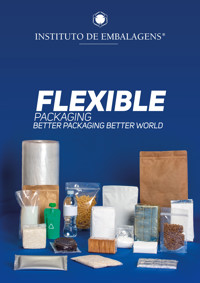
Flexible packaging: the fastest growing packaging market in the world is the subject of the new book by Instituto de Embalagens In Brazil, the performance of the flexible packaging industry also continues to expand. In 2021, gross sales reached BRL 43.6 billion, according to a Maxiquim study carried out for ABIEF (Brazilian Association of the Flexible Plastic Packaging Industry). The result represents growth of more than 55% in relation to the previous year. The food industry remains the main market for flexible plastic packaging in Brazil (42% share) and globally (75.5%) in 2021. The fastest-growing end-use markets include meat, fish and poultry, and frozen foods, with an average annual growth rate of 5.9% globally. Flexibility, as the name implies, is one of the great differentials of flexible packaging that is present in various categories of consumer products, addressing convenience, practicality, safety, and environmental, economic, and social sustainability. The growth of stand-up pouches around the world and in Brazil is notable, adding lids and accessories, and gaining market share in new segments. "Innovation brings an avenue of opportunities to develop better flexible packaging for a better world", highlights Assunta Napolitano Camilo, director of the Packaging Institute. Sustainability - The Smithers study also points out that revisiting various stages of the packaging journey, from design to recycling, will be important for the circularity of plastic and will also be one of the subjects addressed in the new bilingual book on Flexible Packaging by the Instituto de Embalagens. In Western Europe, there is increasing pressure to replace difficult-to-recycle plastics in many important applications. This is already driving the evolution of flexible paper packaging and, in particular, structures that can provide adequate barrier protection. Alternatives under development within plastics include: • Use of more recycled plastic content without compromising material performance; • Improve the recyclability of current packaging options with more mono-material constructions; • Identification of suitable markets for flexible biopolymers. An emerging trend in the post-Covid world has been the use of refill packs for household and personal care products. This has unlocked new potential for flexible plastic refill packaging that minimizes size and weight in transit. The new bilingual book on Flexible Packaging brings updated content, covering, market information, trends, design, innovations, processes, equipment, and sustainability.
Sie lesen das E-Book in den Legimi-Apps auf:
Seitenzahl: 441
Veröffentlichungsjahr: 2022
Das E-Book (TTS) können Sie hören im Abo „Legimi Premium” in Legimi-Apps auf:
Ähnliche

















INSTITUTO DE EMBALAGENS LTDA.
Calçada dos Tagetes, 23
06453-043 – Barueri - SP – Brasil
www.institutodeembalagens.com.br
Flexible Packaging
Barueri - São Paulo: Instituto de Embalagens, 2022.
ISBN: 978-65--990455-9-2
Project: FuturePack Consultoria de Embalagens
General Direction: Assunta Napolitano Camilo
Coordination: Simone Ruiz
Research: FuturePack Consultoria de Embalagens
Text Editing: Margaret Hayasaki
Revision: Letícia Carniello
Translation: Several
Proofreading: Fernanda Biagio and others.
Publishing and Graphic Design: Edenilson Santos and Ana Claudia Martins
Cover: Edenilson Santos - FuturePack Consultoria de Embalagens
Photos: Edenilson Santos and Edicarlos Barretos (Cover)
International Data for Cataloging Publication
(CIP) (Brazilian Book Chamber, Brazil)
Flexible packaging : better packaging better world / [organization Assunta Camilo]. -- 2. ed. --Barueri : Instituto de Embalagens, 2022.
Ed. english.
Several translators.
ISBN 978-65-990455-9-2
1. Food - Packaging 2. Packaging - Environmental aspects 3. Packaging - Design 4. Packaging - Recycling 5. Packaging - Industry - Technological innovations 6. Plastics in packaging 7. Sustainability I. Camilo, Assunta. II.
Title: Flexible packaging : better packaging better world.
22-124838 CDD-668.4
Indexes for systematic catalog:1. Plastic packaging : Technology 668.4
Eliete Marques da Silva - Bibliotecária - CRB-8/9380
Year: 2022
Execution: Instituto de Embalagens. All rights reserved.
Views and statements contained in the text are those of their authors and do not necessarily reflect the opinion of Instituto de Embalagens.
All of the images of this publication have the purpose of illustrating the concepts presented here in, being mostly responsibility of each author or contributor.
The credits of the images are found next to the Bibliographic References.
FuturePack, responsible for the graphic design of this work, made available his photographic and packaging collection to assist in the illustration and didactic of its content, made up of photos of points of sale, fairs and packaging bought in markets all over the world.
GRATEFULLNESS
At the end of another great and important project, the feeling that emerges is that of the most sincere gratitude. A genuine feeling of recognition for the dedication of each one in favor of collective work, with a desire to improve the world through knowledge.
A wonderful feeling of mission accomplished and of a great debt to those who believed in the project and made possible the publication of this book that is a valuable contribution to the flexible packaging sector.
I believe that we have to acknowledge every hand extended to us throughout our journey. Our careers and professional paths are built on peers and examples. We depend on other professionals who accompany us and guide us along our trajectory. These people are very important and deserve our gratitude.
Success is winning recognition and having dedicated professionals by your side, who inspire us and display their talents without expecting any retribution.
The union of the team - sponsors, supporters, authors, reviewers, designers and publisher - is the reason for the success of this book.
To all, my gratitude!
Better Packaging Better World
Assunta Napolitano Camilo
Instituto de Embalagens, Director
FLEXIBLE PACKAGING
As the population urbanizes, the need for packaging increases. Among all, flexible packaging is the fastest growing in the world. Demand for flexible packaging (paper, aluminum, and plastics) will reach 39.54 million tons by 2026, according to a report by Smithers.
The growth is mainly driven by the food segment, the main market for the application of flexible packaging. Also, to meet the demand for packaging refill of personal hygiene and cleaning products.
The expansion of flexible packaging is justified, since it is the option that offers an adequate barrier, besides being lighter, more efficient, and competitive. To compensate for these advantages, the flexible packaging industry, starting from its raw materials, needs to review its positions in relation to the issue of the Circular Economy.
Flexible packaging is less recycled because of all the difficulties from domestic sorting to the competitiveness of recycling.
The intention of this publication is to update the information about raw materials, processes, equipment. It is to present innovations, new opportunities, and some possible ways to improve this delicate relationship between flexible packaging and the environment.
The challenge is enormous, but so is science. It is important to clarify the situation and the awareness of the whole society, so that, together, we can address the solutions, which will be several. It is mandatory to start working for an effective circular economy for this type of packaging, that saves so much food, in a way that we can have:
Better Flexible Packaging, Better World.
Assunta Napolitano Camilo
Instituto de Embalagens, Director
“BETTER PACKAGING BETTER WORLD” COLLECTION
“There is only transformation from learning and knowledge”
Aristotle
Sharing knowledge creates value in people’s lives. It is an altruistic practice that helps people not to stop learning. With this feeling, Instituto de Embalagens was founded in 2005. Its mission is to be the center of packaging knowledge in Brazil, contributing to the constant development of industry professionals.
We believe that, when professionals share knowledge about packaging in their workplace, they are collaborating with the development of better solutions so that companies remain active and competitive.
To support our studies, courses, meetings, training sessions and the packaging knowledge diffusion, we have decided to expand our didactic material by launching the bilingual book collection “Better Packaging. Better World.”
The collection has been launched in 2014 to improve the knowledge about packaging, in Brazil and abroad, offering materials that have become a reference to packaging professionals. We extended the invite to other authors beyond the Instituto de Embalagens’ professors with the goal of broadening the view and depth on many subjects. Since there we did eleven books, twenty-two in total.
The “Better Packaging. Better World” collection not only brings technical information, trends and innovation about the sector, but also highlights the characteristics of different types of packaging, indicating new applications and possibilities, processes and equipment, always addressing sustainability in an unbiased way.
In 2020, the year when the pandemic began, we republished the environmental education booklet: “Nós, as embalagens e o meio ambiente” (We, the packaging and the environment), aimed at children, and now we are delivering our 22th book.
So, with one more delivery, concrete attitude, we do:
Better Packaging Better World.
Assunta Napolitano Camilo
Instituto de Embalagens, Director
THE INSTITUTO DE EMBALAGENS (PACKAGING INSTITUTE)
The Instituto de Embalagens is an institution dedicated to Packaging Teaching and Research, founded in 2005, and has become a center that generates content on packaging, in an impartial and unbiased way.
Its major contribution has been building bridges between the various players in the packaging universe, from basic industries to children, who are now so concerned about the planet. From manufacturers of raw materials, equipment, converters or transformers, brand owners, to recycling cooperatives. Always bringing those seeking information closer to those who have it.
During this period, IE had the support of more than 180 companies, 50 institutional supporters, national and international media, hundreds of executives, who were with us as speakers and as many other teachers, as instructors. Many have shared knowledge through articles and chapters for our 22 books and for the environmental education booklet.
The legacy built was always impartial and unbiased, which brought, in the various awards and recognition, most importantly, the trust of more than 15,000 professionals who sought us for retraining. With the participation of almost all packaging companies and brand owners in Brazil and, for some time now, also from abroad.
Among its initiatives, IE promotes courses and workshops on packaging, international trade fair panels and the Fórum Embalagem & Sustentabilidade / Packaging & Sustainability Forum, recognized as the most important space for serious discussion on the topic.
Since 2020, IE has also responded digitally, with courses transmitted from a distance, seeking to stay close and interactive through live broadcasts and hybrid moments (face-to-face and virtual). In addition to the production of e-books and, this year of audio book, to involve more professionals in the universe of packaging.
We want to continue as the center of knowledge on packaging in Brazil and for this, we have invited more and more professionals to be with us, in these very relevant discussions and initiatives, with the same purpose of doing what is right, what is true, so we will have more and more:
Better Packaging Better World.
Assunta Napolitano Camilo
Instituto de Embalagens, Director
PREFACE
Without packaging, without products
The pandemic simply proved what we already knew: packaging is extremely important to ensure the supply of products, especially essential items such as food, beverages, medicines, as well as hygiene and cleaning supplies. Specifically flexible plastic packaging increasingly fulfilled this role, replacing, with numerous advantages, some traditional packaging.
Lightness, flexibility of formats and volumes, potential for recycling, and use of recycled raw materials are just some of the attributes that have been recognized by brand owners and the final consumer. This is only possible thanks to the technological advances of the sector that are aligned with the new demands of consumption.
If we are expected to be 10 billion people in the world by 2050, flexible packaging will certainly have significant participation in this environment, ensuring speed and efficiency in delivering items that are essential to life and contributing to a more circular world. Today, packaging is already born sustainable because it is designed based on the circular economy model. With this, we have another fundamental point: the value of recycled material from post-consumer packaging. We have at our disposal valuable raw material that will give life to new packaging or other items that will be reinserted into the consumer chain.
The sustainability of packaging is consolidated as one of the main trends and will continue to guide consumer choices. The concept of sustainability has evolved and left the purely environmental area to embrace two other causes: governance and social. In other words, we are talking about ESG (environmental, social and governance).
Next to ESG expectations, the pandemic has put on the spotlight consumers used to online shopping and who expect the industry to deliver their purchases in packages compatible with the sales channel and product protection needs. Even though it is a B2B sector, the flexible packaging industry needs to learn to listen, deal, and communicate with this new, conscious, and much more demanding consumer. Then again, the flexibility of our packaging is an important differential.
Therefore, it is up to the industries to adapt to current demands and expectations and foresee future needs in order to remain competitive. And to do so, they need to continually update themselves and track the steps of markets and consumers, as well as incorporate technological and management innovation into their business.
May this book bring just that: knowledge and inspiration. Enjoy!
Rogério Mani
President of ABIEF (Brazilian Association of the Flexible Plastic Packaging Industry)
PROJECT TEAM
ASSUNTA NAPOLITANO CAMILO
DIRECTOR OF THIS BOOK AND THE COLLECTION BETTER PACKAGING BETTER WORLD
Mechanical engineer from the São Paulo University (USP) Polytechnic School, in Brazil, with specialization in Industrial Administration from FCAV/USP and in Marketing from ESPM and Business School. Additionally, she attended other courses in the packaging area in Brazil and abroad and in addition to internships in Germany and in the United States. She has over 40 years of experience in the packaging market, with expertise in the areas of development, strategic planning, and business management, in companies such as Cyklop, DixieToga, TetraPak, and Ripasa. Also, as a writer and international speaker, she has covered themes such as packaging, trends and innovation, sustainability, among others. She has participated in major national and international events and fairs such as InterPack, K, Emballage, Chinaplas, Canton Fair, Tokyo Pack, Envase, Anuga, Drupa, Pack Expo, Drinktec, SIAL, ISM, Ambalaj, and Andina. She won several national and international awards, including Professional of the Year, in 2011, and the 2013 Embanews Brazilian Packaging Award. Currently, she is the Director of FuturePack and of the Instituto de Embalagens (Packaging Institute).
SIMONE RUIZ
COORDINATOR
Bachelor of Science in Industrial Chemistry from Faculdades Oswaldo Cruz, with a postgraduate degree in Sustainable Projects and Corporate Carbon Management by UFPR, MBA in Strategic Planning and Management by Uninter, and with several courses related to packaging in the USA and Europe. She has been working for almost 30 years in packaging projects, innovation, sustainability, research and development. She worked for companies such as Nestlé, Mondelēz and Antilhas Embalagens, in the areas of Packaging Research and Development, Quality, Project Management and Innovation. She led projects of leading brands in Brazil, Argentina and Mexico; coordinated projects of different types of packaging and worked in the development of innovation projects for graphic finishing for paper and paperboard packaging. She is co-author of books of the “Better packaging. Better world” Collection. For the last five years, she has been coordinating packaging courses, workshops and technical books and teaching classes, at the Instituto de Embalagens. Currently, Simone is a senior consultant at Instituto de Embalagens (Packaging Institute) and FuturePack.
MARGARET HAYASAKI
JOURNALIST
Bachelor of Arts in Journalism from the Universidade Estadual Paulista Júlio de Mesquita Filho (UNESP-Bauru), with a post-graduate degree in Business Communications from the Fundação Cásper Líbero. She has been involved in journalism related to packaging for 25 years. She worked at the editorial staff of the Embanews Magazine and is now the editor-in-chief of Pack Magazine and a communications consultant at Instituto de Embalagens.
EDENILSON SANTOS
GRAPHIC PROJECT& PHOTO
He has a specialization in Digital Design from Centro Universitário FIEO (UNIFIEO) and a postgraduate degree in Packaging: Project Management from the Serviço Nacional da Indústria (SENAI). He has also postgraduate degrees in in Marketing, Strategic Management and Value Generation from FIA. He is currently a Marketing and Communications analyst at Instituto de Embalagens.
COAUTORS MEMBERS OF INSTITUTO DE EMBALAGENS
Claudio Marcondes
Bachelor of Science in Material Engineering from the Federal University of São Carlos (UFSCAR). He has post-graduate degrees in Finance Administration from FAAP, Marketing Business Administration from ESPM, Strategic Innovation Management from Unicamp, and Packaging from the Michigan State University. He has more than 30 years of experience in the areas of product and nanotechnology market development. Currently, he is a Master’s student in Materials Engineering at Unicamp and consultant in nanotechnology. He is a teacher at Instituto de Embalagens and coordinator of the Materials area.
OLINDA MIRANDA
Bachelor in Chemical Engineer from the Faculdade de Engenharia Industrial (FEI), postgraduate in Marketing and Communication, MBA - Alcan Inc and several specialization courses in the technical areas, corporate leadership, people management, finance, and foreign trade. 35 years of experience in flexible packaging, working in the areas of Product Development, Quality, Technical Assistance, Commercial, Marketing, Industrial and Supplies. She worked at companies such as Toga-Alcan-Bemis (now Amcor), Inapel, Empax, CBS Elos. She provided consultancy to the companies Embalagens Diadema, Cepalgo, Jaraguá, Finepack. She currently is a Consultant in the Technical, Commercial and Management areas and a Teacher of Instituto de Embalagens.
INVITED COAUTORS
Adriano Godoi
Graduated in Graphic Designer from Senai - Theobaldo de Nigris and with courses in sales and neo linguistics. Specialist in prepress, graphic arts and flexible packaging, he has been working in the flexographic market since 1995, in addition to being a technical consultant in this segment.
André Garcia Fagundes Badaró
Chemical Engineer with master degree in Business Strategy (stricto sensu), sponsored by Vanderbilt University (USA) also holds a degree in Finance and Marketing from FIA and Fundação Dom Cabral. 12 years of experience in the Petrochemical industry, having worked in the Financial, Marketing and Commercial areas and now leads the Innovation and Market Development team for Paper Packaging at Klabin, within the Packaging Business.
Célia Freitas
Bachelor of Science in Physics from PUC-SP and postgraduate in Marketing Management from FAAP. She has been working for more than 30 years in the Terphane group. She started her career at Rhodia Têxtil at the Polymer Technology Center. She actively participated in the development of flexible packaging in Brazil, such as stand-up pouch packaging for tomato sauces and cleaning products. She is currently Market Development Manager at Terphane and works in the Brazilian and Export markets.
Elcio de Sousa
Graphic arts technician, with a bachelor’s degree in Chemistry from the University of Guarulhos, and post-graduate in Production Management from the Federal University of Santa Catarina. He specialized in Graphic Production at the Training Center for Graphic Arts in Chemnitz, in Germany, and holds a master’s degree in Mechanical Engineering, Materials and Manufacturing Processes from the University of Campinas (Unicamp). Director of SENAI Barueri School and SENAI Theobaldo De Nigris School. Teacher and consultant for several companies in the graphic arts and packaging areas; professor at the postgraduate course in Packaging Engineering at Mauá Technology Institute. He has worked in companies such as Editora Abril and Van Leer Embalagens Industriais and is a member of ISO’s international standards committee for the graphic segment.
Felipe Toledo
CEO of Camargo Embalagens, graduated in Business Administration, with a postgraduate degree in Business Management and Financial Management from FGV-RJ and OHIO University, and specialization in Family Business Management from IESE-Barcelona. Member of the Board of ABRE – Brazilian Packaging Association and of Dscoop Americas.
Fernando Ferreira
Graduated in Environmental Technology from Mário Amato SENAI Technology Institute and Chemical Engineering from São Bernardo College, post-graduated in Business Management at ESPM, specializing in Environmental Engineering from the University of Campinas (Unicamp). He has 23 years of experience in the chemical industry, in the areas of Quality and Regulatory, R&D and Innovation Processes, mainly in nitrocellulose and polyurethane resins for printing in liquid systems for flexible packaging for the nail polishers, leather, automotive refinishing, and wood segments.
Glaucia Boner de Oliveira
Packaging professional for over 30 years, she is a designer graduated in Visual Communication from the Armando Álvares Penteado School (FAAP) and post-graduated in Applied Consumer Sciences from Escola Superior de Propaganda e Marketing (ESPM). She also took part in the Fundamentals of Packaging course at Michigan State University School of Packaging. She conducts courses, workshops, and lectures on Packaging Design and visits fairs and international events of the sector, such as Interpak (Germany), Metpack Expo (Germany), Fispal, and Brasilpack. She worked in design agencies in Brazil, developing packaging projects for Nestlé, Tintas Coral, Cervejaria Schincariol, Grupo Pão de Açúcar, Cervejaria Antarctica, Sucos Del Valle, Kimberly Clark, Polenghi, among others. Winner of the Best Packaging Award, in the packaging for small and medium enterprises category, granted by the Brazilian Packaging Association (ABRE).
She is the managing partner of Ideia Viva Inteligência Estratégica e Comunicação, and teacher at Instituto de Embalagens.
Guilherme David Benetti
Graduated in materials engineering, specialized in metallurgy, from UFSCar since 2010. He has been working in the aluminum industry for 12 years, where he has worked in primary aluminum manufacturing processes, casting, heat treatments, extrusion of aluminum profiles and, since 2015, working in the area of lamination process for aluminum sheets and plates. Process engineer at CBA.
Leandro Vieira
Engineer specialized in bagging systems, graduated in Mechanical Engineering from UNIMEP - Universidade Metodista de Piracicaba, in 2016. With 14 years of experience in the bagging market, participating in projects to develop new technologies together with Haver & Boecker Germany as well as nationalization processes of equipment to meet the needs of the local market.
Specialist Engineer responsible for determining which technologies will be used in the projects, as well as analyzing the cost-benefit of each project with the client; Layout engineering team coordinator; Head in the implementation of 3D project integration using the Autodesk package between headquarters in Germany and Brazil; Head of a global research and development project involving group companies in Germany, China, India, USA and Brazil.
Levi Vieira de Sousa
Bachelor of Science in Chemistry from Universidade Camilo Castelo Branco, with a Lato Sensu postgraduate degree in Chemistry from Faculdade Oswaldo Cruz and an MBA in Strategic People Management from Faculdade de São Caetano do Sul. Currently working as Coordinator of the technical support team for Nitro’s global customers, in the Chemical Specialties division.
Lucas de Lima Accorsi
Bachelor of Science in Chemical Engineering from UFRGS. Currently working in the aluminum industry for 9 years, have already worked in the areas of electrostatic painting and anodizing of aluminum profiles, coating of aluminum sheets for application in flexible packaging, production in the area of cutting and packaging of aluminum sheets and in the lamination process and aluminum foil cutting. Currently is Process coordinator at CBA.
Mariana Vendiciano Vasconcelos Moura
Graduated in Production Engineering, with a postgraduate degree in Quality and Productivity. 14 years of experience in the Quality area in the industrial sector, of which 12 years are in the aluminum metallurgical industry. Currently is Production engineer at CBA.
Matheus Henrique Seabra Rosa
Bachelor of Science in Chemical Engineer from USP with a specialization in plastics and rubber processing from UFRJ and a postgraduate degree in leadership and innovation from FGV. Holds the current role of R&D manager at Valgroup in the industrial films segment and has eight years of experience in research and development of shrink and stretch films.
RALPH PEREIRA VIEIRA
Bachelor of Arts in Advertising and Marketing from UNIP and technician in precision mechanics from Senai Suiço-Brasileiro. Over 20 years of experience in the technical and commercial areas of packaging equipment, business development and custom packaging solutions for the food, chemical, cosmetics and consumer goods industries. Worked for the companies Mahle, Newell Rubbermaid, Andorinha and Masipack. Has working at Multivac for the last 8 years and currently is its commercial manager.
INDEX
unit | 1
INTRODUCTION TO THE FLEXIBLE PACKAGING UNIVERSE
1.1 Flexible Packaging Market 30
Margaret Hayasaki
1.2 Consumption Trends that Impact in Packaging 36
Assunta Napolitano Camilo
1.3 Innovation 82
Assunta Napolitano Camilo
1.4 Packaging Design 110
Glaucia Boner
1.5 Flexible Packaging Project 116
Simone Ruiz
1.6 Business Model: Digital Printing 125
Felipe Toledo
unit | 2
MATERIALS AND INPUTS
2.1 Polymers 132
Claudio Marcondes
2.2 Polyethylene (Pe): Properties and Applications 133
Claudio Marcondes
2.3 Polypropylene (Pp): Properties and Applications 138
Claudio Marcondes
2.4 Polyester: Properties and Applications 142
Célia Freitas
2.5 Other Polymers 147
Claudio Marcondes
2.6 Masterbatches 156
Claudio Marcondes
2.7 Papers and its Packaging 163
André Badaró
2.8 Aluminum: Properties and Applications 171
Guilherme Benetti
Lucas Accorsi
Mariana Moura
2.9 Inks Resins 179
Fernando Ferreira
Levi Vieira de Sousa
2.10 Inks, Varnishes and Adhesives 183
Olinda Miranda
unit | 3
PACKAGING AND ACCESSORIES
3.1 Films for Flexible Packaging 190
Claudio Marcondes
3.2 Structures and Applications of Flexible Packaging 201
Simone Ruiz
3.3 Types of Flexible Packaging 229
Simone Ruiz
3.4 Labels 249
Simone Ruiz
3.5 Closures, Seals and Accessories 265
Simone Ruiz
3.6 Shrink and Stretch Films274
Matheus Rosa
3.7 Transport Packaging 279
Simone Ruiz
unit | 4
PROCESSES
4.1 Colors 288
Elcio Sousa
4.2 Prepress Systems 295
Elcio Sousa
4.3 Details of the flexographic prepress system 301
Adriano Godoi
4.4 Printing Processes 305
Elcio Sousa
4.4.1 Gravure
4.4.2 Offset
4.4.3 Digital
4.4.4 Flexography
4.5 Color Standard Control 316
Simone Ruiz
4.6 Metalization and Lamination Processes 321
Claudio Marcondes
4.7 Flexible Packaging Tests 347
Simone Ruiz
unit | 5
MACHINES
5.1 Packaging Systems For Bulk Material 365
Leandro Vieira
5.2 Filling Machines for Liquid and Pasty Products 375
Olinda Miranda
5.3 Atmosphere (Map) Packaging Machines 381
Ralph Vieira
5.4 Labelers 384
P.E. Labellers
5.5 Marking and Coding Machines 389
Olinda Miranda
unit | 6
PACKAGING AND SUSTAINABILITY
6.1 Flexible Packaging & Sustainability 397
Assunta Napolitano Camilo
6.2 Life Cycle Assessment 402
Claudio Marcondes
6.3 Environmental Certifications, Simbology and Labeling 409
Assunta Napolitano Camilo
6.4 Circular Economy 429
Assunta Napolitano Camilo
6.5 Environmental Friendly Packaging and Projects 445
Assunta Napolitano Camilo
Bibliographic references and credits 463
SponsorS 484
Flexible Packaging Market
Margaret Hayasaki
The global demand for flexible packaging (paper, aluminum foil and plastics) must grow at a compound annual growth rate (CAGR) of 3,2% totalizing a global value of Us$ 294,1 billion in 2026. In the same period, total flexible packaging volume will increase from 32,33 million tons to 39,54 million tons.
The Asia-Pacific region will be responsible for the biggest growth, with a CAGR of 5,4% in the next five years (2021-2026). The decrease will be slowest at Occident Europe, followed by Latin and North America. The Occident Europe market is widely saturated and the expectation is to reach an average annual growth of 1,9%. Besides that, the region also suffers an increasing pressure to substitute hard recycling plastic in many important applications. The European Union Single Use Plastics Directive, that forbids single use plastics, including oxybiodegradable plastics, came into force in July of 2021.
Other plastic restrictions are at Europe sight for the next decade. In some applications, the substitution for a new generation of paper flexible packaging is turning specially attracting in function of brands perception and to be in conformity with the legislation. This is already stimulating paper packaging evolution, and in particular, structures that can offer proper barrier protection.
Photo: Miska Sage on Unsplash
The green-alternatives in development inside plastics include:
Using more recycled plastic without committing to the materials performance;Improving the recyclability of the current packaging with monomaterial structures;Identifying proper markets to flexible biopolymers.The Brazilian flexible plastic packaging industry registered gross revenue of R$ 43,6 billion in 2021, a variation of more than 55% comparing to 2020. The good performance of the sector is attributed mostly to the increase of the prices in all the productive channel, from the raw material to transformed products, according to a Maxiquim study done to ABIEF (Brazilian Association of Flexible Plastic Packaging Industry).
Brazilian flexible exportation grew in volume, with a commercial balance of over 51 thousand tons, and also in value, contributing exportations participation at the total of plastic transformed was 18% in 2021 relating to 2020, while importations grew 15% in the same period.
Final Use Applications
Photo: Laura James on Pexels
Food segment still the biggest application of final use to flexible packaging, being responsible for 75,5% of total volume of use in 2021. Covid-19 pandemic had a large impact in diverse areas, including economy, productivity and, at demand in final use sectors; and suppliers and brand owner priorities.
Flexible packaging pack more than 50% of food on Europe, using only 17% of all consume of packaging material, according to Flexible Packaging Europe (FPE). The market-share, by application, stablished leadership of the following categories: pet food, biggest shelf-life food, coffee, and snacks. Flexibles growth at coffee segment is attributed to home consumption.
Photo: Pulsitos.com on Unsplash
Food industry is also the main market to flexible plastic packaging in Brazil. In 2021, the segment responded for 896 thousand tons of 2,1 million tons produced, equivalent to an increase of 8,4% comparing to 2020. Packed food sales are stronger than other goods in economic downturn periods. Covid-19 pandemic changed consumer behavior that began to make meals at home – and will continue to support this change. Fast expansion final use markets include meat, fish, poultry and frozen food, with global annual average growth rate of 5,9%.
An emergent tendency at post-Covid world is the use of refill type of packaging to self-care and domestic products. This gave rise to a new potential to refill sort of plastic packaging that reduce environment impact generating less rubbish and utilizing less material in its production.
Material Use
Paper represents only 8% of global flexible packaging consumption in 2021. Polymers should sample a growth of over 90% of total slice of this market, including plastic material used at multilayer formats.
Polyethylene (PE) is the most used substrate in volume, representing 41% of flexible packaging global market; followed by bioriented polypropylene (BOPP) and bioriented polyester (BOPET).
BOPP will be the substrate with fastest growth in 2021-2026, with a previewed CAGR of more than 5%. In contrast, the demand for regenerated cellulose fiber (RCF) and metallic foil material will increase only marginally in this period.
In Brazil, low density polyethylene (LDPE) and low density linear polyethylene (LDLPE) were more used in 2021 by flexible packaging industry, totalizing 1,589 million tons, growth of 0,9% comparing to previous year. Polypropylene (PP) consumption grew 7,1% achieving 347 thousand tons. Of the total resins used by flexible plastic packaging industry, raw materials respond for 2,035 million tons (growth of 0,5%) and 104 thousand tons were of recycled materials (decrease of 0,2%).
Flexible packaging structure – specially of multilayers laminated – was identified as one of the hardest formats to effectively recycle. In response, suppliers and material converters are introducing more monomaterial packaging designed to recuperation in flow of existent residues. This is pushing R&D to deliver performance characteristics before possible only with multilayer structure, such as best high speed cure time, support food cooking (retortable) and pouches for use in microwave ovens. In parallel, industry is researching how to use post-consumption recycled resin in plastic packaging, in particular, the wide use of raw-material coming from chemistry recycled processes first generation.
In retail, there is also interest in paper flexible packaging concept, including barrier and design new concepts. This way, brands demonstrate their green credentials.
Photo: earlybird coffee on Unsplash
Seven strategies for a sustainable future
Sustainability in design, use and end of life time process, will define more and more the flexible packaging market in the next five years, according to a Smithers study. This will create more challenges to all the value chain until 2026.
With the emerge of circular economy model is necessary to put aside traditional considerations of weight reduction to other strategies. They are grouped in seven key-areas of business and technology:
Design for recycle: including optimization of barrier performance and coatings, change to new paper types of high performance and fast development of functional polymers monomaterial packaging;Overcome of technical and regulatory challenged to increase number of recycled content volume used in films and other plastic, with focus in low density polyethylene (LDPE), high density polyethylene (HDPE) and terephthalate polyethylene (PET);Innovating to attend emerging need of reusable flexible formats, in traditional retail and in the growing electronic sales segment;Best management of waste by marking and collecting, to increase supply of high quality post-consumption resin (PCR), including proper grades for food contact application;Sustainable supply of raw-material, including PCR, but also biological based versions of existent plastic, substitution of polymers substrate for paper when possible and wider use of recycled cellulose in paper packaging;Use, when possible, of biodegradable flexible plastic packaging. Despite the extension of oxydegradable material prohibition to outside European Union, there is still room for PHA (polyhydroxyalkanoates) resins or alternatives for traditional plastics to determined product groups;Weight reduction – flexible packaging will continue to demand thinner substrates, and life cycle analyses (LCA) can highlight CO2 economy that also provide at transportation comparing to heavier hard packaging.Research and development at flexible packaging area are molded by various actors –packaging convertors, brand owners, governments and, finally, consumers. 2025 is a key date. Many brands and fast consumption assets companies compromised to make some or all their packaging totally recyclable until this date. This represents a challenge, because doesn’t exist a universal accepted definition to “recyclable”. The onus is on the flexible packaging industry to highlight its advantages and communicate how it can contribute to circular economy objectives.
Besides that, regional sensibility is necessary. On all continents, countries, and even, bigger federal states, govern different waste management infrastructures and consumer preferences. This adds an additional layer of complexity to effective movements implementation to mitigate the threat of pollution from flexible formats.
Recognizing that, Smithers study considers effective the design art state and life end management in mature and in development economies. To this last, companies may play an important role to mold the evolution of flexible packaging aiming to maximize wider use of innovative formats.
Consumption Trends that
Impact IN Packaging
Assunta Napolitano Camilo
The world has changed and it will never be the same. We will have to relearn and review many concepts to calibrate our business and personal planning.
The long, deep, and devastating pandemic has forced us to discover many absolute and sometimes inconvenient truths. It continues to take victims in rich and poor countries. The tragedy experienced by the most vulnerable, especially in Africa, has alarmed everyone.
The war between Russia and Ukraine, undue, and untimely came to make matters worse.
A lot of hidden stuff came up. Questions about life, values, and ways of seeing opportunities and challenges. Solidarity and uncertainty about the immediate or long-term future have generated tension.
Never so many have cared about who is different. People began to value initiatives that consider gender equity, diversity, and respect for sexual and religious orientation.
Rainbow: edition of Doritos, of PepsiCo, claiming respect, love, freedom, and pride
The collection of street animals and the commotion caused by the mistreatment and death of animals have grown. As a result, shops and supermarket spaces and products for small animals grow in number and size. German supermarkets dedicate four aisles to cat-only products, which are increasingly sophisticated.
Snacks and premium foods, food supplement bar, vitamins, functional biscuit and wet wipes for pets
Companies like Natura and Unilever are concerned with supporting products that respect animals
and demonstrate this by supporting treaties such as UEBT and Cruelty Free. It is the “clean beauty”
movement value products without chemicals, animal testing, and save water and use packaging
with less environmental impact
Sustainability is a central issue for life continue
Sustainability is an issue that has gained widespread debate. The world’s interest in climate change can be measured through the audience numbers of the 26th United Nations Climate Change Conference (COP-26), the UN’s main climate debate summit held in Glasgow: 25,000 delegates from 200 countries, in addition to protests of more than 100,000 people.
On the occasion, some key determinations were made, such as reducing the use of fossil fuels. It has been established a global carbon dioxide emissions reduction by 45% from 2010 until 2030, as well as the CO2 neutrality by 2050 when emissions will be reduced to the maximum and the remainder will be fully offset by reforestation and technologies for carbon capture.
Nestlé, in Brazil, works on the “re” project with several developments, such
as the re-newable that shows that KitKat is produced in a factory with 100% from electric
power renewable power. There are other initiatives within the same program
that promises to rethink several possibilities
Supermarkets offer bags produced using PET bottles
Startups and large companies have become more “equal,” and all seek sustainability in a complete way: environmental, economic, and social. Companies that invest in the ESG platform, which considers environmental, social and governance issues, flourish for their businesses to survive.
This environment generates changes in consumer behavior and new concerns determine the major consumer trends.
If it were possible to define a general average scale, for sure, sustainability would stand out at the top, considering that it is unfolded into environmental, social, and economic aspects. Undeniably, most of the world’s population has lost disposable income. Hunger grows in various parts of the world, generating tension, conflict, and concern of all, from politicians to ordinary citizens.
Consumers began to pay more attention to what they buy and to be interested in the values of companies, in addition to their products. The socially responsible and effective actions of companies to minimize the environmental impact generated have become mandatory.
Hershey’s featured in its chocolate products that cocoa comes from Rainforest Alliance
certified farms and that it supports Bonsucro’s sugarcane farmers
In the points of sale, many products bring some kind of claim (attribute) on the packaging or use packaging with less material (lighter), or with only one material (mono-material), or with post-consumer recycled material or infinitely recycled materials. It has become clear that many brands are confused about such information, perhaps in the eagerness to “seem” environmentally better, to the detriment of “being” environmentally correct. There are clear actions of “greenwashing” and some dubious, bordering on misinformation.
Some highlights:
Flexible plastic packaging as a refill of liquid products, highlighting the use of less material;Personal hygiene products offered in solid format, including shampoos, deodorants, and soaps
in Europe, similar to the proposal of the company Positiv.a, from Brazil
Packaging of cardboard and paper with coating used for dry pasta, rice,
chewing gum, oral and personal hygiene products
Concentrated liquid or powder products for household cleaning and personal
products, reducing the need to carry water and packaging volumes
Liquid products in refill packaging mean lower expenditure
and fit a lower average ticket
HK chose a simple laminated packaging, with a transparent window on the back, to pack 360 grams
of lactose-free meatballs. It is suitable for two people and the preparation is very practical, as they are ready
after two minutes in the microwave. A very practical and economical option
Rigid plastic packaging with post-consumer content (PCR HDPE) for shampoos and PCR PET bottles for ready beverages. Those are clear consumer education campaigns, showing through icons on the labels of the packaging that they are produced using other bottles and that the consumer should recycle them again;Recently, the juice brand Innocent began to participate in the German reverse logistics system called PFAND FLASCHE (bottle that returns). In this system, the consumer pays a deposit when the bottle is purchased. The deposit is refunded when the bottle is returned. Their participation has been celebrated with great prominence on the front of the package, showing the importance that this has for the enlightened population. It was nonsense to offer a healthy product that was not environmentally correct;Aluminum cans highlight the fact that they are infinitely recyclable;Increased use of glass packaging, for example, for medicines such as capsules or tablets, packed in amber glass, without blisters or cartridges. As well as for cosmetic products and beverages (even milk); andUse of compostable packaging (cellulosic or polymeric base) for coffee capsules
(which only makes sense for places where there is a composting system)
We are happy to observe the growth of SHARE’s proposal in Germany. In 2017, the company offered only water, soap, and cereal bars, with the proposal that each product sold would be converted into a product given to someone in a situation of vulnerability. Now there are a dozen toiletries, food, and even office supplies: all with compatible packaging and maintaining the same purpose.
We understand that people are more supportive and want to help. When they find options like these, they engage and contribute. Very good!
Fin Carré with its hit Way to go! The packaging brings certifications related to origin, fair trade,
and support to various causes. The “Way to go” packaging uses the back to tell the story of the brand,
showing the ways to obtain delicious chocolate that values all the workers involved
Health and wellness as a trend
Another concern in this new world’s scenario is related to health. This is clear in several examples, with the increasing adoption of voluntary or non-voluntary statements of clear nutritional tables.
In Europe, the application of NUTRI-SCORE on the front of the packaging has gained strength even in private label packaging of European supermarket chains. Nutri-Score is an assessment of the nutritional profile of pre-packaged food placed on the front of the package. The Nutri-Score nutrition labeling scheme was developed by the French public health authority in 2017 but has now been used throughout Europe.
The Brazilian Health Regulatory Agency (ANVISA) has approved a new standard for the nutritional labeling of packaged foods. The measure adopts frontal nutritional labeling and changes the information table, providing more clarity and readability of nutritional information present on the food label and aiming to help the consumer make more conscious choices.
The novelty establishes changes in the nutritional information table and nutritional claims, as well as innovates by adopting frontal nutritional labeling, which will be a set of information symbols on the front of the product. The idea is to clarify to the consumer, in a clear and simple way, the high content of nutrients that have relevance to health.
To this end, a magnifying glass design was developed to identify the high content of three nutrients: added sugar, saturated fat, and sodium. The symbol should be applied to the front of the product, at the top, because it is an area easily captured by our gaze. Check out the templates:
a) Models with a high content of a nutrient
b) Models with a high content of two nutrients
c) Models with a high content of three nutrients
Source: ANVISA
The nutritional information table will undergo significant changes. The first is that the table now has only black letters and white background. The objective is to rule out the possibility of using contrasts that affects the readability of information.
Another change will be in the information provided. It will be mandatory to identify total and additional sugars, to report the energy and nutritional value per 100 g or 100 ml to help the comparison of products, and the number of portions per pack.
In addition, the table should be, as a rule, close to the list of ingredients and on a continuous surface, and no breaks are accepted.
Source: ANVISA
Learn more at: https://www.gov.br/anvisa/pt-br/assuntos/noticias-anvisa/2020/aprovada-norma-sobre-rotulagem-nutricional
We also live the revolution of plant-based products replacing animal protein such as red meats and dairy products, and now also replacing fish, and seafood, among others. Until recently, there was a small area of supermarkets dedicated to these products. Today, in Europe, we already have entirely dedicated and more accessible aisles.
Almost all major brands are currently offering vegan and/or vegetarian proposals, such as Lindt which already has a “vegan” line, and McDonald’s, with items that are animal meat-free.
Magda, from Poland, launched a 100% plant-based yogurt that
can be kept for up to 6 hours out of the fridge
Brazil: Brands like Not Co, Fugini, and Jasmine
launched plant-based products
Yum’mix vegan burger mix ready to prepare in two separate flow-packs
Fazenda do Futuro with its plant-based tuna
Plant-based fruit and protein bars
Plant-based soups and food supplements
Happy Veggies bars: beetroot, carrot, zucchini, and spinach to carry in the bag
In addition to vegans, who are concerned about food having less impact on the environment, there are other
alternatives, such as SENS: Insect-based protein bars, which would be another alternative to animal protein
The platform of healthy products free of allergens, sugars, fats, and gluten. The “free-from” items continue to grow and a good example in Brazil is Belive
at the time of rest, the demand is for health, thus, the consumption
of fruit and nut-based snacks grows
In Brazil, the healthy snacks category grows with the same appeals. NutriGood is
part of a range of healthy products from the Raia-Drogasil drugstore chain
Increasingly enhanced and healthy bars are presented in packaging
with a special design that clearly highlights the health benefits
Culinary products also emphasize health
Photo: CLUTCH
Products emerge to improve brain cognitive ability such as CLUTCH, from Denmark, among so many others. Many “shots” (single doses) based on roots, such as ginger and other herbs, have various functions to improve immunity, relax, and improve mood – those are functional drinks. In this way, products known as “superfood” were born with the proposal of being complete meals, usually with high levels of proteins with added nutrients and vitamins. We highlight Superfood, from Germany, with solid and liquid versions, and RATION, from Denmark, which positions itself as fuel for the body and mind.
Functional drinks and jams
Functional food proposals
Nestlé’s Health Science division offers the public 50+ products for nutrient replacement, such as Calcium,
Vitamin D, among others, a line of specific functional products such as this Nutritive Soup
Santa Helena bets on including in its traditional Paçoquita, whey protein to serve consumers who practice sports and want more protein in addition to peanut energy!
Energy Sweeties, from Germany, brings a new proposal for a functional product: energy gummy
candies. Developed with ingredients such as caffeine, taurine and vitamin B incorporated into
the candies that promise a real “explosion” of energy. The “explosion” is represented by the
fluorescent green illustration highlighted by the black background
Offered caffeine-based products, such as Upsters, which uses a pun in the name to tell those two candies
correspond to a cup of coffee. They grown up because persons want be wakeup more
In the opposite direction, many products, such as EUPHORIA, have brought cannabis-based products as a proposal for relaxation.
Germany: One 47 offers mixing sticks for the preparation of a caffeine-free herbal drink
with cactus extract, ginger, ginkgo biloba, among other herbs
Germany: Cannabis-based products are approved in a limited percentage in several
products and quickly became popular. The promise is a product that offers relaxation and
balances functions in times of so much stress
Safe packagings
With more access to information, consumers became more demanding and increasingly concerned about food safety. In this scenario Packaging become a important role. The issue of packaging safety has been addressed, for example, with the prohibition of portfolio-type packaging (gluing/folding closure); even sugar cubes are now perfectly packed and sealed (a flow-pack type).
In Brazil, we noticed the migration from portfolio-type packaging to flow pack (with improved sealing) happening with cookies.
Candies are also participating in this movement that started with the most traditional of all,
Sonho de Valsa. Today, popular candies use this safer option. The same is happening to sweets
such as “paçocas” and regional treats, on a smaller scale
Some products, such as Mentos, which are still using portfolio packaging can be sold in a flow-pack.
Other brands (Prince of Peace and Needs) prefer the safety of using the flow-pack option on each
candy (rather than the twist closure)
For pharmaceutical products, an option is a stand-up-pouches with zippers,
or a flow pack sealing, like the one used by the tabs of Phillips
Hisamitsu invests in packaging with a barrier reinforced with aluminum to ensure
the shelf life of its adhesive bandages with medicine. They still reinforce it with four strong welds
In Germany, many brands, such as EDEKA, the famous network of upper-middle-class supermarkets, reinforce the guarantee of their meat products and show this to consumers through seals recognized as the guarantee of origin and the possibility of tracking with QR Codes. In addition, they use the QS Prüfsystem, a quality assurance system that maintains strict manufacturing and marketing criteria throughout the value chain, from the farmer to the counter. Learn more at www.qs-pruefzeichen.de
The pandemic has made us more concerned about the issue of hygiene and food safety. We have
already found in Brazil an option to purchase pre-washed and individually packed fruit
Cotton swabs, set of chopsticks, and spoon packed
individually: safety in sight!
With more time for pleasures, the question of convenience
With an intense daily routine, what people want most is to find time, either to rest with the family or to devote themselves to some pleasurable activity. This demand reflects the growth of the convenience trend. Consumers want products that make household chores easier, whether cleaning or preparing meals.
Product processing and packaging production technologies have been developed. Individual freezing of fish fillets, steaks and chicken allows them to be taken from the freezer straight to preparation, according to the needs of consumers.
Queens, from Vietnam, in addition to freezing, individually packs its Panga fish fillets. The size of 300g
is a suitable portion. The vertical flow-pack features a red stripe that highlights the benefit. The design,
with the photographic production of the dish assembled, is well printed in a beautiful setting, with a lot
of “sea blue.” The elongated shape makes it appear larger than the other products
Proposals for time-saving packaging in food preparation are useful and very welcome. Rice packs
with individual portions can be cooked in the packaging itself. Vacuum-packed instant polenta greatly
facilitates its preparation and allows variation of seasonings to meet the consumer’s taste. Yoki already
offers polenta ready to be served as a side dish or to be fried
Ingredients ready to be incorporated into the dishes: dried tomatoes, dried chopped and selected mushrooms,
and ready mix for preparation of sauces and ice cream make life easier in the kitchen
Selected and pre-washed vegetables add health, safety,
and flavor to meals with practicality
Convenience and innovation are present in the three proposals: Paderri with ready milk jam crepe
Atilatte with mozzarella sticks, individually packaged and sold in multi-packs providing savings; and
Prestígio chocolate with smaller bars in flow packs replacing paperboard box
Food products to prepare dishes from the freezer to the oven
and stove make the routine simpler in the kitchen
Frozen fruits and pulps for the preparation of juices and desserts
Recently, some meat companies started offering hamburgers and other ready fillets in individual
packaging. The solution is cheaper, generates less waste, promotes energy savings, and requires
less freezer space when you have one
We already have available in Brazil, offers of different frozen breads,
without go to a bakery to have fresh bread for breakfast
High barrier, retort, and vacuum technologies allow us to have pre-prepared products such
as meat sauce, pancake syrup, cooked hominy, and tuna ready to go into various dishes
Flexible packaging of ready-made dishes: pasta with sauce, rice ready in two minutes, baked
and seasoned beans, and ready soup ensure lunch and dinner in a matter of minutes
BRF launched the Sadia Livre & Lev line to transform the experience of preparing quick meals, healthy
and simple at the same time. It reminds us of the option of some casual restaurants where the
customer chooses how to “assembly” the dish, choosing the protein, carbohydrate and side dish.
A different “Wrap” every day
Packs with individual servings to take to the office, school, or gym: chocolate powder for the preparation
of the drink; cakes and porridge for quick preparation. Lots of flavors, energy, and health
Smaller servings for smaller families or tasting and lower
disbursement also mean convenience
Pitted and seasoned olives, small salamis, and oatmeal snacks to be served with cheese
are practical options for the happy hour at any time of the day
Packaging with small portions prevents product waste and the opening of a large package and consequent
waste of the remainder of the product by contamination or loss of organoleptic properties
Still little used in Brazil, stand-up pouches for juices, yogurts, smoothies, fruit, and vegetable purees are
very common and convenient to carry everywhere, whether for babies, children, or adults
Stick packs have been increasingly used in various products, including sugar, sweeteners, soluble coffee, honey, and more recently medicines replacing the need to dose and consume. Seasonings, such as the Korean onion extract, and Retap flavoring powder to stimulate a higher consumption of water are also a highlight
Brazilian Drinks launched the Easy Drinks line in colorful stand-up pouches, with strong
attractive colors and outstanding illustrations of fruits. The line has several fruit, sugar, and flavoring-based
liquid mixtures to prepare alcoholic beverages, facilitating “our everyday drink!”
We already have in Brazil the possibility to enjoy our lychees even out of the fruit season with
packaging that maintains the nutritional properties for a long period. The lychees are
lyophilized and packed in a stand-up pouch with a reinforced structure with an aluminum
layer. The design highlights the explosion of promised flavor
Is there a better convenience than to be able to prepare an authentic French fondue in minutes?
This is Riches Monts’ proposal with its product in a stand-up pouch in an exclusive format with beautiful design
and illustration that goes back to an ancient era. They point out on the back that the packaging is ecological since
they are eliminating the previously used cardboard cartridge. They also make it easy to explain “how to use”;
with understandable illustrations regardless of whether consumers know the language
Paulig’s concentrated liquid drink Tazza pack, from Germany, has only 14 cl or 33 g
to be prepared in a cup for hot or cold chocolate. You only have to add water
There are some packages with two independently sealed compartments, such as Knorr packaging that offers a mixture
for chicken seasoning on one side and, on the other, the bag to put the chicken to roast. Bumble Bee delivers its tuna
salad with pepper in one compartment and in the other, the spoon, allowing the consumer to eat wherever they are.
Yogo Crunch also uses two-compartment packaging: one for yogurt powder that must be mixed with water and one for
a grain mixture like granola. Very simple and easy preparation
Neugebauer invested in a new design for its Napolitano line of chocolate bars. They created illustrations that
are beautiful watercolors representing scenes of the families of Italian immigrants from southern Brazil. Recalling memories
and approaching their reliable consumers and engaging the younger ones using children and the elderly in the images




