


Erhalten Sie Zugang zu diesem und mehr als 300000 Büchern ab EUR 5,99 monatlich.
- Herausgeber: Instituto de Embalagens LTDA
- Kategorie: Sachliteratur, Reportagen, Biografien
- Serie: Better Packaging Better World
- Sprache: Englisch
At a time when society started to naturally value the circular economy, many people began to rethink the use of glass packaging. This is an interesting return to concepts once lost in the process of popularization of ready-to-drink products. Because it is inert (it does not change the flavor, smell, or color of the packaged product, thus contributing to consumers' health), glass packaging has gained prominence along with the wellness trend. In addition, flint containers also have the benefit of being transparent while the amber ones provide a barrier to light. In the perfumery segment, more than smell, the success of new fragrances depends on the design of the glass bottle. Some say that it is necessary to design the bottle with emotional ingredients, which encourage the consumer to see in the product an object of desire, before trying the fragrance. Glass packaging also delivers glamour and refinement to famous brands of spirits, premium mineral waters, and food. All types of packaging have their functions and applications and, of course, characteristics that differentiate them and make them more suitable for different moments of consumption. Glass packaging has a UNIQUE condition of reducing environmental impact: IT IS RETURNABLE. Glass has been present in packaging since the beginning. It is one of the oldest packaging materials in our history and, from the start, the fact that it is returnable, even before being reusable, makes it environmentally friendly. That is especially true when we can restrict the geographic area of supply. The reverse logistics process must be economically and environmentally sustainable, not to mention the social aspect. This solution democratizes consumption among people with lower available income because products are more competitive and, therefore, consumers can afford them. In addition, the sector continues to invest in the use of recycled content and to conduct studies on reducing the weight of bottles. Better Glass Packaging. Better World!
Sie lesen das E-Book in den Legimi-Apps auf:
Seitenzahl: 347
Veröffentlichungsjahr: 2022
Das E-Book (TTS) können Sie hören im Abo „Legimi Premium” in Legimi-Apps auf:
Ähnliche

















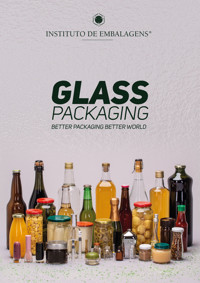
GLASS
PACKAGING
BETTER PACKAGING BETTER WORLD
1st EditionBarueri – Brazil2021
ACKNOWLEDGMENTS
We have got to our 21st book! The Glass Packaging book that was ideated 11 years ago. The difficulties and obstacles only strengthened our willingness to complete it.
Now it is time to thank those who believed and worked to build this very special publication. Thank you, project team and authors, for the dedication and courage to produce such a complete work, the result of much research and content development. I hope you feel accomplished.
We thank those who supported the initiative: Hugo, Edson, Renato, Quineo, Eliane, Federico, Francisco, Maurício, Eric, and Silvio. I hope such an investment is broadly recognized.
I also thank those who have been with us throughout this journey: Daniel, Isabella, Márcia, Ricardo, Fernando, Robson, Adrielli, Lucie, and Thiago. May we create even more projects together.
To the associations and media supporters who are always with us, communicating our initiatives, our special affection.
We also need to thank those who doubted. Know that you have challenged and encouraged us to move on.
As Malala Yousafzai said: “The content of a book holds the power of education and it is with this power that we can shape our future.”
Our purpose is strong and noble, and the universe conspires so we can, day by day, share knowledge for
Better Packaging. Better World.
Assunta Napolitano Camilo
Instituto de Embalagens’s Director
GLASS PACKAGING
At a time when society started to naturally value the circular economy, many people began to rethink the use of glass packaging. This is an interesting return to concepts once lost in the process of popularization of ready-to-drink products.
Because it is inert (it does not change the flavor, smell, or color of the packaged product, thus contributing to consumers’ health), glass packaging has gained prominence along with the wellness trend. In addition, flint containers also have the benefit of being transparent while the amber ones provide a barrier to light.
In the perfumery segment, more than smell, the success of new fragrances depends on the design of the glass bottle. Some say that it is necessary to design the bottle with emotional ingredients, which encourage the consumer to see in the product an object of desire, before trying the fragrance.
Glass packaging also delivers glamour and refinement to famous brands of spirits, premium mineral waters, and food.
All types of packaging have their functions and applications and, of course, characteristics that differentiate them and make them more suitable for different moments of consumption. Glass packaging has a UNIQUE condition of reducing environmental impact: IT IS RETURNABLE.
Glass has been present in packaging since the beginning. It is one of the oldest packaging materials in our history and, from the start, the fact that it is returnable, even before being reusable, makes it environmentally friendly. That is especially true when we can restrict the geographic area of supply.
The reverse logistics process must be economically and environmentally sustainable, not to mention the social aspect. This solution democratizes consumption among people with lower available income because products are more competitive and, therefore, consumers can afford them.
In addition, the sector continues to invest in the use of recycled content and to conduct studies on reducing the weight of bottles.
Better Glass Packaging. Better World!
Assunta Napolitano Camilo
Instituto de Embalagens’s Director
“BETTER PACKAGING BETTER WORLD” COLLECTION
“A book, a pen, a child and a teacher can change the world “Malala Yousafzai – Nobel Peace Prize 2014
Sharing knowledge creates value in people’s lives. It is an altruistic practice that helps people not to stop learning. With this feeling, Instituto de Embalagens was founded in 2005. Its mission is to be the center of packaging knowledge in Brazil, contributing to the constant development of industry professionals.
We believe that, when professionals share knowledge about packaging in their workplace, they are collaborating with the development of better solutions so that companies remain active and competitive.
To support our studies, courses, meetings, training sessions and the packaging knowledge diffusion, we have decided to expand our didactic material by launching the bilingual book collection “Better Packaging. Better World.”
The collection has been launched in 2014 to improve the knowledge about packaging, in Brazil and abroad, offering materials that have become a reference to packaging professionals. We extended the invite to other authors beyond the Instituto de Embalagens’ professors with the goal of broadening the view and depth on many subjects. Since there we did ten books, twenty-one in total.
The “Better Packaging. Better World” collection not only brings technical information, trends and innovation about the sector, but also highlights the characteristics of different types of packaging, indicating new applications and possibilities, processes and equipment, always addressing sustainability in an unbiased way.
In 2020, the year when the pandemic began, we republished the environmental education booklet: “Nós, as embalagens e o meio ambiente” (We, the packaging and the environment), aimed at children, and now we are delivering our 21th book, including the Glass Packaging theme.
So, with one more delivery, concrete attitude, we do:
Better Packaging. Better World.
Assunta Napolitano Camilo
Instituto de Embalagens’s Director
THE INSTITUTO DE EMBALAGENS (PACKAGING INSTITUTE)
Instituto de Embalagens was founded in 2005 with the objective of being a reference center in education and research about packaging in Brazil. The institute promotes courses, events, workshops, and training sessions aiming to spread information and driving the development of the industry professionals. Today, it is a respected institution and it has reached more than 12,000 professionals through more than 95 courses and 132 workshops.
The journey of knowledge about packaging is long and continuous. In 2016, the institute created the Packaging on the Road project, a packaging training course designed to make technical training available to professionals from Brazil.
Instituto de Embalagens also conducts customized projects to spread technical information in the packaging area, such as the in-company courses that have already been held in several companies.
Instituto de Embalagens’ faculty is formed by highly qualified professionals who have a wide experience in the packaging area.
The institution also develops educational content, today available in 21 books. In 2014, Instituto de Embalagens launched the first book in English, Better Packaging Better World, which has been distributed in several countries. In 2016, it launched the bilingual collection (Portuguese-English) Better Packaging Better World, which already count with ten books.
The recognition of Instituto de Embalagens goes beyond the borders of Brazil. Several national and foreign institutions use the books of Instituto de Embalagens as didactic material in their courses.
Instituto de Embalagens has been distinguished by several awards, such as the Embanews Prize Roberto Hiraishi Trophy in the Research category, for its Packaging books, and as the Entity of the Year, in 2016.
Other important recognitions are those of the packaging industry which have sponsored the initiatives and the sector’s associations that support them, the main packaging users, and thousands of professionals who resort to Instituto de Embalagens to learn more about packaging.
Instituto de Embalagens conducts annually workshops and the Forum of Sustainability to bring to the market innovation, packaging and cases that aim to improve the relationship of packaging with the environment, aligning our belief:
Better Packaging. Better World.
Assunta Napolitano Camilo
Instituto de Embalagens’s Director
PREFACE
Glass is used to package our food, preserving freshness, and our beverages, valuing flavor, thus providing a unique consumption experience. You might have wondered why soft drinks taste better when they come in a glass bottle. The answer lies in the attributes of the material that keeps the carbon dioxide for longer. In addition, the packaging is inert and does not react chemically with the drinks.
Glass also awakens the senses. It is beautiful, iconic, and creates emotional connections with consumers. Through its attributes such as touch, image, and sound, it makes the act of purchasing food, drinks, and perfumes a true sensory experience. A quality perfume is valued with a uniquely designed bottle while a table is much more beautiful when decorated with glass cups in diverse shapes and for the specific drink for which they are designed.
Glass, which has the sovereign power of infinite use and transformation of our lives and society since its discovery, about 7,000 years ago, is the protagonist of the new book of the bilingual collection Better Packaging Better World, ideated by Instituto de Embalagens. The book covers the journey of glass packaging through the ages in Brazil, showing its evolution since the establishment of the first industries in the country, their differentials, and innovations. In five parts, the publication presents complete and current content about glass packaging.
It is worth mentioning that the great contribution of the book is the innovative vision of presenting a millenary product that has never stopped evolving, incorporating technologies that bring greater access to the consumers, with the characteristics of being returnable and infinitely recyclable, without loss of its purity, so important to build a sustainable world.
Glass packaging offers a fertile field of opportunities to innovate and grow. I hope that the information of the new bilingual book Glass Packaging contributes to the development of better packaging for a better world.
Hugo Ladeira, president of Owens-Illinois (O-I) for Americas South
SPONSORS
SUPPORT
SUPPORTING INSTITUTIONS
MEDIA PARTNERS
PROJECT TEAM
ASSUNTA NAPOLITANO CAMILO
DIRECTOR OF THIS BOOK AND THE COLLECTION BETTER PACKAGING BETTER WORLD
Mechanical engineer from São Paulo University (USP) Polytechnical School, in Brazil, with specialization in Industrial Administration from FCAV/USP and in Marketing from ESPM and Business School. Additionally, she attended other courses in Brazil and abroad and took part in internships in the United States and Germany. She has over 39 years of experience in the packaging market, with expertise in the areas of development, strategic planning, and business management, having worked with Cyklop, DixieToga, TetraPak, and Ripasa. Also, a writer and international speaker, she has covered themes such as packaging, trends and innovation, sustainability, among others. She has participated in major national and international events and fairs like InterPack, K, Emballage, Chinaplas, Canton Fair, Tokyo Pack, Envase, Anuga, Drupa, Pack Expo, Drinktec, SIAL, ISM, Ambalaj, and Andina. She has won national and international awards, including Professional of the Year in 2011 and the 2013 Embanews Brazilian Packaging Award. Currently, she is the Director of FuturePack and Instituto de Embalagens (Packaging Institute).
SIMONE RUIZ
COORDINATOR
Bachelor’s degree in Industrial Chemistry from Oswaldo Cruz University, with a postgraduate degree in Sustainable Projects, Climate Change, and Carbon Corporate Management from Paraná State University (UFPR). She also holds an MBA in Strategic Planning and Management.
She worked for 24 years in the areas of Research and Development of Packaging, Quality, and Innovation Management. She has worked at Nestlé, Mondelēz, and Antilhas Embalagens. Simone also took courses related to packaging in the United States and Europe. She conducted projects of leading brands in Brazil, Argentina, and Mexico. She coordinated development projects for various types of packaging. She is a co-author of the Better Packaging Better World collection. Currently, Simone is a senior consultant at Instituto de Embalagens (Packaging Institute) and FuturePack.
MARGARET HAYASAKI
JOURNALIST
Journalist graduated from Júlio de Mesquita Filho São Paulo State University (UNESP-Bauru), with a post-graduate degree in Business Communications from Cásper Líbero Foundation. She has been involved in packaging journalism for 25 years. She has written for Embanews Magazine and is now the editor-in-chief of Pack Magazine and a communications consultant at Instituto de Embalagens (Packaging Institute).
EDENILSON SANTOS
GRAPHIC PROJECT& PHOTO
He has a specialization in Digital Design from Centro Universitário FIEO (UNIFIEO) and a postgraduate degree in Packaging: Project Management from the National Service for Industrial Learning (SENAI). He is a postgraduate student in Marketing, Strategic Management and Value Generation at FIA. He is currently a Marketing and Communications analyst at Instituto de Embalagens.
COAUTORS MEMBERS OF INSTITUTO DE EMBALAGENS TEAM
ANTONIO ANDRADE DE PAULA
Chemical engineer from Brazil’s Industrial Engineering School (FEI), having attended packaging specialization courses in the United States and Germany. He has been working in the packaging market since 1976 at companies from different segments, such as converters (Toga, Itap, Overprint), producers of films and special resins (AlliedSignal) and equipment (FEVA), and he is a technical consultant for flexible packaging. He is presently an instructor at Instituto de Embalagens (Packaging Institute), co-author of various books part of the Better Packaging Better World collection, and coordinator of the Flexible Packaging and Processes area.
CLAUDIO MARCONDES
Material engineer from the Federal University of São Carlos (UFSCAR). He has also post-graduation degrees in Finance Administration from FAAP, Marketing Business Administration from ESPM, Strategic Innovation Management from Unicamp, and Packaging from the Michigan State University. He has more than 28 years of experience in the areas of product and nanotechnology market development. Currently, he is a Master’s student in Materials Engineering at Unicamp and consultant in nanotechnology. He is a teacher at Instituto de Embalagens (Packaging Institute) and coordinator of the Materials area.
BETTER
PACKAGING
BETTER
WORLD
INVITED COAUTORS
BIANCA VOLOSHYN NOGUEIRA
Graduated in Nutrition and Marketing from the University of São Paulo (USP). Post-graduated in Development of New Food Products from SENAI Horácio Augusto da Silveira Technology Faculty. Marketing professional with experience in marketing strategy and management, market intelligence, and category and product marketing. Category specialist for food and non-alcoholic beverages at Owens-Illinois.
ELCIO DE SOUSA
Graphic technician, with a bachelor’s degree in Chemistry from the University of Guarulhos, and post-graduated in Production Management from the Federal University of Santa Catarina. He specialized in Graphic Production at the Training Center for Graphic Arts in Chemnitz, in Germany, and holds a master’s degree in Mechanical Engineering, Materials and Manufacturing Processes from the University of Campinas (Unicamp). Director of SENAI Barueri School and SENAI Theobaldo De Nigris School. Professor and consultant in several companies in the graphic arts and packaging areas; professor at the postgraduate course in Packaging Engineering at Instituto Mauá de Tecnologia and Instituto de Embalagens. He has worked in companies such as Editora Abril and Van Leer Embalagens Industriais and is a member of ISO’s international standards committee for the graphic segment.
ELIANE ROMERO
Graduated in Letters from the Faculty of Philosophy, Sciences and Letters of Fundação Santo André (FSA), and post-graduated in Business Management from the University of São Caetano do Sul (USCS), she has been working for 26 years in the packaging sector. Commercial Director at Silgan White Cap do Brasil Ltda., a leading company in the twist-off metal caps segment.
EMILIO CARLOS CURY
Engineer graduated from Centro Universitário FEI, with specialization in industrial administration from Escola Politécnica of the University of São Paulo and MBA in business management from Fundação Getúlio Vargas. He has over 40 years of experience in the areas of process engineering, quality, packaging, finished products and production within the Wheaton Group. He started his career as an intern and, for more than 15 years, has been working as an industrial decoration manager.
ERIC FRESNEL
Graduated from a business school, he completed a course in business administration from an American university with a specialization in industrial marketing. He joined Sleever International in 1980, where he successively held positions in sales, marketing management, and general management. Currently the president of Sleever International.
GLAUCIA BONER DE OLIVEIRA
Designer graduated in Visual Communication from Armando Álvares Penteado School (FAAP) and post-graduated in Applied Consumer Sciences from Escola Superior de Propaganda e Marketing (ESPM). Graphic design, packaging, and visual communication professional with over 30 years of experience, participating in the creation and development of brands and packaging for the most respected companies in the country. She develops editorial projects, campaigns, and actions for marketing and communications, promotion, and incentive.
She participates in forums, international fairs, and packaging congresses and taught design courses at Escola Superior de Propaganda e Marketing (ESPM) and Instituto de Embalagens. Managing partner of Ideia Viva Strategic Intelligence and Communication.
GUSTAVO DE SOUSA
Metallurgical engineer graduated from the Federal University of Ouro Preto. Professional with 11 years of experience in the steel industry in hot and cold rolling of flat steel and five years of experience in the metal packaging sector. He is currently the Industrial Manager of Silgan White Cap do Brasil.
JOSÉ DONIZETTI DA SILVA
Degree in Mechanical Technician from ETEP Faculdades and Degree in Business and Business Administration from Universidade Do Vale do Paraíba (UNIVAP), MBA in Project Management from Fundação Getúlio Vargas (FGV). Marketing professional with experience in product development and innovations in the packaging and home appliances market, product engineering, process and production for all food and beverage categories at Owens-Illinois.
LUCIANO DA SILVA
Graduated in Quality Technology from the University Braz Cubas (UBC). MBA in Business Management from Fundação Getúlio Vargas (FGV). Quality and manufacturing professional with experience in quality management systems, strategy and management, customer support, and negotiation. Quality Manager for South America at Owens-Illinois.
RICARDO ANTÔNIO CRISTOFALO LOPES
He is an engineer graduated from Universidade Santa Cecília (UNISANTA) and has a postgraduate degree and an MBA in business management. He has over 25 years of experience in the production, development, and marketing areas of the Wheaton Group. He started his career as an intern, moving to the production engineering area, later to product development as an engineer, and for more than eight years he has worked as a product development manager. In the last six years, he has also taken the role of marketing and innovation manager for the Wheaton group.
SILVIO ROTTA
Electrical engineer graduated in 1993 from Escola de Engenharia Mauá, with a postgraduate degree in Industrial Administration from Fundação Carlos Alberto Vanzolini (USP) in 1998, and Commercial Management from Alcoa University, in the United States, in 2006. Took charge of the Sales area of Krones in Brazil in 2007, after leaving Alcoa’s commercial management. He is currently a director at Krones.
INDEX
UNIT 1 -
INTRODUCTION TO THE GLASS PACKAGING UNIVERSE
1.1 The History of the Glass Packaging in Brazil
Margaret Hayasaki
1.2 Global Glass Packaging Market
Margaret Hayasaki
1.3 Consumer Trends
Assunta Napolitano Camilo
1.4 Innovation
Assunta Napolitano Camilo
1.5 Packaging Design
Glaucia Boner
1.6 Glass Packaging Project
Simone Ruiz
UNIT 2 -
GLASS PACKAGING MANUFACTURING
2.1 Introduction
Simone Ruiz
2.2 Glass Packaging Manufacturing
José Donizetti da Silva
2.3 Glass Packaging Tests
Luciano da Silva
UNIT 3 -
PACKAGING & ACCESSORIES
3.1 Beverage Bottles
Bianca Voloshyn Nogueira
3.2 Perfume Bottles
Ricardo Cristofalo
3.3 Glass Packaging for Foods
Bianca Voloshyn Nogueira
3.4 Injectables Pharmaceuticals Packaging
SCHOTT Pharmaceutical Systems
3.5 Medicine Bottles
Ricardo Cristofalo
3.6 Labels
Simone Ruiz
3.7 Shrink Labels
Eric Fresnel
3.8 Steel Metallic Closures
Eliane Romero and Gustavo de Sousa
3.9 Other Closures for Glass Packaging
Simone Ruiz
UNIT 4 -
PROCESSES
4.1 Decoration Processes
Emilio Cury
4.2 Silk Screen
Elcio Sousa
4.3 Filling for Liquids
Silvio Rotta
4.4 Filling for Solids, Creams and Gels
Antonio Andrade de Paula
4.5 Glass Packaging Labeling
P.E. Labellers
4.6 Marking and Coding
Antonio Andrade de Paula
UNIT 5 -
PACKAGING AND SUSTAINABILITY
5.1 Packaging & Sustainability
Assunta Napolitano Camilo
5.2 Life Cycle Assessment
Claudio Marcondes and Simone Ruiz
5.3 Environmental Labeling
Assunta Napolitano Camilo
5.4 Circular Economy
Assunta Napolitano Camilo
5.5 Environmentally Friendly Packaging and Projects
Assunta Napolitano Camilo
Bibliography and images credits
Sponsors
1.1 THE HISTORY OF THE GLASS PACKAGING IN BRAZIL
Margaret Hayasaki
Avon perfume glass bottle produced by Wheaton
Photo: Wheaton
Antique glass jar for Toddy powdered chocolate
Photo: From FuturePack’s packaging collection
The arrival of the Royal Family to Brazil drove the opening of the first glass production unit in the country. In 1810, Francisco Ignácio da Siqueira Nobre received the authorization from the regent D. João to open Real Fábrica de Vidros da Bahia, in Salvador, which operated until 1825.
Glass gained prominence at the 1st National Exhibition of Natural and Industrial Products, in 1861, which exhibited bottles, containers, and glass globes for lanterns. Shortly after, in 1882, the second Brazilian glass industry, Fábrica Esbérald, a packaging producer, was created.
1896: VERALLIA
An important milestone for the city of São Paulo was the foundation of the flat glass factory Prado & Jordão in 1895, an initiative of Elias Fausto Pacheco and Antonio da Silva Prado. The plant was installed near Tietê River, a natural source of good quality white sand deposits and pure water, essential for the manufacture of glass.
As the entrepreneurs found no market for flat glass in 1896, they adapted the process to produce bottles. This change coincided with the full development of the beer industry at that time, with large companies, such as Antarctica, Brahma, Bohemia and Bavaria, operating in this segment.
In 1901, Antonio Prado became the sole owner of the company, which two years later was renamed Companhia Vidraria Santa Marina, in honor of one of his daughters. Santa Marina was important for the urbanization of São Paulo’s Água Branca, Pompeia, Lapa, and Freguesia do Ó neighborhoods.
In the 1960s, Santa Marina was bought by the French group Saint-Gobain. In 1972, Saint-Gobain’s packaging division was established. In 2010, the Verallia brand was born. Today the manufacturer of glass packaging for food and beverages has factories in Campo Bom (State of Rio Grande do Sul), Jacutinga (State of Minas Gerais), and Porto Ferreira (State of São Paulo) and employs 950 people in Brazil.
Beer market has always been important for the glass packaging industry
Photo From FuturePack’s packaging collection
1917: OWENS-ILLINOIS
The Owens-Illinois history began when Michael J Owens invented the automatic glass bottle machine. The revolutionary technology was a turning point for the sector, as it enabled serial packaging production in Brazil. O-I started operations in 1917, in Rio de Janeiro, under the Cisper brand. Currently, the country is the company’s main market in Latin America.
The following year, the company received the first order of 100 amber glass bottles from Brahma brewery, which marked the beginning of a long-lasting business relationship that continues to this day. The beer segment has become the main market of O-I Brazil, accounting for 50% of its production.
O-I was known for the Cisper brand that produced household items and was founded by the engineers Olavo Egydio de Souza Aranha and Alberto Monteiro de Carvalho. In October 1949, the company built its second factory in São Paulo. Its foundation gave rise to the name of the neighborhood Vila Cisper, whose development occurred because of the plant. All you had to do was walk around to see such an influence: Cisper bakery, Cisper gym. “Working at Cisper was in the dreams of the people who lived in the neighborhood,” says Gilberto Pena, Global Cost Transformation leader at Owens-Illinois.
In 1960, Monteiro Aranha Group sold 80% of its capital to O-I, becoming a minority shareholder. In 2011, the company sold its 20% stake to Owens-Illinois.
As part of O-I’s expansion strategy in Brazil, the company bought, in 2010, the Industrial Glass Company (CIV) that belonged to Cornélio Brennand Group and had three glass packaging factories in the cities of Recife and Vitória de Santo Antão, both in the State of Pernambuco, and Fortaleza, State of Ceará. With this investment, the company was responsible for more than 50% of the production of glass packaging in the country.
Currently, the company has four industrial units in the country: in Rio de Janeiro, which supplies the brewing market; in São Paulo, which produces several products and today is considered the third-largest plant of the company in the world; and two in the State of Pernambuco. Together, the factories employ 2200 people.
According to Pena, in the past, people consumed products in glass packaging because they had no other option. Consumption and consumer relationship with packaging have become stronger in the last 20 years. This change has impacted the glass packaging industry and consumer experience. “Today, beer bottles are available in new colors, new weights, new shapes, and new opening systems. This is part of the evolution of glass.”
Antique glass bottles collection for Coca-Cola
Photo: From FuturePack’s packaging collection
In Pena’s analysis, O-I is a century-old company that has a spectacular ability to reinvent the services and products that it makes available to the beverage and food markets. Reinventing itself for the challenges that will come in the future is a skill that has allowed the company to build an untouchable trajectory in Brazil. “We are very proud of our history. A small factory that started with a production of 100 bottles for a specific customer. Today we are a global company and have customers that are also global corporations like Ambev, Heineken, Nestlé, Coca-Cola, Pernod Ricard, Campari, Bacardi, Heinz, and Unilever.”
1946: NADIR FIGUEIREDO
Founded in August 1912, Nadir Figueiredo initially started as a typewriter workshop. Two decades later, in 1935, the company acquired the first manual glass factory in the neighborhood of Belém, in São Paulo. With the expanding glass business, in 1945, one of the owners of the factory traveled to the United States to buy machines for the production of cups and household utilities and the IS automatic machines for bottles and glass jars. The following year, Nadir Figueiredo began manufacturing glass packaging to serve various market segments.
In the 1950s, Nadir Figueiredo promoted disruptive innovation in the glass packaging industry. The company brought to the market a new solution that changed the way of marketing and consuming food in Brazil: the glass cup that, in addition to packaging the product, had the function of serving beverages. How did this come about? Observing the daily lives of Brazilians during one of his visits to the countryside, Plínio de Paula Ramos, Glass Packaging director at the time, saw a person having coffee in a can of tomato extract. “He saw an opportunity to sell glass packaging and give a solution to the final consumer. He developed the glass cup for tomato extract with CICA,” says Paulo Figueiredo de Paula e Silva, Sales and Marketing director at Nadir Figueiredo. According to him, this line was a great revolution in the segment in the country and, at the same time, the innovation allowed Nadir Figueiredo to make economically attractive products to the consumer.
The history of Nadir Figueiredo is intertwined with that of the Brazilian food industry. For Silva, Nadir helped develop the food industry. “It popularized solutions for consumers and small industries in the sector at a time when distribution to the countryside was difficult. It spread the glass packaging to the entire country, especially for food.”
The company built its business with a relevant share in this segment, always bringing innovation as the example of the glass cups for pressed food products, such as cream cheese and pates. The creamy cream cheese in Nadir Figueiredo’s glass cup became a classic on the table of Brazilians in the 1950s. According to Silva, the company is the only holder of the technology in South America to produce packaging for pressed products. “In the early 2000s, the share of glass cups declined, and, in the last four years, the company managed to recover market.”
Nadir Figueiredo had several units in Brazil, but with modernization and technological advances, it began to concentrate production at the Vila Maria plant in São Paulo. In 2009, it inaugurated an industrial plant in Suzano (State of São Paulo), which began with a production capacity of 150 tons per day and currently operates with a capacity of 660 tons per day. Five years later, in 2014, the plant began to concentrate 100% of the company’s operations. Investments are constant in Nadir Figueiredo. “In 2021, the goal is to grow 60% in the glass packaging market. It is a great leap that we will take with more news to the market, bringing more modern machinery for the conformation and inspection of the glass packaging,” says Silva.
In 2019, the US investment fund group HIG Capital bought Nadir Figueiredo. According to Silva, the company chose the best for its future, and “it has been proven that the decision was right for the current controllers and the old ones.” The acquisition is a clear strategy of the investment fund to use Nadir Figueiredo, which is a company so recognized for its performance in the segment of household utilities and glass packaging, to accelerate the company’s growth.
1952: Wheaton Brasil
The trajectory that transformed Wheaton Brasil into one of the protagonists of the history of glass packaging in the country began in July 1952, when the American Franklin Wheaton opened a small factory on the corner of Jabaquara and Indianópolis avenues, in São Paulo.
Built on an area that belonged to the laboratory Olavo Fontoura, the company, which had Peter Gottschalk as the executive responsible for the operations in the country, built a prosperous business.
Photo: From FuturePack’s packaging collection
Photo: Wheaton
Complex shapes packaging for perfumes
When Brazil started penicillin production, Wheaton Brasil pioneered the manufacture of 8 ml glass vials for the drug. At the time, the company supplied the packaging for the laboratory Olavo Fontoura that, until then, imported the material. Since then, these bottles have changed little and still belong to their product portfolio.
Photo: From FuturePack’s packaging collection
Antique glass bottle for Acqua Fresca perfume
Wheaton Brasil entry into the cosmetics and perfumery segment was boosted by Avon’s arrival in the country in the early 1960s. Before that, the company already produced glass bottles for hair gel, Leite de Rosas and Leite de Colônia, still quite incipient.
The art of carving perfume bottles began with Avon, which challenged Wheaton Brasil with the demand for complex shapes such as toy cars, dolls, and little houses. “There was no technology available to produce these bottles in Brazil and the company invested resources in engineering and science development to serve Avon. Peter Gottschalk Jr, president of Wheaton Brasil, explains that this has laid a foundation to create shapes that delight consumers.
Glass bottles produced by Wheaton for Avon in the early 60s
Photos: Wheaton
The expansion of Wheaton Brasil and the perfumery segment is attributed to Avon, which to this day brings great challenges for the glass company. If currently the company is a protagonist in the market of cosmetic bottles and perfumery, which accounts for 70% of its business, Avon has great responsibility.
The history of great companies such as Natura, O Boticário and many others is intertwined with the history of Wheaton Brasil. Natura’s first order was 2,000 glass bottles and today it is one of the largest cosmetics companies in the world. The first glass packaging of O Boticário was produced by Wheaton Brasil when the company was still a compounding pharmacy, which operated in downtown Curitiba, State of Paraná.
In 1979, O Boticário launched its first perfume: Acqua Fresca, which was sold in an amphora-shaped glass bottle. The fragrance conquered the world with the second best-selling position. The most famous iconic packaging of the Brazilian perfumery was developed by Wheaton Brasil and has become a symbol of the brand that is easily recognized by consumers. It was restyled in 2017, but the project is basically the same.
Antique glass bottle for Acqua Fresca perfume
Photo: Wheaton
The initial milestone of the decoration happened with the introduction of organic painting with Avon. The cosmetics company once again played an important role in the development of Wheaton Brasil, which began to invest in glass bottle decoration driven by the company’s demand in the 2000s. “Twenty years ago, the company acquired the first glass painting machine and currently has 12 organic and inorganic painting machines and 800 employees working on bottle decoration,” says Renato Massara, Commercial and Marketing director of Wheaton Brasil.
Wheaton Brasil continues to create unique and innovative products. Now, with the endless possibilities of decoration, the bottles have an exclusive personality. Today, packaging can receive the application of laser, heat transfer, and scented ink. The decoration is no longer just an accessory, it gained importance in the world of perfumery.
Decoration represents a great leap for the glass industry. An example of this evolution is O Boticário’s Malbec perfume for men that has at least 10 versions, with different colors and decorations.
The acquisition of Verescence do Brasil (formerly SGD), a manufacturer of glass packaging for perfumery and cosmetics, in 2018, by Wheaton Brasil was a milestone in its history. In addition to the gains in technology, the glass company took this important step with the goal of exporting its products to Europe. In the words of its president Peter Gottschalk Jr, this is a Brazilian boldness, a work-in-progress. He is proud to reveal that the bottle of the new Dunhill luxury perfume was produced by Wheaton Brasil.
Glass bottle for Dunhill perfume
Photo: Wheaton
Wheaton Brasil exports to more than 40 countries in Latin America, Central America, Europe, and to the United States, serving the pharmaceutical and cosmetics markets. A curiosity about its performance in the foreign market is that the company is one of the few manufacturers of glass machines. It has machines operating in Asia, the United States, Africa, and South America.
Antique glass jar for perfume
Photo: From FuturePack’s packaging collection
Exports were more focused on pharmaceuticals and now the company is benefiting from the growth in cosmetics.
Love to glass comes from generation to generation. “I have been living on this since I was born. At first, it wasn’t our company, that’s what my father did. He acquired the company in 1990 and built Wheaton Brasil. We will reach 70 years of operations. We’ve already made the transition to the third generation,” says Peter Gottschalk Jr.
The passion for glass is in the blood. “I’m proud of our history. Pride of a company that started with 50 employees and today is one of the 700 largest in Brazil”, Peter Gottschalk Jr adds.
1981: VIDROPORTO
The sand deposits in the Porto Ferreira region, in the State of São Paulo, favored the installation of a glass packaging industry. Vidroporto was founded in 1977 by a small group of entrepreneurs in the city, but only began producing in 1981. The first furnace operated with a capacity of 14 tons of glass per day. Today the production capacity is almost 1000 tons daily.
The first glass bottles produced by Vidroporto served the cachaça industry of the region, such as Caninha 51, Velho Barreiro, and Missiato.
The transformation of Vidroporto began with the arrival of Edson Rossi (the current president of the company) in 2004. At the time, it produced 60 tons of amber glass per day and had a 1% share in the market. In the following year, it entered the beer market, which was still incipient, with a small production of returnable bottles. Due to a quality issue, the production was discontinued.
The return in a sustainable manner occurred in 2008 after investments mainly in glass inspection equipment. The great leap in the beer market, according to Rossi, took place only in 2014 when Vidroporto invested in the construction of a furnace that increased its production 1.5-fold and in technology produce returnable and one-way bottles.
“We started to serve large breweries such as Ambev, Heineken, Petrópolis and the craft microbreweries. Currently, the beer segment accounts for 75% of our business,” he says.
In 2018, Vidroporto took an important step in the expansion of its business with the acquisition of Indústria Vidreira do Nordeste (IVN), located in the city of Estância, in the State of Sergipe. The purchase of the factory represented a lot for the company that increased its production capacity by almost 30% and began to serve the northeastern market in a competitive way. From a strategic point of view, Rossi says, the acquisition has allowed it to offer its products practically in every corner of Brazil. “It brought new customers from the region and strengthened partnerships with companies.”
Building a growth story is difficult and being able to maintain is an arduous task that depends on hard work, effort, and sweat. Rossi stresses the pride of leading Vidroporto and its 800 employees. “We are lucky for working in a company that has developed and contributed to the growth of the Brazilian glass packaging market. That brought benefits to the cities where the plants are installed, for the employees, for the whole society. This growth has been socialized.”
The greatest legacy of the Vidroporto way of managing is to have created a loyal relationship with all its partners. Rossi explains that it is a relationship of mutual help, of finding solutions together, of imposing nothing but listening and trying to find something together. “That’s the great pillar of the company,” Rossi says.
We have selected some packages from our collection that tell a little about the history of glass packaging in Brazil.
Photo: From FuturePack’s packaging collection
Stock’s Dakar: launch that preceded ice drinks in the early 1990s
Photo: From FuturePack’s packaging collection
To celebrate the arrival of 2002, the year of the Soccer World Cup, Brahma used a bottle of “sparkling wine” with a heat-shrinkable label and a cork to pop. Brazil won its fifth championship, defeating Germany in the final match
Photo: From FuturePack’s packaging collection
Bottle of Skol “wears” the first holographic label in Brazil to celebrate the carnival of 1994
Photo: From FuturePack’s packaging collection
The traditional bottle of the famous Velho Barreiro, one of the most consumed cachaças in Brazil, is already present in more than 40 countries
Photo: From FuturePack’s packaging collection
One of the first versions of the ICE packaging of 51 in the early 2000s
Photo: From FuturePack’s packaging collection
One of the first bottles of O Boticário moisturizer with amber glass and wooden closure
1.2 GLOBAL GLASS PACKAGING MARKET
Margaret Hayasaki
GLOBAL GLASS PACKAGING MARKET
Amid the Covid-19 pandemic crisis, the global glass packaging market, estimated at US$ 50.6 billion in 2020, is projected to reach US$ 62.8 billion in 2027, growing at a compound annual growth rate (CAGR) of 3.1%, according to a study conducted by Research and Markets. The alcoholic beverages segment is the main user of glass packaging. This market is expected to reach US$ 27.2 billion in 2027, growing at a CAGR of 3.6%. The CAGR for the beer segment is expected to be at 3.2%.
Source: Research and Markets
Innovative technologies for decoration, modeling, and artistic finishing are making glass packaging more popular among end-users. In addition, factors such as the growing demand for environmentally friendly products and the expansion of the market for dairy products and beverages are contributing to a promising future for the sector.
Glass recyclability makes the material the most desired type of packaging from an environmental point of view. Weight reduction has been an important type of innovation in recent times, offering the same strength and greater stability, reducing the volume of raw material used and CO2 released.
REGIONAL GROWTH
The glass packaging market in the United States was estimated at US$ 13.7 billion in 2020. China, the world’s second-largest economy, is expected to reach US$ 12.9 billion by 2027, growing at a CAGR of 5.7%. Other major geographic markets include Japan and Canada, each expected to grow 0.8% and 2.3%, respectively. In Europe, it is estimated that Germany’s CAGR will be 1.5%.
In Latin America, the glass packaging market was estimated at US$ 5,215.1 million in 2020. The market in the region is expected to reach US$ 6,731.97 million in 2026, with a CAGR of 4.4%. New production methods and recycling systems make it possible to produce lighter glass containers, with thinner walls. The development of the Narrow Neck Press and Blow process allowed a significant reduction in the weight of glass bottles in Latin America.
FOODS AND DRINKS
In the global market of glass packaging for foods and drinks, the United States, Canada, Japan, China, and countries in Europe will drive a CAGR of 2.4% estimated for those consumption segments. These regional markets, responsible for a combined market size of US$ 7.2 billion in 2020, are expected to total US$ 8.5 billion by 2027.
China will remain among the fastest-growing countries in this cluster of regional markets. Led by countries such as Australia, India, and South Korea, the market in the Asia-Pacific region is expected to reach US$ 8.7 billion by the year 2027, while Latin America will expand at a CAGR of 3.5%.
Photo: LuxePack
The glass bottle of premium Cardinal Du Four “21 Rebellion” Armagnac is produced by Saverglass. The two-piece galvanized zamak closure is washed in metallic red and is shaped like a cardinal miter
Photo: Pentawards




