


11,49 €
Mehr erfahren.
- Herausgeber: Atlantic Books
- Kategorie: Geisteswissenschaft
- Sprache: Englisch
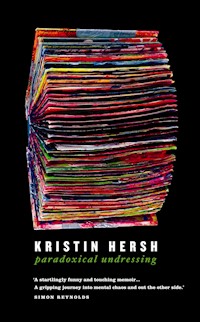
Kristin Hersh was a preternaturally bright teenager, starting university at fifteen and with her band, Throwing Muses, playing rock clubs she was too young to frequent. By the age of seventeen she was living in her car, unable to sleep for the torment of strange songs swimming around her head - the songs for which she is now known. But just as her band was taking off, Hersh was misdiagnosed with schizophrenia. Paradoxical Undressing chronicles the unraveling of a young woman's personality, culminating in a suicide attempt; and then her arduous yet inspiring recovery, her unplanned pregnancy at the age of 19, and the birth of her first son. Playful, vivid, and wonderfully warm, this is a visceral and brave memoir by a truly original performer, told in a truly original voice.
Das E-Book können Sie in Legimi-Apps oder einer beliebigen App lesen, die das folgende Format unterstützen:
Veröffentlichungsjahr: 2011
Ähnliche




















PARADOXICAL UNDRESSING
Kristin Hersh is an American songwriter and guitarist. She founded the seminal art-punk band Throwing Muses at age fourteen and is widely recognized as an indie-rock pioneer. She is a mother of four, and lives in New Orleans.
First published in the United States of America in 2010 by Penguin Books, a division of Penguin Group USA, Inc.
First published in Great Britain in hardback in 2011 by Atlantic Books, an imprint of Atlantic Books Ltd.
This paperback edition published in Great Britain in 2011 by Atlantic Books.
Copyright © Martha Kristin O’Connell, 2010
The moral right of Martha Kristin O’Connell to be identified as the author of this work has been asserted by her in accordance with the Copyright, Designs and Patents Act of 1988.
All rights reserved. No part of this publication may be reproduced, stored in a retrieval system or transmitted in any form or by any means, electronic, mechanical, photocopying, recording or otherwise, without the prior permission of both the copyright owner and the above publisher of this book.
Every effort has been made to trace or contact all copyright holders. The publishers will be pleased to make good any omissions or rectify any mistakes brought to their attention at the earliest opportunity.
1 3 5 7 9 10 8 6 4 2
A CIP catalogue record for this book is available from the British Library.
Paperback ISBN: 978 1 84887 239 4
Ebook ISBN: 978 0 85789 301 7
Printed in Great Britain
Atlantic Books, An imprint of Atlantic Books Ltd, Ormond House, 26–27 Boswell Street, London WC1N 3JZwww.atlantic-books.co.uk
They say, “You are ill, so what appears to you is only unreal fantasy.” But that’s not strictly logical. I agree that ghosts only appear to the sick, but that only proves that they are unable to appear except to the sick, not that they don’t exist.
—FYODOR DOSTOYEVSKY
The universe is godding.
—MICKY DOLENZ
This book is based on a diary I started when I was eighteen. Don’t know why I kept the diary for so many years; the combination of nostalgia and nausea I felt when reading it was pretty rough. I sort of held it out at arm’s length, the way you might keep the first fish you ever caught (it’s an accomplishment . . . it just stinks!). I do find it astonishing that, as a teenager, I was already trying to bring music and art together; a hell of a mission to take on. If Americans thought music and art belonged together, they wouldn’t have the Grammys!
I guess the diary was a bad luck charm—I really didn’t want history repeating itself. ’Cause it was certainly a strange book to pick up and read. Full of holes, it dissolved along with the drowning writer and each page was oddly like crawling in a window: you had to stand up carefully, squint, get your bearings. The diary was about a year long, from one spring to the next.
I seemed awfully young that first spring and not so young the next, though this wasn’t a year when a whole lot happened, in my opinion. It was a year when many things began, which is probably important. It was also a year I tried very hard to forget, so I know it was worth remembering. Some of it I don’t actually remember; I just read about it in the diary. I’m real okay with not remembering this stuff, though; like a lot of people’s stories, mine can be pretty embarrassing.
Songs help with that. They don’t commit to linear time—they whiz around all your memories, collecting them into a goofy pile that somehow seems less goofy because it’s set to music. Songs’re weird: they tell the future and they tell the past, but they can’t seem to tell the difference. So I stuck lyrics from my songs into the text whenever they reflected on a moment and its reverberations.
Here’s a quote of mine: “I would never paint a picture, do a dance or write a book.” And here’s another one: “I’m not in the business of publishing pages from my diary.” I still say these things all the time. What I mean when I say them is that although I’m a musician, I’m not a particularly creative person, nor am I interested in self-expression—I don’t want people to listen to my songs so that they’ll care about me. That would be obnoxious.
I did, however, write this book based on pages from my diary because copying down a year isn’t a particularly creative thing to do. And it all happened twenty-five years ago, so it can’t really count as a story about me—that girl isn’t me anymore. Now it’s just a story.
And interestingly, it turns out to be a love story. One with no romance, only passion. Passion for sound, reptiles, old ladies, guitars, a car, water, weather, friends, colors, chords, children, a band, fish, light and shadow. It’s dedicated to my friends Betty and Mark, who both died while I was turning the story into this book. And can I just say: everything that wacky old Betty Hutton told me was true. The craziest things she said turned out to be particularly true. She was even right about “Throwing Muses” having too many syllables.
Betty taught me that you can’t tell the whole truth, as not all of it is pertinent or lovely. You have to leave things out in order to tell the story. Otherwise, people could miss the whaddyacallit . . . the point. Her story was full of brightly lit holes that allowed the point to show itself in sharp relief.
For what it’s worth, this is my old diary’s story, riddled with enormous holes and true.
Love,
Kristin
PARADOXICAL UNDRESSING
Contents
SPRING 1985
SUMMER 1985
FALL 1985
WINTER 1986
SPRING 1986
SPRING 1985
The handmade Jesus on Napoleon’s living room wall has no face, just a gasping, caved-in head with blood dripping down its chest. He appears to have been crucified on some popsicle sticks. His mottled green and gold surface reminds us of fish scales and his paddle-shaped toes fan out like a tail. It is a singularly gruesome crucifix. We call it “Fish Jesus.”
The first time I saw it, I thought it was funny. It’s less funny at night when you’re alone. And even less funny tonight because next to me is a bag of horrible donuts one of the painters left for me as a joke. They look just like Fish Jesus. Oblong, greenish-gold and bloody with jelly, coconut maggots swarm over them. I really don’t wanna look at them anymore, but throwing them away would mean touching them and I don’t wanna do that, either.
So me and Fish Jesus and the donuts all lean against the wall, watching Christmas lights blink. It isn’t Christmas, but these were the only working lights left in this empty apartment when its old man died. He was named Napoleon. All we really know about him is that he lived here in Providence and now he’s dead, his body and most of his belongings carted away. And somehow he still pays his electric bill. Someone does, anyway, and it isn’t me or any of the other people I’ve seen use his electricity.
I also know where he hid his key (under the mat—Napoleon was a brilliant tactician), and tonight I need a place to stay. So I park myself under a sad crucifix and watch tiny blue, green, red and orange bulbs blink on and off. Insomniacs like to waste time.
The lights are comfortingly tacky, the garish blue ones my favorites. They remind me of being a little kid, hypnotized and mystified by Christmas. I open first one eye and then the other, to see if I can watch only the blue lights and ignore the other colors, but it’s hard and I’m boring myself, so I close both eyes to try and get some sleep. They pop right open again.
fish
i have a fish nailed to a cross on my apartment wall
This room is not a good thing to look at, but I look anyway. The wall-to-wall carpeting is a pukey beige, bleached in the center by a stain shaped like a hermit crab. The paneling on the walls is marked by big splotches of something that once sprayed across it. It has been suggested by sleepless crashers that these splotches are a clue as to how Napoleon died. The whole apartment smells like mold and disinfectant. And now, donuts.
It’s spring, but you’d never know it looking out Napoleon’s window. He lived and died in a gray world.
I’m glad it’s spring, though—Christmas decorations around here are the saddest things you ever saw. They hung, decomposing in the gray wind, through March. Just a few weeks ago, someone took down the dismal pink wreath, blackened with car exhaust, that hung around the fluorescent green sign across the street. This sign has always read, will always read: “Pumpkin Muffins 24 Hours.”
All the women who work in the donut shop below the sign look the same. They wear pink smocks and lean on the counter, smoking, all night long. I’m often a sleepless crasher in this apartment myself and I’ve spent many hours watching them to see if they ever move. They don’t. I’ve never even seen one light a new cigarette. It probably smells like mold, disinfectant and donuts in there, too.
The loosely associated group of people who frequent Napoleon’s guest house: touring musicians, bored kids with nowhere else to go or nothing else to do, and anyone whose job isn’t really a job (like “painter”) have agreed that the key should remain under the mat—the first place any desperate individual would look—to honor Napoleon’s memory. Not that we remember him, but he’s become a kind of saint to us. He shelters the lonely and the lost, wrapping them in a soft blanket of Christmas lights and old-man smell.
So the key stays where Napoleon left it because if somebody wants to break in here, well then, we should make it easy for ’em. Clearly, they need Napoleon’s soft blanket.
I gotta get rid of these fucking donuts; they’re making me sick and they aren’t gonna get any prettier. Maybe I’ll leave them here on the floor for the Animal.
We don’t know what the Animal is, only that it gets in sometimes and eats cornflakes out of the cabinet, which is fine ’cause I didn’t like the look of those dead-guy cornflakes anyway. Once, a painter named Jeff actually took the Animal to the face. It leaped out of the apartment and jumped on his head when he opened the door. This is the closest encounter any of us have had with it. Unfortunately, it was the middle of the night and the stairwell was too dark for him to get a good look at it; the Animal just knocked him backwards down the stairs and took off.
Jeff was thrilled. The next time I saw him, he was still giddy, glowing with pride. “Kristin!” he said dreamily. “The most wonderful thing happened . . .”
This guy looks just like Jimmy Stewart. I tried to imagine him falling backwards in the dark, limbs flailing, fur wrapped around his head. For some reason, I saw this happening in black and white—maybe ’cause of the Jimmy Stewart thing—which made it even creepier. But Jeff was so happy telling the story, he looked dewy. Painters are so sick. I wouldn’t want an animal jumping on my face in the dark.
I gotta admit I was enchanted, though. “Did it make a noise?” I asked him. “Was it furry? Did it smell weird?” He couldn’t remember much; he was falling down stairs. Happily falling, having taken a wild animal to the face, but too distracted by gravity to pay attention to much else. In retrospect, he figured it had been furry and was about the size of a watermelon.
This was relevant information, as we had had a kind of meeting on the subject once, the gaggle of lost souls who use this apartment when they have nowhere else to go. The Animal hadn’t yet gone for the cornflakes—it had only shuffled around the apartment in the dark, which was, I admit, a little spooky. Subsequently, there had been murmurings of “ghosts” walking around at night, and most of the musicians are such pussies they were scared to sleep here anymore. Some of them wanted to have a Narragansett medicine woman smudge the place with sage to relieve it of its restless spirits.
“Look,” a drummer named Manny said gravely over the cold leftovers of two greasy pizzas. Candles flickered near the open window, the dancing shadows making it look more like a séance than the overgrown Cub Scout meeting it really was. “She’s really nice, I’ve met her. She doesn’t dress weird or anything. She charges a nominal fee and all we have to do is fast or fuck off for, like, a day and a half.”
“What?!” yelled a painter, laughing. Painters think musicians are ridiculous. There seems to be a general consensus among them that painting is high art, music low. Can’t say that I blame them; musicians are sorta ridiculous. I’m a guitar player, so technically I’m one myself, but I don’t stick up for us all that often.
Manny, clearly more afraid of ghosts than painters, held his ground. “This place is definitely haunted,” he said. “I hear noises, but when I check ’em out, there’s nobody there!” He pushed a lock of purple hair behind his ear. For some reason, none of us musicians have normal hair—another thing that makes us seem ridiculous to the painters. Mine is blue, there is a lime green and a fuzzy-yellow-chick yellow . . . together, we look like an Easter basket. Chalk white and glossy jet-black are close to normal, but those two are goth kids—at least once a day, a painter will turn to them and yell, “Happy Halloween!”
“Fast?” The painter stared at Manny, wide-eyed.
“Don’t eat,” explained Manny.
“I know what it means. I just think you’re a moron.” The other painters laughed. The musicians and neutral observers sat quietly in the candlelight.
Manny shook his head. “Last night, something was walking near my face. It was weird.”
“It’s just the family downstairs bangin’ around,” said the painter. “They got like, twelve kids or something.”
“No, seriously. I could feel it moving. It was right next to my face.”
“Were you high?” asked the painter sarcastically.
“Yeah,” answered Manny, “but . . . it was right next to my face!”
You can tell painters and musicians apart by their uniforms and expressions. All the musicians except the goth kids wear torn blue jeans, flannel shirts and pajama tops and look perpetually stunned. Painters dress like it’s 1955, in white T-shirts, khakis and black loafers, all spattered liberally with paint. They either spatter their clothing on purpose so everyone can tell they’re painters or else they have a lot of trouble getting paint from brush to canvas, ’cause they’re really covered in the stuff.
Painters usually look like they’re about to laugh. Not smug; they just think everything is funny. “Let’s get him an exorcism,” said one. “He really wants one.”
Manny looked grim. “I’m not saying there’s an evil presence. Napoleon was a good man. But he died here. A violent death,” he said ominously, pointing at the splotches on the wall.
“That’s Michelob,” smirked the painter. “Napoleon probably had a Barcalounger and spasms. If you’re worried about hauntings, worry about the guy who died in those pajamas you’re wearing.” Manny winced. It was a little low, I thought, going after his clothes. Everybody knows you don’t buy pajamas from the Salvation Army if you’re not into the dead.
Manny’s girlfriend, the fuzzy-yellow-chick-haired chick, tried valiantly to come to his rescue. “Paranormal events occur in places where souls were unwilling to separate from their bodies at the time of death,” she explained carefully. “What if Napoleon’s soul wanted to stay home even though his body was dead?”
“This place is a shit hole. If you could fly, would you stay here?” The other painters laughed; everyone else was silent. Painters and musicians never agree on anything. It can be entertaining, but it can also be exhausting. They even order different pizzas.
I consider myself to be a neutral crasher; I don’t wear either uniform and I don’t side with anyone. The painters are almost always right, but I feel sorry for the hapless musicians who’re so mercilessly ridiculed, so I abstain from arguments and pizza.
The painters have made it clear that they feel I’m one of them, even going so far as to try to make me paint. They claim that making noise is the heathen’s way, a poor excuse for a calling. I guess they’re right, but I am a heathen. I mean, I’ve met me.
But I toured their studios anyway, watched them paint, let them lecture me and attempted to absorb the process of smearing colors onto cloth in order to impress upon observers a sense of “visual feeling.” I even took classes at the Rhode Island School of Design here in Providence. This is frowned upon by the “street” painters in Napoleon’s gang who believe that art is something which can’t be taught.
I thought some paintings were very beautiful—places to go—but ultimately, “I don’t get it,” was all I could think to say.
“What don’t you get?” asked Jeff in his studio on a freezing afternoon, as we studied one of his paintings together.
“It’s too quiet,” I said.
“Even the orange?” he asked, surprised.
I stared at the orange, trying to see it as loud. “It just seems hard to make something matter if you don’t yell it.”
“Kristin, whispering matters.”
I looked at him. “Yeah, well, you don’t do that, either.”
Jeff frowned thoughtfully. “Oh yeah.”
It was painters who suggested that I keep this diary in the interim between making noise and artful sublimation. I don’t even know what a diary is, really—a book about now? That means you can’t write the ending first and work backwards, right?
“Don’t worry,” they said. “Painting will come. Just give it time.”
So far, so bad.
Manny’s girlfriend sighed, slowly pushing pizza crusts around in the cardboard pizza box like a little train, the multicolored Christmas lights creating a shifting pattern for her to drive the train through. We all watched the crusts drive around. “I’m just saying, you should keep an open mind. Maybe Napoleon’s still living here. It’s his house, not ours.”
The painters howled. “You guys are idiots!”
Manny pouted, glaring at them. The girl shifted uncomfortably, blowing yellow hair out of her eyes, her pizza train slowing to a halt. “I said maybe . . .”
We decided to sit up and listen for ghosts. Staying up all night wasn’t hard for the musicians, who were high, paranoid and scared shitless. Everyone else was bored until the noises began: scratching, shuffling, nothing too scary really, but when we crept into the kitchen as a group, there was nothing there.
“Told you,” Manny hissed.
The mystery was partially solved when the ghost turned out to be a furry, watermelon-sized face jumper that likes cornflakes and is good at hiding. We now have tremendous affection for the Animal, which is easy because it never shows itself. It politely devours whatever it can find and then takes off.
We all act like it’s a magic bear, but the best thing it could be, really, is a raccoon and it’s probably just a cat. Though it might be Taffy, the neighbors’ dog who never comes when called. Our scary neighbors stand in their yard wearing bathrobes and yell “Taffy!” over and over again, but Taffy never shows up. Maybe Taffy lives with us now.
When I give touring bands and lonely kids directions to this place, I always mention the Animal, in case it jumps on their faces. Displaced individuals can be sorta jumpy.
I wish it were here right now, ’cause nobody else is. The more promiscuous and insecure of us have a rule: no sleeping alone at Napoleon’s. A rule I’m breaking tonight. “Taffy?” I call weakly and wait.
Napoleon took his bed with him when he left, so when you stay here, you sleep on the floor, and the floor feels extra hard tonight. Extra hard is extra lonely, for some reason. Like you’re being punished for something you probably did but don’t remember doing.
cartoons
this war’s okay
in a sweet old fashioned way
like a game we play
guilty of something we forgot
We live in the woods in a communal dwelling, a gigantic barn full of hippies, one of whom tries to write “Be Together” on a parachute that stretches across our ceiling.
He’s pretty stoned, though, so what he actually writes is “Be Togeater,” and no one has a replacement parachute or the money to buy one.
I’m only three years old, so I shouldn’t be able to read it, but my mother, Crane, taught me to read when I was two. I’m sure she regrets having done this, as we lie on the couch together, staring at the ceiling. “I guess he just likes to spell things his own way,” she says.
So we live under that magical sentiment for years, growing our own vegetables, drinking goat’s milk, and feeding the rats who live there togeater with us by hand, because rats are Buddha’s creatures, too.
7:00. Slept almost three hours straight—a personal best. The Christmas lights’re going quietly apeshit in the sunshine, which is cooking the donuts. Reaching into the terrible bag before I can think about what I’m doing, I tear off a maggot-coated hunk and stuff it into Fish Jesus’s bloody maw—whistling in the sun. Should cheer up the next lonely visitor to Napoleon’s guest house, anyway.
I leave, quietly locking the apartment door so as not to wake the thousands of children who live on the first floor, then let my eyes adjust to the dark stairwell, hoping to catch a glimpse of the Animal. Nope. Not unless it’s hiding behind a pile of old carpet at the bottom of the stairs. Then I lift the mat and place the key under it, silently thanking Napoleon for another night of creepy hospitality. On my way out the door, I peer into the pile of dusty carpet, just in case. “Taffy?” I ask it.
Across the street, Taffy’s owner is standing on his front lawn in a bathrobe, smoking a cigarette and holding the morning paper. “Mahnin!” he shouts through his cigarette when I step outside. This means “good morning” in Rhode Island. I smile. He smiles too, takes the cigarette out of his mouth and, spitting on the ground, starts walking toward me.
Oh, crap. I can’t talk to this guy; I’ve tried. I can’t understand a word he says after mahnin. And he looks like a yeti, which makes it hard to listen to what he’s even trying to say. I always just squint and nod, watching his face move until he stops making noise, then back away. Quickly, before he can cross the street, I scramble into my car and start the engine. It sputters. I try again. Taffy’s dad watches. My dumb car. It doesn’t really work, can hardly breathe. “The Silver Bullet,” she’s called, and she is in fact silver, but she’s a fat-ass, logy version of a bullet. This morning, she coughs, wheezes, then suddenly heaves to life. Pulling away from Napoleon’s neighbor, I wave and he waves back, looking sad, his newspaper at his side.
At the first intersection, the car stalls. I whip my head around to see if he’s following me, lumbering along, puffing his cigarette—“mahnin, mahnin”—his bathrobe blowing in the breeze. No wonder Taffy left. But the street behind me is empty and the Bullet’s engine kicks in again a second later, humming in her distinctive full-throated whine.
“Thank you, ma’am,” I say out loud in my relief. I’m from the South. I believe in politeness, even when it comes to machines. My family left Georgia when I was a kid, a well-mannered little Gomer, and here in Rhode Island I got beaten up for both my Southern accent and my politeness. Damn yankee kids’d never heard the word “ma’am” before.
They tried to beat me up, anyway; I always won those fights. Didn’t clobber anybody, just hit ’em real hard and they fell down. Then I politely helped them up. Damn yankees. I’ve been trying to hide my accent ever since, but I’m still polite.
Speeding is impolite, so I don’t do that. I tear, though . . . tear down the highway, through blizzards, thunderstorms and blazing sun ’cause I love driving. It’s a perfect world for a shy spaz like me. A shy person likes to be alone, and a spaz can’t sit still, right? So though my car sucks big time, it lets me race around without having to make eye contact with a single human. I take the Silver Bullet very seriously for this reason. And, yes, I talk to my car. She deserves it.
arnica montana
the desperate
tearing down the highway
like they got no place to stay
The Bullet and I are doing the thirty-minute drive from Providence to Aquidneck Island together so I can swim laps and shower at the Y before school. Like most of the people in Napoleon’s gang of losers, I’m eighteen—the age where no one takes care of you—so most of my showers are taken at the Y. I’m not homeless, I just can’t stop for very long. I’m too . . . wired. And I have this idea that you could belong everywhere rather than just one place, so I don’t call anything “home.” Don’t know what I’d do there if I did. I’d just get antsy and wanna leave again.
People who suffer because they have nowhere in particular to go are those who can sit still, who sleep. I stopped doing these things last September, when I made a mistake and moved into the wrong place: a bad apartment christened “the Doghouse” by someone who painted that on the door. The Doghouse was the last place I played music on purpose, of my own volition.
I innocently stepped through the door of the Doghouse and put my stuff down because I thought that if I lived alone for a while, music might speak to me, tell me its secrets. Music spoke, alright—it yelled—and as it turns out, it has no secrets. If you ask music a question, it answers and then just keeps talking louder and louder, never shuts up. Music yelled so loud and so much in the Doghouse, I can still hear it.
I was used to sound tapping me on the shoulder and singing into my ear. I’ve heard music that no one else hears since I got hit by a car a couple years ago and sustained a double concussion. I didn’t know what to make of this at first, but eventually I came to feel lucky, special, as if I’d tapped into an intelligence. Songs played of their own accord, making themselves up; I listened and copied them down. Last fall, though, the music I heard began to feed off the Doghouse’s evil energy. Songs no longer tapped me on the shoulder; they slugged me in the jaw. Instead of singing to me, they screamed, burrowing into my brain as electricity.
I got zapped so bad in that apartment, I don’t think I’ll ever rest again. In the Doghouse, sleep stopped coming, days stopped ending—now sleep doesn’t come and days don’t end. Sleeping pills slow my thinking, but they can’t shut down my red-hot brain. If I do manage to drop off, wild dreams wake me up. So I’m different now; my thinking is liquid and quick, I can function at all hours. My songs are different, too, and when I play them, I become them: evil, charged.
I’m actually head over heels in love with these evil songs, in spite of myself. It’s hard not to be. They’re . . . arresting.
Before I disappeared into the Doghouse, the songs I heard were not devils, they were floaty angels. Gentle and meandering, interesting if you took the time to pay attention, but they wouldn’t necessarily stop you in your tracks. Now the songs I bring to my band are essential, bursting: harsh black-and-white sketches that my bandmates color in with their own personal noise. These songs grab your face and shout at it.
Do you want your face grabbed and shouted at? Probably not; at the very least, it’s irritating. But now that it’s happened to me, I know that music is as close to religion as I’ll ever get. It’s a spiritually and biologically sound endeavor—it’s healthy.
Some music is healthy, anyway. I know a lot of bands who’re candy. Or beer. Fun and bad for you in a way that makes you feel good. For a minute. My band is . . . spinach, I guess. We’re ragged and bitter. But I swear to god, we’re good for you.
When I finally left that messed-up apartment, I swore I’d never go back. I stuffed my guitar case full of frantic songs I’d scribbled down on a hundred pieces of paper, then took a minute to squint through the noise and try to figure out what exactly made the Doghouse so dark. It looked like a plain old apartment to me: wood floors, silver radiators, paint-flecked doorknobs and smudgy windows. Why this place and not, say, the house next door? Who knows, maybe the whole block is evil.
But by the time I raced out the door and took off in the Silver Bullet, it was too late. I was branded; tattooed all over with Doghouse songs—each one a musical picture etched into my skin.
I know that when my band plays these ugly tattoos, people can see them all over me, but I don’t care too much. I mean, shy people are generally not show-offs, but the burning that the songs do, the fact that I’m compelled to play them, makes me think they . . . matter? Maybe that’s not the right word. That they’re vital. And I respect that. I can feel sorry for myself without judging the music.
Comfort isn’t necessarily comfortable, after all; sometimes you gotta wander into the woods. Everybody knows that.
I never did go back there. Sometimes I park the Silver Bullet across the street from the Doghouse and stare at it, wondering what the hell is up with that place, but I don’t go inside. I know if I did, the walls’d close in. I made it out with my guitar and my brain, so I can look on the bright side: I got some wild songs out of it and I have evil’s big balls working for me now. Evil seems to know what it’s doing, though it isn’t ever very pretty.
Doghouse songs are definitely not pretty—they sound like panicking—but they are beautiful. The cool thing they do is, they make memories now. A syringe of déjà vu injected into my bloodstream. All the best stories work this way, but a song has the ability to tell a nice loud story. Louder than orange.
Which has made my band a work of obsession, a wholly satisfying closed circle. My bandmates and I are both conceited and pathetic about this: we think we’re the best band in the world and that nobody’ll ever like us. We play in clubs because that’s what bands do, but we don’t expect anybody to show up.
Really, we’re just on our own planet, so it wouldn’t make sense to give a fuck about anybody else, which is sorta nice. If I had to survive the Doghouse to earn this planet, I’m okay with that; it’s a swell planet. I’ve spent a lot of time on it—almost twice as much as someone who sleeps. And this lingering Doghouse energy means that I can keep going, keep moving, keep looking around. I learn a lot, being awake all the time.
For example, I learned this: we should belong everywhere.
calm down, come down
i don’t wanna calm down
i don’t wanna come down
On the lawn next to the library, I sit in the sun, my textbooks stacked beside me, and look for Betty. Peering through groups of college kids, I try to catch a glimpse of her hair. Betty’s hair changes daily, so I’m not exactly sure what I’m looking for, except that she’s about fifty years older than all the other students, so it’s usually gray, champagne or white.
Betty and I have a study date. I know I could go inside the library and start studying without her, but we go to school on the island, right on the water, and it’s just too beautiful out here. I avoid going inside buildings whenever possible, anyway; I kind of . . . disagree with them. Shouldn’t we live outside?
Betty says this is never going to happen ’cause nobody else wants to live outside, just me. She says I need to learn to like buildings, that buildings aren’t something you’re even allowed to disagree with. “They’re everywhere,” she says. “And sometimes, you need to go inside them. Get used to it.”
I get that. But I still disagree with them.
Even childhood takes place inside buildings now, which doesn’t make sense—we shove kids indoors, make them sit still and be quiet when they should be going outside to run around and make noise. At least college classes allow for breaks when you can race out the door and breathe. I think I hold my breath when I’m in a classroom, “learning.” Learning to hold my breath.
This university let me enroll a few years ago, before I was old enough, because my philosophy-professor father, who teaches there, told them they should. He sent them my records and then I had to have a meeting with three administrators in which I was expected to carry myself in collegiate fashion.
My dad coached me on the way to the meeting. “Sit up straight. Lie. Smile.” I told him he was making me nervous. “Oh yeah, and don’t be nervous,” he continued. “Make eye contact. But not for too long—no piercing stares. And when they ask you a question, lie some more.”
“About what?”
“You’ll see.”
“That’s unpossible,” I said. “I can’t lie.”
“Oh. And don’t make up any words.”
I squinted up at him. “I make up words?”
The three administrators I was meeting with, through glorious coincidence, all had flippy hair in the shape of yak horns. What’re the odds? They also looked angry. Three angry yaks.
Everyone in the world calls my father “Dude” except for these three yaks. An old hippie with weird-ass white-blue eyes and big, curly hair, my dad looks like a Dude. The yaks called him “Dr. Hersh,” though. I would’ve snickered if they hadn’t already looked so angry.
“Very impressive grades,” the yak man said to me with a threatening glare. His flippy horns were tiny, right at the top of his forehead, and he was neck-less.
“And test scores,” added the yak woman, grimacing. When she moved, her shoulder-length curls did not.
The yak person of indiscriminate gender and chin-length horns frowned. “I think Ms. Hersh will be extremely happy here.”
I sat up straight, made brief eye contact and assured them that I would be extremely happy holding my breath inside those buildings. I used only real words, as far as I know. The whole time, I was thinking Dorks always get straight A’s . . . do they not know this?
“They weren’t so schmanky,” I said to Dude, walking down the hallway after the meeting, “but you don’t look like a Dr. Hersh.”
“What do I look like?” He stopped and posed while I stared at him.
“You look sorta like Dr. Who . . .”
“Hmmm.” He stopped posing. “I wonder if I could get people to call me Dr. Who?”
“That’d be cool. It might be weird to suggest it.”
“Yeah. I’ll stick with Dude.”
Now Dude makes me take all the groovy classes he teaches, to pay him back for getting me into college before I belonged there: Dream Symbolism, Native American Mythology, Yoga. “I’m trying not to grow up into a hippie,” I told him.
“Good luck with that,” he said.
One of our housemates holds a brown and white guinea pig in his hands for me to pet. “Don’t be afraid. The guinea pig is the gentlest of all creatures,” he says kindly. “All he wants is peace.”
The guinea pig looks at me suspiciously and makes strange, underwater sounds.
“Humans enslave each other and fight wars,” he continues, pushing his long brown hair behind his ears. “Guinea pigs want nothing to do with governments or violence. They’re our brothers in peace. Go ahead, you can pet him.”
I reach out to touch the guinea pig’s twitching nose with my finger. It bites me.
Dude introduced me to Betty one afternoon outside his office, as college students who looked like college students chatted in the hallway, balancing books, backpacks and cans of Coke. Kristin Hersh? Betty Hutton, he giggled. Betty Hutton? Kristin Hersh.
Betty had white hair that day, which curved in around her jawline, framing her pink lipstick. She wore blue cowboy boots and sunglasses, which she removed to reveal enormous drag queen eyelashes. Dude cried gleefully, Its perfect! Kristin, youre too young to make any friends here and Betty, youre too old! Betty and I both cringed.
Lesen Sie weiter in der vollständigen Ausgabe!
Lesen Sie weiter in der vollständigen Ausgabe!
Lesen Sie weiter in der vollständigen Ausgabe!
Lesen Sie weiter in der vollständigen Ausgabe!
Lesen Sie weiter in der vollständigen Ausgabe!
Lesen Sie weiter in der vollständigen Ausgabe!
Lesen Sie weiter in der vollständigen Ausgabe!
Lesen Sie weiter in der vollständigen Ausgabe!
Lesen Sie weiter in der vollständigen Ausgabe!
Lesen Sie weiter in der vollständigen Ausgabe!
Lesen Sie weiter in der vollständigen Ausgabe!
Lesen Sie weiter in der vollständigen Ausgabe!
Lesen Sie weiter in der vollständigen Ausgabe!
Lesen Sie weiter in der vollständigen Ausgabe!
Lesen Sie weiter in der vollständigen Ausgabe!
Lesen Sie weiter in der vollständigen Ausgabe!
Lesen Sie weiter in der vollständigen Ausgabe!
Lesen Sie weiter in der vollständigen Ausgabe!
Lesen Sie weiter in der vollständigen Ausgabe!
Lesen Sie weiter in der vollständigen Ausgabe!
Lesen Sie weiter in der vollständigen Ausgabe!
Lesen Sie weiter in der vollständigen Ausgabe!
Lesen Sie weiter in der vollständigen Ausgabe!
Lesen Sie weiter in der vollständigen Ausgabe!
Lesen Sie weiter in der vollständigen Ausgabe!
Lesen Sie weiter in der vollständigen Ausgabe!
Lesen Sie weiter in der vollständigen Ausgabe!
Lesen Sie weiter in der vollständigen Ausgabe!
Lesen Sie weiter in der vollständigen Ausgabe!
Lesen Sie weiter in der vollständigen Ausgabe!
Lesen Sie weiter in der vollständigen Ausgabe!
Lesen Sie weiter in der vollständigen Ausgabe!
Lesen Sie weiter in der vollständigen Ausgabe!
Lesen Sie weiter in der vollständigen Ausgabe!
Lesen Sie weiter in der vollständigen Ausgabe!
Lesen Sie weiter in der vollständigen Ausgabe!
Lesen Sie weiter in der vollständigen Ausgabe!
Lesen Sie weiter in der vollständigen Ausgabe!
Lesen Sie weiter in der vollständigen Ausgabe!
Lesen Sie weiter in der vollständigen Ausgabe!
Lesen Sie weiter in der vollständigen Ausgabe!
Lesen Sie weiter in der vollständigen Ausgabe!
Lesen Sie weiter in der vollständigen Ausgabe!
Lesen Sie weiter in der vollständigen Ausgabe!
Lesen Sie weiter in der vollständigen Ausgabe!
Lesen Sie weiter in der vollständigen Ausgabe!
Lesen Sie weiter in der vollständigen Ausgabe!
Lesen Sie weiter in der vollständigen Ausgabe!
Lesen Sie weiter in der vollständigen Ausgabe!
Lesen Sie weiter in der vollständigen Ausgabe!
Lesen Sie weiter in der vollständigen Ausgabe!
Lesen Sie weiter in der vollständigen Ausgabe!
Lesen Sie weiter in der vollständigen Ausgabe!
Lesen Sie weiter in der vollständigen Ausgabe!
Lesen Sie weiter in der vollständigen Ausgabe!
Lesen Sie weiter in der vollständigen Ausgabe!
Lesen Sie weiter in der vollständigen Ausgabe!
Lesen Sie weiter in der vollständigen Ausgabe!
Lesen Sie weiter in der vollständigen Ausgabe!
Lesen Sie weiter in der vollständigen Ausgabe!
Lesen Sie weiter in der vollständigen Ausgabe!
Lesen Sie weiter in der vollständigen Ausgabe!
Lesen Sie weiter in der vollständigen Ausgabe!
Lesen Sie weiter in der vollständigen Ausgabe!
Lesen Sie weiter in der vollständigen Ausgabe!
Lesen Sie weiter in der vollständigen Ausgabe!
Lesen Sie weiter in der vollständigen Ausgabe!
Lesen Sie weiter in der vollständigen Ausgabe!
Lesen Sie weiter in der vollständigen Ausgabe!
Lesen Sie weiter in der vollständigen Ausgabe!
Lesen Sie weiter in der vollständigen Ausgabe!
Lesen Sie weiter in der vollständigen Ausgabe!
Lesen Sie weiter in der vollständigen Ausgabe!
Lesen Sie weiter in der vollständigen Ausgabe!
Lesen Sie weiter in der vollständigen Ausgabe!
Lesen Sie weiter in der vollständigen Ausgabe!
Lesen Sie weiter in der vollständigen Ausgabe!
Lesen Sie weiter in der vollständigen Ausgabe!
Lesen Sie weiter in der vollständigen Ausgabe!
Lesen Sie weiter in der vollständigen Ausgabe!
Lesen Sie weiter in der vollständigen Ausgabe!
Lesen Sie weiter in der vollständigen Ausgabe!
Lesen Sie weiter in der vollständigen Ausgabe!
Lesen Sie weiter in der vollständigen Ausgabe!
Lesen Sie weiter in der vollständigen Ausgabe!
Lesen Sie weiter in der vollständigen Ausgabe!
Lesen Sie weiter in der vollständigen Ausgabe!
Lesen Sie weiter in der vollständigen Ausgabe!
Lesen Sie weiter in der vollständigen Ausgabe!
Lesen Sie weiter in der vollständigen Ausgabe!
Lesen Sie weiter in der vollständigen Ausgabe!
Lesen Sie weiter in der vollständigen Ausgabe!
Lesen Sie weiter in der vollständigen Ausgabe!
Lesen Sie weiter in der vollständigen Ausgabe!
Lesen Sie weiter in der vollständigen Ausgabe!
Lesen Sie weiter in der vollständigen Ausgabe!
Lesen Sie weiter in der vollständigen Ausgabe!
Lesen Sie weiter in der vollständigen Ausgabe!
Lesen Sie weiter in der vollständigen Ausgabe!
Lesen Sie weiter in der vollständigen Ausgabe!
Lesen Sie weiter in der vollständigen Ausgabe!
Lesen Sie weiter in der vollständigen Ausgabe!
Lesen Sie weiter in der vollständigen Ausgabe!
Lesen Sie weiter in der vollständigen Ausgabe!
Lesen Sie weiter in der vollständigen Ausgabe!
Lesen Sie weiter in der vollständigen Ausgabe!
Lesen Sie weiter in der vollständigen Ausgabe!
Lesen Sie weiter in der vollständigen Ausgabe!
Lesen Sie weiter in der vollständigen Ausgabe!
Lesen Sie weiter in der vollständigen Ausgabe!
Lesen Sie weiter in der vollständigen Ausgabe!




