


61,99 €
Mehr erfahren.
- Herausgeber: John Wiley & Sons
- Kategorie: Fachliteratur
- Sprache: Englisch
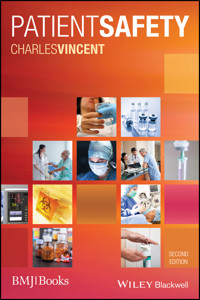
When you are ready to implement measures to improve patient safety, this is the book to consult. Charles Vincent, one of the world's pioneers in patient safety, discusses each and every aspect clearly and compellingly. He reviews the evidence of risks and harms to patients, and he provides practical guidance on implementing safer practices in health care. The second edition puts greater emphasis on this practical side. Examples of team based initiatives show how patient safety can be improved by changing practices, both cultural and technological, throughout whole organisations. Not only does this benefit patients; it also impacts positively on health care delivery, with consequent savings in the economy. Patient Safety has been praised as a gateway to understanding the subject. This second edition is more than that - it is a revelation of the pervading influence of health care errors, and a guide to how these can be overcome. "... The beauty of this book is that it describes the complexity of patient safety in a simple coherent way and captures the breadth of issues that encompass this fascinating field. The author provides numerous ways in which the reader can take this subject further with links to the international world of patient safety and evidence based research... One of the most difficult aspects of patient safety is that of implementation of safer practices and sustained change. Charles Vincent, through this book, provides all who read it clear examples to help with these challenges" From a review in Hospital Medicine by Dr Suzette Woodward, Director of Patient Safety. Access 'Essentials of Patient Safety - Free Online Introduction': www.wiley.com/go/vincent/patientsafety/essentials
Sie lesen das E-Book in den Legimi-Apps auf:
Seitenzahl: 837
Veröffentlichungsjahr: 2011
Ähnliche



















Contents
Preface
The nature of the book
Inspiration, acknowledgements and thanks
SECTION ONE The Evolution of Patient Safety
CHAPTER 1 Medical harm: a brief history
The cure can be worse than the disease
Heroic medicine and natural healing
Hospitalism and hospital acquired infection
Surgical errors and surgical outcome
Iatrogenic disease
Systematic studies of the hazards of hospitalization
Medical nemesis
References
CHAPTER 2 The emergence of patient safety
Improving the quality of healthcare
Learning from error
Tragedy and opportunities for change
Studying the safety of anaesthesia: engineering a solution
Error in medicine
Litigation and risk management
Professional and government reports: patient safety hits the headlines
An organization with a memory: learning from adverse events in the NHS
References
CHAPTER 3 Integrating safety and quality
Defining patient safety
Patient safety – reducing harm or reducing error?
What is quality?
The quality chasm
The relationship between safety and quality
When does a quality issue become a safety issue?
What has safety brought to quality?
Safety and quality research
References
SECTION TWO The Hazards of Healthcare
CHAPTER 4 The nature and scale of error and harm
Studying errors and adverse events
Methods of study
Hindsight bias
Studying adverse events using case record review
The impact and cost of adverse events
Complications and adverse events in surgery
Deaths from adverse events: can we believe the findings of retrospective record review?
Hospital acquired infection
Injection safety in developing countries
Studies of medication errors and adverse drug events
Medication errors
Adverse drug events
Vulnerability to harm: the old and the frail
The vulnerability of the very young
References
CHAPTER 5 Reporting and learning systems
Varieties of healthcare reporting systems
Aviation, aerospace and nuclear reporting and learning systems
Reporting systems in healthcare
Local reporting systems
Specialty reporting systems
National and other large-scale systems
Do healthcare reporting systems reflect the underlying rate of incidents?
Using multiple information systems
Barriers to reporting
Feedback and action
Reporting, surveillance and beyond
References
CHAPTER 6 Measuring safety
The critical role of measurement
Defining measures of safety
Structure, process and outcome: what measures best reflect safety?
Structural measures
Outcome measures
Process measures
Intervening variables
The integration of safety and quality at the process level
Approaches to the measurement of safety
Systematic record review
The global trigger tool
Mandatory reporting of never events
Safety indicators: using routine data
Targets, standards and the unexpected consequences of measurement
Tracking safety over time: are patients any safer?
Hospital standardized mortality
Mortality following surgery
Healthcare acquired infections
Medication errors and adverse drug events
References
SECTION THREE From Accident Analysis to System Design
CHAPTER 7 Human error and systems thinking
The lessons of major accidents
Is healthcare like other industries?
Differences between healthcare and other industries
The organization of safety in healthcare and other industries
What is error?
Defining error
Classifying errors
Describing and classifying error in medicine
Prescribing error
Diagnostic errors
Examples Commentonerror
The psychology of error
Slips and lapses
Mistakes
Violations
Perspectives on error and error reduction
Engineering perspective
Individual perspective: the person model
Organizational perspective: the system model
Error, blame and censure
The concept of error: is it useful for the design of safe healthcare systems?
References
CHAPTER 8 Understanding how things go wrong
Background to the incident
Death from spinal injection: a window on the system
Assumption that the system was reliable
Assumptions about people
The influence of hierarchy on communication
Physical appearance of syringes containing cytotoxic drugs
Unnecessary differences in practice between hospitals
Aetiology of ‘organizational’ accidents
Seven levels of safety
The investigation and analysis of clinical incidents
Methods of investigation
Systems analysis or root cause analysis?
Systems analysis of clinical incidents: the London Protocol
An illustrative case example
Human reliability analysis
Techniques of human reliability analysis
Failure modes and effects analysis (FMEA)
Integration and evaluation of analytic techniques
From accident analysis to system design
References
SECTION FOUR The Aftermath
CHAPTER 9 Caring for patients harmed by treatment
Injury from medical treatment is different from other injures
The impact of medical injury
The experiences of injured patients and their relatives
What do injured patients need?
Being open: patients’ and physicians’ attitudes to disclosing error
Open disclosure: policy and practice
Barriers to open disclosure
Breaking the news about error and harm
In the longer term
Compassion in action
References
CHAPTER 10 Supporting staff after serious incidents
The experience of error
The wider impact on clinical staff
What makes an error traumatic?
The impact of litigation
Strategies for coping with error, harm and their aftermath
References
SECTION FIVE Design, Technology and Standardization
CHAPTER 11 Clinical interventions and process improvement
Two visions of safety
Clinical practices to improve safety
Evidence based medicine meets patient safety
Quality management and process improvement
Simplifying and standardizing the processes of healthcare
Waste, delay and rework
Reducing medication error
Positive personal characteristics can inhibit process improvement
References
CHAPTER 12 Design for patient safety
Design and error
Design for safer healthcare
Designing out medication error
Re-designing the resuscitation trolley
Designing out hospital acquired infection
Whole system design
References
CHAPTER 13 Using information technology to reduce error
The limits of memory
Judgement and decision making
Using information technology to reduce medication errors
Communication and alerts
Forcing functions and corollary orders
Electronic medical records
Decision support
Patients’ response to decision support
The implementation of information technology
The unintended consequences of information technology
The ironies of automation
Inflexibility and rigidity
Integration within the work process
A false sense of security
References
SECTION SIX People Create Safety
CHAPTER 14 Creating a culture of safety
The many facets of safety culture in healthcare
Organizational culture
Organizational culture and group culture
Safety culture
An open and fair culture
Assessing culpability: the incident decision tree
A culture of learning
Flexibility and resilience: the culture of high reliability
The lessons of high reliability organizations (HRO)
Reflections on high reliability research
Measuring safety culture
Can we change the culture?
And if we can change the culture, will patients be any safer?
References
CHAPTER 15 Patient involvement in patient safety
Patients as active participants in their care
The patient’s role in patient safety
Patient involvement in patient safety: fundamental issues
Patients’ willingness to engage in safety practices
Patients reporting of adverse events
Safety interventions: collaboration between patients and professionals
Hand hygiene
Patients for patient safety
References
CHAPTER 16 Procedures, violations and migrations
Creating safety by following rules and procedures
Breaking the rules and bucking the system
Understanding deviations from procedures
A theory of migrations and violations
The natural lifespan of a safety rule
Managing violations in the clinical team
Procedures are an ideal world
References
CHAPTER 17 Safety skills
Safety skills, attitudes and behaviour in industry
Safety skills in healthcare
Putting on your second hat: awareness of fallibility and hazard
Safety and non-technical skills
Situation awareness
Anticipation and vigilance
Decision making
Training in decision making
The influence of working conditions
References
CHAPTER 18 Teams create safety
What is a team?
Why work in teams?
Teams and safety
Watching what goes on: observing teamwork
Team leadership
Leadership skills
Team interventions: briefing, checklisting and daily goals
Clarity and communication: the adoption of daily goals
Briefing and checklisting in surgery
Formula 1 and post-operative handover
Redesigning the wider team
Team training for safety
Assessing teamwork
Simulation
Emergency medicine: team training to reduce error
Leadership and learning: how do teams train themselves?
References
SECTION SEVEN The Journey to Safety
CHAPTER 19 Safe organizations: bringing it all together
Clinical microsystems
The evaluation of complex interventions
A hospital is a complex adaptive system
The intervention evolves over time
Measurement of impact
Improving the safety of intensive care
Foundations of improvement
Translating evidence into practice
The keystone project: state wide harm reduction
The Safer Patients Initiative
The safer patients programme
Ready for improvement?
The impact of SPI
Engagement and motivation
Process improvement
Patient outcomes and system change
On the campaign trail
References
CHAPTER 20 High performing healthcare systems
Conditions and drivers of change
Leading system change
High performing healthcare systems
Veterans Affairs, New England
Standardization and systematization
Performance measurement and accountability
Electronic medical records and decision support
Systems for implementing change
Jonkoping County
Sustained leadership and commitment
Esther
Qulturum: centre for learning and culture
Engagement and spread
A quality strategy
Styles and strategies for system improvement
Investing for the long term
Making a Swiss watch from a Swiss cheese
References
Index
Frontispiece
‘The greatest benefit to mankind’.
(Samuel Johnson’s tribute to medicine)
‘It may seem a strange principle to enunciate as the very first requirement in a hospital that it should do the sick no harm’.
(Notes on Hospitals, Florence Nightingale, 1863).
This second edition is published 2010, © 2010 by Charles Vincent
BMJ Books is an imprint of BMJ Publishing Group Limited, used under licence by Blackwell Publishing which was acquired by John Wiley & Sons in February 2007. Blackwell’s publishing programme has been merged with Wiley’s global Scientific, Technical and Medical business to form Wiley-Blackwell.
Registered office: John Wiley & Sons Ltd, The Atrium, Southern Gate, Chichester, West Sussex, PO19 8SQ, UK
Editorial offices: 9600 Garsington Road, Oxford, OX4 2DQ, UK
The Atrium, Southern Gate, Chichester, West Sussex, PO19 8SQ, UK
111 River Street, Hoboken, NJ 07030-5774, USA
For details of our global editorial offices, for customer services and for information about how to apply for permission to reuse the copyright material in this book please see our website at www.wiley.com/wiley-blackwell
The right of the author to be identified as the author of this work has been asserted in accordance with the Copyright, Designs and Patents Act 1988.
All rights reserved. No part of this publication may be reproduced, stored in a retrieval system, or transmitted, in any form or by any means, electronic, mechanical, photocopying, recording or otherwise, except as permitted by the UK Copyright, Designs and Patents Act 1988, without the prior permission of the publisher.
Wiley also publishes its books in a variety of electronic formats. Some content that appears in print may not be available in electronic books.
Designations used by companies to distinguish their products are often claimed as trademarks. All brand names and product names used in this book are trade names, service marks, trademarks or registered trademarks of their respective owners. The publisher is not associated with any product or vendor mentioned in this book. This publication is designed to provide accurate and authoritative information in regard to the subject matter covered. It is sold on the understanding that the publisher is not engaged in rendering professional services. If professional advice or other expert assistance is required, the services of a competent professional should be sought.
The contents of this work are intended to further general scientific research, understanding, and discussion only and are not intended and should not be relied upon as recommending or promoting a specific method, diagnosis, or treatment by physicians for any particular patient. The publisher and the author make no representations or warranties with respect to the accuracy or completeness of the contents of this work and specifically disclaim all warranties, including without limitation any implied warranties of fitness for a particular purpose. In view of ongoing research, equipment modifications, changes in governmental regulations, and the constant flow of information relating to the use of medicines, equipment, and devices, the reader is urged to review and evaluate the information provided in the package insert or instructions for each medicine, equipment, or device for, among other things, any changes in the instructions or indication of usage and for added warnings and precautions. Readers should consult with a specialist where appropriate. The fact that an organization or Website is referred to in this work as a citation and/or a potential source of further information does not mean that the author or the publisher endorses the information the organization or Website may provide or recommendations it may make. Further, readers should be aware that Internet Websites listed in this work may have changed or disappeared between when this work was written and when it is read. No warranty may be created or extended by any promotional statements for this work. Neither the publisher nor the author shall be liable for any damages arising herefrom.
First published © Elsevier Limited 2006
Library of Congress Cataloging-in-Publication Data
Vincent, Charles, Dr.
Patient safety / Charles Vincent - 2nd ed.
p. cm.
Includes bibliographical references and index.
ISBN 978-1-4051-9221-7 (pbk.)
1. Medical errors 2. Iatrogenic diseases 3. Hospitals-Safety measures. I. Title. [DNLM: 1. Patient Care-standards. 2. Quality of Health Care-standards. 3. Medical Errors-prevention & control. 4. Safety Management-standards. W 84.41 V769p 2010]
R729.8.V56 2010
610.28’9-dc22
2010003436
For Angela
Preface
Patient safety is the foundation of good patient care. The unnerving fact that healthcare can harm us as well as heal us is the reason for suggesting that patient safety is the heart of healthcare quality. Effectiveness, access to care, timeliness and the other dimensions of quality are all important. But when a member of your family goes into hospital or receives other healthcare then above all you want them to be safe. There is something horrifying about being harmed, or indeed causing harm, in an environment of care and trust. Both for patients and staff, safety is the emotional heart of healthcare quality. I also believe in terms of understanding, improvement and day-to-day running of healthcare that safety is a touchstone and guide to the care that is given to the patients; the clinician or the organization that keeps safety to the fore in the midst of the many other often competing priorities achieves something remarkable and provides the care that we would all want to receive.
Why though, even if you accept this perspective, should you read a book on patient safety? The first reason is very simple: the importance of the topic. As you will see if you read on, there is compelling evidence that, while healthcare brings enormous benefits to us all, errors are common and patients are frequently harmed. The nature and scale of this harm is hard to comprehend. It is made up, worldwide, of hundreds of thousands of individual tragedies every year, in which patients are traumatized, suffer unnecessary pain, are left disabled or die. Many more people have their care interrupted or delayed by minor errors and problems; these incidents are not as serious for patients but are a massive and relentless drain on scarce healthcare resources.
A second reason is that for all the books, reports, articles and Websites devoted to patient safety, there is still no straightforward overview of the field. The books that are available are mostly multi-author edited texts which, while they bring a rich diversity of perspective, are not primarily aimed at explaining the basic principles, characteristics and direction of the field. My aim has been to show the landscape of patient safety: how it evolved, the research that underpins the area, the key conceptual issues that have to be addressed, and the practical action needed to reduce error and harm and, when harm does occur, to help those involved.
Third, patient safety is a meeting point for a multitude of other topics. The relevant literature is difficult to grasp, being scattered, diverse and multidisciplinary in nature. Much of it is published in areas, such as cognitive psychology and ergonomics, which are unfamiliar to medicine. Worse still, many of the topics fundamental to progress in patient safety are themselves the subjects of huge literatures and much debate. For instance, a substantial amount of work has been carried out, from a number of different perspectives, on the factors that produce safe, high performing teams. The same could be said of expertise, decision making, human error, human factors, information technology, leadership, organizational culture … the list goes on and on.
A fourth reason is to show that patient safety is, very simply, a tough problem in cultural, technical, clinical and psychological terms, not to mention its massive scale and heterogeneity. Healthcare is the largest industry in the world and extraordinarily diverse in terms of the activities involved and the manner of its delivery. We are faced with hugely intractable, multifaceted problems, which are deeply embedded within our healthcare systems. Understanding this is both an intellectual and a practical challenge. One of the greatest obstacles to progress on patient safety is, paradoxically, the attraction of neat solutions, whether political, organizational or clinical.
The nature of the book
I hope that this book can be read by anyone either interested or involved in healthcare, as an introduction to patient safety or to deepen their knowledge of specific topics. I have tried to write a clear and comprehensive overview of the major themes while not shying away from the difficulties, controversies and challenges. To my mind the attempt, in many papers and conferences, to present all quality and safety issues in the simplest possible terms has been a disaster and a major obstacle both to progress generally and specifically to the engagement of clinicians. I have also tried to make the book a gateway into the field. Some truly wonderful books and papers have been written about patient safety, or topics relevant to it, and I have tried to show my own sources of inspiration and learning and direct people to them.
A book of this kind is inevitably highly selective and some decisions have to be made about what to cover and in how much detail. I have tried, as far as possible, to address generic issues that cross specialties and disciplinary boundaries, rather than examine a series of specific clinical topics. I believe this approach brings a greater understanding and enables the reader to take the basic principles and apply them in whatever setting they work in. I have, however, included illustrations and specific clinical examples wherever possible, aiming to balance and illuminate the more general points. Patient safety is still largely confined to hospital medicine and to the developed world, and the book reflects this. Safety in primary care, mental health, care given in the home and patient safety in developing countries are vital issues, but work on them has hardly begun.
The second edition of this book is very different from the first, reflecting developments in both the field and my own understanding. In 2005 I was able to write that most safety improvement programmes were, to my mind, rather haphazard and without defined direction or purpose. That was true then, but no longer. The entire second half of this book discusses how healthcare can be made safer and contains a host of examples and illustrations of improvements to the safety and quality of care.
The book is designed to be read straight through, though readers who wish to address particular themes and topics can select specific sections. The first half of the book discusses the nature of safety and the essential understanding that is needed before improvements can be made The first section of three chapters addresses the history and evolution of patient safety and the vexed question of how safety relates to quality. Patient safety emerged from a particular historical context; understanding how it emerged is the best way, to my mind, to understand its character, strengths and limitations. The next three chapters address the nature and scale of harm, examining the research evidence, the role of reporting systems and the neglected topic of measurement of safety. Chapters 7 and 8 form another section devoted to understanding why errors and accidents happen, reviewing the concept of human error, the nature of accidents, perspectives on safety and methods of analysing incidents. The following two chapters consider the impact of errors and harm on the people involved, patients and their families in Chapter 9 and clinical staff in Chapter 10.
The chapters in the second half of the book, all in one way or another concern the reduction of error and the ultimate aim of safe, reliable healthcare. The fifth section opens with a discussion of ways in which clinical processes can be improved, rooted in well established methods of quality improvement in both healthcare and manufacturing industries. The next chapter considers the new, but potentially very fruitful, role of design in patient safety followed by a discussion of the critical role of information technology. Section 6, consisting of five chapters, complements these technological solutions by addressing the different ways that people, both patients and staff, can either erode or create safety, both as individuals and as teams. Two final chapters consider how all these component parts can be integrated to bring us safer organizations and safer healthcare systems.
The fact that a quarter of this book is devoted to the many ways in which people individually or within teams actively create safety reflects my own belief that anyone in any discipline and at any level in healthcare can improve the safety of care. Systems and processes are important but in the end people make the difference. I hope this book may be of some help to you.
Inspiration, acknowledgements and thanks
Many people, whether they know it or not, have helped in the writing of this book. In the first edition I listed a number of people who through their actions, their writings or their conversation had expanded my view or changed the way I think about patient safety. Even then it was a long list but now it is impossibly long and so I will simply say that the list of references and sources is testament to the richness of the patient safety literature and that I am indebted to everyone named there. As before, however, I will single out two people, Lucian Leape and James Reason, who require special mention both because of their influence on the field and the help they have given to me personally. Both have been an inspiration and unfailingly generous in their support and encouragement.
I also wish to thank the following people for their contribution to the book. Rachel Davis provided exemplary help, encouragement and tactful criticism during the writing; Katrina Brown, Susannah Long, Krishna Moorthy and Susanna Walker nobly read and commented on the entire manuscript, resulting in many more apposite examples, much greater clarity and the removal of a variety of errors and infelicities. Raj Aggarwal, Jonathan Benn, Susan Burnett, Nick Sevdalis and Jonny West provided specialist input to specific chapters. Most academic authors suffer from what a friend of mine called the benign neglect of academic editors; in complete contrast, Mary Banks has encouraged me throughout to write the book I wanted to write.
The book could also never have been written without the support and assistance of a number of people. Ara Darzi saw the potential of a unit dedicated to patient safety set within a department of surgery and has supported my work throughout my time in his department. My colleagues in the department and in the Imperial Centre for Patient Safety and Service Quality have been patient and tolerant of my immersion in this project. As every researcher knows, the time-consuming treadmill of searching for funding is a constant distraction from actually doing useful research. I amparticularly grateful therefore to Sally Davies at the National Institute of Health Research and to Vin McCloughlin at the Health Foundation for their support over the years and for providing the stable funding environment in which our research has flourished and which has enabled this book to be written.
The incomparable P.G. Wodehouse dedicated one of his books to his daughter Leonora (queen of her species), without whose never-failing sympathy and encouragement, as he said, it would have been finished in half the time. I must thank my wife Angela for her sympathy and patience and for her encouraging remarks after bravely reading Chapter 1. Everything else I might thank her for is expressed in the dedication.
SECTION ONE
The Evolution of Patient Safety
CHAPTER 1
Medical harm: a brief history
Over the last ten years there has been a deluge of statistics on medical error and harm to patients, a series of truly tragic cases of health care failure and a growing number of major government and professional reports on the need to make healthcare safer. There is now widespread acceptance and awareness of the problem of medical harm and a determination, in some quarters at least, to tackle it. It seems that we are only now waking up to the full scale of medical error and harm to patients. Yet, awareness of medical harm and efforts to reduce it are as old as medicine itself, dating back to Hippocrates classic dictum to ‘abstain from harming or wronging any man’.
The cure can be worse than the disease
Medicine has always been an inherently risky enterprise, the hopes of benefit and cure always linked to the possibility of harm. The word ‘pharmakos’ means both remedy and poison; the words ‘kill’ and ‘cure’ were apparently closely linked in ancient Greece (Porter, 1999). Throughout medical history there are instances of cures that proved worse than the disease, of terrible suffering inflicted on hapless patients in the name of medicine, and of well intentioned though deeply misguided interventions that did more harm than good. Think, for example, of the application of mercury and arsenic as medicines, the heroic bleeding cures of Benjamin Rush, the widespread use of lobotomy in the 1940s and the thalidomide disasters of the 1960s (Sharpe and Faden, 1998). A history of medicine as harm, rather than benefit, could easily be written; a one-sided, incomplete history to be sure, but a feasible proposition nonetheless.
Looking back with all the smugness and wisdom of hindsight, many of these so-called cures now seem to be absurd, even cruel. In all probability though, the doctors who inflicted these cures on their patients were intelligent, altruistic, committed physicians whose intention was to relieve suffering. The possibility of harm is inherent to the practice of medicine, especially at the frontiers of knowledge and experience. We might think that the advances of modern medicine mean that medical harm is now of only historical interest. However, for all its genuine and wonderful achievements, modern medicine too has the potential for considerable harm, perhaps even greater harm than in the past. As Chantler (1999) has observed, medicine used to be simple, ineffective and relatively safe; now it is complex, effective and potentially dangerous. New innovations bring new risks, greater power brings greater probability of harm and new technology offers new possibilities for unforeseen outcomes and lethal hazards. The hazards associated with the delivery of simple, well understood healthcare, of course remain. Consider, for example, the routine use of non-sterile injections in many developing countries. Before turning to the hazards of modern medicine however, we will briefly review some important antecedents of our current concern with the safety of healthcare.
Heroic medicine and natural healing
The phrase ‘First do no harm’, a later twist on the original Hippocratic wording, can be traced to an 1849 treatise ‘Physician and patient’ by Worthington Hooker, who in turn attributed it to an earlier source (Sharpe and Faden, 1998). The background to this injunction, and its use at that point in the development of Western medicine, lay in a reaction to the ‘heroic medicine’ of the early 19th century.
Lesen Sie weiter in der vollständigen Ausgabe!
Lesen Sie weiter in der vollständigen Ausgabe!
Lesen Sie weiter in der vollständigen Ausgabe!
Lesen Sie weiter in der vollständigen Ausgabe!
Lesen Sie weiter in der vollständigen Ausgabe!
Lesen Sie weiter in der vollständigen Ausgabe!
Lesen Sie weiter in der vollständigen Ausgabe!
Lesen Sie weiter in der vollständigen Ausgabe!
Lesen Sie weiter in der vollständigen Ausgabe!
Lesen Sie weiter in der vollständigen Ausgabe!
Lesen Sie weiter in der vollständigen Ausgabe!
Lesen Sie weiter in der vollständigen Ausgabe!
Lesen Sie weiter in der vollständigen Ausgabe!
Lesen Sie weiter in der vollständigen Ausgabe!
Lesen Sie weiter in der vollständigen Ausgabe!
Lesen Sie weiter in der vollständigen Ausgabe!
Lesen Sie weiter in der vollständigen Ausgabe!
Lesen Sie weiter in der vollständigen Ausgabe!
Lesen Sie weiter in der vollständigen Ausgabe!
Lesen Sie weiter in der vollständigen Ausgabe!
Lesen Sie weiter in der vollständigen Ausgabe!
Lesen Sie weiter in der vollständigen Ausgabe!
Lesen Sie weiter in der vollständigen Ausgabe!
Lesen Sie weiter in der vollständigen Ausgabe!
Lesen Sie weiter in der vollständigen Ausgabe!
Lesen Sie weiter in der vollständigen Ausgabe!




