


5,99 €
Mehr erfahren.
- Herausgeber: Open Book Publishers
- Kategorie: Geisteswissenschaft
- Sprache: Englisch
Recent acts of terrorism and the current unrest in the Middle East remind us how important it is to understand the relationship between violence, peace and democracy. In a challenging and insightful essay, Amartya Sen explores ideas around 'organised violence' (such as war, genocide and terrorism) and violence against the individual. Highlighting the inadequacies of some of the widely accepted explanations for violence—including the idea that the world is experiencing a 'clash of civilisations'—Sen makes a plea for a global, multilateral debate on the causes of conflict, and an understanding of the multiple identities of the individuals involved.The introductory essay draws on the findings of the Commonwealth Commission on Respect and Understanding, which was chaired by Sen, and established to promote mutual communication and understanding among all faiths and communities in the Commonwealth. Its timely report, "Civil Paths to Peace", suggests that governments, media and educators—indeed, everyone—must take the time to understand the complexities around violent behaviour and its causes, without prejudging what these might be.
Das E-Book können Sie in Legimi-Apps oder einer beliebigen App lesen, die das folgende Format unterstützen:
Veröffentlichungsjahr: 2011
Ähnliche




















PEACE AND DEMOCRATICSOCIETY
Professor Amartya Sen is Lamont University Professor and Professor of Economics and Philosophy at Harvard University. He has served as President of the Econometric Society, the Indian Economic Association, the American Economic Association and the International Economic Association. He formerly served as Honorary President of OXFAM and is now its Honorary Advisor. Born in India, Sen studied at Presidency College, Calcutta, and at Trinity College, Cambridge. His previous posts include the Drummond Professor of Political Economy at Oxford University, and Professor of Economics at Delhi University and at the London School of Economics. Among the awards Amartya Sen has received are the Bharat Ratna, the Eisenhower Medal, the George C. Marshall Award, the Brazilian Ordem do Merito Cientifico (gra-Cruz), Companion of Honour (UK), the Edinburgh Medal, and the Nobel Prize in Economics. Amartya Sen’s books have been translated into more than thirty languages, and include Collective Choice and Social Welfare (1970), On Economic Inequality (1973, 1997), Poverty and Famines (1981), Choice, Welfare and Measurement (1982), Resources, Values and Development (1984), On Ethics and Economics (1987), The Standard of Living (1987), Inequality Reexamined (1992), Development as Freedom (1999), and Rationality and Freedom (2002), The Argumentative Indian (2005), and Identity and Violence: The Illusion of Destiny (2006), among others.
Peace and Democratic Society
edited by
Amartya Sen
Open Book Publishers CIC Ltd.,40 Devonshire Road, Cambridge, CB1 2BL, United Kingdomhttp://www.openbookpublishers.com
Civil Paths to Peace: Report of the Commonwealth Commission on Respect and Understanding © Commonwealth Secretariat 2007
Part I: Violence and Civil Society © Amartya Sen 2011
Published by arrangement with the Commonwealth Secretariat. Some rights are reserved. This book is made available under the Creative Commons Attribution-Non-Commercial-No Derivative Works 2.0 UK: England & Wales Licence. This licence allows for copying any part of the work for personal and non-commercial use, providing author attribution is clearly stated. Details of allowances and restrictions are available at:
http://www.openbookpublishers.com
As with all Open Book Publishers titles, digital material and resources associated with this volume are available from our website:
http://www.openbookpublishers.com/product.php/78
ISBN Hardback: 978-1-906924-40-9ISBN Paperback: 978-1-906924-39-3ISBN Digital (pdf): 978-1-906924-41-6
Index by Indexing Specialists (UK) Ltd
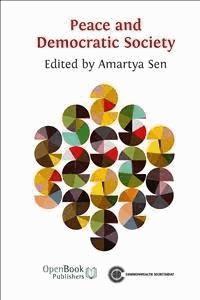
Cover image: Identities by Arthur Buxton
All paper used by Open Book Publishers is acid-free and SFI (Sustainable Forestry Initiative), and PEFC (Programme for the Endorsement of Forest Certification Schemes) Certified.
Printed in the United Kingdom and United States byLightning Source for Open Book Publishers
Contents
Part I. VIOLENCE AND CIVIL SOCIETY by Amartya Sen
Part II. CIVIL PATHS TO PEACE
Report of the Commonwealth Commission on Respect and Understanding
Members of the Commission
Executive Summary
1. Why do Respect and Understanding Matter?
2. The Nature and Nurture of Violence
3. Poverty, Inequality and Humiliation
4. History, Grievance and Conflict
5. Political Participation
6. The Role of Media and Communication
7. Young People and Education
8. Multilateralism and the International Order
9. The Way Forward and Conclusions
Afterward: original preface and letter of presentation to the report
References
Bibliography
Appendix: Written submissions to the Commonwealth Commission on Respect and Understanding
Index
Additional Resources
In 2011/2012 the Commonwealth Secretariat is planning to take forward an extensive programme of action in the area of Civil Paths to Peace (CPP) including the following initiatives:
Pilot ‘youth dialogue and action forums’ in Commonwealth countries to facilitate discussions and actions on CPP issues in order to promote understanding, respect, tolerance and a culture of peaceful coexistence through dialogue and inclusive activities.
A resource pack on CPP. The proposed resource pack will have teaching and training modules on the CPP related topics such as respect and understanding, multiple identities, tolerance, conflict, violence and dialogue etc. It will be developed on a learner-centred-methodology where students and trainees will use games, role plays, stories, and exercises to learn and practice the CPP concepts and values by actually engaging in these activities.
Training programmes for Commonwealth journalists. A set of training programmes are proposed to be developed for the Commonwealth journalists and media personnel on CPP related topics such as ‘responsible reporting of conflicts’, ‘skills for developing multiple narratives’, ‘promoting a culture of tolerance through media’, and ‘role of media in confidence building’ etc.
A publication on CPP Good practices in the Commonwealth countries. The proposed book will showcase case studies where youth, women, education and media have played a positive role in preventing conflicts and promoting peace. This reference book will be used in CPP education and training programmes.
Further information about these developments, together with other digital resources related to the Civil Paths to Peace and this publication, will be available from the Peace and Democratic Society page on the Open Book Publishers website:
http://www.openbookpublishers.com/product.php/78
Part IViolence and Civil Society1
Amartya Sen
1.
The widespread prevalence of terrorism and political violence in the contemporary world has led to many initiatives in recent years aimed at removing the scourge. Military ways for trying to secure peace have sometimes been rapidly deployed, with less informed justification in some cases than in others. And yet group violence through systematic instigation is not exclusively, nor primarily, a military challenge. It is fostered in our divisive world through capturing people’s minds and loyalties, and through exploiting the varying allegiance of those who are wholly or partly persuaded. Some are ‘inspired’ – and prodded – into joining various movements for promoting violent actions against targeted groups, but a much larger number of influenced people do not take part in any violent activities themselves. They can nevertheless hugely contribute to generating a political climate in which the most peaceful of people come to tolerate the most egregious acts of intolerance and brutality, on some hazily perceived grounds of ‘self-defence,’ or ‘just retaliation,’ against the wrong-doing ‘enemy.’
The Commonwealth Commission report called Civil Paths to Peace, which was published in 2007 and presented to the Heads of Commonwealth governments, focused particularly on the causes and ways of preventing terrorism and cultivated violence that has been in ascendancy for some years now and afflict or threaten the lives of nearly two billion people in the Commonwealth countries as well as the rest of the world.2 The report does not dispute that military initiatives can sometimes be of limited use, when they are well informed, well executed, and adequately supplemented by well thought-out civilian measures. But when they are badly informed, or based on faulty reasoning, or inadequately linked to civil measures, they can not only fail to achieve their goals but in fact generate immensely counterproductive results, generating further hostilities. Civil initiatives, at the national as well as global level, are essential for successfully confronting organized violence and terrorism in the world today.
Lesen Sie weiter in der vollständigen Ausgabe!
Lesen Sie weiter in der vollständigen Ausgabe!
Lesen Sie weiter in der vollständigen Ausgabe!
Lesen Sie weiter in der vollständigen Ausgabe!
Lesen Sie weiter in der vollständigen Ausgabe!
Lesen Sie weiter in der vollständigen Ausgabe!
Lesen Sie weiter in der vollständigen Ausgabe!
Lesen Sie weiter in der vollständigen Ausgabe!
Lesen Sie weiter in der vollständigen Ausgabe!
Lesen Sie weiter in der vollständigen Ausgabe!
Lesen Sie weiter in der vollständigen Ausgabe!
Lesen Sie weiter in der vollständigen Ausgabe!
Lesen Sie weiter in der vollständigen Ausgabe!
Lesen Sie weiter in der vollständigen Ausgabe!
Lesen Sie weiter in der vollständigen Ausgabe!
Lesen Sie weiter in der vollständigen Ausgabe!
Lesen Sie weiter in der vollständigen Ausgabe!
Lesen Sie weiter in der vollständigen Ausgabe!
Lesen Sie weiter in der vollständigen Ausgabe!




